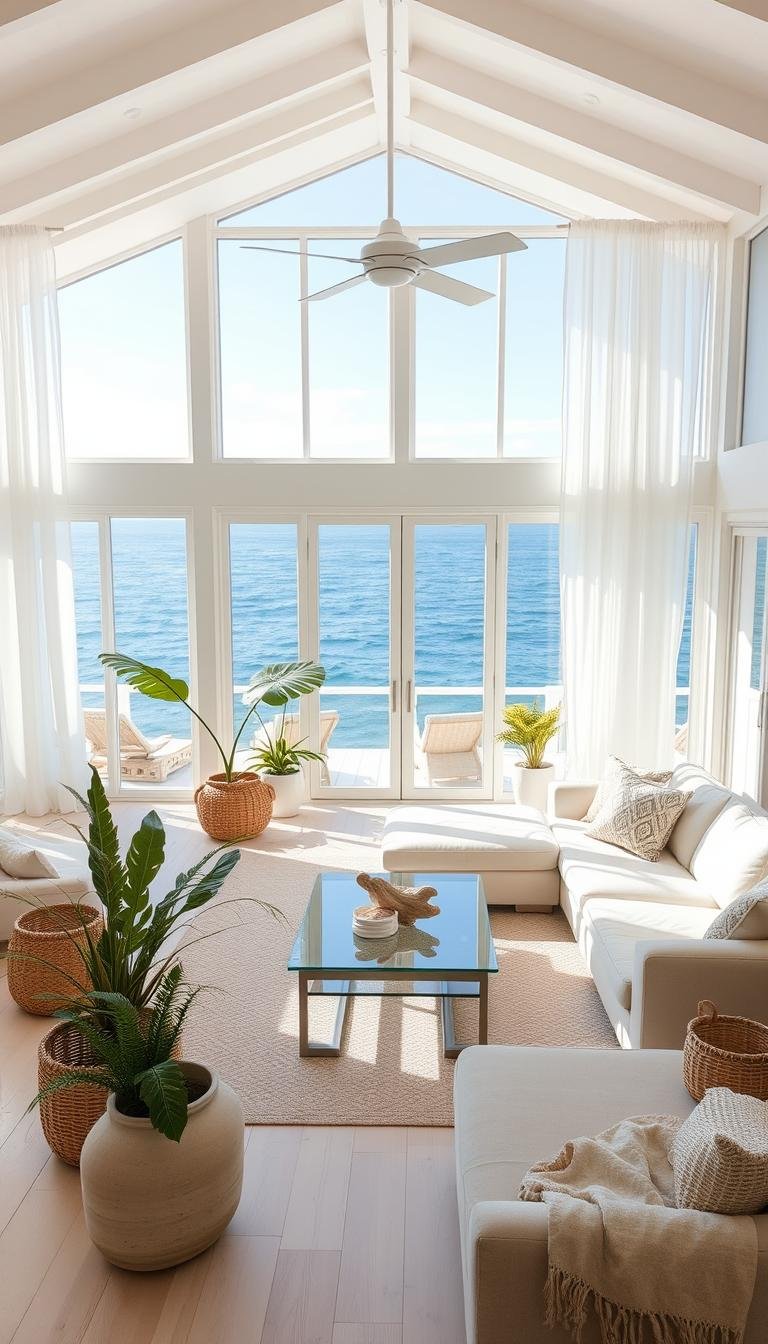
Welcome to your complete guide for designing the perfect breezy retreat. We’ll show you how to blend contemporary style with beach-inspired elements.
Creating a space that feels both fresh and comfortable starts with smart choices. You’ll learn how to achieve that open, uncluttered feeling everyone loves.
Stick to a natural palette of white and blue to broadcast those seaside vibes. This approach keeps your area feeling bright and peaceful.
Our friendly advice covers everything from color schemes to furniture picks. Whether starting fresh or updating, these tips help create your dream space.
Get ready to transform your home into a peaceful sanctuary. Capture the essence of beachside living with these practical, stylish approaches.
What Defines a Modern Coastal Living Room Vibe
Ever wonder what makes a seaside-inspired space feel so special? It’s more than just shells and sailboats. This design approach captures the ocean’s calm spirit right inside your home.
Think of soft blue shades, sandy neutrals, and bright whites. These colors work together to create a peaceful setting. They mirror the beach’s natural beauty without going overboard.
Unlike old-fashioned nautical themes, today’s look is clean and fresh. It blends straight lines and simple shapes with a laid-back feel. The goal is an open, breezy atmosphere that welcomes you in.
You don’t need to live near water to enjoy this style. It fits any home, anywhere. The focus is on light, space, and a calm mood.
Natural sunlight plays a big role in achieving that airy look. Large windows and clever layouts make rooms feel bigger and brighter. It’s all about that effortless, tranquil vibe.
Comfort is key in these spaces. You want furniture that looks good but feels even better. It’s the perfect mix of chic and cozy.
This design is great for hosting friends or relaxing with family. It feels upscale yet totally unwinding. Everyone will love spending time in your inviting retreat.
| Traditional Beach Style | Modern Coastal Approach |
|---|---|
| Uses literal ocean decorations | Focuses on color and texture暗示 |
| Can feel themed or crowded | Feels open, minimal, and fresh |
| Often includes dark woods | Prefers light tones and natural materials |
| Might seem outdated | Feels current and timeless |
Balance is everything in this style. You mix sleek elements with soft, comfy touches. The result is a space that’s both stylish and livable.
Your home becomes a personal getaway. It’s a place to unwind and feel at ease. That’s the true heart of coastal design.
Curating Your Coastal Color Palette for a Calm Feel
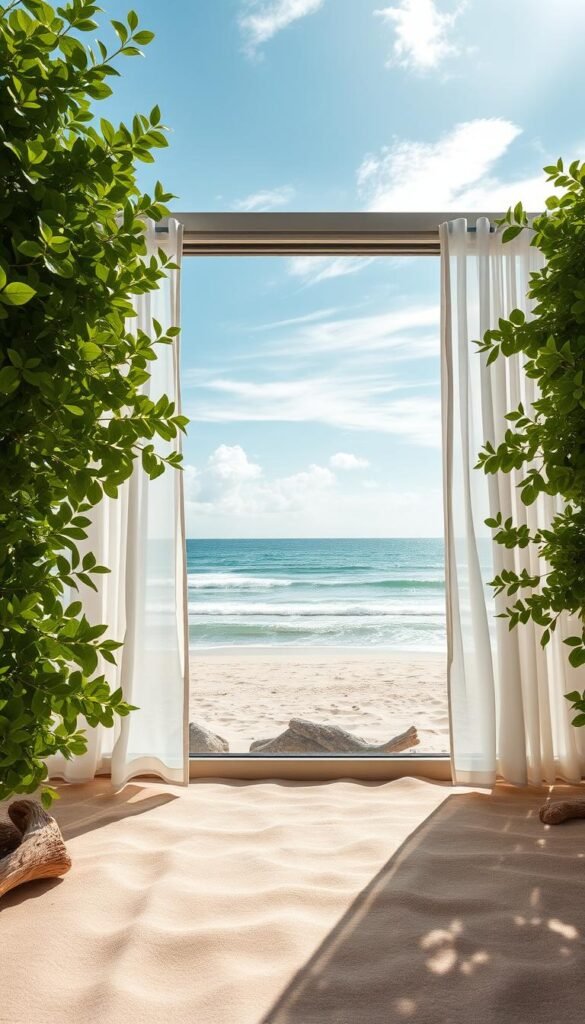
Your journey to a peaceful retreat begins with choosing the right colors. The perfect palette creates that soothing atmosphere you crave.
Think of gentle waves and soft sands when selecting your scheme. These natural elements inspire the most relaxing combinations.
Core Hues: Whites, Sandy Beiges, and Ocean Blues
Start with crisp whites as your foundation. They reflect light beautifully and make any space feel brighter.
Sandy beige tones add warmth without sacrificing that airy quality. They ground your design while keeping things light.
Ocean blues bring the sea right into your home. From soft sky shades to deeper blue-grays, these colors create calm.
Benjamin Moore’s Smokestack Gray offers a lovely blue-gray option. It feels both breezy and sophisticated.
For a blue-green with gray undertones, try Wythe Blue. This versatile shade works wonderfully in many spaces.
Adding Warmth and Nuance with Soft Accent Colors
Introduce pale yellows, pinks, or peaches for personality. These gentle accents add interest without overwhelming.
Keep all colors soft and light to maintain that breezy feeling. Test samples in your room at different times of day.
Natural light changes how colors appear throughout daylight hours. This helps you make the best choice.
Balance cool blues with warm neutrals for comfort. The mix creates an inviting atmosphere everyone enjoys.
| Color Type | Purpose | Example Shades |
|---|---|---|
| Foundation Whites | Create brightness and reflect light | Pure White, Chantilly Lace |
| Sandy Neutrals | Add warmth and ground the space | Manchester Tan, Shaker Beige |
| Ocean Blues | Bring calm, sea-inspired feeling | Smokestack Gray, Wythe Blue |
| Soft Accents | Add personality and nuance | Pale Yellow, Blush Pink |
Create a cohesive story that flows throughout your space. This harmony makes your room feel intentional and restful.
Your color choices set the tone for your entire design. They work together to craft that perfect coastal feeling.
Choosing Natural Materials for an Authentic Coastal Look
The true soul of a beach-inspired space comes from the materials you choose. These elements bring genuine character and warmth that synthetic options simply cannot match.
Natural fabrics and finishes create that effortless, organic feeling you want. They age beautifully, telling your home’s story over time.
Weathered Wood and Light Wood Tones
Weathered wood furniture adds instant character and a sense of history. Each piece tells its own story through natural wear patterns.
Light wood tones keep your space feeling bright and open. Oak, ash, and pine offer beautiful options that won’t darken your room.
These materials bring natural warmth without overwhelming your design. They complement both cool blues and warm neutrals perfectly.
Textural Elements: Rattan, Jute, and Wicker
Rattan furniture brings wonderful texture and organic beauty to your design. Chairs, headboards, or accent pieces add visual interest.
Jute rugs provide a natural, beachy feel underfoot. They’re durable and add earthy texture to anchor your space.
Wicker elements work beautifully in baskets, trays, and decorative pieces. These accessories add depth while maintaining that light, airy feeling.
Mixing different natural materials creates wonderful depth and interest. The combination feels cohesive because everything shares an organic origin.
“The best designs let materials speak for themselves. Their natural beauty needs little enhancement.”
| Material Type | Coastal Benefits | Best Uses |
|---|---|---|
| Weathered Wood | Adds character and history | Coffee tables, console tables |
| Light Wood Tones | Maintains brightness and warmth | Flooring, shelving, furniture frames |
| Rattan | Brings texture and organic beauty | Chairs, lighting, accent pieces |
| Jute | Adds natural texture underfoot | Area rugs, floor coverings |
| Wicker | Provides lightweight texture | Baskets, trays, decorative items |
Balance different wood tones with other natural elements for harmony. Lighter woods generally work best for maintaining that breezy feeling.
Choose quality pieces that will age gracefully over years. Good natural materials develop patina rather than simply wearing out.
Your space becomes more authentic with each genuine material you incorporate. They work together to create that perfect coastal character.
Maximizing Natural Light for an Airy Breezy Feel
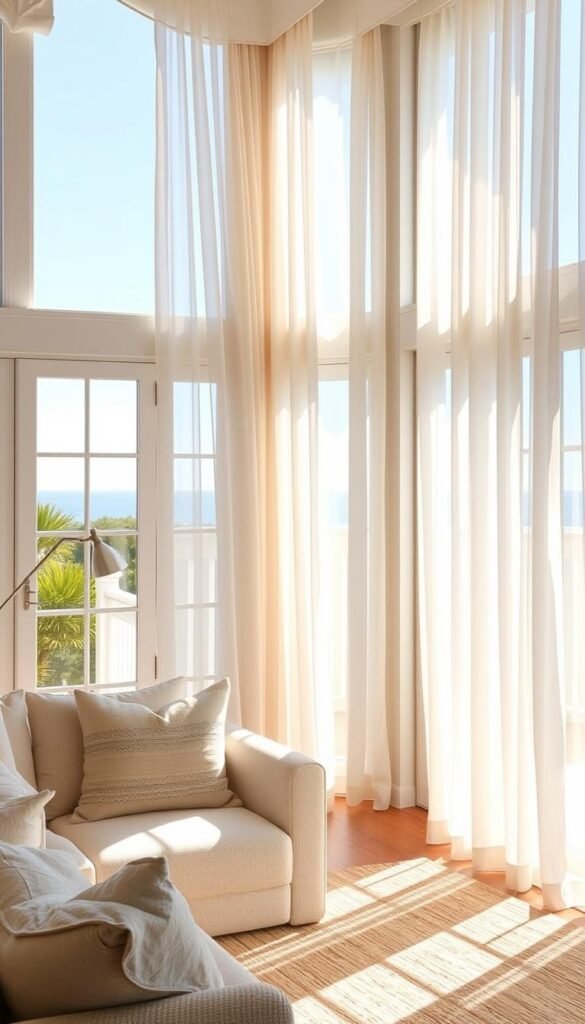
Sunlight streaming through your windows creates magic in any space. It makes rooms appear larger and more inviting.
Proper light management enhances your overall comfort. You’ll enjoy a brighter, more cheerful environment every day.
Selecting the Right Window Treatments
Choose treatments that balance privacy with light transmission. Gauzy curtains filter sunlight beautifully while maintaining seclusion.
Solar shades offer clean lines and UV protection. They preserve your view while controlling glare effectively.
Light-colored fabrics work best for diffusion. They soften harsh sunlight without darkening your room.
Consider seasonal adjustments for optimal lighting. Lighter treatments work well during shorter winter days.
Strategic Mirror and Surface Placement
Position mirrors opposite windows to bounce light deeper. This technique brightens darker corners naturally.
Glass coffee tables create reflective surfaces. They amplify light while maintaining visual openness.
Metallic accents catch and distribute illumination. Choose polished nickel or chrome for subtle shimmer.
Place furniture to avoid blocking light paths. Keep larger pieces away from window areas when possible.
| Light Enhancement Strategy | Best Application | Expected Result |
|---|---|---|
| Sheer Curtains | All windows | Soft, diffused light throughout day |
| Strategic Mirror Placement | Opposite light sources | Doubled light penetration |
| Light-Colored Walls | All surfaces | Enhanced light reflection |
| Glass Furniture | Central pieces | Light continuity across space |
| Minimal Window Treatments | Primary light sources | Maximum sunlight entry |
These techniques work together to create brilliant illumination. Your home will feel brighter and more expansive instantly.
Remember that balance maintains comfort while maximizing light. You’ll achieve that perfect sunny atmosphere effortlessly.
Furniture Selection: Clean Lines and Relaxed Comfort
Finding the perfect seating and surfaces transforms your space into a true sanctuary. The right choices blend beauty with everyday practicality.
Look for sofas with simple silhouettes and plush cushions. These pieces offer both visual appeal and deep comfort. You’ll enjoy lounging while maintaining that clean aesthetic.
Chairs should follow the same principle of streamlined design. Armchairs with tapered legs and soft upholstery work beautifully. They provide support without looking bulky or heavy.
Your coffee table serves as both functional surface and style statement. Choose materials that complement your overall color scheme. Light wood tones or glass tops maintain visual lightness.
Side tables should coordinate without matching exactly. Similar heights and materials create harmony. Different shapes add interesting variety to your arrangement.
Storage solutions keep your space organized and clutter-free. Closed cabinets hide necessities while open shelving displays favorite items. Both options maintain that essential uncluttered feeling.
Mixing different furniture pieces creates depth and character. Stick to a consistent color palette and material story. This approach ensures everything works together beautifully.
Scale matters greatly in maintaining that open atmosphere. Choose pieces proportional to your room’s dimensions. Oversized furniture can make spaces feel cramped and closed-in.
Upholstery fabrics need to balance beauty with durability. Performance fabrics resist stains while feeling soft to the touch. They handle daily life while looking fresh and inviting.
| Furniture Type | Key Features | Best Materials |
|---|---|---|
| Sofas | Straight arms, deep seats, medium depth | Performance linen, cotton blends |
| Chairs | Tapered legs, open frames, comfortable backs | Light oak, rattan, washed wood |
| Coffee Tables | Simple shapes, light visual weight | Glass, light oak, white marble |
| Side Tables | Varied heights, complementary styles | Rattan, light wood, metal accents |
| Storage Pieces | Closed and open options, clean hardware | White oak, painted wood, woven materials |
Arrange your furniture to encourage conversation and connection. Floating pieces away from walls creates intimate seating areas. This layout feels both intentional and welcoming.
Every piece should contribute to your overall comfort and style. You’ll create a space that looks beautiful and feels wonderful to live in.
The Art of Coastal Decor and Accessories
Accessories and artwork transform your space from beautiful to deeply personal. These finishing touches create that authentic connection to the sea and shore.
Your decor choices should feel collected rather than purchased all at once. This approach creates a space that tells your unique story over time.
Incorporating Nautical and Beach-Inspired Motifs
Nautical elements work best when used sparingly and thoughtfully. A single anchor-shaped bookend or rope-detailed mirror adds character without overwhelming.
Stripes remain a classic choice for pillows or throws. Choose navy and white combinations for timeless appeal. These patterns recall sailing flags and beach umbrellas.
Natural materials like driftwood and coral bring genuine beach character. A driftwood sculpture or coral piece adds organic beauty. These elements feel authentic rather than themed.
Seashells arranged in a clear glass jar create a simple, elegant display. Group similar types together for visual impact. Avoid scattered arrangements that can look cluttered.
Rattan bowls and jute baskets offer both style and function. They organize smaller items while adding natural texture. These pieces work beautifully on shelves or tables.
Using Artwork to Enhance the Ocean Vibe
Artwork sets the mood without literal interpretations of the beach. Abstract seascapes in blues and greens suggest water and sky. They create atmosphere without obvious themes.
Black-and-white photography of waves or shorelines feels sophisticated. These pieces add dramatic contrast to light-colored walls. They work particularly well in gallery walls.
Palm print wallpaper makes a bold statement in small doses. Consider using it on an accent wall or in a powder room. This pattern brings tropical feeling without overwhelming.
Seascape canvases serve as beautiful focal points above sofas or mantels. Choose pieces that complement your color scheme. Their scale should balance with your furniture arrangement.
Coastal photography featuring misty shores or calm waters enhances the serene atmosphere. These images capture the peaceful essence of waterfront living.
| Decor Approach | Best Applications | Effect Created |
|---|---|---|
| Subtle Nautical Motifs | Single accent pieces, hardware details | Suggestive rather than literal ocean connection |
| Natural Material Accessories | Bowls, baskets, decorative objects | Authentic texture and organic beauty |
| Abstract Coastal Art | Wall galleries, statement pieces | Mood enhancement without theme park feeling |
| Beach Element Displays | Grouped collections, curated arrangements | Personal connection to shore experiences |
| Textural Layers | Mixed material combinations | Depth and interest while maintaining calm |
Layer your accessories gradually to avoid a cluttered look. Start with essential pieces then add others over time. This method creates a collected, personal feeling.
Choose decor that reflects your actual experiences by the water. Pieces should remind you of favorite beaches or ocean moments. This personal connection makes your space truly special.
Remember that less often creates more impact in coastal design. A few well-chosen pieces beat many random items. Your space will feel curated rather than crowded.
Layering Textures with Rugs, Pillows, and Throws
Your space transforms when you add comforting layers that invite touch and relaxation. These elements bring both visual interest and physical comfort to your design.
Textiles create depth while maintaining that essential light feeling. You achieve coziness without sacrificing the open atmosphere you love.
Start with a foundation rug that anchors your seating area. Natural fiber rugs like jute or sisal add earthy texture underfoot. They provide softness while keeping things breezy.
Choose a rug size that fits your furniture arrangement properly. All front legs should rest on the rug for a cohesive look. This creates a defined conversation area.
Add throw pillows in various sizes and fabrics for dimension. Mix linen covers with cotton or washed fabrics for interest. These combinations feel both curated and comfortable.
Ocean-inspired colors work beautifully for your pillow selections. Soft blues, sandy neutrals, and crisp whites maintain your palette. Patterns like subtle stripes add movement without overwhelming.
Throws and blankets offer both visual texture and practical warmth. Drape them over sofa arms or chair backs for easy access. They’re perfect for chilly evenings or lazy weekends.
Choose throws in complementary weights and materials. Lightweight cotton works for warmer months. Heavier knits provide coziness during cooler seasons.
Mixing patterns and solids creates balanced visual interest. Too many patterns feel busy while only solids might seem flat. Aim for a harmonious blend that feels intentional.
Different fabric weaves contribute to the overall tactile experience. Rough textures contrast beautifully with smooth surfaces. These variations make your space more engaging.
Color coordination keeps your layered textiles feeling cohesive. Pull colors from your existing palette for harmony. This approach ensures everything works together seamlessly.
Seasonal rotation keeps your space feeling fresh year-round. Lighter linens and cottons work for spring and summer. Warmer wools and knits suit autumn and winter.
Always maintain that breezy feel even with added layers. Choose textiles that breathe and feel light. Your space should never feel heavy or closed-in.
| Textile Element | Primary Function | Best Material Choices |
|---|---|---|
| Area Rugs | Anchor space, add softness underfoot | Jute, sisal, light wool |
| Throw Pillows | Add comfort, color, and pattern | Linen, cotton, performance fabrics |
| Blankets & Throws | Provide warmth and textural interest | Cotton, wool, knit blends |
| Window Treatments | Filter light, add softness to windows | Linen, cotton voile, sheer fabrics |
These layers work together to create a space that feels both stylish and welcoming. You’ll enjoy the perfect balance of visual appeal and everyday comfort.
Remember that quality pieces last longer and feel better. Invest in textiles that will age gracefully over time. Your efforts will create a truly inviting retreat.
Incorporating Plants and Greenery for a Fresh Feel
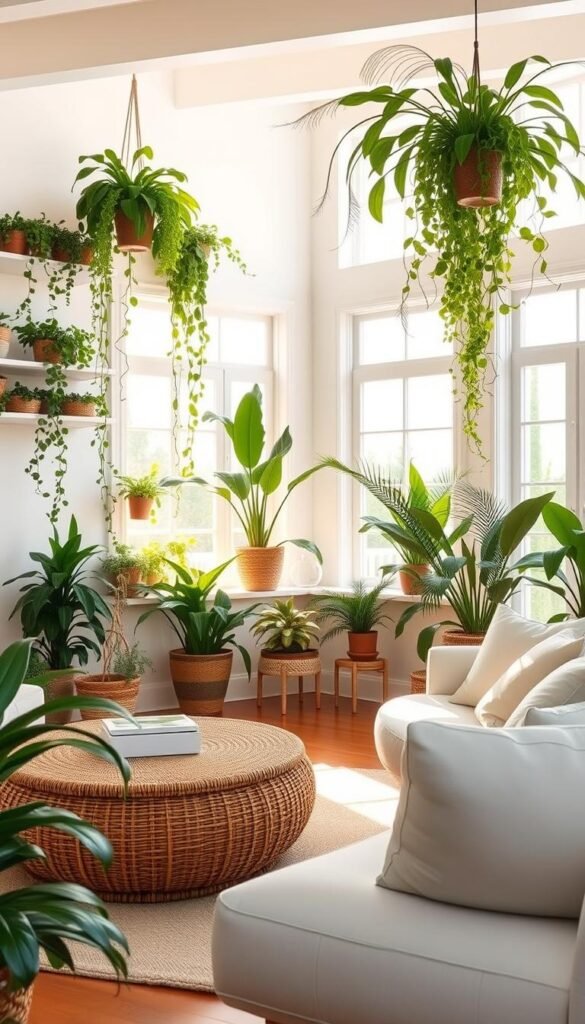
Greenery transforms your home by adding life and energy to your design. Plants bring the refreshing essence of nature indoors beautifully.
They balance coastal colors with organic texture and movement. Your space gains depth and vitality with these living accents.
Plants thrive in the bright light typical of these spaces. Many varieties love sunny spots near windows.
Choose low-maintenance options if you have a busy lifestyle. Snake plants and pothos handle occasional watering with ease.
Their natural beauty enhances your aesthetic without extra effort. You enjoy fresh energy daily with minimal care.
Select planters that complement your color scheme. Neutral pots in white, beige, or light gray work wonderfully.
Natural materials like terracotta or woven baskets add texture. These choices feel cohesive with your overall design.
Place plants strategically to avoid clutter. Group smaller pots on shelves or windowsills.
Larger floor plants anchor corners without crowding. They soften hard surfaces and add organic movement.
Certain houseplants purify your living environment. Peace lilies and spider plants filter air naturally.
You breathe easier while enjoying their visual appeal. It’s a healthy upgrade for your home.
Rotate plants seasonally to maintain interest. Flowering varieties add color during spring and summer.
Evergreens provide consistent greenery through colder months. Your space feels fresh year-round.
Create beautiful focal points with grouped arrangements. Mix heights and leaf shapes for visual impact.
These green clusters become living art in your room. They enhance your space with natural elegance.
Plants make your design feel more authentic and inviting. They complete that fresh, coastal feeling perfectly.
Modern Coastal Living Room Ideas to Inspire Your Space
Ready to transform your home with fresh inspiration? These four distinct approaches offer creative ways to achieve that perfect seaside atmosphere.
Each idea focuses on different elements and color combinations. You can adapt them to suit your personal taste and space requirements.
Whether you prefer bold contrasts or subtle neutrals, there’s an option for you. These concepts work in various room sizes and light conditions.
Mix and match elements from different ideas to create your unique look. Your space will reflect your personality while maintaining that breezy feel.
Idea 1: Light Wood Tones and Breezy Whites
This approach creates a fresh, Scandinavian-inspired look. Light oak or ash furniture forms the foundation.
Pair wooden pieces with crisp white walls and upholstery. The combination feels both warm and bright simultaneously.
Add soft neutral pillows in linen or cotton fabrics. These textiles provide comfort without introducing competing colors.
The result is an open, airy space that welcomes relaxation. It works particularly well in rooms with abundant natural light.
Idea 2: Soft Blue Accents and Crisp White Pairings
This classic combination instantly evokes ocean feelings. Start with a white base on walls and larger furniture pieces.
Introduce soft blue shades through chairs and decorative elements. Sky blue or powder blue work beautifully against white backgrounds.
The contrast creates visual interest while maintaining serenity. It feels like a breath of fresh sea air indoors.
This palette suits both traditional and contemporary spaces. It brings timeless elegance to your design.
Idea 3: Rattan Furniture with Deep Blue Textiles
Rattan chairs or tables add wonderful texture and organic beauty. Their natural material complements coastal themes perfectly.
Pair these pieces with deep blue pillows and throws. Navy or cobalt blue creates rich contrast against light rattan.
Add a light striped rug to complete the shore-inspired look. The combination says “relax by the water” effortlessly.
This approach adds depth while keeping things light and comfortable. It works well as an accent within larger spaces.
Idea 4: A Minimalist Approach with Sandy Neutrals
For those preferring subtle elegance, sandy neutrals create calm. Use beige, taupe, and warm gray throughout your space.
Keep furnishings simple and uncluttered. Clean lines and minimal decor maintain the peaceful atmosphere.
Add texture through natural materials like jute rugs or woven baskets. These elements provide interest without introducing color.
The result is a sophisticated, subdued palette that feels endlessly relaxing. It’s perfect for creating a serene retreat.
| Design Approach | Best For | Key Elements |
|---|---|---|
| Light Wood & Whites | Bright spaces, Scandinavian lovers | Oak furniture, white walls, neutral textiles |
| Blue & White Pairings | Classic coastal feel, traditional homes | White base, blue accents, crisp contrast |
| Rattan & Deep Blue | Texture lovers, accent spaces | Rattan furniture, navy textiles, striped rugs |
| Sandy Neutrals | Minimalist preferences, serene atmospheres | Beige tones, simple furnishings, natural textures |
Consider your existing space and lighting when choosing an approach. North-facing rooms might benefit from warmer neutrals.
South-facing spaces can handle cooler blues and brighter whites. Each idea adapts beautifully to different conditions.
Remember that personal touches make your space uniquely yours. These ideas provide foundation concepts to build upon.
Your home will become a personal sanctuary that reflects your coastal aspirations. Enjoy creating a space that feels both fresh and comforting.
How to Blend Modern Design with Coastal Elements
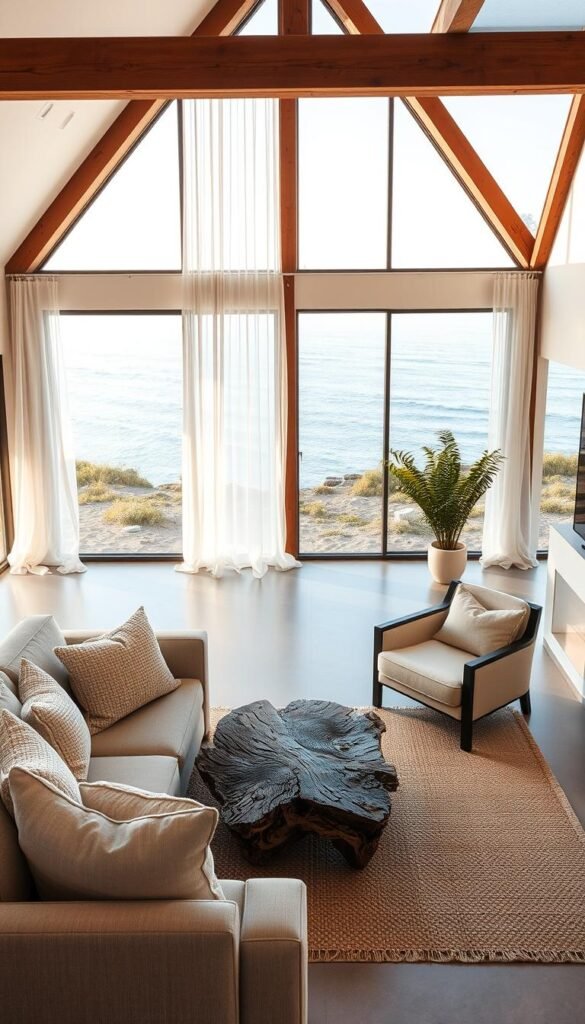
Merging two distinct styles creates a unique and personal space. You achieve a look that feels both fresh and timeless.
This approach balances structure with relaxation. Clean lines meet organic textures beautifully.
Your space gains sophistication without losing comfort. It becomes a true reflection of your taste.
Start with a neutral foundation for your walls and larger pieces. Crisp whites or soft grays work wonderfully.
Introduce natural materials like light wood or rattan. These elements add warmth and texture.
Choose furniture with simple silhouettes and tapered legs. These pieces maintain visual lightness.
Mix sleek surfaces with woven accents for balance. A glass table paired with a jute rug creates harmony.
Color plays a crucial role in unifying both styles. Stick to a palette of whites, blues, and neutrals.
Add depth with darker blue accents in pillows or art. This creates contrast without overwhelming.
Lighting should combine function with aesthetic appeal. Choose fixtures with clean lines and natural materials.
Scale your pieces appropriately for your room size. Oversized furniture can disrupt the airy feeling.
Accessories should feel curated rather than collected. Select items that honor both design philosophies.
Abstract art works better than literal nautical themes. It suggests the ocean without obvious references.
Always prioritize comfort in your seating choices. Plush cushions on streamlined frames offer the best of both.
Your space becomes a sophisticated yet relaxing retreat. It feels intentionally designed yet completely livable.
| Modern Element | Coastal Element | Blending Technique |
|---|---|---|
| Sleek metal frames | Natural wood tones | Combine metal legs with wood tops |
| Minimalist art | Ocean-inspired colors | Choose abstract pieces in blue hues |
| Glass surfaces | Woven textures | Pair glass tables with rattan chairs |
| Clean-lined sofa | Soft blue upholstery | Select streamlined shape in coastal color |
| Geometric lighting | Natural materials | Choose bamboo or rattan light fixtures |
Remember that balance is key to successful blending. Neither style should dominate the other.
Your home will feel both contemporary and comfortably beach-inspired. This harmonious combination creates a truly special space.
Avoiding Common Mistakes: Keeping It Relaxed, Not Themed
Creating your perfect retreat means steering clear of common design pitfalls. Many people accidentally create spaces that feel more like theme parks than comfortable homes.
The key difference lies in suggestion versus literal interpretation. True coastal style suggests the ocean rather than shouting about it.
Your space should feel collected over time, not purchased in one themed shopping trip. This approach creates authenticity that can’t be replicated.
Many homeowners make these common errors when designing their rooms:
- Using too many literal nautical decorations
- Overloading with blue and white patterns
- Choosing furniture that looks beachy but isn’t comfortable
- Forgetting to edit and leaving too many items displayed
Color mistakes can quickly make your room feel dated or overwhelming. Avoid pairing bright primary colors that feel childish rather than sophisticated.
Stick to muted, natural versions of ocean-inspired hues. These shades create calm rather than visual chaos.
Pattern mixing requires careful balance. Too many competing prints create busyness rather than harmony.
Limit yourself to two or three pattern types maximum. Combine them with plenty of solid textures for visual rest.
Editing your decor maintains that essential uncluttered feeling. Remove items that don’t serve a purpose or bring you joy.
Your personal touches make the design uniquely yours. Family photos, travel souvenirs, and favorite books add meaning.
These elements prevent your room from looking like a catalog page. They create authentic character that can’t be bought.
Sometimes stepping back helps you evaluate objectively. Take photos of your space and review them with fresh eyes.
Ask yourself if any areas feel crowded or overly themed. Simplify wherever possible to maintain that relaxed vibe.
| Common Mistake | Better Approach | Result Achieved |
|---|---|---|
| Literal beach decorations | Subtle ocean-inspired accents | Sophisticated suggestion rather than theme |
| Overly bright color combinations | Muted, natural color palette | Calm, serene atmosphere |
| Too many patterns mixed together | Limited patterns with solid textures | Visual harmony without chaos |
| Displaying every collected item | Edited, curated collections | Uncluttered, intentional feeling |
| Purchasing everything at once | Collecting pieces over time | Authentic, personal character |
Remember that your home should reflect your personality above all trends. Choose pieces that speak to you rather than following rules strictly.
This approach creates a space that feels genuinely yours. It becomes a true retreat that welcomes you home every day.
The best designs balance beauty with livability. Your room should look beautiful but feel even better to live in.
Avoiding these common mistakes ensures your space remains relaxed rather than themed. You’ll create that perfect coastal vibe without going overboard.
Working With What You Have: Quick Coastal Updates
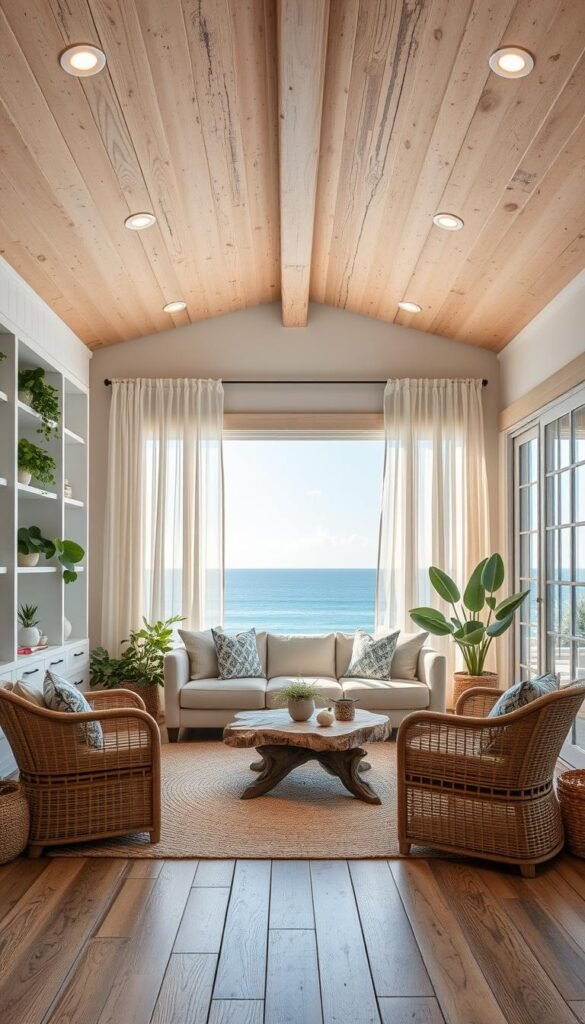
Transforming your space doesn’t require a complete overhaul. Small, thoughtful changes can create that breezy coastal feeling you love.
You can refresh your living room using items you already own. Strategic updates make a big impact without breaking the bank.
Start by evaluating your current color scheme. Soft blues and sandy neutrals work wonders for creating coastal vibes.
If painting walls isn’t an option, focus on accents. Throw pillows in ocean-inspired shades instantly change the mood.
Natural textures bring authentic character to your space. Woven baskets and cotton throws add depth and interest.
Rearrange your furniture to improve flow and light. Floating pieces away from walls creates an open, airy feeling.
This simple change makes your room feel larger and more inviting. It costs nothing but makes a significant difference.
DIY projects add personal touches without major investment. Create simple driftwood displays or seashell arrangements.
These natural elements connect your space to the shore. They feel collected rather than purchased.
Lighting adjustments enhance the coastal atmosphere. Swap heavy curtains for light, filtering options.
This change welcomes more sunlight into your room. It brightens everything naturally.
Focus on strategic decor additions that matter most. A large mirror reflects light and makes spaces feel bigger.
Natural fiber rugs define areas while adding texture. They anchor your seating arrangement beautifully.
Transition your space gradually over time. Add one coastal element each season.
This approach creates a curated, personal look. Your room evolves naturally into your perfect retreat.
| Quick Update | Estimated Cost | Impact Level |
|---|---|---|
| Throw pillow refresh | $50-100 | High visual change |
| Natural basket addition | $20-40 | Texture and storage |
| Furniture rearrangement | $0 | Improved flow and light |
| DIY driftwood art | $10-30 | Personal coastal touch |
| Lighting fixture update | $80-150 | Enhanced atmosphere |
Remember that consistency creates cohesion. Stick to your chosen color palette throughout updates.
Your space will feel intentionally designed yet completely comfortable. These changes make your home truly yours.
Creating a Cozy and Inviting Coastal Layout
Arranging your furniture thoughtfully transforms how your home feels and functions. A smart layout creates both openness and intimate relaxation zones.
Your space should flow naturally while offering comfortable spots to unwind. This balance makes your room perfect for both entertaining and quiet moments.
Start by defining conversation areas with your seating. Arrange sofas and chairs to face each other comfortably. This setup encourages talking and connection.
Leave enough space between pieces for easy movement. You want to maintain that breezy, uncluttered feel. Traffic should flow around seating, not through it.
Create distinct zones for different activities within your living room. A reading nook with a comfortable chair and good light works beautifully. Another area might focus on television viewing or game playing.
Use area rugs to anchor these different sections visually. They define spaces without physical barriers. Your room stays open but organized.
Consider the natural focal points in your design. A fireplace, large window, or interesting artwork can anchor your arrangement. Arrange furniture to highlight these features.
Balance furniture placement with empty areas. Too many pieces make rooms feel crowded. Leave some breathing room around each grouping.
Lighting layout creates warmth and ambiance throughout your space. Combine overhead lights with table and floor lamps. This layered approach offers both general and task lighting.
Arrange accessories in intentional groupings rather than scattering them. A collection of seashells on a tray looks curated. A few framed photos on a shelf create personal connection.
Test different layouts before moving heavy pieces. Use painter’s tape to mark furniture placement on the floor. This helps you visualize the final arrangement.
You can also take photos of your current setup. Experiment with digital tools that let you rearrange furniture virtually. These methods save time and effort.
Remember that your layout should serve your lifestyle. Arrange pieces to support how you actually use the space. Your room becomes both beautiful and functional.
The right arrangement makes your home feel welcoming and relaxed. You’ll enjoy spending time in your perfectly organized retreat.
Bringing the Relaxed Coastal Vibes Home to Your Space
Your journey to a peaceful retreat is now complete. You’ve learned how to blend contemporary style with seaside charm.
Remember the core principles: light colors, natural materials, and plenty of sunlight. These elements create that open, breezy feel you love.
Trust your personal taste when adding accents and decor. Your home should reflect what brings you joy and comfort.
Start with small changes and build gradually. Even simple updates can transform your space into a personal sanctuary.
Enjoy creating a design that feels both fresh and authentically yours. Your perfect coastal living room awaits!