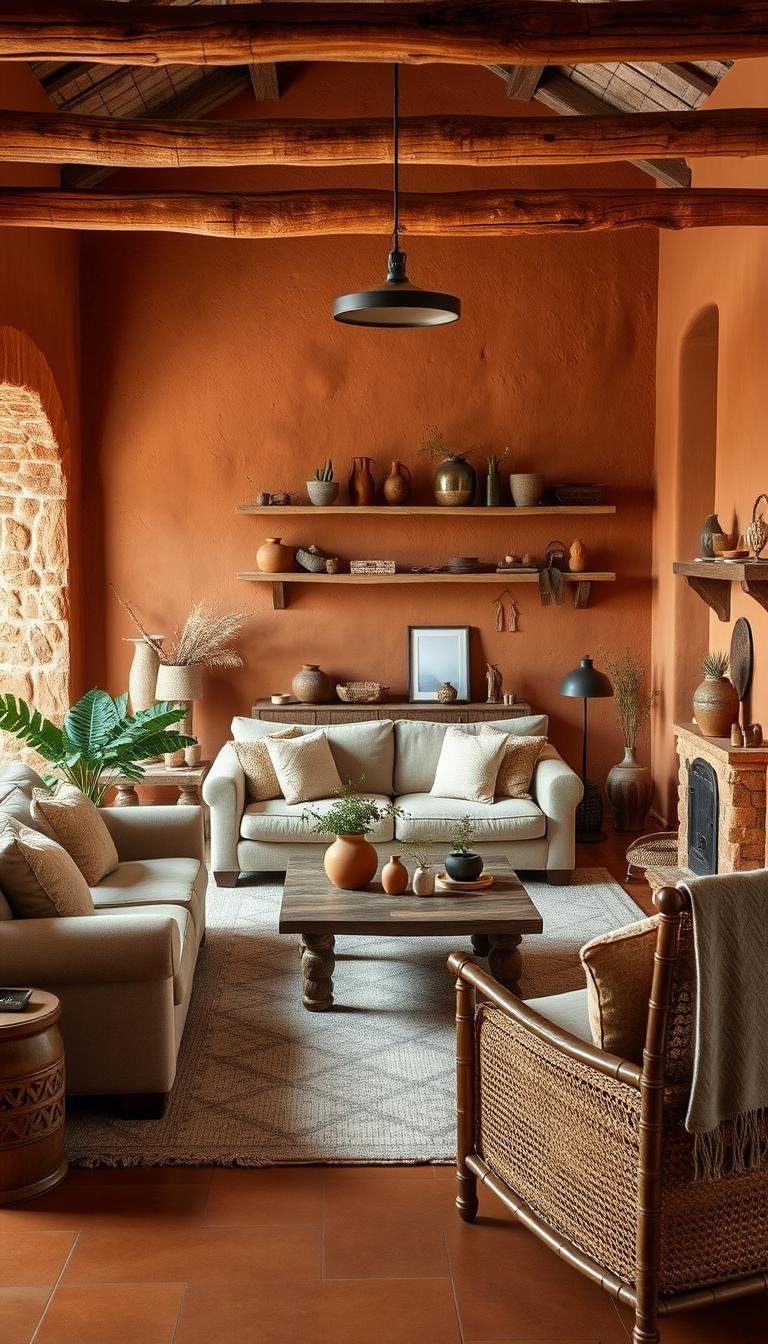
Warm earthy tones are trending in home design. They create a soothing and welcoming atmosphere in any space. These hues make your home feel more inviting and comfortable.
This popular shade works with many interior styles. You can use it in modern, boho, or minimalist designs. It offers flexibility for full schemes or subtle accents.
The color ranges from deep reds to soft orange tones. This versatility lets you express your personal style. Pair it with warm neutrals for a balanced and harmonious look.
These combinations add depth and visual interest to your space. They create a grounded yet sophisticated feel. The result is a friendly and approachable vibe.
Consider your light conditions and room size when choosing elements. The hue can shift beautifully throughout the day. Explore the following sections for specific inspiration.
1. Embrace Striking Terracotta Walls for a Cozy Backdrop
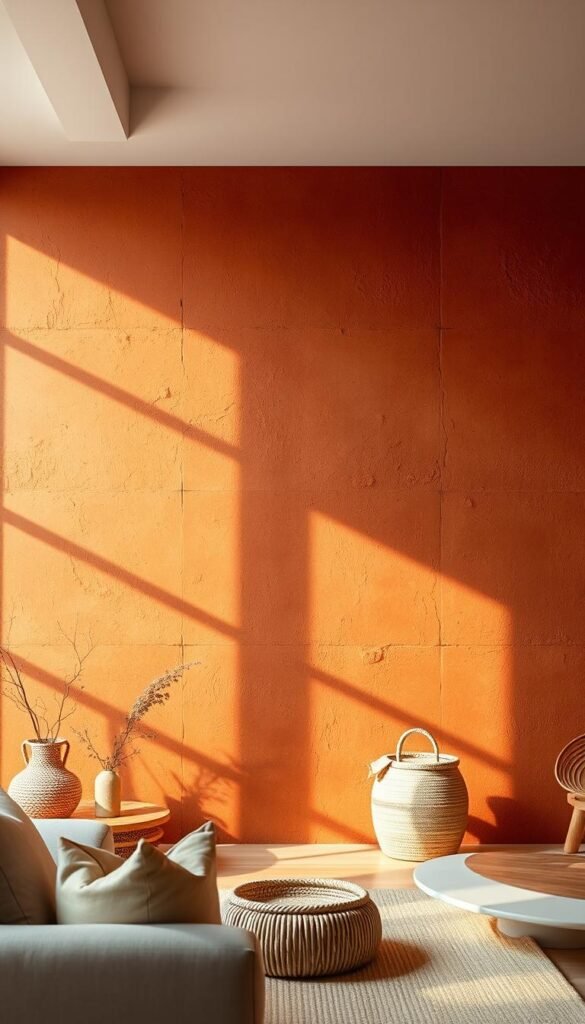
These warm-colored surfaces work magic in any interior. They wrap your space in comfort while making a stylish statement. The right hue can completely change how a room feels throughout the day.
Choosing the Right Shade for Your Light
Natural light changes how colors appear. North-facing rooms need warmer tones to combat gray light. South-facing spaces can handle deeper, richer shades.
Test your favorite options before committing. Paint large sample sheets and observe them at different times. This ensures you pick the perfect match for your conditions.
Consider Farrow & Ball’s Red Earth for a warming reddish-brown effect. It adds glow to darker corners while maintaining sophistication.
Creating a Focal Point with an Accent Wall
Not ready for all-over color? Try a single accent wall instead. This approach adds drama without overwhelming your space.
Focus on architectural features like alcoves or trim. Painting these elements creates cohesion throughout the room. It highlights interesting details while maintaining balance.
Pair your terracotta wall with natural materials and earthy tones. This combination enhances the overall aesthetic beautifully. For more inspiration on working with these warm hues, explore this terracotta decor guide.
Whether you choose full coverage or strategic accents, these walls transform any area into a comforting retreat. They ground your design while adding visual interest and depth.
2. Anchor Your Space with a Warm Terracotta Sofa or Armchair
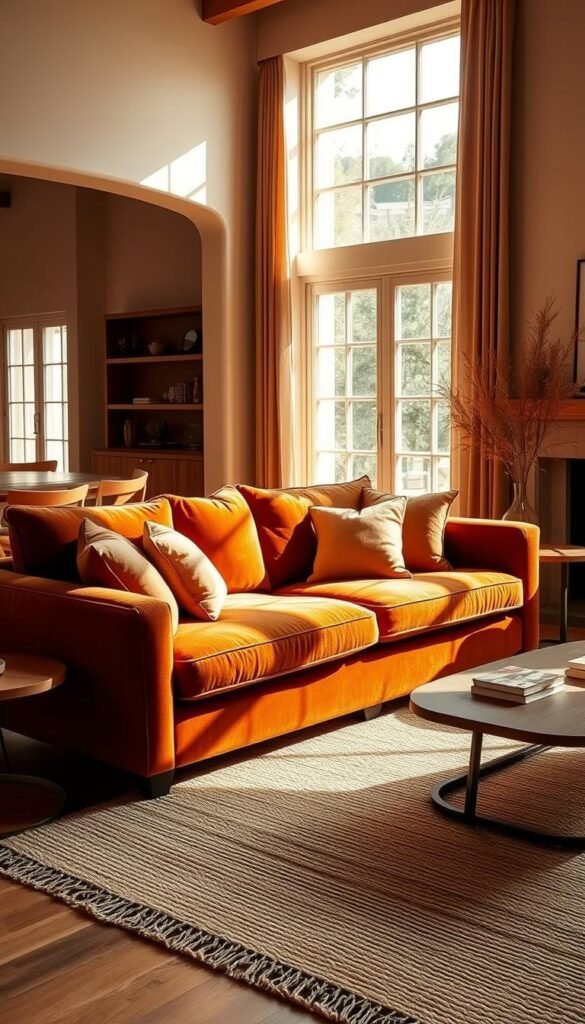
A statement seating piece transforms your area instantly. This earthy hue brings natural warmth and becomes the room’s centerpiece. It creates an inviting atmosphere that welcomes relaxation.
Choose between a full sofa or accent chair based on your needs. Both options deliver that cozy, grounded feeling. They work beautifully with various design aesthetics.
Selecting the Perfect Upholstery Material
Fabric choice dramatically affects both look and feel. Velvet offers luxurious depth and rich texture. It enhances the color’s natural warmth beautifully.
Linen provides a casual, breathable alternative. Its natural texture complements earthy tones perfectly. Both materials create wonderful tactile experiences.
Consider your lifestyle when making this decision. Velvet suits formal spaces while linen works well for family areas. Either choice adds comfort and style.
Styling Tips for Smaller Living Spaces
Compact furniture keeps your area feeling open. A loveseat or armchair adds color without crowding. Pair with light neutrals to maintain airiness.
Beige, cream, or light gray walls work wonderfully. They create pleasant contrast without overwhelming. Mustard yellow or khaki accents complete the palette.
Urban Outfitters’ Reema cushion offers flexible options. It lets you test the hue before committing. This approach works well for rental homes.
Natural wood tables complement these pieces perfectly. Olive green throw pillows add depth. The combination creates a cohesive, inviting environment.
Remember to measure your area carefully. Choose pieces that enhance rather than dominate. Your seating should invite relaxation while maintaining balance.
3. Harmonize the Look with Natural Wood Accents
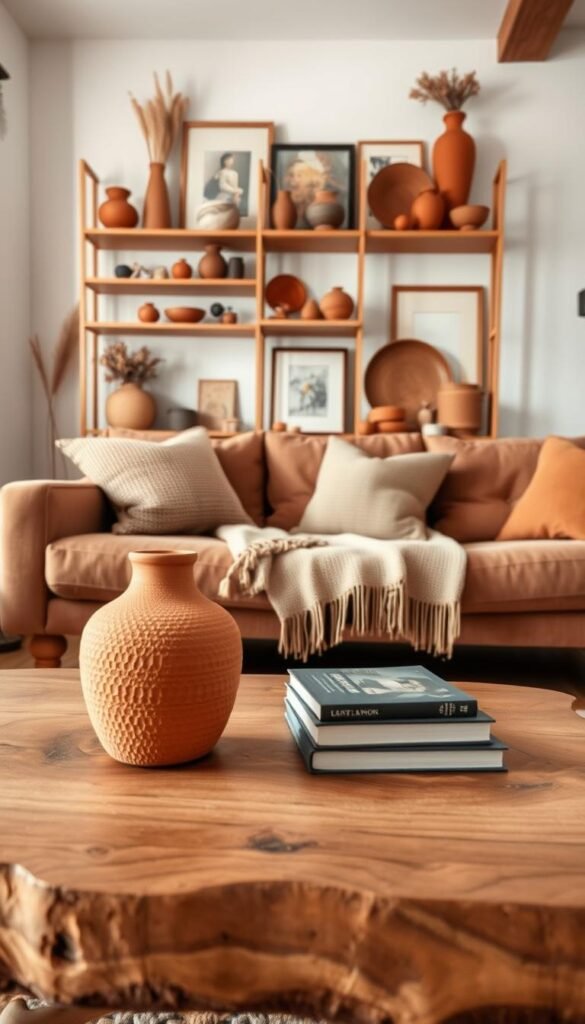
Natural materials create beautiful harmony in your home. Wood brings organic texture that pairs perfectly with earthy colors. This combination adds depth and character to your space.
These elements work together to create a welcoming atmosphere. The mix feels both refined and casually inviting. It’s a timeless approach that never goes out of style.
Incorporating Wooden Furniture Pieces
Choose pieces that complement your existing color scheme. Coffee tables with rich grain patterns add visual interest. Shelving units in natural wood provide functional beauty.
Side tables and consoles complete the look beautifully. They offer practical surfaces while enhancing the overall aesthetic. The right wood tone makes all the difference.
According to design experts at Architectural Digest, “Walnut and mahogany work well with deeper shades. Lighter woods like oak create pleasant contrast.” This guidance helps you select the perfect match.
Adding Texture with Architectural Details
Architectural elements bring structural interest to your room. Exposed beams add rustic charm and height. Wall paneling creates rhythm and dimension.
These features ground your design with organic texture. They emphasize a natural aesthetic that feels authentic. The result is a space that feels both stylish and comfortable.
Wood accents can be subtle or bold based on your preference. Picture frames and decorative bowls offer gentle touches. Statement furniture pieces make stronger visual impacts.
This combination works across various design styles. Boho spaces embrace rattan and woven elements. Modern rooms use sleek, finished wood surfaces.
Pair wood with textiles for layered texture. The mix adds depth without overwhelming your space. It creates a biophilic feel that connects you to nature.
Natural wood accents elevate your decor beautifully. They add character and warmth that feels cohesive. Your living area becomes a stylish, inviting retreat.
4. Layer Terracotta Rugs for Texture and Underfoot Comfort
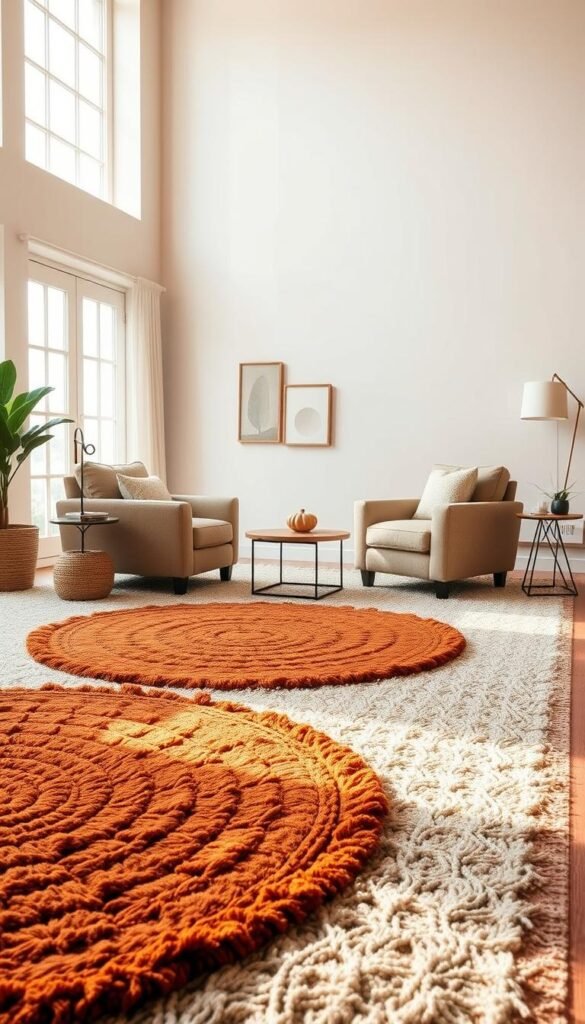
Floor coverings in earthy shades transform your area instantly. They add cozy warmth underfoot while creating visual appeal. These pieces ground your furniture and define zones beautifully.
Layering rugs introduces wonderful texture and depth. It makes your space feel more inviting and comfortable. This approach works in both large and compact areas.
Mixing Patterns and Sizes for Depth
Combine different shapes and designs for interest. A patterned piece over a solid base creates dimension. This technique adds personality without clutter.
The Hykkon Noor Chequered Rug offers bold style. Its geometric pattern serves as a focal point. Available in various sizes, it fits any layout.
Start with a larger neutral foundation rug. Layer a smaller terracotta piece on top. This creates a framed effect that looks intentional.
Pairing Rugs with Other Natural Materials
Natural fibers enhance the earthy vibe perfectly. Jute or wool rugs add tactile contrast. They bring organic texture that feels authentic.
These materials work well with wood furniture. They also complement rattan or bamboo accents. The combination feels cohesive and welcoming.
Consider traffic patterns when selecting materials. Plush wool offers softness for low-traffic areas. Durable jute handles busy spaces better.
Your rug should anchor the room’s color scheme. It ties together various elements harmoniously. The right choice makes your design feel complete.
Terracotta floor coverings are practical and stylish. They add layers of comfort and visual interest. Your space becomes more enjoyable and inviting.
5. Introduce Softness with Terracotta Textiles and Throws
Soft furnishings instantly transform your atmosphere. They add cozy layers that welcome relaxation and conversation. These elements make your area feel complete and inviting.
Current trends favor mixed textures for depth. Velvet, knits, and linen create wonderful tactile experiences. They bring both visual and physical comfort to your home.
Mixing Textures for a Tactile Experience
Combine different materials for rich dimension. Plush velvet cushions pair beautifully with chunky knit throws. This layered look feels luxurious yet approachable.
Vary cushion sizes and shapes on your sofa. Add throws to armchairs for extra coziness. This arrangement creates a curated yet comfortable vibe.
Natural materials enhance the earthy theme. Wood or rattan furniture complements these textiles perfectly. The combination feels harmonious and authentic.
Choosing Complementary Color Pairings
Select colors that balance the warmth beautifully. Beige, cream, or olive green create pleasant contrast. These hues add visual interest without overpowering.
Patterned throws can unify your color palette. Abstract or floral motifs add personality. They tie together different elements in your space.
According to design experts, “These textiles offer cost-effective seasonal updates. You can easily swap them to refresh your aesthetic.” This flexibility makes them perfect for rental homes.
Products like La Redoute’s Joan cushion cover add artisanal touches. Their Nedo cotton fringed bedspread completes the style. Both options bring affordable softness to your design.
These elements are an easy way to incorporate earthy tones. They offer flexibility and warmth that personalize your area. Your living room becomes more inviting and comfortable.
6. Incorporate a Biophilic Touch with Terracotta Planters
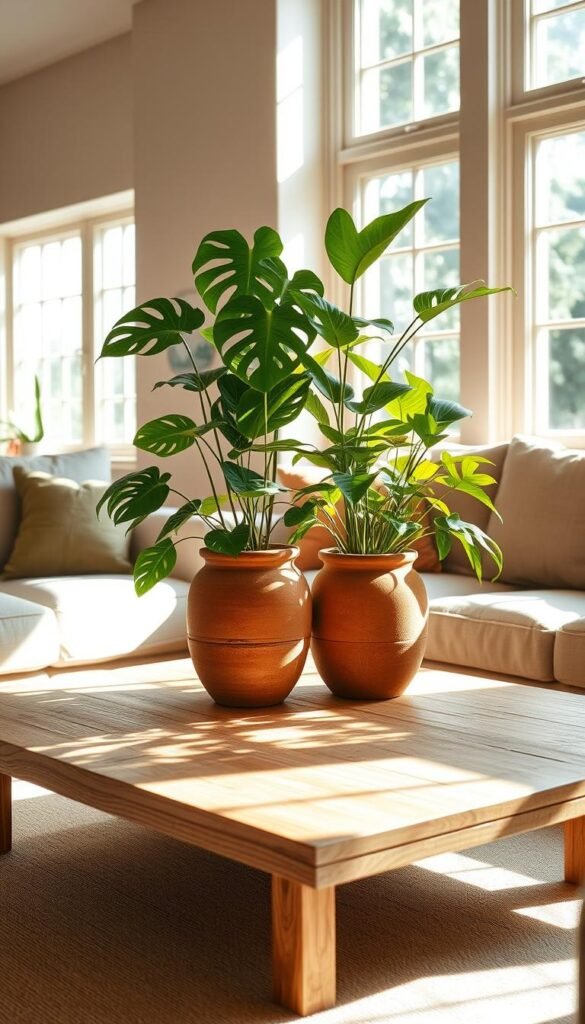
Bringing living plants into your home creates an instant connection with nature. These earthy containers add organic texture while enhancing your overall aesthetic. They bring life and movement to any arrangement.
The porous nature of clay helps regulate soil moisture naturally. This creates healthier root systems for your greenery. According to gardening experts, “This material allows roots to breathe while preventing waterlogging.”
Selecting the Right Plants for Your Space
Consider your light conditions when choosing greenery. North-facing windows need low-light varieties. South-facing areas can handle more sun-loving species.
Great options for different conditions include:
- Pothos for low-light corners
- Snake plants for dry environments
- Succulents for sunny spots
- Ferns for humid areas
Maintenance needs vary by plant type. Some require weekly watering while others thrive on neglect. Choose species that match your lifestyle and available time.
Using Planters as Sculptural Decor Elements
These containers serve as artistic statements beyond their function. Position them as focal points on shelves or side tables. Group varying sizes together for visual interest.
The Fairford Speckle Leaf Plant Pot offers timeless appeal. Its speckled finish adds texture to your arrangement. Nkuku’s Jara wall-hung planter creates vertical interest.
Create curated vignettes with other natural elements. Combine with wood accents or stone surfaces. This enhances the organic feel throughout your space.
Consider your overall design when selecting styles. Rustic finishes work well in farmhouse schemes. Sleek modern shapes complement contemporary interiors.
These planters add both life and texture to your environment. They promote a calming, nature-inspired atmosphere that feels both fresh and inviting.
7. Balance the Palette with Warm Neutrals and Earthy Hues
Mastering color balance transforms your space from ordinary to extraordinary. The right combination creates harmony while letting each element shine. This approach makes your area feel both sophisticated and welcoming.
Layering Soft Beiges and Creams
These gentle tones provide the perfect neutral foundation. They allow your statement pieces to stand out beautifully. The effect adds lightness and freshness throughout your space.
Consider using beige textiles or cream-colored walls. These elements create a sun-baked backdrop that feels inviting. They work particularly well with natural light conditions.
Design experts suggest,
“Neutral foundations create visual breathing room. They prevent bold colors from overwhelming your senses.”
Adding Depth with Olive Greens and Deep Browns
Rich earthy hues introduce wonderful dimension to your scheme. Olive green accessories add natural contrast without competing. Deep brown furniture pieces ground the entire composition.
These colors enhance the organic theme beautifully. They create a dynamic, layered effect that feels curated. The combination works across various design aesthetics.
Minimalist spaces might use terracotta and cream for clean elegance. Boho rooms can mix multiple earthy shades for eclectic charm. Both approaches achieve balanced sophistication.
Natural elements like wood or plants reinforce this palette perfectly. They add texture that makes your space feel organic. The result is a serene environment ideal for relaxation.
Experiment with different tones within this spectrum. Find what best suits your personal taste and existing elements. This flexibility ensures your space reflects your unique style.
A balanced palette creates timeless appeal that remains trend-aware. Your living area becomes both welcoming and stylish through thoughtful color harmony.
8. Add Drama by Painting Architectural Features Terracotta
Architectural details become extraordinary focal points when painted in this earthy hue. This technique transforms ordinary elements into artistic statements that command attention. You create visual interest while maintaining a cohesive design throughout your space.
Highlighting Trim, Ceilings, and Alcoves
Specific features gain new life with this colorful treatment. Crown molding becomes a striking frame when painted in warm earth tones. Exposed beams turn into dramatic elements that draw the eye upward.
Alcoves become inviting nooks when treated with this approach. They create cozy reading corners or display areas that feel intentional. The color adds depth and dimension to these architectural elements.
According to design experts at Elle Decor, “Painting a ceiling creates a cocoon-like effect that feels both cozy and sophisticated.” This technique works particularly well in rooms with interesting architectural details.
Creating Cohesion Throughout the Room
Repeating the hue across multiple elements ties your design together beautifully. It creates rhythm and flow that feels intentional and polished. Your space gains a curated look that appears professionally designed.
This approach works across various interior styles. Modern spaces benefit from clean lines in warm tones. Rustic rooms gain additional character with this earthy treatment.
Pair these features with lighter wall colors for pleasant contrast. Soft grays or creamy whites create balance and prevent overwhelming effects. Natural wood elements complement the scheme perfectly.
| Architectural Feature | Visual Impact | Recommended Pairings |
|---|---|---|
| Crown Molding | Adds definition and frames the space | Light gray walls, natural wood floors |
| Ceilings | Creates intimate, cocoon-like atmosphere | White trim, minimalist lighting fixtures |
| Window Trim | Frames views and adds character | Sheer curtains, indoor plants |
| Alcoves | Creates inviting focal points | Built-in shelving, accent lighting |
| Exposed Beams | Adds rustic charm and height | Neutral walls, woven textiles |
Consider your room’s natural light when selecting shades. North-facing spaces benefit from warmer, richer tones. South-facing rooms can handle slightly muted variations.
This technique offers flexibility for color experimentation. You achieve bold impact without committing to entire wall surfaces. It’s perfect for renters or those hesitant about full-color schemes.
Architectural details in warm earth tones add character and sophistication. They create a welcoming atmosphere that feels both current and timeless. Your space becomes more engaging and personally expressive.
9. Accessorize with Artisanal Terracotta Decor Objects
Handcrafted accessories bring soulful character to your environment. These unique pieces add personality and grounded charm throughout your space. They transform ordinary surfaces into curated displays that reflect your taste.
Artisanal items offer one-of-a-kind appeal you won’t find elsewhere. Their imperfect textures and organic shapes feel authentic. They complement the earthy aesthetic beautifully while making a personal statement.
Displaying Textured Vases and Sculptural Pieces
Textured vessels become instant focal points on any surface. Place them on coffee tables, mantels, or console tables. Their tactile surfaces catch light beautifully throughout the day.
Consider the Lisa Angel candlestick holder for elegant simplicity. Its handmade quality adds artisanal warmth to your arrangement. Group similar pieces together for greater visual impact.
Vary heights and shapes when creating displays. Tall vases work well behind lower, wider pieces. This creates depth and dimension on your surfaces.
Styling Cohesive Tablescapes and Shelves
Create inviting vignettes that tell your personal story. Combine decorative objects with functional items for balance. Books, plants, and candles make excellent companions.
Follow these simple styling principles for polished results:
- Group items in odd numbers for visual harmony
- Include varying heights for dynamic interest
- Mix materials like wood, metal, or glass for contrast
- Leave breathing room between objects
- Edit regularly to keep displays fresh
The Zone Denmark Ume Toothbrush Cup shows how these accents work beyond your main area. Using consistent elements throughout creates design cohesion.
Select pieces that complement your existing color scheme. Consider scale relative to your furniture and room size. Smaller objects work well on shelves while larger pieces anchor tables.
Mixing materials keeps your look contemporary and interesting. Metallic finishes add modern contrast to earthy textures. Glass elements provide lightness and transparency.
Artisanal decor objects personalize your environment beautifully. They add character and warmth that mass-produced items cannot match. Your space becomes truly yours through these thoughtful touches.
10. Complete Your Design with Warm, Terracotta Lighting
Lighting in earthy tones casts a gentle, sunbaked glow throughout your space. It adds both functional illumination and sculptural beauty. This final layer brings your entire design together beautifully.
Choose from pendant lights, table lamps, or floor lamps. Each option provides warm, diffused light that enhances coziness. The Marks & Spencer Colby Rechargeable Lamp offers versatile 70s-inspired style.
Consider your room size when selecting fixtures. Compact lamps work well in smaller areas. Statement pendants anchor larger spaces with dramatic impact.
Pair these lights with natural materials like wood for added warmth. Layer multiple light sources for optimal ambiance. This approach creates a relaxed, intimate atmosphere perfect for relaxing.
Your lighting serves as the perfect finishing touch. It ties all elements together while adding comfort and style. Your space becomes a beautifully curated retreat.