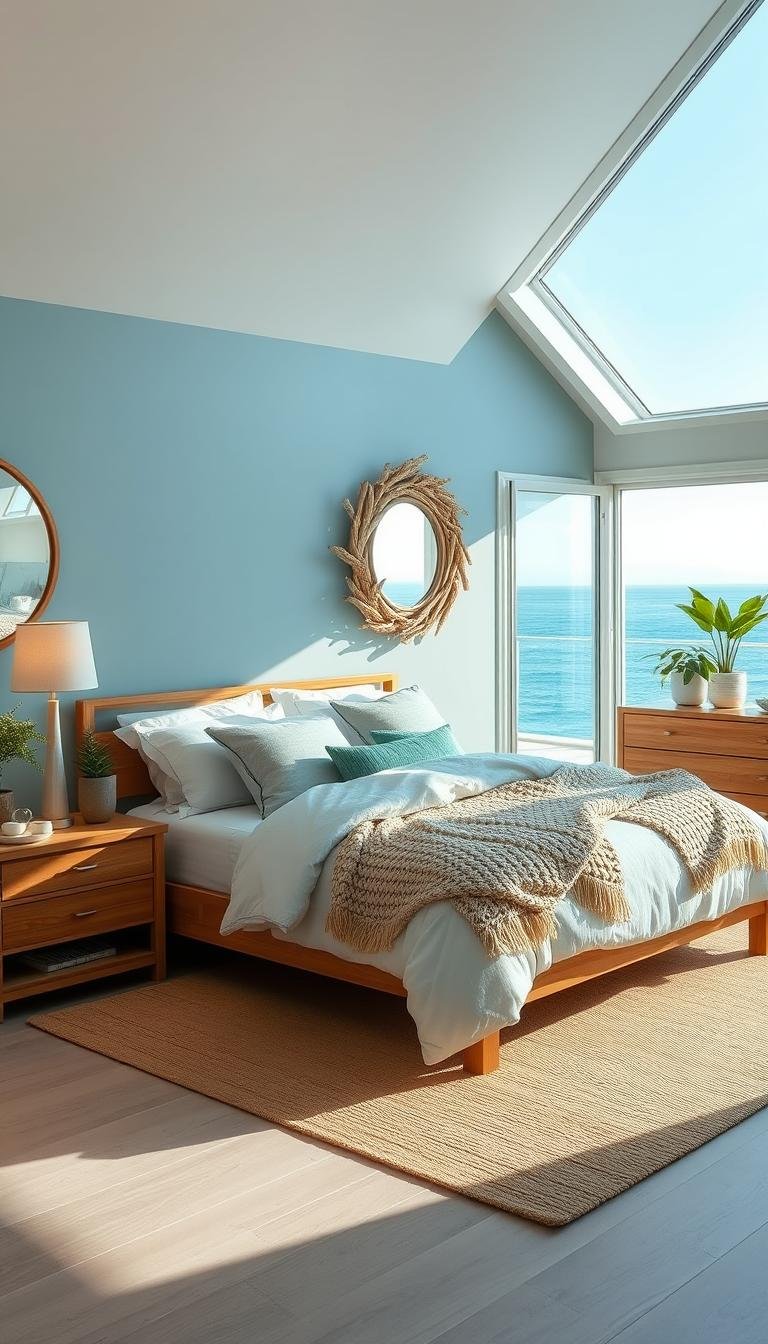
Welcome to your journey toward a peaceful personal haven. Imagine waking up to the gentle vibes of seaside living every single morning.
This guide shows you how to blend modern style with calming beach elements. You will learn to build a room that feels like a permanent vacation.
We focus on comfort and deep relaxation. The right mix of color, texture, and light makes all the difference.
Our practical tips help you design a stylish and soothing environment. Get ready to unwind in your new favorite space.
1. Begin with a Sun-Drenched Color Palette
Your coastal transformation starts with selecting the perfect sun-kissed color scheme. This foundation sets the mood for your entire space.
The right palette creates that bright, airy feeling you love about coastal living. It brings the outside environment into your personal sanctuary.
Whites and Off-Whites for a Bright Base
Crisp whites form the perfect foundation for your coastal palette. They mimic sun-bleached shores and classic cottage aesthetics.
Off-whites add warmth while maintaining that airy quality. Think of colors like oyster, cream, or soft ivory tones.
These light bases make your room feel more spacious. They reflect natural light beautifully throughout the day.
Soft Blues and Aquas to Mimic the Sea and Sky
Blue tones bring the ocean directly into your space. They range from pale sky shades to deeper ocean hues.
Aqua colors add a refreshing, watery element. They create calmness and serenity in your environment.
Designer Victoria Hagan mastered this approach in Palm Beach. She used blue and white palettes pulled from the beach outside.
Warm Sandy Neutrals and Earthy Tones
Sandy neutrals ground your color scheme with natural warmth. They reflect the colors of beach sand and driftwood.
Earthy tones add depth and richness to your palette. These include taupe, greige, and soft brown shades.
These colors prevent your space from feeling too cold or sterile. They create a cozy, inviting atmosphere.
Layering these colors effectively creates visual interest. You maintain that light, airy coastal feel while adding dimension.
| Color Type | Psychological Effect | Best Placement |
|---|---|---|
| Crisp Whites | Creates openness and clarity | Walls, ceilings, large furniture |
| Soft Blues | Promotes calm and relaxation | Accent walls, textiles, accessories |
| Sandy Neutrals | Adds warmth and comfort | Floors, wood elements, textiles |
| Aqua Tones | Evokes refreshment and energy | Artwork, pillows, decorative items |
The psychological impact of coastal colors contributes significantly to relaxation. As noted in beach-themed bedroom designs, the foundation of any coastal room is its color scheme with brilliant whites, soft blues, and warm earthy tones.
Your color choices should work together harmoniously. They create that permanent vacation feeling you desire in your personal retreat.
2. Maximize Natural and Artificial Light
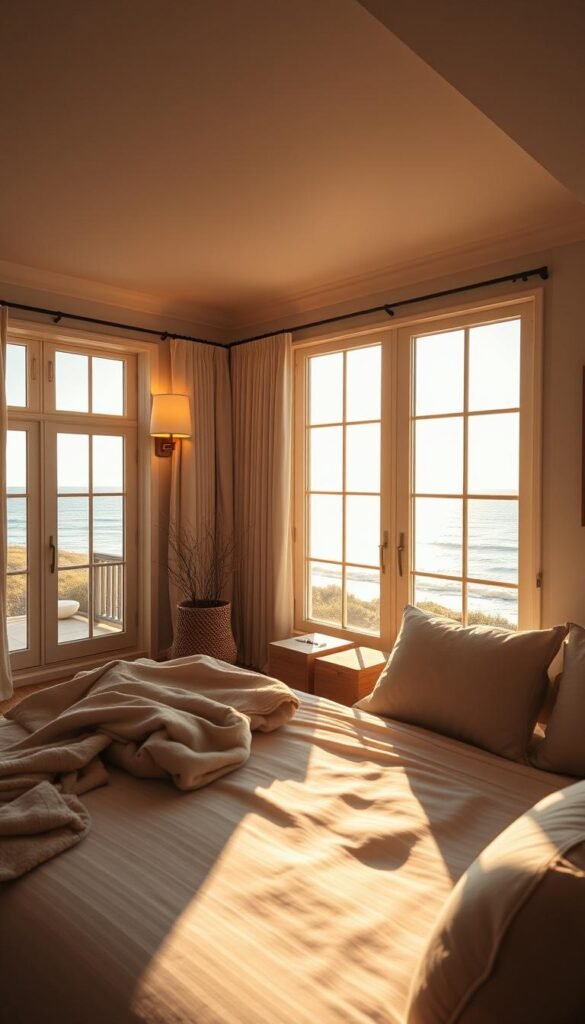
Lighting transforms your coastal sanctuary from ordinary to extraordinary. The right illumination strategy brings that bright, airy feeling indoors.
Your approach to light affects the entire mood of your space. It enhances colors and creates depth throughout the day.
Natural light provides that authentic seaside glow. Artificial sources extend the coastal vibe into evening hours.
Balancing both types creates a layered scheme. This approach works beautifully for different times and activities.
Using Sheer Curtains and Woven Shades
Sheer curtains filter sunlight while maintaining privacy. They create a soft, diffused glow throughout your room.
Woven shades add texture and natural elements. Materials like bamboo or rattan complement coastal design perfectly.
Both options allow light penetration without harsh glare. They maintain that connection to the outdoors you love.
Strategically Placed Mirrors to Amplify Light
Mirrors reflect and multiply existing natural light. They make any space feel larger and more open.
Place them opposite windows for maximum effect. This simple trick dramatically brightens darker corners.
Choose mirrors with coastal-inspired frames. Driftwood or weathered finishes enhance your overall look.
Choosing Warm, Natural Material Light Fixtures
Light fixtures should complement your coastal aesthetic. Natural materials create warmth and authenticity.
Rattan pendants or seagrass lampshades work beautifully. They cast inviting, soft glows throughout your space.
Warm white bulbs mimic natural sunlight. They enhance your color palette without artificial-looking tones.
Your lighting choices significantly impact the ambiance. They work with other elements to complete your coastal retreat.
3. Incorporate Natural Textures for a Tactile Experience
Texture transforms your space from visual to sensory experience. Natural materials bring the authentic feel of coastal living right into your personal environment.
Layering different textures creates depth without overwhelming your design. This approach makes your room feel both intentional and effortlessly comfortable.
Jute Rugs and Seagrass Baskets
Jute rugs add organic warmth underfoot. They bring earthy character that complements any coastal theme.
Seagrass baskets offer stylish storage solutions. These natural elements work beautifully throughout your space.
Both materials age gracefully over time. They develop a lovely patina that enhances their beach-inspired charm.
Rattan and Lightly Weathered Wood Furniture
Rattan furniture brings casual elegance to your design. Its woven texture adds visual interest and coastal authenticity.
Lightly weathered wood pieces feel naturally aged. They suggest years of exposure to sea air and sunshine.
Designer Jacques Grange mastered this approach beautifully. He used a vintage rattan screen as a headboard in a Portuguese getaway.
These materials create that relaxed, beachy feel you love. They work with both modern and traditional coastal styles.
Breathable Linen and Cotton Textiles
Linen bedding provides soft, casual comfort. Its natural wrinkles add texture and relaxed character.
Cotton textiles offer breathability and ease. They feel cool against skin during warmer months.
Both fabrics enhance your coastal aesthetic beautifully. They layer perfectly with other natural elements in your space.
Choosing the right textiles completes your tactile experience. They make your room feel genuinely inviting and comfortable.
4. Make a Statement with Your Wall Treatment
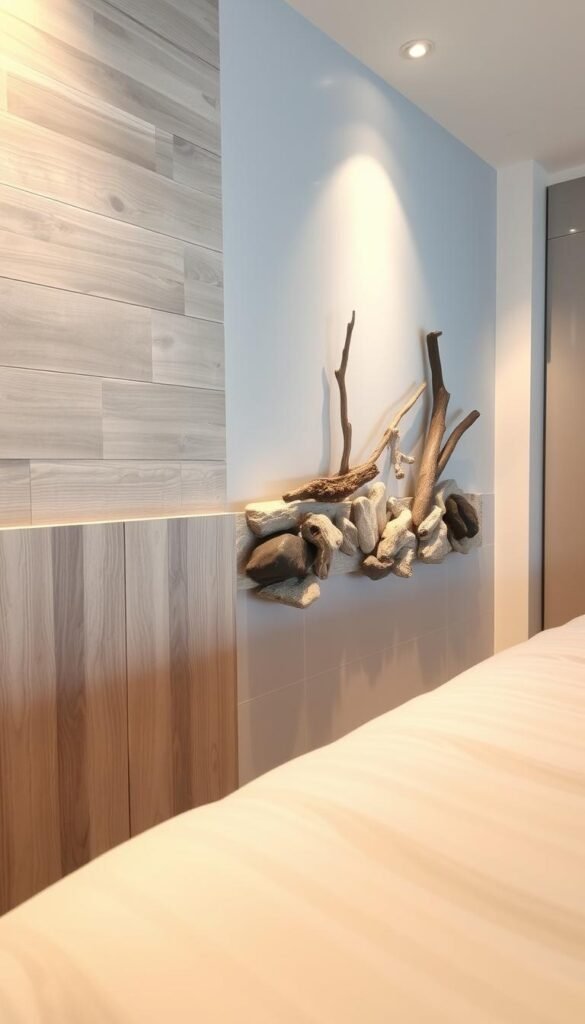
Your walls offer a fantastic opportunity to express coastal style. They serve as the canvas for your entire bedroom design.
Thoughtful wall treatments add depth and personality. They can transform ordinary walls into stunning focal points.
Whether bold or subtle, your choices set the tone. They work with other elements to complete your coastal vision.
Painting a Calming Two-Tone Horizon Line
Consider painting a two-tone horizon line on your wall. This technique creates the illusion of a seaside view.
Paint the lower portion in a soft sky blue. Use crisp white for the upper section.
This approach visually opens up your space. It brings that endless ocean feeling right into your room.
The horizon line adds architectural interest without construction. It’s a simple yet powerful design trick.
Installing Shiplap for Classic Coastal Character
Shiplap brings authentic coastal charm to any space. Its horizontal lines suggest nautical craftsmanship.
This wall treatment adds wonderful texture and dimension. It works beautifully in both modern and traditional settings.
Designer Tom Scheerer used shiplap walls effectively. His nautical-themed guest bedroom demonstrates its timeless appeal.
Shiplap creates that relaxed, beach-house feeling. It serves as a perfect backdrop for your coastal elements.
Selecting a Subtle Nautical or Botanical Wallpaper
Choose wallpaper with subtle coastal patterns. Look for designs that whisper “beach” rather than shouting.
Nautical themes work well when used sparingly. Botanical prints bring organic beauty to your walls.
Your wallpaper should complement your overall color scheme. It enhances the coastal vibe without overwhelming.
Patterned wallpaper makes an excellent accent. It adds visual interest while maintaining serenity.
| Wall Treatment | Visual Impact | Best Application |
|---|---|---|
| Two-Tone Paint | Creates horizon illusion | Feature wall behind bed |
| Shiplap Installation | Adds texture and character | All walls or accent wall |
| Subtle Wallpaper | Introduces pattern gently | Single wall or ceiling |
| Combination Approach | Layers visual interest | Various wall sections |
Your wall treatments should harmonize with other elements. They create either bold statements or subtle backdrops.
Choose options that reflect your personal coastal style. They significantly impact your overall bedroom design.
5. Choose a Bed Frame that Defines the Space
Your bed serves as the centerpiece of your coastal sanctuary. The right frame establishes the entire room’s character and style.
This choice affects both visual appeal and practical function. It determines how other elements work together in your design.
Consider proportions, materials, and overall aesthetic. Your selection should reflect your personal coastal vision.
The Airy Elegance of a Canopy or Four-Poster Bed
Canopy beds bring architectural drama to your space. They create vertical interest while maintaining an open feel.
Four-poster designs offer similar elegance with cleaner lines. Both options add that luxurious resort-like atmosphere.
These frames work beautifully in spacious rooms. They make a strong style statement without overwhelming.
The Organic Feel of a Rattan or Driftwood Frame
Rattan frames introduce natural texture and warmth. Their woven patterns suggest casual beach house living.
Driftwood pieces bring authentic coastal character. Each unique grain pattern tells its own seaside story.
Designer Marieanne Khoury-Vogt incorporated a carved wood frame from Dubai. This approach adds global inspiration to coastal design.
These organic materials blend beautifully with other natural elements. They create that relaxed, breezy feeling you love.
The Bold Impact of an Upholstered Headboard
Upholstered headboards offer comfort and style. They serve as a soft backdrop for reading or relaxing.
Choose coastal-inspired fabrics or textures. Nautical stripes or wave-like patterns work beautifully.
This option allows for color and pattern introduction. It becomes a focal point without dominating your space.
Your headboard choice can tie together various design elements. It completes your bed’s overall look.
| Bed Frame Type | Style Impact | Room Size Consideration |
|---|---|---|
| Canopy/Four-Poster | Adds vertical elegance | Best for larger spaces |
| Rattan/Driftwood | Brings organic texture | Works in any room size |
| Upholstered Headboard | Creates soft focal point | Ideal for compact spaces |
| Mixed Material | Offers design flexibility | Adaptable to various layouts |
Your bed frame selection influences the room’s flow. It should complement your chosen coastal style perfectly.
Whether modern, bohemian, or classic nautical – choose a frame that reflects your personal taste. This important piece defines your entire sleeping environment.
6. Layer Your Bedding for Comfort and Style
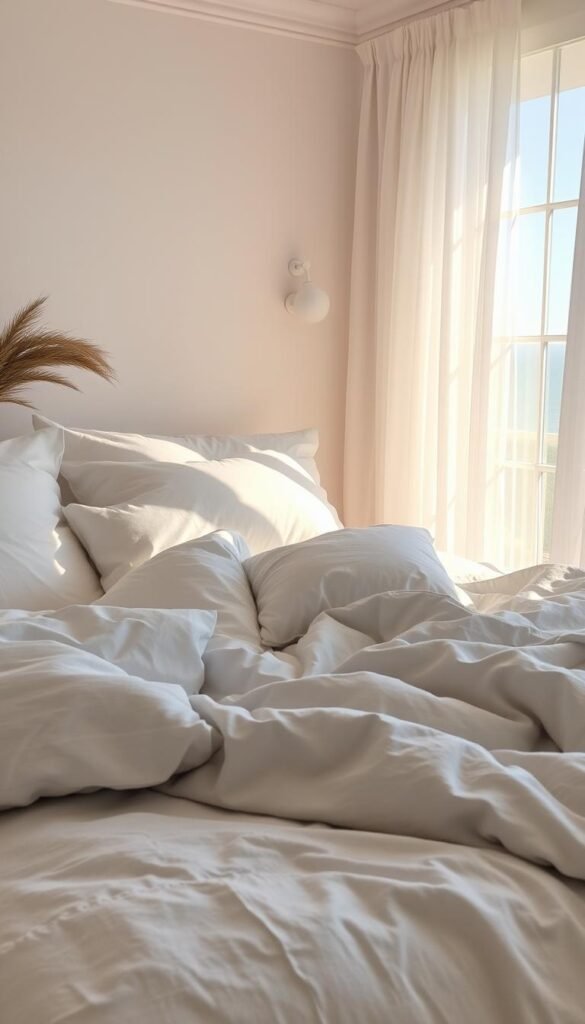
Your sleeping area becomes the heart of your coastal sanctuary through thoughtful textile choices. The right combination creates both visual appeal and physical comfort.
Layering transforms your bed into an inviting oasis. It combines different textures and patterns for a polished yet relaxed look.
Designer Kelly Hurliman mastered this approach beautifully. She captured that perfect beachy vibe through strategic textile selection and bright white foundations.
Crisp White Sheets as a Foundation
Start with pristine white sheets as your base layer. They provide that clean, fresh feeling reminiscent of luxury resorts.
White bedding reflects light beautifully throughout your space. It creates an airy, open atmosphere that feels effortlessly elegant.
This foundation allows other elements to shine. It serves as a perfect canvas for your coastal design story.
Adding Depth with Textured Throws and Blankets
Introduce cozy warmth with natural material throws. Chunky knits or woven cotton blankets add wonderful texture.
These layers provide visual interest and physical comfort. They create that inviting look that makes you want to curl up and relax.
Consider a simple gray and white combination like that English lighthouse children’s room. This approach adds sophistication while maintaining coastal charm.
Introducing Pattern with Pillows and Shams
Pillows and shams offer perfect opportunities for pattern play. Coastal-inspired designs add personality without overwhelming your space.
Stripes, waves, or subtle nautical themes work beautifully. They introduce visual interest while maintaining that relaxed feeling.
Mix different sizes and textures for dimensional appeal. This creates that casually elegant style you love about coastal living.
The art of bedding layering transforms ordinary sleep spaces into extraordinary retreats. It combines comfort with style in the most inviting way.
Your bedding choices significantly impact both look and feel. They complete your coastal sanctuary with both style and substance.
7. Select Art that Evokes the Coast, Subtly
Art selection makes the difference between themed and authentically coastal. The right pieces should suggest seaside living rather than announce it loudly.
Subtle coastal art creates sophistication in your space. It references the beach environment without obvious nautical clichés.
Your approach to wall decoration should feel personal and intentional. Choose pieces that speak to your connection with coastal living.
Abstract Ocean and Wave Photography
Abstract photography captures water’s movement without literal representation. These images suggest ocean waves through color and motion.
Look for blurred horizons or textured water surfaces. They create calming focal points that enhance your relaxing atmosphere.
This way of suggesting the sea feels more artistic than obvious beach scenes. It adds sophistication to your coastal theme.
Elegant Shorebird or Botanical Prints
Coastal flora and fauna make beautiful artistic subjects. Choose elegant renderings of shorebirds or beach plants.
Botanical prints reference nature without overwhelming your space. They bring organic beauty to your walls.
Select artwork with soft color palettes and clean compositions. These pieces feel coastal without being theme-park obvious.
Textured Ceramic or Global-Inspired Wall Pieces
Textured wall pieces add dimensional interest to your space. Ceramic art brings handmade character to coastal decor.
Global-inspired elements work beautifully in beach environments. Designer Carlos Mota used an Indian screen and Turkish suzani in a Peruvian beach house.
These pieces tell cultural stories while complementing coastal vibes. They make your space feel collected rather than decorated.
| Art Type | Subtlety Level | Best Placement | Visual Impact |
|---|---|---|---|
| Abstract Photography | High subtlety | Above bed or console | Creates movement |
| Botanical Prints | Medium subtlety | Gallery walls | Adds natural beauty |
| Global Textiles | Cultural reference | As accent pieces | Adds texture |
| Ceramic Wall Art | Tactile element | Entryway or niche | Provides dimension |
The most successful coastal spaces use art that whispers rather than shouts. Subtle suggestions of the sea create more atmosphere than literal depictions.
Your art choices should feel personally meaningful while enhancing coastal vibes. They complete your space with sophistication and style.
Curate pieces that make you feel connected to water and nature. This approach creates authentic coastal character throughout your room.
8. Embrace a Blue and White Color Scheme
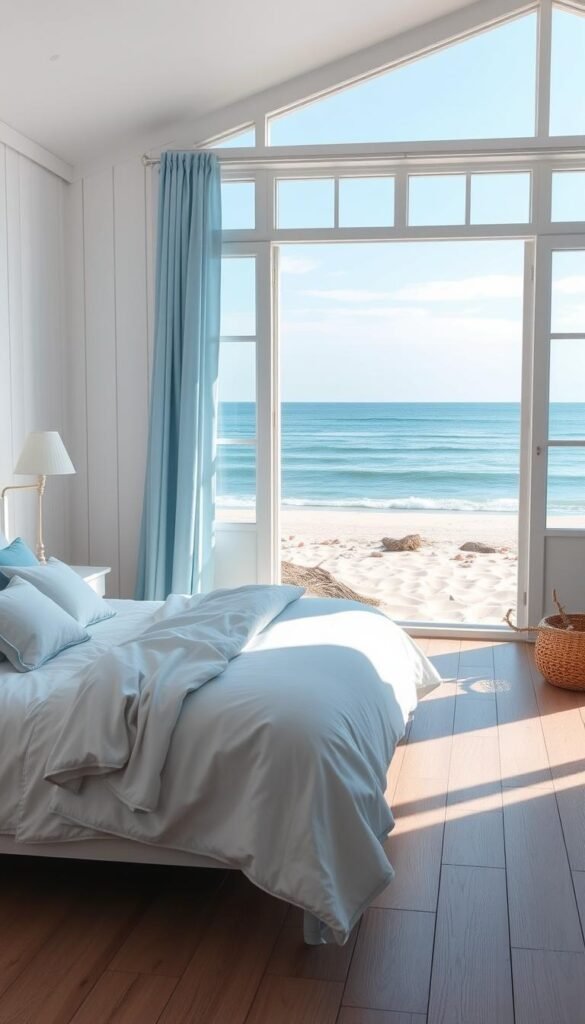
The classic pairing of blue and white creates instant coastal charm. This timeless combination feels both fresh and familiar in any space.
Designers have loved this palette for generations. Victoria Hagan pulled her blue and white scheme directly from the Palm Beach shoreline.
Janie Molster used the same approach in her quintessentially coastal projects. The result always feels sophisticated rather than theme-park obvious.
Blue and white together create psychological calm. They evoke clear skies meeting ocean waves in perfect harmony.
This color combination brings serenity to your personal space. It delivers that perfect beachy feeling without effort.
Balance different blue shades with crisp whites for depth. Pale sky tones work beautifully with brighter oceanic hues.
Your foundation should remain predominantly white. Then layer in blue accents through textiles and accessories.
This scheme adapts to various coastal styles effortlessly. It works with modern minimalism or traditional nautical themes.
Choose accessories that complement rather than compete. Natural materials like sea glass or woven fibers enhance the palette.
Your blue and white foundation creates visual cohesion. It ties together all elements in your coastal sanctuary.
9. Weave in Nautical Elements Without the Kitsch
Nautical touches can elevate your coastal sanctuary when handled with sophistication. The secret lies in subtlety rather than obvious theming.
These elements should whisper seaside charm rather than shout maritime clichés. Designer Tom Scheerer mastered this approach beautifully in his projects.
He combined striped fabrics with jute rugs and whimsical boat imagery. The result feels stylish rather than costume-like.
Children’s coastal bedrooms also demonstrate tasteful nautical integration. The key is balancing these references with other design features.
Your goal is creating a cohesive, sophisticated look. Nautical elements should complement rather than dominate your space.
Rope Details and Nautical Hardware
Rope accents bring authentic maritime texture to your decor. Use them as subtle finishing touches rather than main features.
Consider rope-wrapped mirror frames or drawer pulls. These small details reference sailing without overwhelming your space.
Nautical hardware works beautifully in moderation. Think cleat-inspired towel hooks or pulley light fixtures.
These elements add character while maintaining elegance. They reference maritime life without feeling theme-park obvious.
Striped Fabrics in a Sophisticated Palette
Stripes naturally suggest nautical themes without literal interpretation. Choose sophisticated color combinations for modern appeal.
Tom Scheerer used striped fabrics in calming, neutral palettes. This approach feels coastal without bright primary colors.
Consider navy and cream instead of bold blue and white. Softer stripes integrate more seamlessly with your overall design.
This pattern works beautifully on bedding, curtains, or accent chairs. It adds visual interest while maintaining serenity.
Porthole Mirrors and Nautical-Themed Art
Porthole mirrors offer circular shapes that reference maritime windows. Their metal frames suggest ship construction without literal interpretation.
Choose mirrors with simple, clean lines rather than overly decorative versions. They become interesting architectural elements in your space.
Nautical-themed art should feel artistic rather than literal. Abstract boat images or subtle wave patterns work beautifully.
These pieces add character without dominating your walls. They complete your coastal theme with sophistication and style.
| Nautical Element | Sophisticated Application | Avoid This Approach |
|---|---|---|
| Rope Details | Drawer pulls, mirror frames | Rope railings, excessive use |
| Striped Patterns | Neutral color palettes | Bright primary colors |
| Nautical Hardware | Subtle hook designs | Oversized ship wheels |
| Maritime Art | Abstract interpretations | Literal sailor motifs |
Balance is everything when incorporating nautical references. Let these elements complement rather than define your space.
Your coastal sanctuary should feel collected rather than decorated. This approach creates lasting style that never feels dated.
10. Create a Focal Point with a Statement Ceiling
Your ceiling offers the fifth wall for dramatic coastal expression. This often-overlooked surface presents exciting design opportunities.
A statement overhead treatment transforms your entire room’s atmosphere. It draws eyes upward and maximizes your vertical space.
Consider painting your ceiling a deep tropical teal. This bold choice creates striking contrast against lighter walls.
The dramatic effect adds intimacy while maintaining coastal vibes. Designer Jacques Grange used this approach beautifully.
His Portuguese getaway featured a soaring pine ceiling treatment. The natural wood brought warmth and architectural interest.
Your ceiling choice significantly impacts the room’s perceived height. It can make spaces feel more grand or intentionally cozy.
Vaulted or beamed ceilings enhance the coastal feel wonderfully. These architectural details suggest beach house character.
Your overhead treatment should complement wall colors and textures. The relationship between surfaces creates visual harmony.
Whether painted or natural, your ceiling becomes a design feature. It completes your coastal sanctuary with unexpected flair.
| Ceiling Treatment | Visual Effect | Room Height Impact | Coastal Style Match |
|---|---|---|---|
| Painted Tropical Teal | Adds drama and contrast | Creates intimacy | Modern coastal |
| Natural Wood Planks | Brings warmth and texture | Adds architectural height | Rustic beach house |
| White Beamed Ceiling | Defines space gracefully | Enhances volume | Classic coastal |
| Vaulted Construction | Creates airy openness | Maximizes vertical space | All coastal styles |
Your ceiling deserves as much attention as other surfaces. It provides the perfect finishing touch to your coastal design.
Look upward for inspiration in your bedroom transformation. This vertical element completes your personal seaside escape.
11. Opt for Minimalist Furniture to Maintain an Airy Feel
Your furniture choices determine whether your space feels cramped or coastal. Minimalist pieces create that open, breezy atmosphere essential to beach-inspired design.
Celia Muñoz’s Barbados retreat demonstrates this principle beautifully. Her minimal furnishing approach achieves an effortlessly airy look.
Modern coastal style prioritizes clean lines and uncluttered sophistication. This philosophy extends to your furniture selection process.
Choose pieces with light visual weight that don’t overwhelm your room. Slim profiles and elevated legs enhance that floating, airy feeling.
Focus on function and flow rather than excess furniture. Each piece should serve a purpose while maintaining visual openness.
Natural materials complement coastal aesthetics while keeping simplicity. Light woods, rattan, and streamlined metals work beautifully.
Balance minimal furnishings with smart storage solutions. Built-ins and multi-functional pieces maintain cleanliness while meeting practical needs.
This approach makes your coastal bedroom feel more spacious and relaxing. You create breathing room for both movement and mind.
Minimalist furniture ideas transform your personal retreat. They capture that effortless beach house vibe without clutter or complication.
Your selections should enhance rather than occupy your environment. This thoughtful approach completes your coastal sanctuary perfectly.
12. Accessorize with Thoughtfully Curated Decor
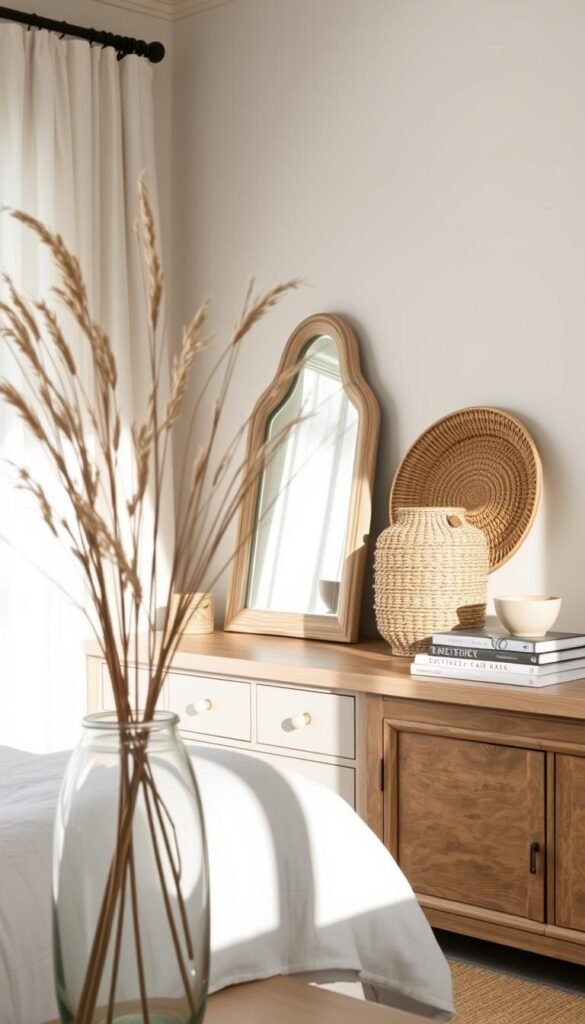
The art of accessorizing transforms your space from beautiful to personally meaningful. These final touches complete your coastal vision with authentic character.
Choose items that whisper seaside charm rather than shout beach themes. This approach creates sophistication while maintaining that relaxed feeling.
A Vase of Sea Glass or Elegant Coral
Sea glass brings authentic coastal beauty to your decor. Its weathered appearance suggests years of ocean tumbling.
Elegant coral pieces add organic texture without cliché motifs. They reference marine life with artistic subtlety.
Designer Ken Fulk used this approach in his Cape Cod property. He selected nautical-themed accessories with antique character.
Woven Baskets for Stylish Storage
Woven baskets solve storage needs while adding natural texture. They keep your space organized and clutter-free.
Choose materials like seagrass or rattan for coastal appeal. These elements blend beautifully with your overall theme.
Place baskets near your bed for books or extra blankets. They maintain that clean, airy feel while being practical.
Personal Items from Your Own Travels
Incorporate treasures from your coastal adventures. These pieces tell your personal story and create connection.
A shell from your favorite beach vacation works perfectly. So does driftwood collected during morning walks.
This approach makes your room uniquely yours. It feels collected rather than decorated from a catalog.
The best coastal spaces whisper rather than shout. Personal, authentic accessories create character that mass-produced items cannot match.
Edit your accessories to maintain visual breathing room. Each piece should enhance rather than clutter your environment.
Your final decor choices complete your coastal sanctuary. They add those personal touches that make the space truly yours.
13. Explore Different Coastal Style Vibes
Your personal coastal journey offers multiple paths to seaside serenity. Discovering which style resonates with you creates a more authentic and satisfying result.
Each approach brings unique character to your sleeping environment. They range from crisp modernity to free-spirited bohemian charm.
Understanding these variations helps you make intentional choices. Your selections should reflect both personal taste and architectural context.
Bright & Modern Coastal
This approach embraces clean lines and uncluttered sophistication. It focuses on quality over quantity in both furniture and decor.
Neutral palettes dominate with occasional blue accents. Materials include light woods, metals, and smooth surfaces.
The overall feel is airy and intentionally minimalist. This style works beautifully in contemporary homes and smaller spaces.
Everything serves a purpose while maintaining visual calm. The result feels both luxurious and effortlessly comfortable.
Natural & Bohemian Beach
Bohemian coastal style celebrates organic textures and global influences. It feels collected rather than perfectly coordinated.
Earthy materials like rattan, jute, and raw wood create warmth. Layered textiles add depth and casual comfort.
This approach embraces imperfections and personal treasures. It works well in spaces with architectural character.
The free-spirited vibe encourages mixing patterns and eras. Your room becomes a reflection of your travels and experiences.
Classic & Timeless Nautical
Traditional nautical design references maritime heritage with sophistication. It avoids theme-park obviousness through subtle details.
Crisp navy and white stripes create timeless appeal. Maritime elements appear as refined accents rather than dominant features.
This style honors sailing traditions without literal interpretation. It feels both familiar and freshly elegant.
Quality materials and craftsmanship take center stage. The result is a polished yet comfortable environment.
The most successful coastal bedrooms blend elements from different styles. They feel personally curated rather than strictly following one theme.
Your home’s architecture might naturally suggest one direction. Contemporary spaces often lean modern, while older homes suit classic nautical.
Consider mixing elements to create your unique coastal look. A modern base with bohemian textiles can feel fresh and personal.
Budget considerations might influence your choices too. Some styles require investment pieces while others embrace found objects.
Ultimately, your coastal bedroom should feel authentically yours. The right style combination creates that perfect seaside escape.
14. Design for the View and Indoor-Outdoor Flow
Your coastal bedroom becomes truly special when it connects with its surroundings. This connection transforms your personal retreat into something magical.
When you have beautiful scenery outside, let it shine. Simple decor works best when nature provides the main attraction.
Jenni Kayne’s New Zealand refuge shows this approach perfectly. Her bedroom design stayed minimal to highlight the stunning natural views.
Your furniture placement should frame rather than block outdoor scenery. Position your bed to face windows whenever possible.
Keep larger pieces low and away from window areas. This strategy maintains sightlines to your outdoor environment.
Window treatments need careful consideration. Choose options that provide privacy but maximize view access.
Sheer curtains work beautifully for filtering light. They maintain privacy while keeping your connection to nature.
Roller shades offer another excellent solution. They disappear completely when not in use.
Your color choices should complement the outdoor environment. Pull inspiration from your specific landscape.
If you have ocean views, use soft blues and aquas. For forest settings, incorporate earthy greens and browns.
Even without direct views, you can create visual connections. Use mirrors to reflect any available natural light.
Position artwork that suggests outdoor scenes. Abstract nature photography works wonderfully.
Indoor plants help bridge the gap between environments. They bring organic life into your personal space.
The feeling of connection matters most in coastal living. It enhances that permanent vacation sensation.
| Design Element | View Maximization Strategy | Indoor-Outdoor Connection |
|---|---|---|
| Furniture Placement | Low profile pieces near windows | Creates clear sightlines |
| Window Treatments | Sheer or retractable options | Maintains visual access |
| Color Scheme | Complements outdoor palette | Creates harmony |
| Decor Selection | Minimal and reflective pieces | Enhances spaciousness |
| Artificial Lighting | Warm, natural spectrum bulbs | Mimics daylight |
Your coastal home should feel connected to its environment. This approach makes your room truly special.
Even urban spaces can capture this feeling. Focus on creating that seamless flow between inside and outside.
The connection to nature remains central to coastal living. It brings peace and tranquility into your daily life.
The most successful coastal designs celebrate their environment. They create dialogue between interior spaces and outdoor beauty.
Your bedroom becomes more than just a sleeping area. It transforms into a true seaside escape.
15. Incorporate Plants for a Fresh, Organic Touch
Living greenery brings your coastal sanctuary to life with natural energy. Plants add that final layer of authenticity to your personal retreat.
They introduce movement, texture, and vibrant color in the most organic way. Unlike artificial elements, plants evolve and grow with your space.
Claire Thomas demonstrated this beautifully in a bohemian coastal project. She used lush greenery to balance vibrant colors throughout the room.
Plants contribute to better air quality and relaxation too. They naturally purify your environment while enhancing visual appeal.
Choose varieties that thrive in typical sleeping areas. Consider light conditions and maintenance requirements before selecting.
Low-maintenance options work best for most people. Snake plants, pothos, and ZZ plants tolerate various light levels.
These varieties require minimal attention while providing maximum impact. They bring life to your space without demanding constant care.
Strategic placement enhances your coastal aesthetic beautifully. Group plants near windows or in empty corners.
Use hanging planters to save surface space. Place smaller pots on nightstands or shelves.
Plants soften architectural lines and add organic curves. They create visual interest where furniture and walls meet.
Your greenery reinforces that essential connection to nature. It completes the authentic coastal experience in your personal environment.
Living plants bring dynamic energy that artificial decor cannot match. They transform spaces with genuine life and movement.
Start with one or two plants and observe how they perform. Gradually add more as you gain confidence in plant care.
Your coastal sanctuary becomes truly complete with living elements. They add that fresh, organic touch you’ve been seeking.
16. Your Personal Seaside Escape Awaits
Your perfect coastal bedroom is about capturing a feeling, not following rigid rules. It should make you feel relaxed, happy, and authentically you.
Mix elements from different styles to create a space that works for your lifestyle. Trust your instincts about what brings you comfort and joy.
Your personal retreat can evolve over time as you discover new textures and colors. Embrace this process as an ongoing journey of self-expression.
Look forward to enjoying your calming escape every day. Whether near the ocean or bringing those vibes home, your sanctuary awaits.