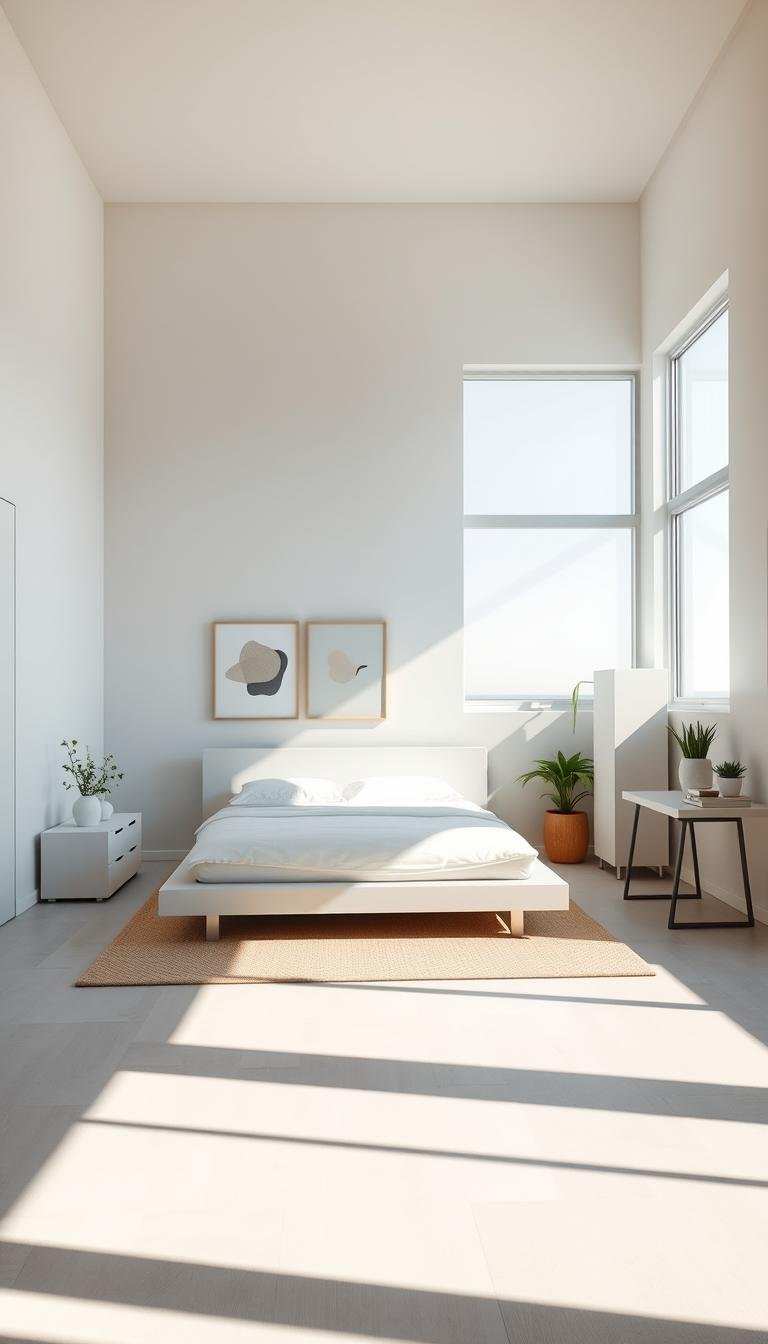
Welcome to your complete guide for creating a peaceful sleeping space that blends clean lines with warm comfort. Your bedroom should be a sanctuary where you can truly relax and recharge.
Many people love minimalist bedrooms because they create calm, organized spaces. This approach helps reduce visual clutter while maintaining a cozy atmosphere.
You’ll discover practical strategies to achieve both visual simplicity and physical comfort. We’ll show you how to avoid common mistakes that can make spaces feel cold or sterile.
This guide covers everything from decluttering to final decorative touches. By the end, you’ll have all the tools needed to create a bedroom that feels both spacious and snug.
Understanding the Cozy Minimalist Bedroom Concept
Minimalism isn’t one-size-fits-all. It spans from austere to casual styles. Your personal taste shapes what works best for your space.
A cozy minimalist room blends clean lines with warmth. It avoids starkness and clutter. This creates a peaceful retreat in your home.
This design focuses on essentials. You keep only what you love and use. Every item has purpose and meaning.
Soft textures and warm colors add comfort. They make the room feel inviting. Thoughtful details enhance the overall experience.
Defining Your Personal Minimalist Style
Your bedroom should reflect your lifestyle. Choose a style that matches your comfort needs. It could be moderate or more relaxed.
Think about how you use the room. Do you need more storage or open space? Your choices affect the room’s feel.
Consider these common minimalist approaches:
| Style | Features | Best For |
|---|---|---|
| Austere | Mattress on floor, bare walls | Those who prefer extreme simplicity |
| Moderate | Simple bedding, one nightstand | Balance seekers |
| Casual | Limited color palette, more furniture | Families and comfort lovers |
Your personal style makes the room yours. It should support relaxation and rest.
The Balance Between Simplicity and Warmth
Good design balances visual calm with emotional warmth. Too sparse feels cold. Too busy feels stressful.
Focus on functional pieces with clean lines. Add soft textiles for comfort. Warm lighting completes the atmosphere.
This approach creates a low-maintenance space. It feels both stylish and timeless. You enjoy a clutter-free room daily.
Remember: cozy minimalism avoids extreme starkness. It also prevents clutter buildup. Your bedroom becomes a true sanctuary.
Core Principles for a Warm Minimalist Design
Creating a welcoming minimalist space requires following several foundational rules. These guidelines help you build a room that feels both serene and personal.
Think of these principles as your roadmap to success. They transform empty spaces into comfortable retreats. Each element works together to create harmony.
Prioritize Function and Purpose
Every item in your room should serve a clear function. Ask yourself if you truly need each piece. This approach eliminates unnecessary clutter immediately.
Multi-functional furniture maximizes your space beautifully. Consider storage beds or nesting tables. Ottomans with hidden compartments work wonderfully.
These smart pieces reduce visual noise while increasing utility. Your room maintains clean lines without sacrificing practicality.
Embrace a “Less is More” Philosophy
This famous design approach focuses on quality over quantity. Keep only what you genuinely use and love. Your space becomes more meaningful this way.
“Perfection is achieved not when there is nothing more to add, but when there is nothing left to take away.”
Editing your belongings creates breathing room. You’ll appreciate each remaining item more. The overall feel becomes lighter and more peaceful.
Curate a Sense of Visual Calm
Intentional editing creates tranquil environments. Limit your color palette to warm neutrals. Soft whites, beige, and muted earth tones work beautifully.
Add subtle accents like terracotta or soft blush. These colors create openness without coldness. They establish a cozy atmosphere throughout your home.
Layer textures thoughtfully using natural materials. Combine linen, cotton, knits, and wood surfaces. Restrict yourself to three or four texture types maximum.
This limitation maintains cohesion while adding dimensional visual interest. Your space feels curated rather than cluttered.
These core principles work together seamlessly. They create bedrooms that are both beautiful and functional. Your personal sanctuary awaits!
Your First Steps: Decluttering and Planning
Ready to transform your sleeping area? The journey begins with two crucial actions: clearing out what doesn’t belong and mapping your ideal layout.
This foundation sets the stage for everything that follows. You’ll create a clean slate that makes design decisions easier.
How to Edit Your Belongings Effectively
Professional organizers swear by the “clear the room” method. Remove everything from your sleeping area completely.
This blank canvas approach helps you see possibilities. It also forces honest decisions about each possession.
Return only essential items that serve daily purposes. Ask yourself: “Do I love this? Do I use this regularly?”
Be ruthless about finding another home for unused things. Donate, sell, or repurpose what no longer serves you.
Hidden storage becomes your best friend here. Utilize closet systems, under-bed space, and clever drawers.
Develop a daily tidying habit to maintain surfaces. This prevents clutter from creeping back into your peaceful retreat.
“Have nothing in your house that you do not know to be useful, or believe to be beautiful.”
Measuring Your Space and Planning Your Layout
Grab a tape measure and notebook before making any purchases. Document your room’s exact dimensions.
Note window placements, outlet locations, and door swings. These details impact furniture arrangement significantly.
Create functional zones for sleeping, dressing, and relaxing. Ensure clear movement paths between these areas.
Consider using graph paper or digital tools for layout experiments. This prevents costly furniture mistakes.
Your planning should prioritize both aesthetics and practicality. The right layout makes your space feel larger and more intentional.
Remember that proper measurement and planning save time and money. They ensure your minimalist bedroom functions beautifully from day one.
How to Design a Modern Minimalist Bedroom that Feels Inviting
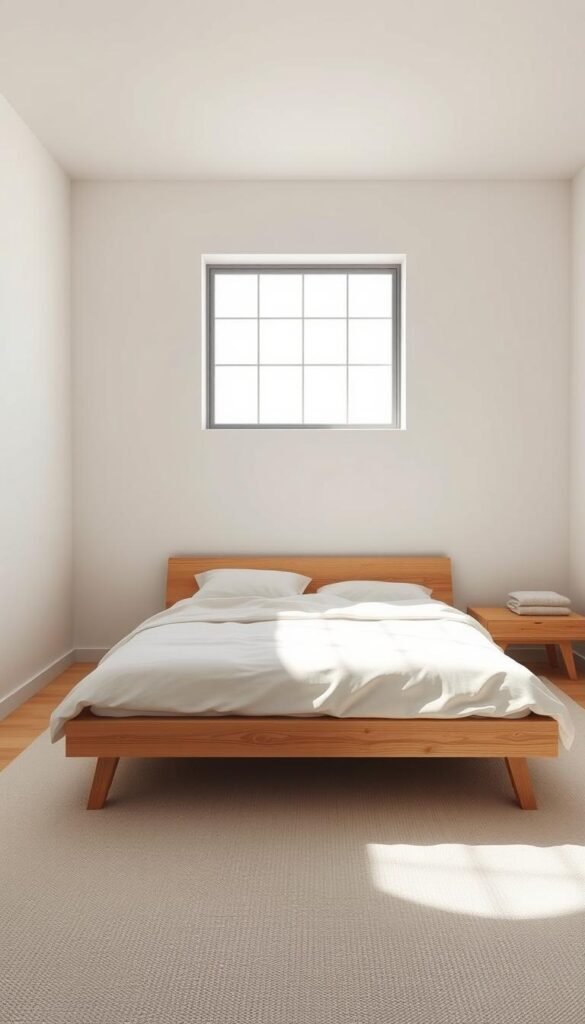
Now let’s dive into the practical steps for crafting your personal retreat. These techniques ensure your space feels both serene and welcoming from the very beginning.
Starting with a Clean Slate
Begin by completely clearing your sleeping area. Remove every item from the room to create a blank canvas.
This approach lets you see your space with fresh eyes. You’ll notice architectural details and natural light patterns.
Return only essential items that serve daily purposes. Be selective about what earns a place in your renewed environment.
Building Your Design Around the Bed
Your sleeping surface becomes the natural focal point. Position it to create a sense of balance and importance.
Choose furniture with clean lines that complement rather than compete. Nightstands should frame your bed beautifully.
Consider these placement strategies for different room sizes:
| Room Size | Bed Placement | Furniture Strategy |
|---|---|---|
| Small | Centered on main wall | Floating nightstands |
| Medium | Angled in corner | Low-profile storage |
| Large | Floating away from walls | Statement headboard |
This approach ensures your sleeping area feels intentional and peaceful.
Incorporating Texture and Warmth from the Start
Add softness immediately through bedding materials and area rugs. Natural fibers like linen and cotton create instant comfort.
Window treatments should filter light while adding tactile interest. Choose simple curtains in organic materials.
Layer warmth elements systematically rather than as afterthoughts. This prevents your space from feeling cold or sterile.
Your bedroom becomes inviting from day one of your redesign. Every element works together to create comfort.
Selecting Your Minimalist Color Palette
Your color choices set the emotional tone for your entire space. The right palette creates harmony while maintaining visual calm.
Thoughtful color selection makes rooms feel both spacious and welcoming. It’s about finding balance between simplicity and warmth.
Choosing a Calming Neutral Base
Start with soft whites, beige, or muted earth tones as your foundation. These colors create openness without feeling cold or sterile.
Your base color should cover about 60-70% of the room. This includes walls, large furniture, and main textiles.
Consider these popular neutral options:
- Warm white (creamy undertones)
- Soft beige or greige
- Muted taupe
- Pale gray with warm undertones
Test samples in your actual light conditions before committing. Colors change throughout the day.
Introducing Warm Accent Tones
Add personality through strategic accent colors. Use terracotta, muted olive, or soft blush in small doses.
These tones work beautifully in throw pillows, area rugs, or bedding. They create visual interest without overwhelming the space.
Limit accent colors to 10-15% of your overall palette. This maintains the serene atmosphere you want.
Distribute accents evenly throughout the room. This creates balance and cohesion in your design.
Creating Depth with a Monochrome Scheme
Build sophistication using varying shades of the same color family. Try cream, beige, and tan layered together.
This approach adds dimension while keeping your space cohesive. It’s a sophisticated style choice that feels intentional.
Use darker shades for grounding elements like rugs or furniture. Lighter variations work well for walls and ceilings.
The monochrome method creates a warm inviting feel without visual chaos. Your room maintains its peaceful quality.
Remember to limit your overall color selection to three to five shades maximum. This prevents the space from feeling too busy.
Choosing Essential Minimalist Bedroom Furniture
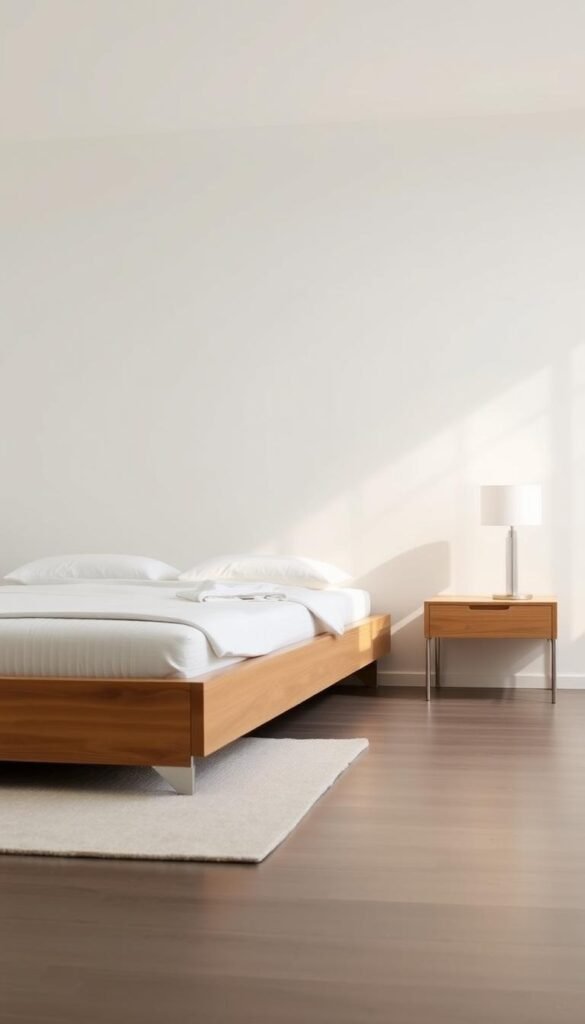
The right furniture transforms your sleeping area into a functional sanctuary. Your selections should balance form and purpose beautifully.
Thoughtful choices create both visual harmony and practical utility. Every piece earns its place through daily use and aesthetic value.
Picking the Perfect Bed Frame
Your bed frame anchors the entire room’s aesthetic. Choose designs with clean lines and subtle presence.
Low platform frames create wonderful visual lightness. Light wood tones add warmth without heaviness.
Consider these popular options:
- Platform beds with hidden storage
- Simple metal frames with clean lines
- Wooden slat bases with minimal detailing
Your selection should enhance rather than dominate the space. The right frame becomes a peaceful foundation for rest.
Selecting Functional Nightstands and Storage
Nightstands provide essential surface area and concealed storage. Choose designs that serve multiple purposes seamlessly.
Open shelving maintains visual lightness while offering accessibility. Single-drawer designs hide clutter while keeping items handy.
Match your nightstands to create symmetry and balance. This approach reinforces the calm atmosphere you want.
Multi-functional pieces reduce furniture quantity dramatically. Your room feels more spacious and intentional.
Incorporating a Cozy Seating Area
A small seating nook adds function without compromising minimalism. Choose a comfortable chair with simple lines.
Add a floor lamp for reading light and ambiance. Soft throws create instant warmth and texture.
This area serves multiple purposes throughout your day. It becomes a spot for reading, dressing, or quiet reflection.
Your seating should feel inviting without overwhelming the design. Every element contributes to the peaceful atmosphere.
Essential furniture includes your bed, nightstands, and storage solutions. Optional items like accent chairs add personal comfort.
Proper selection creates both aesthetic appeal and practical functionality. Your bedroom becomes a true retreat.
Incorporating Textiles for Warmth and Comfort
Textiles transform your minimalist bedroom from stark to sanctuary. These soft elements add both visual and physical warmth to your personal retreat.
Thoughtful textile choices create that perfect balance between simplicity and coziness. They make your space feel inviting without adding visual clutter.
Layering Your Bedding with Texture
Start with high-quality natural fabrics for your foundation layer. Linen and cotton bedding offer exceptional comfort and breathability.
Layer a lightweight quilt with a chunky knit throw for added dimension. This combination creates visual interest through contrasting textures.
Limit accent pillows to two or three carefully chosen pieces. Select pillows with varied textures rather than bold patterns.
This approach maintains your minimalist aesthetic while providing physical warmth. Your bed becomes the cozy centerpiece of the room.
Using Rugs to Define Space and Add Softness
Area rugs serve multiple functions in your sleeping area. They define spaces while adding underfoot comfort and acoustic benefits.
Consider layering rugs for added depth without visual complexity. Start with a large flat-weave or jute base rug.
Add a softer wool or cotton rug on top for extra plushness. This technique creates wonderful textural contrast.
Your rug placement should anchor your bed and seating areas. This creates clear zones within your overall space.
Selecting Soft, Flowing Window Treatments
Window treatments provide privacy while maintaining airy lightness. Choose soft, flowing curtains in natural materials like linen or cotton.
Floor-to-ceiling neutral shades enhance natural light beautifully. They add subtle textural interest without overwhelming the room.
These treatments filter light gently throughout the day. They create a soft, diffused glow that enhances your room’s ambiance.
As experts at Decorilla note, natural materials like linen add both texture and warmth to minimalist spaces.
Your textile choices significantly impact both the look and feel of your bedroom. They can be changed seasonally to refresh your space without major redesign.
These elements work together to create that warm inviting atmosphere you desire. Your room maintains its minimalist integrity while feeling completely comfortable.
Lighting Your Space for Ambiance and Function
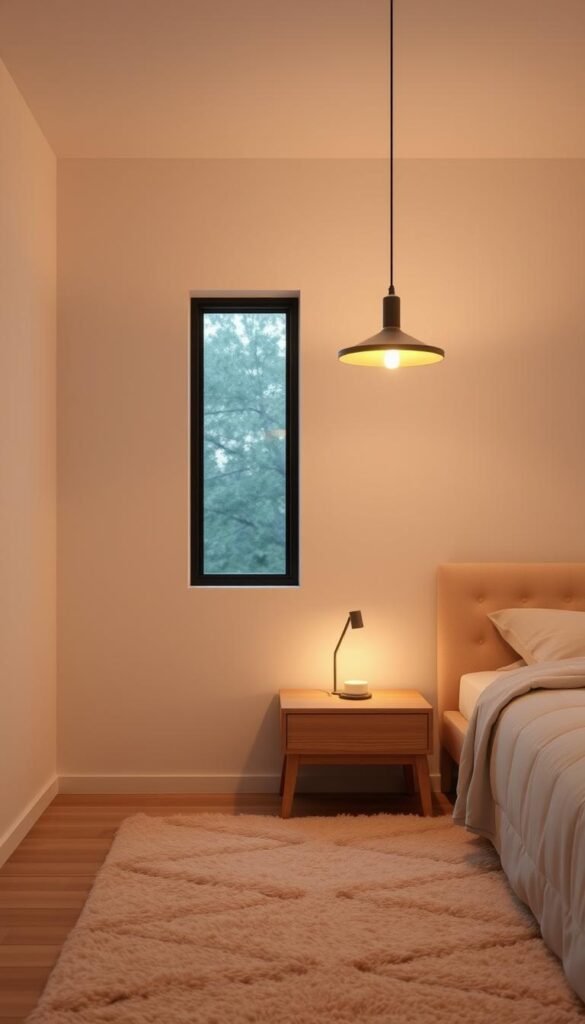
Your lighting choices create both atmosphere and practicality in your sleeping area. They transform the room from daytime simplicity to evening sanctuary.
Thoughtful illumination enhances every aspect of your personal retreat. It serves functional needs while adding artistic elements to your space.
Utilizing Layered Lighting Strategies
Layered lighting combines different sources for perfect illumination. This approach balances ambient, task, and accent lighting beautifully.
Start with overhead fixtures for general brightness. Add reading lamps for specific activities. Include subtle accent lights for visual depth.
This strategy ensures your room functions perfectly at all times. You get proper illumination without harsh shadows or glare.
Choosing Statement Fixtures for Visual Interest
Select lighting pieces that serve as artistic elements. A sculptural pendant or elegant wall sconce adds personality.
Choose fixtures with clean lines and interesting forms. They should complement your overall design without overwhelming it.
Consider these popular options for minimalist spaces:
| Fixture Type | Best Placement | Visual Impact |
|---|---|---|
| Pendant lamp | Above bedside tables | Creates focal point |
| Wall sconce | Flanking the headboard | Saves surface space |
| Sculptural table lamp | On nightstands | Adds artistic touch |
Your lighting choices should feel intentional and cohesive. They become part of your room’s character.
Installing Dimmers for Mood Control
Dimmer switches transform your lighting experience completely. They allow you to adjust brightness for any time of day.
Install dimmers on overhead fixtures and reading lamps. This gives you complete control over your room’s atmosphere.
Warm-toned bulbs create soft, restful illumination. Fabric shades diffuse light gently throughout your space.
Consistent finishes across all lighting create visual harmony. Choose blackened brass or matte black for cohesion.
Your lighting should feel calming and inviting at night. During the day, fixtures make subtle design statements.
Proper illumination significantly enhances both functionality and comfort. It completes your peaceful retreat perfectly.
Adding Personality with Minimal Decor
Your final decorative touches should feel intentional and meaningful. These elements add character without compromising your clean aesthetic.
Thoughtful selections make your space uniquely yours. They create visual interest while maintaining peaceful simplicity.
Selecting Meaningful Wall Art
Choose one or two special pieces instead of filling every wall. Large framed prints work beautifully in minimalist spaces.
Neutral abstract art adds sophistication without overwhelming. It creates focal points that draw the eye gently.
Your selections should reflect your personal taste. They become conversation starters that show your personality.
Incorporating Natural Elements and Greenery
Plants bring life and freshness to your sleeping area. They purify air while adding organic texture.
Low-maintenance varieties thrive in bedroom environments. Snake plants and pothos handle low light beautifully.
Fiddle leaf figs make striking statements in corners. Their large leaves create wonderful visual interest.
These living elements connect you with nature daily. They enhance your room’s peaceful atmosphere.
Using Mirrors to Enhance Light and Space
Mirrors with simple frames serve multiple purposes. They reflect light to brighten your room naturally.
Strategic placement creates the illusion of more space. Round wall mirrors add softness to angular rooms.
Leaning floor mirrors make elegant functional pieces. They become both practical and decorative items.
Your mirror choices should complement your overall decor. They enhance without dominating the space.
Shelves should hold only a few meaningful objects. A candle, small book stack, or single plant works perfectly.
This approach maintains visual calm while adding personal touches. Your room feels curated rather than cluttered.
Smart Storage Solutions for a Clutter-Free Room

Effective organization transforms your sleeping area into a peaceful sanctuary. Clever storage keeps essentials accessible while maintaining visual calm throughout your space.
Hidden solutions and multi-functional pieces work together beautifully. They create order without sacrificing your clean aesthetic.
Maximizing Hidden and Multi-Functional Storage
Storage beds provide excellent concealed space for linens and seasonal items. Under-bed bins slide neatly out of sight while keeping things organized.
Built-in drawers create seamless integration with your room’s architecture. They maintain clean lines while offering practical storage solutions.
Multi-functional furniture serves dual purposes wonderfully. Nesting tables provide surface area and hidden compartments. Ottomans with storage offer seating and organization in one piece.
Closed storage maintains that calm, spacious feeling you love. It prevents visual clutter from disrupting your peaceful environment.
Organizing Your Surfaces and Drawers
Regular editing keeps your surfaces clear and functional. Return items to their designated homes after each use.
Drawer dividers create orderly compartments for small belongings. They make finding things effortless while maintaining neatness.
Implement intuitive systems that work with your daily routines. Labeled containers help maintain organization long-term.
This approach prevents gradual accumulation of unnecessary items. Your space stays clutter-free and perfectly functional.
Smart storage transforms even small bedrooms into spacious-feeling retreats. Every solution contributes to your serene minimalist environment.
Designing for Your Room’s Size and Layout
Your bedroom’s dimensions shape your design approach significantly. Whether you have a compact space or a generous area, smart strategies can maximize both comfort and style.
The right layout creates harmony between function and aesthetics. It makes your room feel intentional and perfectly suited to your needs.
Every space offers unique opportunities for creative solutions. You’ll discover how to work with your existing layout beautifully.
Cozy Minimalist Ideas for Small Bedrooms
Compact rooms demand clever furniture choices and space-saving solutions. Multi-functional pieces become your best friends here.
Choose a storage bed with built-in drawers for hidden organization. Floating nightstands preserve floor space while providing surface area.
Consider these space-maximizing strategies:
- Use vertical space with wall-mounted shelves
- Select furniture with exposed legs for visual lightness
- Install mirrors to create depth and reflect light
- Choose a low-profile platform bed to maintain ceiling height
Your small bedroom can feel spacious and uncluttered. Every element serves multiple purposes without crowding the room.
Light colors and minimal window treatments enhance the airy feel. They make your compact space appear larger and more open.
Balancing Design in Medium to Large Spaces
Generous rooms require careful planning to avoid sparse feelings. You want to create intimacy within openness.
Define functional zones using area rugs and furniture placement. A reading nook with a comfortable chair and floor lamp works beautifully.
Consider creating a small seating area or dressing zone. These defined spaces make large rooms feel purposeful and cohesive.
Scale your furniture appropriately to the room’s proportions. Oversized pieces can make even large spaces feel cramped.
Your larger bedroom should maintain that cozy, intimate feel. Strategic zoning creates warmth without visual separation.
Remember that empty space is part of good design. It allows your eyes to rest and appreciate the carefully chosen elements.
“The details are not the details. They make the design.”
Your room’s layout should enhance daily living while maintaining visual calm. Whether compact or spacious, your home sanctuary awaits thoughtful arrangement.
Achieving a Cozy Minimalist Look on a Budget
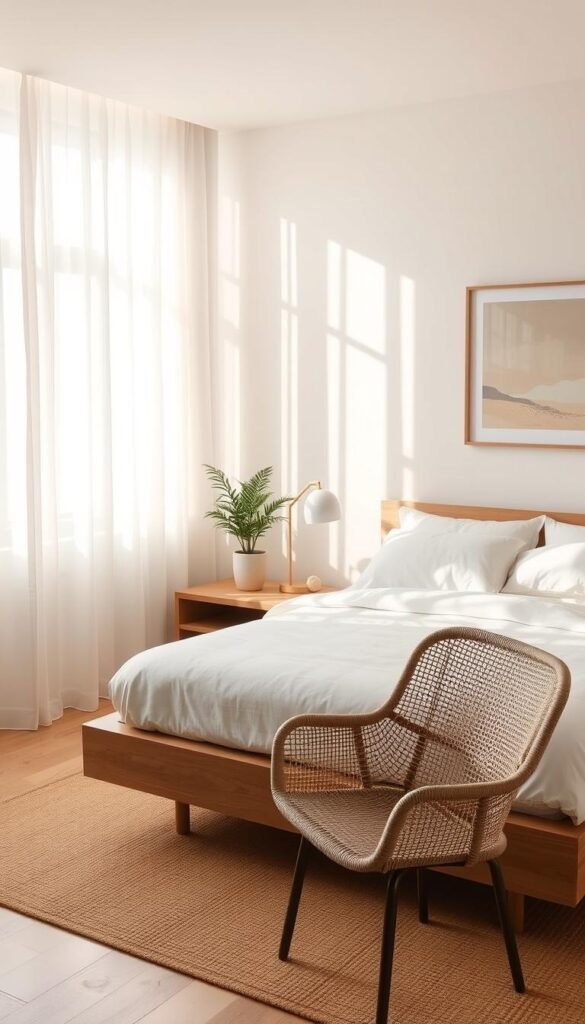
Creating your dream space doesn’t require endless spending. Smart choices and creative solutions can deliver high-end results while keeping costs low.
You can build a beautiful retreat through strategic planning and resourcefulness. Focus on where to invest and where to save for maximum impact.
DIY Projects and Upcycling Ideas
Transform basic materials into custom pieces that elevate your room. Simple projects add personal touches without breaking your budget.
Create a stunning headboard using reclaimed wood or plywood. Sand and stain the wood for a finished look that matches your aesthetic.
Padded fabric panels offer another affordable option. Choose neutral linen or cotton for a soft, inviting feel.
Refresh existing furniture through painting or reupholstering. A fresh coat of paint can modernize dated pieces instantly.
Thrift stores and online marketplaces offer wonderful finds. Look for solid wood furniture with good bones.
Sand and repaint these pieces to create cohesive design elements. This approach saves money while reducing waste.
Strategic Splurges and Savvy Saves
Invest in foundational pieces that ensure long-term satisfaction. Your bed frame and mattress deserve priority in your budget.
Quality bedding made from natural fibers enhances comfort significantly. These items contribute greatly to your daily rest experience.
Save on decorative accents and accessory items. Budget-friendly stores offer excellent options for completing your look.
Consider this balanced approach to spending:
| Category | Investment Level | Recommended Sources |
|---|---|---|
| Bed Frame | Splurge | Solid wood, quality construction |
| Mattress | Splurge | Premium brands, proper support |
| Bedding | Moderate | Natural fibers, neutral colors |
| Decor Accents | Save | IKEA, Target, Wayfair sales |
| Lighting | Save/Moderate | Thrift stores, Facebook Marketplace |
This strategy ensures your money goes where it matters most. You create a space that feels both luxurious and affordable.
Remember that patience often rewards budget-conscious shoppers. Wait for sales or hunt for secondhand treasures.
Your bedroom can reflect beautiful style without straining finances. Thoughtful choices make all the difference.
Adapting Your Bedroom with the Seasons
Your sleeping space can evolve beautifully throughout the year. Small seasonal adjustments maintain freshness without major redecorating.
These simple changes keep your room feeling current and intentional. They enhance comfort while preserving your clean aesthetic.
Creating a Warm and Cozy Winter Retreat
Winter transforms your bedroom into a warm inviting sanctuary. Layer chunky knit blankets over your existing bedding.
Add a thick duvet with natural filling for extra warmth. Textured area rugs provide underfoot comfort during colder months.
Plush accents like flannel sheets and faux fur throws add luxury. These elements create physical warmth without visual heaviness.
Consider these winter bedding strategies for maximum coziness:
| Element | Winter Choice | Benefit |
|---|---|---|
| Sheets | Flannel or brushed cotton | Retains body heat |
| Blankets | Chunky wool or cable knit | Adds texture and warmth |
| Throws | Faux fur or sherpa | Instant cozy factor |
| Rugs | Thick wool or shag | Warm floors |
Your winter bedroom should feel like a warm hug. These changes make cold months more comfortable.
Lightening Up for a Fresh Summer Feel
Summer calls for lighter, breathable materials throughout your space. Swap winter bedding for crisp linen or cotton sheets.
Replace heavy curtains with airy sheer panels. They filter light beautifully while maintaining privacy.
Lighter color accents create a fresh, airy feeling. Pale blues, soft greens, or warm whites work perfectly.
Add more greenery to connect with nature’s summer abundance. Plants enhance air quality and visual appeal.
These summer updates improve breathability and light penetration. Your room feels cooler and more refreshed.
Seasonal plant choices can shift your bedroom’s atmosphere dramatically. Choose varieties that thrive in summer conditions.
Textile rotations completely transform your room’s feel with minimal effort. You maintain a consistent design while adapting to seasonal needs.
Your home sanctuary remains perfectly suited to current weather conditions. These thoughtful adjustments keep your space feeling intentional year-round.
Common Minimalist Bedroom Mistakes to Avoid
Many well-intentioned bedroom makeovers accidentally create spaces that feel more clinical than calming. Understanding these common errors helps you maintain that perfect balance between simplicity and warmth.
Creating a Sterile Instead of Serene Space
Too much white without warmth creates cold, hospital-like environments. This mistake often happens when people focus only on removing clutter without adding comforting elements.
Your bedroom should feel peaceful, not empty. Add natural wood tones through furniture or accent items. Soft lighting and textured fabrics prevent that sterile feel.
Layer different materials to create visual interest. Combine linen bedding with a wool throw blanket. Add a jute rug for organic texture.
These elements maintain minimalism while adding comfort. Your space becomes inviting rather than impersonal.
Overdecorating and Losing the Minimalist Vibe
Too many decorative items quickly overwhelm your peaceful retreat. This common error transforms minimalism into visual chaos.
Limit accessories to a few meaningful pieces. Choose one statement artwork instead of gallery walls. Select two decorative objects rather than filling surfaces.
Your room should breathe easily. Empty space is part of the design, not something to fill.
Edit constantly until you achieve visual calm. Step back and assess whether each piece truly belongs. Remove anything that doesn’t serve purpose or bring joy.
Ignoring Functionality for the Sake of Style
Beautiful design must work for daily living. Some minimalist style choices sacrifice practicality for appearance.
Ensure your nightstands offer adequate surface space. Choose bedding that feels comfortable, not just visually appealing. Include sufficient storage for essential items.
Test furniture arrangements for easy movement. Your bedroom should support relaxation and functionality equally.
The best minimalist look combines aesthetics with livability. Your space becomes both beautiful and perfectly usable.
Remember these common pitfalls as you create your sanctuary. Your bedroom will maintain that perfect serene atmosphere you desire.
Bringing Your Minimalist Bedroom Vision to Life
Start with thoughtful changes that make sense for your space and lifestyle. Ease into updates one step at a time. Even one small, well-considered change can make a big difference.
Focus on fewer, better-quality items. This ensures your bedroom stays uncluttered, comfortable, and classic. Your room should be your sanctuary—a place to unwind and declutter your mind.
Each day, your home reflects your personal personality and design choices. The right minimalist bedroom helps you relax and recharge. It supports a peaceful feel every day.
For more inspiration, explore minimalist bedroom design tricks that emphasize simplicity and quality.