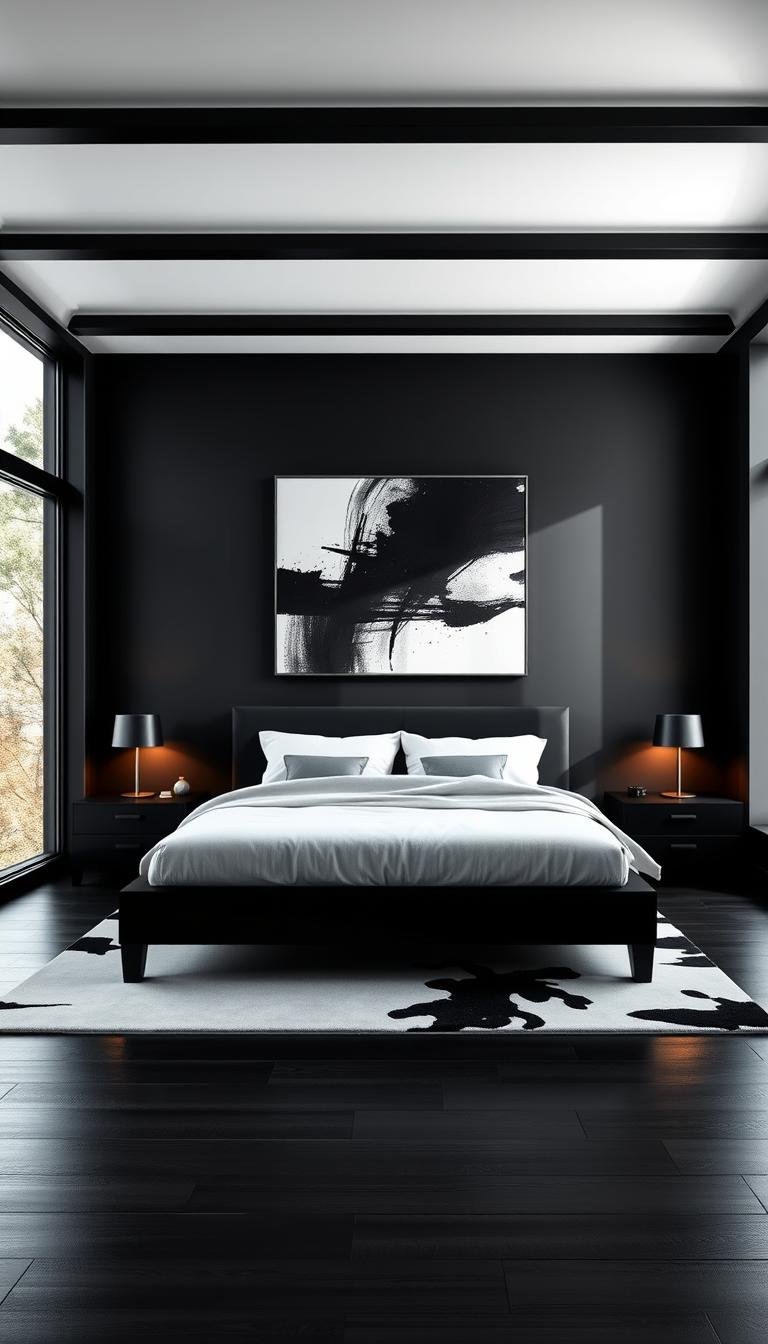
Many people love the idea of a dramatic sleeping space but worry about creating a gloomy atmosphere. You might be searching for ways to incorporate this bold color without making your room feel dark or overwhelming.
When implemented with care, this sophisticated shade can actually create a cozy and inviting retreat. It’s all about balance and choosing the right elements to achieve a contemporary look.
This guide will show you how to transform your personal sanctuary with 16 stylish and practical ideas. You’ll discover that this powerful color isn’t just a choice—it’s a whole mood that can elevate your space.
We’ll focus on approaches that feel warm and modern rather than heavy. Get ready to embrace a design that feels both luxurious and completely livable.
1. Master the Art of Black Paint Selection
Your journey to a sophisticated sleeping space begins with the perfect shade. Choosing the right hue sets the foundation for your entire design scheme.
Black isn’t one-size-fits-all. There are shades that lean warm, cool, matte, glossy, and everything in between. Try going for a softer black with a hint of gray or navy for a moody bedroom idea that feels bold but still inviting.
Warm vs. Cool Undertones
Warm undertones feature brown, red, or yellow bases. These create cozy, inviting atmospheres perfect for personal retreats.
Cool undertones have blue, gray, or green bases. They offer sleek, contemporary appearances that feel crisp and clean.
Test samples in your actual lighting conditions. Colors change dramatically throughout the day.
Matte, Eggshell, or Glossy Finishes
Different finishes create unique visual impacts. Matte options absorb light for sophisticated elegance.
Glossy surfaces reflect light and add depth. Eggshell provides a balanced middle ground with subtle sheen.
Consider how finishes work with your lighting strategy. Each interacts differently with natural and artificial light.
| Finish Type | Light Interaction | Best For | Maintenance |
|---|---|---|---|
| Matte | Absorbs light | Sophisticated look, hides imperfections | Harder to clean |
| Eggshell | Subtle reflection | Balanced approach, moderate durability | Easy to maintain |
| Glossy | Reflects light | Modern spaces, accent features | Shows imperfections |
The Power of a Single Accent Wall
Introduce drama without overwhelming your space. A single feature wall creates focus and depth.
Designer Greg Natale masterfully used painted wainscoting, bed frame, trim, and chandelier in black while keeping white ceiling to avoid smothering feel. This approach maintains airiness while adding character.
“A strategic accent wall anchors the room without closing it in. It’s about creating balance between bold statements and breathing space.”
Consider your room’s size and natural light availability. Smaller spaces benefit from strategic placement rather than full coverage.
Choose the wall behind your bed for maximum impact. This creates a natural focal point that enhances your entire sleeping area.
Remember to test multiple samples before committing. The perfect shade changes with your unique lighting throughout the day.
2. Implement a Layered Lighting Strategy
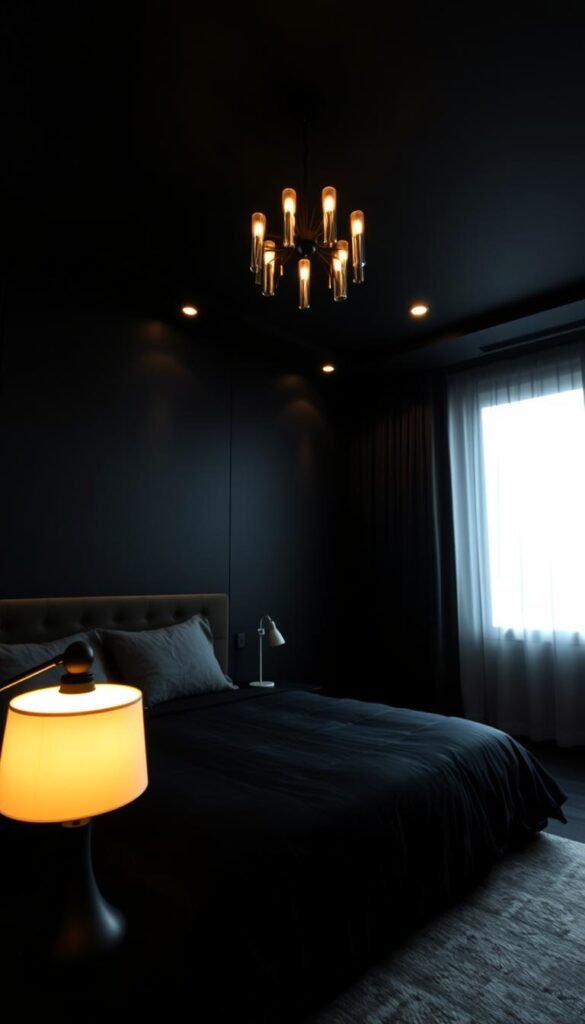
Your lighting approach makes all the difference in creating an inviting atmosphere. Since dark surfaces absorb illumination, you need multiple light sources working together.
This prevents your personal retreat from feeling flat or cavernous. Designer Danielle Colding notes how properly lit walls become “magical at night” when layered correctly.
Ambient Light: Chandeliers and Pendants
Start with overall illumination that sets your room’s mood. A beautiful fixture provides the foundation for your entire lighting scheme.
Crystal options scatter light beautifully across surfaces. They create soft shadows and prevent harsh contrasts in your space.
Consider a statement chandelier as your primary light source. This establishes both function and visual interest immediately.
Task Lighting: Sconces and Table Lamps
Add focused illumination where you need it most. Reading lamps and wall-mounted fixtures serve specific purposes beautifully.
Place table lamps on nightstands between 25-29 inches tall. This height minimizes shadows while providing perfect reading light.
Wall sconces free up surface space while adding architectural interest. They’re particularly useful in smaller sleeping areas.
Accent Lighting: LEDs and Dimmers
Highlight special features and create atmosphere with subtle touches. LED strips under beds or along ceilings add dimension.
Dimmer switches are absolutely essential for control. They let you adjust intensity throughout the day and evening.
Use warm white bulbs around 2,700K for the most flattering glow. This temperature complements dark surfaces without feeling clinical.
| Lighting Type | Primary Function | Best Placement | Recommended Bulbs |
|---|---|---|---|
| Ambient | Overall illumination | Center of room | 2700K warm white |
| Task | Specific activities | Bedside, reading nooks | 3000K bright white |
| Accent | Highlight features | Architectural details | LED strips with dimmer |
Combine these elements for a truly dimensional effect. Your lighting should work harmoniously from morning through nighttime.
Test different combinations during both day and evening hours. The right balance makes your personal sanctuary feel both dramatic and welcoming.
3. Warm Up the Space with Natural Wood Tones
Nature’s warmth becomes your secret weapon against cool surfaces. Introducing organic elements creates instant coziness and visual balance.
Wood grains and natural patterns add depth and character. They bring life to your personal retreat without overwhelming the design.
Walnut Bed Frames and Nightstands
Rich walnut pieces offer deep, warm tones that complement dark surfaces beautifully. The natural grain patterns create movement and interest.
Designer Hilary Matt used stained black wood for a desk area. This technique highlights the woodgrain while maintaining cohesion.
Matching nightstands create harmony throughout your space. They provide functional storage while adding organic warmth.
Oak Flooring Against Dark Walls
Light oak flooring creates stunning contrast with moody walls. The natural variation in planks adds texture and dimension.
This combination prevents your room from feeling too heavy. It maintains an airy, open feel while embracing drama.
Choose wide-plank options for a modern, spacious appearance. The horizontal lines visually expand your space.
Rattan and Woven Textures
Natural fibers bring casual elegance and organic charm. Rattan headboards or accent chairs add lightweight texture.
Woven baskets provide both style and practical storage solutions. They keep your space organized while adding visual interest.
These elements introduce pattern without overwhelming your design. They create a collected, layered look that feels intentional.
“Wood is your best friend if worried about cold feel. A walnut bed frame introduces warmth through rich grain, softening matte surfaces.”
Mix different wood species for a curated appearance. Combine darker walnut with lighter oak for balanced contrast.
Consider wood tones in your accessories and architectural details. Floating shelves or trim work can incorporate natural warmth.
Remember that wood grains tell a story. Each piece adds unique character and history to your personal sanctuary.
4. Introduce Soft Textures for a Cozy Feel
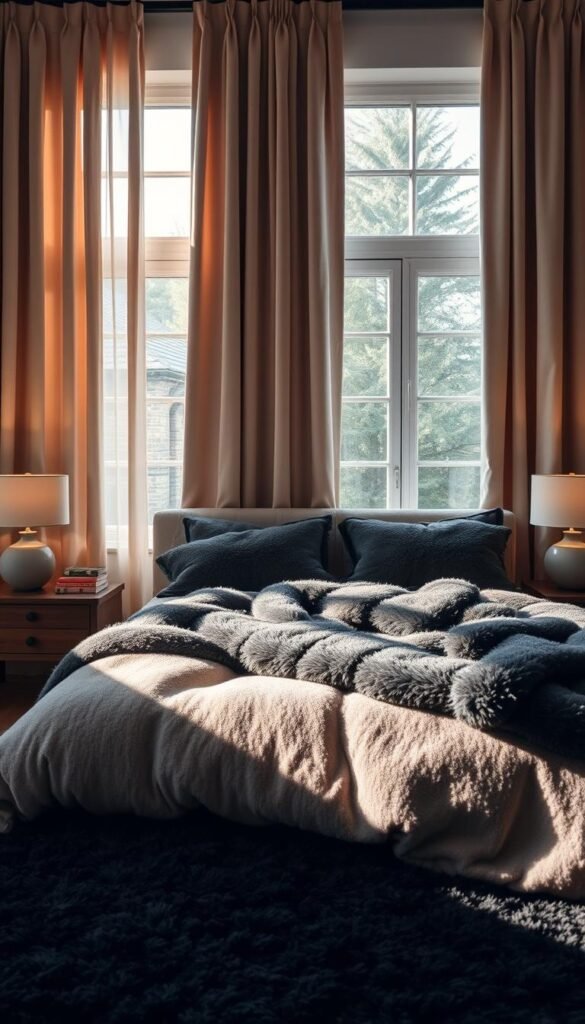
Your space transforms from stark to inviting through thoughtful fabric choices. Tactile elements create warmth and visual interest that make dark walls feel welcoming.
Texture keeps the eye moving and builds a bold yet cozy aesthetic. The right combinations add depth without overwhelming your design.
Plush Velvet Headboards and Benches
Luxurious velvet pieces add instant sophistication and comfort. This rich fabric catches light beautifully, creating subtle highlights.
Ralph Lauren silk velvet used on custom furniture adds a premium vibe. The material’s depth plays wonderfully with matte surfaces.
Choose deep jewel tones for maximum impact. Emerald or sapphire velvet creates stunning contrast against dark backgrounds.
Knitted Throws and Faux Fur Pillows
These accessories provide immediate tactile warmth and coziness. They invite you to relax and enjoy your personal retreat.
Layer different knit patterns for visual interest. Chunky cable knits beside finer weaves create beautiful dimension.
Faux fur pillows offer luxury without maintenance concerns. They bring softness to seating areas and bedding arrangements.
Textured Wall Panels and Upholstery
Architectural details add depth beyond flat surfaces. Upholstered walls or textured panels create sophisticated interest.
Ribbed or quilted fabrics introduce pattern subtly. They work particularly well behind beds as focal features.
Consider acoustic panels for both style and function. They soften sound while adding visual texture to your space.
“Texture is what turns a room from a showpiece into a home. It’s the difference between looking at a space and wanting to live in it.”
Different fabric weights interact uniquely with light. Heavy velvets absorb illumination while silks reflect it.
Layering works best when you mix scales. Start with large pieces like upholstered beds, then add medium and small textures.
| Texture Type | Light Interaction | Best Placement | Maintenance Level |
|---|---|---|---|
| Velvet | Absorbs and reflects light | Headboards, accent chairs | Medium – requires occasional steaming |
| Knitted Wool | Absorbs light | Throws, pillow covers | Low – machine washable |
| Faux Fur | Reflects light | Pillows, bench seats | Medium – spot clean only |
| Textured Wall Covering | Creates shadow patterns | Accent walls, ceiling | Low – dust occasionally |
Choose textiles that complement rather than compete. Let your dark surfaces serve as the perfect backdrop for textured pieces.
Remember that touch matters as much as appearance. Every texture should invite interaction and comfort.
5. Balance the Darkness with Light Neutrals
Light neutrals become your secret weapon against overwhelming darkness. They create visual breathing room while maintaining your sophisticated aesthetic.
These calming hues prevent your space from feeling heavy or closed-in. The right combination makes your personal retreat feel both dramatic and welcoming.
Crisp White and Cream Bedding
White linens create stunning contrast against dark surfaces. They reflect light beautifully while adding crisp freshness.
Cream options offer slightly warmer undertones for cozier atmospheres. Both choices provide that perfect black white balance designers love.
Layer different white shades for depth and dimension. Try snow-white sheets with off-white duvets for subtle variation.
Beige and Oatmeal Tones in Rugs and Curtains
These earthy tones soften your overall palette beautifully. They bring warmth without competing with your main color scheme.
Oatmeal area rugs anchor your space with organic texture. They create cozy underfoot comfort while lightening the visual weight.
Beige curtains filter natural light gently throughout the day. This maintains privacy while keeping your space feeling airy and open.
Using Sand and Greige for a Softer Contrast
Sand colors offer gentle contrast that feels effortless and calm. They work particularly well with warm-undertone paints.
Greige (gray-beige) provides sophisticated neutrality for contemporary spaces. It bridges cool and warm palettes seamlessly.
Designer Doniphan Moore used monochromatic gray schemes to invite relaxation. This approach creates serene environments that feel intentionally curated.
“Light neutrals act as visual punctuation in dark spaces. They give the eye places to rest while highlighting your bold choices.”
Different neutral tones affect mood and spatial perception dramatically. Lighter options make rooms feel more expansive and airy.
Warmer neutrals create cozy, intimate atmospheres. Cooler versions feel more contemporary and crisp.
Choose your neutrals based on your wall paint’s undertones. Warm blacks pair beautifully with cream and sand accents.
Cooler blacks work best with pure whites and greige colors. This creates harmonious flow throughout your space.
| Neutral Shade | Best With Undertones | Mood Created | Ideal Placement |
|---|---|---|---|
| Crisp White | Cool blue/gray bases | Clean, contemporary | Bedding, trim work |
| Warm Cream | Brown/red bases | Cozy, inviting | Upholstery, curtains |
| Beige | Warm or neutral bases | Calm, balanced | Rugs, larger textiles |
| Greige | Cool or neutral bases | Sophisticated, serene | Wall colors, furniture |
| Sand | Warm yellow bases | Soft, effortless | Accessories, pillows |
Layer neutrals starting with largest elements first. Begin with area rugs and curtains, then add bedding and finally decorative pillows.
Maintain your dark elements as the focal point. Use neutrals to frame and highlight rather than compete.
Remember that texture matters with neutral pieces. Matte finishes absorb light while glossy surfaces reflect it.
Your finished space should feel balanced and intentional. The right neutral combination makes dark walls feel sophisticated rather than somber.
6. Add Dimension with Metallic Accents
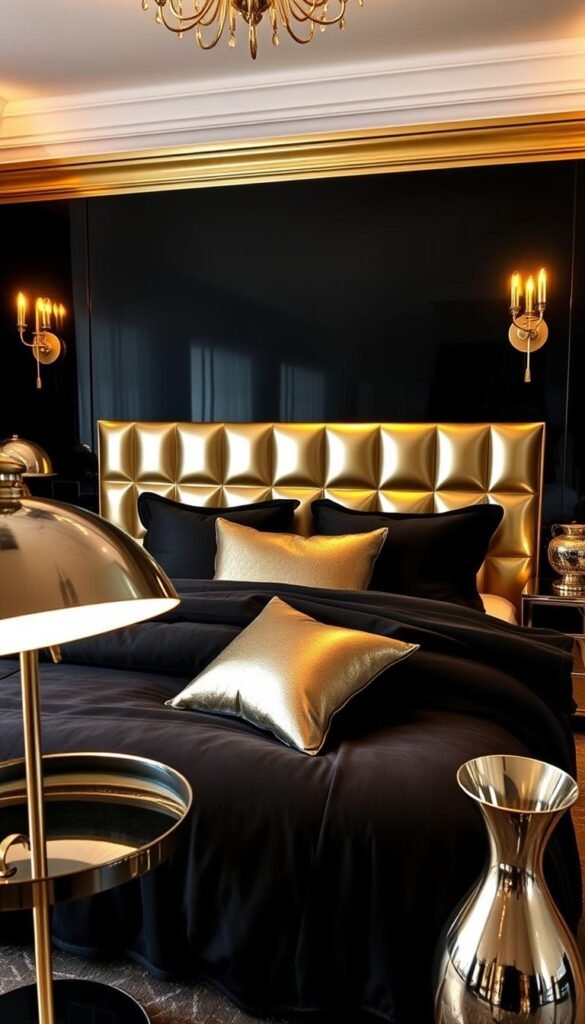
Metals provide an easy way to elevate your space with sophistication and light. They add visual interest and prevent flatness in your design.
These elements catch illumination beautifully. They create highlights and shadows that bring depth to your personal retreat.
Choose finishes that complement your overall style. Each metal offers unique reflective qualities and character.
Brushed Brass and Gold Fixtures
Warm metals like brass bring cozy elegance to your space. They introduce rich tones that contrast beautifully with dark surfaces.
Brushed finishes reduce glare while adding texture. Gold accents create luxurious focal points throughout your room.
Consider these metals for lighting and hardware. They work particularly well with warm undertones in your paint.
Matte Black and Chrome Combinations
Matte black metals create seamless integration with your walls. They maintain cohesion while adding subtle variation.
Chrome offers cool, contemporary reflections. This combination feels sleek and intentionally modern.
Use these finishes for a cohesive, monochromatic look. They work beautifully in minimalist or industrial spaces.
Antique Bronze for a Vintage Touch
Antique bronze adds character and historical depth. Its patina tells a story of craftsmanship and age.
This finish works wonderfully with traditional or rustic elements. It brings warmth through its rich, varied tones.
Consider bronze for hardware and decorative objects. It creates points of interest that draw the eye around your space.
“Metals transform flat surfaces into dimensional experiences. A touch of gold or antique bronze can elevate simple elements into artistic statements.”
Different finishes interact uniquely with light and texture. Polished metals reflect brightly while brushed options scatter illumination.
Consider how metals work with your existing elements. They should complement rather than compete with other textures.
| Metal Type | Light Reflection | Best Pairings | Style Association |
|---|---|---|---|
| Brushed Brass | Soft, diffuse glow | Warm undertones, wood grains | Traditional, luxurious |
| Polished Chrome | Bright, clear reflection | Cool undertones, glossy surfaces | Modern, minimalist |
| Antique Bronze | Subtle, varied highlights | Textured surfaces, vintage pieces | Rustic, character-rich |
| Matte Black | Minimal reflection | All black schemes, matte finishes | Cohesive, contemporary |
Balance metallic elements throughout your space. Distribute them evenly rather than clustering in one area.
Start with larger pieces like light fixtures. Then add smaller accents through hardware and decorative objects.
Remember that metals work best when they tell a consistent story. Choose finishes that align with your overall design approach.
7. Make a Statement with Your Bed
Your sleeping area’s centerpiece deserves special attention when working with dark schemes. The right choice anchors your entire space while expressing your personal taste.
This key element sets the tone for everything else in your room. It can either enhance or diminish the sophisticated atmosphere you’re creating.
The All-Black Upholstered Bed
An entirely dark upholstered piece creates a dramatic, cohesive focal point. This approach gives a bold contemporary vibe that feels intentional and polished.
The B&B Italia bed in Holland & Sherry wool demonstrates this perfectly. Used in a Chicago penthouse, it shows how luxury materials elevate simple forms.
Choose plush fabrics like velvet or wool for added texture and comfort. These materials catch light beautifully against matte walls.
Low-Profile Mid-Century Modern Frames
Clean-lined frames offer understated sophistication and space-saving benefits. Their minimalist design keeps the focus on your overall scheme.
These pieces ground your room without overwhelming it. They work particularly well in smaller spaces where every inch counts.
Graphite bedding and layered gray pillows complement this style beautifully. They maintain visual interest without introducing competing colors.
Tufted Headboards for Added Texture
Detailed headboards bring architectural interest and tactile appeal to your space. The patterned surface creates shadow play that adds depth.
This feature works wonderfully as a standalone statement against simple walls. It provides visual complexity without additional accessories.
Consider button-tufted designs for classic elegance or channel-tufting for modern appeal. Both options add dimension to your sleeping area.
“Scale matters tremendously with dark furniture. A properly proportioned bed frame creates harmony rather than dominance in your personal retreat.”
Measure your room carefully before selecting any piece. Leave adequate walking space around all sides for comfortable movement.
Consider the height of your ceiling when choosing headboard styles. Taller options work well in rooms with generous vertical space.
| Bed Style | Room Size Suitability | Best For | Visual Impact |
|---|---|---|---|
| Upholstered | Medium to large rooms | Luxurious, cozy feel | High – becomes focal point |
| Low-Profile Frame | Small to medium rooms | Modern, minimalist look | Medium – blends seamlessly |
| Tufted Headboard | Any size room | Texture and detail lovers | Variable – depends on size |
Accessorize your chosen piece with complementary textiles and lighting. Layer pillows and throws that enhance rather than compete with your statement piece.
Remember that your bed should feel inviting above all else. The right combination of style and comfort makes your space truly special.
8. Style Artwork That Pops on Dark Walls
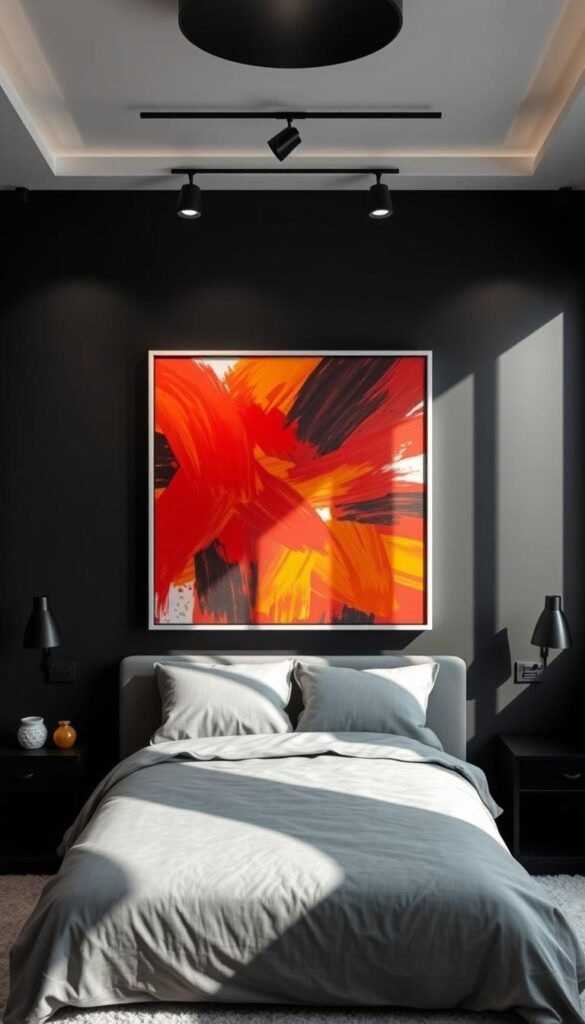
Art transforms your space into a personal gallery with dramatic impact. Dark backgrounds make every piece stand out with incredible presence.
Your walls become the perfect canvas for creative expression. Thoughtful selections add personality while maintaining your sophisticated aesthetic.
Blair Moore demonstrates this beautifully by choosing pieces from darker palettes on light backgrounds. This approach creates moody sophistication without overwhelming your space.
Creating a Black and White Gallery Wall
A grid of monochromatic prints offers striking contrast against deep surfaces. This arrangement becomes an instant focal point above your headboard.
Thin brass frames add modern elegance to the composition. They provide subtle metallic accents that catch light beautifully.
Maintain consistent spacing between each piece for a polished look. This creates rhythm and harmony throughout your display.
Choosing Frames: Thin Metal vs. Chunky Wood
Frame selection dramatically affects your overall aesthetic. Thin metal options offer sleek, contemporary appeal.
These frames create delicate borders that emphasize the art itself. They work particularly well with modern and minimalist spaces.
Chunky wood frames bring warmth and organic texture to your display. Their substantial presence adds weight and importance to each piece.
Consider your existing decor when making this decision. Metal frames complement cool undertones while wood enhances warmer schemes.
Using Art to Introduce Subtle Color
Artwork provides the perfect opportunity to incorporate gentle color accents. Choose pieces with limited color palettes for cohesive integration.
Earth tones and muted hues work beautifully against dark backgrounds. They add visual interest without disrupting your sophisticated atmosphere.
Consider artwork with cream or sand-colored elements. These neutral accents maintain balance while introducing subtle variation.
“Art becomes the soul of a room when displayed against dark surfaces. Each piece tells its story with enhanced drama and presence.”
Proper lighting ensures your collection receives the attention it deserves. Directional spotlights or picture lights highlight specific pieces beautifully.
Consider the scale of your artwork relative to your wall space. Larger pieces make bold statements while smaller works create intimate moments.
Mix different mediums for added texture and interest. Photographs, paintings, and prints each offer unique visual qualities.
| Art Style | Best Frame Choice | Lighting Needs | Visual Impact |
|---|---|---|---|
| Black & White Photography | Thin metal frames | Focused spot lighting | High contrast, dramatic |
| Oil Paintings | Chunky wood frames | Diffuse ambient light | Textured, traditional |
| Abstract Prints | Minimal metal frames | Even wall washing | Modern, energetic |
| Vintage Posters | Medium wood frames | Directional accent light | Nostalgic, characterful |
Arrange your collection at eye level for optimal viewing. This creates comfortable engagement with each piece throughout your day.
Remember that art should complement rather than compete with your design. Choose works that enhance your space’s overall mood and atmosphere.
Your finished gallery will transform your personal retreat into a curated sanctuary. Each piece contributes to a space that feels both sophisticated and deeply personal.
9. Choose Sculptural and Statement Light Fixtures
Your lighting choices become the jewelry of your space. Instead of basic fixtures, select sculptural pieces that command attention against deep surfaces.
These elements serve dual purposes. They provide essential illumination while acting as functional art installations.
Jackie Astier’s Manhattan dining room features a stunning 19th-century French chandelier. This antique piece demonstrates how historical fixtures bring character to contemporary spaces.
Modern Tiered Pendant Lights
Tiered pendants create dramatic vertical interest in your room. Their cascading forms draw the eye upward, enhancing perceived height.
These fixtures work beautifully above bedside tables or seating areas. They provide focused light while making strong style statements.
Choose designs with clean lines for modern appeal. Metallic finishes add reflective qualities that bounce light around your space.
Geometric Sconces as Functional Art
Wall sconces offer both practicality and artistic expression. Their sculptural forms become permanent installations on your walls.
Angular designs create interesting shadow patterns after dark. These dynamic effects add movement to static surfaces.
Place them flanking your bed or alongside artwork. This positioning maximizes their functional and decorative impact.
Crystal Chandeliers for a Glamorous Touch
Crystal fixtures bring undeniable elegance to any space. Their refractive qualities scatter light in mesmerizing patterns.
Even small versions make substantial style statements. They work particularly well in rooms with higher ceilings.
Modern crystal designs offer updated takes on traditional glamour. Look for clean-lined interpretations that feel current rather than dated.
“Lighting should whisper luxury rather than shout extravagance. The right fixture feels like jewelry—precious but never overpowering.”
Scale matters tremendously when selecting statement pieces. Oversized fixtures can overwhelm smaller rooms.
Measure your space carefully before making decisions. Leave adequate clearance from ceilings and walls.
Consider how fixtures complement your existing decor. Their style should harmonize with your overall design approach.
| Fixture Type | Best Room Size | Light Distribution | Style Impact |
|---|---|---|---|
| Tiered Pendant | Medium to large | Focused downward | Dramatic, architectural |
| Geometric Sconce | Any size | Directional wash | Modern, artistic |
| Crystal Chandelier | Medium to large | Multidirectional sparkle | Glamorous, luxurious |
Balance dramatic lighting with other room elements. Let your fixture stand out without competing with busy patterns.
Install dimmer switches for ultimate control. This allows you to adjust ambiance throughout the day and evening.
Your finished space will feel both illuminated and artistically curated. The right lighting makes all the difference.
10. Incorporate Natural Elements and Greenery
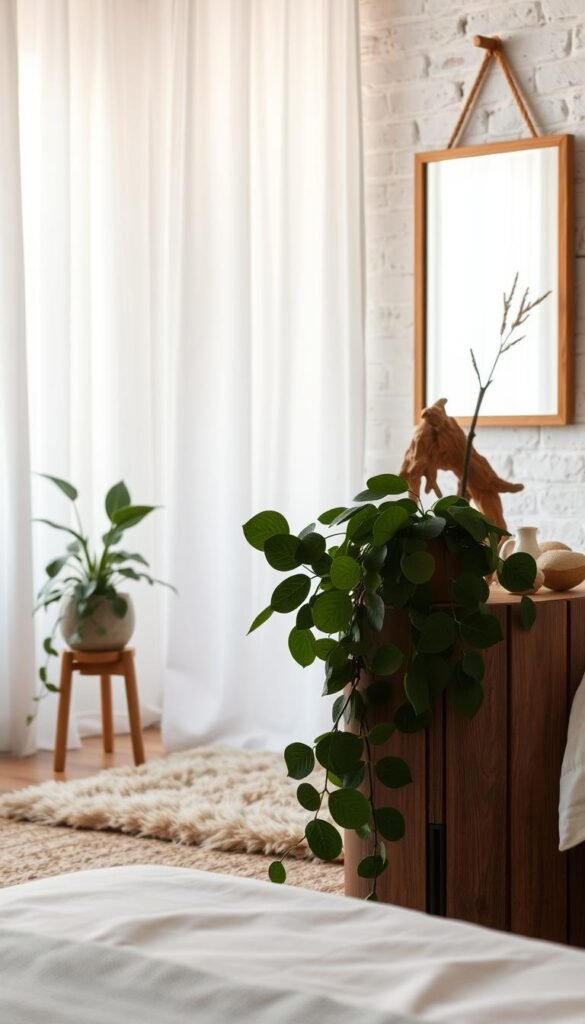
Bringing nature indoors transforms your personal retreat into a vibrant sanctuary. Organic elements soften dramatic surfaces while adding life and movement to your space.
These touches create balance against bold backgrounds. They introduce texture, color variation, and psychological benefits that enhance your daily experience.
Architects in New Zealand demonstrated this beautifully with black-stained cedar walls. They paired them with natural materials throughout for a harmonious, grounded feel.
Oversized Potted Plants and Trees
Large greenery makes a substantial style statement while improving air quality. Fiddle leaf figs or monstera plants add tropical freshness to your room.
Choose planters with natural textures like woven rattan or rough ceramic. These materials enhance the organic feel while complementing your design.
Position taller plants in corners to draw the eye upward. This creates vertical interest and makes your space feel more expansive.
Fresh Florals and Dried Stems
Fresh blooms bring temporary color and fragrance to your sanctuary. Rotate seasonal flowers to keep your space feeling current and alive.
Dried arrangements like pampas grass offer lasting texture and movement. Their feathery plumes create beautiful silhouettes against dark walls.
Group several stems together for maximum impact. Odd numbers often create the most visually appealing compositions.
Stone and Ceramic Decor Pieces
Natural minerals add earthy elegance and timeless appeal. Marble bookends or agate coasters introduce subtle pattern variation.
Hand-thrown ceramic vessels bring artisanal character to your surfaces. Each unique piece tells a story of craftsmanship and tradition.
Mix different stone types for layered interest. Combine smooth river rocks with textured lava pieces for tactile variety.
“Greenery in oversized planters brings natural lift. Gold-accented sconces and metallic décor pieces introduce shine to balance matte finishes.”
Different plants thrive under various light conditions. Consider your window exposure before selecting greenery.
- Low light: Snake plants and ZZ plants tolerate shaded areas
- Medium light: Peace lilies and pothos enjoy filtered sunlight
- Bright light: Succulents and citrus trees need direct exposure
Style natural elements in intentional groupings rather than scattering them randomly. Create visual triangles with plants, stones, and ceramics for balanced arrangements.
Maintenance matters for long-term enjoyment. Establish a simple care routine that fits your lifestyle.
| Element Type | Care Requirements | Visual Impact | Best Placement |
|---|---|---|---|
| Large Plants | Weekly watering, seasonal pruning | High – creates focal points | Corners, beside furniture |
| Fresh Flowers | Water changes every 2-3 days | Medium – temporary color | Nightstands, dressers |
| Dried Stems | Occasional dusting | Medium – lasting texture | Shelves, behind bed |
| Stone Pieces | Wipe with damp cloth | Low – subtle accents | Grouped on trays |
Natural elements offer psychological benefits beyond aesthetics. Studies show they reduce stress and improve sleep quality.
Your finished space will feel both sophisticated and deeply connected to nature. The right balance creates a sanctuary that nurtures both body and spirit.
11. Utilize Mirrors to Reflect Light and Space
Mirrors serve as your secret weapon against dark, enclosed feelings. They bounce illumination around your room while creating the illusion of expanded dimensions.
Strategic placement transforms these functional items into decorative assets. You’ll discover how to maximize both natural and artificial brightness throughout your day.
Black-Framed Leaning Mirrors
Lean a tall mirror against your wall for an effortlessly chic solution. This approach maintains your color scheme while adding practical functionality.
The angled position creates depth and dimension in your arrangement. It makes smaller areas appear more generous without permanent installation.
Choose frames with matte finishes to complement your walls beautifully. They blend seamlessly while still defining the mirror’s edges.
Round Gold-Framed Mirrors for Warmth
Circular shapes introduce softness against angular room architecture. Their curved lines balance straight edges throughout your space.
Gold frames bring warm metallic accents that catch light wonderfully. They create beautiful highlights against darker surfaces.
These pieces act as artistic statements when strategically positioned. Their reflective qualities enhance your overall illumination.
Strategic Placement to Maximize Light
Position mirrors opposite windows to capture maximum natural brightness. This technique doubles the sunlight entering your room.
Angle them toward dark corners that need extra illumination. Even artificial light gains effectiveness through thoughtful reflection.
Consider height and sightlines when determining placement. Your mirror should reflect interesting views rather than blank walls.
“A well-placed mirror can transform light distribution dramatically. It’s like adding windows without structural changes.”
Different sizes create varying impacts on your room’s perception. Larger options make bold statements while smaller versions add subtle reflections.
Frame style significantly influences your overall aesthetic. Ornate designs feel traditional while slim profiles appear contemporary.
| Mirror Type | Best Placement | Light Enhancement | Style Impact |
|---|---|---|---|
| Black-Framed Leaner | Against long walls | Moderate reflection | Modern, integrated |
| Round Gold-Framed | Above dressers | Warm light diffusion | Elegant, decorative |
| Full-Length | Closet doors | Maximum reflection | Functional, spacious |
Layer multiple mirrors throughout your space for cumulative effect. Group them in artistic arrangements that serve both form and function.
Remember that reflection quality matters more than size. A well-placed small mirror often outperforms a poorly positioned large one.
Your design benefits from these clever optical enhancements. They create brighter, more open environments that feel both spacious and inviting.
12. Design a Black Bedroom That Looks Modern, Not Moody
Creating a sophisticated sleeping space with dark walls involves smart design choices. You want a room that feels contemporary and inviting, not heavy or somber.
The right approach balances drama with brightness. It’s about using contrast, texture, and light to shape the overall atmosphere.
Key Differences in Approach
Modern designs focus on clean lines and intentional contrast. They use dark colors as accents rather than overwhelming features.
Moody spaces often lack sufficient light sources. They might feel closed-in instead of open and airy.
Your color selection plays a crucial role here. Warm undertones create cozier environments than cooler shades.
Designer Greg Natale shows how layering patterns prevents a smothering feel. His use of white ceilings maintains airiness.
Elements That Prevent a Gloomy Vibe
Multiple light sources transform dark surfaces into something magical. Ambient, task, and accent lighting work together beautifully.
Natural materials like wood and rattan bring organic warmth. They add texture and life to your personal retreat.
Metallic accents reflect light and add sophistication. Brass or gold fixtures create highlights against matte surfaces.
Strategic mirror placement bounces light around your room. This technique makes spaces feel larger and brighter.
Curating a Bright and Airy Feel Despite the Dark Palette
Light neutrals provide visual breathing room against dark backgrounds. Crisp white bedding creates stunning contrast.
Sheer curtains filter natural light gently throughout the day. They maintain privacy while keeping your space feeling open.
Furniture scale matters tremendously in smaller rooms. Low-profile pieces prevent overcrowding and maintain flow.
Plants introduce life, color, and movement. They soften dramatic surfaces and improve air quality.
“Dark walls become a canvas for light play rather than a limitation. The right balance creates sophistication without somberness.”
Assess your room’s natural light before committing to dark walls. North-facing spaces might need extra illumination strategies.
Test your color choices at different times of day. Lighting changes dramatically from morning to evening.
Remember that dark surfaces show imperfections more easily. Choose finishes that complement your lifestyle and maintenance preferences.
Your finished space should feel intentionally designed rather than accidentally dark. Every element should contribute to a cohesive, inviting atmosphere.
For more inspiration on achieving this balance, explore black modern bedroom ideas that master contrast and texture.
13. Optimize Black Decor for Smaller Bedrooms
Small sleeping areas can shine with dark elements when planned thoughtfully. The right techniques make your space feel cozy yet spacious.
Strategic approaches prevent that closed-in feeling. You’ll create an inviting retreat that maximizes every square foot.
Strategic Use of Color and Mirror Placement
Choose where to place deep tones for maximum impact. An accent wall behind your bed creates focus without shrinking the room.
Matte surfaces absorb light while maintaining sophistication. Pair them with crisp white bedding for beautiful contrast.
Mirrors become your best friend in compact areas. Position them opposite windows to double natural light.
Gold-framed options add warmth and reflection. They make your personal retreat feel more open and airy.
Choosing Low-Profile Furniture
Select pieces that serve multiple functions beautifully. A platform bed with built-in storage saves precious floor space.
Floating nightstands maintain visual openness. They provide surface area without bulky legs.
Consider scale carefully before purchasing any item. Your furniture should complement rather than overwhelm the area.
Designer Blair Moore demonstrates how streamlined pieces create flow. This approach keeps movement easy and comfortable.
The Illusion of Space with Sheer Curtains
Window treatments play a crucial role in spatial perception. Sheer fabrics filter light while maintaining privacy.
They create soft diffusion throughout the day. Your room feels brighter and more expansive instantly.
Hang curtains higher than the window frame. This vertical trick draws the eye upward beautifully.
Choose neutral tones that blend with your walls. They maintain cohesion while enhancing natural illumination.
“In compact rooms, every choice must serve both form and function. The right balance creates sophistication without sacrifice.”
Optical illusions work wonders in limited square footage. Horizontal stripes on bedding can widen the visual field.
Vertical elements like tall headboards increase perceived height. These subtle tricks make your sanctuary feel generous.
| Element | Small Room Benefit | Implementation Tip |
|---|---|---|
| Accent Wall | Creates focus without overwhelm | Use behind bed only |
| Mirrors | Doubles light and visual space | Place opposite windows |
| Low-Profile Furniture | Maintains open floor space | Choose multifunctional pieces |
| Sheer Curtains | Filters light while maintaining openness | Hang above window frame |
Balance is key when working with limited dimensions. Too many dark elements can feel heavy.
Incorporate light-reflecting surfaces throughout. Metallic accents and glass pieces add sparkle.
Your finished space will feel intentionally designed. It combines cozy intimacy with clever spaciousness.
14. Experiment with Bold Patterns and Wallcoverings
Patterns and wallcoverings transform your space from flat to fascinating. They add depth and movement that keep your eyes engaged throughout the room.
Texture becomes the real pattern in darker spaces. It creates visual interest without overwhelming your sophisticated aesthetic.
Alice Lane Interior Design demonstrates this beautifully. They used textured wallcovering instead of simply painting surfaces, making the area more interesting and less one-dimensional.
Textured Wallpaper Instead of Flat Paint
Textured wallpaper offers dimension beyond basic paint finishes. It creates subtle shadows and highlights that change throughout the day.
Grasscloth varieties bring organic texture and natural variation. Their woven surfaces add warmth and character to your walls.
Embossed patterns create architectural interest without permanent changes. They work particularly well on accent walls behind your bed.
Consider metallic-infused options for subtle reflection. These catch light beautifully while maintaining sophistication.
Subtle Stripes and Geometrics in Bedding
Striped bedding introduces rhythm and movement to your sleeping area. Thin pinstripes offer delicate contrast against solid surfaces.
Geometric patterns create modern energy without chaos. Hexagons or subtle chevrons add contemporary flair to your bedding ensemble.
Choose patterns with limited color palettes for cohesion. Monochromatic designs maintain your sophisticated style while adding visual interest.
Scale matters with pattern selection. Smaller repeats create texture while larger motifs make bolder statements.
Gingham and Large-Scale Prints for Drama
Gingham patterns bring classic charm and rhythmic repetition. Their checked design feels both timeless and fresh against dark backgrounds.
Large-scale florals make dramatic statements without overwhelming. Choose designs with ample negative space for balanced impact.
Botanical prints connect your space to nature beautifully. They introduce organic forms that soften architectural lines.
Consider overscale patterns for maximum visual impact. These create focal points that draw the eye around your room.
“Pattern should whisper rather than shout in resting spaces. The right balance creates interest without disturbing tranquility.”
Mixing patterns requires thoughtful coordination. Start with one dominant pattern and add supporting designs.
Vary scale between different patterns for harmony. Combine large-scale prints with smaller geometrics for balanced interest.
Maintain color consistency throughout your selections. This creates cohesion despite pattern variation.
| Pattern Type | Visual Impact | Best Placement | Style Association |
|---|---|---|---|
| Textured Wallpaper | Subtle dimension | Accent walls, ceiling | Sophisticated, tactile |
| Subtle Stripes | Rhythmic movement | Bedding, window treatments | Classic, tailored |
| Geometric Prints | Modern energy | Pillows, area rugs | Contemporary, structured |
| Large-Scale Florals | Dramatic statement | Accent chairs, drapes | Bold, artistic |
Test patterns in your actual lighting conditions. View samples at different times of day before making final decisions.
Remember that patterns should enhance relaxation. Choose designs that feel calming rather than stimulating.
Your finished space will feel both visually rich and perfectly restful. The right patterns create depth without distraction.
15. Don’t Neglect the Fifth Wall: The Ceiling
Your overhead surface plays a crucial role in shaping your room’s atmosphere. Often overlooked, this element dramatically affects how your space feels and functions.
Different treatments create unique psychological effects and visual impacts. The right choice enhances your overall design while serving practical purposes.
Painting the Ceiling for a Cocoon Effect
Deep overhead surfaces create intimate, enveloping atmospheres. This approach makes your area feel cozy and protected.
Designers Joe Nahem and Blaze Makoid used this technique beautifully. Their dark overhead treatment gives the sensation of lounging beneath the night sky.
This works particularly well in rooms with adequate height. It brings dramatic focus downward toward your living space.
Using White Lacquer on a Paneled Surface to Reflect Light
Glossy white finishes bounce illumination throughout your area. They maintain brightness while adding architectural interest.
Thom Filicia demonstrated this in a Connecticut country home. His reflective treatment diffuses light beautifully throughout the space.
Paneled details add texture and traditional charm. The combination creates both function and style overhead.
Smoked Mirror Surfaces for Ultimate Moodiness
Mirrored ceilings create incredible depth and dimension. They multiply light sources and visual space dramatically.
Smoked versions offer subtle reflection rather than stark mirrors. This creates sophisticated ambiance without overwhelming brightness.
These installations work best in contemporary settings. They add artistic flair while serving practical light-enhancing purposes.
“The overhead plane completes your room’s story. Whether dark and cozy or light and airy, it sets the final tone for your entire experience.”
Different treatments affect perceived height significantly. Dark colors tend to lower the visual plane while light tones elevate it.
Consider your room’s proportions before deciding. Higher ceilings can handle darker treatments more comfortably.
Lower ceilings benefit from light-reflecting options. These create airiness and prevent cramped feelings.
| Treatment Type | Height Perception | Light Effect | Best For |
|---|---|---|---|
| Dark Paint | Lowers ceiling | Absorbs light | Intimate, cocoon-like spaces |
| White Lacquer | Maintains height | Reflects light | Bright, traditional rooms |
| Smoked Mirror | Creates depth | Multiplies light | Contemporary, dramatic spaces |
Coordinate your overhead choice with other elements. It should complement your wall colors and flooring seamlessly.
Consider practical installation factors for each option. Some treatments require professional expertise for best results.
Your finished space will feel complete and intentional. The right overhead treatment ties everything together beautifully.
16. Embrace Your Bold and Sophisticated Sanctuary
Your personal retreat can achieve a perfect balance of drama and warmth. By applying the right principles, you create a space that feels both luxurious and inviting.
Strategic lighting, natural textures, and thoughtful contrast prevent a heavy atmosphere. These elements work together to craft a room that reflects modern elegance.
This powerful color choice transforms ordinary areas into extraordinary personal havens. It’s about creating an environment that supports relaxation and reflects your unique taste.
Embrace these ideas with confidence, knowing your finished sanctuary will provide lasting satisfaction. Well-executed design turns bold choices into daily comfort and style.