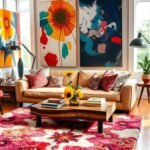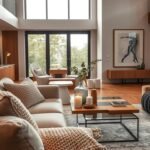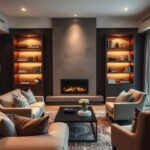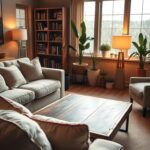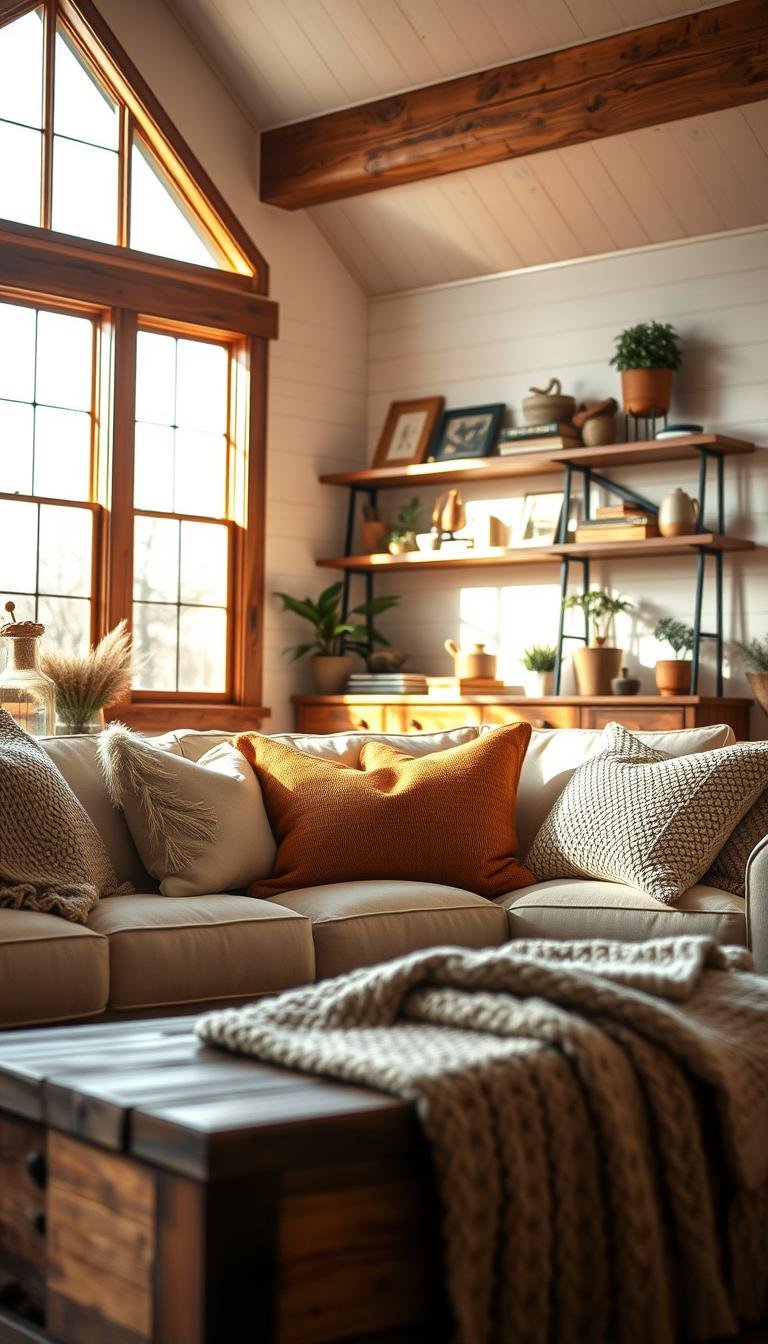
A welcoming farmhouse feel comes from comfort and character, not from filling every corner with rustic decor. Your living room can feel country-inspired in a city apartment, a suburban home, or a rural house. The style adapts to the space you have and the things you love, so you do not need to copy one picture-perfect look.
A focal point is the feature that first draws your eye and helps organize the room. It might be a fireplace, a large window, or a piece of art that means something to your family. Cozy farmhouse style grows from comfortable furniture, natural textures, and personal details chosen with care. Those choices make a room feel useful on an ordinary day, not just attractive in photos. Start with the way you want your family to use the space, then choose details that support that everyday life.
What Defines Living Room Designs Farmhouse Style?
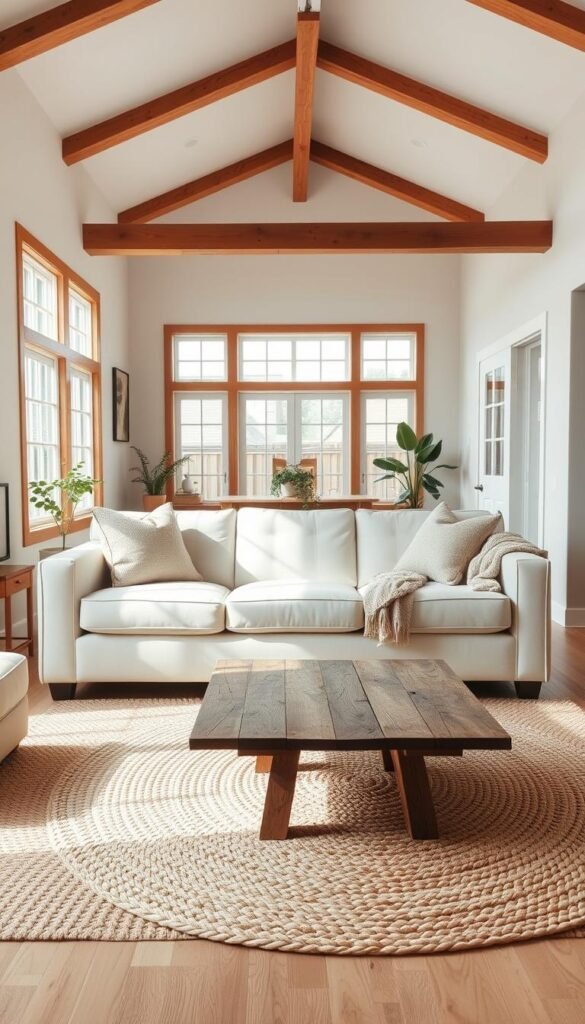
Modern farmhouse style keeps the warmth of traditional country rooms but pares back their decoration and furniture lines. Natural materials and practical furniture bring farmhouse living into a home without making every piece look old. The result can feel relaxed and current at the same time.
Modern farmhouse combines traditional warmth with clean, contemporary lines. You can pair a streamlined sofa with one weathered wood accent, then use metal and soft textiles to add contrast. A restrained modern farmhouse approach also works in a living room: keep the materials honest and the details selective.
Choose a few rustic details that feel useful or meaningful, rather than repeating one motif across the whole room.
Modern farmhouse choices for a cleaner look
Traditional farmhouse rooms often feel collected over time, with relaxed shapes and visible signs of age. Modern farmhouse designs keep that charm while using simpler silhouettes and fewer decorative pieces. The changing modern farmhouse style continues to make room for cleaner interiors and selective traditional features.
Modern living room designs in farmhouse style can use a streamlined sofa, a plain wood table, and one vintage chair. The contrast gives the old piece room to stand out. Simple living room designs in farmhouse style can feel complete with fewer, more meaningful items.
Simple country details that keep the room relaxed
Start with two or three natural materials, such as wood, metal, and woven textiles, then add one or two vintage accents. This practical rule of thumb helps you create farmhouse style without turning every surface into a display. A cotton throw or a metal lamp can add country character while still feeling useful.
Let one or two well-chosen rustic details carry the country character instead of repeating the same motif everywhere.
Plan a Layout That Works for Your Room
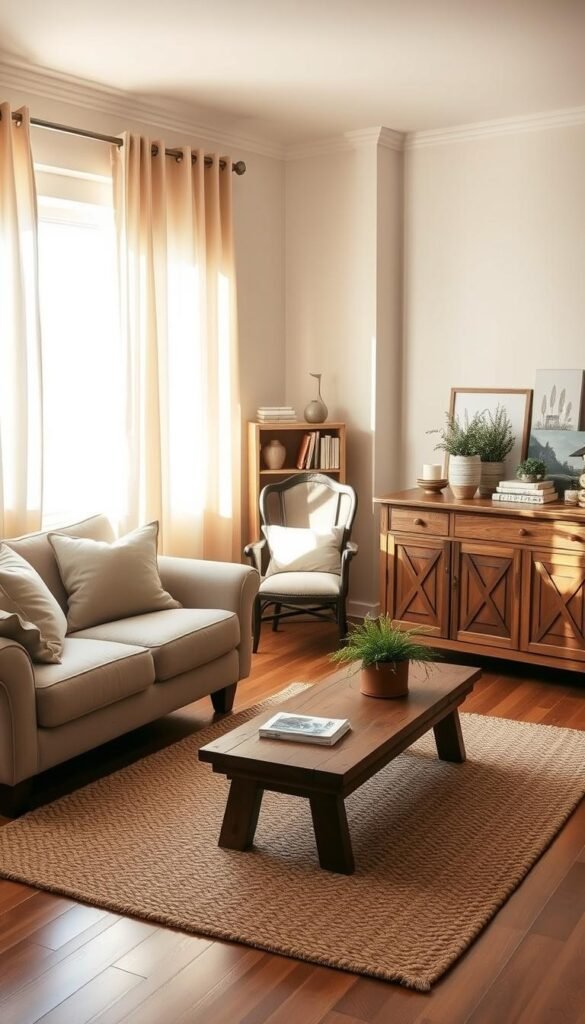
In a small or busy room, protect the walking route before deciding where every chair goes. A clear path makes a farmhouse living room easier to use, even when the furniture needs to serve as a family room. Keep doorways usable and let your seating support conversation instead of obstructing movement.
Allow 30-36 inches for a walkway between large furniture pieces where space permits. If the room is tight, 18-24 inches can work. A compact sofa and appropriately scaled chairs can leave the center open, while a corner or wall provides a focal point without crowding the room.
Make a small room feel open and useful
Small living room designs in farmhouse style benefit from a simple furniture plan. Choose a compact sofa and chairs that fit the room, rather than forcing in full-size pieces. Leave a clear route through the space, especially between the entry and the rest of the home. Avoid placing a chair where it blocks a doorway or window.
Small farmhouse living room ideas can use a corner as the focal point, with seating angled toward a fireplace, window, or favorite photo. That arrangement keeps the middle of the room useful. A wall-mounted light or narrow side table can serve the seating area without adding a bulky piece.
Arrange a larger or pass-through room around its focal point
In a larger room, let the focal point guide the seating group, then protect the routes people use to cross the space. In a pass-through room, angle or group chairs so they face the focal point without blocking doors. Test furniture footprints on paper or take room photos from each doorway to spot awkward turns.
Use this four-part layout check before moving heavy furniture:
- Identify the main route through the room.
- Mark door swings so furniture does not block them.
- Choose the focal point that will guide the seating.
- Test the arrangement with furniture footprints or room photos.
Walk the main route from each doorway before committing to the final furniture placement.
Choose Sofa and Coffee Table Proportions
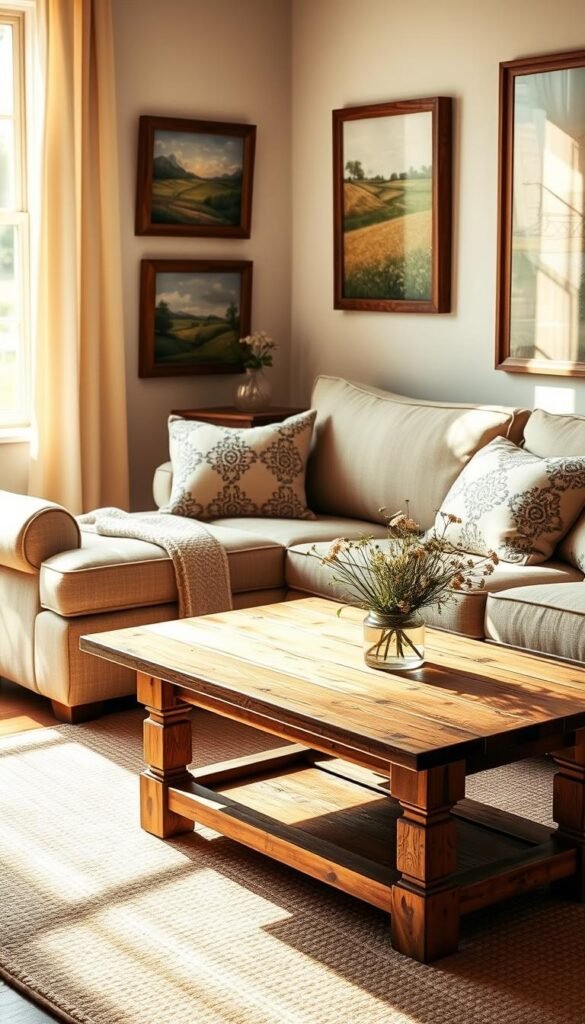
A coffee table around two-thirds the sofa’s length is a useful starting point for a balanced seating group. Good proportions make the room feel settled without requiring a matching furniture set. The table should also be easy to reach from the seats you use most.
Use the sofa’s length and arm height as practical guides for nearby pieces. Artwork above furniture is commonly about one-half to two-thirds of that furniture’s width. A side table usually works best at or near sofa-arm height, so a lamp or drink stays within comfortable reach.
These measurements are starting points, not rules that override the room. A broad sofa may need a longer coffee table, while a narrow path may call for a smaller one. Check the furniture you already own, then compare its dimensions with the open area around the seating group.
| Piece | Scale guide | What to measure |
|---|---|---|
| Artwork above furniture | One-half to two-thirds of furniture width | Furniture width |
| Coffee table | About two-thirds of sofa length | Sofa length |
| Side table | At or near sofa-arm height | Sofa-arm height |
The table’s height matters as much as its length. A low coffee table can feel comfortable beside a low sofa, while a taller sofa may pair better with a table that is easier to reach. Measure from the floor to the sofa arm, then compare that figure with the side table’s top.
Artwork should feel connected to the furniture beneath it, rather than floating by itself. A small frame above a wide sofa can look lost, while art that spans nearly the full width can overwhelm the wall. Use the range as a guide, then judge the actual wall and frame together.
Leave enough space to reach the table comfortably from the sofa and chairs.
Layer Rustic Wood, Vintage Finds, and Metal
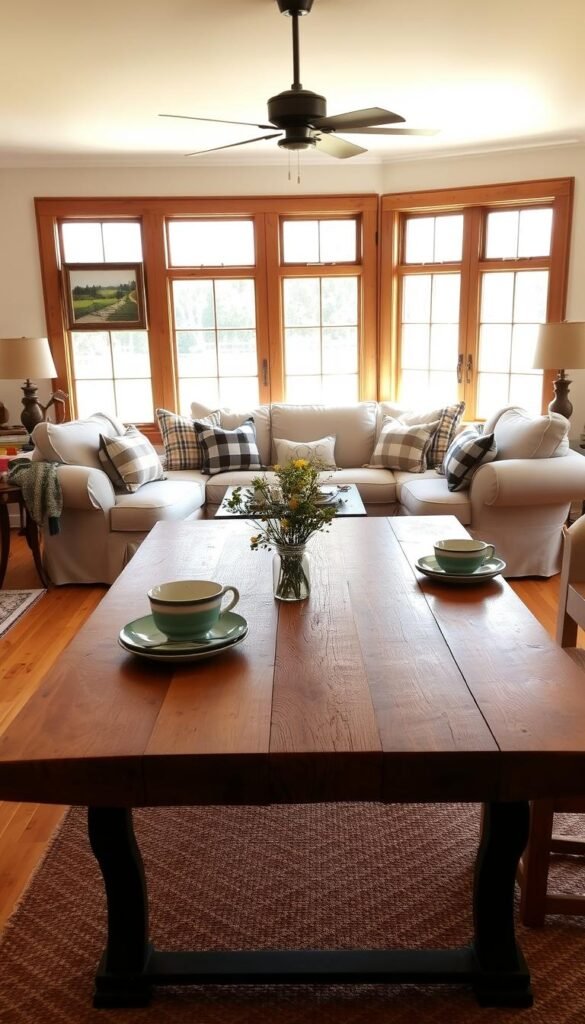
A few materials with visible texture can make a room feel country without turning it into a theme set. Natural contrast brings farmhouse style to life: reclaimed wood can sit beside iron or another metal, while soft upholstery keeps the mix comfortable.
Mix a small number of worn pieces with simpler newer furniture. That contrast helps a rustic farmhouse living room feel collected, not crowded. A weathered wood table can be the standout piece while newer chairs and a plain sofa give the eye a place to rest.
Mix natural materials without making the room feel busy
Reclaimed wood adds grain and marks that newer finishes may not have. Metal brings a harder edge, and upholstery softens the seating area. Choose a few finishes that work together instead of making every item rustic. A simple wood surface beside a metal lamp can offer enough texture without filling the room with distressed pieces.
Mixing old and new furniture gives vintage finds a natural place in the room. A clean-lined chair can balance a worn table, and a new sofa can make an older wood piece feel intentional. For more ways to combine these materials, explore cozy farmhouse living room ideas with natural textures and comfortable seating.
Give vintage and reclaimed pieces a useful role
Vintage farmhouse living room ideas work best when old objects still serve a purpose. Repurposed accents can hold flowers, books, or everyday items instead of sitting untouched as display-only decor. Try these practical options:
- Use a glass milk jar as a vase.
- Turn a wooden crate into a side table.
- Use a metal bucket to hold books or magazines.
- Hang a reclaimed-wood wall clock where you can read it.
Check the condition of an old piece before giving it a job. A crate should sit firmly if you use it as a table, and a metal container should not have sharp edges. Keep repurposed objects only when they serve a purpose or bring a detail you genuinely want to see every day.
Pick Farmhouse Paint Colors for Warmth and Light
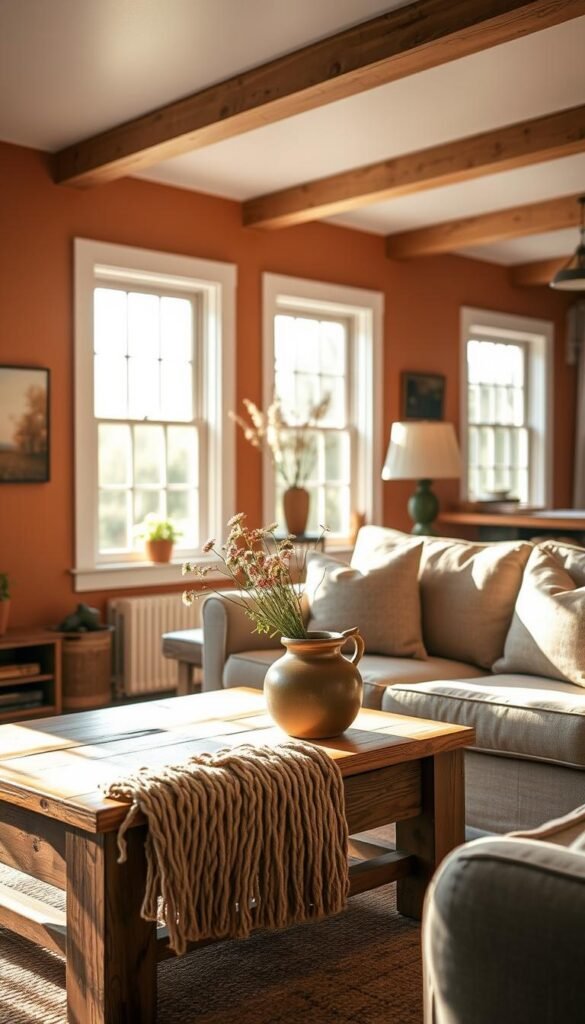
The room’s light matters as much as the paint chip when you choose a farmhouse wall color. Undertones can shift as daylight changes, so a warm neutral may look different from morning to evening. Light reflectance value, or LRV, measures how much visible light a paint color reflects.
For a north-facing room, Sherwin-Williams recommends warm-undertone paint with an LRV of 60 or higher. The company also recommends neutral paint colors with an LRV of 50-60 to help brighten a room. These ranges can guide your choices, though the room’s exposure and existing finishes still affect the result.
Choose a palette that suits the room’s natural light
Warm neutrals can soften a room that receives cool or limited daylight. A color with a higher LRV reflects more visible light, while a lower LRV reflects less. Consider the wall’s exposure, nearby floors, and the light you use at night before settling on a shade.
Two 2026 paint collections offer colors that can suit a farmhouse interior. Here are five named options from those collections:
| Collection | Color | Color ID |
|---|---|---|
| Benjamin Moore Color Trends 2026 | Silhouette | AF-655 |
| Benjamin Moore Color Trends 2026 | Raindance | 1572 |
| Benjamin Moore Color Trends 2026 | Swiss Coffee | OC-45 |
| HGTV Home by Sherwin-Williams Honest Essentials 2026 | Universal Khaki | HGSW6150 |
| HGTV Home by Sherwin-Williams Honest Essentials 2026 | Neutral Ground | HGSW7568 |
Use earthy colors as accents or architectural contrast
Benjamin Moore describes Silhouette AF-655 as a blend of burnt umber and charcoal. One suggested scheme pairs Sherwood Tan 1054 walls with Silhouette AF-655 on trim, lower cabinets, and ceiling beams. HGTV Home by Sherwin-Williams named Universal Khaki HGSW6150 its 2026 Color of the Year.
Other Benjamin Moore Color Trends 2026 choices include First Crush CSP-310, Batik AF-610, Narragansett Green HC-157, Southwest Pottery 048, and Sherwood Tan 1054. The Honest Essentials collection also includes Cordovan HGSW6027, Lemon Chiffon HGSW6686, Creamy HGSW7012, Griffin HGSW7026, Reddened Earth HGSW6053, Still Water HGSW6223, Hazel HGSW6471, and Secret Garden HGSW6181.
Paint a sample on the actual wall and look at it at different times of day. A color can shift beside wood floors, window trim, or a large piece of furniture. Check the painted sample in both daylight and evening light before committing to the full wall.
Make the Fireplace a Comfortable Focal Point
A fireplace can anchor a farmhouse room even when the rest of the decor stays simple. Texture makes it feel grounded, whether the surround uses brick, stone, or wood. The material can give the room character without adding a long list of decorative objects.
Keep the fireplace’s strongest visual feature clear. A television, mantel decor, and the fire itself can all compete for attention. Decide which one should lead, then let the other elements stay quieter so the room has a clear focal point.
Shiplap is made with horizontal wood panels that are often about 7 inches wide. That width is a scale detail, not a required specification, so the panels can suit the wall and ceiling height. Use the horizontal lines to add texture around the fireplace without making every wall match.
A brick surround can feel sturdy and familiar, while stone brings irregular texture. Wood can make the fireplace feel warmer and tie it to nearby furniture. You can also use iron in a screen or tool set, but a few material contrasts are usually enough to keep the surround from feeling busy.
Exposed wood beams add a rustic architectural detail above the room. They can echo a wood mantel or shiplap without needing to match it exactly. If the ceiling already has strong beams, give the fireplace a simpler finish so the two features do not compete.
Decor should support the architecture, not cover it. A mirror, framed art, or a few small objects can work above the mantel, depending on its width and height. A crowded display can hide the materials that make the fireplace feel like part of the home.
Keep mantel objects low enough that they do not obscure the fireplace or compete with the room’s main focal point.
Use Rugs, Lighting, and Textiles to Add Softness
A rug that reaches into the seating group makes the furniture feel like one gathering place. Size helps connect the sofa, chairs, and coffee table, while a small rug floating in the middle can make each piece feel separate.
Common living-room rug sizes are 8′×10′ and 9′×12′, and the rug should extend at least 6 inches beyond each side of the sofa, with 8 inches ideal. A rug covering only a small fraction of the seating area can make the group feel disconnected.
Choose a rug that connects the seating group
Measure the seating area before choosing a rug. The right size depends on the room and furniture, but the rug should relate to the sofa rather than look like an isolated mat. If a large rug cannot fit beneath every piece, keep the furniture legs consistently on or off it.
Jute can warm wood floors and add a natural texture underfoot. A softer wool rug may suit a room where you spend long periods sitting on the floor. For a tan sofa, warm rug and textile pairings can add comfort without making the seating area feel disconnected.
Layer light and fabric for a lived-in feel
Sheer white curtains filter daylight while preserving privacy. Their soft look pairs well with a lantern-style pendant, a wrought-iron fixture, or exposed Edison bulbs. Choose lighting that suits the room’s architecture, then add fabric through curtains, cushions, or a throw.
Layered light makes the room easier to use after sunset. A ceiling fixture can brighten the whole space, while a lamp near a sofa gives you a quieter pool of light for reading. The fabric softens hard surfaces, and varied light levels keep the room from feeling flat.
Before buying a rug, mark its outline on the floor and check that the main furniture legs will land consistently.
Which Paint Colors Feel Current and Sell Well?
If resale is a priority, pale blue and charcoal gray had positive living-room offer associations, while the results for other colors depended on the room and context. These are associations, not guaranteed changes to an offer. Zillow’s 2026 paint-color analysis surveyed more than 4,400 recent and prospective U.S. homebuyers.
Pale blue living-room paint was associated with an estimated $1,723 higher offer than white, and charcoal gray with an estimated $1,509 higher offer. The same color can perform differently in another room, so keep the setting attached to each result.
Colors with positive living-room offer associations
Sage green ranked near the top across bathrooms, living rooms, and bedrooms. That broad result makes it an option to consider if you want color without choosing a very bright shade. Still, a room’s light, architecture, and finishes shape how any paint color feels in your home.
The estimates describe buyer preferences in the analysis, not a promise about your sale. Zillow’s 2026 paint-color results found different associations across specific rooms and shades. The table keeps those contexts together so a bathroom result does not get mistaken for a living-room finding.
| Color and context | Reported result | How to read it |
|---|---|---|
| Pale blue living room | $1,723 higher offer than white | Living-room association |
| Charcoal-gray living room | $1,509 higher offer than white | Living-room association |
| Ochre yellow across four rooms | $18,164 lower offer | Kitchen, living room, bedroom, and bathroom |
| Fire-hydrant-red bathroom | Nearly $8,000 lower offers than a white bathroom | Bathroom association |
| Red, designer concern | 37% named it most off-putting | 2026 survey of 86 designers |
Colors to use cautiously when resale matters
Ochre yellow used in the kitchen, living room, bedroom, and bathroom was associated with an estimated $18,164 lower offer. A fire-hydrant-red bathroom was associated with offers nearly $8,000 lower than a white bathroom. Pale pink performed poorly in every room studied.
In a 2026 Fixr survey of 86 interior designers, 37 percent identified red as the paint color most off-putting to potential homebuyers. Another 35 percent advised avoiding cool gray when preparing a home for sale. Those opinions are not the same as measured offer associations, so consider them separately.
The same designer survey found that 83 percent identified overly bright hues as the worst exterior paint colors for potential buyers. That finding applies to exterior paint, not interior walls. Treat a color’s resale association as one consideration alongside the home’s light, architecture, and the next owner’s likely preferences.
Decorate on a Budget Without Looking Cluttered
You can make a farmhouse room feel more personal without replacing the sofa or every table. Start with what you own, then spend only on a change that solves a real need. This approach can give modern farmhouse decor character without buying a matching set.
Reusing furniture and repurposing household objects can refresh a room without replacing every piece. Before spending, check an item’s condition and ask how you will use it. A worn chair that needs costly repairs may not be a useful bargain.
Refresh what you already own
Try these four changes before shopping for more furniture:
- Rearrange existing furniture to open a route or improve conversation.
- Refinish or repaint one useful piece that still works well.
- Repurpose a household object for storage or display.
- Add a small textile or tray accent to a sofa or coffee table.
A tray can give a coffee table a more finished look while keeping small items together. A throw or pillows can change the feel of a sofa without buying new seating. If you repaint a table, choose a finish that suits its surface and the way you use it.
Add only the pieces the room needs
Buying fewer functional pieces helps a room feel collected rather than over-decorated. A home does not need matching tables on both sides of the sofa if one side table does the job. Leave open surfaces where you set down a drink, book, or remote.
Budget-friendly farmhouse living room ideas often begin with moving a lamp, changing the arrangement of chairs, or clearing a shelf. Give each item a clear role before bringing it into the room. Try the rearranged room for a few days before buying anything to fill a space that may not need filling.
Finish the Room With Personal, Family-Friendly Details
The details that make a room feel like home are often the objects you already care about. Personal meaning matters more than a perfectly styled display, especially in a family room that gets used every day.
Choose a few meaningful accents and leave them room to be seen. A living room can feel warm with family photos, a plant, and well-used books, without putting something on every table or wall.
These four details can make the room feel personal without crowding its surfaces:
- Family photos in simple frames.
- A meaningful heirloom you want to keep nearby.
- A plant or fresh flowers that suit your routine.
- A small stack of books you frequently read.
Pastoral art can add a country note, while a floral or plaid textile can bring pattern to a chair or sofa. Choose those accents when they suit the household, not because every farmhouse room needs them. A small Eucalyptus wreath can also add a natural detail to a wall or door.
Keep meaningful objects visible, but do not cover every surface with a display.
Family photos can feel more cohesive when their frames share a simple finish, even if the images differ. A few favorite photos may have more presence than a crowded gallery of every picture you own. Place heirlooms where they are safe from daily bumps and still easy to enjoy.
Books can bring color and use to a side table, but keep the stack small enough to reach the ones you read. A plant adds life, though its light and care needs should suit the spot. Choose the personal pieces you want to see every day, then leave a little open space around them.
Bring the Farmhouse Look Together
A farmhouse feel comes together when the room works for your everyday life and still reflects what you love. Comfort and personal character matter more than copying a fixed formula. A space can feel country with a few thoughtful choices, even when it does not resemble a staged photograph.
Choose one focal point today, then test a seating arrangement around it before adding another piece.