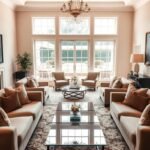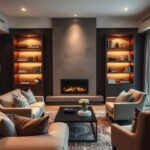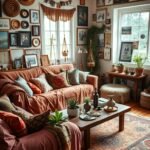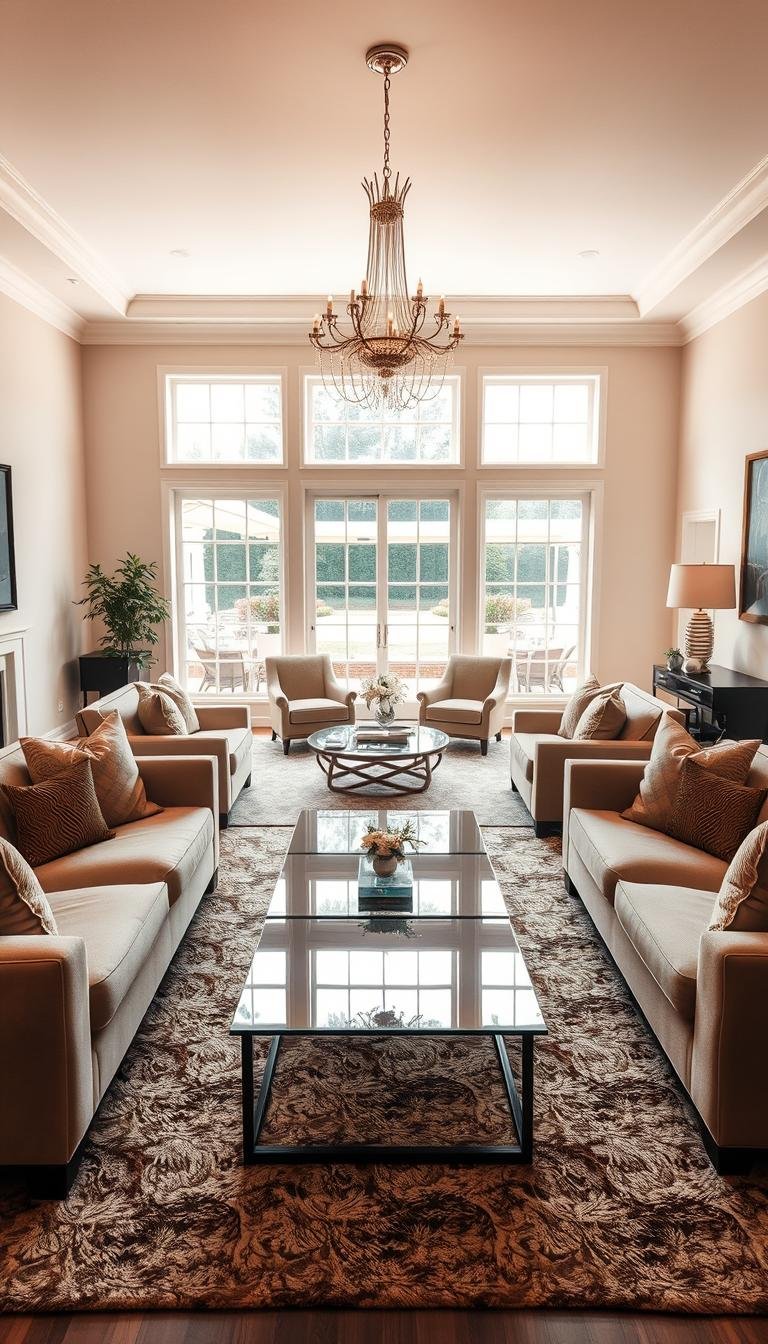
A polished gathering space works best when guests can relax as easily as they can admire the design. Your home can have a room that looks composed for company and still feels comfortable on an ordinary day. Symmetry, supportive seating, layered materials, and personal details help formal living room designs feel welcoming rather than precious. A conversation grouping is an arrangement of seats oriented toward one another so people can talk comfortably.
The right plan depends on how you use the space, from a quiet place to read to a setting for evening visits. A matching pair of chairs, a well-placed lamp, or a treasured piece of art can make a polished room feel like yours. You do not need every surface to look untouched; guests should know where to sit and feel welcome to stay.
Start by deciding whether your gatherings call for face-to-face conversation, relaxed reading or a mix of both.
Which Layout Makes Conversation Easy?
Two seats facing each other across a central table make conversation the natural focus of the room. Facing sofas, angled armchairs, or seats turned toward a fireplace or large artwork all help guests connect. Keep seats about 3.5-10 feet apart for comfortable conversation.
A living room layout also needs a clear route through the seating area. Arrange the group so you can move around it without cutting through the place where guests are talking. In an open room, a sofa back can help define the living area while leaving the dining space distinct.
Face Seats Toward Each Other
Set a sofa and one or two chairs in a loose U shape, or place two sofas opposite one another. If a fireplace is the room’s focal point, turn seats partly toward it rather than lining them up in a row. A large artwork can play the same role when the room has no fireplace.
Keep the Main Route Clear
Give the primary walkway enough width for people to pass naturally, especially between large furniture pieces. The exact route depends on the room, but the guidelines below offer a useful starting point.
| Situation | Guideline | Practical result |
|---|---|---|
| Main walkway between large furniture | 30-36 inches when space permits | Comfortable circulation |
| Smaller-room walkway | At least 18-24 inches | A workable route in tighter space |
| Conversation distance between seats | 3.5-10 feet | Comfortable conversation |
Keep the primary walkway outside the conversation grouping whenever the room allows. Guests can move through the room without interrupting the people seated there.
A conversation-friendly furniture layout can work with classic or contemporary pieces. Before settling on the layout, walk the primary walkway as if carrying a drink.
Formal Living Room Designs for a Balanced Seating Plan
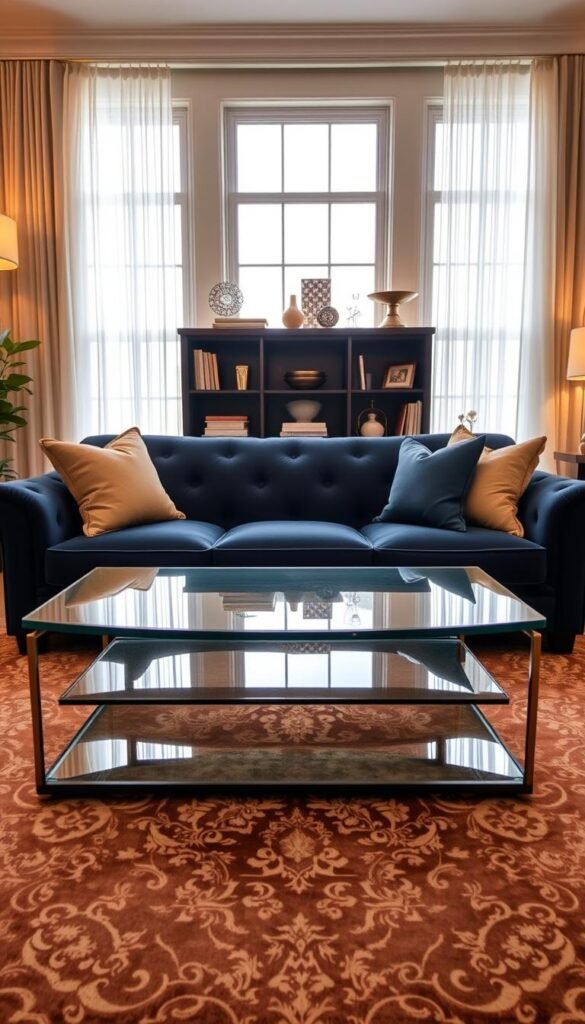
A sofa sized to about two-thirds of a small room’s width can anchor the seating without swallowing the remaining area. For formal living room designs, pair a tailored sofa with armchairs and a coffee table that suit the way you host. Balanced proportions make a living room design feel composed, not crowded.
Choose upright seats if guests mostly talk, or deeper seats if you want room to lounge. A sofa back can also mark the edge of an open-plan living area beside a dining space. When the room permits, pulling the sofa a little away from the wall gives the furniture a more intentional position.
- For a small room, aim for a sofa about two-thirds of the room’s width.
- When space allows, leave 3-5 inches between the sofa and wall.
- Choose a coffee table at least half the sofa’s length.
- Keep the coffee table within 4 inches of the seat-cushion height, above or below.
Allow 16-18 inches between the sofa and coffee table so guests can reach the surface without feeling boxed in. This gap also helps the central furniture pieces work together rather than look disconnected. A narrow table may disappear beside a long sofa, while an oversized one can dominate a more delicate arrangement.
Think about the jobs your furniture needs to do before choosing its shape. A pair of armchairs can make a long sofa feel less imposing, and a round table can soften a room built around straight lines. Select pieces that leave room for lamps and side tables without filling every corner.
Measure the sofa and table together before buying, then leave enough room to pass between them.
How Can You Pair Traditional and Modern Details?
A floral sofa can feel current when the table beside it has a simpler, more modern profile. Pair one traditional anchor, such as patterned upholstery, an antique, or a classic wood table, with a contemporary piece. One clear contrast gives the room personality without making every surface compete.
Let one traditional detail lead and keep the surrounding shapes simpler. Floral and romantic upholstery is also a current sofa direction for 2026. That does not mean every chair needs a print; a single patterned piece can supply enough character for the room.
Start With a Traditional Anchor
Choose the older or more classic piece first, then give it breathing room. A New York parlor pairs floral stripes and a patterned sofa with a chrome-and-glass coffee table and mahogany tables. The mix feels deliberate because the materials and shapes are not all making the same statement.
A traditional living room with a modern twist can use a curved antique chair beside a clean-lined sofa, or a carved wood table under a crisp lamp. For more ways to mix vintage and modern decor, repeat a material or shape in more than one place.
Balance Pattern With Clean Lines
Use pattern as a focal detail rather than a cue to add another print to every surface. If your sofa carries a floral or stripe, choose a quieter rug and simpler curtains. A solid chair in a related color gives the eye a place to rest while keeping the room from feeling overly matched.
Wood, metal, and glass can help connect pieces from different eras. A dark wood table beside a contemporary lamp can feel cohesive when their scale suits the seating group. Modern living room ideas often work best when the room has one strong traditional element and one restrained update.
Keep one element visually quiet so the traditional detail has room to stand out.
What Seating Makes Gatherings More Flexible?
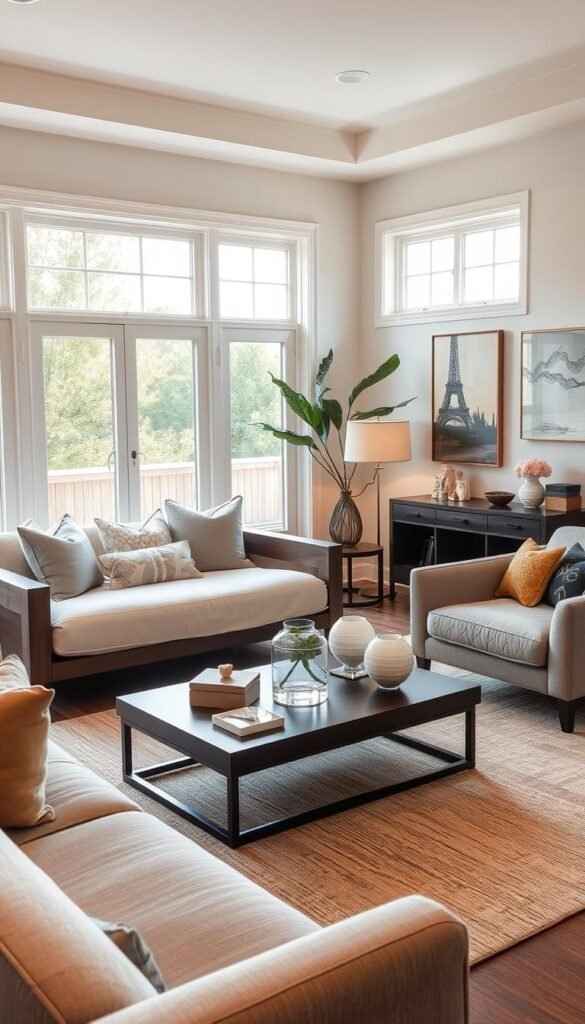
Add a different type of seat when a matching pair of chairs would make the room feel too formal. Armchairs, swivel chairs, a daybed, and an ottoman each give guests a different way to settle in. Varied seating makes the room more useful for conversation, reading, and larger gatherings.
A daybed offers a relaxed alternative to a formal chair. Daybeds are returning as a living-room seating option, and their open shape can suit a room where guests might stretch out with a book. An underused corner can become a quiet reading spot with a small lamp and a comfortable seat.
- Armchairs provide individual seats for guests.
- Swivel chairs turn between conversation areas.
- A daybed gives you a place for relaxed lounging.
- An ottoman works as a footrest or occasional extra seat.
- A compact bench can serve a reading nook.
Each option changes how people use the room. A swivel chair can face a sofa during a visit, then turn toward a window or bookcase. An ottoman adds a soft place to rest your feet, and a compact bench can be tucked away when you need more floor space.
Choose pieces that suit the room’s main use instead of adding seats simply to fill empty floor. If you often host a small group, a mix of fixed and movable pieces can make conversation feel easy. If reading is part of the room’s everyday life, give that activity a comfortable corner of its own.
Choose at least one movable or flexible seat if your gatherings change in size or shape.
Which Colors and Materials Set an Elegant Tone?
A sandy neutral or a deep umber-charcoal shade can each anchor an elegant palette in a different way. A restrained base lets patterned upholstery, art, or an accent chair stand out. Texture adds depth without asking you to introduce another color.
Test paint beside your actual flooring and upholstery, not in isolation. HGTV Home by Sherwin-Williams named Universal Khaki (HGSW6150) its 2026 Color of the Year, describing it as a sandy-shade neutral. Its 2026 Honest Essentials collection includes Neutral Ground, Cordovan, Lemon Chiffon, Creamy, Universal Khaki, Griffin, Reddened Earth, Still Water, Hazel, and Secret Garden.
Begin With a Grounding Neutral
Universal Khaki offers a warm, quiet starting point. Benjamin Moore’s 2026 Color of the Year, Silhouette AF-655, takes a different direction as a blend of burnt umber and charcoal. Its 2026 Color Trends palette also includes Swiss Coffee, First Crush, Raindance, Batik, Southwest Pottery, Sherwood Tan, and Narragansett Green.
These collections are optional inspiration, not a palette you need to copy from wall to wall. A soft neutral can let a bold chair or artwork take the lead. A darker shade can give the room a more grounded look, especially when nearby materials bring in lighter tones.
Add Contrast Through Color and Texture
Mix soft upholstery with harder finishes such as hardwood, brass, or stone. A velvet cushion beside a polished table, for example, creates contrast through touch and shine rather than another bright hue. Layered textures make the room feel considered while keeping its color story calm.
You can also repeat one material in different forms. A wood table and wood picture frames do not need identical finishes to connect; their shared warmth can be enough. For a broader view of elegant modern living room interiors, look for combinations that balance comfort with visual polish.
Test paint colors beside the room’s actual upholstery and flooring before committing to the full palette.
How Do You Make the Fireplace the Focal Point?
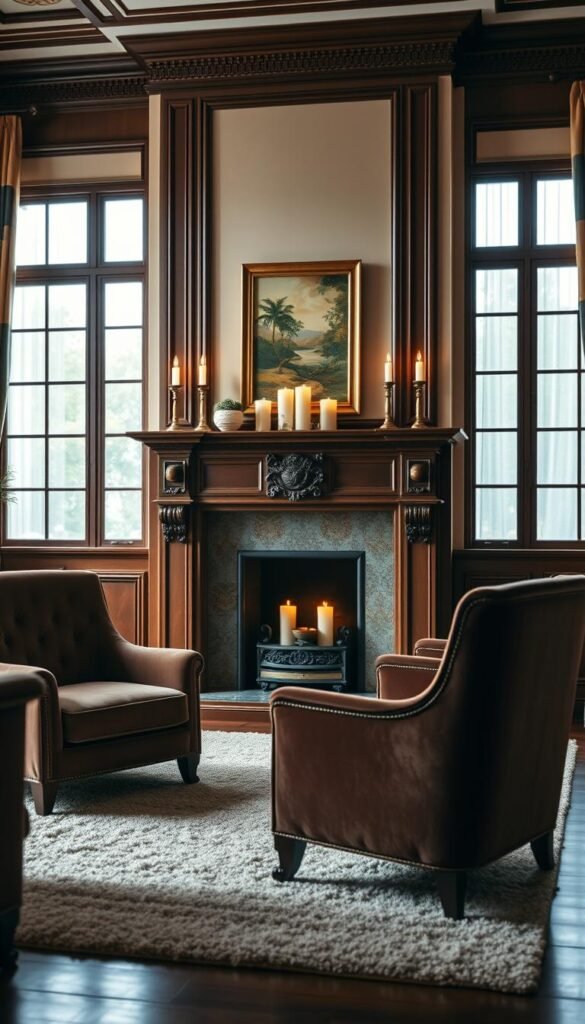
A fireplace can anchor the room when the main seats acknowledge it without turning their backs on one another. Angle the seating toward the hearth, then keep the conversation grouping open enough for guests to see each other. Shared attention lets the room feel welcoming instead of arranged like a waiting area.
Use the surround material to make the fireplace feel like part of the room’s design. Stone, tile, brick, wood, metal, and plaster can each define its character. A restrained mantel display lets the finish remain visible rather than hiding it behind objects.
Fireplaces come in standard, ribbon, two-sided, and corner styles, and a wood stove can serve as a focal point too. The format affects how you arrange seats and where the room’s visual weight falls. A two-sided fireplace may connect adjoining areas, while a corner model can make an awkward wall feel purposeful.
Keep mantel objects low enough that the surround remains easy to see. A few pieces with varied shapes can add personal character without turning the mantel into a shelf of small distractions. The strongest display usually leaves some open space around the central feature.
The fireplace is not the only possible anchor. A grand piano or a large artwork can lead the seating plan when that better suits your home. In either case, allow the focal point to be visible from the seats without making it the only reason guests face one another.
For a functional surface nearby, a thoughtful approach to styling a surface can help you balance useful objects with a few personal pieces.
Keep mantel objects low enough that the fireplace surround remains easy to see.
How Do You Decorate Living Room Walls?
Art looks more intentional when its center sits near eye level and its width relates to the furniture below. Choose one larger artwork, a carefully spaced gallery wall, or built-in millwork that suits the room’s architecture. Good scale matters more than filling every open area.
Above furniture, size artwork at about two-thirds to three-quarters of the furniture’s width. That proportion gives the piece a clear relationship to the sofa or console without making it feel cramped. The guidelines below can help you place art with confidence.
| Art placement detail | Guideline | Condition |
|---|---|---|
| Art center | 57-65 inches above the floor | General eye-level guideline |
| Gap above furniture | 6-8 inches | Between furniture top and artwork bottom |
| Artwork width | 2/3-3/4 of furniture width | When hung above furniture |
| Gallery-wall frame gap | 2-3 inches | Between frame or canvas edges |
One large piece can simplify a wall and give the room a strong visual anchor. Built-in shelves or millwork can add architectural interest when they suit the home. A gallery wall offers a more personal look, with a mix of frames, subjects, or artwork styles.
To choose wall art for a living room, relate its scale to nearby furniture and architecture. You do not need to hang something on every bare section of wall. Leave some space empty so the pieces you choose have room to register.
A personal gallery wall can use a grid for a tidy effect or a looser arrangement for a more collected feel. Repeat a frame finish, color, or subject to help varied pieces look connected.
Lay gallery-wall frames on the floor first so you can adjust their spacing before hanging them.
How Can a Formal Living Room Work in a Small House?
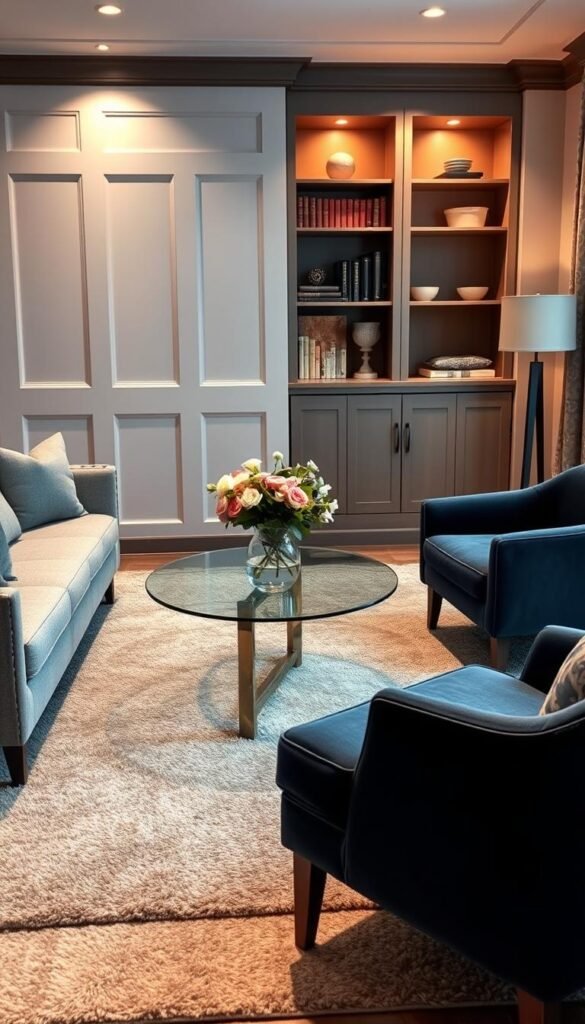
A compact room can still feel formal when the sofa, rug, and walking route are sized as one composition. Choose furniture with a clear purpose, leave a direct route through the room, and avoid filling every wall. Fewer useful pieces often make a small space feel more graceful.
Let the rug unite the seating group by catching the sofa’s front legs and all chairs. A living room does not need a matching piece of furniture on every wall. A well-sized sofa, a chair, and a side table may serve you better than extra pieces that narrow the room.
| Room condition | Rug guideline | Placement |
|---|---|---|
| Small living room | At least the sofa’s front legs and all chairs on the rug | Leave 10-18 inches to the walls |
| Typical living room | At least an 8×10 rug | Size it to suit the seating group |
| Large living room | Choose a rug that relates to the seating group | Leave about 24 inches to the walls |
For modern living room design in a small house, start with the largest furniture piece and build around it. A sofa with a lighter visual profile can preserve an open feel, while a few well-chosen surfaces still give guests places to set down a book or drink.
Simple living room ideas for small spaces can include a single piece of artwork, a compact reading chair, or a lamp that serves more than one part of the room. Let the room’s architecture show where possible, rather than hiding it behind furniture. The aim is a comfortable gathering area, not a miniature version of a much larger room.
Mark the rug’s edges with painter’s tape before ordering to check its relationship to the walls and seats.
What Lighting and Accessories Finish the Space?
A room feels more welcoming when light comes from more than one point. Combine a chandelier, wall sconces, uplighters, and lamps to create different levels of light for guests and quiet evenings. Layered lighting can make a polished living room feel less formal after dark.
Use more than one fixture type so the whole room does not rely on a single overhead light. A chandelier can mark the center of the room, while sconces bring light to a wall and a lamp makes a reading chair more useful. Choose the mix around the room’s shape and daily routines.
- Window treatment: curtains or blinds add privacy and help shape the room’s look.
- Cushions: use them to bring color and softness to the sofa.
- Tabletop objects: keep the selection small and personal.
- Rug: choose one that brings the seating group together.
Curtains and blinds serve practical needs, but their fabric, color, and shape also affect the room’s tone. Cushions can refresh a neutral sofa without asking you to replace large pieces. A few personal objects on a coffee table or side table make the space feel lived in.
Accessories should support the room rather than compete with each other. A lamp, a book, and one meaningful object may be enough for a small table. If you have a favorite piece, give it room to stand out instead of surrounding it with smaller decor.
For more cozy living room decor ideas, focus on comfortable light and textiles that invite guests to settle in. Accessories can update a neutral base without replacing the furniture you already use.
Edit the final accessories until each visible surface has breathing room.
Which 2026 Trends Suit a Formal Living Room?
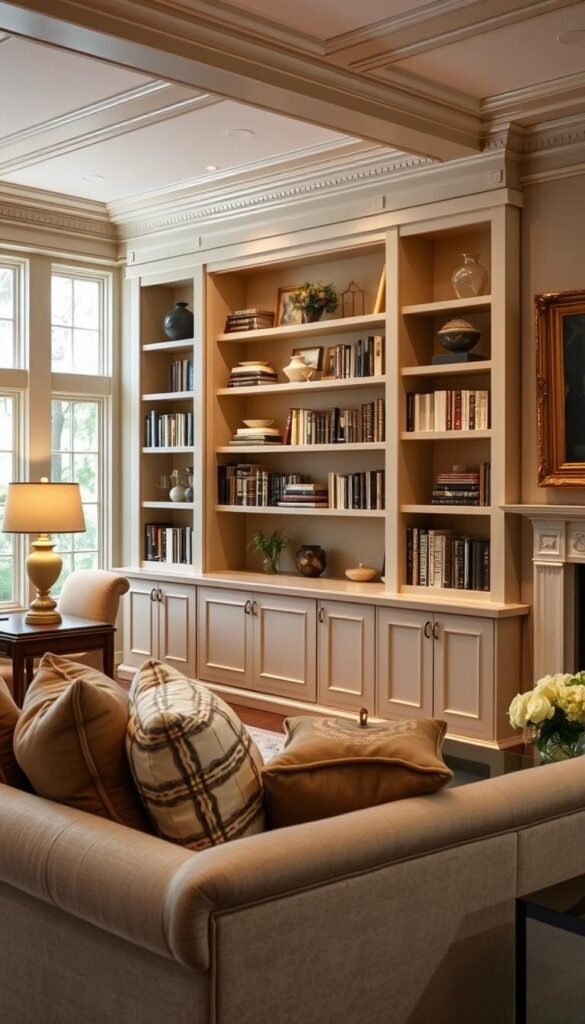
The most adaptable 2026 ideas make a polished room easier to use, not simply more fashionable. Flexible seating can make a formal living room feel less stiff, while shelving and painted built-ins can add storage and character. Choose for your needs rather than treating trends as a checklist.
Use extensive shelves only when your storage needs and available wall space justify them. Book drenching, with shelves spanning a wall or wrapping around a room, is a 2026 storage trend. In a compact room or one with prominent artwork, a full wall of shelves can feel overwhelming or compete for attention.
Make Seating More Flexible
Flexible, informal living-room layouts with varied seating, including floor seating, are a 2026 trend. You can borrow the idea without making the room casual from top to bottom. A movable chair or pouf can make extra space for guests while keeping the main furniture arrangement composed.
Consider how people actually gather in your home. If guests shift between conversation and reading, flexible seats can help the room serve both activities. A formal design does not require every seat to look or feel identical.
Use Shelving and Color With Intention
Colorful painted built-ins and cabinetry, including color-drenched walls and joinery, are another current design direction. Shelves can display books and personal objects while giving an empty wall a purpose. Painted joinery can connect storage to the rest of the room’s palette.
Keep the overall effect aligned with your architecture and artwork. Extensive shelving may suit a wall with a real storage need, while a simpler built-in can leave more space for a large piece of art. Trends work best as options you adapt to the room, not rules you follow in full.
Choose one trend that solves a real need in your room before adding a second.
How Can a Photo Gallery Help You Choose a Style?
A photo gallery is most useful when you compare one design decision at a time. Look at seating shape, fireplace treatment, wall color, and materials instead of trying to copy an entire room. One comparison at a time helps you spot details that suit your own home.
Save examples that solve the same design problem, then adapt their details to your room. Houzz’s traditional living-room gallery lists 21,311 photos tagged as formal, while its broader living-room ideas gallery lists 109,473 formal photos. Examples include homes in New York and Los Angeles, not rules for how those cities should look.
- Seating arrangement: compare pairs of chairs, sectionals, and sofa groupings.
- Fireplace or other focal point: note how the main feature relates to the seats.
- Wall and upholstery colors: see which combinations feel right to you.
- Lighting and surface materials: compare lamps, wood, metal, stone, and glass.
Use gallery images to study individual choices, not to copy a complete room. A detail that works in one home may need a different scale or finish in yours.
Save images that share a practical challenge, such as a narrow room or an off-center fireplace. That makes it easier to compare how different designers handle the same condition. Notice which details feel useful, then consider what you can adapt with your own furniture and architecture.
A photo gallery can provide inspiration without turning your room into someone else’s design. Look for a repeated idea you genuinely like, such as curved seating or a mix of wood and metal. A few focused examples make your preferences easier to identify.
Save a few examples that solve the same design problem, then adapt their details to your own room.
Make the Room Ready for Your Next Gathering
An inviting formal room is one you are comfortable using, not one you feel obliged to protect. A successful space balances conversation, circulation, and personal details, so guests can move easily and feel at home. Elegance does not depend on keeping the living room off-limits.
Give the room a quick test before company arrives. Check that there is a clear place to sit, a useful surface for a drink, and enough room to move through the seating group. One meaningful object or piece of art can make the setting feel personal without adding clutter.
Your next step is simple: sketch the seating group and mark the primary walkway before moving furniture. Then try the arrangement in the room and adjust it for the way your household actually gathers. Sketch your seating plan today, then test it in the room before your next gathering.