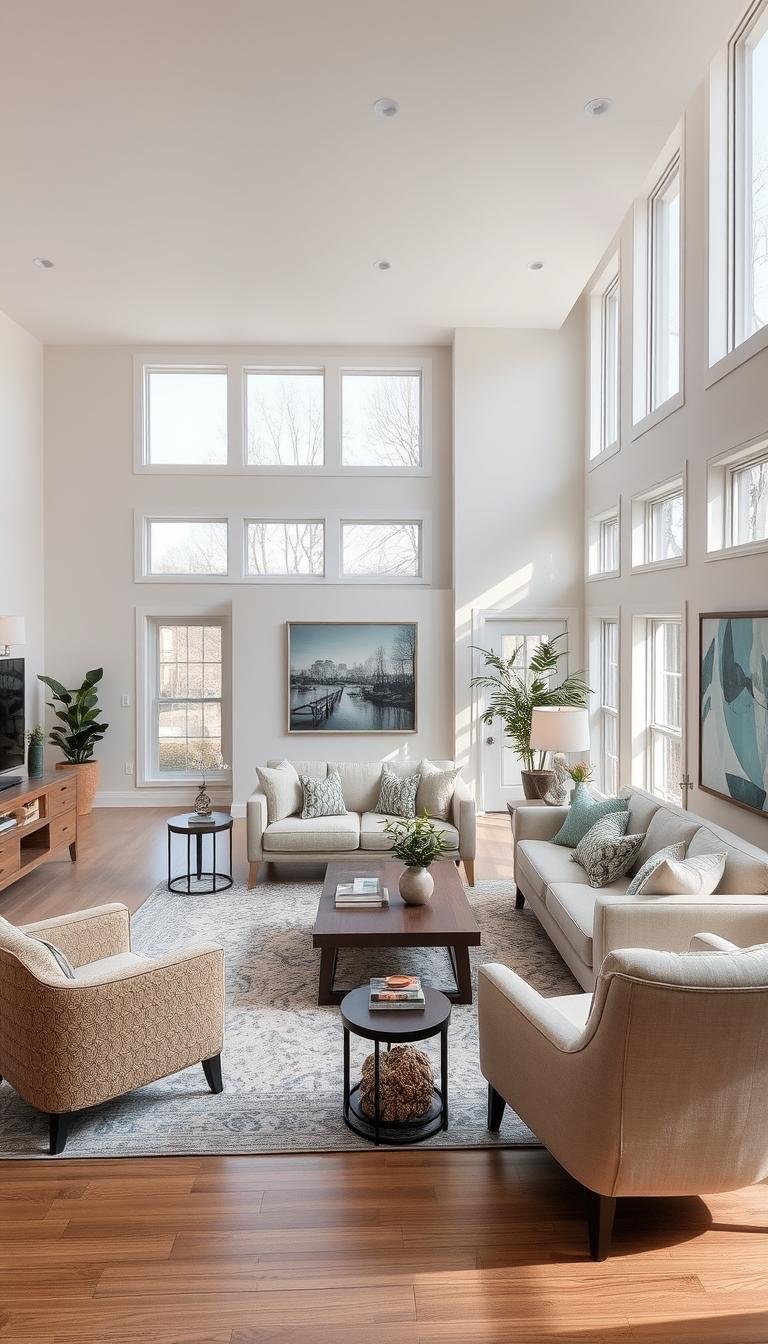
Ever feel torn between classic comfort and sleek sophistication? You’re not alone. Many homeowners struggle to choose between traditional warmth and contemporary style.
What if you didn’t have to choose? There’s a design approach that blends the best of both worlds. It creates spaces that feel both fresh and timeless.
This style combines plush, comfortable furniture with clean lines and neutral colors. The result is a space that’s perfect for both entertaining and cozy family nights. You get elegance without sacrificing comfort.
Discover how this approach lets you mix your favorite pieces from different eras. You can create a cohesive look that truly reflects your personal taste. Learn more about creating your perfect space through transitional living room ideas.
This design philosophy focuses on balance above all else. It’s about creating rooms that work beautifully for everyday life while still making a stylish statement.
What Defines a Modern Transitional Living Room Design for Balanced Elegance?
Imagine creating an environment where heritage pieces and contemporary accents live in perfect harmony. This design philosophy celebrates the best of both worlds without forcing you to choose sides.
The core concept revolves around intentional blending rather than random mixing. You carefully select elements that complement each other across different eras.
The Core Philosophy: Blending Old and New
This approach values harmony between contrasting aesthetics. It allows traditional comfort to coexist with current sophistication in your space.
Professional designers achieve this through thoughtful curation. They avoid extreme minimalism or maximalism, finding the perfect middle ground.
The result is a room that feels both fresh and familiar. You get the warmth of classic decor with the clarity of clean lines.
Key Characteristics of This Versatile Space
Several elements define authentic transitional environments. Understanding these helps you create a cohesive look.
Neutral foundations provide a serene backdrop for blending different design elements. Soft, neutral colors create versatility.
Clean, simple lines maintain visual clarity in mixed-style settings. Straightforward furniture profiles create an unfussy aesthetic.
Texture mixing adds depth and interest without overwhelming the space. Different materials create tactile appeal.
Timeless furniture pieces bridge old and new designs. They work beautifully with contemporary accessories.
Functional layouts prioritize both comfort and social interaction. Your space works for living and entertaining.
These characteristics work together to create interiors that feel both current and timeless. They provide a framework for your personal expression.
Start with a Serene and Versatile Neutral Color Palette
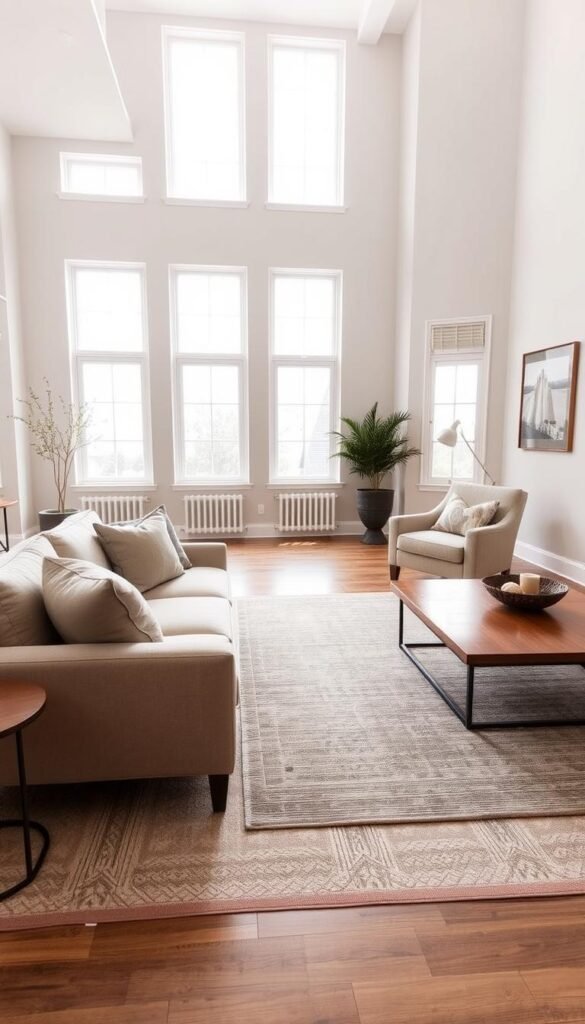
Your color choices create the foundation for your entire space. A neutral palette offers incredible flexibility while maintaining a calm atmosphere.
These soft backgrounds let your furniture and accessories take center stage. They provide the perfect canvas for blending different styles seamlessly.
Best Neutral Shades for Your Foundation
Certain hues work particularly well as base colors. Beige, gray, taupe, and ivory create warm yet sophisticated backgrounds.
These shades provide versatility for mixing various design elements. They prevent visual chaos while allowing different pieces to shine.
Soft blue tones also work beautifully as alternative neutrals. They maintain serenity while adding subtle color interest to your space.
| Color Family | Best Uses | Mood Created | Pairing Suggestions |
|---|---|---|---|
| Warm Beiges | Walls, large furniture | Cozy, inviting | Dark wood tones, brass accents |
| Soft Grays | Flooring, built-ins | Calm, sophisticated | White trim, chrome finishes |
| Ivory/Cream | Trim, ceilings | Bright, airy | Natural materials, black accents |
| Taupe | Upholstery, rugs | Elegant, versatile | Metallics, textured fabrics |
| Soft Blue | Accent walls, textiles | Serene, refreshing | Warm woods, neutral patterns |
How to Introduce Subtle Color Accents
Texture variation within the same color family adds depth without disruption. Different materials create visual interest while maintaining harmony.
Restrained color palettes make design decisions easier. They create instantly serene spaces that feel both current and timeless.
Professional designers use these techniques to enhance rather than overwhelm. They maintain color harmony while allowing different styles to work together.
Your neutral backdrop becomes the perfect stage for your favorite pieces. It lets your personality shine through without competing elements.
Select Furniture that Bridges Traditional and Contemporary Styles
Your furniture choices form the backbone of your entire space. They create the physical and visual foundation that supports all other elements.
Finding pieces that span design eras might seem challenging. Yet it’s simpler than you think when you know what to look for.
This approach transforms your room into a curated collection. Each piece contributes to a harmonious whole.
Identifying Timeless Pieces with a Modern Twist
Look for classic forms updated with current details. A traditional wingback chair gets fresh life in performance fabric.
These updated classics bring heritage craftsmanship into today’s homes. They honor the past while fitting perfectly in present-day spaces.
The Modern Tudor concept shows this philosophy beautifully. It blends historical architectural elements with clean, current lines.
Your sofa might feature traditional rolled arms but simplified proportions. This creates familiarity without feeling dated.
Strategies for Balancing Heavy and Light Pieces
Visual weight matters when mixing different styles. Heavier traditional items need lighter counterparts.
Pair a substantial classic sofa with a sleek metal coffee table. The contrast creates dynamic interest while maintaining equilibrium.
Scale and proportion become your guiding principles. They ensure all elements work together rather than compete.
This careful balancing act produces spaces that feel both grounded and airy. You achieve sophistication without stiffness.
Your finished room will showcase your personal taste through thoughtfully chosen pieces. They create an environment that’s both inviting and impressive.
Master the Art of Mixing Textures for Depth and Warmth
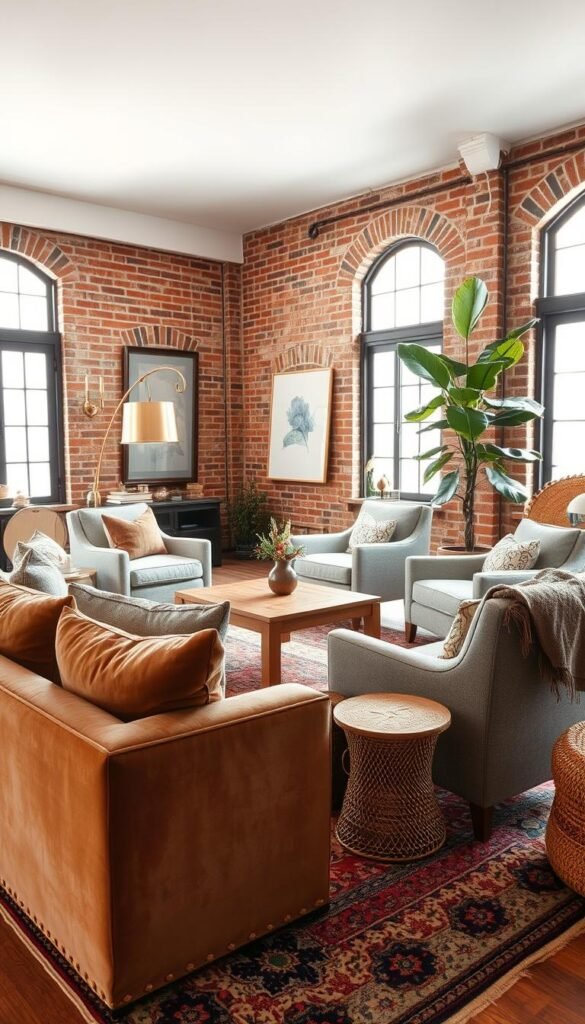
Have you ever walked into a room that just feels right? That perfect atmosphere often comes from thoughtful texture mixing. It’s the secret ingredient that makes spaces feel complete and inviting.
Texture blending creates rich sensory experiences in your home. It adds layers of interest without relying on bold colors. This approach makes your space feel curated rather than decorated.
Successful texture combinations create visual harmony. They make rooms feel both sophisticated and comfortable. You achieve depth through material variety rather than color complexity.
Combining Plush, Leather, Glass, and Natural Materials
Great texture mixing follows a simple formula. Combine soft, hard, smooth, and rough elements. This creates balance while adding tactile appeal.
Try pairing a plush area rug with a leather armchair. Add a glass coffee table for contrast. The combination feels both cozy and refined.
Natural materials bring organic warmth to your scheme. Wood accents, stone elements, or woven baskets add earthy texture. They connect your interior to the natural world.
Professional designers use this material matrix:
| Material Type | Best Placement | Texture Quality | Pairing Suggestions |
|---|---|---|---|
| Plush Fabrics | Rugs, upholstery | Soft, inviting | Glass tables, metal frames |
| Leather | Chairs, ottomans | Smooth, durable | Wool throws, wood accents |
| Glass/Metal | Tables, lighting | Hard, reflective | Textured rugs, fabric chairs |
| Natural Wood | Floors, shelves | Warm, organic | Metallic accents, plush textiles |
| Stone/Ceramic | Accessories, tiles | Cool, textured | Wood elements, soft fabrics |
This balanced approach prevents any single texture from dominating. Your space feels cohesive yet interesting.
Using Textiles to Add a Cozy Factor
Textiles provide the easiest way to incorporate warmth. Throws, pillows, and curtains add softness without commitment. They’re perfect for seasonal updates too.
Layer different fabric weights for maximum effect. A chunky knit blanket over a smooth sofa creates instant comfort. Mix patterns through textiles rather than wall treatments.
Pillows offer excellent opportunities for texture play. Combine velvet, linen, and wool pillows on one sofa. The variety feels collected rather than matched.
Remember that texture variety often matters more than color changes. A monochromatic scheme with multiple textures feels more sophisticated than multiple colors with flat textures.
Your finished space will feel inviting and lived-in. Texture mixing creates that perfect balance between polished and comfortable.
Incorporate Clean Lines and Simple Silhouettes
Clean lines act as the quiet heroes in your blended space. They create visual calm that lets other elements shine beautifully.
This approach values clarity over complexity. Your room gains sophistication through thoughtful restraint.
Choosing Furniture with Unfussy Profiles
Select pieces with straightforward shapes and minimal detailing. These profiles work well with both classic and current items.
Look for sofas with straight arms and clean skirts. Choose tables with simple geometric bases. These pieces become versatile anchors in your scheme.
Uncluttered furniture creates breathing room for special architectural features. It prevents visual competition between your furnishings and room structure.
Letting Simple Architecture Shine
Your furniture should complement rather than hide beautiful building elements. Understated pieces highlight impressive ceilings or fireplaces perfectly.
Clean-lined stone tables can echo masonry details subtly. Neutral drapes frame windows without distracting from the view. This approach celebrates your room’s inherent character.
Professional designers often say “let the architecture sing”. Simple furnishings provide the perfect accompaniment without overwhelming the melody.
Curate a Minimalist Approach to Decor and Accessories
Ever notice how some spaces feel instantly peaceful while others seem busy? The difference often comes down to restraint in decoration. A thoughtful approach to accessories makes your area feel both polished and personal.
This philosophy values quality over quantity in your decorative choices. It creates rooms that breathe while still showing your unique taste.
Your decorative elements should complement rather than compete with your furniture and architecture. They add personality without creating visual noise.
The Power of a Few Statement Pieces
Selecting one spectacular item often makes more impact than many small ones. An oversized mirror creates drama while expanding your sense of space.
Abstract art brings energy and conversation to neutral walls. These pieces become focal points that anchor your entire scheme.
Professional designers follow the “three-piece rule” for surfaces. They limit tabletops to three intentional items rather than numerous knickknacks.
This approach creates curated moments throughout your home. Each decorative choice feels deliberate and meaningful.
Avoiding Visual Clutter for a Sophisticated Look
Too many small items can make your space feel traditional rather than transitional. They compete for attention instead of working together.
Larger decorative pieces make stronger statements with less effort. A substantial ceramic vase holds more presence than several small trinkets.
Keep surfaces mostly clear to maintain clean lines throughout your room. This allows your beautiful furniture and architectural details to shine.
Here’s how professionals choose accessories for maximum impact:
| Accessory Type | Best Placement | Impact Level | Style Contribution |
|---|---|---|---|
| Oversized Mirror | Above fireplace, entryway | High impact | Expands space, reflects light |
| Large Artwork | Primary wall, behind sofa | High impact | Adds color, creates focus |
| Sculptural Vase | Console table, shelf | Medium impact | Adds height, organic shape |
| Statement Bowl | Coffee table, dining table | Medium impact | Holds smaller items neatly |
| Textured Basket | Floor, shelf | Low impact | Adds warmth, hides clutter |
This selective approach maintains the clean aesthetic essential to this look. Your room feels intentionally designed rather than accidentally decorated.
Remember that empty space is just as important as filled space. It gives your eyes places to rest and appreciate your carefully chosen pieces.
Your finished space will feel both sophisticated and serene. Minimal decor allows your personality to show through in the most elegant way.
Introduce Modern Accents to Refresh the Classic Foundation
Ever wondered how to add contemporary flair without losing timeless appeal? Strategic modern accents create that perfect spark of current style.
These elements should complement rather than compete with your existing pieces. They bring freshness while respecting your established foundation.
Using Metallic Finishes and Geometric Patterns
Metallic touches add sophistication without overwhelming your space. Choose brushed finishes over shiny surfaces for subtle elegance.
Geometric patterns reference current trends while maintaining classic appeal. They work beautifully in textiles and accessories.
Professional designers often use the “three-metal rule” for harmony. Mix no more than three metallic finishes throughout your room.
This approach creates cohesion while allowing visual interest. Your space feels curated rather than random.
Selecting Contemporary Lighting Fixtures
Lighting serves both functional and decorative purposes. Choose fixtures that make statements without shouting.
Clean-lined pendants work well over traditional tables. They create beautiful contrast that feels intentional.
Remember that less truly becomes more with modern elements. A few well-chosen pieces refresh your entire look.
Your space maintains its comfortable foundation while gaining current appeal. This balance creates rooms that feel both fresh and timeless.
Design a Functional and Inviting Layout for Living
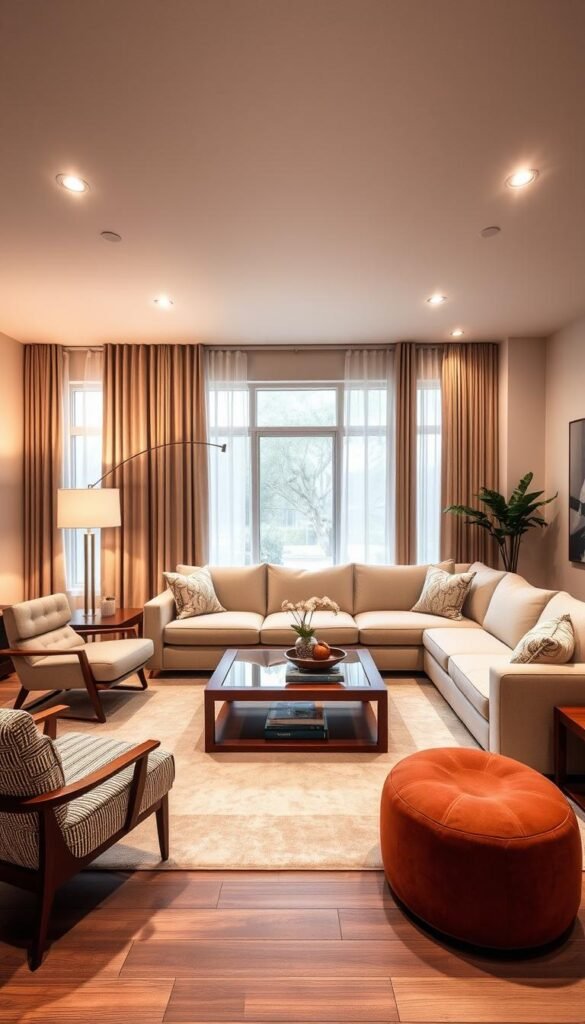
Have you ever entered a space that just flows beautifully? That effortless movement comes from smart planning. Your arrangement makes all the difference between awkward and amazing.
A great setup feels both open and intentional. It welcomes people in while guiding them naturally through the area. This approach works wonders for daily life and special gatherings.
Your furniture placement should serve how you actually use the area. Think about your daily routines and favorite activities. Then build your plan around those real needs.
Arranging Seating for Conversation and Comfort
Create intimate seating groups that face each other. This setup encourages talking and connection. People shouldn’t have to strain to see each other.
Keep sofas and chairs close enough for easy conversation. About eight feet between facing pieces works well. This distance feels cozy without being cramped.
Allow plenty of walking space around your seating area. Leave at least thirty inches between furniture pieces and walls. This prevents that cramped, cluttered feeling.
Angle chairs slightly toward the main seating group. This small tweak makes people feel included even when not directly facing others. It creates a more welcoming atmosphere.
Creating Distinct Zones for Different Activities
Define separate areas for various uses within your open plan. Use area rugs to anchor different functional spaces. This visual separation helps organize the room naturally.
Create a cozy reading nook with a comfortable chair and good lighting. Position it away from the main traffic flow for quiet moments. Add a small side table for books and drinks.
Designate an entertainment zone around your media center. Keep this area functional but stylish with organized storage. Blend technology seamlessly into your overall aesthetic.
Consider a game or puzzle area if that suits your lifestyle. A versatile table can serve multiple purposes throughout the day. This flexibility makes your space work harder for you.
Remember to maintain visual connections between zones. Your eye should travel smoothly from one area to another. This creates cohesion throughout your entire setup.
Layer in a Variety of Soft Furnishings and Pillows
Ever walk into a room that just wraps you in comfort? That cozy feeling often comes from smart layering. Soft furnishings add both visual and physical warmth to your area.
These elements bring personality and comfort to your scheme. They let you experiment with colors and patterns without major commitments.
Your choices here make a big difference in how your space feels. They add that final layer of polish and comfort.
Using Pillows to Inject Color and Pattern
Pillows offer the easiest way to introduce new colors. Start with your neutral foundation, then add pops of interest.
Choose two or three accent colors that work well together. Repeat these shades throughout your pillow arrangement. This creates cohesion without matching.
Mix patterns in similar color families for best results. Try pairing a large-scale print with a smaller geometric pattern. Solid pillows help balance the look.
Vary textures for added depth within your color scheme. Velvet, linen, and woven pillows work beautifully together. The combination feels collected rather than overly designed.
Selecting Throws and Rugs for Added Warmth
Throws provide instant coziness for chilly evenings. Drape them over sofas or chairs for both style and function.
Choose throws in complementary textures to your upholstery. A chunky knit blanket looks great on a smooth leather sofa. This contrast adds visual interest.
Area rugs anchor your seating arrangement while adding comfort underfoot. They define spaces in open floor plans beautifully.
Vintage wool rugs bring character and history to your scheme. Their subtle patterns work well with various furniture styles.
Natural elements soften contemporary lines effectively. Leather poufs and woven baskets add organic warmth. They create that perfect blend of styles.
Plants bring life and freshness to any interior. They complement both traditional and current pieces beautifully.
Here’s how professionals mix textures for maximum impact:
| Element Type | Best Uses | Texture Quality | Style Contribution |
|---|---|---|---|
| Velvet Pillows | Sofas, chairs | Luxurious, soft | Adds richness, catches light |
| Woven Throws | Armrests, baskets | Textured, casual | Adds craftsmanship feel |
| Boucle Fabric | Accent chairs, ottomans | Nubby, inviting | Current trend, tactile appeal |
| Wool Rugs | Floor anchoring | Dense, warm | Adds heritage character |
| Leather Poufs | Footrests, extra seating | Smooth, durable | Blends organic and refined |
These soft elements are among the easiest to change seasonally. Swap lighter linens for warmer wools as weather changes. This keeps your space feeling fresh year-round.
Your finished area will feel both inviting and intentionally designed. The right soft furnishings complete your perfect balance.
Choose the Right Artwork to Complement the Style
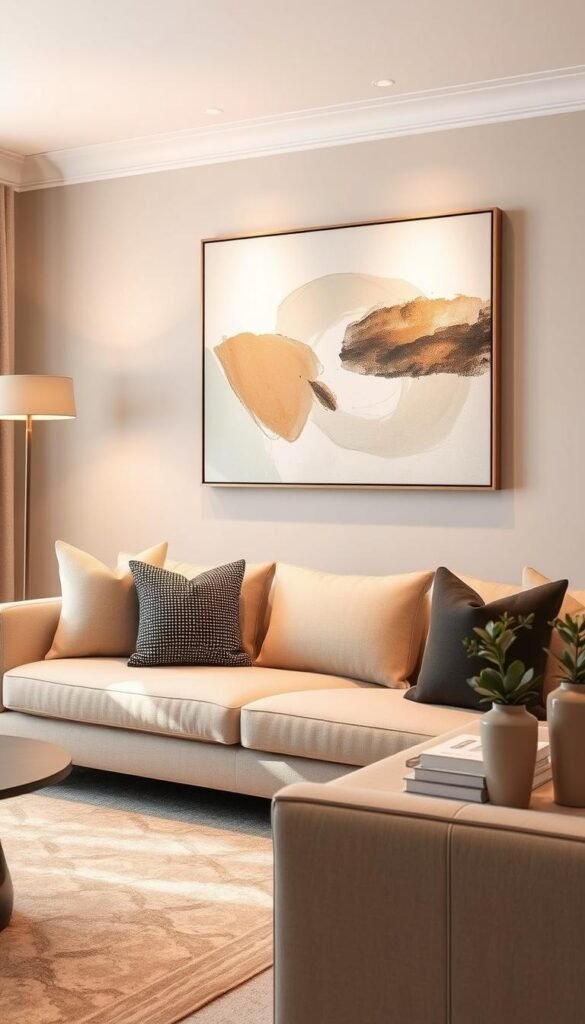
Have you ever noticed how a single piece of art can transform an entire room? The artwork you select plays a crucial role in maintaining harmony between different eras. It brings personality and visual interest to your neutral foundation.
Your art choices should reflect your personal taste while enhancing the overall aesthetic. They create conversation points and add that final layer of sophistication.
Opting for Modern and Minimalist Wall Art
Contemporary pieces work beautifully against soft, neutral backgrounds. They create exciting contrast without overwhelming your space.
Simple graphic prints make strong statements with clean lines. Photography adds current appeal while maintaining timeless quality.
Handcrafted items bring wonderful warmth and character. They bridge traditional craftsmanship with current sensibilities perfectly.
These elements reference today’s trends while respecting your classic foundation. They feel fresh yet appropriate for your blended aesthetic.
How Art Creates a Focal Point
Strategic artwork placement anchors your entire arrangement. It draws the eye and organizes visual flow throughout your area.
A large statement piece above your sofa establishes immediate impact. It becomes the centerpiece that ties everything together beautifully.
Smaller works can highlight specific zones or architectural features. They add interest without competing with larger elements.
Professional designers often use art to balance different textures and materials. The right piece can harmonize various elements seamlessly.
Your selections should feel intentional rather than random. They complete your curated look with personal expression and style.
Utilize Mirrors to Enhance Light and the Illusion of Space
Have you ever wished your area felt brighter and more open? Mirrors offer a clever solution that combines beauty with function. They serve dual purposes in your interior, adding both style and practical benefits.
These reflective surfaces work magic in any environment. They bounce light around your space, making it feel airy and expansive. The right mirror can transform how you experience your room.
Selecting Mirrors with Minimalist Frames
Choose frames that complement rather than dominate your aesthetic. Simple, clean-lined borders work best in blended environments. They enhance without competing with other elements.
Neutral finishes like brushed nickel or matte black create harmony. These subtle frames let the mirror’s reflective quality shine. Your selection should feel intentional and integrated.
Consider the mirror’s shape as part of your overall scheme. Geometric forms reference current trends while maintaining timeless appeal. They add interest without overwhelming your space.
Strategic Placement for Maximum Impact
Position mirrors opposite windows to capture natural light. This placement maximizes brightness throughout your area. It creates a welcoming, sun-filled atmosphere.
Place reflective surfaces where they can visually expand tight spaces. A well-positioned mirror can make narrow hallways feel wider. It adds depth without physical changes.
Use mirrors to highlight beautiful views or architectural features. They can double attractive elements throughout your room. This technique adds dimension and interest.
| Mirror Type | Best Placement | Light Enhancement | Space Illusion |
|---|---|---|---|
| Oversized Wall Mirror | Opposite windows, above sofa | High light reflection | Creates dramatic expansion |
| Grouped Small Mirrors | Gallery wall, entryway | Medium light reflection | Adds depth through pattern |
| Leaner Floor Mirror | Room corner, behind furniture | Directs light upward | Heightens ceiling appearance |
| Console Table Mirror | Entry hall, behind console | Enhances artificial light | Expands narrow areas |
| Sunburst Design | Accent wall, above fireplace | Radiates light outward | Adds visual movement |
Professional designers consider both frame quality and glass clarity. The reflection should be distortion-free for best results. This attention to detail ensures beautiful functionality.
Your mirrors become integral parts of your overall scheme. They enhance light and space while maintaining your curated aesthetic. This approach creates rooms that feel both bright and beautifully balanced.
Invest in High-Quality, Timeless Core Furniture Pieces
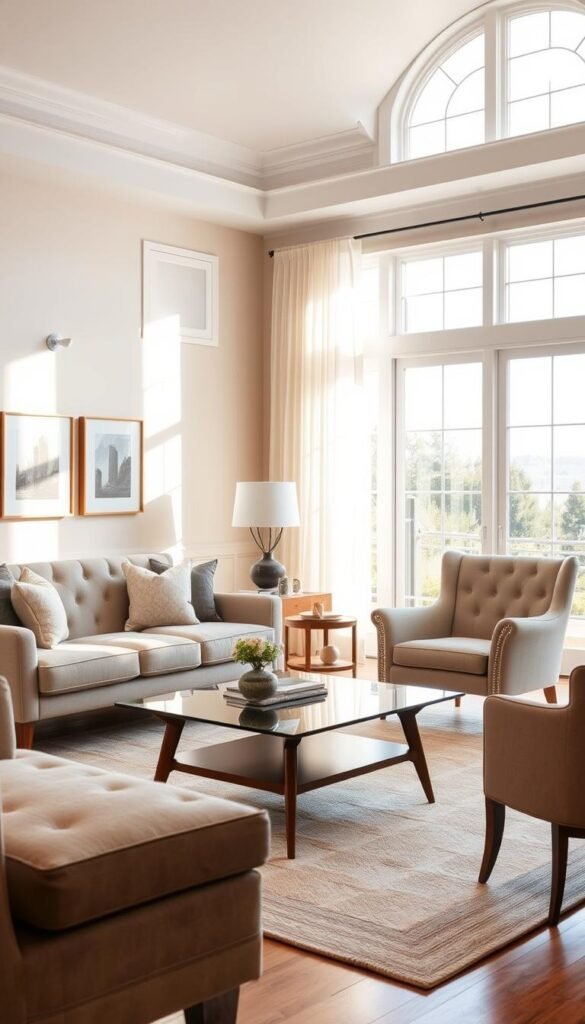
Have you considered what makes some rooms feel effortlessly stylish year after year? The secret often lies in the foundation pieces you choose. Quality furniture becomes the reliable anchor that supports your entire aesthetic vision.
These investment pieces form the backbone of your space. They provide the structural integrity that lets you play with other elements freely. Your sofa, chairs, and tables should be built to last through changing trends.
Building Your Design on a Sturdy Foundation
Sturdy construction matters more than fleeting fashion. Well-made pieces maintain their beauty through daily use and years of enjoyment. They become the trusted constants in your evolving decor.
Look for solid wood frames rather than particle board. Check joinery details like dovetail construction and reinforced corners. These features indicate furniture that will stand the test of time.
Upholstery quality makes a significant difference too. Performance fabrics resist stains and wear while maintaining comfort. They keep your investment looking fresh through years of use.
Why Quality Ensures Long-Term Style
Timeless design transcends temporary trends. Classic silhouettes and neutral foundations remain relevant through style shifts. Your quality pieces adapt to your evolving taste.
Investment-grade furniture offers both aesthetic appeal and functional longevity. It becomes more valuable as it develops character through use. These pieces tell your home’s story over time.
Professional designers prioritize quality foundations for good reason. They create spaces that feel both current and enduring. Your room maintains its charm while accommodating new accessories.
This approach lets you express creativity through changeable elements. You can update pillows, art, and decor without replacing core pieces. Your foundation remains constant while accents evolve.
Your investment in quality pays dividends in daily satisfaction. You enjoy furniture that feels substantial and performs beautifully. It creates that perfect balance between style and substance.
Incorporate Natural and Organic Elements for Warmth
Ever feel your space needs that extra touch of comfort and life? Natural elements bring an authentic warmth that manufactured items simply can’t match. They create an inviting atmosphere that feels both fresh and familiar.
These organic touches help blend different eras beautifully. They add character while maintaining a cohesive look throughout your area.
Items from nature bridge various design components effortlessly. They create harmony between traditional and contemporary pieces.
Adding Plants and Natural Wood Tones
Plants instantly breathe life into any interior. They add freshness and color without overwhelming your neutral palette.
Choose varieties that complement your lighting conditions. Snake plants and pothos work well in lower light spaces.
Natural wood tones bring wonderful warmth to your scheme. They add organic texture that feels both current and timeless.
Consider these popular options:
- Reclaimed wood coffee tables add history and character
- Live edge shelves bring nature’s artistry indoors
- Woven rattan chairs offer lightweight texture
- Oak or walnut accents provide rich, warm tones
Even simple birch logs in a fireplace or basket feel special. They reference nature while maintaining clean lines.
Connecting Your Interior to the Natural World
Found nature items add unique personality to your space. Driftwood, stones, or dried branches become sculptural elements.
These pieces tell stories and create conversation points. They make your room feel curated rather than decorated.
Organic materials soften modern lines effectively. They add tactile interest that makes spaces feel more inviting.
Professional designers often use natural elements to enhance comfort. These touches make rooms feel lived-in and authentic.
Your connection to nature through design creates lasting appeal. It brings balance and serenity to your daily environment.
Infuse Your Unique Personality into the Balanced Design
Have you ever admired a beautifully designed space that still felt impersonal? The final magic happens when you add your own story to the mix. Your personal touches transform a well-designed room into your true home.
These special items create emotional connections within your space. They make your area feel lived-in and authentically yours. The key lies in curating rather than simply displaying.
Curating Personal Items and Heirlooms
Family photographs become art when displayed thoughtfully. Choose cohesive frames that complement your color scheme. Black, white, or natural wood frames work beautifully.
Heirloom pieces bring history and character to your interior. A vintage quilt can become a stunning wall hanging. Grandmother’s ceramic collection makes a wonderful display.
Travel souvenirs tell your personal story without clutter. Select a few meaningful pieces rather than many small items. These treasures become conversation starters.
Professional designers use these curation techniques:
- Group similar items together for greater impact
- Use consistent backgrounds or display methods
- Edit collections to show only the best pieces
- Rotate items seasonally to keep things fresh
Ensuring Additions Complement the Overall Aesthetic
Your personal elements should enhance your established palette. Choose items that work with your existing color story. This maintains visual harmony throughout the space.
Consider the scale and proportion of your additions. A large family portrait needs appropriate wall space. Smaller items work better on shelves or tables.
Texture matters with personal pieces too. A woven textile from travels adds wonderful warmth. Smooth ceramic souvenirs bring clean sophistication.
Your most personal items deserve thoughtful presentation. They complete your space with meaning and heart. This approach creates rooms that feel both designed and deeply personal.
The transitional framework particularly accommodates personal expression. Its balanced nature welcomes your unique story. You create a space that truly reflects who you are.
Maintain a Cohesive Look with a Restrained Color Story
Have you ever seen a room where everything just clicks together perfectly? That seamless harmony often comes from smart color control. A limited palette creates visual flow throughout your space.
This approach makes decorating decisions simpler and more effective. You focus on texture and form rather than complex color matching.
Your color choices establish rhythm and connection between different areas. They create a unified feel that ties all elements together beautifully.
Repeating Key Colors for Harmony
Color repetition builds visual consistency throughout your interior. It guides the eye smoothly from one area to another.
Choose two or three main colors for your foundation. Repeat these shades in different elements throughout your space.
Your sofa might feature the same neutral tone as your walls. Pillows can pick up accent colors from your artwork. This creates a coordinated look.
Strategic color echoing makes mixed pieces feel intentionally chosen. It transforms separate items into a cohesive collection.
Letting a Unified Palette Tie Everything Together
A consistent color story blends diverse furniture styles effortlessly. It allows traditional and contemporary pieces to work together.
Neutral backgrounds provide the perfect stage for your favorite items. They prevent visual competition between different eras.
This approach creates serene, relaxing environments. Your space feels both polished and comfortable.
Professional designers use these techniques for guaranteed success:
| Color Strategy | Application Method | Visual Effect | Style Benefit |
|---|---|---|---|
| Base Color Repetition | Walls, large furniture, rug | Creates foundation | Unifies different pieces |
| Accent Color Echoing | Pillows, art, accessories | Adds rhythm | Connects separate areas |
| Tonal Variation | Different shades of same color | Adds depth | Maintains harmony |
| Texture Contrast | Same color, different materials | Adds interest | Prevents flatness |
| Strategic Pops | Small colorful accessories | Creates focus | Adds personality |
This method works particularly well for blended aesthetics. It allows you to mix pieces from different periods while maintaining harmony.
Your space will feel both collected and coordinated. The color story becomes the invisible thread that ties everything together.
Your Journey to a Perfectly Balanced Living Room
Creating a space that feels both current and timeless is an exciting adventure. You have blended clean lines with cozy textures for a look that works beautifully every day.
This approach allows your personality to shine through thoughtfully chosen pieces. Your area becomes a true reflection of your taste and lifestyle.
Enjoy a room that serves both practical needs and aesthetic desires perfectly. It remains fresh and relevant for years to come.
Celebrate achieving a space that feels intentionally designed yet naturally comfortable. Your journey results in a truly harmonious and inviting home.