Your living area deserves to feel special and inviting. The right artistic touches can make all the difference in creating a cozy atmosphere.
Well-chosen artwork adds warmth and personality to any room. It brings texture and character while keeping things modern and clean.
This guide will show you how to create an intentional look that reflects your unique style. We cover everything from color choices to proper placement.
These concepts work with various interior styles, from minimalist to contemporary. You can easily refresh your home with confidence.
Think of your walls as a blank canvas for self-expression. The right piece becomes a stunning focal point that transforms your entire space.
Let’s explore how to turn your living area into a relaxing retreat you’ll love coming home to every day.
Why Canvas Art Elevates Your Living Room Atmosphere
Beyond mere decoration, the right artistic elements work quietly to influence your daily mood and comfort. The pieces you select become part of your home’s personality, shaping how you feel in your space every day.
Studies show that colors directly affect our emotions. Different hues create specific feelings that can enhance your room’s purpose and atmosphere.
The Emotional Impact of Wall Art in Your Space
Color psychology plays a huge role in how art makes you feel. Warm earth tones like brown and orange create cozy, grateful feelings. Soft blues promote calm and relaxation throughout your space.
Vibrant colors bring energy to social areas. Muted tones offer serenity for quiet moments. Metallic accents brighten rooms with limited natural light.
Consider what mood you want to achieve. Abstract pieces spark conversation during gatherings. Landscapes bring peace for relaxation times. Choose what resonates personally with you.
| Color Family | Emotional Response | Best For |
|---|---|---|
| Earth Tones (brown, green, orange) | Warmth, gratitude, comfort | Cozy seating areas |
| Soft Blues | Calm, relaxation, peace | Reading nooks, quiet spaces |
| Vibrant Hues | Energy, excitement, joy | Social gathering spots |
| Metallic Accents | Brightness, sophistication | Low-light areas |
| Yellow Tones | Happiness, optimism | Morning spaces, entryways |
How Art Creates Focal Points and Visual Interest
Strategic placement turns artwork into a natural focal point. It draws the eye and anchors your room’s design. This creates visual balance and intentional style.
Large wall spaces benefit from artistic breaks. Art adds texture and dimension without clutter. It layers interest while maintaining clean aesthetics.
Your selections tell your unique story. They transform functional areas into emotionally engaging spaces. The right piece makes your room feel truly yours.
Proper placement amplifies this impact dramatically. We’ll explore positioning strategies in later sections. Thoughtful arrangement completes your vision beautifully.
Investing in meaningful pieces elevates daily living experiences. Your space becomes more inviting and reflective of personal style. The atmosphere you create enhances everyday moments.
Choosing Your Color Palette: Setting the Right Mood
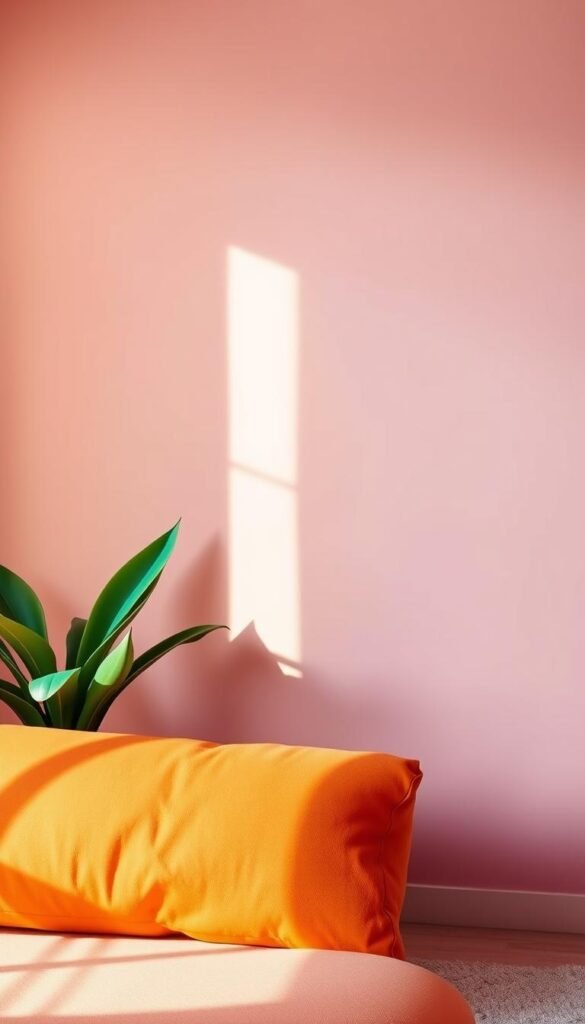
Selecting the perfect color scheme is the first step toward creating your ideal room atmosphere. Your palette choices work with existing furniture and architectural elements to establish a cohesive look.
Thoughtful color selection ensures your artistic pieces enhance rather than compete with your space. This approach creates visual harmony throughout your entire area.
Warm Neutrals for Cozy Comfort
Beige, taupe, and soft grey tones create instant warmth and comfort. These hues work beautifully in spaces where you want to relax and unwind.
Terracotta accents add depth to neutral schemes. They bring earthy richness without overwhelming your aesthetic. These colors pair well with most furniture styles.
Muted Blues and Greens for Calming Effects
Sage green and dusty navy introduce serene, peaceful energy. These cooler tones perfect spaces meant for relaxation and quiet contemplation.
After a long day, these colors help create a tranquil retreat. They work particularly well in rooms with ample natural light.
Black and White for Timeless Elegance
Monochromatic schemes offer sophisticated contrast without visual clutter. This classic combination suits both modern and traditional interior design approaches.
Black and white pieces make strong statements while maintaining simplicity. They anchor brighter color schemes effectively.
Earth Tones for Organic Warmth
Sand, clay, and rust colors bring natural warmth to your space. These organic hues complement wooden furniture and botanical elements beautifully.
Earth tones create grounded, inviting atmospheres. They work particularly well in sunlit rooms throughout different seasons.
Follow the 60-30-10 rule for balanced color distribution. Use 60% main color for walls and large furniture pieces. Reserve 30% for secondary colors like rugs and curtains. The remaining 10% works perfectly for artistic accents and accessories.
Match your color choices to room functionality. Social areas benefit from slightly vibrant pieces. Quiet zones work best with soothing, muted hues.
Experiment with textured finishes to enhance color depth. Textured surfaces add warmth to softer tones. They create interesting light play throughout the day.
Terracotta or ivory artistic pieces warm up neutral backgrounds. They make spaces feel more lived-in and personally curated. Your choices should reflect individual style while considering emotional impact.
A well-chosen palette sets the foundation for harmonious design. It makes subsequent styling decisions much easier to implement. Your space becomes truly reflective of personal taste and daily needs.
Modern Canvas Styles That Work Wonders
Contemporary artistic selections bring fresh energy to your space. They create visual impact while maintaining clean, intentional design.
These modern approaches work with various furniture styles and color schemes. They add personality without overwhelming your room’s atmosphere.
Choosing the right style depends on your desired mood and existing decor. Each option offers unique benefits for different areas of your home.
Abstract Art for Contemporary Flair
Abstract pieces feature soft, flowing shapes and monochrome strokes. Their versatility makes them perfect for contemporary spaces.
These works add dynamic flair without visual clutter. They become conversation starters during social gatherings.
Fluid forms create movement and energy in your room. They pair beautifully with modern furniture and minimalist decor.
Minimalist Line Drawings for Clean Aesthetics
One-line drawings offer simplicity with striking visual impact. Their clean lines create interest without complexity.
These pieces enhance rooms featuring natural materials. They complement wood accents and linen textiles perfectly.
Minimalist art maintains open, airy feelings in your space. It works particularly well in smaller rooms.
Neutral-Toned Landscapes for Depth
Soft landscape scenes provide calm and tranquility. Their muted tones create depth and serenity.
These pieces work wonderfully above fireplaces or sectionals. They evoke peaceful atmospheres for relaxation.
Neutral landscapes blend seamlessly with various color schemes. They add organic warmth to contemporary designs.
Black and White Photography for Classic Appeal
Monochrome photographs offer timeless elegance. Architectural or nature scenes create sophisticated statements.
These works fit beautifully in symmetrical gallery arrangements. They provide contrast against colorful backgrounds.
Black and white images anchor brighter color schemes effectively. They maintain visual balance throughout your space.
Consider paired diptychs for larger wall areas. Two complementary prints maintain balance while filling space beautifully.
These modern styles work with trending decor elements like boucle furniture. They create cohesive, stylish environments.
Mixing styles creates personalized, dynamic spaces that feel uniquely yours.
Combine abstract pieces with traditional elements for personal expression. This approach avoids catalog-like uniformity.
Oversized abstract works make stunning statement pieces. Line art suits minimalist interiors perfectly.
Select styles based on room usage. Abstracts energize social areas. Landscapes calm quiet corners. Photography adds elegant accents.
Modern artistic styles are versatile and easy to integrate. They help you achieve chic looks with intentional choices.
Perfect Placement: Where to Hang Your Canvas Art
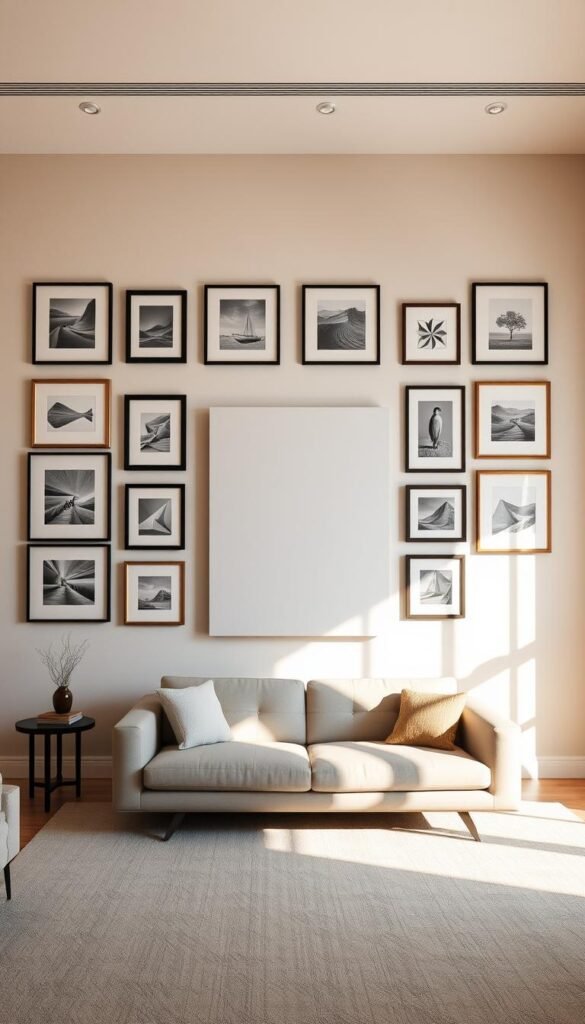
Strategic positioning turns beautiful pieces into integral elements of your room’s design. The right location enhances both visual appeal and daily functionality.
Consider how people move through your space. Place artistic works where eyes naturally rest during conversation or relaxation. This maximizes their impact on your atmosphere.
Above the Sofa: The Centerpiece Position
Your sofa wall offers the perfect opportunity for a stunning focal point. This position naturally draws attention in seating areas.
Follow the two-thirds rule for ideal proportions. Your artwork should span approximately two-thirds of your sofa’s width. This creates balanced visual weight.
Center the piece carefully above furniture. This arrangement anchors your seating area beautifully. It becomes the heart of your room’s design.
Gallery Walls Around Entertainment Centers
Create engaging displays around television units. Artistic groupings distract from black screens when not in use.
Symmetrical arrangements provide orderly elegance. Eclectic mixes offer personal expression. Both approaches integrate technology into your decor seamlessly.
Maintain consistent spacing between pieces. This creates cohesive collections rather than random placements. Your entertainment area becomes more inviting.
Console Table Arrangements for Balance
Art hung above console tables adds vertical interest. This technique enhances narrow spaces effectively.
Grid formations complement furniture lines beautifully. Diptychs or triptychs create streamlined looks. These arrangements add height without overwhelming.
Choose pieces that relate to table function. Decorative items below can echo artistic themes above. This creates harmonious vignettes.
Reading Nook Accents for Cozy Corners
Smaller pieces work wonderfully in intimate spaces. They enhance cozy corners meant for relaxation.
Thematic selections promote personal enjoyment. Choose calming images for reading areas. These additions make special spots feel complete.
Position art at comfortable viewing height. This ensures enjoyment during quiet moments. Your nook becomes more inviting.
Expert tips ensure successful placement every time. The classic eye-level rule suggests hanging with the center 57-60 inches from the floor. This height works for most viewers.
Use kraft paper templates before drilling holes. Cut paper to match your piece sizes. Tape them on the wall to test arrangements.
Work with your room’s architecture naturally. Large walls need substantial pieces. High ceilings suit vertical arrangements perfectly.
Avoid common placement mistakes for better results. Don’t hang pieces too high or too scattered. Instead, create intentional groupings that enhance room flow.
Consider areas where people naturally gather. Entryways and conversation spots deserve artistic attention. This maximizes impact on daily living.
Proper placement transforms decoration into functional design. Your selections become part of your room’s ecosystem. They enhance both beauty and practicality.
Sizing Guidelines: Getting Proportions Right
Proper sizing transforms your artistic selections from mere decorations into integral design elements. The right dimensions create visual harmony throughout your space.
Scale impacts how pieces interact with furniture and architecture. Well-proportioned works enhance rather than compete with your existing elements.
The Two-Thirds Rule for Furniture Pairing
This classic principle ensures perfect balance above your seating or console. Your artwork should span approximately two-thirds of your furniture’s width.
A piece measuring 48 inches wide fits beautifully above a 72-inch sofa. This proportion creates visual weight without overwhelming.
Archeworks recommends covering two-thirds to three-quarters of the wall space above furniture. This coverage creates intentional focal points.
Measure before purchasing to avoid sizing mistakes. Too small works look lost. Oversized pieces can dominate your entire area.
Oversized Pieces for Statement Walls
Large blank surfaces deserve bold artistic statements. Substantial works anchor rooms and become instant conversation starters.
Consider a single abstract canvas above your sectional sofa. This approach makes a dramatic impact in social gathering spots.
Big pieces work particularly well in rooms with high ceilings. They fill vertical space beautifully while maintaining clean aesthetics.
Oversized art creates sophisticated atmospheres in main living areas. These selections often become the heart of your design scheme.
Grouped Sets for Larger Wall Spaces
Multiple pieces offer balanced ways to fill substantial areas. Diptychs or triptychs provide visual interest without single massive works.
Kobel + Co suggests mixing dimensions for playful yet intentional looks. Consistent spacing creates cohesive collections rather than random placements.
A set of three prints above a console table works wonderfully. Space them evenly for harmony and professional appearance.
Gallery walls suit corners and narrow spaces perfectly. They add personality without overwhelming smaller areas.
| Wall Area | Recommended Approach | Expert Tip |
|---|---|---|
| Above sofa (large wall) | Single oversized piece or grouped set | Cover 2/3 to 3/4 of wall space |
| Narrow spaces/hallways | Smaller groupings or vertical arrangements | Mix sizes for visual interest |
| Statement walls | Bold oversized artwork | Anchor with substantial pieces |
| Above console tables | Diptychs or triptychs | Maintain consistent spacing |
| Intimate spaces/bedrooms | Smaller subtle pieces | Consider room function first |
Consider your room’s purpose when selecting sizes. Social areas benefit from statement works. Quiet zones work better with subtle pieces.
Always ensure art size complements your architecture. High ceilings accommodate vertical arrangements. Lower ceilings suit horizontal compositions.
Use templates or apps to visualize sizes before buying. Cut paper to match potential pieces. Tape them on your wall to test proportions.
Proper sizing creates professional-looking results. Your space feels curated and thoughtfully designed. Every piece enhances your overall atmosphere.
Creating Gallery Walls That Captivate
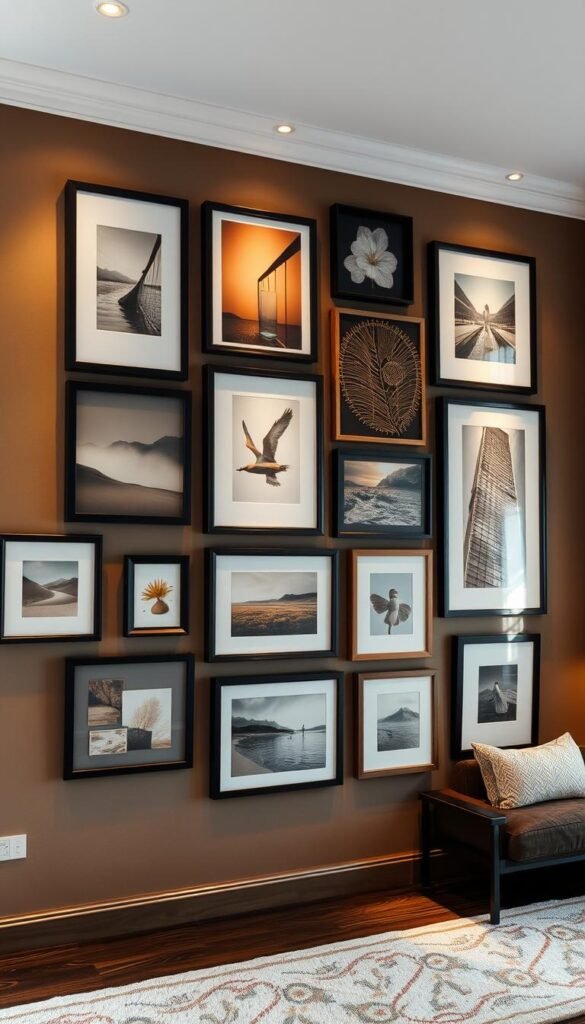
Gallery arrangements turn ordinary walls into dynamic showcases of personal style. They transform blank surfaces into engaging displays that tell your unique story.
These curated collections add depth and personality to any room. They create visual interest while maintaining cohesive design.
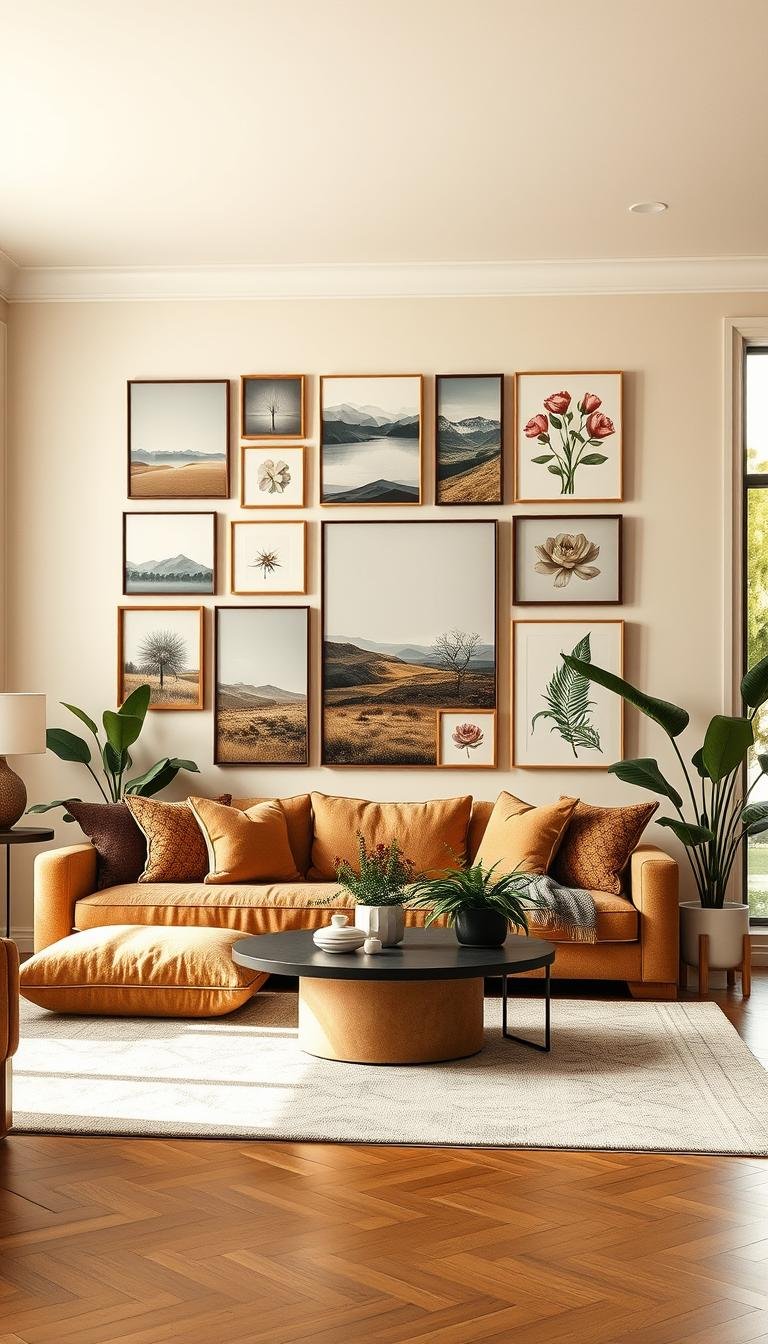
Design experts recommend starting with a focal piece. Build your arrangement around this central artwork for balanced composition.
Use kraft paper templates to plan layouts before hanging. Cut paper to match your piece sizes. Tape them on the wall to test different arrangements.
Symmetrical Arrangements for Order
Symmetrical layouts create calm, organized displays. They work beautifully in traditional or minimalist spaces.
Arrange frames evenly around a central axis. This approach offers visual balance and elegant simplicity.
Keep spacing consistent between each piece. Use rulers or templates for precision placement.
These ordered collections suit formal areas perfectly. They bring structured beauty to your interior design.
Eclectic Mixes for Personal Expression
Eclectic groupings celebrate individual taste and creativity. Combine different styles, sizes, and frames for dynamic energy.
Mix expensive originals with affordable prints. This approach adds depth without stretching your budget.
Ensure one piece stands out as the highlight. This hierarchy guides the eye through your collection.
Lorien Stern’s rotating art demonstrates this personal approach. Her evolving display reflects changing tastes and inspirations.
Consistent Spacing Techniques
Proper spacing creates visual harmony in your arrangement. Maintain 5-10 centimeters between each piece.
Use measuring tools for accurate placement. Templates help achieve professional-looking results.
Consistent gaps prevent crowded or scattered appearances. Your collection feels intentional and well-planned.
This technique works for both symmetrical and eclectic walls. It brings cohesion to diverse pieces.
Themed Collections for Cohesive Stories
Thematic groupings tell compelling visual stories. They create intentional, meaningful displays.
Choose a unifying theme like nature or travel. Black-and-white photos offer another cohesive option.
Liz Williams’ sailboat collection demonstrates this approach. Her themed arrangement unified scattered pieces into a strong statement.
Themes add character and personal connection to your space. They make your gallery wall truly special.
Ensure hierarchy in color or size so viewers understand highlights versus filler.
Gallery walls transform unused areas into engaging focal points. They work wonderfully around entertainment centers or in hallways.
These arrangements draw attention and spark conversation. They make functional spaces feel more inviting.
Your collection can evolve over time as you acquire new pieces. This flexibility lets your decor grow with your personal style.
Gallery arrangements offer versatile ways to express yourself. They turn your house into a home filled with meaningful art.
Framed vs Unframed: Choosing Your Look
The finishing details on your artistic pieces dramatically impact your room’s overall character. Your framing choices add that final layer of personality to your space.
This decision affects both aesthetics and functionality. It determines how your artwork integrates with existing furniture and architectural elements.
Consider your desired atmosphere and existing decor when making this choice. Both options offer unique benefits for different settings and styles.
Polished Frames for Formal Elegance
Sleek black or metallic frames create structured sophistication. They add polished refinement to contemporary spaces.
These options work beautifully with modern furniture and clean lines. They provide a finished, gallery-like appearance to your pieces.
UV-protective glass in frames offers practical benefits too. It prevents fading from sunlight exposure over time.
Choose framed art for a deliberate, composed look. It complements tailored furniture and formal arrangements perfectly.
Unframed Canvas for Casual Comfort
Unframed pieces create relaxed, organic vibes in your space. They blend seamlessly into your wall for understated elegance.
This approach emphasizes texture and simplicity. It works wonderfully with natural materials like wood and linen.
Your artwork feels more integrated and less formal. It suits minimalist or rustic decor that values comfort over perfection.
Unframed selections offer raw, authentic character. They make your space feel lived-in and personally curated.
Mixing Frame Styles for Eclectic Charm
Combining different frames creates dynamic, personalized displays. Mix colors, materials, and widths for curated collections.
Maintain one common element for cohesion. Use all wood tones or consistent profile thicknesses throughout your arrangement.
Contrast frame styles with room architecture for added interest. Modern frames in traditional settings create compelling juxtaposition.
This approach avoids matchy-matchy uniformity. It reflects evolving personal taste and collected style over time.
Your gallery wall becomes a true expression of individual personality. It tells your unique story through intentional variety.
Consider your room’s function when deciding between framed and unframed. Formal areas often benefit from structured presentations.
Cozy spaces might prefer the relaxed feel of unframed pieces. Both options can work within the same home when chosen thoughtfully.
Experiment to discover what feels authentically yours. The right choice enhances your daily living experience beautifully.
Texture and Material Considerations
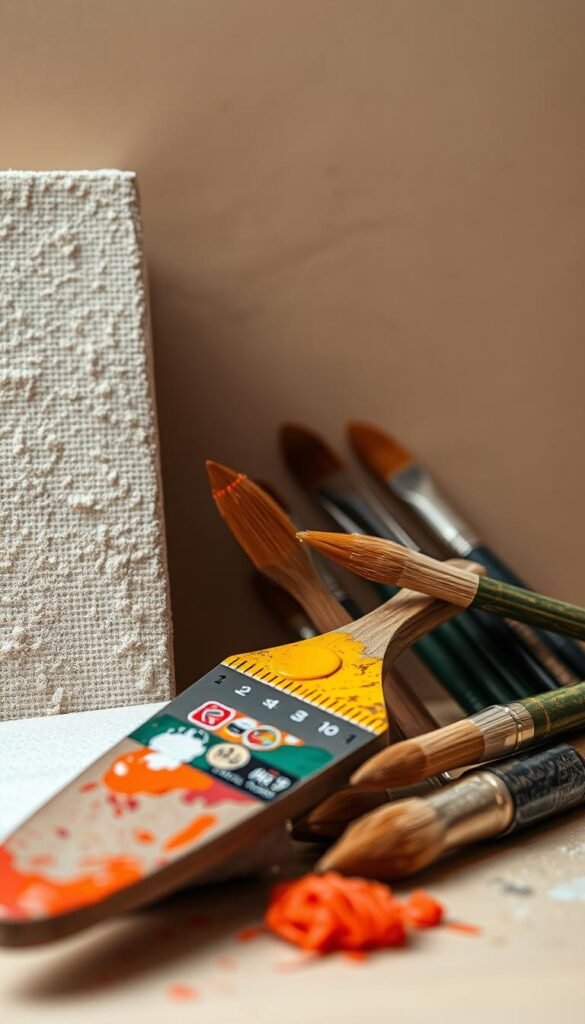
The materials you choose for your artistic pieces add depth and personality to your space. They transform flat surfaces into engaging experiences that appeal to both sight and touch.
Thoughtful material selection enhances your room’s overall atmosphere. It creates layers of interest while maintaining cohesive design.
Canvas Textures for Added Dimension
Textured finishes bring wonderful depth to your artistic selections. Brush strokes or woven surfaces create tactile interest that catches light beautifully.
These finishes add warmth to neutral color schemes. They make pieces feel more substantial and engaging in your space.
Choose textured works for areas where people gather closely. The added dimension invites closer inspection and conversation.
Soft-toned textured pieces work particularly well. They add coziness without introducing bold colors.
Mixed Media for Visual Interest
Combining different materials creates unique visual appeal. Metal accents or wooden elements add exciting contrast to traditional pieces.
Mixed media works break decorative monotony effectively. They become striking focal points in any arrangement.
Consider adding personal touches to existing pieces. Wooden beads or fabric elements reflect craftsmanship and individuality.
These combinations work beautifully in eclectic spaces. They add personality while maintaining visual harmony.
Natural Materials for Organic Appeal
Organic elements bring earthy warmth to modern spaces. Wood frames or linen mounts create comfortable, inviting atmospheres.
Natural materials pair beautifully with minimalist designs. They add texture without visual clutter.
Jute accents or hemp details offer rustic charm. These elements work wonderfully in rooms with natural light.
Designer Andrea Goldman used stoneware with hemp rope for texture. Heather Peterson incorporated cork walls for unexpected warmth.
Match material choices to your existing decor style. Smooth, modern rooms benefit from textured contrasts. Rustic spaces embrace raw, natural elements beautifully.
Consider how light interacts with different surfaces throughout the day. Textured pieces cast interesting shadows that change with sunlight.
Layered lighting enhances these dynamic effects. Your pieces gain movement and life beyond their static appearance.
Material choices contribute significantly to room mood. Rough textures suggest rustic comfort. Smooth finishes indicate sleek modernity.
These selections transform flat decoration into multi-sensory experiences. Your space gains depth and character through thoughtful material choices.
Matching Art to Your Existing Decor
The right artistic selections should feel like they belong in your space. They complement rather than compete with your current furnishings and color schemes.
When chosen thoughtfully, these elements tie everything together beautifully. They create harmony throughout your entire area.
Complementing Furniture Styles
Your furniture style guides your artistic choices. Modern sofas pair perfectly with abstract works featuring clean lines.
Traditional wooden pieces work well with landscape scenes. Rustic decor calls for textured selections with natural materials.
Consider the overall vibe you want to create. Match contemporary furniture with bold graphic prints. Choose organic pieces for cozy, comfortable settings.
Coordinating with Color Schemes
The 60-30-10 rule creates balanced color distribution. Use 60% for main colors like walls and large furniture.
Thirty percent works for secondary elements like curtains and rugs. Your artistic pieces become the perfect 10% accent color.
Echo colors already present in cushions or accessories. This creates cohesion without exact matching.
A bold abstract selection might pick up mustard yellow from throw pillows. Black-and-white works contrast beautifully with colorful rugs.
Balancing Patterns and Solids
Patterned furniture calls for solid artistic choices. This prevents visual clutter and maintains balance.
Solid decor benefits from patterned pieces. They add interest without overwhelming your space.
Consider your room’s mood when making these decisions. Serene spaces need calming works. Energetic areas can handle vibrant selections.
| Furniture Style | Recommended Art Type | Color Approach |
|---|---|---|
| Modern Contemporary | Abstract, graphic prints | Bold accent colors |
| Traditional Wood | Landscapes, classic scenes | Earthy tones, muted hues |
| Rustic/Natural | Textured pieces, organic materials | Neutral accents, natural colors |
| Minimalist | Line drawings, simple forms | Monochromatic schemes |
| Eclectic Mix | Varied styles, personal collections | Coordinated accent colors |
Art should echo your space’s colors without matching exactly. This creates depth and visual interest throughout your room.
View artistic works as unifying elements. They can tie together different furniture pieces or colors. This makes your space feel intentionally designed.
Ensure proportions relate to furniture scale. Large pieces work above sofas. Smaller selections suit side table areas.
Maintain style continuity with your room’s theme. Coastal spaces might feature ocean scenes. Industrial areas could use metallic accents.
Well-matched artistic pieces integrate seamlessly into your decor. They elevate your overall design while reflecting personal taste.
Your space becomes more cohesive and thoughtfully arranged. Every element works together to create your ideal atmosphere.
Lighting Your Canvas Art Perfectly
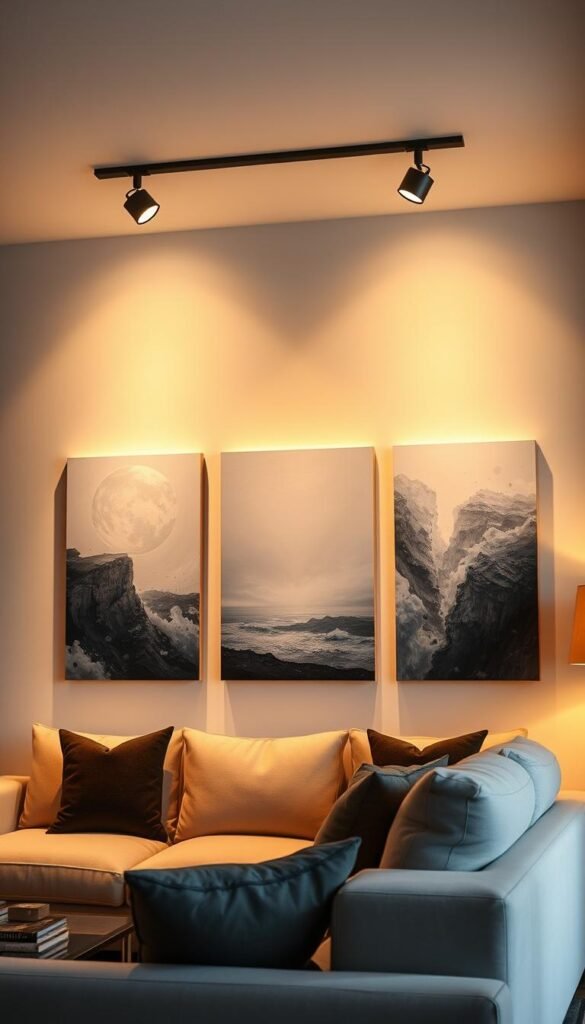
Proper illumination transforms your artistic pieces from static decorations into dynamic focal points. The right lighting strategy enhances both visibility and emotional impact throughout your day.
Thoughtful lighting choices protect your investments while creating beautiful ambiance. They ensure your selections remain vibrant and engaging for years to come.
Natural Light Considerations
Sunlight affects your pieces differently throughout the day. Direct exposure causes fading and damage over time.
Position works away from south-facing windows when possible. North-facing light offers softer, safer illumination for your space.
Use UV-filtering window treatments for added protection. These solutions reduce harmful rays while maintaining brightness.
Consider lighter backgrounds for rooms with limited natural light. Metallic accents reflect available illumination beautifully.
Accent Lighting Techniques
Picture lights mounted above pieces create focused illumination. They highlight textures and colors without overwhelming your space.
Track lighting offers flexible spotlighting for gallery arrangements. Adjustable heads let you direct light exactly where needed.
Directional sconces provide both function and decorative appeal. Jen Levy recommends glass or metal fixtures against matte surfaces.
These options work wonderfully above sofas or console tables. They make your artistic selections stand out beautifully.
Avoiding Glare and Fading
Angled lighting minimizes reflections on protective glass. Position fixtures to avoid direct beam contact with surfaces.
LED bulbs offer low heat output for better preservation. They maintain consistent temperature for your pieces.
Dimmable controls let you adjust intensity throughout the day. This creates perfect ambiance for different occasions.
Maintain stable environment conditions whenever possible. Ideal settings stay between 18-22°C with 50-55% humidity.
| Lighting Type | Best Application | Preservation Benefit |
|---|---|---|
| Picture Lights | Single statement pieces | Focused, controlled illumination |
| Track Lighting | Gallery arrangements | Adjustable directional coverage |
| Directional Sconces | Above furniture pieces | Decorative and functional |
| LED Spotlights | Dark corner accents | Low heat emission |
| Dimmable Fixtures | Multi-purpose rooms | Adjustable intensity control |
Proper lighting transforms art into a living element that changes with your daily rhythm and mood.
Regular maintenance ensures optimal performance over time. Dust fixtures and surfaces monthly to maintain brightness.
Consider your room’s primary function when planning illumination. Social areas might need brighter settings than relaxation zones.
Your lighting strategy should evolve with natural daylight patterns. Morning light differs dramatically from evening ambiance.
Well-planned illumination makes your space feel curated and intentional. It showcases your personal style while protecting your investments.
Budget-Friendly Canvas Wall Decor Ideas
Creating a stylish space doesn’t require a huge budget. With smart choices and creativity, you can achieve a high-end look for less.
Many affordable options exist that maintain quality and style. You can mix these with personal touches for unique results.
Affordable Print Options
Online retailers offer excellent value for custom pieces. Sites like Etsy provide unique selections at reasonable prices.
Many services include free shipping with orders. This makes larger pieces more accessible for your space.
Digital downloads represent another cost-effective solution. You can print high-resolution files locally on various materials.
Look for seasonal sales and discount codes. Holiday promotions often bring significant savings on quality items.
DIY Art Projects
Creating your own pieces adds personal meaning to your decor. Simple abstract paintings require minimal artistic skill.
Line drawings offer clean, modern aesthetics. They work beautifully in minimalist spaces throughout your home.
Consider mixed media projects using fabric scraps. These add texture and sustainability to your design approach.
Repurposing old frames or paintings saves money. A fresh coat of paint transforms outdated pieces into current styles.
Mixing High and Low Pieces
Strategic investment creates balanced, curated collections. Choose one statement piece as your focal point.
Complement this with more affordable selections. Thrift stores often contain hidden gems waiting for discovery.
Group smaller works into gallery arrangements. This fills substantial wall space without large expenses.
Your collection becomes more dynamic and personal. It reflects your taste rather than your budget limitations.
| Budget Approach | Estimated Cost | Style Impact |
|---|---|---|
| Online Prints | $30-100 | Professional finish, wide selection |
| DIY Projects | $15-50 | Personalized, unique character |
| Thrift Store Finds | $5-25 | Eclectic, vintage charm |
| Digital Downloads | $10-40 | Customizable, immediate access |
| Sales & Discounts | Varies | High quality at reduced prices |
Great style comes from creativity, not cost. The most interesting spaces mix cherished investments with thoughtful finds.
Remember that expensive doesn’t always mean better. Well-chosen affordable pieces can elevate your entire room.
Your space becomes a true reflection of personal style. It tells your story through intentional, budget-conscious choices.
With these approaches, anyone can create a beautiful, inviting atmosphere. Financial limitations shouldn’t limit your design aspirations.
Seasonal Rotation Strategies
Your home should evolve with you throughout the year. Changing your artistic displays keeps your space feeling fresh and responsive to different seasons and moods.
This approach lets you enjoy more pieces from your collection. It creates dynamic energy that reflects current inspirations and occasions.
Refreshing Your Space Periodically
Rotating pieces prevents visual fatigue in your main gathering area. It brings new energy without major redecorating efforts.
Artist Lorien Stern changes works based on her current mood. This practice keeps her home feeling lively and personally relevant.
Consider aligning rotations with natural light changes. Bright selections work well during sunnier months. Warmer tones complement shorter winter days.
Spring and summer call for vibrant colors and light themes. Fall welcomes earthy tones and rich textures. Winter suits cozy neutrals and calming scenes.
Storage Solutions for Art Collections
Proper storage protects your investments between displays. Vertical positioning prevents warping and maintains structural integrity.
Use acid-free wrapping materials to avoid chemical damage. Padded bags provide cushioning against accidental impacts.
Choose cool, dry areas with stable humidity levels. Ideal conditions stay around 50-55% relative humidity.
Avoid attics or basements with temperature fluctuations. Closet spaces or under-bed storage often work better.
Create an inventory system with seasonal labels. This simplifies finding pieces when rotation time arrives.
Creating Flexible Hanging Systems
Modern hanging solutions make swaps quick and damage-free. Gallery rails allow effortless adjustments and rearrangements.
Picture ledges offer versatile display options for various sizes. They support changing arrangements without new hardware.
Removable adhesive strips work for lighter pieces. They maintain wall surfaces while providing secure support.
Continuous rods create elegant solutions for multiple frames. They enable quick updates without tools or measuring.
Document your favorite arrangements with photographs. This makes recreating successful layouts much simpler later.
| Season | Recommended Style | Color Palette |
|---|---|---|
| Spring | Botanical prints, floral themes | Pastels, fresh greens |
| Summer | Coastal scenes, abstract brights | Vibrant hues, ocean blues |
| Fall | Landscapes, textured pieces | Earth tones, warm oranges |
| Winter | Minimalist works, serene scenes | Neutrals, cool grays |
| Holiday | Thematic pieces, personal collections | Metallic accents, traditional colors |
Living with new work before exhibitions helps me understand how pieces function in daily life. Rotation keeps my home feeling current and personally meaningful.
Seasonal rotations offer cost-free ways to refresh your environment. You can enjoy your entire collection throughout the year.
Your space remains engaging and personally relevant. It reflects your evolving tastes and current inspirations beautifully.
This approach makes your home feel continually renewed. It brings joyful discovery to everyday living experiences.
Maintenance and Care for Longevity
Proper care ensures your beautiful selections remain vibrant for years. Thoughtful maintenance preserves both visual appeal and investment value.
Simple routines protect against environmental damage and wear. Your pieces continue enhancing your space beautifully over time.
Cleaning Techniques for Canvas
Gentle dusting keeps surfaces clean without causing harm. Use a soft, dry paintbrush to remove loose particles.
Avoid liquids or chemical cleaners that might damage colors. These can cause fading or surface deterioration.
Light dusting after gatherings maintains fresh appearance. Dining areas might need more frequent attention.
Regular inspections help spot early signs of trouble. Look for flaking paint or sagging corners.
Environmental Protection Strategies
Direct sunlight causes fading and premature aging. Position works away from south-facing windows.
Maintain stable temperature between 18-22°C. Ideal humidity stays around 50-55% for preservation.
Heat vents and humid areas pose significant risks. Bathrooms require moisture-resistant selections.
UV-protective window film reduces harmful rays. This solution maintains brightness while preventing damage.
Dehumidifiers help in problematic spaces. They create better conditions for your collection.
Proper Handling and Storage
Always hold pieces by their edges during movement. This prevents oils from hands transferring to surfaces.
Vertical storage prevents warping and maintains shape. Use acid-free paper between works for protection.
Padded bags offer cushioning against accidental impacts. They safeguard your investments during rotation.
Cool, dry areas provide ideal storage conditions. Avoid attics or basements with temperature fluctuations.
Professional conservation ensures valuable pieces receive proper care. Experts can address specific issues effectively.
Glass covers protect framed works in busy areas. They prevent physical damage while maintaining visibility.
Conservation materials like acid-free mats prevent aging. UV glass adds another layer of protection.
Climate control systems maintain ideal conditions year-round. Humidifiers or air purifiers help significantly.
Your careful attention preserves beauty and value. Enjoy your stunning space for many years ahead.
Mixing Styles for Personal Expression
Your home becomes truly special when it reflects your unique personality. Mixing different artistic styles creates a space that feels authentically yours rather than following strict design rules.
This approach celebrates individuality and personal history. It turns your walls into a visual storybook of your tastes and experiences.
Nicholas Potts recommends blending traditional and contemporary pieces for dynamic results. Old masters can create fascinating contrast in modern spaces.
Your collection gains depth and character through intentional mixing. This method makes your room feel curated rather than decorated.
Combining Traditional and Modern
Pairing classic landscapes with bold abstract works creates exciting visual tension. This contrast adds energy while maintaining sophistication.
Try placing a large modern piece in a traditionally furnished room. The juxtaposition becomes an instant conversation starter.
Look for common elements to ensure cohesion. Shared color palettes or similar frame styles help unite different pieces.
Mix high-end artwork with DIY creations for authentic charm. This combination reflects both investment and personal touch.
Personal Collections with Meaning
Family heirlooms and travel souvenirs add wonderful storytelling elements. These pieces carry emotional weight beyond their visual appeal.
Liz Williams created a unified display using her inherited sailboat paintings. The thematic approach turned scattered pieces into a cohesive statement.
Botanical prints or nature photographs make excellent themed collections. They bring organic beauty while maintaining personal relevance.
Start with one meaningful piece and build around it gradually. Your collection evolves naturally with your life experiences.
Unexpected Pairings That Work
Black-and-white photography pairs beautifully with colorful abstract works. The contrast creates balanced visual interest.
Yond Interiors used collectible toys alongside serious artwork. This playful approach reflected their client’s personality perfectly.
Textile wall hangings complement canvas pieces wonderfully. The mixed materials add tactile dimension to your space.
Circular frames or nature-inspired subjects can unite diverse styles. These common elements create harmony within variety.
| Mixing Approach | Visual Effect | Cohesion Technique |
|---|---|---|
| Traditional + Modern | Dynamic contrast | Shared color palette |
| High-end + DIY | Authentic charm | Similar frame styles |
| Photography + Abstracts | Balanced interest | Consistent spacing |
| Themed Collections | Personal storytelling | Common subject matter |
| Mixed Materials | Tactile dimension | Unified color scheme |
Personal expression always trumps passing trends. Choose pieces that genuinely make you happy, even if they defy conventional design rules.
Your living area should reflect what you love rather than what’s fashionable. The most engaging spaces mix cherished investments with thoughtful finds.
Allow your collection to grow organically over time. Each addition should resonate personally rather than match perfectly.
This approach turns your home into a true reflection of your journey. Every piece contributes to a space that feels uniquely yours.
Professional Tips from Interior Designers
Expert advice can transform your approach to decorating. These insider secrets help you achieve professional results with confidence.
Top designers share their best practices for creating harmonious spaces. Their guidance ensures your artistic choices enhance your entire room.
Scale and Proportion Secrets
The two-thirds rule creates perfect balance above your furniture. Your artwork should span about two-thirds of your sofa’s width.
This proportion creates ideal visual weight without overwhelming your space. It makes your piece feel intentionally chosen rather than random.
For wall space above furniture, cover two-thirds to three-quarters of the area. This coverage creates a strong focal point that anchors your design.
Always measure before making final decisions. Too small works look lost on large walls. Oversized pieces can dominate your entire room.
Color Theory Applications
The 60-30-10 rule ensures balanced color distribution throughout your space. Use 60% for main colors like walls and large furniture.
Thirty percent works for secondary elements like rugs and curtains. Your artistic pieces become the perfect 10% accent color.
Color psychology helps create specific moods in different areas. Blues promote calm in relaxation zones. Yellows bring energy to social spaces.
Echo colors already present in your room’s accessories. This creates cohesion without exact matching that can feel too uniform.
Common Mistakes to Avoid
Hanging pieces too high is a frequent error many people make. The center should sit at eye level, around 57-60 inches from the floor.
Ignoring room function leads to disappointing results. Social areas need different energy than quiet reading nooks.
Not planning gallery walls creates cluttered, chaotic appearances. Always use templates to test arrangements before committing.
Choosing pieces that don’t resonate personally creates disconnected spaces. Your art should reflect what you genuinely love.
Art should never be an afterthought. It’s your opportunity to inject personality and delightful quirks into your space.
Direct sunlight causes fading and damage over time. Position works away from south-facing windows when possible.
Dark corners without proper lighting diminish artistic impact. Add accent lighting to showcase your pieces beautifully.
Test arrangements using digital tools or temporary hooks. This helps visualize how pieces work together before final placement.
Consider your room’s architecture when selecting sizes. High ceilings accommodate vertical arrangements beautifully.
Gallery walls need careful planning for best results. Maintain consistent spacing between pieces, usually 5-10 centimeters.
Ensure one piece stands out as the focal point. This hierarchy guides the eye through your collection gracefully.
Kraft paper templates prevent unnecessary holes in your walls. Cut paper to match your piece sizes for accurate testing.
Your choices should work with features like windows or ceilings. This creates integrated, harmonious placement throughout your space.
Always choose art that speaks to you personally. Authenticity creates more inviting and meaningful environments than perfect matching.
These professional tips help you avoid common pitfalls. They ensure your artistic selections enhance your space effectively and joyfully.
Your room becomes a true reflection of your personality. It feels curated rather than decorated when following expert advice.
Bringing Your Vision to Life: Final Inspiration
Your creative journey begins with that first piece you truly love. Use our tips on sizing, color, and placement to build confidence in your choices.
Art should be intentional and joyful. It reflects personal stories and enhances daily life rather than just filling space.
Imagine your area as a curated gallery. Each piece contributes to a harmonious and inviting atmosphere.
Explore collections from recommended sources like Etsy. They offer affordable and customizable options that suit any style.
Consider maintenance and rotation for long-term enjoyment. This keeps your space fresh and meaningful over years.
Visit art websites and measure your walls. Begin turning vision into reality, one canvas at a time.
This process is fun and creative. It offers endless possibilities for self-expression and home enhancement.
We wish you success in creating a room that truly feels like your sanctuary. May it be filled with art that inspires and comforts.