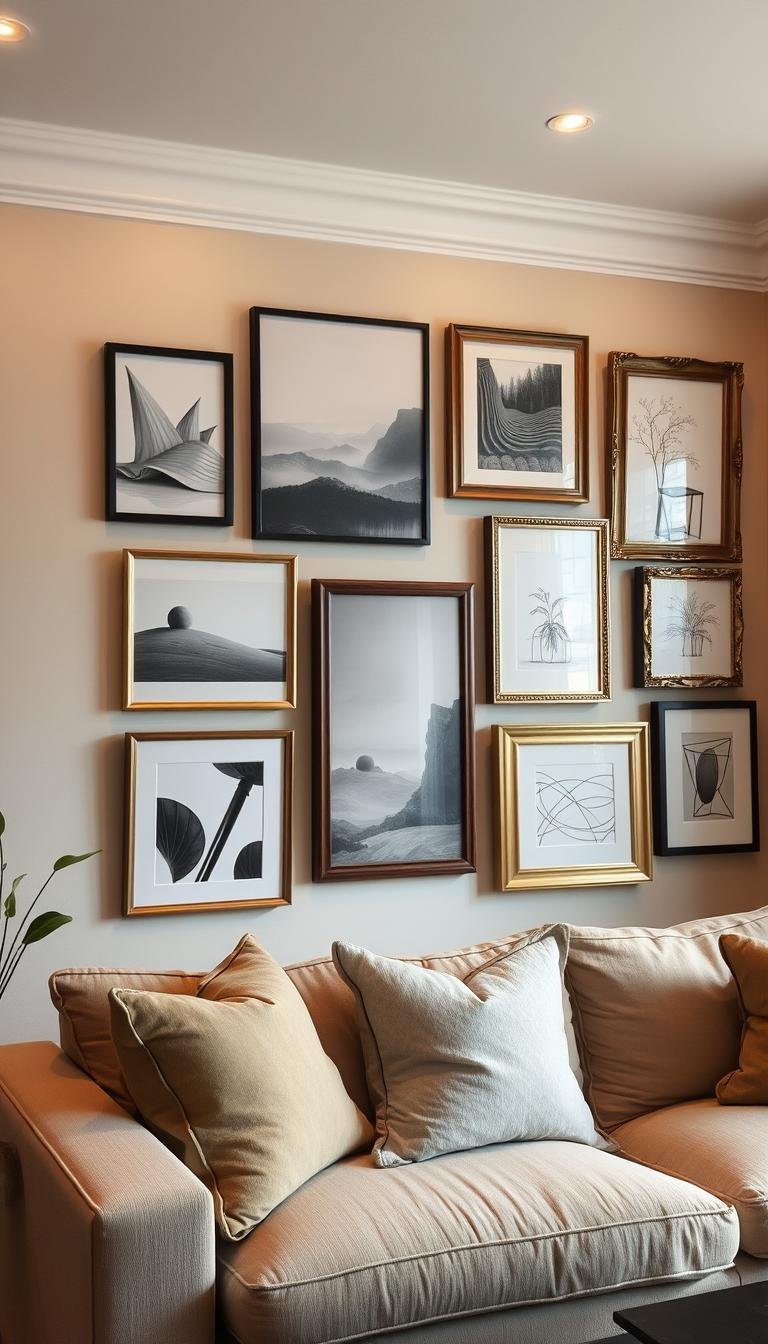
Transform your space with a stunning gallery wall display. This design approach turns blank walls into captivating focal points that showcase your unique personality.
You can create beautiful arrangements using pieces you already own or new finds. Mix photographs, artwork, and prints to build a collection that tells your story.
The beauty of this decor idea lies in its flexibility. Whether you prefer minimalist layouts or bold statement pieces, your gallery can reflect your personal style.
Surround yourself with meaningful artwork that brings life and color to your room. This approach creates visual interest and adds depth to your home’s design.
Why a Gallery Wall is the Perfect Choice for Your Living Room
Elevate your interior with a display that grows and evolves alongside your life journey. This approach to decor creates a timeless focal point that never goes out of style.
Your blank surfaces become meaningful canvases for personal storytelling. Each piece you choose adds another chapter to your visual narrative.
One of the greatest strengths of this design concept is its incredible versatility. Whether you have a compact apartment or spacious home, this solution adapts beautifully.
It works with various architectural features and room layouts. Even challenging spaces with unusual angles can become stunning focal points.
This isn’t a passing trend but a permanent design fixture that adds depth and character to your environment. The emotional value comes from surrounding yourself with meaningful pieces that reflect your experiences.
Your arrangement can accommodate any aesthetic preference. From clean minimalist approaches to bold maximalist statements, the possibilities are endless.
As you acquire new pieces and memories, your display naturally evolves. This living collection tells an ongoing story that changes with your life’s journey.
Your personal touch transforms ordinary decor into something truly special. The result is a space that feels authentically yours and uniquely welcoming.
Finding the Ideal Spot for Your Gallery Wall
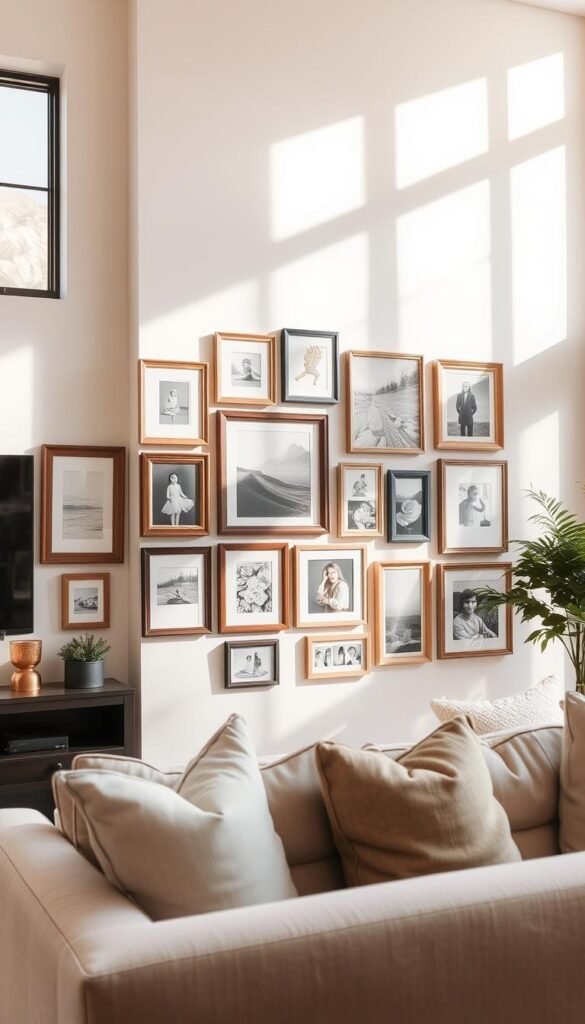
Your artwork deserves a prime position where it can truly shine and capture attention. Start by walking through your space and identifying areas that feel incomplete or underutilized.
Look for walls that naturally draw the eye when you enter the room. These often become the perfect canvas for your creative display.
The space above your sofa creates a wonderful focal point. Center your arrangement with the couch for balanced visual appeal.
Long, blank surfaces offer excellent opportunities for expansive displays. They transform empty areas into engaging visual experiences.
Consider cozy corners near reading nooks or accent chairs. These intimate spaces benefit from personal artwork that enhances their warmth.
Hallway-adjacent surfaces that lead into your main area work beautifully. They create a seamless transition between spaces while adding character.
Evaluate each potential location from multiple angles. Check visibility from seating areas and natural traffic patterns.
Lighting conditions significantly impact your display’s appearance. Natural light highlights colors while artificial lighting creates evening ambiance.
Avoid placing your collection near competing features like fireplaces or large windows. Your artwork should remain the main attraction without visual competition.
Television areas typically don’t work well for art displays. The screen becomes the dominant focal point, diminishing your pieces’ impact.
Your arrangement can actually enhance architectural elements. It draws attention to interesting room features or compensates for challenging layouts.
Test potential locations before committing. Use painter’s tape to outline your proposed layout or take photos for digital visualization.
Consider furniture placement and room traffic when finalizing your spot. You want your display to be enjoyed, not obstructed by daily movement.
The right location transforms your collection into a captivating centerpiece. It becomes a natural focal point that complements your entire room’s design.
Choosing a Layout That Complements Your Style
The way you organize your collection dramatically influences its overall aesthetic appeal. Your arrangement’s structure creates visual harmony and communicates your personal taste.
Different organizational patterns suit various interior design approaches. Consider your room’s existing decor when selecting your display’s format.
Your chosen pattern should enhance your space’s character. The right arrangement makes your collection feel intentional and professionally designed.
The Symmetrical Grid for a Modern Look
This clean approach uses identical frames arranged in perfect rows and columns. The uniform spacing creates a structured, organized appearance.
This layout works beautifully in contemporary spaces with minimalist decor. It brings order and precision to your display.
Place this arrangement above sofas or low furniture pieces. The balanced pattern complements modern furniture lines.
The Centered Anchor for a Strong Focal Point
Begin with one larger piece as your main attraction. Surround it with smaller complementary works that enhance its presence.
This approach naturally draws attention to your centerpiece. The surrounding items create visual flow and depth.
This layout works well above consoles or substantial seating areas. It creates a powerful visual statement in your space.
The Organic Freeform for Eclectic Vibes
Mix various frame sizes and styles for a relaxed, collected feel. Vary spacing between pieces to create dynamic movement.
This approach suits bohemian or eclectic interior design themes. It feels personal and creatively spontaneous.
Irregular wall spaces and corners become design features. The asymmetrical balance feels curated rather than chaotic.
| Layout Style | Best For | Frame Approach | Ideal Placement |
|---|---|---|---|
| Symmetrical Grid | Modern, minimalist spaces | Identical frames, even spacing | Above sofas, credenzas |
| Centered Anchor | Creating focal points | Large center with smaller surrounds | Over consoles, large furniture |
| Organic Freeform | Eclectic, boho interiors | Mixed sizes, varied spacing | Corners, irregular walls |
Consider your wall’s dimensions and architectural features. Some layouts work better in specific spaces than others.
Visual balance matters more than perfect symmetry. Step back frequently to assess your arrangement’s overall harmony.
Your chosen pattern should feel authentic to your personal style. The right layout makes your collection truly yours.
Selecting a Cohesive Theme to Tell Your Story
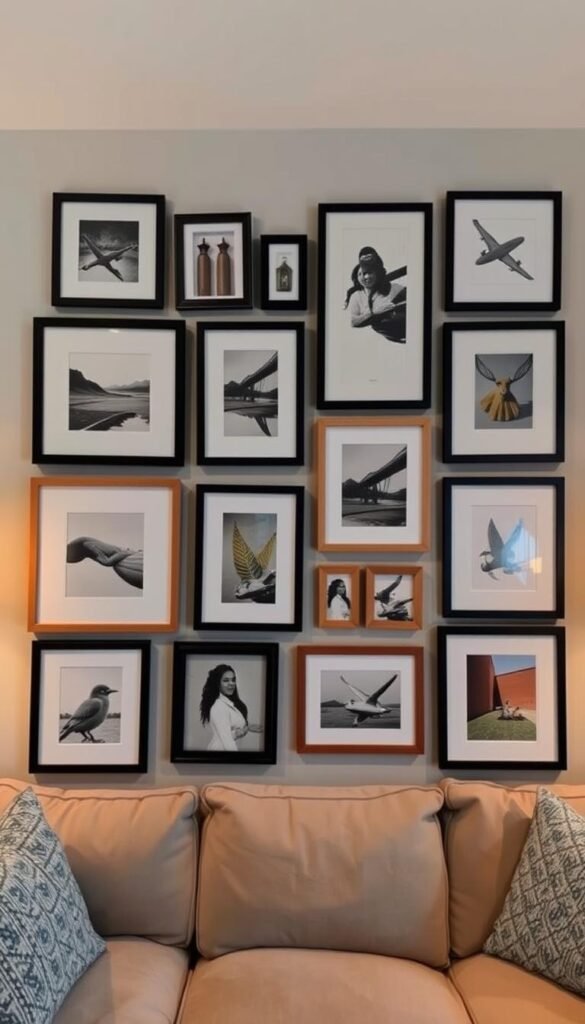
Your collection’s visual impact depends on thoughtful theme selection. This approach transforms individual pieces into a unified statement that reflects your personality.
Thematic consistency creates harmony among diverse artworks. It helps your arrangement feel intentional rather than random.
Unifying Through a Color Palette
Color creates instant visual connection between different pieces. Choose a dominant palette that ties your collection together.
Neutral tones work beautifully for elegant, understated displays. Black and white photography creates dramatic contrast and timeless appeal.
Soft pastels bring gentle harmony to eclectic mixes. You can also use accent colors that repeat throughout your arrangement.
Connecting Pieces with Frame Style
Frame style establishes consistent visual language across your display. Matching finishes create immediate cohesion.
Wood tones bring warmth and organic feeling to your space. Black frames offer modern sophistication and bold definition.
Mixed metals work well for industrial or contemporary settings. Consistent matting inside frames also enhances unity.
Building a Narrative with Subject Matter
Subject matter tells your personal story through visual elements. Choose themes that reflect your interests and experiences.
Travel memories create wonderful conversational pieces. Family photographs build emotional connections with your space.
Botanical prints bring natural beauty indoors. Abstract works allow for interpretive personal meaning.
Your theme should resonate with your life journey. This makes your display authentically yours and uniquely meaningful.
Make Your Art Pop with a Bold Colored Wall
A bold colored wall creates the perfect stage for your cherished art collection. This approach transforms your display into a dramatic focal point that commands attention.
Vibrant backgrounds make your pieces stand out with incredible clarity. The contrast between artwork and wall creates visual depth and dimension.
Deep, rich colors like navy blue create stunning backdrops for your arrangement. These shades make lighter artwork appear more vibrant and defined.
Color theory helps you choose backgrounds that complement rather than compete. Warm wall colors enhance cool-toned artwork beautifully.
Cool backgrounds make warm-colored pieces pop dramatically. Complementary colors create exciting visual tension in your space.
Professional designers often recommend these successful combinations:
| Wall Color | Artwork Type | Visual Effect | Room Atmosphere |
|---|---|---|---|
| Deep Blue | Gold frames, white mats | Elegant contrast | Sophisticated drama |
| Emerald Green | Natural wood tones | Organic harmony | Earthly richness |
| Terracotta | Black and white photography | Modern warmth | Cozy contemporary |
| Charcoal Gray | Colorful abstract pieces | Gallery sophistication | Urban elegance |
Lighting dramatically affects how colors appear throughout the day. Natural sunlight reveals true color intensity and vibrancy.
Evening artificial lighting creates different moods and shadows. Test your color choices under various lighting conditions.
Always sample paint colors on your actual wall before committing. Observe how they look at different times of day.
Digital visualization tools help preview final results. Many paint companies offer augmented reality apps for testing.
Your bold wall choice transforms the entire room’s atmosphere. It establishes mood and character beyond your art display.
Complement your colored wall with coordinating decor elements. Choose textiles and accessories that enhance your color story.
This approach creates a cohesive design look throughout your space. Your art becomes integrated with your overall decor scheme.
The right colored background makes your personal collection shine. It turns your display into a true statement piece.
Your chosen color should reflect your personality and style. This creates an authentic look that feels uniquely yours.
Create a Modern Statement with a Single Subject Focus
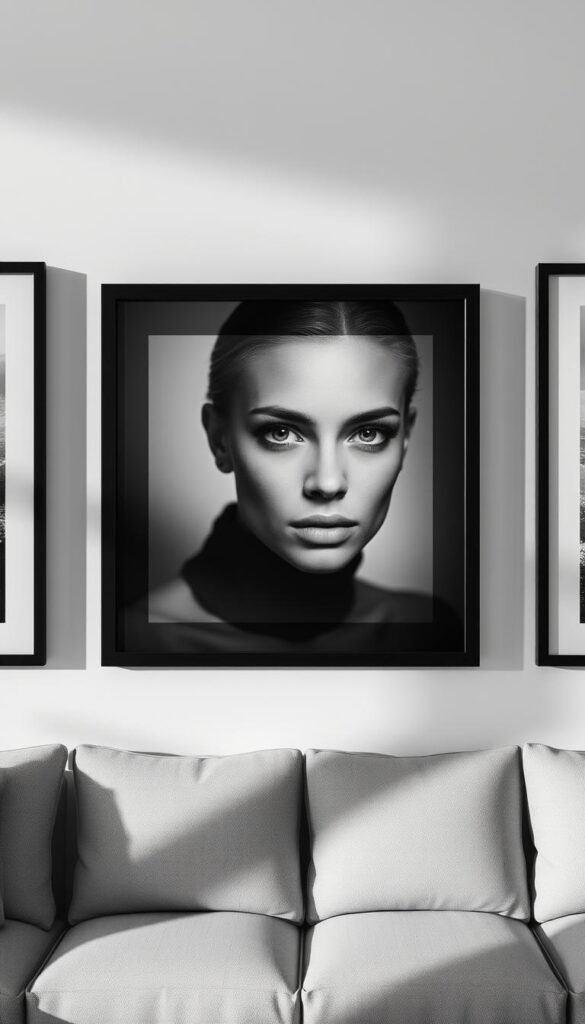
Discover the power of a singular focus in your art collection. This approach creates intentional displays that command attention through thematic consistency.
Your display gains sophistication when all pieces share a common subject. This curated appearance feels deliberate and professionally designed.
Botanical prints create beautiful natural collections. Architectural photography builds geometric interest throughout your space.
Portrait collections tell compelling human stories. Each example demonstrates how one subject can create visual harmony.
This method allows deep exploration within your interest area. You can showcase different interpretations of the same theme.
Maintain visual variety through diverse artists and styles. Different periods or techniques add richness to your consistent subject.
Choose subjects with personal meaning and strong visual appeal. Your passion should shine through every selected piece.
These collections become excellent conversation starters. Guests naturally engage with your specific interests and stories.
Source multiple pieces through specialty art dealers. Online marketplaces offer extensive themed collections.
Local artists often create series within specific subjects. Antique shops provide vintage pieces with character.
Your focused approach creates a memorable statement that reflects your personality. The result feels both personal and professionally curated.
Mix Colors and Shapes for a Dynamic Display
Intentional mixing creates visual energy that captures attention. Your arrangement becomes a vibrant expression of personal creativity when you combine diverse elements.
Artist Kjerstin Marie champions this approach with her philosophy. She believes intentional imperfection creates the most engaging displays.
The more out of line with each other, the better
Her method celebrates beautiful chaos with thoughtful curation. “My life and my house are chaotic, and so are my gallery walls,” she shares. “But although it’s chaotic, it is also carefully curated.”
This balance between spontaneity and intention makes your display uniquely yours. Your walls reflect your personal energy and creative spirit.
Creating Visual Harmony Through Diversity
Color theory helps you combine hues without visual discord. Complementary colors create excitement while analogous shades offer calm harmony.
Consider these basic principles when selecting your palette:
- Warm colors (reds, oranges) advance toward the viewer
- Cool colors (blues, greens) recede into the background
- Neutral tones balance vibrant accent pieces
- Monochromatic schemes create sophisticated cohesion
Frame shapes contribute significantly to your dynamic look. Mix rectangles, squares, ovals, and circular frames for visual interest.
Vary sizes to create rhythm and movement throughout your arrangement. Larger pieces anchor your display while smaller items fill spaces beautifully.
Maintaining Cohesion in Eclectic Mixes
Your diverse collection needs unifying elements to feel intentional. Repeating colors, materials, or themes creates connection between different pieces.
Consider these approaches for maintaining visual balance:
| Element to Mix | Unifying Technique | Visual Result |
|---|---|---|
| Various frame colors | Consistent matting color | Coordinated diversity |
| Different frame shapes | Uniform spacing between pieces | Organized variety |
| Mixed artwork styles | Common color palette | Thematic connection |
| Various sizes | Alignment along invisible lines | Structural harmony |
Your display can evolve organically as you acquire new pieces. Edit periodically to maintain balance and intentionality.
Remove items that no longer fit your evolving story. Add new finds that complement your existing arrangement.
Your mixed display becomes a living representation of your journey. It grows and changes alongside your personal experiences.
This approach makes your space truly reflective of your unique story. The result is a dynamic, personal display that feels both spontaneous and carefully considered.
Follow Your Room’s Shape for a Custom Fit
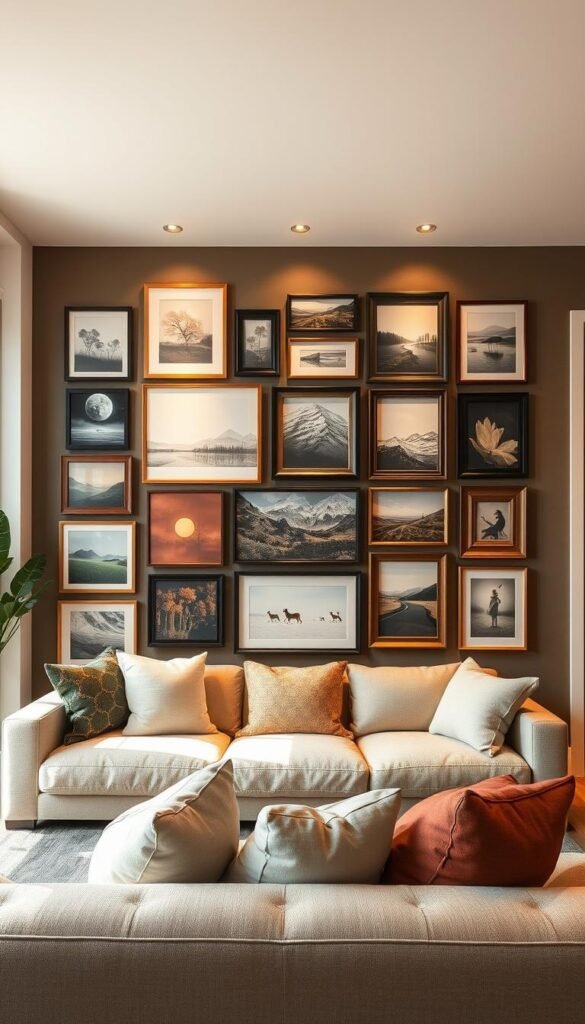
Your room’s unique shape offers a perfect opportunity for creative expression. Those angled surfaces and alcoves become design features rather than limitations.
Embrace your space’s architectural character instead of fighting against it. Your arrangement can follow the natural lines of your room.
This approach turns challenging elements into stunning focal points. That slanted wall becomes an intentional part of your design story.
Measure your space carefully before planning your layout. Use painter’s tape to mark the boundaries of unusual wall surfaces.
Consider scale and proportion when selecting your pieces. Larger artworks anchor expansive areas while smaller items fill compact spaces beautifully.
Mix horizontal and vertical orientations to complement spatial features. This creates visual balance across irregular surfaces.
Your custom-fitted display makes awkward areas feel intentional and designed. Even the smallest nook becomes a statement of style.
Visualization techniques help plan arrangements on unusual surfaces. Take photos and use editing apps to test different layouts digitally.
Your room’s shape guides your creative choices rather than limiting them. The result feels perfectly integrated with your space.
This personalized approach celebrates what makes your home unique. Your arrangement becomes a natural extension of your room’s architecture.
Embrace Maximalism with a Cluttercore Style
Cluttercore celebrates bold personal expression through dense, meaningful displays. This maximalist approach turns your surfaces into rich tapestries of life experiences and collected treasures.
Designer Peter D’Ascoli beautifully captures this philosophy.
The salon walls of our family in India are covered in art and artifacts we have collected over decades – from Turkish tiles to Italian gouaches of Naples to antique English chintz – and even some of our daughter’s childhood paintings.
Your arrangement becomes a visual autobiography. Each item contributes to a larger story about your journey and passions.
This style incorporates diverse objects beyond traditional artwork. Textiles, ceramics, and dimensional pieces add depth and texture.
Vintage finds bring historical character to your collection. Family photos create intimate connections to personal moments.
Visual cohesion emerges through intentional repetition. Use consistent colors or materials to unite your diverse pieces.
Start with larger items as anchors within your layout. Build around these focal points with smaller complementary pieces.
Balance variety with some unifying elements. A common color palette or frame style creates harmony within the density.
Your maximalist display evolves beautifully over time. New acquisitions integrate seamlessly into the existing tapestry.
This approach celebrates the beautiful chaos of a life well-lived. Your walls become a living museum of personal significance.
Every glance reveals another layer of your story. The result feels both deeply personal and visually captivating.
Incorporate Mixed Media for Depth and Interest
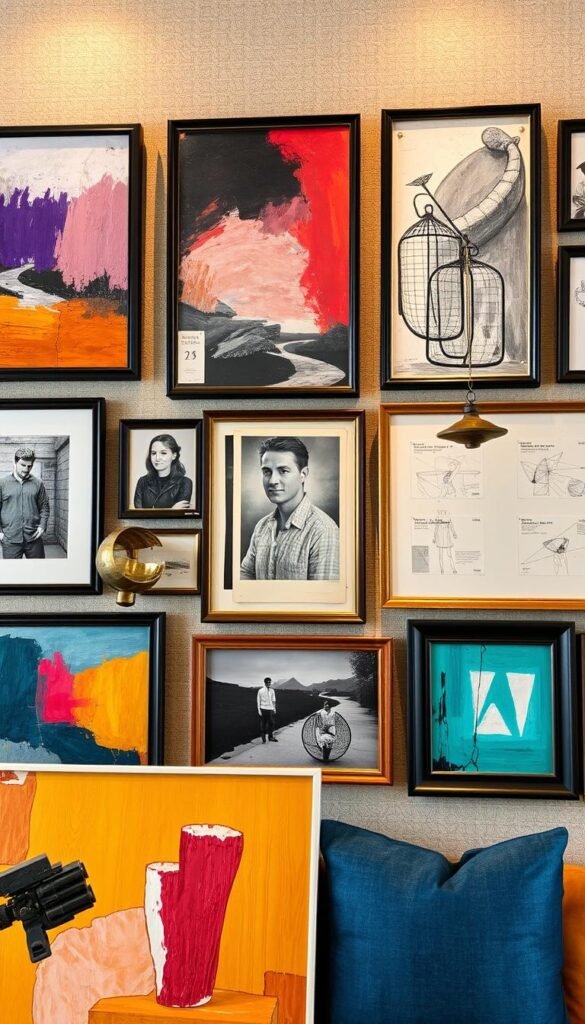
Your display gains remarkable dimension when you blend different artistic forms. This approach creates visual richness that captures attention from every angle.
Mixed media collections incorporate diverse materials and dimensions. They combine traditional framed pieces with dimensional objects for added texture.
Photographs work beautifully alongside small sculptures or textiles. Found objects add personal meaning and unique character to your arrangement.
Texture variety creates tactile appeal that enhances your space. Smooth glass, rough wood, and soft fabrics offer sensory interest.
Secure dimensional elements properly for safety and stability. Use appropriate hanging hardware for heavier items.
Consider lighting that enhances your display’s dimensional qualities. Directional lighting creates shadows that emphasize texture and form.
Create visual connections between different media through color themes. A consistent palette unites diverse materials beautifully.
Your arrangement can tell evolving stories through unconventional objects. Personal mementos and travel souvenirs add meaningful layers.
Build your collection gradually as you discover special pieces. Each addition contributes to your ongoing visual narrative.
This approach celebrates creative expression through material diversity. Your walls become a dynamic showcase of your unique journey.
Follow a Cohesive Color Scheme for Visual Harmony
Color coordination between your artwork and room elements creates sophisticated, integrated designs. This approach makes your display feel like an intentional part of your space rather than an afterthought.
Start by identifying dominant colors in your existing decor. Look at your furniture, textiles, and architectural features. Notice which hues appear most frequently throughout your room.
Use color theory to create harmonious relationships between wall art and surroundings. Complementary colors create excitement while analogous shades offer calm balance.
Your color story should flow naturally throughout the space. Pull colors from your largest furniture pieces or most prominent textiles. This creates visual continuity from floor to walls.
Accent colors add interest without disrupting harmony. Choose one or two accent hues that appear in both your art and decor elements. This creates subtle connections throughout your design.
Work with existing room colors rather than reinventing everything. Your display should complement what’s already working in your space. This approach feels organic and well-considered.
Cohesive color planning transforms your collection into an intentional design element. It becomes seamlessly integrated with your overall decor scheme.
Introduce new colors through artwork that complements existing decor. Look for pieces that share at least one color with your room’s palette. This creates instant visual connection.
Your coordinated approach results in a polished, professional look. The harmony between art and environment feels both deliberate and effortlessly beautiful.
Add Character and Depth with Abstract Pieces
Abstract art introduces a unique visual language to your collection. These pieces create interpretive possibilities that literal representations cannot match.
They bring emotional resonance without specific subject matter. Your personal connection forms through color, form, and composition rather than recognizable imagery.
This approach adds sophisticated character to any arrangement. Abstract works serve as excellent visual anchors in mixed collections.
They balance representational pieces through contrasting styles. The combination creates dynamic visual interest throughout your display.
Select abstract works that complement your existing color scheme. Consider these relationships when mixing styles:
| Abstract Element | Representational Pairing | Visual Effect |
|---|---|---|
| Bold color fields | Black and white photography | Modern contrast |
| Organic shapes | Botanical prints | Natural harmony |
| Geometric patterns | Architectural photography | Structural dialogue |
| Textural surfaces | Smooth portrait finishes | Tactile interest |
Scale matters when integrating different artistic approaches. Larger abstract pieces can anchor smaller representational works beautifully.
Choose based on personal response rather than seeking specific meaning. Your emotional reaction matters more than intellectual interpretation.
Abstract art modernizes traditional collections effectively. It also softens contemporary arrangements with organic elements.
Create visual conversations between different artistic languages. Let abstract forms play against literal representations for balanced depth.
Your selection process should prioritize personal connection over technical analysis. The right pieces feel instinctively right for your space.
This approach adds sophisticated character while maintaining your unique personality. Your walls become galleries of personal expression and visual discovery.
Incorporate Mirrors to Create the Illusion of Space
Strategic mirror placement transforms your arrangement into a functional design element. These reflective surfaces serve dual purposes as decorative pieces and spatial enhancers.
Mirrors cleverly expand perceived dimensions by bouncing light around your area. They make compact areas feel more open and inviting. This optical trick works wonders in various room configurations.
Different shapes contribute unique visual interest to your composition. Round mirrors soften angular layouts while rectangular ones reinforce clean lines. Consider mixing forms for dynamic rhythm.
Frame selection significantly impacts your overall aesthetic. Ornate frames add traditional elegance to your display. Simple borders maintain modern minimalism throughout your arrangement.
Position mirrors to capture and distribute both natural and artificial illumination. Place them opposite windows to maximize daylight reflection. This technique brightens darker corners effectively.
Safety considerations remain crucial when hanging reflective elements. Secure heavier pieces properly with appropriate hardware. Avoid placing mirrors where people might bump into them.
Combine mirrors with artwork for balanced functional beauty. Alternate reflective and non-reflective pieces throughout your layout. This creates visual variety while maintaining spatial benefits.
Smaller or darker areas gain dramatic transformation through mirrored collections. They instantly feel brighter and more expansive. The atmosphere becomes more inviting and comfortable.
Create rhythmic patterns through thoughtful mirror placement within larger arrangements. Space them evenly throughout your composition. This establishes visual flow and harmony.
Your mirrored display becomes both artistic statement and practical solution. It enhances your space while expressing personal style beautifully.
Essential Tools and Tips for a Flawless Hang
Getting your display perfect requires the right approach and equipment. Proper preparation makes the difference between amateur results and professional-looking installations.
Start by gathering everything you need before beginning. This prevents interruptions and ensures smooth progress throughout your project.
Using Painter’s Tape and Paper Templates
Create paper templates of each frame for perfect positioning. Trace your frames onto craft paper and cut them out carefully.
Label each template with its corresponding artwork. This keeps everything organized during your layout process.
Arrange these paper guides on your surface using painter’s tape. Adjust them until you achieve your desired composition.
This method lets you visualize the final result without making holes. You can experiment freely without damaging your surfaces.
Step back frequently to check proportions and balance. Take photos from different angles to assess your arrangement objectively.
The Importance of a Level and Consistent Spacing
Maintain uniform spacing between all pieces for cohesive results. Consistent gaps create visual harmony and intentional design.
Measure 2-3 inches between frames using a tape measure. Mark these measurements lightly with pencil for reference.
Use a quality level for straight horizontal and vertical lines. Check alignment after hanging each piece to maintain precision.
Professional designers emphasize this crucial step. “Levels prevent crooked installations that undermine your entire display,” notes interior expert Maria Rodriguez.
For grid patterns, measure both vertical and horizontal spacing. Double-check measurements before making any permanent marks.
Consider these essential items for successful installations:
- Laser level for perfect alignment
- Measuring tape for consistent spacing
- Painter’s tape for temporary positioning
- Craft paper for template creation
- Pencil for light marking
- Appropriate hanging hardware for different weights
Heavier pieces require special consideration and hardware. Use wall anchors for plaster surfaces and find studs when possible.
For challenging arrangements, measure your space on the floor before transferring to the wall. This technique helps visualize larger compositions.
Remember to step back frequently during installation. View your progress from different angles and lighting conditions.
Your attention to detail creates stunning results that showcase your collection beautifully. Proper technique ensures your display remains secure and visually balanced for years.
Bring Your Personality to Life on Your Walls
Your art display is more than decoration. It’s a true reflection of your unique personality and life journey. This creative expression tells your personal story through visual memories.
Trust your instincts when building your collection. Your home should showcase what you genuinely love. The right pieces create an authentic design that feels completely yours.
Remember that perfection matters less than personal meaning. Your arrangement will naturally evolve as you grow. Add new finds that speak to your changing style.
Begin with pieces that hold special significance. Let your walls become a living gallery of cherished moments. This approach transforms ordinary spaces into deeply personal environments.
Your creative expression makes your home truly welcoming. Embrace the joy of surrounding yourself with meaningful art. Your walls are waiting for your unique touch.