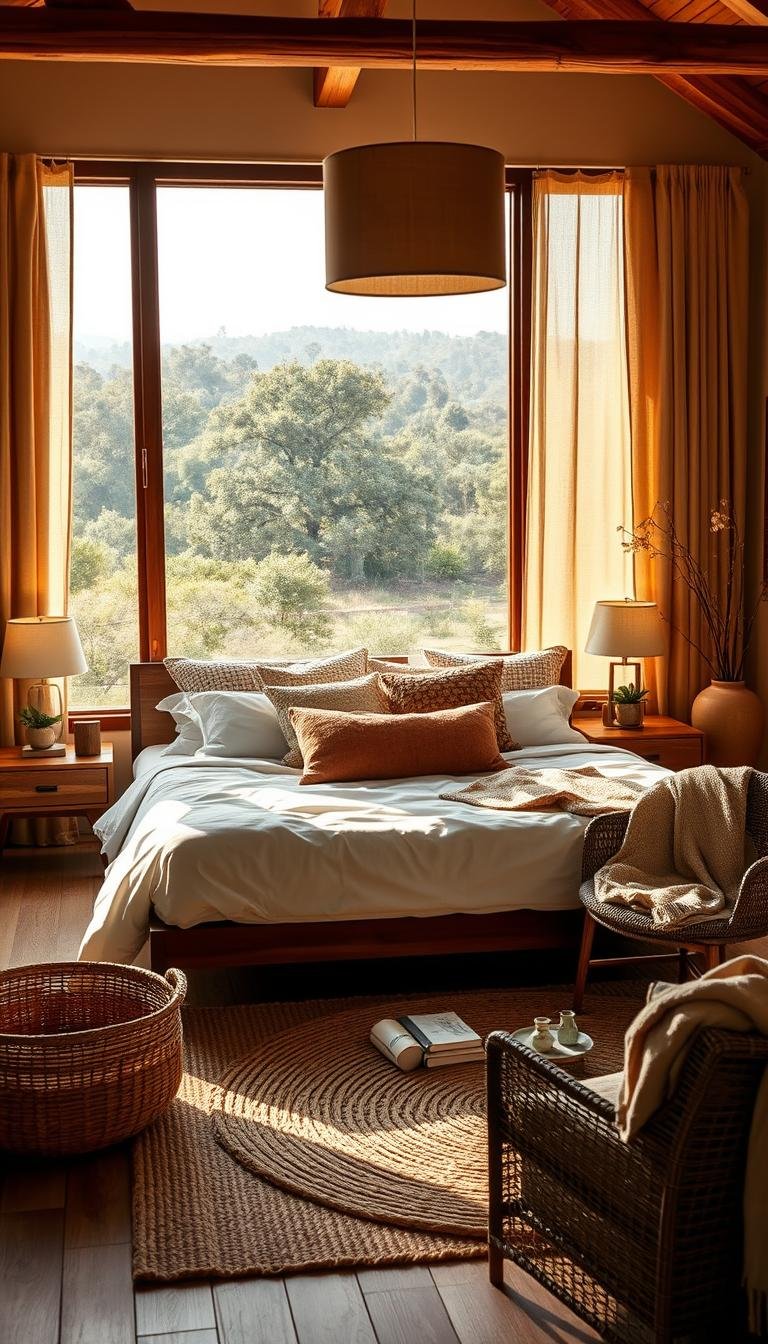
Your sleeping space should be more than just a place to rest. It should be your personal sanctuary where you recharge and feel completely at peace. Creating this special retreat is easier than you might think.
This guide will show you how to blend comfort with style for a space that feels both luxurious and functional. You’ll discover practical design ideas for everything from foundational bedding to decorative wall art.
The best part? You don’t need a huge budget or professional help. Our tips are inspired by real designer examples and current trends for 2026. Even small changes can transform your room into a warm haven.
We’ll cover color palettes, lighting options, texture combinations, and smart furniture choices. These decor ideas work for any space size or personal style preference. Get ready to create a room that’s both beautiful and deeply comforting.
Why Your Bedroom Deserves a Cozy Makeover
Think of your personal space as more than just a room with a bed. It’s your retreat for unwinding after a long day. This area should support your well-being and daily happiness.
Creating a warm environment has real benefits for your mental health. Studies show that comfortable surroundings can lower stress and improve mood. Your room becomes a sanctuary for peace.
More Than Just a Place to Sleep
Your sleeping area can serve multiple purposes. It’s perfect for reading, meditating, or enjoying quiet moments. Design ideas that incorporate comfy chairs or soft lighting make the room versatile.
Even a small bedroom can become multifunctional. Clever solutions like floating shelves or a compact armchair maximize your space. This approach is a growing trend in modern home setups.
The Connection Between Comfort and Quality Rest
Physical comfort directly impacts how well you sleep. Supportive furniture and soft bedding contribute to restful nights. Quality rest leads to refreshed mornings and better health.
Investing in your room is an investment in long-term wellness. Small updates, like adding a plush rug or calming color trends, make a big difference. As one says designer, “A thoughtfully designed room improves daily routines and overall happiness.”
Everyone deserves a personal haven that promotes relaxation and joy.
Defining Your Personal Cozy Bedroom Aesthetic
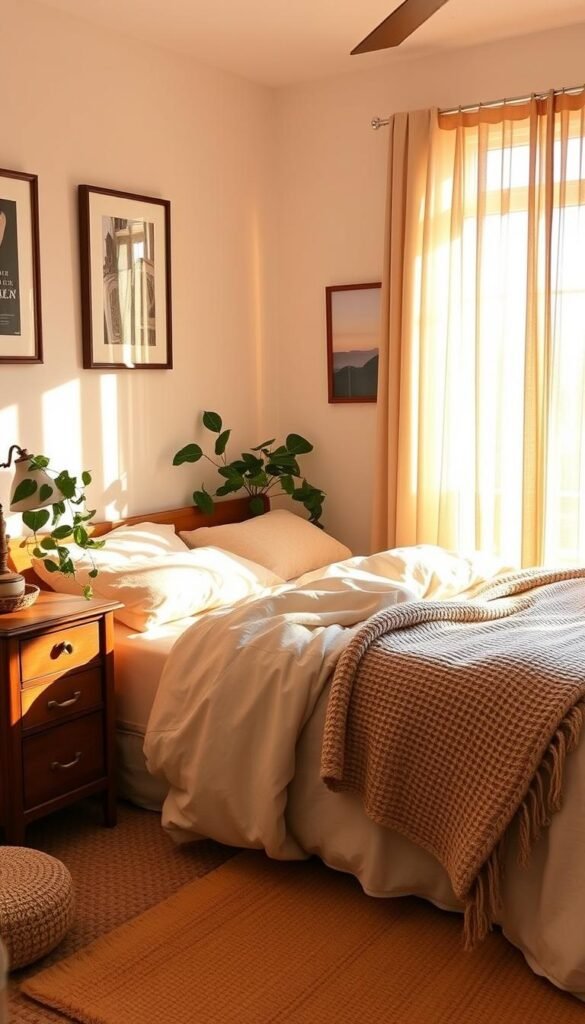
Your private retreat deserves a look that feels uniquely yours. This journey begins with understanding your environment and personal preferences.
Every great design starts with thoughtful planning. You’ll want to consider both practical needs and visual appeal.
Assessing Your Space and Lifestyle Needs
Start by looking at your room’s physical characteristics. Measure your available area and note window placement.
Natural light affects your color choices and furniture arrangement. North-facing windows need different solutions than south-facing ones.
Consider how you actually use the space. Do you read before sleeping? Work from home occasionally? These habits influence your design needs.
Even compact areas can become multifunctional with smart planning. Built-in storage and versatile furniture maximize your square footage.
Finding Inspiration That Resonates With You
Great ideas come from many sources. Social media platforms offer endless visual inspiration for room transformations.
Design magazines and blogs showcase current trends and timeless approaches. Save images that trigger an emotional response.
Your personal experiences matter too. Travel memories or nature elements can inspire your color palette and textures.
Create a mood board to visualize your preferences. This helps identify patterns in what you find appealing.
| Style Approach | Key Characteristics | Best For |
|---|---|---|
| Minimalist | Clean lines, limited decor, neutral palette | Small spaces, clutter-free lovers |
| Maximalist | Bold patterns, layered textures, vibrant colors | Large rooms, personality displays |
| Coastal | Light blues, natural materials, airy feeling | Light-filled rooms, relaxed vibes |
| Eclectic | Mixed patterns, unique pieces, personal collections | Creative types, conversation starters |
Remember that your aesthetic can evolve over time. Seasonal updates and new discoveries keep your space feeling fresh.
The most important rule? Choose what makes you happy. Your personal sanctuary should reflect your unique personality and needs.
Foundation First: The Perfect Bed Setup
Creating a comfortable retreat starts with mastering the art of the perfect bed setup. Your sleeping area’s centerpiece deserves thoughtful attention to both comfort and visual appeal.
Quality bedding transforms ordinary rest into luxurious relaxation. The right combination of layers creates an inviting look while supporting better sleep.
Choosing High-Quality Sheets for Ultimate Comfort
Begin with exceptional sheets made from natural fibers. Cotton and linen offer breathability and softness against your skin.
Brands like Boll & Branch and Serena & Lily provide premium options. These investments pay off in daily comfort and long-term durability.
Natural fibers regulate temperature throughout the night. They feel cooler in summer and warmer in winter than synthetic alternatives.
The Art of Layering Bedding Like a Designer
Professional designers build depth through strategic layering. Start with your fitted sheet and flat sheet as the base.
Add a quilt or duvet for warmth and visual weight. Top with a chunky knit throw for added texture and flexibility.
This approach allows seasonal adaptability with minimal effort. Lighter layers work for summer while heavier ones cozy up winter nights.
As one designer shares:
“I like to start with high-quality sheets, then add a quilt or duvet for warmth. Then I top it all off with a chunky knit throw and decorative pillows.”
Pillow Arrangements That Balance Style and Function
Combine functional sleeping pillows with decorative accents. This creates both comfort and visual interest.
Mix textures like velvet, linen, or silk for dimensional appeal. Varying sizes and shapes add professional polish to your bed.
Even a small bedroom benefits from thoughtful pillow arrangements. They can make your sleeping area feel more intentional and complete.
Your nightstand can complement this setup with matching accents. This creates harmony throughout your personal space.
Mastering the Color Palette for Serenity
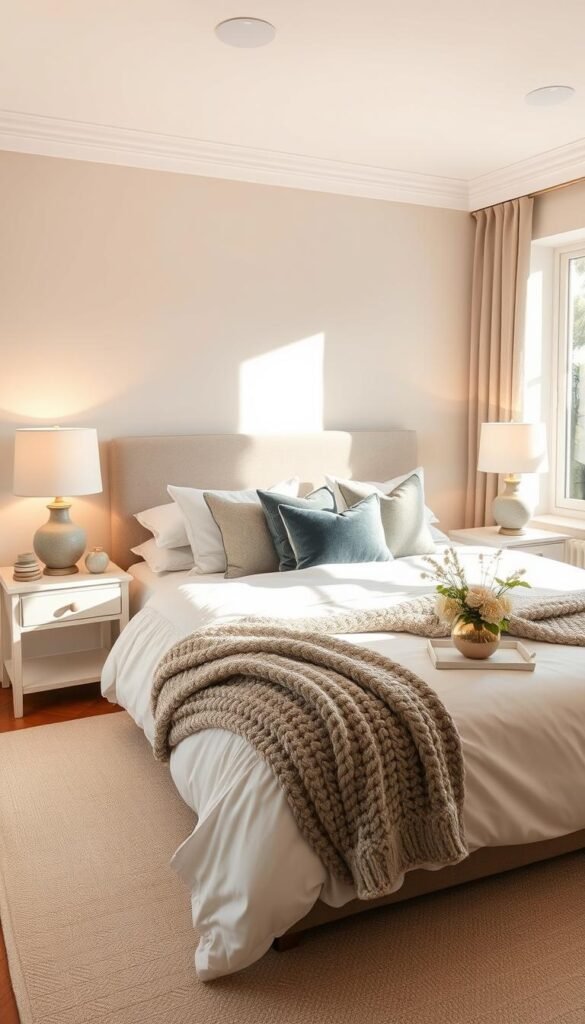
The right color scheme transforms your personal space into a peaceful retreat. Your choices influence both mood and visual harmony throughout the day.
Thoughtful color selection creates an environment that supports relaxation and rest. This approach combines psychological principles with current design preferences.
Calming Coastal Hues and Earthy Tones
Nature-inspired palettes bring outdoor tranquility inside your home. Soft blues mimic peaceful ocean views while gentle grays reflect cloudy skies.
Earthy greens connect your space to forest landscapes. These organic colors create a grounded, stable feeling in any room.
Designer Sarah Richardson notes:
“When designing a coastal bedroom, a color palette of muted tones, warm neutrals, soft blues, or gentle grays will enhance a serene atmosphere.”
These color trends work beautifully with natural materials. Think weathered wood accents and woven textures for complete harmony.
Why Muted Colors Promote Better Sleep
Bright, energetic shades stimulate brain activity when you need calm. Soft, muted tones signal your nervous system to unwind and prepare for rest.
Psychologists confirm that pale blues and greens lower heart rates. These cool hues naturally relax both mind and body before sleep.
Avoid vibrant reds and oranges in sleeping areas. These warm colors increase energy levels when you need relaxation most.
Your bedroom decor should prioritize restful shades over dramatic statements. Peaceful environments support quality sleep night after night.
Accent Colors That Warm Up Neutral Bases
Start with a neutral foundation of beige, white, or light gray. These versatile bases create a calm background for personal expression.
Add warmth through strategic accent pieces. Maroon throw pillows or deep red artwork inject personality without overwhelming the space.
Test paint samples on your wall at different times of day. Natural light changes how colors appear from morning to evening.
Seasonal changes keep your space feeling fresh year-round. Switch accent pillows or artwork to reflect different times of year.
These simple ideas help create a personalized sanctuary that promotes both style and serenity.
Lighting That Sets the Mood
The right illumination transforms your space from functional to magical. Thoughtful lighting choices create atmosphere and support daily routines.
Your personal sanctuary deserves layers of light that adapt to different needs. This approach combines practical function with beautiful design elements.
Ditching Harsh Overhead Lighting
Bright ceiling fixtures often create uncomfortable glare. They can make your space feel clinical rather than relaxing.
Soft, indirect illumination works better for winding down. Multiple light sources create depth and dimension throughout your room.
Consider removing harsh bulbs from main fixtures. Replace them with softer options or use them less frequently.
Bedside Lamps and Sconces for Ambient Glow
Bedside illumination serves both practical and aesthetic purposes. Reading becomes easier with directed task lighting.
Wall sconces save precious nightstand space while adding style. Hanging pendants offer a modern alternative to traditional lamps.
Choose fixtures that complement your overall decor theme. Vintage styles suit traditional spaces while sleek designs match contemporary interiors.
As one designer notes:
“Bed-side lamps and sconces are perfect for the bedroom, and a candle or two adds an extra touch of coziness.”
The Magic of Dimmable Options and Warm Bulbs
Adjustable brightness lets you customize your environment. Morning routines need brighter light than evening relaxation.
Warm-toned bulbs around 2700K mimic natural sunset hues. They reduce blue light exposure before sleep.
Dimmable systems offer ultimate flexibility throughout your day. Install dimmer switches or use smart bulbs with adjustable settings.
Energy-efficient LED options now provide excellent warm light quality. They last longer while creating the same inviting atmosphere.
| Lighting Type | Best Uses | Recommended Bulbs |
|---|---|---|
| Task Lighting | Reading, dressing, detailed work | 2700K LED, 60-watt equivalent |
| Ambient Lighting | General illumination, mood setting | Dimmable 2700K, smart bulbs |
| Accent Lighting | Highlighting art, architectural features | Warm white spots, directional lights |
Layer different lights for a balanced effect throughout your space. Combine overhead, task, and accent illumination for best results.
These ideas help create photogenic settings that look beautiful in person and online. Good lighting enhances both daily life and special moments.
Current trends favor personalized lighting solutions that adapt to individual needs. Your cozy bedroom deserves illumination that supports relaxation and joy.
Textural Elements That Invite Touch
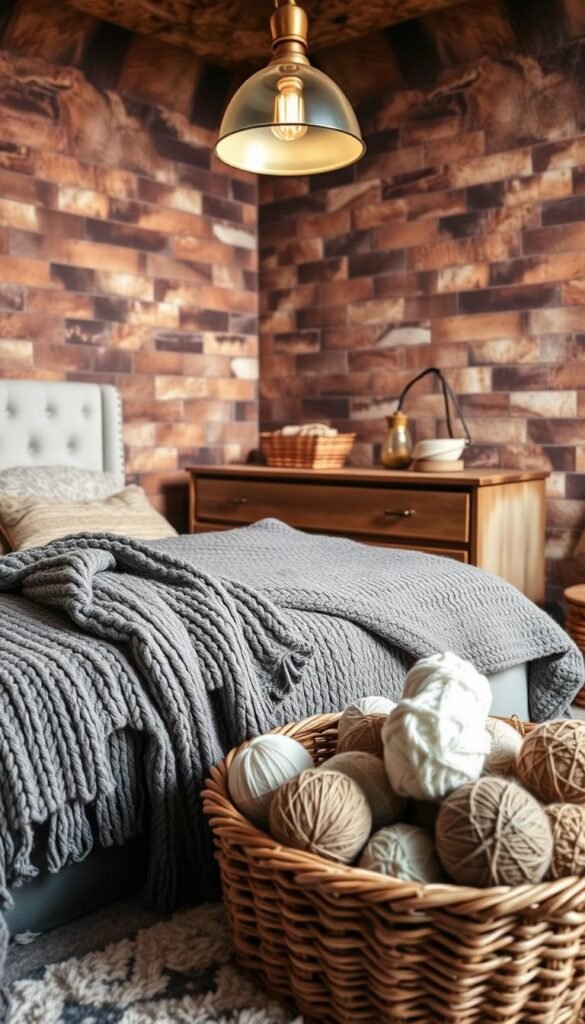
Texture transforms your room from ordinary to extraordinary through sensory experience. The right combinations create depth and comfort that make your space feel complete.
Thoughtful textural choices work with your existing decor to enhance the overall atmosphere. They add visual interest while making your environment more inviting.
Plush Rugs for Bare Feet Mornings
Nothing welcomes your day better than soft flooring underfoot. A quality area rug provides comfort and warmth from your first steps.
Natural fiber options like wool or jute offer excellent texture underfoot. They feel luxurious while being durable enough for daily use.
Consider size and placement for maximum impact. Your rug should extend beyond the bed frame for complete coverage.
Incorporating Velvet, Wool, and Natural Fibers
Mix materials throughout your space for layered appeal. Velvet pillows add luxury while wool blankets provide warmth.
Natural fiber baskets organize while adding organic texture. Woven elements bring nature indoors in an elegant way.
As seen in the Layered Textiles bedroom, combining different fabrics creates rich visual interest. These textures like those in designer spaces make your room feel professionally designed.
Mixing Patterns Without Creating Visual Chaos
Start with a neutral foundation for pattern mixing success. Solid colors allow patterned pieces to shine without competition.
Choose patterns that share a common color palette. Stripes and florals can work together when colors coordinate.
Vary pattern scales for balanced visual interest. Large patterns pair well with smaller, more detailed designs.
Current trends favor thoughtful pattern combinations that feel intentional. This approach creates personality without overwhelming your space.
Remember that texture can be visual as well as tactile. Grasscloth wallpaper or textured paint adds dimension to walls.
Balance smooth and rough surfaces throughout your room. This contrast creates dynamic interest in your overall design.
These ideas help create photogenic spaces that feel amazing in person. Your cozy bedroom becomes a true retreat through thoughtful textural elements.
Window Treatments for Warmth and Privacy
Your windows deserve more than just basic coverings. They offer a chance to enhance both comfort and visual appeal in your personal retreat. The right choices transform how your space feels and functions throughout the day.
Window treatments serve dual purposes in any room design. They provide insulation against temperature changes while ensuring your privacy remains intact. These elements contribute significantly to creating a restful environment.
Current design trends favor treatments that combine practicality with style. You’ll find numerous options that work with various room sizes and personal preferences. The best solutions address both aesthetic and functional needs simultaneously.
Choosing the Right Fabric Weight and Length
Fabric selection impacts both insulation and visual weight. Heavier materials like linen, cotton, or velvet provide better warmth retention. These fabrics also offer superior light control for improved sleep quality.
Lighter fabrics create an airy, relaxed feeling in your space. They allow more natural light while still providing privacy. Sheer options work well for rooms that benefit from maximum daylight.
Curtain length dramatically affects your room’s perception. Floor-length treatments that pool slightly at the bottom add elegance. This approach makes ceilings appear higher and spaces feel more luxurious.
Proper measurement ensures your treatments fit perfectly. Always measure from rod to floor rather than window to floor. This accounts for hardware placement and creates a cohesive look.
Patterned Curtains as Focal Points
Bold patterns can transform ordinary windows into stunning features. They draw attention away from architectural imperfections or awkward placements. This design trick works particularly well in challenging spaces.
Choose patterns that complement your existing color scheme. Select one or two colors from your room’s palette for coordination. This creates harmony while allowing the pattern to stand out.
Large-scale patterns make strong statements in spacious rooms. Smaller prints work better in compact areas where they won’t overwhelm. Always consider your room’s proportions when selecting patterns.
As one designer notes:
“Patterned curtains can become the hero piece in any room. They add personality and depth while serving practical purposes.”
Light Blocking Solutions for Restful Nights
Complete darkness supports deeper, more restorative sleep. Blackout liners attached to regular curtains offer effective light control. These solutions work especially well in urban areas with light pollution.
Layered treatments provide flexibility throughout the day. Combine sheer curtains with heavier drapes for adjustable light levels. This approach lets you control brightness according to your needs.
Roman shades or cellular blinds offer clean, modern alternatives. Their streamlined profiles work well with various decor styles. Many options now include blackout features for improved sleep support.
Consider these light control solutions:
- Blackout curtains with tight weave construction
- Double-layer systems with sheer and opaque panels
- Window films that reduce glare while maintaining visibility
- Motorized systems for effortless light adjustment
Hardware choices complete your window treatment design. Select rods and finials that complement your room’s style. Matte black finishes suit contemporary spaces while brass works in traditional settings.
These treatments offer affordable ways to refresh your look seasonally. Lighter fabrics suit spring and summer while heavier materials cozy up fall and winter. Simple changes make your space feel current and intentional.
Your window solutions should balance beauty with functionality. They frame your view while protecting your privacy. Thoughtful choices enhance both your daily experience and your room’s overall design.
Furniture That Balances Form and Function
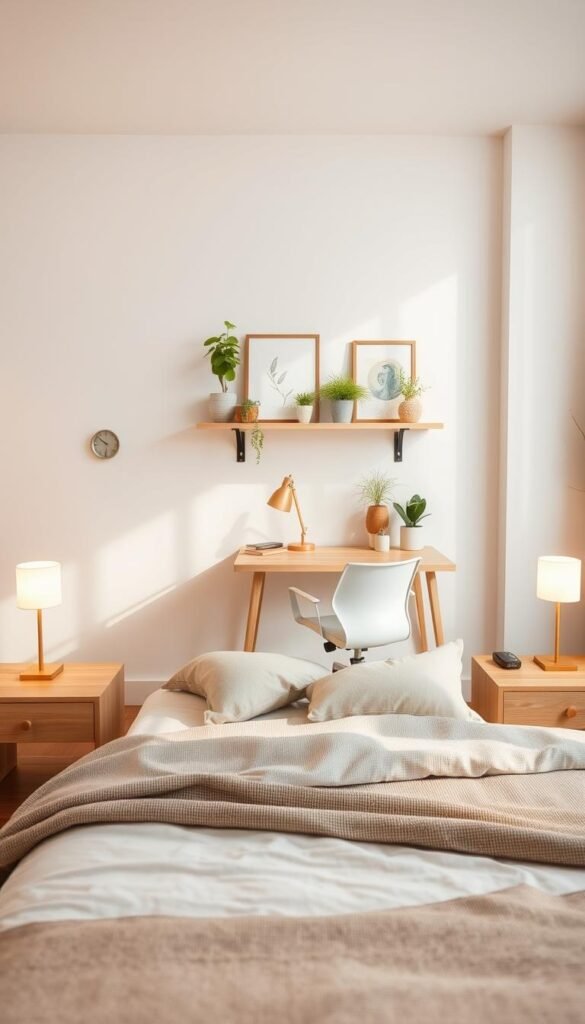
Your room’s furniture should work hard while looking beautiful. Smart choices create harmony between daily use and visual appeal. Every piece contributes to your overall comfort and style.
Think about how you move through your space each day. Your furniture should support these routines while expressing your personality. This balance makes your room feel both practical and personal.
Nightstands That Offer Style and Storage
Your nightstand serves multiple purposes throughout your day. It holds bedtime essentials while adding to your room’s look. Choose pieces with drawers or shelves for hidden organization.
Vintage nightstands add character with their unique details. Modern options offer clean lines and minimalist appeal. Both approaches provide valuable surface space and storage.
Consider scale when selecting your bedside tables. They should align with your mattress height for easy access. This ensures comfort when reaching for items during the night.
Materials matter for both durability and style. Wood nightstands bring warmth through natural grain patterns. Metal frames offer industrial charm with their sleek profiles.
Statement Beds: From Canopies to Upholstered Headboards
Your bed naturally becomes the room’s focal point. Make it count with a frame that reflects your personal style. Upholstered headboards provide comfort and visual softness.
Canopy beds create dramatic height and romantic appeal. They work particularly well in rooms with high ceilings. These statement pieces transform ordinary sleeping areas into luxurious retreats.
Clean-lined maple frames suit minimalist preferences. Their simple profiles keep the focus on quality materials. This approach celebrates natural beauty through thoughtful design.
As seen in the “Dapper Bedroom,” a tufted leather sofa at the foot adds functionality. It provides extra seating while enhancing the overall aesthetic. This smart solution maximizes both form and function.
Multi-functional Pieces for Small Spaces
Limited square footage demands creative solutions. Look for furniture that serves multiple purposes simultaneously. Storage beds with built-in drawers eliminate need for separate dressers.
Foldable chairs tuck away when not in use. They provide extra seating without permanent space commitment. This flexibility makes small rooms feel more adaptable.
Floating shelves save floor space while displaying decor. They keep essentials accessible without clutter. This approach works well in compact sleeping areas.
Consider these space-saving solutions:
- Storage ottomans that offer seating and hidden organization
- Nesting tables that provide surface space when needed
- Murphy beds that fold away for daytime activities
- Desk extensions that create workspace without permanent footprint
Scale and proportion ensure furniture fits comfortably. Measure your room before making any purchases. Leave adequate walking space around each piece.
Current trends favor curved furniture for soft visual flow. Sustainable materials like reclaimed wood support eco-friendly design. These choices create contemporary spaces with character.
Mix vintage finds with new pieces for unique personality. An antique dresser paired with a modern bed creates interesting contrast. This layered approach makes your space truly yours.
| Furniture Type | Functional Benefits | Style Considerations |
|---|---|---|
| Storage Bed | Hidden organization, space saving | Various headboard styles, material choices |
| Multi-functional Nightstand | Drawer storage, surface space | Wood accents, metal details, vintage charm |
| Convertible Chair | Extra seating, compact storage | Upholstery options, frame materials |
| Floating Shelves | Display space, minimal footprint | Wood types, bracket styles, arrangement options |
Invest in key pieces you use daily like your bed and nightstands. These elements impact both comfort and room organization. Quality furniture lasts longer while maintaining its beauty.
Your choices add texture and color through material selection. A wooden bed frame brings natural warmth to your space. Painted dressers introduce accent colors without overwhelming.
These ideas help create rooms that work beautifully for daily life. Your furniture should support both practical needs and personal expression. This balance makes your space truly special.
Creating Your Dream Reading Nook
Every personal sanctuary deserves a dedicated spot for quiet moments. Your perfect reading corner becomes a retreat within your retreat. This special area offers space for relaxation and personal enjoyment.
Even compact rooms can accommodate a comfortable reading setup. Smart design ideas maximize every inch of available space. You’ll create a functional area that enhances your daily routine.
Current trends favor multi-functional corners that serve various purposes. Your reading spot can double as a meditation area or morning coffee station. This approach makes excellent use of your available square footage.
Selecting the Perfect Chair or Chaise
Your seating choice determines comfort during long reading sessions. Look for chairs with proper back support and comfortable dimensions. Armchairs and chaises work well for extended relaxation.
Consider scale when choosing furniture for your nook. Smaller chairs fit better in compact corners. Larger pieces anchor more spacious areas effectively.
Window seats utilize often-wasted space beneath windows. They provide built-in seating with beautiful natural light. This solution works particularly well in small bedrooms.
As one designer suggests:
“Start with a comfy armchair, settee, or chaise, then add a small side table, floor lamp, and soft throw for the perfect spot to curl up with a cup of tea and a good book.”
Lighting and Side Table Essentials
Proper illumination protects your eyes during reading sessions. Adjustable floor lamps direct light exactly where you need it. Wall sconces save valuable floor space in tighter areas.
Your side table holds essentials within easy reach. Choose pieces with surfaces large enough for books and beverages. Some options include storage for extra blankets or reading materials.
Consider these essential elements for your setup:
- Adjustable reading lamp with warm light bulb
- Sturdy side table with adequate surface area
- Convenient power source for reading devices
- Storage solutions for books and accessories
Making Small Corners Feel Intentional
Define your reading area with strategic decor choices. An area rug anchors the space and adds comfort underfoot. Coordinate colors with your existing room palette for visual harmony.
Add personal touches that make the space inviting. Display favorite books on nearby shelves. Incorporate artwork that inspires relaxation and joy.
Soft textiles enhance comfort during reading sessions. Plush throws and supportive pillows make extended sitting more enjoyable. These elements contribute to the overall cozy atmosphere.
Even simple additions transform unused corners into special spots. A comfortable chair and good lamp create an instant reading retreat. This small investment significantly enhances your home experience.
| Nook Element | Functional Purpose | Style Options |
|---|---|---|
| Seating | Comfortable reading position | Armchair, chaise, window seat |
| Lighting | Eye-friendly illumination | Floor lamp, adjustable sconce |
| Surface | Holding books and drinks | Side table, floating shelf |
| Textiles | Added comfort and warmth | Throw blanket, accent pillows |
Your reading nook should reflect your personal style and preferences. Choose things that make you want to continue reading for hours. This personalized approach creates a space you’ll truly enjoy using daily.
Remember that functionality matters as much as appearance. Your corner should work beautifully while looking attractive. This balance creates the perfect reading environment.
Wall Art and Personal Touches
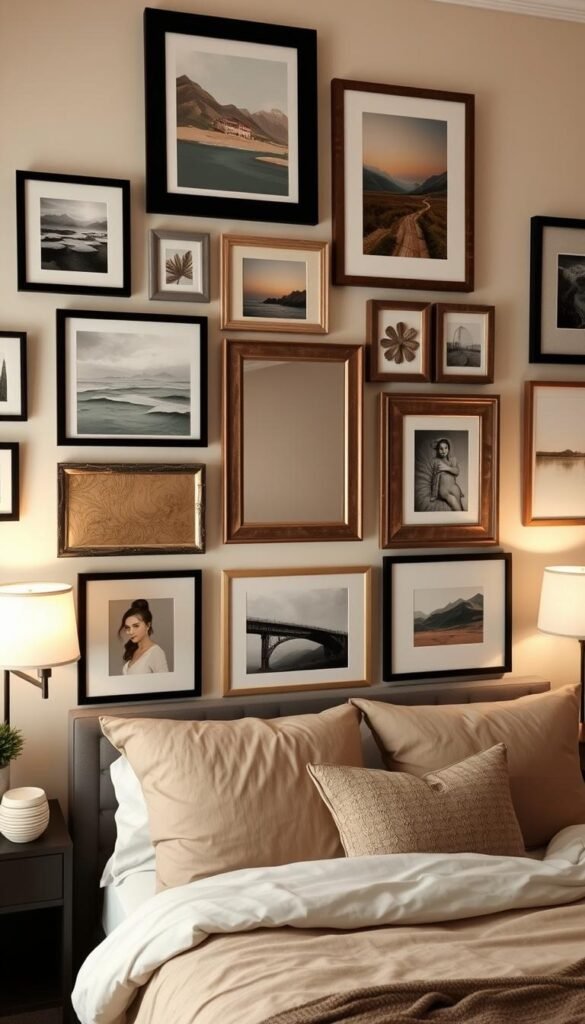
Your walls offer more than just structural support—they become the canvas for your personal story. Thoughtful displays transform empty spaces into meaningful expressions of your journey.
These elements add character and make your room feel uniquely yours. They create emotional connections that standard decor cannot achieve.
Choosing Artwork That Speaks to You
Select pieces that trigger positive emotions and memories. Whether prints, paintings, or photographs, choose what resonates personally.
Consider the mood you want to create. Calming landscapes promote relaxation while vibrant abstracts energize your space. Current trends favor artwork that reflects personal values and experiences.
As seen in the “Classic Cozy Boudoir,” a 17th-century Flemish tapestry adds historical depth. Such pieces become conversation starters while adding sophistication.
Gallery Walls That Tell Your Story
Create visual narratives through carefully arranged collections. Mix frame styles and sizes for dynamic interest.
Start with a focal point and build outward. Use templates to plan your arrangement before hanging. This ensures balanced composition.
Include personal photographs alongside purchased art. This blend makes your display both professional and intimately personal.
Consider these arrangement ideas:
- Grid patterns for clean, organized looks
- Organic clusters for casual, collected feels
- Themed groupings around colors or subjects
- Mixed media including textiles and dimensional pieces
Displaying Meaningful Keepsakes Tastefully
Personal mementos deserve thoughtful presentation. Shadow boxes protect delicate items while creating mini-exhibits.
Shelves offer flexible display options for rotating collections. Group items in odd numbers for visual appeal. Maintain consistent colors throughout your arrangement.
Family photos or travel souvenirs make space feel inviting and unique. As one source notes,
“Adding in a few personal touches helps make a space feel more inviting and unique to you.”
Balance keepsakes with negative space to avoid clutter. Allow each piece breathing room for maximum impact.
DIY options provide budget-friendly personalization. Create your own art or print personal photographs. Even postcards or children’s drawings add warmth when framed properly.
Rotate items seasonally to keep your bedroom decor feeling fresh. This approach lets you enjoy different memories throughout the year.
Your wall art and personal displays should evolve with you. They represent your journey and make your home truly yours.
Bringing Nature Indoors
Natural elements transform your personal retreat into a living sanctuary. They create peaceful energy and organic beauty throughout your space.
Plants and natural materials improve air quality while reducing stress. They connect your indoor environment to the calming power of the outdoors.
Current design trends emphasize sustainable choices and biophilic design. These ideas work in any size room or personal style.
Plants That Thrive in Bedroom Environments
Choose low-maintenance greens that purify air while you sleep. Snake plants and pothos tolerate lower light conditions beautifully.
These varieties require minimal care while providing maximum benefits. They add life and color to your bedroom decor without demanding constant attention.
Place plants near windows for optimal growth. Rotate them occasionally for even exposure to sunlight.
Natural Materials: Wood, Rattan, and Woven Elements
Wood accents bring warmth and character through natural grain patterns. A rattan headboard or woven baskets add texture and organic charm.
These materials create visual interest while being eco-friendly. Reclaimed wood furniture supports sustainable design practices.
As one designer shares:
“I love adding a few natural elements to warm up a space… wood furniture, woven baskets, pottery, and even gathered rocks or seashells.”
Mix different natural textures for layered appeal. Combine smooth wood with rough woven elements for dynamic contrast.
Floral Arrangements and Botanical Prints
Fresh flowers bring seasonal color and fragrance to your side table. Change them weekly to keep your space feeling fresh and alive.
Botanical prints on wall art or bedding create nature-inspired themes. They add visual interest without overwhelming your room’s aesthetic.
Faux arrangements offer long-lasting beauty without maintenance. High-quality artificial plants look realistic while being allergy-friendly.
Small touches make big impacts in your home. A vase of branches or stone paperweight adds organic charm to any surface.
These natural things create a cohesive look throughout your personal retreat. They make your cozy bedroom feel connected to the natural world.
Seasonal updates keep your space feeling current year-round. Switch pinecones for winter and fresh flowers for spring.
Your connection to nature enhances daily relaxation and joy. These elements transform your bedrooms into true sanctuaries.
Continue reading to discover how mirrors can expand your visual space in the next section.
The Power of Mirrors in Small Spaces
Mirrors do more than just show your reflection—they transform how your room feels and functions. These clever additions create visual magic while serving practical daily purposes.
Strategic mirror use makes any area feel more open and inviting. You can achieve dramatic effects with simple placement choices.
Creating the Illusion of More Space
Mirrors visually double your square footage through reflection. They make compact areas appear significantly larger than their actual dimensions.
Light reflection brightens dark corners naturally. This reduces the need for additional lighting fixtures in your room.
As seen in the “Mirrored Bedroom” example, a full mirrored wall creates incredible depth. This approach works particularly well in narrow spaces.
Strategic Placement for Maximum Impact
Position mirrors opposite windows to capture natural light. This technique spreads sunshine throughout your entire space.
Place them near artificial light sources to enhance evening ambiance. The reflection multiplies your existing lighting effects beautifully.
Consider sight lines when choosing mirror locations. They should reflect attractive views rather than cluttered areas.
One designer notes:
“A well-placed mirror can make even the smallest bedroom feel spacious and airy while adding decorative interest.”
Choosing Frames That Complement Your Style
Frame selection significantly impacts your overall decor. Ornate gold frames suit traditional spaces with classic elegance.
Minimalist wood frames match contemporary design preferences. Their clean lines keep the focus on reflection rather than the frame itself.
The “squiggly floor-length mirror” demonstrates how unique shapes become statement pieces. These artistic options add personality to simple walls.
Consider these frame options:
- Vintage frames for traditional or eclectic spaces
- Metallic finishes for modern glamour
- Natural wood for organic, minimalist styles
- Frameless designs for seamless integration
Oversized mirrors create dramatic focal points on large walls. Grouped smaller mirrors form artistic gallery arrangements.
Safety matters with mirror installation. Secure mounting prevents accidents in active households.
Mirrored furniture offers alternative reflection options. Dressers or nightstands with mirror surfaces provide function without wall commitment.
These design ideas help maximize both style and practicality in your home. Your space becomes more functional while looking absolutely beautiful.
Seasonal Adaptations for Year-Round Comfort
Your personal retreat deserves to feel inviting through every season. Smart adjustments keep your space comfortable and visually appealing all year long.
These simple changes work with your existing design to maintain that perfect atmosphere. You’ll enjoy a dynamic environment that matches the weather outside.
Seasonal updates don’t require major renovations or big budgets. Rotating items you already own creates fresh looks throughout the year. This approach keeps your room feeling current and intentional.
Lightweight Layers for Warmer Months
Summer calls for breathable materials that keep you cool. Linen sheets offer excellent airflow during warm nights.
Cotton quilts provide just enough coverage without overheating. These natural fibers feel comfortable against your skin.
Lightweight throws add texture without extra warmth. They maintain your bedroom decor style while being practical.
Brighten your lighting for longer summer days. Open curtains wider to maximize natural light.
Cozy Additions for Winter Comfort
Winter invites deeper layers and richer textures. Flannel sheets provide wonderful warmth during cold nights.
Heavier duvets create that perfect nest-like feeling. According to Martha Stewart, layering with different materials and weights helps adapt to seasonal changes perfectly.
Chunky knit throws offer both style and functionality. They’re perfect for curling up on chilly evenings.
Soft lighting creates a warmer atmosphere during dark winter months. Dimmer settings help set a cozy mood.
Easy Swaps to Refresh Your Space Seasonally
Pillowcases offer quick seasonal color changes. Switch to brighter shades for summer and deeper tones for winter.
Area rugs can rotate with the seasons. Lighter weaves work for summer while plush options warm up winter.
Small decor items make big impacts. Seasonal flowers or themed accents refresh your space easily.
Storage solutions keep off-season items organized. Under-bed containers work well for seasonal rotations.
| Season | Bedding Recommendations | Color Suggestions | Lighting Adjustments |
|---|---|---|---|
| Spring | Medium-weight cotton, light blankets | Pastels, fresh greens | Natural light maximization |
| Summer | Linen sheets, cotton quilts | Bright accents, cool tones | Brighter settings, longer days |
| Fall | Flannel sheets, medium-weight duvets | Warm oranges, deep reds | Softer glow, earlier evenings |
| Winter | Heavy duvets, wool blankets | Rich neutrals, deep blues | Low lighting, warm bulbs |
These seasonal ideas help maintain comfort throughout the year. Your home becomes more responsive to changing weather patterns.
Remember that seasonal updates should feel enjoyable rather than stressful. Small changes make big differences in your daily experience.
Continue reading to discover how to make your space Instagram-ready in the next section.
Instagram-Ready Styling Tips
Your beautifully designed space deserves to be captured and shared. Great photos showcase your hard work and inspire others. These professional techniques help you highlight your room’s best features.
Photogenic spaces combine careful preparation with smart shooting techniques. You’ll learn how to make your area camera-ready in minutes.
Composition Tricks for Beautiful Photos
Professional photographers use the rule of thirds for balanced shots. Imagine your frame divided into nine equal squares. Place key elements where the lines intersect.
Shoot from angles that emphasize your room’s best features. Lower angles make ceilings appear higher. Straight-on shots create symmetrical compositions.
Create depth through strategic layering. Foreground elements like plants or chairs add dimension. Middle-ground items like your bed anchor the composition.
As seen in the “Minimalist Room” example, clean backgrounds enhance visual appeal. Remove clutter before shooting for professional results.
Highlighting Your Best Design Features
Identify your room’s standout elements before shooting. A statement headboard or colorful rug deserves special attention. Make these features the focal point of your composition.
Style surfaces with intentional arrangements. Fluff pillows and smooth bedding for perfect folds. Arrange books and decor items in appealing groups.
Add props that suggest comfortable living. A coffee cup on your nightstand implies recent use. Open books on chairs create inviting scenes.
Current design trends favor authentic, lived-in appearances. Your space should look beautiful yet completely usable.
Natural Light Photography in Your Bedroom
Natural light creates the most flattering photographs. Shoot during golden hour for warm, soft illumination. This occurs shortly after sunrise or before sunset.
Position your camera facing windows for even lighting. Avoid shooting with windows behind you to prevent harsh shadows.
Use sheer curtains to diffuse strong sunlight. They soften shadows while maintaining bright conditions.
Adjust your camera settings for optimal results. Increase exposure slightly for brighter images. Use a tripod for sharper low-light shots.
| Photography Element | Professional Technique | Equipment Needed |
|---|---|---|
| Lighting | Golden hour shooting, window positioning | Camera, tripod optional |
| Composition | Rule of thirds, layered depth | Smartphone or camera |
| Styling | Surface decluttering, prop placement | Basic cleaning supplies |
| Editing | Brightness adjustment, contrast enhancement | Editing app or software |
Edit photos to enhance their natural beauty. Adjust brightness to make colors pop naturally. Increase contrast slightly for clearer definition.
Share your styled space online for community inspiration. Tag designers whose work influenced your ideas. Connect with others who appreciate beautiful home design.
Remember that perfect photos showcase real living spaces. Your authentic style makes your images uniquely appealing.
Continue reading to discover budget-friendly updates in the next section.
Budget-Friendly Cozy Updates
Creating a welcoming retreat doesn’t require a massive budget. Smart choices and creative thinking can transform your space without breaking the bank. You’ll discover how small investments deliver big impacts.
Focus on strategic updates that enhance comfort and style. These changes work together to create a harmonious environment. Your personal sanctuary becomes more inviting with each thoughtful addition.
High-Impact Changes Under $100
Start with affordable updates that transform your room’s atmosphere. New throw pillows refresh your color scheme instantly. They add texture and personality to your existing setup.
A fresh coat of paint creates dramatic visual changes. Choose calming colors that promote relaxation. This simple update makes walls feel clean and renewed.
Plants bring life and natural beauty to your space. Low-maintenance varieties thrive in various light conditions. They purify air while adding organic charm.
Consider these budget-friendly ideas:
- Swap outdated lighting fixtures for modern alternatives
- Add an area rug to define spaces and add warmth
- Update hardware on furniture for a fresh look
- Incorporate mirrors to enhance light and space perception
DIY Projects That Add Character
Personal touches make your space uniquely yours. Painting furniture transforms basic pieces into custom items. An IKEA nightstand becomes special with your creative touch.
Create artwork that reflects your personal style. Frame fabric swatches or create abstract paintings. These pieces add personality without high costs.
Sew cushion covers using affordable fabrics. This allows seasonal color changes without buying new pillows. Basic sewing skills create professional-looking results.
One designer shares:
“DIY projects infuse spaces with personal stories and unique charm. They transform ordinary items into conversation starters.”
Where to Splurge and Where to Save
Invest in items you use daily for long-term comfort. Quality bedding supports better sleep night after night. A good mattress forms the foundation of restful nights.
Save on decorative items and accessories. These elements change with trends and personal preferences. Budget-friendly shops like TJ Maxx and Amazon offer stylish options.
Shop secondhand for unique pieces with character. Vintage finds add history and personality to your room. Sales and clearance sections provide quality items at reduced prices.
Prioritize updates that offer visual impact. Lighting changes transform atmosphere dramatically. Area rugs anchor spaces while adding comfort underfoot.
| Investment Area | Recommended Splurge | Budget-Friendly Alternative |
|---|---|---|
| Sleep Foundation | Quality mattress | Mattress topper |
| Bedding | Natural fiber sheets | Cotton blend options |
| Lighting | Statement fixture | Updated lampshades |
| Decor | Artisan pieces | DIY creations |
Small changes collectively create significant transformations. Focus on incremental improvements over time. This approach makes updating your space manageable and enjoyable.
Remember that thoughtful touches matter more than expensive items. Your personal sanctuary reflects your creativity and care. These budget-friendly ideas help create a space you love.
Bringing Your Cozy Vision to Life
Your personal sanctuary begins with a clear vision and thoughtful execution. Start with foundational elements like quality bedding and strategic lighting. Then layer in personal touches that make the space uniquely yours.
Take things step by step rather than attempting a complete makeover at once. Keep a digital folder or journal to track inspiration and progress. Remember that good design evolves over time.
Your room should reflect what feels good to you, not strict rules. Current trends emphasize personal expression over perfect replication. Experimentation often leads to the best results.
The long-term benefits for your well-being make this journey worthwhile. Share your results and questions as you transform your home sanctuary. Your perfect retreat awaits your creative touch.