Your bedroom should be more than just a place to sleep. It’s your personal retreat where you begin and end each day. Creating a space that reflects your unique personality while promoting relaxation is essential for your well-being.
The right approach to your room’s design can transform it into a calming oasis. By focusing on thoughtful elements and cohesive pieces, you can achieve a look that feels both inviting and personal.
This guide will show you how to create harmony throughout your space. You’ll discover how color, textures, and lighting work together to establish the perfect tone. Every element from your walls to your floor contributes to the overall atmosphere.
We’ll explore practical ideas that prioritize function and simplicity. You’ll learn about furniture choices, storage solutions, and how to incorporate warmth through wood tones and soft textiles. These touches make your room feel complete without overwhelming the space.
Get ready to embrace a design style that reduces clutter and stress. Your transformed space will support your lifestyle while showcasing your personal aesthetic beautifully.
What Defines Modern Minimalist Bedroom Decor?
Many people think this style means empty rooms with no personality. That’s not true at all. It’s about creating a space that feels calm and intentional.
Your personal retreat should reflect what matters most to you. It focuses on quality over quantity. Every item has a purpose or brings you joy.
The Spectrum of Minimalism: From Austere to Casual
This design approach isn’t one rigid look. It spans a wide range from very simple to more furnished spaces. You can find the right balance for your lifestyle.
At one end, austere minimalism might feature just a mattress on the floor. It eliminates almost everything non-essential. This creates maximum open space.
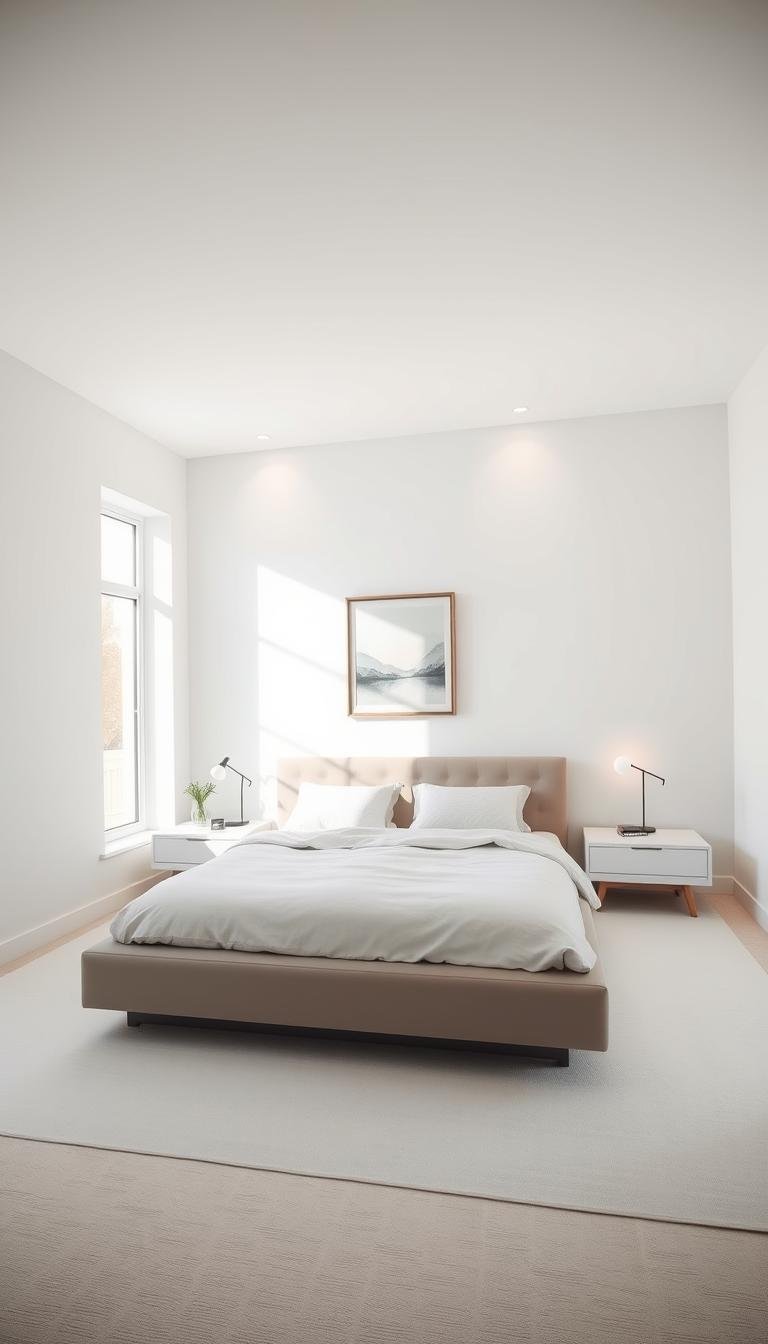
Moderate minimalism often includes white walls and bare windows. A simple bed frame with basic bedding sets the tone. Essential pieces like nightstands and lamps add function.
Casual minimalism allows for more furniture while keeping a limited color palette. Area rugs and dressers can appear if they serve a clear purpose. The key is avoiding clutter accumulation.
Core Principles: Clean Lines and a “Less is More” Philosophy
The “less is more” idea guides every decision. It emphasizes intentionality in your choices. This reduces visual noise and promotes calm.
Clean lines in furniture and decor create a streamlined look. They feel both current and timeless. This avoids ornate details that can make a space feel busy.
Open space and airflow become priorities. This makes your room feel larger and more inviting. It works well in compact guest rooms or spacious master suites.
Remember, this is a personal lifestyle choice. You might incorporate a dresser if closet space is limited. Just commit to keeping surfaces clear.
This style isn’t about deprivation. It’s about curating an environment that reflects your personality. Carefully selected elements that matter most create your perfect retreat.
Begin with a Serene and Intentional Color Palette
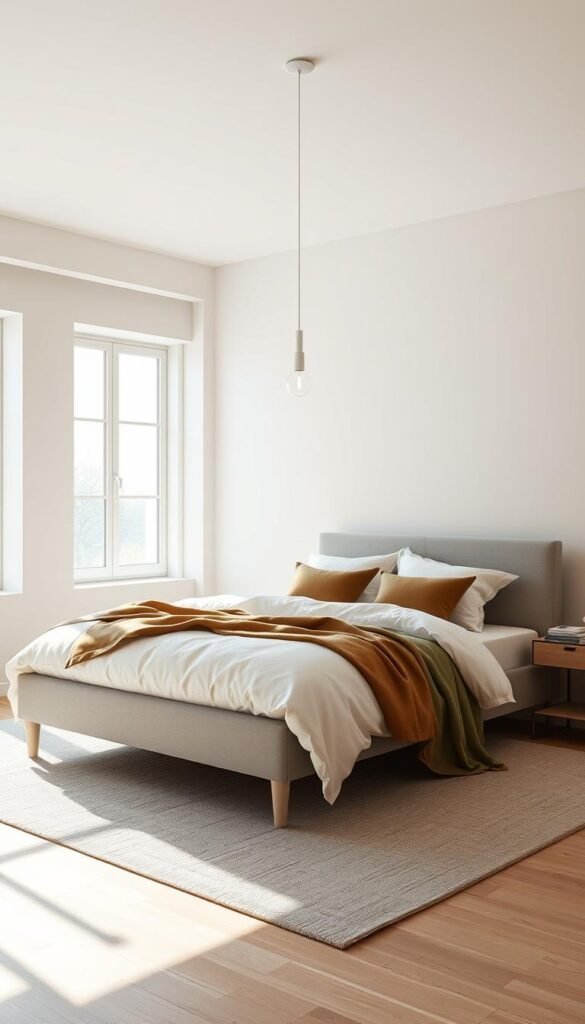
Your room’s color scheme sets the foundation for everything else. It creates the initial impression when you enter your personal space. Choosing wisely makes all other design decisions easier.
A thoughtful palette establishes harmony throughout your area. It works with natural and artificial lighting to create different moods. This approach transforms your space into a true retreat.
Why Neutral Tones are Your Best Foundation
Neutral colors like soft whites and warm grays create a calm backdrop. They make your room feel more spacious and airy. These shades reflect light beautifully throughout the day.
Designers often choose neutrals for their versatility. They allow other elements to stand out without competition. Your furniture and textiles become the stars of the show.
Psychological studies show neutral environments promote relaxation. They help reduce visual stress after a long day. This makes your space perfect for unwinding and recharging.
Incorporating Desaturated Hues for Subtle Interest
Add personality with muted colors that complement your base tones. Soft greens or pale blues bring nature-inspired calm. These shades work well in Paris-inspired designs.
Consider “Brussels Oyster” for curtains and bedding. This sophisticated hue maintains cohesion while adding depth. It creates a peaceful atmosphere throughout your room.
Test paint samples on your walls at different times. Observe how morning light versus evening lamps affect the color. This ensures your palette always looks intentional.
Desaturated colors pair wonderfully with natural materials. Wood tones and linen textiles add warmth and texture. They keep the overall feel current yet timeless.
Remember that a limited palette isn’t boring—it’s strategic. It provides the perfect canvas for layering textures later. Your space will feel both personal and perfectly composed.
Choosing Furniture with Purpose and Clean Lines
Your furniture choices create the foundation for your entire room. Each piece should serve a clear function while enhancing your overall aesthetic. Thoughtful selection ensures your space remains both beautiful and practical.
Focus on items that contribute to daily comfort without adding visual noise. Clean silhouettes and simple forms help maintain a calm atmosphere. This approach transforms your area into a true personal sanctuary.
Selecting a Bed Frame That Anchors Your Space
Your bed serves as the centerpiece of your sleeping area. Choose a frame with straightforward design that provides stability. Materials like wood or metal offer durability without ornate details.
Designers like Michele di Fonzo create beautiful platform beds. These pieces often feature built-in storage options. This functionality helps keep your space organized and clutter-free.
The right frame can make a subtle statement while adhering to minimalist principles. It establishes the primary tone for your entire room. Consider how different styles complement your existing color palette.
The Role of Functional Pieces Like Dressers and Nightstands
Secondary furniture should prioritize utility while maintaining visual harmony. Dressers with clean lines help maintain tidiness when surfaces stay clear. They provide essential organization without dominating the room.
Nightstands offer convenient surfaces for bedtime essentials. Ralph Lauren creates elegant tables that balance form and function. These elements hold reading materials or lamps without creating visual distraction.
Custom headboard designs can incorporate hidden storage compartments. This innovative approach maximizes functionality while preserving your aesthetic. Every item should contribute to a cohesive look that prioritizes ease of use.
| Furniture Type | Key Features | Designer Examples | Functionality Benefits |
|---|---|---|---|
| Bed Frame | Clean lines, built-in storage | Michele di Fonzo | Anchors space, hidden organization |
| Dressers | Streamlined silhouettes | Custom designs | Surface maintenance, clothing storage |
| Nightstands | Simple surfaces, proportional scale | Ralph Lauren tables | Essential item placement, reading light support |
Scale and proportion matter greatly when selecting furniture. Ensure pieces fit comfortably without overcrowding. This becomes especially important in smaller rooms or guest spaces.
Every furniture item should earn its place through both function and form. This philosophy creates a tranquil environment that supports your lifestyle. Your room becomes a harmonious retreat that truly serves your needs.
Mastering the Art of Decluttering for a Peaceful Retreat
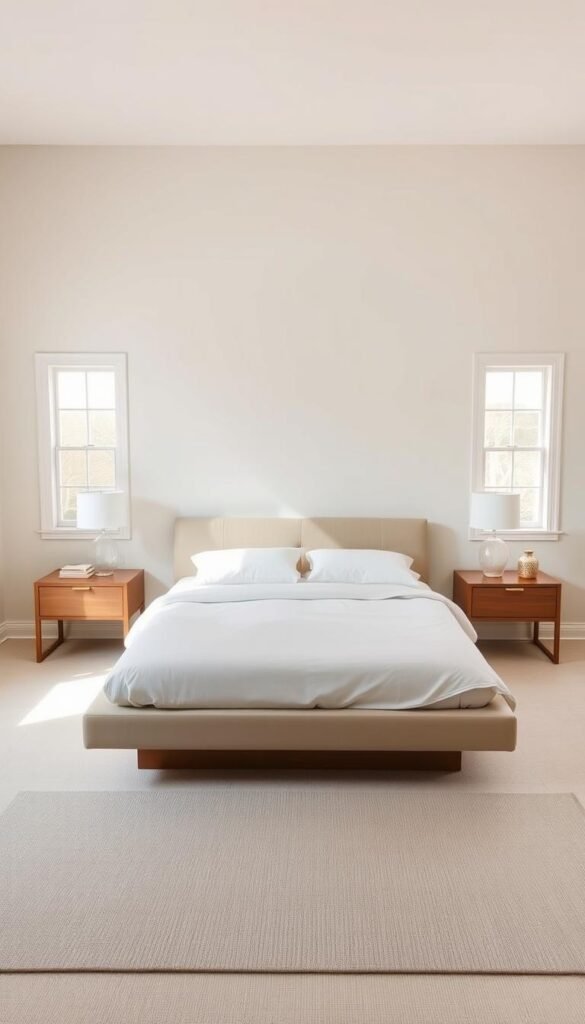
A peaceful retreat starts with a clear space. Your room should feel open and calm. This allows you to truly relax and recharge each day.
Decluttering is more than just tidying up. It’s about creating an environment that supports your well-being. Every item should have purpose or bring joy.
The “Clear Out and Reintroduce” Method
Start by removing everything from your room. This might feel overwhelming at first. But it gives you a blank slate to work with.
Only bring back items that are essential or genuinely make you happy. This process helps you reassess what truly matters. You’ll reduce visual chaos and maintain a simpler environment.
Donate or find new homes for unused items. This aligns with intentional living. It frees up physical and mental space.
“Have nothing in your house that you do not know to be useful, or believe to be beautiful.”
Smart Storage Solutions to Hide Everyday Items
Built-in drawers under bed frames offer hidden organization. They keep clothing and accessories out of sight. This maintains your room’s clean look.
Closet organizers maximize vertical space. They create designated spots for all your belongings. Everything stays accessible yet neatly stored.
Custom headboards with concealed compartments are brilliant. They store books or shoes without sacrificing style. These pieces blend function with beautiful design.
Regular tidying prevents clutter from returning. Make it part of your daily or weekly routine. Your space will remain a true sanctuary.
| Storage Type | Best For | Visual Impact | Accessibility |
|---|---|---|---|
| Under-bed drawers | Seasonal clothing, extra bedding | Completely hidden | Easy access with lift-up frames |
| Closet organizers | Daily wear, accessories | Behind closed doors | Immediate availability |
| Custom headboards | Books, small personal items | Seamlessly integrated | Within arm’s reach |
| Floating shelves | Decor items, reading material | Minimal visual weight | Highly accessible |
Choose storage pieces with clean lines and neutral colors. They blend into your room’s background. This maintains your overall aesthetic.
Embrace storage as a key element of your design. It allows you to enjoy a tidy, serene environment. Everything will have its proper place.
This approach reduces stress and enhances well-being. Your room becomes a true retreat. It supports both relaxation and daily function beautifully.
Your Guide to Minimalist Bedding for a Sleek Look
Your bedding choices transform your sleeping area into a true sanctuary. The right textiles create both comfort and visual harmony throughout your space. They establish the foundation for restful nights and peaceful mornings.
Quality linens make your bed the most inviting spot in your room. They work with your existing color scheme to create cohesion. Every element from sheets to throws contributes to the overall atmosphere.
Opting for Simple, High-Quality Linens
Invest in natural materials that offer both durability and luxury. Linen, cotton, and silk provide excellent comfort without bold patterns. These fabrics feel wonderful against your skin night after night.
Brands like De Le Cuona and American Silk Mills create exceptional bedding. Their pieces feature beautiful craftsmanship and lasting quality. You’ll appreciate how these textiles maintain their crisp appearance over time.
Neutral tones work best for creating a serene foundation. They allow other textures to stand out beautifully. Your bedding becomes the perfect canvas for layered comfort.
How to Layer Textures Instead of Patterns
Create visual interest through varied tactile experiences. Combine chunky knit throws with smooth cotton sheets. Add soft velvet pillows for additional depth and comfort.
This approach maintains a streamlined look while adding personality. Each layer contributes to the overall cozy feeling. Your bed becomes inviting without visual distraction.
Consider these effective texture combinations:
- Crisp percale sheets with a nubby wool blanket
- Silk pillowcases with a cable-knit throw
- Linen duvet cover with faux fur accents
Texture layering brings wonderful warmth to your sleeping space. It makes your bed a focal point that embodies the “less is more” philosophy. You’ll create a comfortable retreat that encourages restful sleep.
Your bedding can act as a perfect foil to other elements. It complements statement pieces like a botanical headboard by keeping things understated. The textures do all the talking while maintaining a cohesive tone.
Choose bedding that’s easy to care for and maintain. This ensures your room always looks fresh with minimal effort. You’ll enjoy a beautiful space that supports your lifestyle effortlessly.
For more inspiration on creating a peaceful retreat, explore these minimalist bedroom ideas that balance simplicity with comfort.
Incorporating Texture to Add Warmth and Dimension
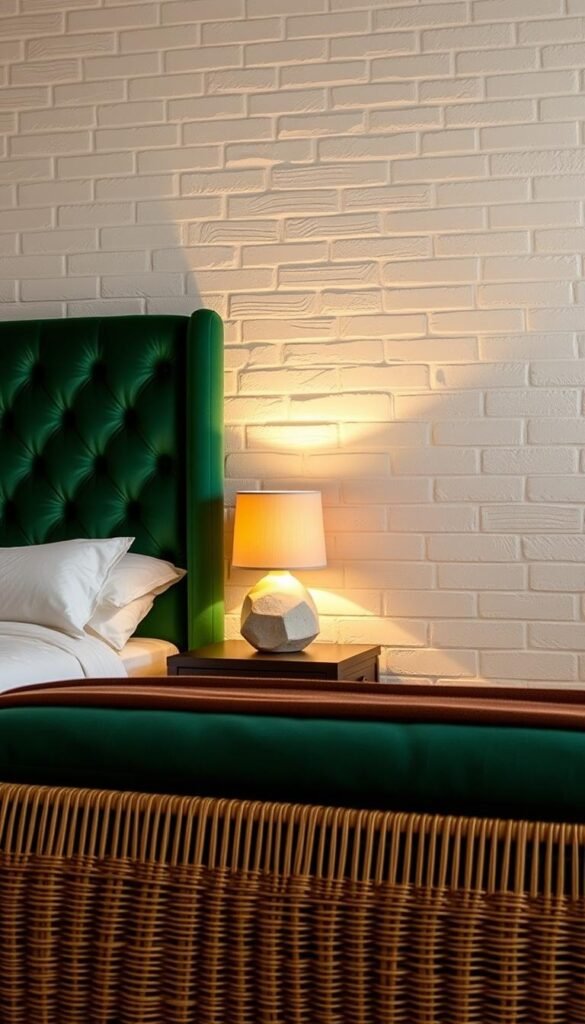
Texture transforms your room from flat to fascinating. It creates depth and character without adding clutter. This approach makes your space feel inviting and complete.
Thoughtful textural elements bring comfort and visual interest. They work with your existing color scheme to enhance the overall atmosphere. Every surface becomes an opportunity to add personality.
Using Natural Textiles: Linen, Wool, and Cotton
Natural fabrics bring organic warmth to your sleeping area. Linen bedding offers beautiful drape and breathability. It softens the look of your bed while maintaining simplicity.
Wool throws add cozy comfort during cooler months. They provide wonderful tactile contrast against smoother surfaces. These textiles feel luxurious without appearing fussy.
Cotton remains a classic choice for crisp, clean sheets. It works beautifully with other textures throughout your room. These materials create a layered look that feels both intentional and inviting.
The Texture Technique: Bouclé, Wood, and Micro-cement
Bouclé fabric makes a wonderful statement on headboards or chairs. Its nubby surface adds visual interest without bold patterns. This material brings cozy sophistication to any piece.
Wood tones introduce natural warmth through furniture and accents. Oak nightstands or teak frames complement neutral palettes beautifully. They ground the space with organic character.
Micro-cement floors offer a unique underfoot experience. Their subtle texture adds dimension while maintaining a streamlined look. This innovative material creates visual interest without overwhelming the room.
“Texture is what gives a room its soul—it’s the difference between a space that looks good and one that feels good.”
Wall treatments like grasscloth or textured paint scatter light beautifully. They create depth without needing additional artwork. Your walls become a subtle feature rather than just background.
Mixing textures creates rich visual layers. Pair a smooth leather chair with a chunky knit rug. Combine velvet pillows with linen bedding for varied tactile experiences.
Every textural choice should enhance your overall design. They work together to create a space that feels both personal and peaceful. Your room becomes a true retreat that welcomes you at the end of each day.
Strategic Lighting to Enhance the Minimalist Mood
Lighting shapes how you experience your personal retreat. It transforms the atmosphere from functional to truly inviting. The right approach makes your space feel both practical and peaceful.
Thoughtful illumination highlights your room’s best features. It works with your existing color scheme and textures. This creates a cohesive environment that supports relaxation.
Your lighting choices should serve multiple purposes throughout the day. They provide visibility for tasks and create ambiance for winding down. This layered approach makes your room versatile and comfortable.
Sculptural Pendant Lights and Sleek Table Lamps
Choose fixtures that combine function with beautiful design. Sculptural pendant lights make wonderful focal points. They add visual interest without clutter.
Gubi creates elegant pendants that provide ambient glow. These pieces cast soft light across your ceiling and walls. They become functional art in your space.
Sleek table lamps offer perfect task lighting. The Artemide Tizio lamp features adjustable arms for reading. Its matte black finish complements a neutral palette beautifully.
Every lighting fixture should enhance your overall aesthetic. Clean lines and simple forms maintain visual calm. They contribute to your room’s serene tone.
Layering Light Sources for Function and Ambiance
Combine different lighting types for maximum versatility. Overhead fixtures provide general illumination. Task lamps focus light where you need it most.
Accent lighting highlights special elements like artwork or textures. Wall sconces offer gentle glow without taking up surface space. This approach creates depth throughout your room.
Consider these effective lighting layers:
- Pendant lights for overall ambient illumination
- Adjustable table lamps for reading and tasks
- Wall-mounted fixtures for accent and mood lighting
Natural light plays a crucial role in your design. Sheer curtains allow soft, diffused light through your window. This makes your space feel airy and open during daylight hours.
Choose bulbs with warm tones for evening use. They create cozy ambiance without harsh glare. This supports relaxation as you prepare for sleep.
“Lighting is the jewelry of the room; it can make or break the space.”
Your lighting should highlight special features like a wood headboard or textured rug. It draws attention to these elements without additional decor. This maintains your minimalist approach.
For more inspiration on creating the perfect atmosphere, explore these minimalist lighting ideas that balance function and beauty.
Embrace lighting as a key component of your personal sanctuary. It illuminates your space while contributing to the overall aesthetic. Your room becomes a true retreat that supports both activity and rest.
The Impact of a Statement Piece in a Minimal Space
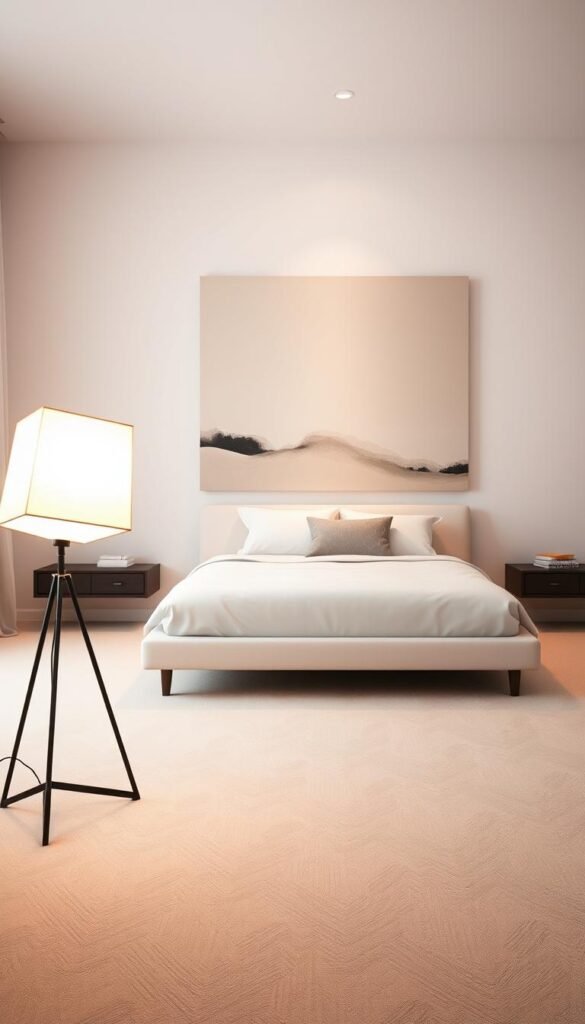
A single standout element can transform your entire room. It adds personality without overwhelming your calm environment. This approach keeps your space feeling intentional and special.
Your statement piece becomes the heart of your design. It draws attention while maintaining simplicity. Everything else supports this focal point beautifully.
Choosing One Focal Point: Art, Headboard, or Rug
Select one item that truly reflects your personal style. A bold artwork creates visual interest on your walls. It introduces color and movement without clutter.
B&B Italia beds make wonderful statement pieces. Their unique designs anchor the room with elegance. These frames combine beautiful form with practical function.
Geometric rugs add warmth underfoot while defining your space. They bring pattern and texture to your floor. This creates visual depth without competing elements.
Consider these popular statement options:
- Abstract paintings with vibrant color accents
- Custom headboards with unique material or shape
- Patterned area rugs that complement your palette
- Sculptural lighting fixtures that draw the eye upward
- Accent chairs with interesting forms or textures
Your choice should balance visual impact with daily use. A comfortable headboard supports reading in bed. A soft rug feels wonderful under bare feet each morning.
Letting a Statement Piece Shine Without Clutter
Keep the area around your focal point simple and clean. Avoid additional decor that might compete for attention. This allows your statement piece to truly stand out.
Position your chosen element where it naturally draws the eye. Center artwork above your bed frame. Place a rug to define the sleeping area clearly.
Choose background elements that complement rather than compete. Neutral walls and simple furniture provide the perfect canvas. Your statement piece becomes the star of the show.
“Perfection is achieved not when there is nothing more to add, but when there is nothing left to take away.”
Even small pieces can make a big impact when given proper space. A unique pendant light or special chair adds character. These elements provide personality without violating minimalist principles.
Remember that your statement piece should enhance your daily experience. It brings joy while serving a practical purpose. This approach honors the “less is more” philosophy beautifully.
Your room becomes a curated space that feels both personal and peaceful. One strong element provides that perfect touch of drama. It elevates your entire design while maintaining serenity.
Don’t Forget the Fifth Wall: Your Ceiling
Your ceiling offers a surprising opportunity to enhance your personal retreat. Often overlooked, this surface can add depth and character to your entire space. Thoughtful overhead treatments create visual interest without crowding your room.
Many designers call the ceiling the “fifth wall” for good reason. It completes your room’s envelope and contributes to the overall atmosphere. A well-designed ceiling makes your space feel more intentional and polished.
Simple Ideas for Adding Interest Overhead
Start with paint to transform your ceiling quickly. Choose a shade slightly lighter than your walls. This creates an illusion of height and makes your room feel more spacious.
Consider adding subtle texture for additional character. Hand-formed plaster details provide organic variation. They catch light beautifully throughout the day.
Wallpaper introduces pattern in an unexpected way. Geometric designs create modern appeal. Botanical prints bring natural elements indoors.
Architectural features make strong statements. Exposed wood beams add rustic warmth. They work beautifully with neutral color schemes.
Custom cove ceilings provide elegant sophistication. Burgundy tones create dramatic contrast. These elements feel both luxurious and intentional.
How a Thoughtful Ceiling Design Elevates the Entire Room
Your ceiling treatment influences how you experience the space. It can make a compact room feel larger and more open. Higher ceilings gain intimacy with the right approach.
Ceiling-mounted lighting serves multiple purposes. Pendant lights draw attention upward while providing illumination. Flush mounts offer clean lines and functional light.
These fixtures highlight your ceiling’s best features. They create pools of light that enhance the overall ambiance. Your room feels both practical and beautifully designed.
“The ceiling is the most neglected surface in most rooms, yet it offers tremendous potential to add character and dimension.”
Choose colors that complement your existing palette. Soft neutrals maintain serenity throughout your space. Bold hues create focal points in otherwise simple rooms.
Every overhead element should contribute to your cohesive environment. Your ceiling becomes another layer in your well-designed retreat. It completes your room beautifully without overwhelming other elements.
Incorporating Natural Elements for a Organic Feel
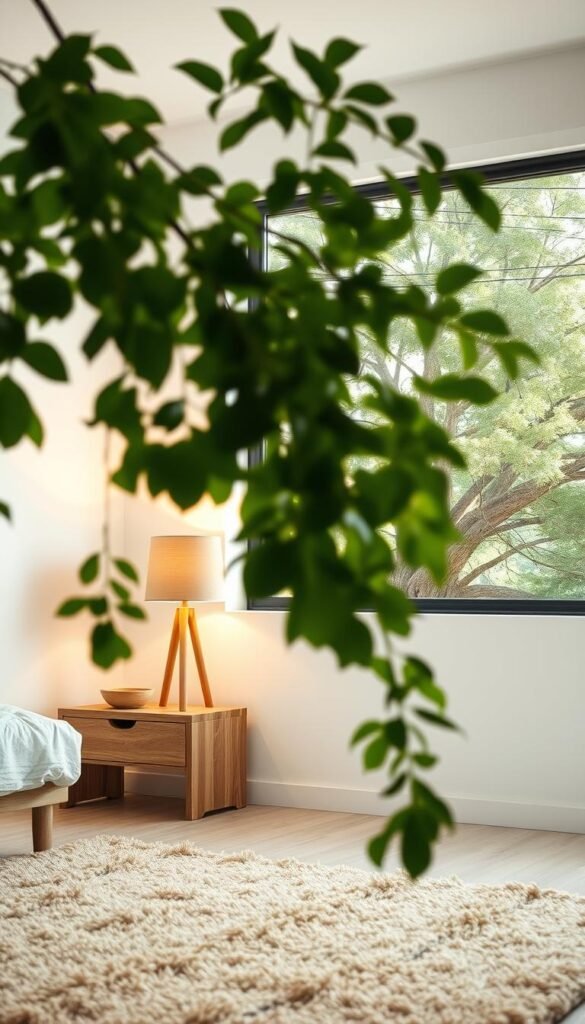
Nature brings a special kind of calm to your personal retreat. Organic materials create warmth and connection in your space. They add life while keeping your design simple and intentional.
These elements work beautifully with your existing color scheme. They introduce texture and movement throughout your room. The result feels both grounded and refreshing.
Using Wood Tones to Bring Warmth to Neutral Spaces
Wood adds earthy character to any room. Light oak or rich walnut bring natural beauty. These tones complement neutral palettes perfectly.
Choose furniture with clean lines and natural grain. A simple bed frame or nightstand adds warmth. These pieces feel both functional and beautiful.
Wood finishes should match your overall style. Lighter tones work well in bright spaces. Darker woods create cozy atmosphere in softer light.
Even small wood accents make a difference. A rattan basket or teak tray adds organic touch. These elements connect you to nature without clutter.
The Life and Airiness Added by Indoor Plants
Plants bring fresh energy to your space. They improve air quality and add visual interest. Greenery softens hard lines and creates calm.
Choose low-maintenance varieties that thrive indoors. Snake plants and pothos are excellent choices. They require little care and grow beautifully.
Place plants where they can receive natural light. Near windows is often ideal. They’ll benefit from sunshine throughout the day.
Use plants sparingly to maintain simplicity. One or two well-chosen specimens make perfect impact. They add life without overwhelming your design.
Natural light works with plants and wood tones. This combination creates dynamic environment. Your room feels alive and inviting all day long.
“Nature holds the key to our aesthetic, intellectual, cognitive and even spiritual satisfaction.”
Embrace these organic elements in your personal space. They make your room feel lived-in and harmonious. You’ll create a retreat that truly connects with nature.
Window Treatments That Prioritize Light and Simplicity
Your window treatments play a crucial role in shaping your room’s atmosphere. They control natural light while maintaining privacy throughout your space. The right choices enhance both function and beauty in your personal retreat.
Simple window coverings support a calm environment. They frame your view without adding visual distraction. This approach keeps your focus on the overall harmony of your room.
Thoughtful window treatments work with your existing color palette. They complement your walls and furniture beautifully. Every element contributes to a cohesive and intentional design.
Selecting Sheer Curtains for a Soft, Diffused Light
Sheer curtains create a beautiful soft glow in your room. They filter sunlight gently throughout the day. This creates a bright and airy feeling perfect for relaxation.
Brands like American Silk Mills offer excellent sheer options. Their fabrics provide privacy while maintaining outdoor connection. You’ll enjoy natural light without harsh glare.
Neutral tones blend seamlessly with your walls. They maintain your room’s serene mood beautifully. These curtains avoid patterns that might disrupt your calm space.
Mount your curtains high and wide on the window frame. This creates the illusion of taller windows. Simple hardware keeps the look clean and streamlined.
Clean-Lined Blinds and Shades for a Streamlined Look
Blinds and shades offer precise light control with clean aesthetics. Roller shades provide a smooth, unbroken surface when lowered. They contribute to your room’s uncluttered feeling.
Wooden blinds add natural warmth with their organic texture. Their slats allow adjustable light throughout the day. You can create privacy while still enjoying soft illumination.
Choose neutral colors that match your wall tone. This helps them blend into the background seamlessly. Your window treatments become almost invisible when not in use.
These options work well in smaller rooms too. They maximize natural light and maintain clear sightlines. Your space feels more open and spacious as a result.
| Treatment Type | Light Control | Privacy Level | Visual Impact |
|---|---|---|---|
| Sheer Curtains | Soft diffusion | Moderate privacy | Airy, light-enhancing |
| Roller Shades | Adjustable levels | Complete privacy | Sleek, minimal profile |
| Wooden Blinds | Precise adjustment | Variable privacy | Warm, textured look |
| Roman Shades | Gentle filtering | Good privacy | Structured yet soft |
Your window treatments should support your overall design goals. They provide function while maintaining visual simplicity. This approach creates a truly harmonious environment.
Embrace these coverings as essential elements of your space. They control light and privacy with elegant efficiency. Your room becomes a perfect blend of beauty and practicality.
Personalizing Your Space Without the Clutter
Your room becomes truly yours when you add personal touches. These elements tell your story and create emotional connection. They make your space feel warm and inviting without excess.
Choosing items with meaning keeps your environment intentional. Every piece should reflect who you are. This approach maintains calm while adding personality.
Curating a Few Meaningful Decor Pieces
Select items that hold special memories or significance. A family heirloom brings history into your room. Vintage photographs capture cherished moments beautifully.
Bojagi art introduces cultural heritage with colorful patterns. These traditional Korean textiles add visual interest. They work well with neutral backgrounds.
Consider a vintage chest for both storage and style. It provides function while showcasing craftsmanship. Every piece should serve a purpose beyond decoration.
Place these items where you can enjoy them daily. A nightstand holds a small sculpture or favorite book. These touches make your space feel uniquely yours.
Using Artwork and Photography in a Minimalist Way
Choose one or two pieces that complement your color palette. They should enhance your room’s overall tone. Simple frames keep the look clean and focused.
Black and white photography works beautifully in neutral spaces. It adds contrast without overwhelming the eye. These images become subtle focal points.
Consider frameless canvas prints for a modern approach. They blend seamlessly with your walls. This creates a cohesive and intentional display.
Scale matters when selecting artwork. Larger pieces make strong statements on empty walls. Smaller works create intimate moments on shelves or tables.
“Have nothing in your house that you do not know to be useful, or believe to be beautiful.”
Rotate your artwork seasonally to keep things fresh. This prevents visual boredom without accumulating items. It aligns with the minimalist habit of reassessment.
Your personal touches should enhance rather than dominate. They add character while maintaining serenity. Your room becomes a true reflection of your personality.
| Decor Type | Placement Ideas | Emotional Value | Visual Impact |
|---|---|---|---|
| Family Heirlooms | Nightstand, dresser top | High sentimental connection | Subtle historical charm |
| Artwork | Wall above bed, empty corner | Personal aesthetic preference | Strong focal point |
| Photography | Gallery wall, single frame | Memory preservation | Narrative element |
| Cultural Pieces | Shelf display, accent area | Heritage connection | Textural interest |
Embrace personalization as a way to make your room truly yours. It should feel like a sanctuary that reflects who you are. This maintains the calm and order of thoughtful design.
Modern Bedroom Decor: Clean, Sleek, Minimal Ideas for Small Spaces
Compact sleeping areas present unique opportunities for creative expression. You can craft a cozy retreat that feels both spacious and personal. Smart solutions transform limitations into advantages.
Every choice should serve multiple purposes in your smaller room. This approach maximizes functionality while maintaining visual calm. Your space becomes efficient and beautiful.
Furniture Choices That Maximize Floor Space
Select pieces that offer storage while maintaining clean lines. Platform beds with built-in drawers keep items hidden but accessible. This eliminates the need for additional dressers.
Wall-mounted nightstands free up valuable floor area. They provide surface space without bulky legs. Your room feels more open and airy.
Multifunctional furniture serves several needs in one piece. A desk can double as a vanity with the right mirror. Storage benches offer seating while hiding belongings.
Consider these space-saving options:
- Floating shelves instead of bookcases
- Fold-down desks for occasional use
- Nesting tables that tuck away when not needed
Choose furniture with visible legs to create openness. This makes your floor appear larger. It also simplifies cleaning underneath.
Color and Mirror Tricks to Make Your Room Feel Larger
Light colors reflect natural and artificial illumination beautifully. They make your walls seem to recede. This creates an expansive feeling.
Stick to a limited palette of soft neutrals. These tones work together to unify your space. They prevent visual fragmentation.
Mirrors amplify both light and perceived area. Place a large mirror opposite your window. It bounces sunlight throughout your room.
Mirrored furniture adds depth without taking up visual space. These pieces seem to disappear into the background. They maintain your clean aesthetic.
Vertical stripes on walls or curtains draw the eye upward. This makes ceilings appear higher. Your room feels more generous.
| Strategy | Implementation | Visual Effect | Functional Benefit |
|---|---|---|---|
| Light Color Palette | Soft whites, pale grays on walls | Expands perceived space | Reflects natural light |
| Strategic Mirror Placement | Opposite windows, on closet doors | Doubles visual depth | Amplifies illumination |
| Vertical Elements | Tall bookcases, striped patterns | Lengthens room height | Maximizes storage upward |
| Multifunctional Furniture | Storage beds, convertible desks | Reduces piece count | Serves multiple purposes |
Embrace these strategies for your compact sleeping area. They create an inviting environment that feels larger than its measurements. Your room becomes a true sanctuary.
Every element works hard to support your lifestyle. You’ll enjoy both beauty and function in your personal retreat. Small spaces can offer big comfort.
Blending Styles: When Modern Minimalism Meets Other Influences
Your personal space gains character when you mix design approaches thoughtfully. Blending styles creates a room that feels uniquely yours while maintaining calm. This approach allows you to express personality without clutter.
Successful mixing requires a clear foundation and careful accents. Start with your minimalist base of neutral colors and clean lines. Then add elements from other styles that complement your vision.
This method creates depth and interest throughout your room. It makes your space feel curated rather than decorated. You’ll achieve a look that’s both personal and peaceful.
Adding a Touch of Scandinavian Hygge
Scandinavian design emphasizes comfort and simplicity. It brings cozy warmth to your minimalist foundation. This combination creates an inviting retreat for relaxation.
Incorporate chunky knit throws and faux fur accents. These textures add tactile comfort to your bedding or seating area. They make your space feel welcoming during colder months.
Natural wood tones enhance the organic feel. Light oak or pale birch furniture complements neutral walls beautifully. These pieces bring earthy character without overwhelming your space.
Soft lighting creates the hygge atmosphere perfectly. Choose warm-toned bulbs in simple fixtures. They cast a gentle glow that encourages relaxation.
“Hygge is about an atmosphere and an experience, rather than about things. It is about being with the people we love. A feeling of home. A feeling that we are safe.”
Keep your color palette soft and neutral. Whites, grays, and pale blues work beautifully together. They provide the perfect backdrop for textured accents.
Incorporating Subtle Industrial or Mid-Century Elements
Industrial influences add urban edge to your serene space. Exposed brick walls create wonderful texture against smooth surfaces. They bring character without sacrificing simplicity.
Metal accents in matte black or brushed nickel work well. Choose light fixtures with clean lines and industrial materials. These pieces become functional art in your room.
Mid-century modern elements bring retro flair. Tapered furniture legs and organic shapes add visual interest. They complement minimalist principles with their straightforward designs.
Geometric patterns in rugs or artwork create focal points. They add movement while maintaining a cohesive look. These elements should enhance rather than dominate your space.
Consider these successful blending techniques:
- Minimalist platform bed with mid-century nightstands
- Industrial pendant light over Scandinavian-style seating
- Neutral walls with one exposed brick accent wall
- Clean-lined furniture with textured throws and pillows
| Style Element | How to Incorporate | Visual Impact | Functional Benefit |
|---|---|---|---|
| Scandinavian Textiles | Chunky knit throws on bed or chair | Adds cozy warmth | Extra comfort during cool evenings |
| Industrial Lighting | Metal pendant lights above nightstands | Urban aesthetic appeal | Focused task illumination |
| Mid-Century Furniture | Tapered-leg dresser or chair | Retro character | Functional storage or seating |
| Natural Wood Accents | Teak tray or oak shelves | Organic warmth | Surface protection or display |
Remember to maintain balance throughout your room. Choose one style as your foundation and use others as accents. This prevents visual chaos and keeps your space feeling intentional.
Your blended design should reflect your personal taste. It creates a room that feels both curated and comfortable. You’ll enjoy a space that truly represents your unique style.
Maintaining Your Minimalist Bedroom Sanctuary
Keeping your peaceful retreat looking its best requires consistent care. Simple habits help preserve that calm atmosphere you’ve worked so hard to create. Your space deserves regular attention to maintain its serene quality.
Think of maintenance as part of your self-care routine. It ensures your room always feels welcoming and restful. These practices become second nature with regular practice.
Daily and Weekly Habits to Keep Clutter at Bay
Start each morning by making your bed. This simple act sets a tidy tone for your entire day. It instantly makes your room feel more organized.
Put clothes away immediately after changing. This prevents piles from forming on chairs or the floor. Your surfaces stay clear and functional.
Do a quick evening tidy-up before bed. Clear nightstands and put away any stray items. This creates a peaceful environment for sleeping.
Consider these effective daily routines:
- Make your bed immediately after waking
- Hang clothes or place in hamper right away
- Clear surfaces each night before sleep
- Open curtains to welcome natural light each morning
Weekly habits provide deeper maintenance. Dust all surfaces to keep your room fresh. Change bedding regularly for optimal comfort.
These small actions prevent mess from accumulating. They help your space remain a true sanctuary. You’ll appreciate the consistent calm.
Reassessing Your Space Seasonally for Continuous Calm
Evaluate your room every three months. Look at each item with fresh eyes. Ask yourself if it still serves a purpose or brings joy.
Donate anything that no longer fits your lifestyle. This prevents unnecessary items from crowding your space. It aligns with intentional living.
Seasonal changes offer perfect reassessment opportunities. Switch out heavier bedding for lighter options in summer. Adjust your lighting needs as daylight hours change.
Create a simple maintenance checklist for these sessions:
- Review all clothing and accessories
- Evaluate decor pieces for continued relevance
- Check furniture functionality and condition
- Assess storage needs and organization
“The ability to simplify means to eliminate the unnecessary so that the necessary may speak.”
This regular evaluation keeps your design current. It ensures everything in your room supports your well-being. You maintain that beautiful minimalist aesthetic.
Embrace these habits as part of your lifestyle. They help your space evolve with your needs. Your room remains a true retreat that always feels fresh and inviting.
Bringing Your Vision for a Serene Retreat to Life
Your personal sanctuary begins with thoughtful choices. Start with a neutral color palette as your foundation. Select furniture with clean lines that serves multiple purposes.
Add warmth through natural textures and wood tones. Strategic lighting creates the perfect mood throughout your space. Every element should contribute to peaceful living.
This approach to your room‘s design evolves with your needs. It becomes a journey of continuous refinement. Your style grows more personal over time.
Embrace the process of creating your ideal retreat. Small changes make big impacts on daily comfort. Your space will support both relaxation and renewal beautifully.