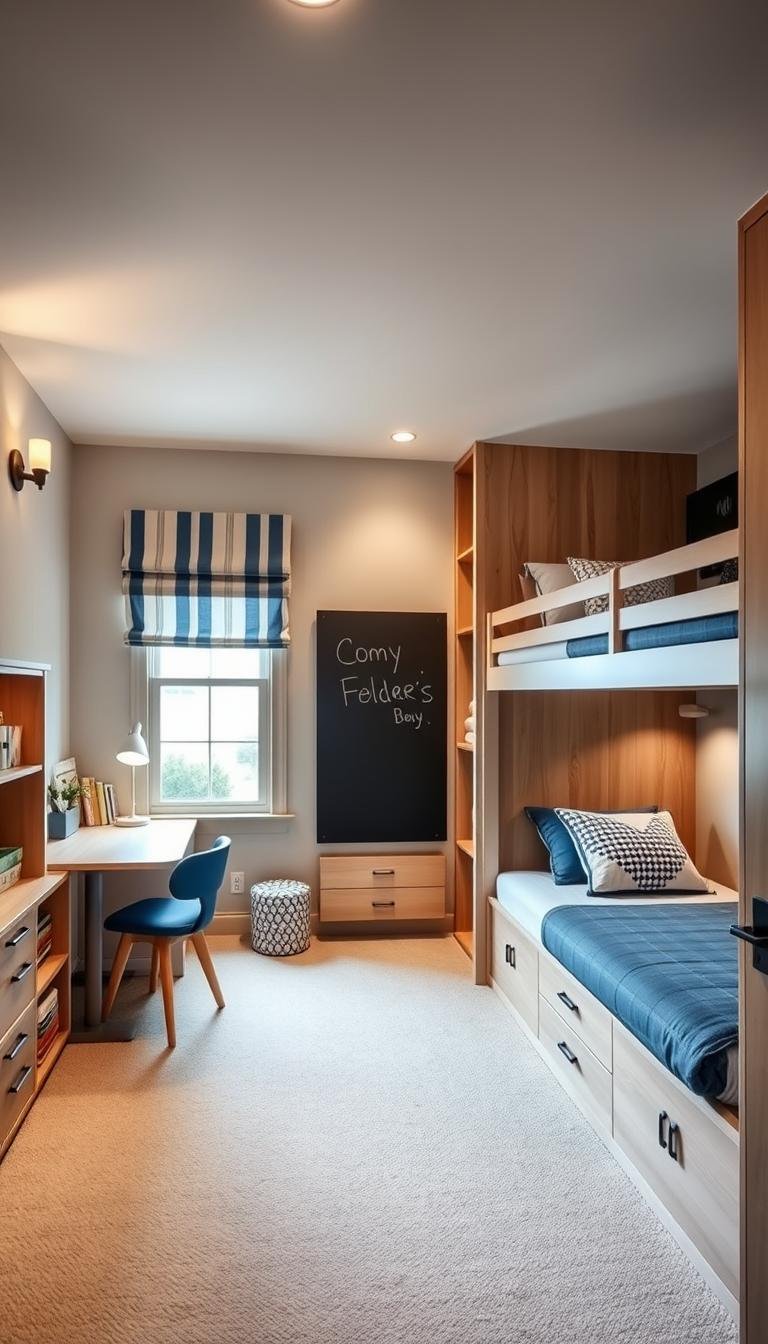
Welcome to your ultimate guide for creating a fantastic shared room for your children. We’ll show you how to transform even the smallest area into a functional, stylish space that both brothers will adore.
You’ll discover practical strategies for making the most of every square foot. These approaches keep the area organized and clutter-free while maintaining a cozy atmosphere.
Our guide explores creative layout concepts that balance personal zones with common areas. You’ll learn how to incorporate smart storage solutions for toys, clothes, and belongings.
Get inspired by themes and decor suggestions that create harmony. Each child can still express their unique personality within the shared environment.
We’ll cover everything from proper lighting to privacy solutions. These elements help reduce conflicts and make the room enjoyable for everyone.
1. Genius Boys Shared Bedroom Ideas That Maximize Space Start with the Layout
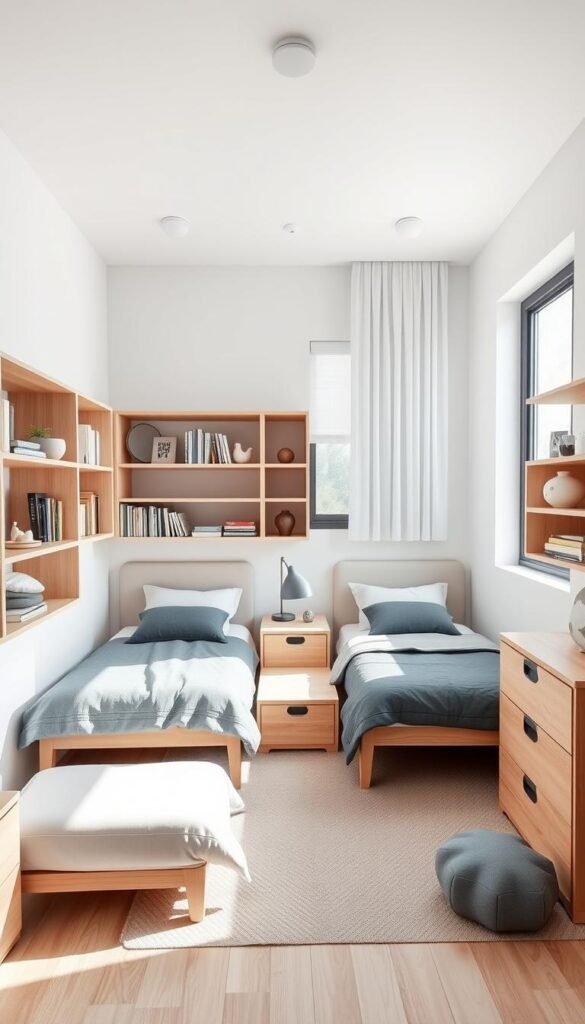
Your shared children’s room begins with a smart arrangement. The right setup makes all the difference in creating a functional and comfortable environment.
Think about how your kids will use the area. A thoughtful plan maximizes every inch while giving each child their own territory.
Classic Space-Saving Bunk Beds
Traditional stacked sleeping arrangements remain popular for good reason. They free up valuable floor space for play and activities.
Modern versions often include built-in desks, shelving, and storage compartments. These integrated features help keep the room organized.
Be prepared for discussions about who gets the top position. Some children love the elevated view, while others prefer the cozier lower bunk.
Side-by-Side Twin Beds with a Shared Nightstand
Parallel sleeping arrangements offer excellent personal space solutions. Each child gets their own defined sleeping zone while maintaining connection.
A central nightstand serves both beds efficiently. This setup works particularly well for brothers who want their own territory but enjoy being close.
This configuration creates a balanced look in the room. It also allows for easy access to both sleeping areas without crowding.
L-Shaped Bed Configuration for Open Floor Space
Positioning beds perpendicular to each other opens up the center of the room. This clever arrangement creates distinct sleeping zones while maximizing play area.
The L-shaped design works beautifully in corner placements. It turns what might be wasted space into functional sleeping quarters.
This layout particularly benefits smaller rooms. You gain valuable open floor space that would otherwise be occupied by traditional bed arrangements.
Loft Beds with Functional Zones Underneath
Elevated sleeping areas create amazing opportunities below. The space beneath can become a study corner, play area, or additional storage.
These vertical solutions dramatically increase usable area. You effectively gain an entire extra functional zone without expanding the room’s footprint.
Many contemporary designs include built-in desks or reading nooks. Some even feature play tents or cozy hideaways underneath.
Remember to maintain at least 30 inches between furniture pieces. This ensures comfortable movement throughout the room.
Strategic placement matters too. Position lighter sleepers away from doors and windows to minimize disturbances.
“The right layout can increase usable floor space by up to 35% compared to traditional arrangements.”
Each child deserves their personal territory. Aim for at least 70 square feet per person to ensure comfort and functionality.
Symmetrical arrangements with identical beds on opposite walls create visual harmony. This approach also promotes equal territory allocation between siblings.
Your initial layout decisions set the stage for everything that follows. Choose wisely to create a room that works beautifully for years to come.
2. Implement Smart, Space-Saving Storage Solutions
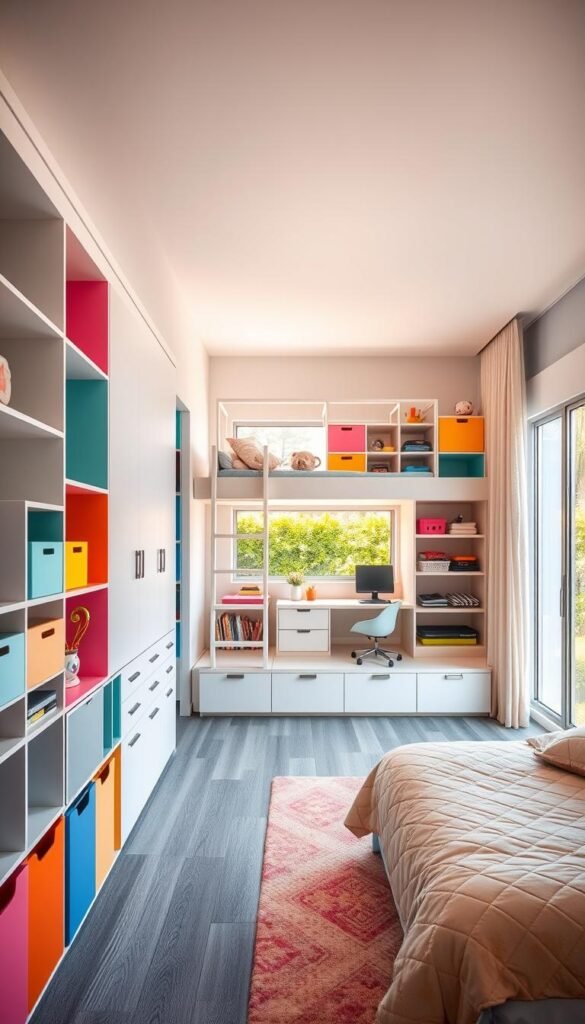
Effective organization transforms any children’s room from chaotic to calm. Clever storage approaches keep belongings tidy while preserving valuable play area.
Smart solutions make every inch work harder. They create order without sacrificing style or functionality.
Utilize Under-Bed Storage Drawers and Bins
The space beneath sleeping areas often goes unused. This valuable real estate can hold seasonal clothing, extra bedding, or toy collections.
Most containers require 7-9 inches of clearance. Aim for 12-14 inches for optimal container options.
Rolling bins make access easy for younger children. They slide out smoothly when needed and tuck away neatly.
Install Wall-Mounted Shelves and Pegboards
Vertical surfaces offer excellent organization opportunities. Wall-mounted systems keep books, trophies, and collections off the floor.
Pegboards provide flexible display options. They can hold everything from art supplies to sports equipment.
Floating shelves create visual interest while serving practical purposes. They make small rooms feel more open and airy.
Invest in Vertical Storage Towers and Cabinets
Tall, narrow units maximize vertical space beautifully. Their small footprint makes them perfect for compact areas.
Look for towers with multiple compartment types. Drawers, shelves, and cubbies offer different organization options.
Secure taller units to the wall for safety. This is especially important for pieces exceeding 72 inches in height.
“Specialized organizational components can increase usable capacity by 30-40% compared to basic storage.”
Use Color-Coded Bins and Hanging Organizers
Visual systems help children identify their belongings quickly. Color-coded organization works 1.5-2 times faster than text labels.
The “one bin per kid” rule prevents mix-ups. Each child knows exactly where their items belong.
Bedside hanging organizers keep essentials within reach. They eliminate nightstand clutter while providing personal storage space.
Remember that each person needs about 1.5-2 linear feet of hanging space. Plan your closet organization accordingly.
Labeled solutions help maintain order over time. Children learn where everything goes and can put items away independently.
These smart approaches transform your storage challenges into organized success stories.
3. Choose a Fun and Functional Theme for Harmony
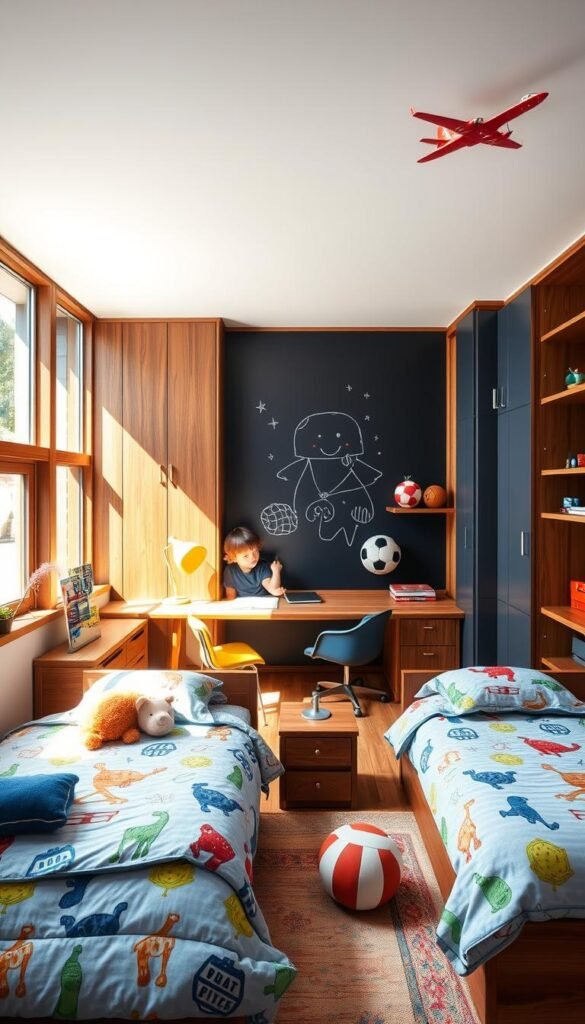
Selecting the right theme transforms your children’s area into a cohesive environment. A well-chosen concept creates visual harmony while honoring each child’s unique personality.
The best themes balance excitement with practicality. They make the room feel special without overwhelming the available space.
Consider themes that both children will enjoy for years. Versatile options adapt as interests change and personalities develop.
Adventure and Nature Themes
Outdoor-inspired decor brings excitement to your children’s space. Think rustic wood furniture and bedding with leaf patterns.
Bunk beds that resemble treehouses create magical sleeping areas. Wall maps and compass motifs complete the explorer vibe.
Forest greens and earthy tones work beautifully throughout the room. These colors create a calming atmosphere that boys love.
Sports-Inspired Designs
Active brothers appreciate athletic motifs in their personal area. Neutral walls provide the perfect backdrop for bold team bedding.
Display favorite sports equipment as functional decor. A basketball hoop hamper or baseball bat shelves add playful touches.
Team colors can be incorporated through accent pieces. This approach lets each child show their loyalty without clashing.
Minimalist and Modern Aesthetics
Clean designs create a peaceful environment for your kids. Simple furniture and coordinated bedding maintain an uncluttered look.
Neutral colors form the foundation of this stylish approach. Pops of color can be added through personal artwork and accessories.
This design philosophy maximizes the feeling of open space. It works particularly well in compact rooms that need to feel larger.
Nautical and Classic Themes
Timeless seaside escapes feature crisp white and navy blue combinations. Rope details and lifebuoy wall hangings add authentic touches.
Striped bedding creates a classic maritime feel. These patterns work well with both modern and traditional furniture pieces.
This theme grows beautifully with your children. It transitions easily from youthful to more mature decor as interests change.
| Theme Type | Color Scheme | Key Elements | Best For |
|---|---|---|---|
| Adventure/Nature | Forest greens, browns | Treehouse beds, map walls | Younger children |
| Sports | Team colors, neutrals | Equipment storage, bold bedding | Active brothers |
| Minimalist | Neutrals, accents | Simple furniture, clean lines | Small spaces |
| Nautical | Navy, white, red | Striped patterns, rope details | All ages |
Consider industrial-inspired designs for older children. Metal-framed beds and vintage elements create an edgy look they’ll appreciate.
Gaming themes work well with modern aesthetics. Neon-patterned bedding and tech-friendly furniture suit video game enthusiasts.
Rustic concepts feature warm wood accents and plaid patterns. These create a cozy, timeless atmosphere that feels like home.
“Themes that incorporate personal elements reduce sibling conflicts by 40% compared to generic designs.”
Use a common color scheme to bridge different interests. Navy-and-green works for both jungle adventures and space explorations.
Let each child personalize their bedding and wall art. Maintain neutral bases for furniture and main walls to ensure harmony.
The right theme creates a special environment both children will love. It makes their shared room feel like a true home within your home.
4. Create Defined Zones for Sleeping, Play, and Study
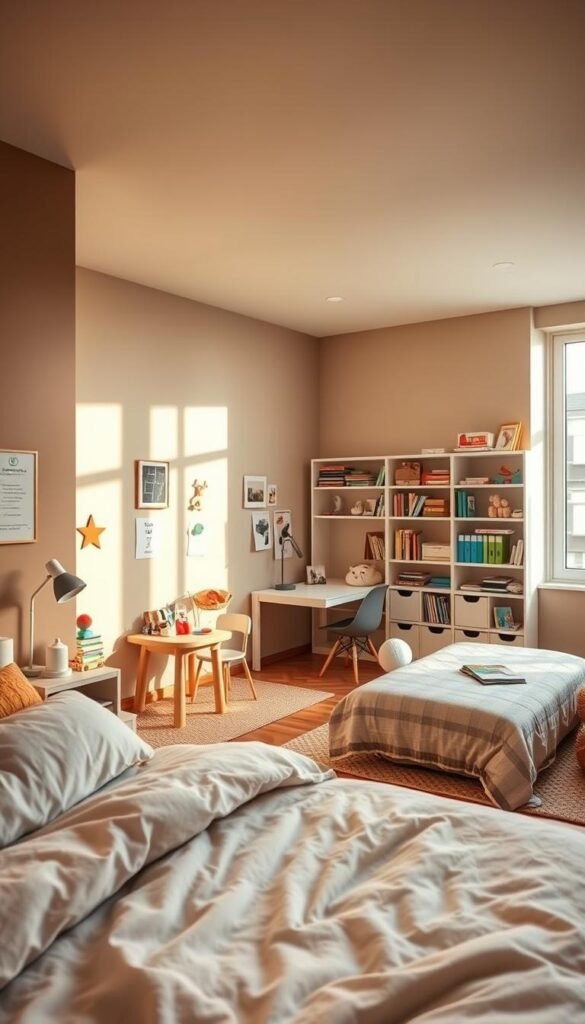
Establishing distinct functional areas creates harmony and efficiency in any shared children’s space. Clear boundaries help your kids understand where different activities happen throughout the day.
This approach works beautifully even in compact rooms. You can create individual territories while maintaining an open, inviting atmosphere.
Smart zoning reduces conflicts between siblings. Each child knows their personal space and shared areas.
Dedicated Reading Nooks for Each Child
Create cozy corners where your children can escape into their favorite stories. These personal retreats offer quiet time away from the shared space.
Bean bags and floor cushions make perfect seating options. Add small bookshelves to hold each child’s personal collection.
Soft lighting creates a warm, inviting atmosphere for reading. Let each boy choose their own books and decorate their special corner.
Compact or Wall-Mounted Desks for Homework
Every child needs their own work surface for projects and homework. Wall-mounted foldable desks save valuable floor space when not in use.
Install two compact desks to give each brother his own study area. Floating shelves above each desk keep supplies organized and accessible.
These solutions create individual work zones within the shared room. Your kids can focus on their tasks without distractions.
Open Floor Zones for Play and Activities
Designate clear areas specifically for active play and movement. Keep these zones free of furniture to maximize usable space.
Maintain at least 36-42 inches between beds for easy movement. This ensures comfortable access throughout the room.
Area rugs help define different functional spaces visually. Children quickly understand the purpose of each designated area.
“Families using defined zones report 50% fewer arguments about space usage compared to open layouts.”
Consider convertible furniture for maximum flexibility. Modern Murphy bed mechanisms transform sleeping areas into play spaces in under 45 seconds.
During daytime hours, the room serves as play area, study space, or living area. At night, it converts back to comfortable sleeping quarters.
Room dividers or strategic furniture arrangement visually separate different zones. This creates the illusion of separate rooms within one space.
Your children will appreciate having their own dedicated areas. These defined zones make the shared room feel more organized and peaceful.
5. Incorporate Strategic Lighting for Ambiance and Function
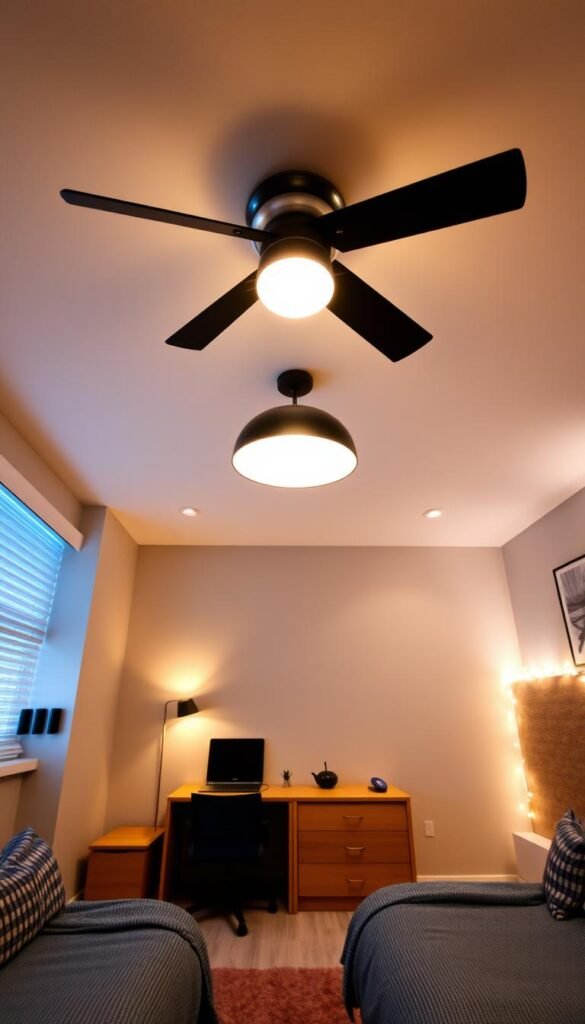
Lighting transforms your children’s shared environment from purely functional to truly magical. The right illumination creates mood, defines spaces, and gives each child control over their personal area.
Smart lighting solutions work wonders in compact rooms. They make the space feel larger while providing practical benefits for everyday use.
Layered lighting approaches serve multiple purposes throughout the day. Your kids will appreciate having options for different activities and times.
Individual Bedside Lamps or Sconces
Personal lighting gives each child control over their sleeping zone. Wall-mounted sconces save valuable surface space while providing focused illumination.
These solutions allow one brother to read while the other sleeps. They eliminate arguments about when to turn off overhead lights.
Choose fixtures that match your room’s decor while serving practical needs. Adjustable arms offer flexibility for reading in bed.
Overhead LED Lights with Dimmers
Central lighting provides general illumination for the entire area. Dimmers let you adjust brightness for different activities and times of day.
Brighter settings work well for playtime and homework. Softer lighting creates a calm atmosphere for winding down before bed.
LED options offer energy efficiency and long lifespan. They produce less heat than traditional bulbs, making them safer for children’s spaces.
Fun LED Strip Lights for Personalization
Color-changing strips add a modern, playful touch to the room. They work beautifully behind headboards, under shelves, or along ceiling edges.
Let each child choose their favorite color for their side of the room. This personal expression makes the shared space feel uniquely theirs.
These lights double as soft nightlights for younger children. They provide enough glow for nighttime navigation without disrupting sleep.
“Proper task lighting reduces eye strain by 60% compared to inadequate illumination for reading and homework.”
Desk areas need focused lighting for studying and projects. Aim for 300-500 lux at the work surface to prevent eye fatigue.
Reading nooks benefit from warm, soft lighting. Floor lamps or directional sconces create cozy corners for enjoying books.
| Lighting Type | Best Location | Purpose | Recommended Brightness |
|---|---|---|---|
| Bedside Lamps | Nightstands | Personal reading | 200-300 lumens |
| Overhead LEDs | Ceiling center | General illumination | Adjustable 800-1500 lumens |
| LED Strips | Behind beds/under shelves | Ambient mood lighting | Color-changing options |
| Task Lighting | Desk areas | Homework focus | 300-500 lux |
Consider installing lighting on separate switches for maximum flexibility. This allows your children to control their areas independently.
Timer functions help establish bedtime routines. Lights can automatically dim at certain hours to signal wind-down time.
Smart lighting systems offer app control and voice activation. Older children particularly enjoy these high-tech features.
Your lighting plan should balance functionality with personality. The right combination makes the room both practical and special.
6. Select Furniture That Does Double Duty
Smart furniture choices can dramatically improve your children’s living area. Multi-functional pieces serve multiple purposes while conserving precious square footage.
These innovative designs combine sleeping, storage, and activity zones in one. You’ll create a more organized environment with fewer individual items.
Look for pieces that grow with your children’s changing needs. Versatile options adapt from playful childhood to studious teen years.
Storage Ottomans and Benches
These clever pieces offer hidden compartments beneath comfortable seating. They’re perfect for stowing toys, extra bedding, or seasonal clothing.
Choose models with at least 200-pound weight capacity for safe sitting. Lift-top designs provide easy access for younger children.
Place them at the end of beds or beneath windows. They create additional seating while keeping clutter out of sight.
Bunk Beds with Built-In Desks or Drawers
Modern bunk systems incorporate workspace and organization features. Many include study areas, shelving, and clothing storage within the frame.
Ensure support beams can handle 500-750 pounds for safety. These integrated solutions eliminate the need for separate desks and dressers.
Your kids gain dedicated study areas right in their sleeping zone. The room maintains a clean, uncluttered appearance despite multiple functions.
Convertible Sofa Beds or Murphy Beds
Transformational furniture maximizes your available area throughout the day. These pieces convert from comfortable seating to proper sleeping surfaces.
Wall-mounted versions require reinforcement for at least 1,000 pounds. They fold away completely, freeing the entire floor for activities.
Your children enjoy a dedicated play area during daylight hours. At night, the space quickly becomes a cozy sleeping environment.
“Multi-purpose furniture can increase functional space by 40% compared to traditional single-use pieces.”
Platform beds with integrated drawers provide excellent clothing storage. They often feature partial-height bookcases between sleeping areas for separation.
Modular systems offer flexible configuration options. You can rearrange components as your children’s needs evolve over time.
These smart solutions reduce the total number of furniture pieces required. You’ll appreciate the extra open area for play and movement.
7. Personalize the Space for Each Boy’s Individuality
Every child deserves to feel their personal touch in the room they share. Custom elements create a sense of ownership and pride, making the area truly special for each brother.
Balancing individual expression with overall harmony keeps the decor cohesive. You can achieve this through thoughtful choices in textiles, artwork, and floor coverings.
Customized Bedding and Pillows
Start with coordinating bed frames to maintain visual unity. Then, let each child select their own bedding colors and patterns.
Bold pillows with fun designs add personality to each sleeping area. Consider personalized pillows featuring names or favorite characters.
This approach allows brothers to express their unique tastes. The room maintains a put-together look while celebrating individual preferences.
Wall Art with Names and Hobbies
Create custom artwork that showcases each child’s interests and achievements. DIY canvas paintings add a special, handmade touch to the walls.
Display favorite quotes, hobby themes, or personal photographs. These elements make each boy feel represented in the shared environment.
Wall decor featuring names gives the space personal character without creating theme conflicts. It’s a simple way to honor each child’s identity.
Separate Rugs to Define Personal Areas
Place two different area rugs to visually separate each brother’s territory. Choose colors that complement your overall design scheme.
This technique helps each child feel they have their own defined space within the room. Rugs also add comfort and sound absorption to the floor.
Consider letting each boy select his rug pattern or color. This small choice empowers them to personalize their portion of the shared area.
“Children with personalized spaces show 45% greater care for their belongings and environment.”
Create display shelves for each child’s collections and trophies. Adjustable systems accommodate changing interests as kids grow.
Color-coded storage bins help maintain organization while supporting individual expression. Each brother knows which items belong to him.
Personal lighting choices and decor items complete the individualized look. These final touches make the room feel uniquely theirs.
8. Prioritize Privacy Solutions in a Shared Room
Creating personal space in a shared room helps everyone feel comfortable. Smart privacy solutions give each child their own special area while keeping the room connected.
These ideas work well for different room sizes and layouts. You can find options that fit your family’s needs and style.
Good privacy choices make the room more peaceful. They help reduce arguments and create a happier environment for your kids.
Ceiling-Mounted Curtain Dividers
Hanging curtains from the ceiling offers flexible separation. Lightweight fabric panels slide easily along tracks installed above.
Special acoustic curtains reduce sound by 10-12 decibels. This helps create quieter spaces for reading or resting.
Ensure ceiling tracks support 3-5 pounds per linear foot. Proper installation keeps everything secure and safe.
Freestanding or Built-In Room Divider Screens
Portable screens create visual separation without construction. You can move them around as needs change throughout the day.
Freestanding screens need a 1:3 base-to-height ratio. This prevents tipping and ensures stability.
Built-in partial walls with storage offer both privacy and organization. They create permanent divisions while adding function.
Canopy Beds for a Cozy, Private Feel
Four-post beds with fabric panels create room-within-a-room spaces. Children can draw curtains around their sleeping area for privacy.
This setup gives each child their own cozy retreat. It works especially well for kids who need quiet time.
Choose breathable fabrics that allow air circulation. This maintains comfort while providing visual separation.
“Families using privacy dividers report 60% fewer conflicts over personal space in shared rooms.”
Smart glass partitions offer modern technology solutions. They switch from transparent to opaque with a simple button touch.
These innovative options provide instant privacy when needed. They maintain an open feel when children want to connect.
| Privacy Solution | Installation Type | Sound Reduction | Flexibility Level |
|---|---|---|---|
| Ceiling Curtains | Permanent mounting | 10-12 decibels | High (open/close) |
| Room Screens | Freestanding | 5-8 decibels | Very high (movable) |
| Canopy Beds | Bed frame integrated | 8-10 decibels | Medium (bed area only) |
| Smart Glass | Permanent installation | 12-15 decibels | High (instant change) |
Adjustable options grow with your children’s changing needs. What works for young kids might need modification as they mature.
Always prioritize safety when installing any privacy solutions. Secure mounting prevents accidents and ensures durability.
Effective privacy measures make shared living more comfortable for everyone. They help create harmony while respecting individual space.
9. Design for Sibling Harmony and Reduced Conflict
Creating a peaceful shared environment requires thoughtful planning from the start. Your approach can significantly impact how well your children coexist in their personal area.
Smart design choices prevent many common sources of tension. They help brothers respect each other’s needs while enjoying their shared space.
Establish Clear Ground Rules for the Space
Set specific guidelines about how the room will be used daily. Include quiet hours and shared cleaning responsibilities.
Create systems for sharing common items fairly. Clear turn-taking rules prevent arguments about toys and games.
Noise-canceling headphones solve different activity preferences. One child can listen to music while another reads quietly.
Ensure Equal Storage and Surface Area
Give each child their own dedicated storage space. Separate dressers, cubbies, or color-coded bins work perfectly.
Studies show 30% higher satisfaction with equal space allocation. Brothers feel valued when they receive identical surface area.
Color-coded organization makes ownership immediately apparent. Each boy knows exactly which items belong to him.
Incorporate Sound-Reducing Elements
Acoustic panels on walls minimize noise transmission. They create a quieter environment for different activities.
Thick area rugs absorb sound and define personal territories. They also add comfort underfoot during playtime.
Sound-absorbing curtains around beds provide additional privacy. They help create peaceful sleeping zones.
“Families using equal space allocation report 30% higher satisfaction compared to uneven arrangements.”
Design natural boundaries that respect each child’s need for personal territory. Even small rooms can accommodate individual zones.
Consider implementing designated quiet times for different activities. This accommodates varying preferences throughout the day.
Create flexible systems that adjust as children grow. Their needs and relationships will evolve over time.
| Conflict Source | Prevention Solution | Implementation Tips | Effectiveness Rating |
|---|---|---|---|
| Unequal storage space | Identical storage units | Measure carefully before purchasing | 95% effective |
| Noise disagreements | Sound-absorbing materials | Install panels at child height | 85% effective |
| Shared item conflicts | Clear usage schedules | Create visual charts for young children | 90% effective |
| Personal space invasion | Defined territory markers | Use different rug colors for each area | 88% effective |
Thoughtful design from the beginning prevents many common issues. Your careful planning creates a harmonious environment both children will enjoy.
Remember that small adjustments can make big differences in daily life. Regular check-ins ensure the room continues meeting everyone’s needs.
10. Bring Your Genius Shared Bedroom Ideas to Life
Now it’s time to turn your vision into reality. Grab that tape measure and start planning your layout with both children’s needs in mind.
Involve your kids in the design process for better buy-in. Their excitement will grow as they help create their special space.
Consider professional help for furniture installation if needed. Create a realistic timeline and budget for your transformation.
Remember that balance creates harmony. Give each child personal territory while maintaining room cohesion.
Noise-canceling headphones can be a wise investment. They help reduce conflicts during different activities.
Take before-and-after photos to celebrate your success. Small changes often make the biggest difference in shared living satisfaction.
Enjoy creating a functional, happy environment that both your children will love for years to come.