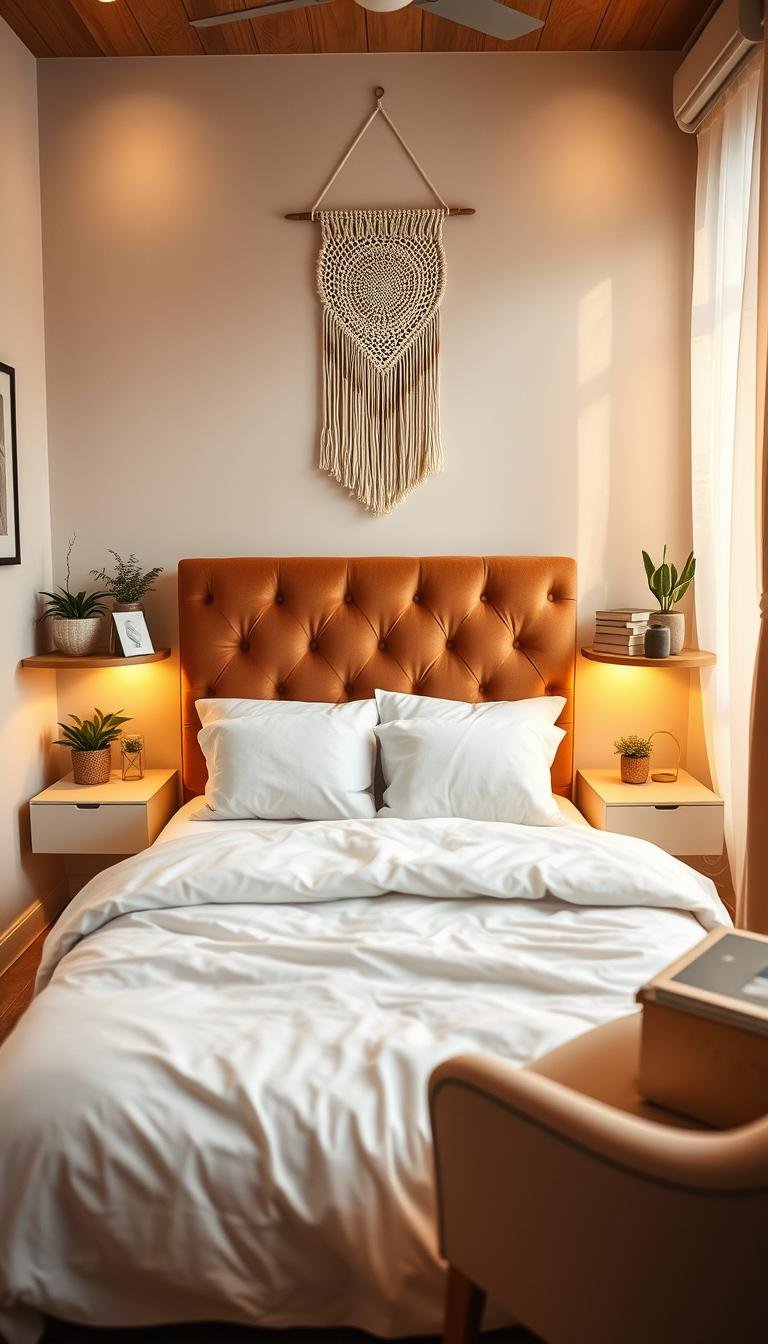
Welcome to your guide on transforming a compact sleeping area into a beautiful, functional space. Limited square footage does not mean you must sacrifice comfort or style.
We will explore practical strategies to maximize every inch of your room. Smart bed placement and clever color choices can make a huge difference.
You will learn how to select multifunctional furniture and utilize vertical space effectively. Designers like Alan Tansey and Michael K. Chen offer expert tips to help.
Whether you live in a tiny apartment or a cozy nook, these approaches will help you create a personalized retreat. Embrace the challenge and get creative with your design.
By the end, you will have a clear plan to make your space not just functional, but stunningly beautiful.
1. Start With Strategic Bed Placement
Your first step to a better room begins with smart bed positioning. The right layout makes your space work beautifully.
Think about how you move through the area every day. Good placement helps everything feel open and easy.
Maximizing Movement Space
Put your bed where you can walk around it without trouble. Leave clear paths so you never bump into things.
Try a low bed frame. It makes the ceiling seem higher and gives more visual room.
Designer Noz Nozawa used this trick in her Lake Tahoe home. It really opens up the area.
Considering Room Flow
Place your bed against a wall that keeps doors and windows clear. This creates a natural flow for movement.
Think about your daily routine. Do you read, dress, or relax here? Arrange your bed to support these activities.
If you have an alcove, tuck the bed into it. This saves floor space and makes a cozy sleep spot.
Use your extra space wisely. Add a dresser, storage bench, or reading chair. Keep things simple to avoid clutter.
| Placement Tip | Benefit | Best For |
|---|---|---|
| Against long wall | Creates wide pathways | Narrow rooms |
| In alcove | Maximizes central space | Rooms with nooks |
| Low profile frame | Enhances ceiling height | Low ceiling areas |
Remember, good placement is not just about fitting furniture. It’s about creating a room that feels spacious and welcoming.
2. Embrace Multifunctional Furniture Solutions
Maximize your room’s potential by choosing items that work harder for you. The right pieces can transform your limited area into a highly functional space.
Jennifer Press, founder of Press Interiors in New York City, highlights a common mistake. “Selecting a bed that’s too large makes it impossible to add appropriately sized nightstands,” she explains. This approach limits your options dramatically.
Storage Beds That Work Overtime
Consider a storage bed with built-in drawers or a pop-up mechanism. West Elm’s Myla Pop-Up Storage Bed offers clever hidden compartments.
These designs let you stash belongings without consuming extra floor space. In a shared sleeping area, prioritize multifunctional pieces to accommodate both partners’ needs.
A storage bed can handle dual belongings beautifully. This approach keeps your room organized and spacious.
Dual-Purpose Nightstands
Choose nightstands that serve multiple functions. Look for a small dresser offering drawer storage or a desk doubling as a bedside table.
Winsome Interior Design demonstrated this perfectly in a North Carolina home. They used a pair of drawers on each side of a desk, keeping both nighttime essentials and workday needs close by.
RH Teen’s Laguna 2-Drawer Nightstand provides scaled-down functionality. Avoid oversized furniture that overwhelms your space.
Consider a daybed that functions as a sofa by day and sleeping area by night. This works perfectly for rooms serving dual purposes.
Look for furniture with hidden storage compartments like ottomans or benches. These solutions help your space work harder while maintaining a tidy appearance.
3. Implement Space-Saving Murphy Beds
Let’s explore a clever furniture solution that completely transforms your compact sleeping area. A Murphy bed might be the ultimate answer when you need your room to serve multiple purposes.
Design expert Alan Tansey offers straightforward advice. “Nobody wants to hear it, but a Murphy bed may be the biggest way to maximize space if you want the room to double as a home office or lounge.”
These innovative beds hinge to an interior wall and fold away when not in use. This creates valuable floor space for daytime activities. Your bedroom can easily become a productive workspace or relaxing den.
Architect Michael K. Chen created a striking powder blue custom design. Ready-made options also offer excellent solutions for various styles and budgets.
The transformation happens instantly. When folded up, the bed disappears completely into the wall. This creates a seamless, clutter-free area that feels much larger.
Installation requires careful planning. You must anchor the unit to a sturdy interior wall for safety and functionality. Professional installation is often recommended.
Complete your multifunctional space with complementary elements. Wall-mounted shelves or a fold-down desk create a complete workstation. This approach works beautifully in studios where every square foot must multitask.
Though it represents an investment, a Murphy bed delivers remarkable returns. It transforms your limited area into a truly versatile environment that works hard for your lifestyle.
4. Build Custom Wall Storage Solutions
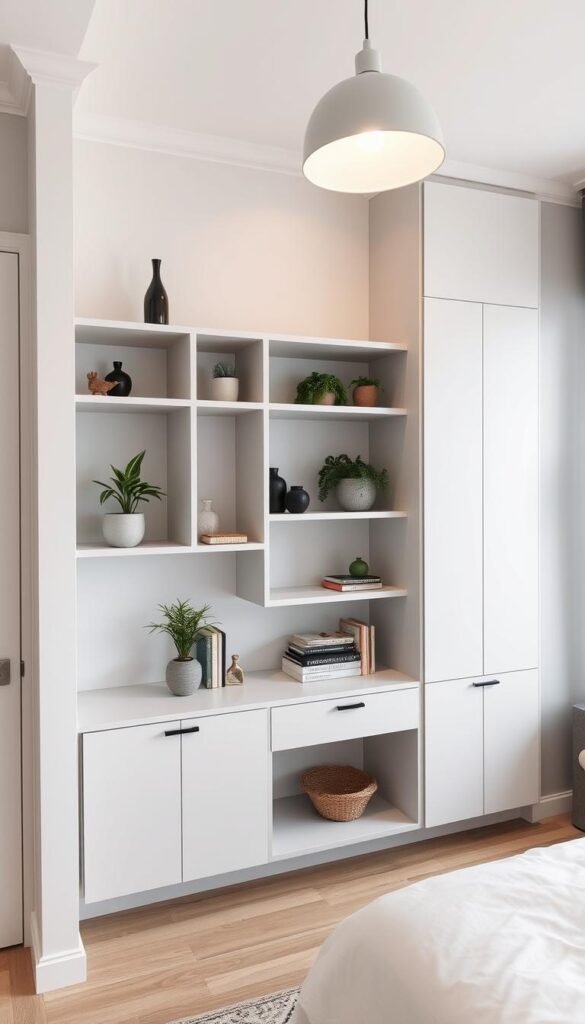
Turn your walls into smart storage solutions that save space and add style. Instead of bulky furniture that eats floor area, built-in options create a seamless look.
These integrated systems keep your room organized without clutter. You gain valuable storage while maintaining an open, airy feel.
Integrated Shelving Systems
Built-in shelving becomes part of your wall structure. This approach saves precious floor space in your compact sleeping area.
Customize shelves to fit awkward nooks or alcoves perfectly. You maximize every inch without disrupting the room’s natural flow.
Consider open shelving for a light, airy feel. Alternatively, add doors to conceal clutter for a minimalist aesthetic.
Materials like wood or painted MDF can match your preferred style. Whether modern, rustic, or cozy, these solutions enhance your room’s design.
Disguising Utilities Creatively
Hide unsightly utilities while adding functional storage. Radiators or electrical panels can blend beautifully into your design.
Catherine and VW Fowlkes of Fowlkes Studio demonstrated this brilliantly. They disguised a radiator with a custom bookshelf cover that matched their inset shelving.
This clever approach turns functional necessities into design features. Your room maintains its aesthetic while everything works efficiently.
Use vertical space above beds or desks for additional shelving. Keep frequently used items within easy reach while maintaining a clean, uncluttered look.
While custom solutions might require professional help, they offer perfectly tailored storage that maximizes your space beautifully.
5. Optimize Vertical Space Utilization
Look up! Your walls hold incredible potential for creating a more functional and spacious room. By thinking vertically, you can dramatically increase storage and style without sacrificing floor area.
This approach works beautifully in compact sleeping areas where every inch counts. You’ll discover smart ways to store items and add lighting while keeping your space open and airy.
High Shelving Installation
Install shelves higher than usual to create storage that feels almost hidden. This keeps your pathways clear while providing valuable space for items you don’t need daily.
Designers often use this technique to maximize room height. High shelving works perfectly for displaying decor, books, or special mementos.
Keep frequently used items at lower levels for easy access. Be selective about what goes on higher shelves to avoid visual clutter.
Consider combining a desk with built-in bookshelves above it. This creates a complete workstation that uses your room’s full height.
This solution proves especially useful in children’s rooms. It keeps precious floor space open for play while maintaining safety.
Wall-Mounted Lighting Options
Free up valuable surface space with wall-mounted lighting. Sconces provide excellent ambient light without consuming nightstand area.
Designers Ashley Maddox and Hilary Walker demonstrated this beautifully. Their wall-mounted solution creates a cozy atmosphere while keeping surfaces clear.
These fixtures eliminate the need for bulky floor lamps. You gain both functionality and style without sacrificing precious square footage.
Choose adjustable sconces for reading light. This allows you to direct light exactly where you need it most.
| Vertical Solution | Primary Benefit | Ideal Placement |
|---|---|---|
| High shelving | Creates hidden storage | Above desk or bed |
| Wall sconces | Saves surface space | Beside bed or reading chair |
| Built-in bookshelves | Combines functions | Above workspace |
| Display shelving | Shows decor items | High on feature wall |
Remember to balance your vertical elements throughout the room. Proper distribution creates visual harmony while maximizing your storage potential.
Your compact sleeping area will feel more organized and spacious. These solutions help you make the most of your valuable vertical space.
6. Choose Low-Profile Bed Frames
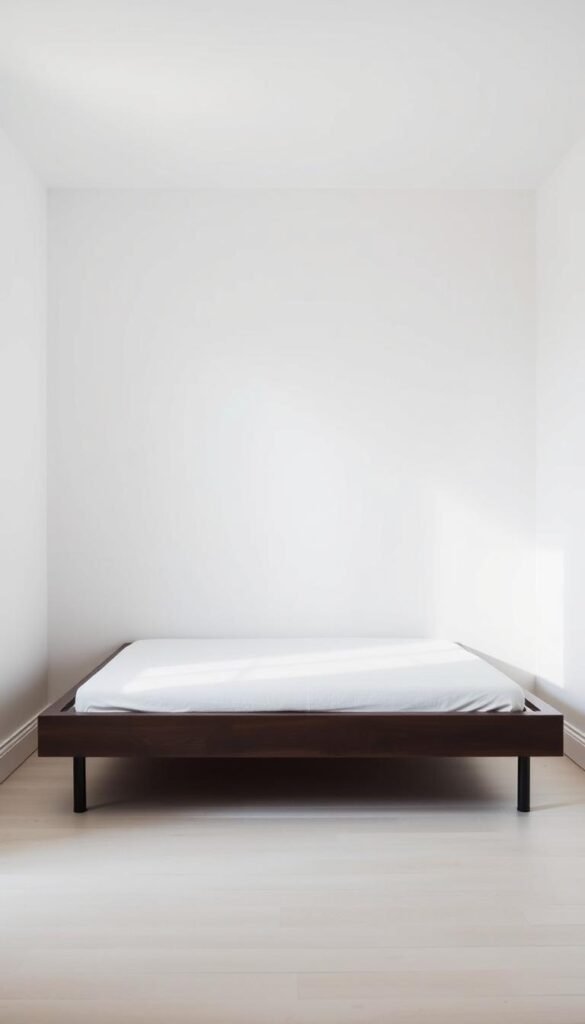
The height of your bed frame significantly impacts your room’s overall perception. A lower foundation creates immediate visual benefits in compact sleeping areas.
Designer Noz Nozawa demonstrated this perfectly in her Lake Tahoe home. Her low bed frame makes the ceiling appear higher and creates room for a statement pendant light.
This style minimizes visual bulk, making your space feel less crowded. Even when your bed dominates the floor area, the room maintains an airy quality.
Pair your low bed with vertical elements that draw the eye upward. A striking light fixture or tall artwork enhances the sense of height beautifully.
Avoid tall headboards or bulky frames that can make the area feel cramped. Instead, opt for minimalist designs that blend seamlessly with your decor.
Low beds work wonderfully with under-bed storage solutions. Rolling bins or built-in drawers add functionality without compromising style.
This approach proves particularly effective in rooms with limited square footage. Every design decision contributes to the overall spacious feeling.
Embrace your bed as the focal point while keeping it low. This maintains balance and ensures your room remains both functional and stylish.
| Frame Type | Visual Impact | Best Pairings |
|---|---|---|
| Low-profile platform | Creates ceiling height illusion | Statement lighting, vertical art |
| Standard height | Neutral space perception | Traditional nightstands, full headboards |
| High canopy | Dramatic but space-consuming | Tall ceilings, spacious rooms |
Remember that your bed frame choice sets the tone for your entire room. A lower profile helps maximize both function and visual appeal.
7. Create Illusions With Strategic Drapery
Your window treatments can do more than just block light. They become powerful tools for transforming your compact sleeping area.
Smart drapery choices create visual tricks that expand your space. They add texture and personality while serving practical needs.
Designers use these techniques to make rooms feel larger and more cohesive. You can achieve similar results with careful planning.
Extended Curtain Techniques
Try extending curtains behind your bed frame when positioned near a window. This creates a beautiful backdrop that ties the room together.
Designer Galeana Younger used vibrant yellow-green damask fabric for this effect. The result offers a cocooning feel that makes the area more integrated.
This approach draws the eye upward, creating height illusion. It turns functional window coverings into stunning design features.
Choose fabrics that complement your color scheme. Lighter materials work best for maintaining an airy feel in limited space.
Roman Shades Advantage
Roman shades provide excellent space-saving solutions for compact areas. They fit perfectly within your window frame without bulky drapes.
Ashley Gilbreath demonstrates their effectiveness in her bedroom designs. These shades fold up neatly, taking minimal room while adding style.
Their clean lines create a tailored look that enhances your overall design. You gain light control without sacrificing precious space.
These window treatments soften hard edges and add texture. They coordinate beautifully with bedding and wall colors for harmony.
| Drapery Type | Space Benefit | Visual Effect |
|---|---|---|
| Extended curtains | Creates cohesive backdrop | Adds height illusion |
| Roman shades | Fits window frame perfectly | Provides clean, tailored look |
| Light fabrics | Maintains airy feeling | Enhances natural light |
| Coordinated colors | Unifies design elements | Creates intentional style |
Strategic drapery placement can visually expand your room. It draws attention outward, creating the illusion of more space.
Avoid heavy floor-length curtains in very compact areas. Instead, choose simpler designs that won’t overwhelm your room.
This approach saves valuable space while adding elegance. Your window treatments become both functional and beautiful design elements.
8. Transform With Pattern Drenching
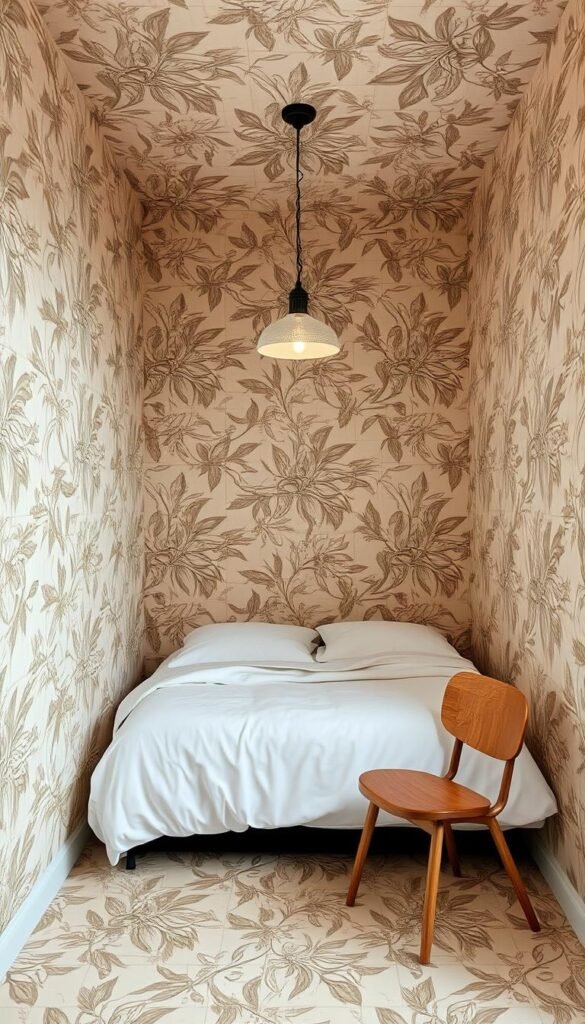
Transform your space with a bold design approach called pattern drenching. This technique creates stunning visual effects that make your area feel larger and more dynamic.
Cover your walls and ceiling with a single, continuous pattern. Designer Wendy Labrum used oversized gingham to achieve this cohesive look.
Your room gains personality and depth through this optical illusion. The eye travels across the unified surface, perceiving more space than actually exists.
Choose patterns that reflect your personal style. Geometric shapes, floral prints, or abstract designs all work beautifully.
Carry your selected pattern into bedding and accessories. This creates a unified look that feels intentional and complete.
Tonal variations within your pattern add visual interest. They maintain flow while enhancing your room’s overall aesthetic.
Consider larger-scale designs for a calmer vibe. These feel less overwhelming than busy patterns in compact spaces.
Pair patterned walls with minimalist furniture and lighting. This prevents visual clutter while letting your design shine.
Pattern drenching turns spatial limitations into striking design features. Your room becomes a personalized retreat that feels expansive and inviting.
9. Select Space-Appropriate Bed Sizes
Finding the perfect balance in furniture scale transforms your compact sleeping area. The right proportions create harmony instead of crowding.
Jennifer Press, founder of Press Interiors in New York City, shares common sizing mistakes. “Many people prioritize having a king bed in a room that can really only truly fit a queen,” she explains.
This choice makes it impossible to add properly sized nightstands. Your room loses functionality when the main piece dominates.
Avoiding Oversized Furniture
Choose a bed size that fits your room’s proportions perfectly. Measure carefully before purchasing any furniture.
In shared sleeping areas, compromise becomes essential. Consider a full or queen with smart storage solutions.
But beware of going too small with everything. Designer Zehner warns against playing things “too safe.”
Undersized nightstands and furnishings can make the space feel disjointed. Find that sweet spot between overwhelming and inadequate.
Right-Scale Nightstand Selection
Select nightstands scaled appropriately to your bed. They should hold essentials without encroaching on walking space.
Consider alternative options like wall-mounted tables. Narrow dressers can also serve as functional bedside solutions.
These choices save floor space while maintaining usefulness. Your lamp and books remain within easy reach.
The right scale creates intentional design rather than cramped living. Every piece should contribute to cohesive harmony.
| Furniture Type | Ideal Proportion | Space Benefit |
|---|---|---|
| Bed Frame | Allows 24″ walking space | Maintains room flow |
| Nightstands | Match bed height ±4″ | Provides surface function |
| Alternative Tables | Wall-mounted or narrow | Saves floor area |
| Shared Space Bed | Queen with storage | Accommodates both users |
Remember that balanced proportions make your room feel intentional. Well-chosen furniture creates both beauty and function.
10. Incorporate Clever Daybed Solutions
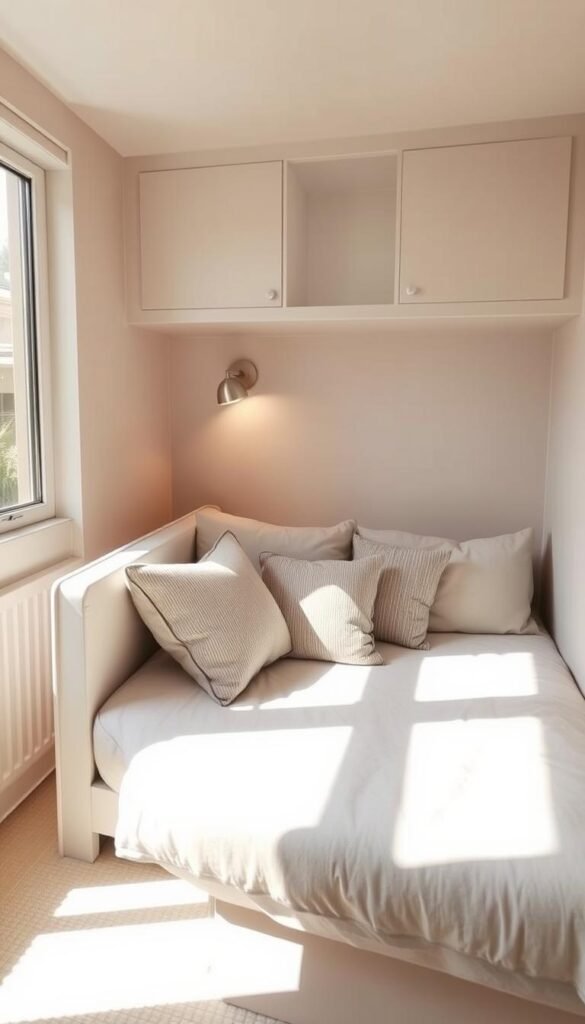
Discover how a single piece of furniture can transform your compact sleeping area. A daybed offers remarkable versatility for your home.
This smart solution works hard to make space for both relaxation and rest. During daytime hours, it functions as comfortable seating.
Come nighttime, it easily converts into a cozy sleeping surface. Designer Wendy Labrum demonstrated this beautifully in her pattern-drenched room.
Daybeds serve dual purposes perfectly. They provide seating for reading or socializing during the day.
At night, simply add pillows and a duvet to create a comfortable bed. This approach maximizes functionality without clutter.
These pieces work wonderfully in guest rooms or studio apartments. Any area needing to multitask benefits from this furniture choice.
Consider models with built-in storage drawers. Some designs include trundle beds underneath for extra guest sleeping.
This provides additional accommodation without permanent footprint. Your room maintains its spacious feel.
Style your daybed with throw blankets and decorative pillows. This enhances its dual purpose beautifully.
Position it against a wall to free up floor space. Pair it with a small table or wall-mounted shelf for essentials.
Daybeds offer both versatility and style. They represent an excellent choice for rooms serving multiple functions.
| Daybed Feature | Primary Benefit | Ideal Application |
|---|---|---|
| Convertible design | Serves as seating and bed | Studio apartments |
| Built-in storage | Provides hidden organization | Rooms with limited closet space |
| Trundle option | Adds guest sleeping space | Frequent host situations |
| Wall-hugging design | Maximizes floor area | Very compact rooms |
Remember to measure your space before selecting a daybed. Proper proportions ensure both comfort and functionality.
This furniture solution helps your room work smarter, not harder. You gain beautiful style and practical benefits.
11. Repurpose Closets Into Functional Spaces
Your closet holds hidden potential beyond just hanging clothes. Think about turning it into a cozy nook that serves multiple purposes.
Many compact sleeping areas lack enough wall space for extra furniture. If you already have good storage elsewhere, consider this smart solution.
Designer Liz Carroll transformed a closet into a serene work-from-home area. She added shelves and cabinets to keep storage functional.
A fun wallpaper and peachy pink paint brought life to the dimly lit space. This approach creates a dedicated zone without eating into your main room.
You can build out a closet alcove for various uses. Think about a reading corner, mini office, or meditation spot.
Retain some storage within the closet to maintain practicality. Dedicate part of the area to a desk or comfortable seating.
Bright paint or lively wallpaper makes the space feel inviting. It helps the nook integrate beautifully with your overall design.
Good lighting is essential for functionality. Add a small lamp or built-in LED strips for proper illumination.
This method works perfectly when floor space is limited. You create specific zones for different activities without clutter.
Your room feels more expansive through dedicated areas. Each space serves its purpose while maintaining openness.
Get creative with your closet’s transformation. Reflect your personal style whether creating a cozy retreat or productive workspace.
This approach maximizes every inch of your home. You gain functionality without sacrificing style or comfort.
12. Work With Architectural Limitations
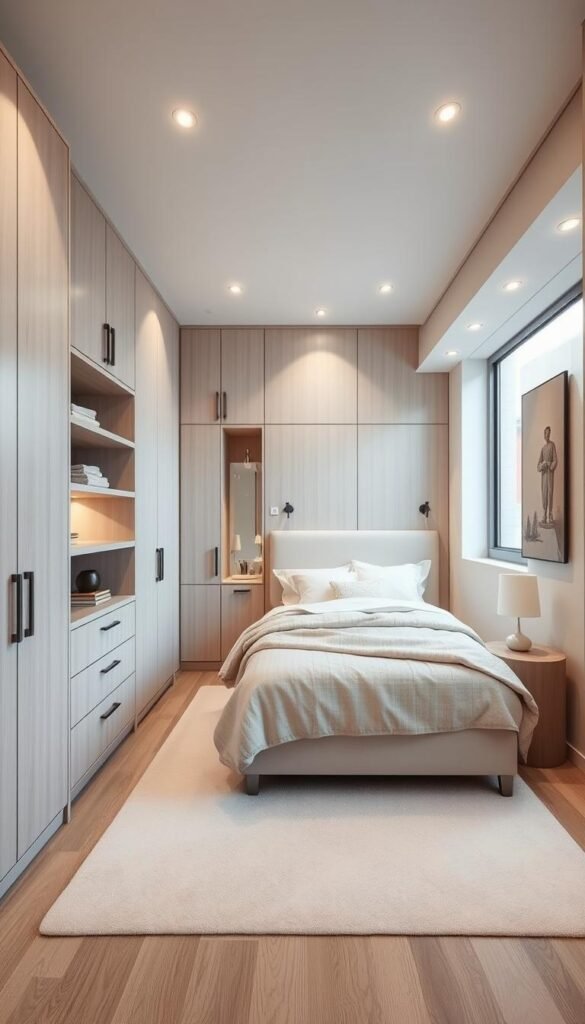
Your home’s unique features can become your greatest design assets. Instead of fighting unusual architecture, embrace it to create a truly special sleeping area.
Awkward alcoves and sloped ceilings offer incredible potential. They add character that standard rooms simply cannot match.
Alcove Optimization
Turn those funny nooks into functional features. Built-in beds fit perfectly into alcoves, creating cozy sleeping nooks.
Martha Mulholland demonstrated this beautifully in an attic bunk room. She placed twin beds under the pitched roof, making a perfect sleepover space.
Use alcoves for storage solutions too. Custom shelving or drawers maximize every inch of available space.
These features add charm while serving practical purposes. Your room gains personality and function simultaneously.
Sloped Ceiling Solutions
Slanted ceilings create intimate, cocoon-like sleeping areas. They make your space feel wonderfully private and secure.
Choose low-profile furniture that complements the angles. This maintains clear movement paths beneath lower sections.
Strategic lighting enhances these unique spaces. Place fixtures where ceiling height allows comfortable movement.
Custom solutions often work best for unusual spaces. The result is a personalized room that maximizes every inch.
Older homes frequently feature charming architectural quirks. Standard furniture arrangements might not work in these spaces.
Instead of fighting limitations, let them inspire creativity. Your resulting design will feel special and perfectly tailored.
This approach transforms potential obstacles into beloved features. Your room becomes a true reflection of your home’s character.
13. Implement Miniature Art Displays
Discover how tiny treasures can transform your walls into elegant galleries. Small artwork creates big impact without overwhelming your precious space.
Design firm Kobel + Co champions this clever approach. Their work shows how miniature pieces maintain visual calm while adding personality.
Choose petite frames that complement your color scheme. This creates a cohesive look that feels intentional and polished.
Group several small pieces together for a gallery wall effect. This draws the eye without creating visual clutter in your compact room.
Keep walls relatively bare between art clusters. This enhances the illusion of a larger space while still showing your style.
Avoid large, bold pieces that dominate the wall. Instead, create subtle points of interest that maintain openness.
This technique works especially well in very tight spaces. Every element must be carefully scaled to preserve that airy feel.
Your room gains charm and character through these delicate touches. The overall atmosphere remains calm and uncluttered.
| Art Size | Wall Impact | Recommended Use |
|---|---|---|
| 4×6 inches | Subtle accent | Single piece above nightstand |
| 8×10 inches | Focal point | Gallery wall centerpiece |
| Multiple small | Curated collection | Vertical arrangement on narrow wall |
| Miniature series | Distributed interest | Spaced throughout room |
Remember that less can truly be more. Your carefully chosen miniature art makes your space feel both personal and spacious.
14. Experiment With Dark Color Palettes
Dark colors can completely transform your sleeping area’s atmosphere. While light shades often get recommended for compact rooms, deep hues create an unexpected sophistication.
Tanner Sammons demonstrated this beautifully with his striking design approach. His use of dark wallcoverings shows how bold choices pay off.
Rich black or navy blue walls create a cocoon-like feeling. This intimate environment enhances relaxation and promotes better sleep quality.
This counterintuitive approach works because dark colors recede visually. They add depth rather than making spaces feel cramped or confined.
Consider extending your dark palette to the ceiling. This creates a seamless, enveloping effect that feels both luxurious and intentional.
Balance your dark walls with lighter furniture and accents. Cream-colored bedding or natural wood tones prevent the room from feeling too heavy.
Metallic finishes like brass or chrome add beautiful contrast. They catch the light and create visual interest against dark backgrounds.
This style offers a sophisticated alternative to typical all-white schemes. It proves that limited square footage doesn’t mean playing it safe with color.
Your room becomes a personalized retreat that feels both cozy and elegant. Dark palettes work particularly well in rooms with good natural light.
Embrace your space’s cozy dimensions with confidence. Rich, intentional color choices create a sanctuary perfect for rest and relaxation.
15. Add Dimension With Wood Paneling
Wood paneling introduces warmth and texture to transform your sleeping space. This approach creates instant character without needing extra decorations.
White Space Design Group demonstrated this beautifully in their cabin-inspired project. The natural wood surfaces make the area feel complete and intentional.
Paneling adds wonderful texture and dimension to your walls. It creates a warm, inviting feel that reduces the need for additional decor.
This technique enhances your room’s aesthetic with natural materials. Even in compact spaces, wood makes the area feel cozy and well-designed.
Choose paneling that matches your personal style perfectly. Whether rustic, modern, or traditional, it should reflect your preferred look.
Install it on one accent wall or throughout the entire room. Both approaches create visual interest without overwhelming the space.
Wood panels make your sleeping area feel more substantial. They provide pattern and depth while maintaining a clean, cohesive design.
This works especially well in rooms with architectural character. The paneling adds to the overall charm and functionality.
Embrace wood as a multifunctional material that offers both beauty and warmth. Your space becomes a custom-designed retreat that feels intentionally created.
The natural elements bring texture that plain walls simply cannot match. Your room gains personality through this sophisticated design choice.
16. Your Beautiful Mini Bedroom Awaits
You now have a wealth of ideas to transform your compact sleeping area into a beautiful, functional space. Each tip helps maximize your room’s potential.
Remember to prioritize what matters most to you. Make choices that enhance your daily life.
Don’t be afraid to experiment with colors, patterns, and layouts. Small spaces can handle bold decisions that make them unique.
Start with one or two changes and build from there. Embrace the journey of designing your personal haven.
Enjoy turning limitations into opportunities for style and function. Your cozy retreat awaits!