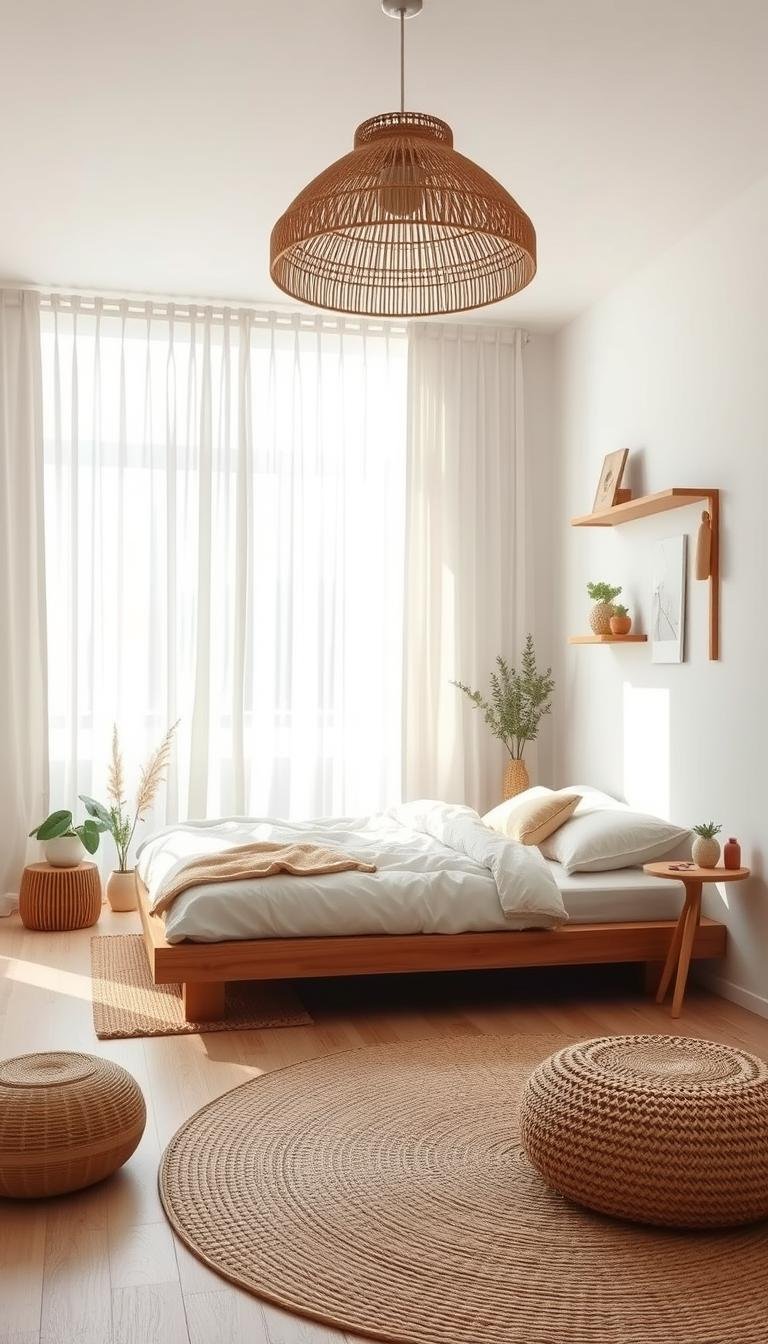
Welcome to your complete guide for creating a peaceful personal retreat. This style combines Scandinavian simplicity with Japanese tradition.
You will discover how this fusion creates grounded spaces perfect for relaxation. The approach focuses on clean lines and thoughtful elements.
Natural materials play a key role in achieving the right room feel. They bring texture and organic beauty into your space.
We will show you practical tips and beautiful examples. These will help transform your area into a serene sanctuary.
Get ready to implement these concepts regardless of your current decor. This design works beautifully in rooms of all sizes.
1. Master the Japandi Color Palette with Earthy Tones
Creating the perfect retreat starts with choosing the right colors. Your space should feel both calming and inviting.
The japandi style draws from nature’s most soothing hues. Think of soft forest shades and gentle earth colors.
Go Beyond Basic Neutrals
Move past simple beige and white schemes. Explore richer, more complex neutral tones instead.
Designer Julee Wray shows how deep browns work with light blues. She adds soft pinks and grayish greens for depth.
This approach creates visual interest without overwhelming your space. The result feels both sophisticated and serene.
Draw Inspiration from Nature
Look outside for your perfect color palette. Notice how sandy taupes and sage greens appear together naturally.
These organic combinations create instant harmony. They bring a sense of peace into your personal sanctuary.
Earthy colors actually improve relaxation and sleep quality. Their psychological impact makes your room truly restorative.
Test paint samples and fabric swatches before committing. See how different natural hues interact in your light conditions.
Use color to define different areas within your space. A muted blue accent wall can create a peaceful reading nook.
2. Layer Natural Textures for a Cozy Atmosphere
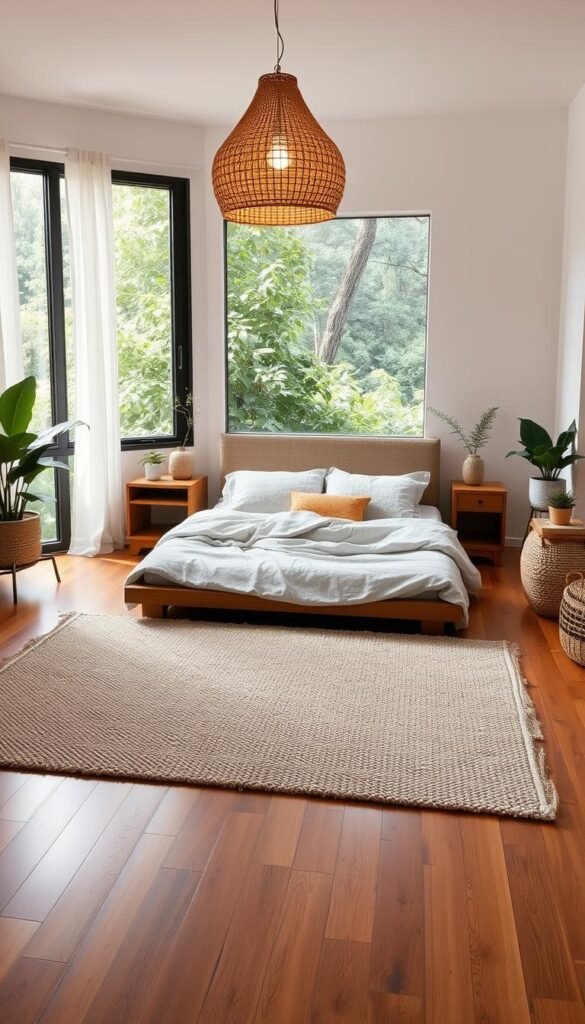
Texture becomes your secret weapon for transforming stark simplicity into welcoming comfort. Different materials work together to create depth and visual interest throughout your space.
Organic fabrics complement the soothing color palette beautifully. They add warmth to potentially cold minimalist designs.
Explore options like linen bedding and wool throws for maximum coziness. Cotton drapes and hemp accessories complete the natural look.
Emily Minton Redfield showcases how Truss Interiors mastered this approach:
“They combined a cloth mural accent wall with a fluffy quilted comforter. Natural shapes in the wallcovering balanced sharp angles in the bedding.”
This combination creates the tranquil aesthetic you want. It demonstrates how contrasting elements work in harmony.
Layer your textures without creating visual clutter. Mix smooth and rough surfaces for balanced sensory experience.
Different materials offer unique tactile qualities that enhance physical comfort. They contribute to both visual appeal and your overall sense of wellbeing.
Use texture to define different functional areas within your room. A plush rug can anchor your sleeping space while woven baskets organize essentials.
Your natural textures should feel inviting yet maintain the clean aesthetic. The right balance creates that perfect cozy atmosphere.
3. Combine and Contrast Different Wood Tones
Wood plays a starring role in creating a balanced and inviting space. The right mix of tones brings warmth and character to your room.
Natural materials shine when you pair different stains and finishes. This approach adds depth without sacrificing simplicity.
Emily Minton Redfield highlights how Truss Interiors mastered this technique. They placed a light-toned chair beside a darker patterned dresser.
This combination creates visual interest through contrast. It shows how varied wood elements work together beautifully.
You can achieve similar results in your own space. Start by selecting pieces with complementary grains and colors.
Choosing Complementary Wood Species
Some woods naturally work better together than others. Lighter species like ash or maple pair well with walnut or oak.
The grain pattern matters as much as the color. Straight grains often balance well with more dramatic patterns.
Consider this table of compatible wood combinations:
| Light Wood | Dark Wood | Best Use |
|---|---|---|
| Maple | Walnut | Furniture sets |
| Ash | Cherry | Flooring accents |
| Pine | Mahogany | Decorative pieces |
Unfinished wood maintains authenticity in your design. It celebrates natural variations and imperfections.
These organic flaws add character and warmth. They honor the wabi-sabi philosophy of beauty in imperfection.
Practical Application Tips
Test wood combinations before making final decisions. Gather samples of different stains and species.
View them in your room’s lighting at different times. Natural light changes how colors appear throughout the day.
Introduce wood elements through various room components. Functional pieces like storage solutions add both utility and beauty.
Dark wood drawers create striking contrast against lighter elements. They serve as both practical storage and decorative accents.
Wooden stools offer versatile functionality. They work as bedside tables or additional seating.
Remember that balance creates harmony. Distribute light and dark tones evenly throughout your space.
Your wood choices significantly impact the room’s mood. Warmer tones create coziness while cooler tones feel more serene.
This careful blending transforms simple elements into extraordinary interior design. Your space becomes both functional and visually captivating.
4. Maximize Natural Light to Enhance Warmth
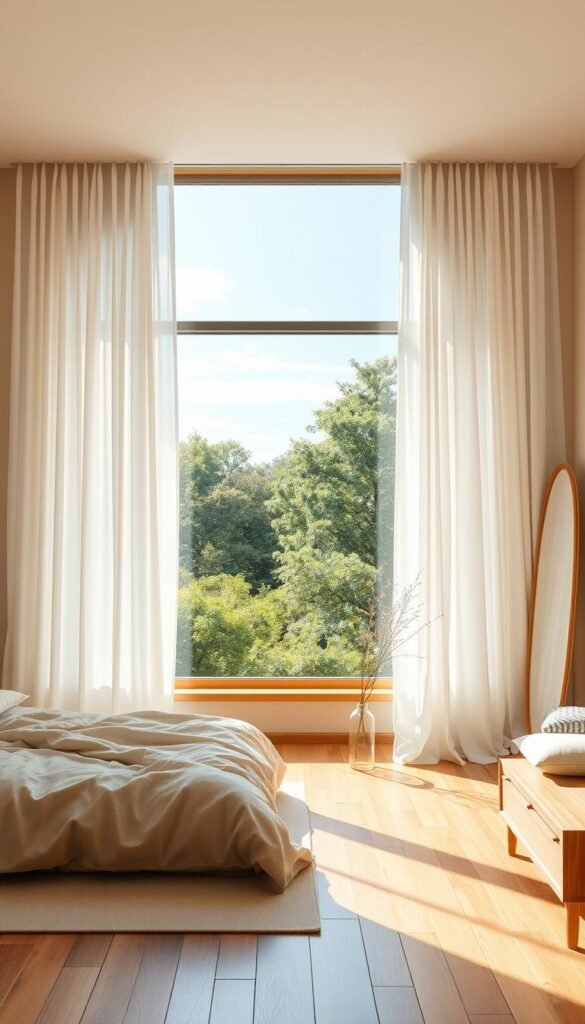
Sunlight transforms your personal sanctuary into a truly special retreat. This free resource brings life and energy into your space.
Designer Erin Roberts understood this power perfectly. She “layered soft desert hues with natural textures” to capture and enhance incoming light.
Sunbeams work magic in your personal space. They soften hard edges and highlight beautiful textures throughout the room.
The right illumination creates a slow, steady mood perfect for relaxation. It makes your entire area feel more inviting and peaceful.
Window Treatments That Welcome Light
Choose coverings that balance privacy with illumination. Sheer curtains filter light beautifully while maintaining some seclusion.
Roman shades offer another excellent option. You can adjust them throughout the day as the sun moves.
Consider these popular window treatment options:
| Treatment Type | Light Transmission | Privacy Level | Best For |
|---|---|---|---|
| Sheer Curtains | High | Medium | All day use |
| Roman Shades | Adjustable | High | Bedroom windows |
| Top-Down Blinds | Adjustable | High | Street-facing windows |
Your window choices significantly impact the overall space feel. They determine how much natural light enters throughout the day.
Working With Your Room’s Orientation
Understand how sunlight moves through your space. Southern exposures receive the most consistent light all day.
Eastern windows catch beautiful morning light. Western exposures get warmer afternoon sunshine.
Arrange furniture to take advantage of these patterns. Place reading chairs where they’ll catch the best light.
Mirrors strategically placed opposite windows work wonders. They bounce light deeper into your room.
Light-colored walls and ceilings help distribute illumination. They prevent dark corners and create a brighter atmosphere.
Seasonal Light Considerations
Sunlight changes character throughout the year. Summer brings brighter, more direct illumination.
Winter light appears softer and more diffused. Adjust your design approach with these seasonal shifts.
Lighter fabrics and fewer layers work well in summer. Heavier textiles create coziness during darker months.
This adaptability helps create calm regardless of the season. Your space remains comfortable year-round.
The relationship between natural and artificial lighting matters too. Choose warm bulbs that complement daylight rather than fight it.
Your lighting strategy affects both functionality and mood. Proper planning ensures your sanctuary always feels just right.
5. Choose a Low, Wooden Bed Frame to Ground the Space
Your sleeping area becomes the foundation of your entire room design. A low wooden frame creates immediate visual harmony and physical stability.
Iwan Halstead from Daytrip Studio explains the perfect combination:
“A low wooden bed frame with light linen bedding, a textured, woven throw blanket, and a soft, heathered cushion adds to the cozy atmosphere.”
This approach achieves multiple design goals simultaneously. The low profile makes your space feel more open and unobtrusive.
Furniture close to the floor creates a grounded, calm atmosphere. It connects you physically and visually with your environment.
Low beds work particularly well in compact sleeping areas. They maximize the sense of space while maintaining full function.
Different frame styles offer unique benefits for your design. Consider these popular options for your space:
| Frame Style | Height Range | Best For | Visual Impact |
|---|---|---|---|
| Platform Bed | 6-12 inches | Modern minimalism | Clean lines |
| Tatami Style | 4-8 inches | Authentic Japanese influence | Cultural authenticity |
| Storage Bed | 8-14 inches | Small bedroom organization | Hidden utility |
| Slat Base | 6-10 inches | Air circulation | Lightweight appearance |
Measure your space before selecting your perfect wooden frame. Consider ceiling height and window placement.
Proper proportions ensure your low bed enhances rather than overwhelms. The right height creates balance throughout your area.
Bedding choices complement your frame beautifully. Natural fabrics like linen and cotton work best with wood tones.
Accessorize thoughtfully around your sleeping platform. A single woven basket or minimalist lamp maintains clean lines.
This furniture choice contributes significantly to your overall look. It establishes the tranquil foundation for your entire japandi bedroom.
Practical benefits include easier maintenance and improved safety. Lower heights make changing sheets simpler and reduce fall risk.
Your sleeping area becomes a peaceful sanctuary within your sanctuary. The right frame creates both visual appeal and physical comfort.
6. Streamline Your Belongings for a Minimalist Feel
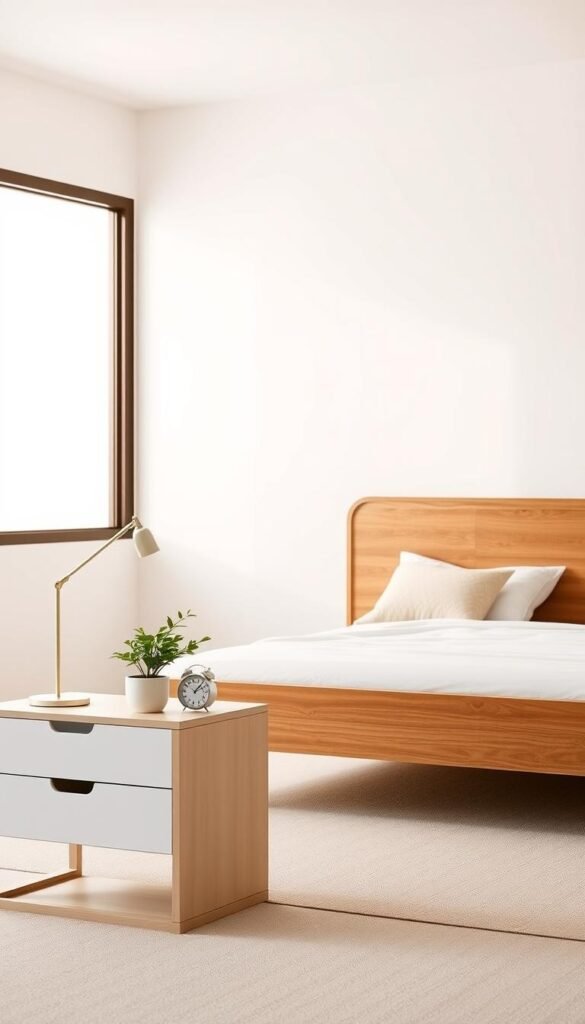
Decluttering your room transforms it into a peaceful retreat. This process focuses on keeping only what truly matters to you.
Erin Roberts shows how this works beautifully. She combined “Japanese minimalism and a warm Australian color palette” with light wood tones.
Her approach proves that less truly becomes more. You create room to breathe both physically and mentally.
Selective editing forms the heart of this design philosophy. You carefully choose each item for its purpose or beauty.
Empty areas provide visual rest for your eyes. They contribute significantly to your overall sense calm.
Quality always beats quantity in this approach. Fewer high-quality pieces serve you better than many mediocre ones.
Practical Storage Solutions
Smart storage keeps essentials handy but invisible. It maintains clean lines throughout your personal area.
Consider these effective organization methods:
| Storage Type | Best For | Visual Impact | Accessibility |
|---|---|---|---|
| Under-bed drawers | Seasonal clothing | Completely hidden | Medium |
| Woven baskets | Bedside essentials | Textural element | High |
| Wall-mounted shelves | Display items | Floating effect | High |
| Multi-functional furniture | Small spaces | Clean appearance | Variable |
Physical clutter directly impacts mental stress levels. A tidy environment promotes relaxation and better sleep.
Designer Sarah Sherman Samuel explains the connection:
“When you remove visual noise, your mind can finally rest. The space becomes a true sanctuary for rejuvenation.”
Maintenance Strategies
Establish simple daily habits to preserve your serene environment. A five-minute evening tidy-up prevents accumulation.
Use the one-in-one-out rule for new acquisitions. For every new item entering your space, remove something else.
Personal touches should be meaningful rather than numerous. A single cherished photograph beats a gallery of random images.
Your edited collection reflects your priorities and values. It creates a personalized haven that truly serves your needs.
This approach makes your entire space feel intentional and harmonious. Every element earns its place through beauty or function.
7. Incorporate Subtle Nature Motifs in Your Decor
Nature-inspired patterns create a beautiful bridge between your interior space and the outdoors. These motifs bring organic energy into your personal retreat without overwhelming the simplicity.
Designer Julee Wray demonstrates this approach beautifully. She used drapery behind the sleeping area to introduce natural patterns.
The nightstand showcases classic Scandinavian style while the fabric adds organic movement. This combination creates visual interest while maintaining calm.
Nature connections offer psychological benefits for relaxation. Studies show natural patterns can lower stress and improve sleep quality.
Choosing the Right Natural Themes
Select motifs that complement rather than dominate your space. Abstract leaf patterns work better than literal forest scenes.
Consider these popular nature-inspired options:
- Subtle botanical prints on textiles
- Organic shapes in artwork
- Wood grain patterns on accessories
- Stone texture accents
- Water-inspired flowing patterns
Your choices should feel harmonious with other elements. They should whisper nature rather than shout it.
Implementation Through Different Elements
Textiles offer the easiest entry point for nature motifs. Curtains, bedding, and pillows can carry subtle patterns.
Wall treatments provide another excellent opportunity. Consider grasscloth wallpaper or nature-inspired murals.
Accessories complete the natural story. Woven baskets, stone objects, and wood carvings add organic touches.
All your materials should work together cohesively. The same natural theme should appear across different elements.
Your natural materials and motifs should tell a consistent story. This creates depth without visual clutter.
Seasonal Considerations
Nature changes throughout the year, and your decor can reflect this. Lighter, brighter patterns work well for spring and summer.
Deeper, richer motifs feel appropriate for fall and winter. You might change pillow covers or swap artwork seasonally.
This flexibility keeps your space feeling fresh and connected to the outdoors. It honors the changing natural world outside your windows.
The japandi style celebrates this connection to nature. It brings outdoor tranquility into your indoor sanctuary.
Remember that subtlety creates sophistication. Your nature motifs should enhance rather than dominate your peaceful retreat.
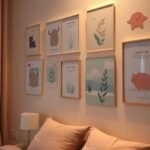
8. Add Depth and Interest with Thoughtful Artwork

Art transforms your space from simple to soulful. It adds personality without overwhelming your peaceful retreat.
Choose pieces that whisper rather than shout. Your selections should enhance the calm atmosphere you’ve created.
“We hung an abstract piece that provides visual interest while maintaining the minimalist aesthetic.”
This demonstrates how art can serve as a focal point without dominating. The right piece adds depth rather than distraction.
Selecting Art for Your Space
Focus on pieces with muted tones and natural materials. Paper prints and linen canvases work beautifully.
Simple wood frames complement the organic feel. They add texture without competing with other elements.
Consider these art characteristics for your room:
- Soft, organic shapes rather than sharp angles
- Neutral color palettes that blend with your scheme
- Textured surfaces that add tactile interest
- Appropriate sizing for your wall space
- Meaningful subjects that resonate personally
Art should tell your story quietly. It reflects your taste while honoring the design principles.
Placement matters as much as selection. A single large piece often works better than multiple small ones.
Consider the sight lines from your bed and entrance. The art should feel integrated rather than isolated.
According to design experts, artwork should add stillness, not noise. This philosophy guides your selection process.
Your chosen pieces become part of the room’s peaceful energy. They contribute to the overall sense of tranquility.
9. Introduce Rustic Elements for Organic Charm
Rustic touches bring authentic character to your personal retreat. They add soulful depth to clean, simple designs.
Daytrip Studio’s Iwan Halstead explains this approach beautifully:
“The room exudes an understated elegance, combining rustic and contemporary elements.”
Handcrafted wooden stools beside your bed create sculptural interest. Their organic forms complement earthy color schemes perfectly.
These natural materials tell stories through their imperfections. Each piece carries unique history and craftsmanship.
Rustic elements balance modern minimalism with traditional charm. They create visual warmth through natural aging and patina.
Consider these rustic additions for your space:
- Hand-carved wooden accessories
- Textured ceramic vessels
- Wrought iron hardware
- Natural stone accents
- Handwoven textile art
Each piece should feel intentionally chosen. Avoid random rustic items that disrupt your design flow.
Mixing eras creates dynamic visual interest. Contemporary bedding looks fresh against antique wooden frames.
Rustic textures enhance physical and visual comfort. Rough-hewn wood feels wonderful under your fingertips.
These elements age gracefully over time. Their character deepens with proper care and use.
Explore this guide to rustic material combinations:
| Rustic Material | Best Paired With | Maintenance Level | Visual Impact |
|---|---|---|---|
| Reclaimed Wood | Smooth plaster walls | Low | High character |
| Hand-forged Iron | Light linen textiles | Medium | Industrial charm |
| Natural Stone | Polished concrete floors | High | Organic elegance |
| Artisanal Ceramics | Clean-lined furniture | Low | Subtle artistry |
Source pieces from local craftspeople when possible. Their work carries regional authenticity and supports small businesses.
Proper maintenance preserves rustic beauty for years. Regular oiling protects wood while gentle cleaning maintains stone surfaces.
Your space gains depth through these thoughtful additions. Rustic elements make your retreat feel genuinely lived-in and loved.
10. Soften the Look with Fabric and Canopies
Fabric elements transform your space from structured to serene with gentle softness. They add warmth where wood and angles might feel too sharp.
Natural textiles create movement and comfort throughout your area. They balance clean lines with organic flow perfectly.
Choose linen for its beautiful drape and natural texture. This material softens your look without adding visual clutter.
Canopies create intimate sleeping areas within your space. They define zones while maintaining an open feel.
Textured wall hangings add depth to plain surfaces. They introduce pattern without overwhelming your design.
Long curtains in earthy tones filter light beautifully. They enhance your room feel with gentle illumination.
These elements improve acoustics by absorbing sound. Your area becomes quieter and more peaceful.
Consider seasonal changes when selecting fabrics. Lighter materials work well in warmer months.
Heavier textiles add coziness during cooler seasons. This adaptability maintains comfort year-round.
For small bedroom ideas, fabric canopies maximize vertical space. They create drama without floor footprint.
Maintenance keeps your textiles looking fresh. Most natural fabrics clean easily with gentle care.
Your fabric choices should complement other elements. They complete the harmonious design you want.
11. Use Greenery to Bring Life and Texture
Living plants transform your personal space into a breathing, organic sanctuary. They introduce movement and vitality that furniture alone cannot achieve.
A single potted plant adds remarkable visual interest. It brings softness and living energy to your clean design.
Plants contribute to both aesthetics and air quality in your sleeping area. They naturally filter air while adding beautiful organic shapes.
Choose varieties that thrive in your specific light conditions. Some plants love bright morning light while others prefer shaded corners.
Consider how plant colors complement your existing scheme. Deep green foliage works beautifully with earthy neutrals.
Successful placement creates natural focal points. A tall plant beside a window draws the eye beautifully.
Explore different plant types for various effects. Large statement plants anchor corners while small tabletop varieties add subtle touches.
Proper care ensures your plants remain healthy and vibrant. Different species have unique watering and light needs.
Plant shapes and growth patterns enhance room design dramatically. Trailing vines soften shelves while upright varieties add vertical interest.
Living plants offer psychological benefits for sleep environments. Studies show they reduce stress and improve overall wellbeing.
Combine multiple plants without creating visual clutter. Group them in odd numbers for natural-looking arrangements.
Use plants as natural room dividers or focal points. A grouping of plants can define different areas within your space.
This table shows excellent plant choices for various light conditions:
| Plant Type | Light Needs | Water Frequency | Growth Pattern |
|---|---|---|---|
| Snake Plant | Low to Bright | Every 2-6 weeks | Upright |
| Peace Lily | Low to Medium | Weekly | Spreading |
| ZZ Plant | Low to Bright | Every 2-3 weeks | Upright |
| Pothos | Low to Medium | Weekly | Trailing |
| Rubber Plant | Medium to Bright | Every 1-2 weeks | Upright |
Your greenery should feel integrated rather than added. Choose pots that complement your overall design aesthetic.
Natural materials like terracotta or ceramic work beautifully. They enhance the organic feel of your plants.
Remember that less often becomes more with plants. A few healthy specimens make stronger impact than many struggling ones.
Your plants become living elements in your design story. They grow and change along with your personal space.
12. Create a Focal Point with a Visual Anchor
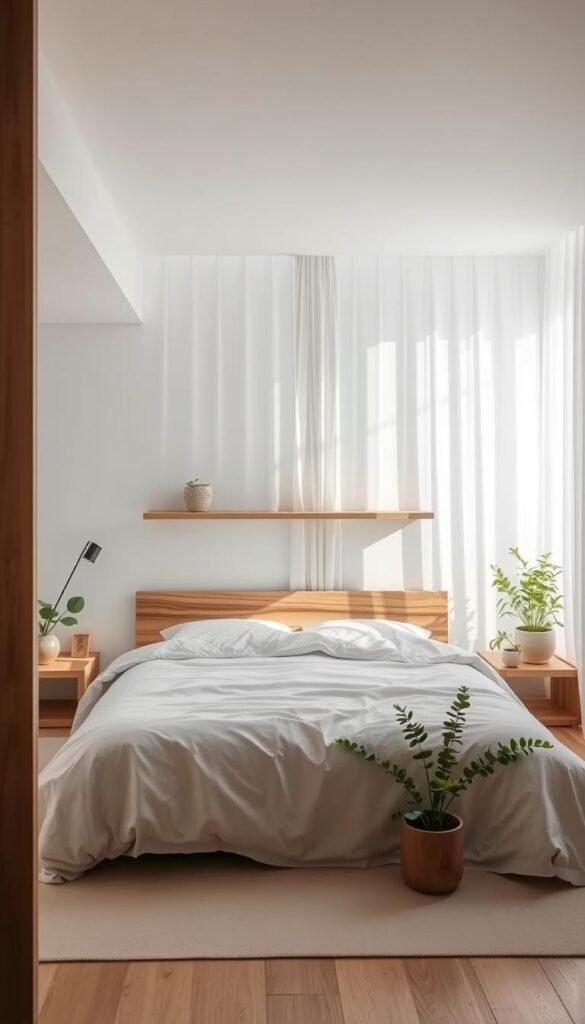
Strategic focal points provide essential structure in minimalist bedroom designs. They create visual interest where neutral colors dominate your environment.
OWIU Studio demonstrates this principle beautifully. They placed a black tatami mat beneath their raised sleeping platform.
This simple addition creates immediate depth and definition. The dark mat grounds the area while differentiating the sleeping zone.
Visual anchors organize your entire space effectively. They establish clear hierarchy within your room’s design.
Different focal points work well in sleeping environments. Consider architectural elements like accent walls or statement lighting.
Furniture can also serve as powerful anchors. A distinctive bed frame or unique seating draws attention beautifully.
Artwork creates excellent focal points when chosen carefully. Large-scale pieces command attention without overwhelming.
These elements guide the eye through your room naturally. They create flow between different functional areas.
Designers use visual anchors to enhance room function. A well-placed focal point can improve traffic patterns.
Lighting plays a crucial role in highlighting anchors. Strategic illumination emphasizes your chosen elements.
Test different focal point options before committing. Use temporary markers to visualize placement.
Your anchors should serve both aesthetic and practical purposes. They contribute to both beauty and functionality.
This approach creates layered interest in your japandi bedroom. It balances simplicity with intentional complexity.
Remember that focal points should enhance calm rather than disrupt it. Choose elements that complement your peaceful atmosphere.
13. Design for Multi-Purpose and Flexible Spaces
Modern living demands creative solutions for multi-functional spaces. Your sleeping area can serve multiple purposes without sacrificing style or comfort.
Designer Erik Munro shares a perfect example of this approach. His client needed a guest room for her mother that could also serve as a meditation and exercise room.
“A folding bed meant the space would be versatile, and the balance of the fiery silk wallpaper against the more calming falling snow and blossom artwork balanced the need for both meditation and working out,” Munro says.
This demonstrates how smart interior design creates adaptable environments. You can enjoy different activities in the same area.
Space-saving solutions work beautifully with clean design principles. Foldable furniture and modular pieces offer excellent flexibility.
Creating zones within your room helps separate different functions. Use area rugs or room dividers to define spaces visually.
Storage solutions support multi-functional use perfectly. Hidden compartments and vertical storage keep essentials organized.
Maintaining a calm atmosphere while accommodating various functions requires careful planning. Choose elements that serve multiple purposes gracefully.
Transitioning between different room functions should feel effortless. Smart furniture choices make changes quick and easy.
Color and lighting can support different room purposes effectively. Adjustable lighting systems adapt to various activities.
Your multi-purpose space becomes more valuable and practical. It serves your evolving needs while maintaining beautiful design.
This approach maximizes your available square footage beautifully. Every element earns its place through versatility and style.
Flexibility remains key in modern sleeping area design. Your space adapts to your lifestyle rather than limiting it.
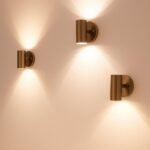
14. Opt for Soft, Warm Lighting to Set the Mood
Lighting creates the emotional foundation for your entire space. The right illumination transforms functionality into pure atmosphere.
Your personal retreat deserves careful lighting consideration. Warm tones establish comfort while soft diffusion prevents harsh shadows.
Paper and wood shades filter light beautifully. They create gentle pools of illumination perfect for relaxation.
Lantern-style bases offer another excellent option. Their design distributes light evenly throughout your area.
Ceiling pendants with warm glow provide overhead ambiance. They work well above reading nooks or seating areas.
Designer lighting expert explains the approach:
“We select fixtures that cast gentle, diffused light. The goal is creating pools of warmth rather than bright illumination.”
Different lighting types serve various purposes in your space. Understanding their effects helps create perfect ambiance.
Consider this comparison of lighting options:
| Lighting Type | Best Location | Mood Created | Fixture Examples |
|---|---|---|---|
| Ambient Lighting | Ceiling center | Overall warmth | Paper lanterns, flush mounts |
| Task Lighting | Bedside, reading areas | Focused functionality | Adjustable lamps, wall sconces |
| Accent Lighting | Artwork, architectural features | Visual interest | Track lights, picture lights |
| Decorative Lighting | Throughout space | Stylish atmosphere | Sculptural lamps, statement pieces |
Light temperature significantly impacts your sense of comfort. Warmer tones around 2700K create cozy environments.
Cooler light feels more energizing and clinical. It works better for offices than sleeping spaces.
Layering different light sources creates depth and flexibility. Combine overhead, task, and accent lighting for optimal effect.
Dimmer switches offer excellent control over intensity. They let you adjust ambiance throughout the day and evening.
Your lighting choices should complement other design elements. Natural materials like wood and paper work beautifully together.
Light direction affects how you perceive your space. Upward lighting makes ceilings appear higher.
Downward lighting creates intimate, focused areas. Side lighting highlights textures and surfaces.
The right lighting enhances your overall design style. It brings out the best in your chosen materials and colors.
Your lighting pieces should feel intentional and harmonious. Each fixture contributes to the tranquil atmosphere.
Evening lighting should support wind-down routines. Soft, warm illumination prepares your mind and body for rest.
Morning light can be slightly brighter but still gentle. It helps you wake gradually and naturally.
Lighting affects both mood and sleep quality significantly. Proper planning ensures your space supports wellbeing.
Your illuminated sanctuary becomes truly magical after dark. The right lighting transforms simple elements into extraordinary beauty.
15. Smart Layout Solutions for Small Japandi Bedrooms
Making the most of your compact sleeping area requires clever thinking. Smart layout choices can transform even the tiniest room into a peaceful retreat.
You can achieve both function and beauty through thoughtful planning. The right arrangement helps your area feel open and organized.
Corner beds work wonders in compact sleeping spaces. They free up valuable floor area while creating a cozy nook.
This placement makes your whole area feel more grounded. It turns potential limitations into design advantages.
Utilizing Corner Beds and Loft Setups
Loft setups aren’t just for children’s rooms anymore. They offer brilliant solutions for adult spaces too.
Elevated sleeping areas create valuable space underneath. You can use this area for storage or a small workspace.
Design expert Maria Chen explains the benefits:
“A well-designed loft bed creates vertical interest while maximizing floor space. The area beneath becomes perfect for a meditation corner or reading nook.”
Built-in furniture solves multiple challenges at once. Custom pieces fit perfectly into awkward spaces.
They eliminate wasted areas and create seamless storage. Your room feels more intentional and organized.
Consider these space-saving furniture options:
| Furniture Type | Space Saved | Best For | Style Impact |
|---|---|---|---|
| Murphy Bed | 60-80% floor space | Multi-purpose rooms | Clean, hidden look |
| Corner Desk | 30-40% floor space | Work areas | Angled efficiency |
| Wall-mounted Shelves | 100% floor space | Display and storage | Floating effect |
| Nesting Tables | 50-70% when stored | Flexible surfaces | Modular design |
Light colors and strategic mirrors enhance spatial perception. They make your area feel larger and more open.
Vertical lines draw the eye upward, creating height illusion. This trick works beautifully in compact environments.
Multi-functional pieces serve dual purposes beautifully. A storage ottoman provides seating and organization.
A bench with hidden compartments offers extra sleeping space for guests. These solutions maximize every square inch.
Your layout should support relaxation and functionality. Traffic flow matters as much as furniture placement.
Leave enough open area for comfortable movement. This balance helps create the peaceful atmosphere you want.
Remember that less furniture often creates more space. Choose each piece for its purpose and beauty.
Your compact room can feel both spacious and cozy. Smart planning makes this possible.
16. Crafting Your Personal Japandi Sanctuary
Your personal retreat becomes truly yours through thoughtful final touches. It balances beauty with daily function in your sleeping area.
Choose items that spark joy while maintaining clean lines. This approach keeps your space feeling open and peaceful.
Meaningful objects should enhance rather than clutter your environment. A single cherished photograph or handmade item adds personality.
Your room should support relaxation and restful sleep every night. The right atmosphere improves your overall wellbeing.
Seasonal updates keep your sanctuary feeling fresh and current. Simple changes like textile swaps or plant rotations work beautifully.
Extend these design principles to other areas of your home. Consistency creates harmony throughout your living space.
Your personalized sanctuary reflects your unique needs and tastes. It becomes a true haven for daily renewal and peace.