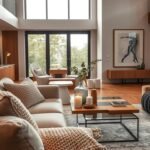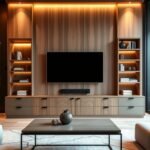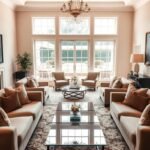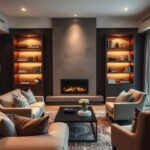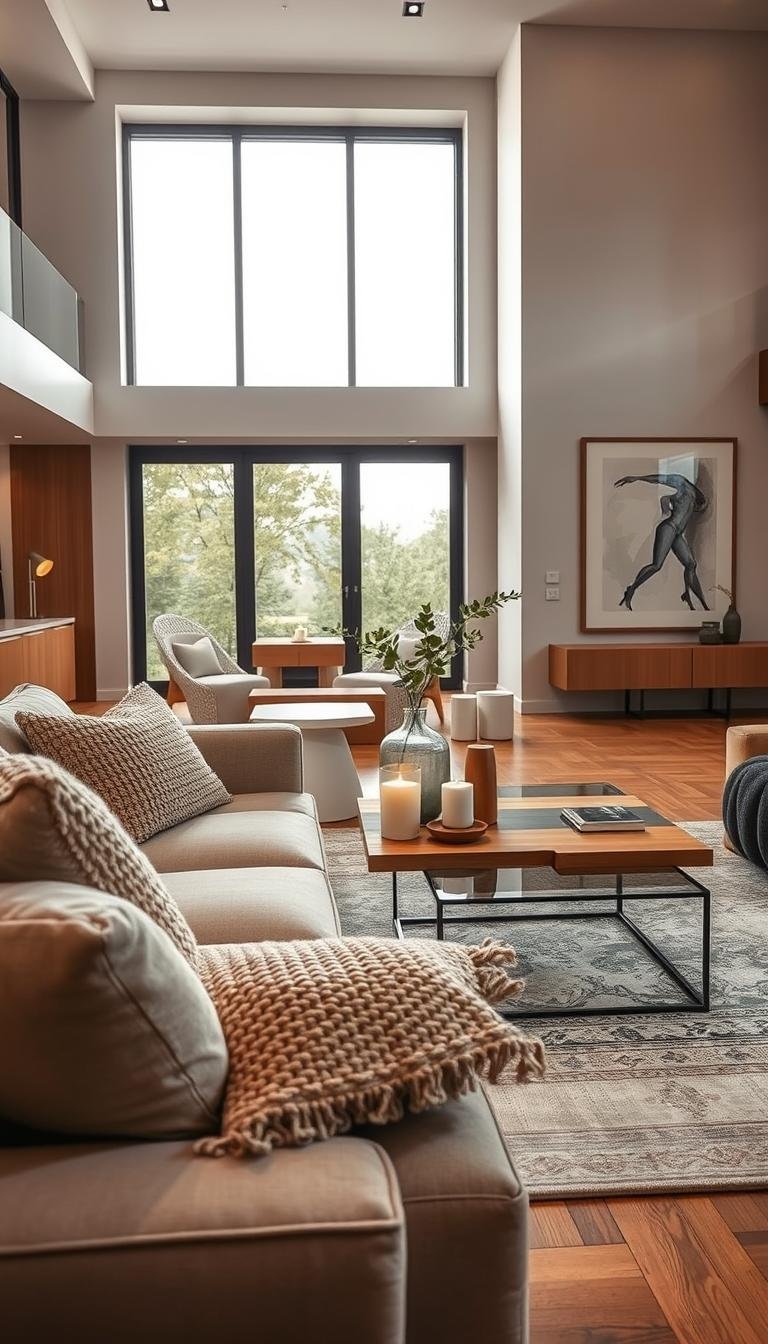
A room feels luxurious when its choices work together and make everyday use feel easy. If your living room feels unfinished or too formal, a welcoming space can come from a few thoughtful choices, not a room full of expensive objects. Comfort, proportion, tactile materials, and restraint give home decor a polished feel you can enjoy every day.
Bouclé is a fabric made with looped or knotted yarn that gives upholstery a nubby, tactile surface. It can add depth beside smooth wood, stone, or linen without making the room feel busy. A considered interior style lets each piece have space to be noticed.
Color, furniture, lighting, and finishing details all shape the mood, so they work best as parts of one plan. You can create an elegant living space by choosing a clear color palette and repeating a few materials rather than matching every surface. Begin with one feature you already love, then let it guide the rest of your decisions.
How to Plan Contemporary Luxury Living Room Designs Around Your Space
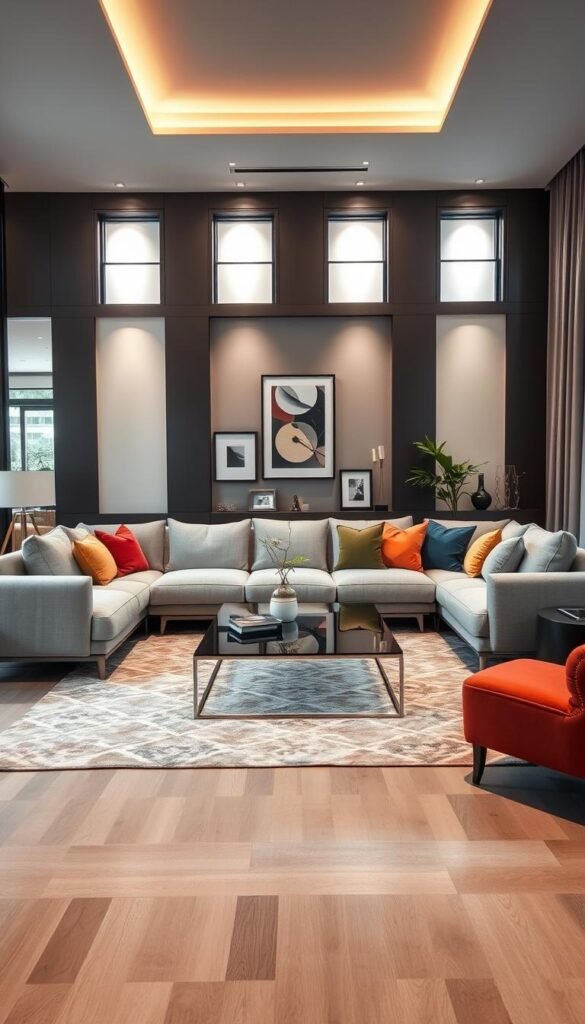
Measure the wall and the walking route before you decide which sofa shape can fit comfortably. Start with proportion: a standard U.S. sofa averages 84 inches wide, with a typical width range of 78-90 inches. Arm and back dimensions also affect how large furniture looks in the room, even when the seat itself seems to fit.
Seat height, usable seat depth, and overall height can change how a sofa feels and reads in your space. A typical sofa has a 17-18.5-inch seat height, 21-23 inches of usable seat depth, and 32-36 inches of overall height. Check the full frame, not only the cushions, against nearby walls and windows.
A sofa about two-thirds the length of its wall is a useful starting rule. For a 9-foot wall, start around 72 inches wide; for a 10.5-foot wall, start around 84 inches wide.
Match Sofa Size to the Wall
Use the wall length as a first check, then adjust for openings, windows, and other furniture. A door that swings toward the seating or a window that needs clear access may call for a shorter sofa. A room with substantial side tables or a fireplace may also need more open wall around the main piece.
The typical ranges below help compare common seating shapes before you measure a specific model. The sofa with chaise has a deeper extended leg-rest section, so consider how far it projects into the living area.
| Seating type | Width | Depth or chaise depth | Seat height |
|---|---|---|---|
| Three-seater | 86-90 inches | 36-38 inches | 17-18.5 inches |
| Loveseat | 60-72 inches | 34-38 inches | 17-18 inches |
| Sectional | 95-140 inches | 36-40 inches | 17-18.5 inches |
| Sofa with chaise | 90-110 inches | Chaise: 60-72 inches | 17-18.5 inches |
Protect Circulation Around Seating
Before settling on a configuration, check each measurement that affects movement through the room:
- Sofa width, including the arms
- Total depth from the back to the front edge
- Clearance at doors and windows
- Walking path around the seating group
Measure with painter’s tape on the floor if you need to see the footprint. A sectional may fit along a wall but still block a path when its return or chaise projects into the room. Leave enough clear floor around the seating group for people to pass without turning sideways.
Build a Refined Color Palette With Warm Neutrals and Accents
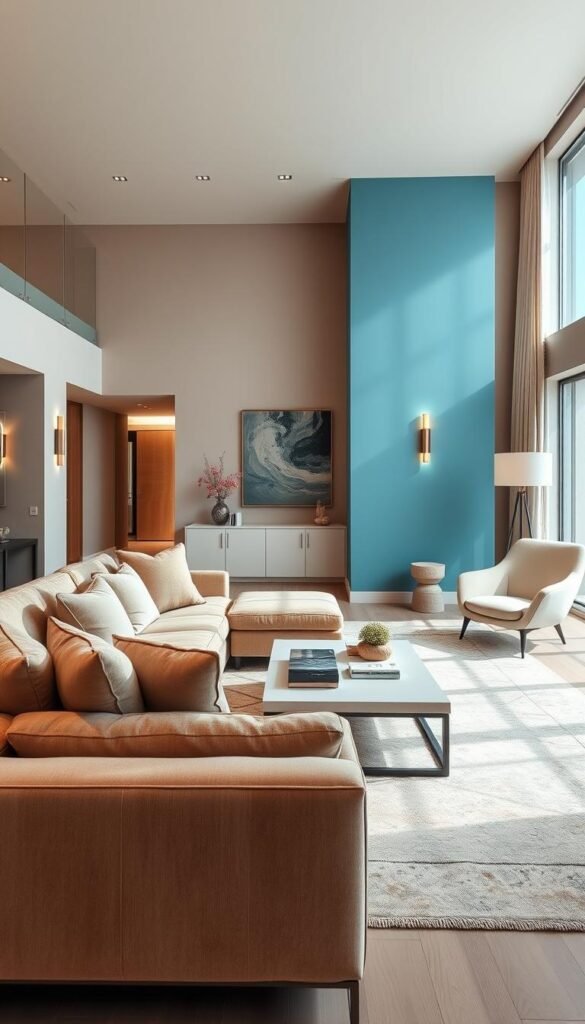
A restrained base gives you room to add color without making every surface compete. Warm neutrals such as warm white, beige, taupe, and greige make a calm foundation. Use those tones to support varied textures, not to make every item match.
Walls in a soft neutral can sit comfortably beside darker wood, pale stone, or textured upholstery. A mix of tones adds depth while keeping the overall design composed. For a layered-neutral modern-classic palette, vary the finish and shade instead of repeating one exact color across the whole living room.
Start With a Quiet Base
Think of the base as the background for the home, not a rule that everything must be beige. Warm white can brighten a shaded room, while taupe or greige can add a grounded feel. Use linen, velvet, wood, and stone to create contrast without introducing a new color at every turn.
Add Color Through Select Details
Icy blue, teal, amber, and burnt caramel are among the accent directions influencing home interiors in 2026. Dunn-Edwards’ 2026 palette includes Viridian Odyssey (DE1925) and Gypsum Rose (DET452), along with Gothic Revival Green (DET507), Country Air (DET581), and Sonoma Chardonnay (DET471). These names offer specific reference points, not a requirement to use a full palette.
Let paint, upholstery, art, and textiles relate across adjoining rooms through a repeated tone or undertone. A saturated sofa or one strong artwork can carry the color focus, while surrounding pieces stay quieter. That approach helps an open living and dining area feel connected without making both zones identical.
Test a paint or fabric sample beside the flooring and largest upholstered piece before committing to a full scheme.
Choose a Sofa That Balances Comfort, Scale, and Cost
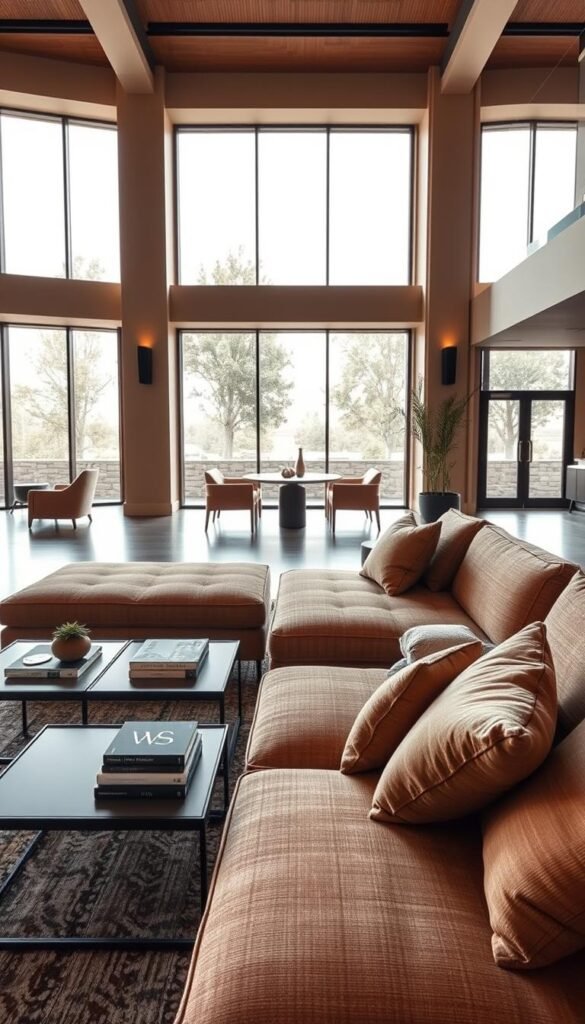
In the U.S., a new sofa can cost from a few hundred dollars to more than $5,000, depending on its tier and features. Set your budget around the construction and options you will use, rather than a label alone. Delivery and setup can add $100-$250 to the total.
The 2026 U.S. price bands put budget or entry-level sofas at $300-$800, mid-range sofas at $900-$2,000, premium sofas at $2,100-$5,000, and luxury or custom models at $5,000 or more. These are historical price ranges, not current quotes or recommendations. The average U.S. household spent $1,400-$1,800 on a new full-size sofa in 2026.
Set a Budget by Sofa Tier
Entry-level and mid-range models cover a broad range of basic choices. A premium sofa may add designer aesthetics, premium materials, modular features, or white-glove delivery. Luxury and custom models may offer full customization and heirloom construction. A considered furniture plan for luxury living can help you decide where a higher-cost feature matters in your room.
A sofa price depends on construction, upholstery, customization, and delivery terms. Ask yourself which features solve a real need: a washable cover may suit a busy household, while a custom finish may matter more if the sofa is a long-term centerpiece.
Compare Comfort Features Before You Buy
Seat depth affects posture and lounging, while removable covers can simplify care. Modularity helps when you want to change a layout or move pieces through narrow access points. Customization suits households with specific fabric, size, or finish needs, though those options can affect the final cost.
Published 2026 examples show how configurations differ. The Albany Park Kova Box Cushion Sofa, 86 inches wide with an ottoman, was the top pick among 14 modular sofas in a test and scored 9.5/10 for comfort. It has a 30-inch seat depth and a tested starting price of $3,042 in 2026.
The Lovesac 4 Seats + 5 Sides Sactional had a 2026 starting price of $4,185, a 60-day home trial, and covers in more than 150 fabrics. The Burrow Union 5-Seat Sectional was listed at $3,600 in 2026 and can shift between L-shape and U-shape layouts. The HERNEST Brisa 84-inch sofa was listed at $1,619 in 2026 and has a 24-inch seat depth.
These examples are not interchangeable: their dimensions, configurations, and included options differ. Before ordering, compare the final delivered total with the features you will use every day.
Layer Lighting for Atmosphere and Function
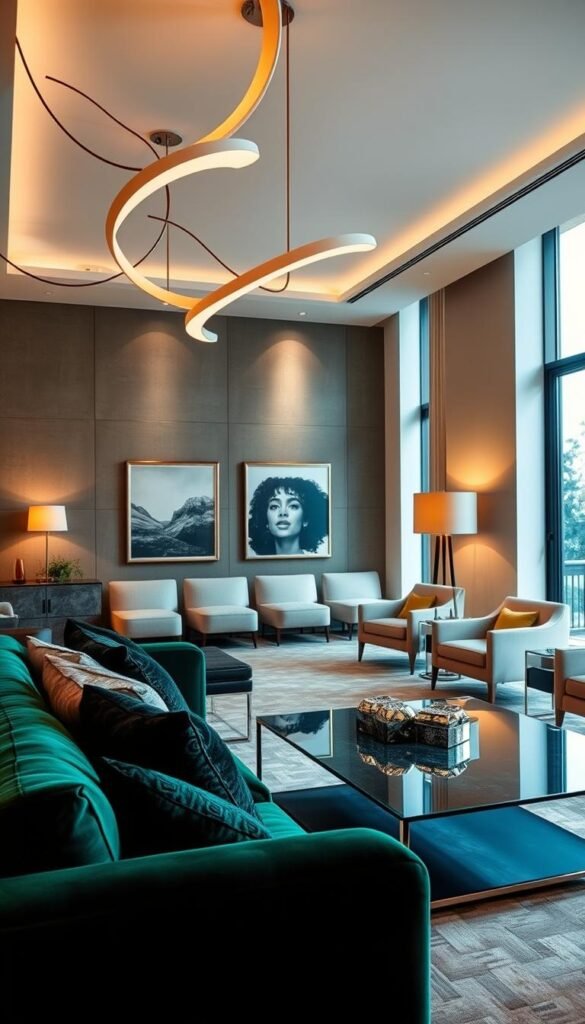
A single ceiling fixture rarely gives you the flexibility to relax, read, and highlight the room’s best details. Several light sources let you adjust the living room for different activities. Combine ambient, task, and accent light instead of relying on one overhead fixture.
Ambient light provides general illumination across the room. A floor or table lamp can place task light beside a reading seat, while accent light can draw attention to art or architectural details. A dimmer makes it easier to shift the mood without changing the room’s furniture or decor.
Combine Ambient, Task, and Accent Light
Start with the activities the room needs to support. A ceiling fixture can offer broad light, but reading calls for a source close to the chair or sofa. Picture lights or adjustable spots can make a favorite artwork visible after sunset without flooding the entire wall.
For more ways to combine useful and decorative sources, try these layered lighting ideas. Multiple sources also help a large living space feel more intimate, since you can leave some areas softly lit while others remain bright enough for reading or conversation.
Choose a Fixture That Fits the Room
A chandelier sizing rule of thumb is to add the room’s length and width in feet, then use that sum in inches for the fixture diameter. A 14-by-18-foot room suits a chandelier around 32 inches across. Treat the result as a starting point, then consider ceiling height and the fixture’s visual weight.
For 2026, luxury lighting directions include sculptural fixtures, bespoke designs, minimalist forms, Art Deco influences, and shapes inspired by nature. A sculptural fixture might combine brass, glass, crystals, and marble accents. Art Deco options use geometric patterns and symmetry, with gold, crystal, lacquer, or blackened brass.
Biophilic forms bring nature-inspired shapes into the room, while repairable LED designs and recycled materials offer other choices. Color-changing LEDs can shift the atmosphere, but they are not needed for a polished interior. Put task light where you sit to read, then check that the bulb and shade do not create glare from the sofa.
Pair Tactile Materials With a Rug That Fits Your Routine
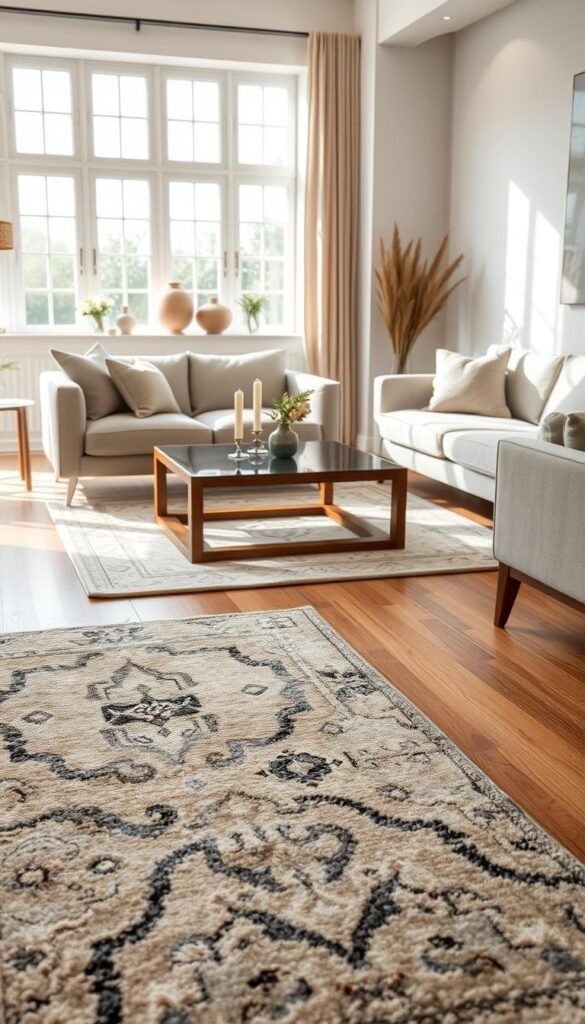
Choose a rug for both its texture and the amount of foot traffic, moisture, and cleaning it will face. Daily use matters as much as appearance. Wool is durable for a high-traffic living room, while silk pile is usually better in a low-traffic space.
Wool rugs can last 20-50 years, and natural lanolin helps repel liquid at the surface before it reaches the fiber. Polypropylene resists stains and fading, but heavy use can mat its pile permanently. The comparison below can help you match a material to your household’s routine.
Match Rug Fiber to Traffic and Care
| Material | Best suited to | Useful quality | Main limitation |
|---|---|---|---|
| Wool | High-traffic living rooms | Durable; can last 20-50 years | Higher care needs than washable cotton |
| Polypropylene | Busy areas prone to spills | Stain-resistant and fade-resistant | Pile may mat permanently with heavy use |
| Jute | Moderate indoor traffic | Natural, textured surface | Absorbs moisture; poor for damp areas |
| Cotton | Washable, lower-cost use | Affordable and washable | Wears faster than wool |
Silk pile can flatten under heavy use, which makes it a less practical pick for a busy family area. Jute can suit moderate indoor traffic, but it absorbs moisture readily and is not suitable for damp areas. Flatweave cotton generally holds up better than tufted or pile cotton.
Layer Texture Without Visual Clutter
Pair smooth stone, wood grain, velvet, linen, or bouclé with a textured rug to give the room a tactile mix. A rougher surface can make sleek furniture feel less formal, while a soft pile can temper stone or metal details. Keep competing patterns limited so each material has room to register.
For more ideas on combining natural wood and layered textures, explore modern classic living room decor. Keep a spare rug pad in your measurement plan, since the rug’s edges should not become a trip hazard.
Finish With Art, Open Space, and Personal Details
Personal details make an elegant room feel lived in, while deliberate empty space keeps those details easy to notice. Choose a focal point such as large-scale art, a distinctive coffee table, or a few collected objects. One meaningful piece can anchor the room without asking every surface to compete.
A large artwork can hold attention above a sofa, while a sculptural coffee table gives the center of the living area a clear purpose. A few personal objects grouped together feel intentional; scattered small items can make tables and shelves look crowded. Large-scale wall decor ideas can help you judge the right visual weight for a focal wall.
Floating furniture away from the walls can define circulation and make a seating area feel distinct. In an open-plan home, repeat a material or tone between the living and dining zones while keeping a clear route between them. Warm minimalism, sustainable materials, multifunctional design, indoor-outdoor continuity, and craftsmanship are among 2026 furniture directions.
Let open floor space do some of the design work. A clear route through the room keeps focal pieces visible and daily movement comfortable.
- Keep a clear walking path
- Group small objects
- Leave useful table space
- Make one personal piece visible
Keep the pieces that serve a purpose or carry a story, and edit out the rest.
Bring Your Design Choices Together
A polished room comes from decisions that support how you want to spend time there. Comfort and proportion matter more than adding another decorative object, and a small number of meaningful details can make luxury living feel personal rather than staged.
Give yourself a concrete starting point: sketch the seating layout and choose one anchor piece before buying smaller accents. That piece might be the sofa, a distinctive table, or artwork that sets the room’s mood. Let its scale and character guide the choices around it, while leaving enough open space for daily life.
Sketch the layout, mark the anchor piece, and take those measurements with you before your next furniture purchase.