Imagine walking into a space that feels like a cozy Mediterranean retreat. This design approach creates an atmosphere perfect for family time and entertaining guests.
The style blends traditional elements with modern comfort. You can achieve this look whether your home has historical architecture or a contemporary layout.
Earthy color palettes and textured surfaces bring authentic character to your interior. Thoughtful furniture arrangements and multifunctional pieces balance rustic charm with today’s living needs.
This guide will show you how to create this inviting look. We’ll cover everything from color schemes to architectural details and accessories.
You’ll discover practical ways to incorporate this beautiful style. Transform your space into a warm, welcoming haven that reflects timeless beauty.
1. Begin with a Warm and Earthy Color Palette
Your journey to creating an inviting atmosphere starts with color selection. The right palette sets the tone for your entire space.
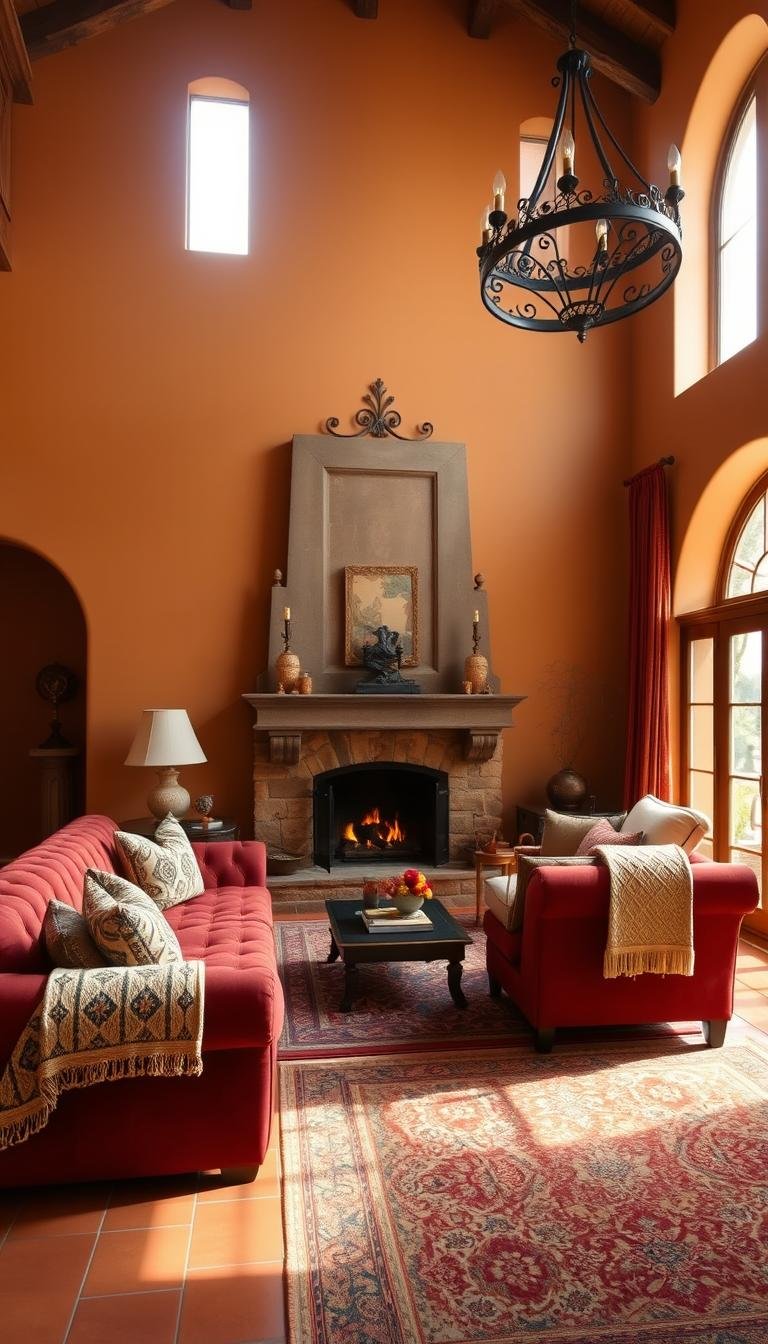
Authentic Mediterranean design draws inspiration from natural landscapes. Terracotta, beige, and cream capture the essence of sun-baked earth and coastal cliffs.
Choosing Your Core Hues: Terracotta, Beige, and Cream
These three colors work together beautifully. They create a harmonious foundation for your design.
Terracotta brings rich, earthy energy to your walls or accents. Beige offers a neutral warmth that complements various elements. Cream provides a soft, light contrast that prevents darkness.
Professional designers often combine these tones in creative ways. Here’s how they typically distribute these colors:
| Color | Primary Use | Secondary Use | Lighting Consideration |
|---|---|---|---|
| Terracotta | Accent walls | Textile accents | Best in well-lit areas |
| Beige | Main walls | Furniture pieces | Works in all lighting |
| Cream | Ceilings | Trim work | Brightens shadowed areas |
How Warm Colors Create a Cozy and Inviting Atmosphere
Warm tones affect how we experience a room. They make spaces feel more welcoming and comfortable.
Psychological studies show warm colors promote relaxation. They can make your interior feel like a peaceful retreat.
Balance your palette with strategic white accents. Off-white walls prevent the space from feeling too heavy. They also create a neutral backdrop for seasonal changes.
Test your color choices in different lighting conditions. Natural light changes throughout the day affecting how colors appear.
These earthy tones complement natural materials perfectly. They enhance wood grains, leather textures, and wrought iron details.
Create flow between rooms using consistent color themes. This approach makes your entire home feel cohesive and thoughtfully designed.
2. Incorporate the Charm of Exposed Wooden Beams
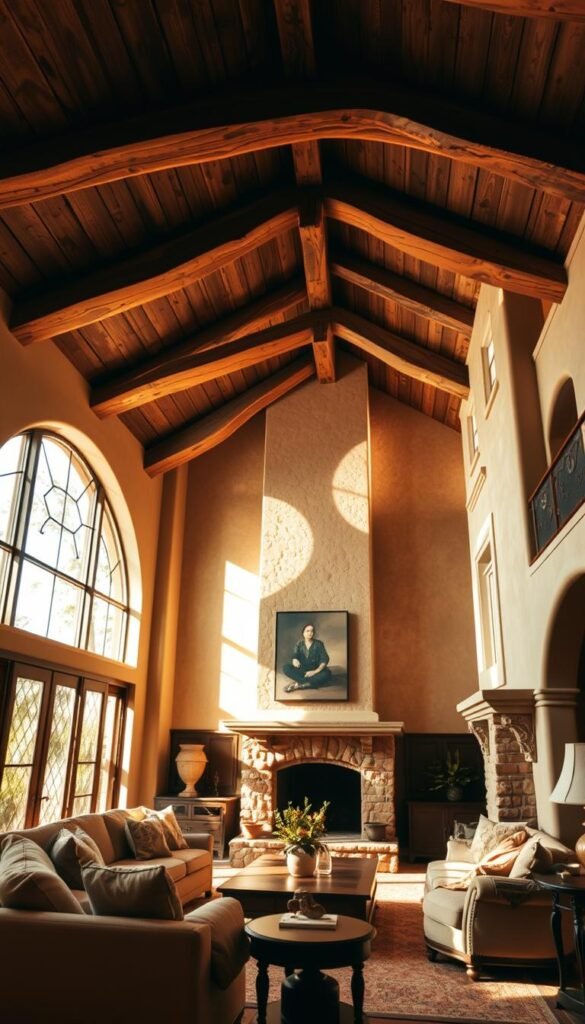
Nothing captures rustic elegance better than overhead timber elements. These structural features instantly transform ordinary spaces into extraordinary rooms with soul.
Exposed beams create instant architectural interest. They add depth and dimension to your ceiling plane.
Authentic Beams vs. Faux Wooden Beam Solutions
Original reclaimed timber offers unmatched authenticity. Each piece tells a story through its unique grain patterns and natural imperfections.
These beams typically come from old barns or structures. They bring genuine history into your home.
Modern alternatives provide excellent solutions too. Faux beams made from high-density polyurethane mimic real wood perfectly.
They’re lighter and easier to install than heavy timber. Many homeowners choose them for their practicality.
Consider these factors when deciding between options:
| Feature | Authentic Beams | Faux Beams |
|---|---|---|
| Cost | $20-$40 per linear foot | $10-$25 per linear foot |
| Weight | Heavy (requires structural support) | Light (easy ceiling mounting) |
| Installation | Professional recommended | DIY possible |
| Maintenance | Regular sealing needed | Wipe clean only |
| Appearance | Unique character marks | Consistent pattern |
The Impact of Ceiling Details on Room Character
Your overhead treatment dramatically affects spatial perception. Tall ceilings with angled beams make rooms feel grand and spacious.
Lower ceilings benefit from simpler beam arrangements. Horizontal patterns can make rooms feel wider.
Beams naturally draw eyes upward. They create vertical interest that enhances your entire space.
Consider existing architectural features when planning beam placement. They should complement rather than compete with other elements.
Lighting integration requires special attention. Recessed lights between beams provide excellent ambient illumination.
Pendant lights hanging from beam intersections create beautiful focal points. Always consult an electrician for proper installation.
Maintenance varies by climate. Dry environments require less upkeep than humid areas where wood may expand.
Regular dusting preserves beam beauty. Occasional conditioning keeps wood looking its best.
These overhead elements complete your authentic look. They add that final layer of character to your design.
3. Add Depth with Textured Whitewashed or Plaster Walls
Your walls become the canvas for your Mediterranean-inspired space. Textured surfaces bring authentic character while maintaining a light, airy feeling throughout your room.
These wall treatments have deep roots in traditional architecture. For centuries, plaster and whitewash protected homes from harsh climates while creating beautiful, organic surfaces.
Achieving the Adobe-Feel Without Major Renovations
You don’t need structural changes to get this authentic look. Modern alternatives create plaster-like textures easily.
Consider these DIY-friendly techniques for your project:
- Venetian plaster kits with built-in texture
- Skip trowel drywall finishing techniques
- Textured paint additives with sand or plaster
- Peel-and-stick textured wall panels
These methods create depth without major construction. They work with your existing wall surfaces beautifully.
Professional designer Maria Rodriguez notes:
“Texture transforms flat walls into living surfaces that change with the light. Even subtle variations create movement and interest throughout the day.”
Why Whitewashed Walls are a Versatile Backdrop
Whitewashed surfaces offer incredible flexibility for your decor. They serve as neutral backdrops that accommodate seasonal changes effortlessly.
The right whitewash tone depends on your lighting conditions. Consider these recommendations:
| Lighting Type | Recommended Whitewash Tone | Finish Type | Room Size Consideration |
|---|---|---|---|
| North-facing/Natural light | Warm cream with yellow undertones | Matte or eggshell | Best for small to medium rooms |
| South-facing/Bright light | Cool white with gray undertones | Flat or matte | Works in all room sizes |
| Artificial lighting only | Soft white with beige undertones | Satin or eggshell | Ideal for large spaces |
| Mixed lighting sources | Neutral white without strong undertones | Matte finish | Versatile for any room |
Textured walls affect your room’s acoustics positively. They absorb sound better than smooth surfaces, creating a quieter atmosphere.
Maintenance requires gentle cleaning methods. Use soft brushes and avoid abrasive cleaners that might damage the texture.
Balance textured walls with simpler design elements. Let your walls be the star while other features play supporting roles.
This approach creates cohesive flow throughout open floor plans. Consistent wall treatments make spaces feel connected and intentional.
4. Install Authentic Terracotta Tile Flooring
Your flooring choice anchors the entire room’s aesthetic. Terracotta tiles create a foundation that feels both ancient and timeless.
These clay tiles have been used for centuries in Mediterranean architecture. They bring natural beauty and practical benefits to modern homes.
The Practical Benefits of Terracotta Tiles
Terracotta offers remarkable temperature regulation properties. The tiles stay cool in summer and retain warmth during cooler months.
Their natural composition helps with humidity control. They absorb excess moisture from the air, improving indoor air quality.
These tiles provide excellent acoustic performance. They reduce echo and sound transmission between floors.
The manufacturing process creates unique variations in each piece. Artisans fire natural clay at high temperatures, creating durable surfaces.
Consider these functional advantages for different climates:
| Climate Type | Benefit | Maintenance Consideration |
|---|---|---|
| Hot and dry | Natural cooling effect | Regular sealing required |
| Humid | Moisture absorption | More frequent sealing |
| Cold | Radiant heat compatibility | Freeze-thaw resistant grades |
| Variable | Temperature stability | Seasonal maintenance checks |
Installation requires proper subfloor preparation. A level, stable base ensures your tiles last for decades.
Professional installer Carlos Mendez advises:
“Always allow tiles to acclimate to your home’s environment before installation. This prevents expansion or contraction issues later.”
Maintenance involves regular sweeping and occasional damp mopping. Avoid harsh chemicals that can damage the natural surface.
Sealing protects against stains and moisture penetration. Reapply sealant every 2-3 years depending on foot traffic.
Using Saltillo Tiles for Accent Walls or Details
Saltillo tiles offer distinctive character beyond flooring applications. Their handcrafted nature makes each piece unique.
These Mexican-origin tiles feature warm orange hues with subtle variations. They work beautifully as decorative accents throughout your space.
Consider these creative applications for Saltillo pieces:
- Fireplace surrounds that become focal points
- Kitchen backsplashes adding rustic charm
- Stair risers creating visual interest
- Accent walls behind seating areas
Tile selection depends on your room’s dimensions. Larger formats work well in spacious areas, while smaller tiles suit cozy spaces.
Pattern choices affect the overall visual impact. Herringbone or diagonal layouts create movement, while straight patterns feel more traditional.
Cost varies significantly by quality grade:
| Quality Grade | Price Range (per sq ft) | Best Use | Durability Rating |
|---|---|---|---|
| Commercial Grade | $8-$12 | High traffic areas | Excellent |
| Standard Grade | $5-$8 | Residential floors | Very Good |
| Economy Grade | $3-$5 | Wall applications | Good |
These earthy surfaces complement other natural materials beautifully. They enhance wooden beams, plaster walls, and wrought iron details.
Incorporating tile accents creates cohesive design flow. Repeat the material in small doses throughout your living area.
Your flooring becomes more than just a surface—it becomes part of your home’s story. Choose tiles that speak to your personal style while honoring tradition.
5. Select Rustic and Weathered Furniture Pieces
Your furniture selection brings warmth and character to your space. These pieces should feel both timeless and functional.
Look for items with natural imperfections and handcrafted details. This approach creates an authentic, lived-in feel.
Key Furniture Choices: Dark Wood, Leather, and Wrought Iron
Dark wooden pieces form the foundation of your arrangement. They offer rich tones that complement warm color schemes.
Distressed leather adds texture and softness to your seating options. It develops a beautiful patina over time.
Wrought iron elements provide structural interest and traditional flair. Use them for table bases, chair frames, or decorative accents.
These materials work together through balanced proportions. Mix them thoughtfully for a cohesive look.
Integrating Statement Leather Chairs for Authenticity
Statement leather chairs serve as focal points in your arrangement. Choose pieces with substantial proportions and comfortable padding.
Look for quality construction when selecting these key items. Solid wood frames and thick, top-grain leather ensure longevity.
Consider these characteristics for authentic pieces:
| Feature | Authentic Piece | Quality Reproduction |
|---|---|---|
| Wood joints | Dovetail or mortise-and-tenon | Pocket screw construction |
| Leather quality | Full-grain with natural markings | Top-grain with uniform appearance |
| Iron work | Hand-forged with variations | Cast iron with consistent pattern |
| Finish | Hand-rubbed oil or wax | Factory-applied stain |
Scale matters when arranging your furniture. Larger pieces create intimate conversation areas perfect for gathering.
Multifunctional items like storage ottomans combine practicality with style. They provide hidden storage while serving as extra seating or tables.
Comfort remains essential despite the rustic aesthetic. Test seating options for proper support and cushion depth.
Mix vintage finds with new reproductions for layered authenticity. This approach creates depth while meeting modern needs.
Your furniture arrangement should encourage conversation and relaxation. Position pieces to create natural flow throughout your space.
6. Embrace Architectural Arches in Doorways and Windows
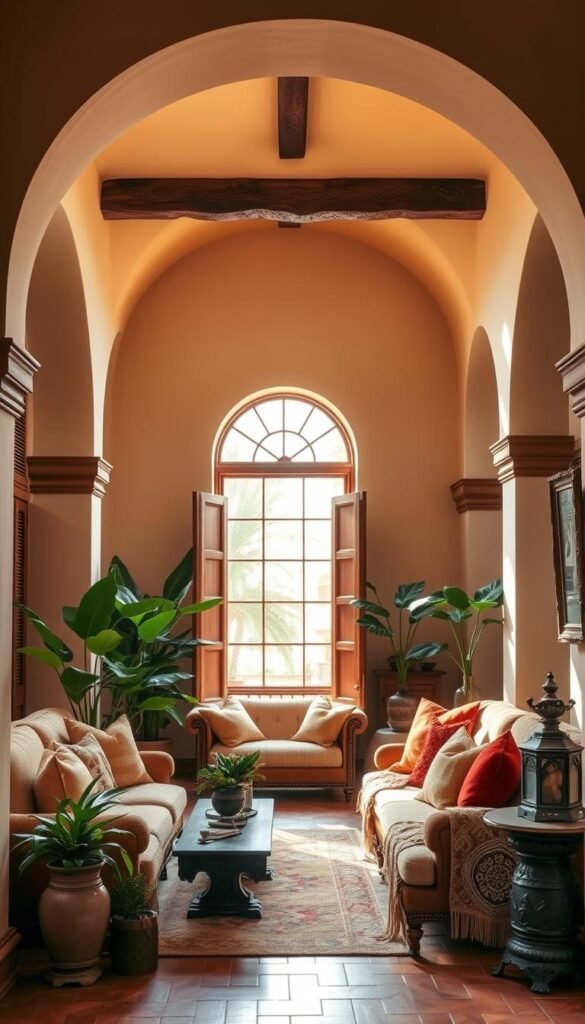
Architectural arches transform ordinary openings into elegant statements of timeless design. These curved elements bring softness to your space while creating visual interest that draws the eye upward.
When implemented correctly, arches enhance both form and function. They work beautifully in various home styles from traditional to contemporary.
How to Correctly Use Arches for a Natural Look
Proper proportion makes all the difference in arch design. The curve should relate harmoniously to the opening’s height and width.
For standard doorways, aim for a rise that’s one-third the opening’s height. This creates a balanced appearance that feels intentional rather than forced.
Repetition establishes visual rhythm throughout your space. Use arch motifs in multiple locations to create cohesion.
Consider these applications for consistent arch elements:
- Matching arched doorways between connected rooms
- Arched transom windows above standard doors
- Arch-shaped mirrors or artwork that echo structural arches
- Curved furniture pieces that complement arched openings
Existing homes can incorporate arches without major construction. Architectural foam elements create instant arch details that attach directly to drywall.
Pre-made arch kits offer DIY solutions for standard openings. These maintain proper proportions while being installation-friendly.
Strategic Placement to Enhance Light and Space
Arched openings dramatically affect how light moves through your home. The curved top allows more natural illumination than rectangular openings.
Place arches where they can maximize daylight penetration. South-facing openings benefit most from arched designs.
These elements create the illusion of more space by drawing eyes upward. The curved lines make ceilings appear higher than they actually are.
Architectural designer Elena Martinez explains:
“Arches guide both light and sightlines through a space. They create natural pathways that make rooms feel more connected and expansive.”
For indoor-outdoor flow, arched openings work beautifully. They frame garden views while creating seamless transitions between areas.
Avoid these common mistakes when incorporating arches:
| Mistake | Why It Fails | Better Approach |
|---|---|---|
| Single isolated arch | Looks like an afterthought | Repeat the motif in 2-3 locations |
| Improper proportions | Appears awkward or heavy | Follow classical arch ratios |
| Wrong placement | Blocks light or movement | Study traffic patterns first |
| Poor material choice | Contrasts with existing style | Match existing trim materials |
Non-structural arch accents offer creative possibilities. Consider arched shelving, arched headboards, or arched display niches.
These details add character without requiring construction. They maintain the elegant feel of architectural arches in simpler forms.
Your arched elements should feel like natural extensions of your space. When done right, they become beloved features that enhance daily living.
7. Layer in Warmth with Ornate Textiles and Rugs
Soft fabrics transform your space from architectural to inviting. They add the final layer of personality and coziness that makes a house feel like home.
Textiles bring tactile experiences into your design. You can feel the difference between a rough woven rug and smooth velvet pillows.
These elements introduce pattern and color in manageable doses. They let you experiment with bold looks without permanent commitment.
Selecting Woven Rugs, Embroidered Pillows, and Heavy Curtains
Authentic patterns draw inspiration from cultural traditions. Look for geometric motifs, floral embroidery, and organic designs.
Quality woven rugs feature natural fibers like wool or jute. They should lie flat with even stitching and consistent dye patterns.
Embroidered pillows often showcase traditional craftsmanship. Hand-stitched pieces add artisanal character to your seating areas.
Heavy curtains provide both style and function. They offer light control and insulation while adding dramatic texture.
Consider these characteristics when selecting your pieces:
| Textile Type | Key Features | Best Placement | Maintenance Level |
|---|---|---|---|
| Wool Rugs | Dense weave, natural dyes | High traffic areas | Professional cleaning |
| Cotton Pillows | Hand embroidery, washable covers | Seating areas | Machine washable |
| Linen Curtains | Natural texture, light filtering | Windows with moderate sun | Dry clean recommended |
| Velvet Accents | Rich color, soft texture | Accent chairs or throws | Spot clean only |
Using Textiles to Introduce Pattern and Color
Layering creates depth and visual interest in your room. Start with larger pieces like rugs, then add smaller textile accents.
Mix patterns while maintaining cohesion through color stories. Choose one dominant pattern and complement it with simpler designs.
Textile expert Sofia Ramirez advises:
“Always test fabrics in your actual space before committing. Natural light changes how colors and textures appear throughout the day.”
Curtain fabrics affect both light and atmosphere. Blackout linings provide privacy and total light control when needed.
Heavier textiles improve room acoustics by absorbing sound. This creates a quieter, more intimate environment for conversation.
Seasonal updates keep your space feeling fresh. Lighter linens for summer and heavier wools for winter maintain comfort year-round.
Handmade pieces add unique character to your design. Look for traditional weaving techniques or local artisan work.
Balance bold patterns with neutral backgrounds. Let your textiles stand out against simpler walls and furniture.
Area rugs help define spaces within open floor plans. They create visual boundaries without physical barriers.
Your textile choices complete the warm, inviting atmosphere. They add the softness and personality that makes your space truly welcoming.
8. Illuminate Your Space with Wrought Iron Lighting
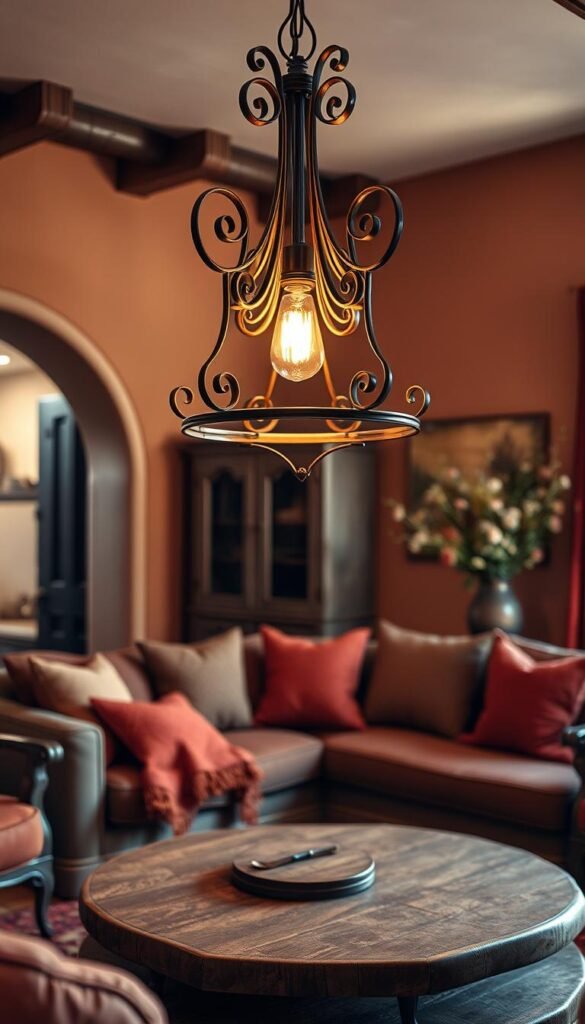
Wrought iron fixtures cast beautiful shadows that dance across your walls throughout the day. These lighting elements become functional artwork that enhances your entire design scheme.
The right illumination creates mood and atmosphere while highlighting architectural details. Your choices affect how you experience colors and textures in your space.
Quality iron pieces show craftsmanship through consistent welding and finishing. Look for smooth joints and even blacksmith marks that indicate handcrafted quality.
Heavier fixtures typically indicate better materials and construction. They feel substantial when handled and install securely.
Choosing Wrought Iron Chandeliers, Sconces, and Pendants
Spanish-style lighting comes in several distinctive forms. Each type serves different purposes in your overall illumination plan.
Chandeliers make dramatic statements in larger rooms or above seating areas. Their multiple arms create layered light patterns.
Wall sconces provide ambient lighting while saving floor space. They work beautifully flanking fireplaces or highlighting artwork.
Pendant lights focus illumination over specific areas like reading nooks. Their directed light creates intimate pools of brightness.
Outdoor lanterns extend your style to entryways and patios. They welcome guests while maintaining design consistency.
Scale matters when selecting your lighting pieces. Consider these general guidelines for different room sizes:
| Room Size | Chandelier Diameter | Pendant Quantity | Sconce Placement |
|---|---|---|---|
| Small (under 12×12) | 20-24 inches | 1-2 fixtures | 4-6 feet apart |
| Medium (12×12 to 16×16) | 24-36 inches | 2-3 fixtures | 6-8 feet apart |
| Large (over 16×16) | 36-48 inches | 3+ fixtures | 8-10 feet apart |
Strategic Lighting Placement for Ambiance and Function
Create layered illumination using multiple light sources. Combine ambient, task, and accent lighting for versatility.
Ambient lighting provides general illumination throughout your space. This includes chandeliers and ceiling fixtures.
Task lighting focuses on specific activities like reading or cooking. Table lamps and directed pendants work well here.
Accent lighting highlights architectural features or artwork. Spotlights and directional sconces create these effects.
Lighting expert Javier Gutierrez recommends:
“Install dimmer switches on all your primary light sources. This lets you adjust ambiance for different occasions throughout the day.”
Bulb selection dramatically affects your light quality. Warm white bulbs (2700K-3000K) create the most inviting atmosphere.
LED bulbs offer energy efficiency without sacrificing warmth. Choose bulbs with high color rendering index (CRI) for truer colors.
Installation requires special consideration for heavy iron fixtures. Always mount them to ceiling joists rather than drywall alone.
Professional electricians ensure proper support and wiring safety. They can also advise on optimal placement for your space.
Mix different lighting styles while maintaining cohesion. Repeat iron elements throughout your various fixtures.
Balance aesthetic appeal with practical needs. Beautiful fixtures should also provide adequate illumination for daily activities.
Lighting affects how you perceive colors throughout the day. Test your paint and fabric choices under both natural and artificial light.
Evening illumination creates different shadows and highlights than daylight. Consider how your space will function at various times.
Your lighting plan completes the warm, inviting atmosphere. It showcases your beautiful design elements while providing functional comfort.
9. Accessorize with Handcrafted Ceramics and Pottery
Artisanal ceramics bring soulful character to your space. These handcrafted pieces introduce authentic charm that mass-produced items cannot match.
Each pottery item tells a story through its unique imperfections. You create a home filled with personality and cultural depth.
Using Terracotta Planters and Decorative Vases
Terracotta containers add organic warmth to your room. Their earthy tones complement other natural materials beautifully.
Choose planters with varying heights and textures. This creates visual interest while displaying your favorite greenery.
Decorative vases serve both functional and aesthetic purposes. Use them for fresh flowers or as standalone art pieces.
Consider these placement strategies for maximum impact:
| Item Type | Ideal Placement | Size Recommendation | Style Consideration |
|---|---|---|---|
| Large Planter | Room corners | 18-24 inches tall | Simple geometric shapes |
| Medium Vase | Console tables | 12-16 inches tall | Hand-painted designs |
| Small Bowl | Coffee tables | 6-8 inches diameter | Textured surfaces |
| Wall Plate | Gallery walls | 10-14 inches diameter | Patterned borders |
The Role of Artisanal Details in Spanish Design
Authentic ceramics reflect generations of craftsmanship tradition. These pieces connect your space to cultural heritage.
Look for specific characteristics when selecting pottery:
- Hand-thrown symmetry with slight variations
- Traditional glaze techniques like cuerda seca
- Regional patterns from Andalusia or Talavera
- Natural clay coloration that varies by region
Mix antique finds with contemporary interpretations. This approach maintains authenticity while fitting modern lifestyles.
Ceramic expert Isabella Fernandez notes:
“True Spanish pottery feels substantial in your hands. The weight, glaze quality, and brushwork all tell you it’s authentic.”
Display collections in curated groupings rather than scattering pieces. This prevents visual clutter while highlighting their beauty.
Use pottery in unexpected ways throughout your home. Try these creative applications:
- Olive oil dispensers in kitchen niches
- Small dish collections on open shelving
- Textured bowls as catch-alls for keys
- Patterned tiles as decorative trivets
Your ceramic accessories complete the layered authenticity of your design. They add those final touches that make your space feel truly special.
10. Curate Spanish-Inspired Artwork and Wall Decor
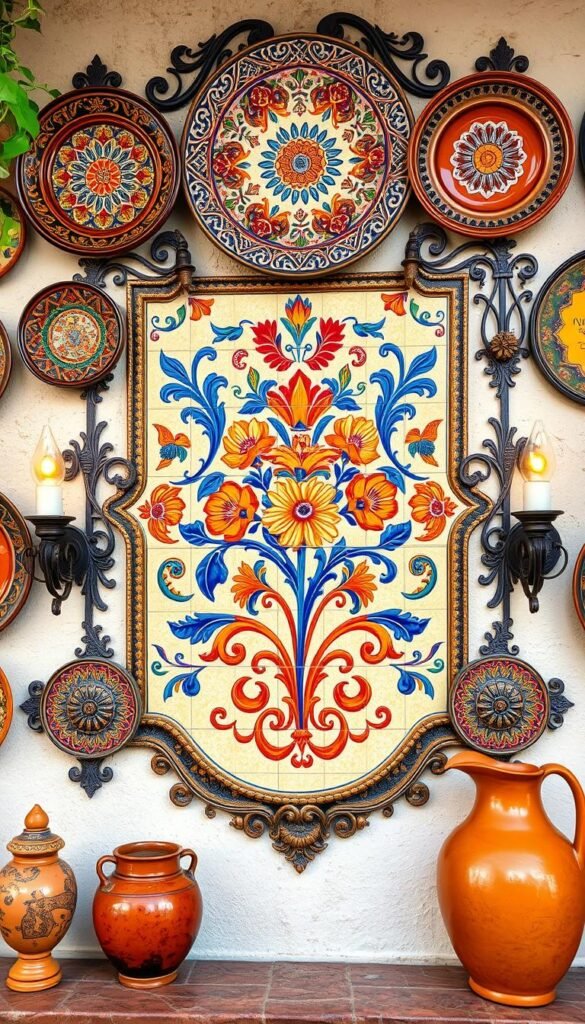
Art transforms your walls into windows of cultural expression. These carefully chosen pieces add personality and soul to your space.
Thoughtful selections create visual interest throughout your room. They become conversation starters that reflect your personal taste.
Selecting Art that Adds Depth and Cultural Character
Authentic pieces often feature traditional motifs and techniques. Look for these distinctive elements in your search:
- Floral and geometric patterns from regional traditions
- Earth-toned color palettes with warm undertones
- Handcrafted textures showing artisan techniques
- Cultural symbolism representing Spanish heritage
Art expert Antonio Jimenez advises:
“True Spanish art carries generations of storytelling. Each piece should feel connected to the land and its people.”
Consider these popular art forms for authentic character:
| Art Type | Key Characteristics | Best Placement | Budget Range |
|---|---|---|---|
| Oil Paintings | Rich textures, deep colors | Above fireplace or sofa | $200-$800 |
| Textile Art | Woven patterns, tactile quality | Gallery walls or entryways | $100-$400 |
| Metalwork | Wrought iron details, aged finish | Accent walls or niches | $150-$500 |
| Ceramic Tiles | Hand-painted designs, glossy finish | Kitchen backsplashes or borders | $20-$100 per tile |
Using Art as a Focal Point to Tie the Room Together
Large statement pieces anchor your entire design scheme. They draw attention and create natural focal points.
Proper sizing ensures balanced proportions in your space. Follow these general guidelines for different wall areas:
For walls behind furniture, choose art that covers ⅔ to ¾ of the wall width. This creates harmony between your pieces and furnishings.
Gallery walls offer creative flexibility for smaller pieces. Mix different art forms while maintaining color consistency.
Framing choices significantly impact your artwork’s presentation. Consider these options for various styles:
| Frame Style | Best For | Material Options | Visual Effect |
|---|---|---|---|
| Simple Wood | Traditional paintings | Dark walnut, oak | Warm and organic |
| Ornate Gold | Classical pieces | Metal leaf, composite | Elegant and rich |
| Minimal Metal | Contemporary art | Black iron, bronze | Clean and modern |
| Floating Frame | Canvas works | Natural wood tones | Light and airy |
Lighting enhances your artwork’s visibility and impact. Use adjustable spotlights or picture lights to highlight favorite pieces.
Rotate your collection seasonally to keep your space feeling fresh. This approach lets you enjoy different pieces throughout the year.
Your art choices complete the cultural narrative of your design. They add those final touches that make your space truly unique.
11. Integrate Natural Greenery and Potted Plants
Living plants breathe life into your interior design, creating a vibrant connection to nature. They transform your space from beautiful to truly alive with organic movement and growth.
Plants improve air quality while adding textural interest. They soften architectural elements and create natural focal points throughout your room.
Choosing Plants that Complement the Earthy Palette
Select plants that thrive in your home’s specific conditions. Consider light exposure, humidity levels, and your maintenance schedule.
Mediterranean-inspired varieties work beautifully with warm color schemes. Their natural forms and colors enhance the earthy aesthetic perfectly.
Consider these excellent choices for different lighting situations:
| Plant Type | Light Needs | Water Frequency | Mature Size | Special Features |
|---|---|---|---|---|
| Olive Tree | Full sun | Every 2 weeks | 6-8 feet | Silver-green foliage |
| Rosemary | Bright light | Weekly | 3-4 feet | Edible, fragrant |
| Snake Plant | Low light | Monthly | 2-4 feet | Air purifying |
| Citrus Tree | Direct sun | Weekly | 4-6 feet | Fruit production |
| Succulents | Bright indirect | Bi-weekly | 6-12 inches | Drought tolerant |
Gardening expert Maria Sanchez advises:
“Choose plants that match your lifestyle. Low-maintenance varieties like snake plants or ZZ plants offer big impact with minimal care.”
Container selection enhances your overall look. Terracotta pots complement the earthy palette while providing excellent drainage.
Consider these planter characteristics:
- Material: Natural clay, ceramic, or aged concrete
- Color: Warm earth tones that blend with your scheme
- Texture: Rough surfaces that show natural character
- Size: Proportional to your plant’s growth potential
Blending Indoor and Outdoor Spaces with Greenery
Strategic placement creates seamless transitions between areas. Position plants near windows and doorways to connect interior and exterior spaces.
Create layered arrangements using varying heights and textures. Tall floor plants anchor corners while smaller specimens adorn tables and shelves.
Edible plants add functional beauty to your decor. Herbs like rosemary and thyme offer fragrance and culinary usefulness.
Seasonal rotations keep your space feeling fresh year-round. Move outdoor container plants inside during colder months for continued enjoyment.
Plants contribute to biophilic design principles by reducing stress and improving wellbeing. Their natural beauty creates a calming atmosphere perfect for relaxation.
Proper care ensures your greenery remains healthy and vibrant. Group plants with similar needs together for easier maintenance.
Your living plants complete the authentic Mediterranean feel. They add the final layer of organic beauty that makes your space truly special.
12. Your Guide to Spanish-Style Living Room Decor Ideas with Warm Colors
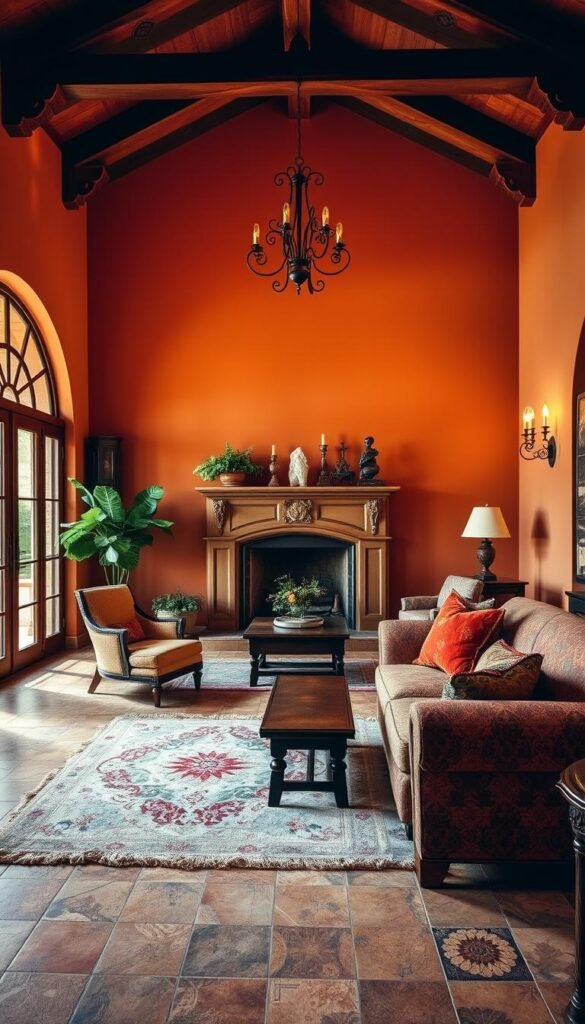
Creating a beautiful and cohesive design requires thoughtful planning and execution. Your space should feel authentic and inviting, not like a themed room.
This guide helps you bring all elements together harmoniously. You’ll learn to avoid common pitfalls while achieving your desired look.
Bringing All the Elements Together Cohesively
Start with a clear vision for your entire room. Consider how each piece contributes to the overall atmosphere.
Create a mood board with colors, textures, and furniture ideas. This visual reference keeps your design focused and consistent.
Professional designer Elena Rodriguez advises:
“Cohesion comes from repetition and rhythm. Repeat key elements throughout your space to create visual harmony.”
Follow these steps for a unified approach:
- Choose a limited color palette and use it consistently
- Repeat materials like wood, iron, and terracotta in different forms
- Maintain consistent scale and proportion throughout
- Create visual pathways that guide the eye naturally
Balance traditional designs with modern comfort. Your home should feel authentic yet functional for daily living.
Common Mistakes to Avoid in Your Design Journey
Many homeowners make these errors when creating their interior. Awareness helps you sidestep these issues.
Avoid single architectural features without repetition. Isolated elements look out of place rather than intentional.
Work with your existing architecture instead of against it. Enhance what you have rather than forcing incompatible styles.
Interior expert Michael Johnson notes:
“The biggest mistake is trying to make your home something it’s not. Authenticity comes from working with your space’s natural character.”
Prevent the “theme park” effect through careful editing. Too many decorative items create clutter rather than charm.
Use this checklist to evaluate your decisions:
| Consideration | Question to Ask | Red Flag | Solution |
|---|---|---|---|
| Proportion | Does this fit my room’s scale? | Oversized or tiny items | Measure before purchasing |
| Repetition | Do I see this element elsewhere? | One-of-a-kind features | Add matching elements |
| Function | Does this serve a purpose? | Purely decorative pieces | Choose multifunctional items |
| Comfort | Is this pleasant to use? | Uncomfortable seating | Test before buying |
Prioritize elements based on impact and budget. Major architectural changes offer big transformation but cost more.
Smaller accessories provide quick updates with less investment. Mix high-impact and low-cost changes for balance.
Know when to seek professional help. Complex installations or structural changes require expert guidance.
Designers prevent years of frustration from DIY approaches. Their experience ensures your vision becomes reality.
Create spaces that feel lived-in rather than staged. Allow for personal items and natural wear over time.
Your final result should reflect your lifestyle while honoring traditional beauty. This balance creates truly welcoming environments.
13. Transform Your Living Room into a Warm Spanish Retreat
Your journey to a beautiful home begins with embracing authentic warmth and character. This design approach creates spaces that feel both timeless and deeply personal.
Natural materials and earthy tones work together to craft an inviting atmosphere. They transform any interior into a cozy sanctuary for daily life.
Start with small changes like textured accents or wrought iron details. These elements gradually build toward your complete vision.
Quality pieces offer long-term value and enduring style. They create a foundation that evolves with your tastes over time.
Your space becomes a true reflection of comfort and personality. It welcomes family and friends with genuine warmth and charm.