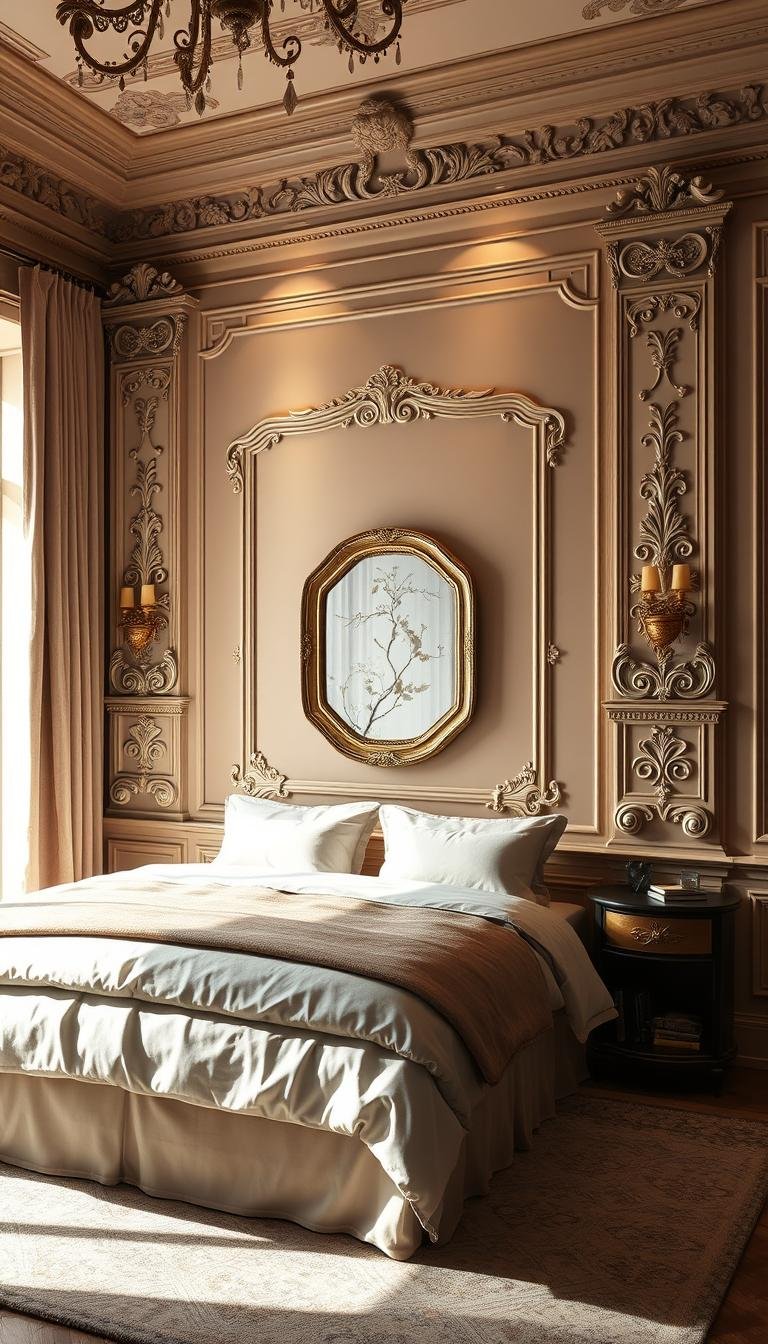
Plain surfaces can feel boring. But they don’t have to stay that way. Adding decorative trim brings new life to any room. It turns simple areas into artistic highlights.
This design element adds depth and texture. It makes your room feel larger and more elegant. You can choose from many styles to match your taste.
Materials like wood, PVC, or metal offer different looks. They protect your surfaces while adding beauty. It’s a cost-effective upgrade without big renovations.
Whether you prefer classic or modern, there’s an option for you. These designs bring warmth and character to your personal space. Let’s explore how to create a luxurious and personalized environment.
Why Wall Moulding is Your Secret Weapon for Bedroom Design
Beyond mere decoration, wall treatments offer both beauty and practical advantages. They serve as your secret weapon for creating a sophisticated retreat that reflects your personal taste.
These architectural elements add character without overwhelming your space. They bring elegance and texture to surfaces that might otherwise feel plain.
One significant benefit is protection for your surfaces. In high-traffic areas, trim guards against everyday wear and tear. This makes your investment both decorative and durable.
You can use these features to define specific zones within your room. Create a sleeping area that feels separate from a reading nook. This enhances functionality while maintaining visual appeal.
Strategic placement creates clever visual illusions. Vertical lines make low ceilings appear higher. Horizontal patterns can make small spaces feel more spacious.
Various materials cater to different needs and skill levels. MDF, wood, and PVC options suit various budgets. Each material offers unique textures and finishes.
The versatility allows for creative expression with colors and patterns. You can match these elements to your existing decor style. Experiment with different looks until you find what suits you best.
These treatments can highlight architectural features or artwork. Turn plain surfaces into curated galleries that showcase your taste. This approach adds depth and interest to your environment.
Eco-friendly options like reclaimed wood add sustainability. You make beautiful choices that also respect our planet. This thoughtful approach enhances your design philosophy.
Maintenance is straightforward, allowing easy updates over time. Refresh your look without major renovations or expenses. This flexibility keeps your space feeling current and fresh.
Ultimately, these design elements represent a smart investment. They elevate your room’s aesthetic while providing long-term benefits. You create a personalized sanctuary that grows with you.
Classic Crown Moulding for Instant Elegance and Height
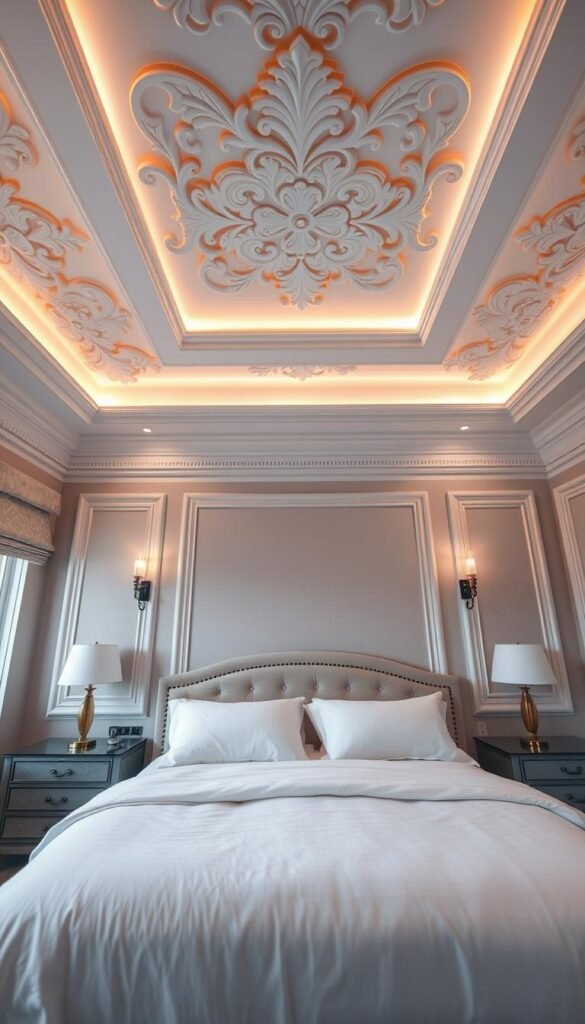
Installing crown trim creates a polished finish at ceiling height. This architectural detail brings sophistication to your sleeping space. It transforms the junction between surfaces into an elegant transition.
Crown treatments work wonders for making rooms feel taller. They draw the eye upward, creating an illusion of height. Even standard ceilings gain grandeur with this approach.
The right choice depends on your ceiling measurements and personal taste. Modern spaces often suit simpler profiles. Traditional rooms can handle more elaborate designs.
Choosing the Right Profile for Your Ceiling
Measure your ceiling height before selecting a profile. Standard eight-foot ceilings work well with narrower designs. Higher ceilings can accommodate more substantial profiles.
Consider your room’s overall style when making decisions. Contemporary spaces benefit from clean, simple lines. Classic interiors can embrace more ornate patterns.
Avoid choices that might overwhelm your space. The goal is enhancement, not domination. Proper proportion creates harmony throughout the room.
Material Options: Wood, PVC, and Plaster
Different materials offer various benefits for your project. Each brings unique characteristics to your design scheme. Your choice affects both appearance and installation process.
Wood provides natural warmth and beautiful grain patterns. It’s durable and can be stained or painted. This traditional option suits many design styles.
PVC offers excellent value and easy maintenance. It’s lightweight and simple to install yourself. This material resists moisture and won’t warp over time.
Plaster allows for intricate custom designs and sharp details. It requires professional installation for best results. The finished look boasts exceptional elegance.
| Material | Best For | Installation | Maintenance | Cost Range |
|---|---|---|---|---|
| Wood | Traditional spaces, warm aesthetics | Moderate DIY skill | Occasional repainting | $$ |
| PVC | Modern rooms, budget projects | Easy DIY | Simple cleaning | $ |
| Plaster | Custom designs, high-end looks | Professional required | Dust regularly | $$$ |
Color choices significantly impact your final result. Matching the ceiling color creates subtle elegance. Contrasting colors make a dramatic statement.
These treatments can hide imperfections along ceiling edges. They cover cracks and uneven junctions beautifully. This practical benefit enhances your room’s finish.
Consider pairing crown details with other trim elements. Wainscoting or picture frames create layered interest. This approach maximizes visual appeal throughout your space.
Maintenance varies by material selection. PVC needs only occasional wiping. Wood may require repainting every few years.
Crown moulding ties your design elements together beautifully. It creates cohesion between walls and ceilings. Your room gains polished sophistication that feels complete.
Wainscoting: Adding Texture and Protection to Your Bedroom
Wainscoting brings both charm and durability to your personal space. This classic feature covers the lower portion of your walls. It shields surfaces from scuffs and scratches while adding visual interest.
You get practical benefits alongside decorative appeal. This treatment creates a finished look that feels both cozy and refined. It transforms ordinary surfaces into something special.
Traditional Raised Panel vs. Modern Flat Panel Designs
Raised panel designs offer timeless elegance. They feature three-dimensional profiles that cast subtle shadows. This style brings classic character to your environment.
Flat panel options provide clean, contemporary lines. They create smooth surfaces with minimal detailing. This approach suits modern interior styles beautifully.
Your choice depends on the overall feel you want. Traditional spaces often benefit from raised designs. Modern rooms shine with flat panel simplicity.
Ideal Height and Placement for Bedroom Walls
The standard height ranges from 36 to 42 inches. This covers about one-third of your wall surface. It creates pleasing proportions in most spaces.
Adjust measurements based on your ceiling height. Higher ceilings can handle taller installations. Standard rooms work well with typical dimensions.
Place these panels behind your bed for a focal point. They frame your sleeping area with structured elegance. This placement enhances room symmetry and balance.
Consider material options for your project. MDF offers affordability and easy painting. Wood provides natural warmth and grain patterns.
PVC works well in humid environments. It resists moisture and won’t warp over time. Each material brings different textures to your design.
Color choices dramatically impact your final look. Contrasting paints make panels stand out boldly. Matching colors create subtle, cohesive elegance.
Combine with wallpaper above for added interest. This layered approach maximizes visual appeal. Lighting fixtures can highlight the texture and depth.
Installation options suit various skill levels. Pre-made panels simplify DIY projects. Custom designs offer unique personalization.
This feature hides imperfections beautifully. It covers wear while adding sophistication. Your room gains both protection and style.
Wainscoting serves dual purposes in your space. It provides practical protection while enhancing beauty. This versatile choice elevates your entire room’s aesthetic.
Picture Frame Moulding: Turn Your Walls into a Gallery
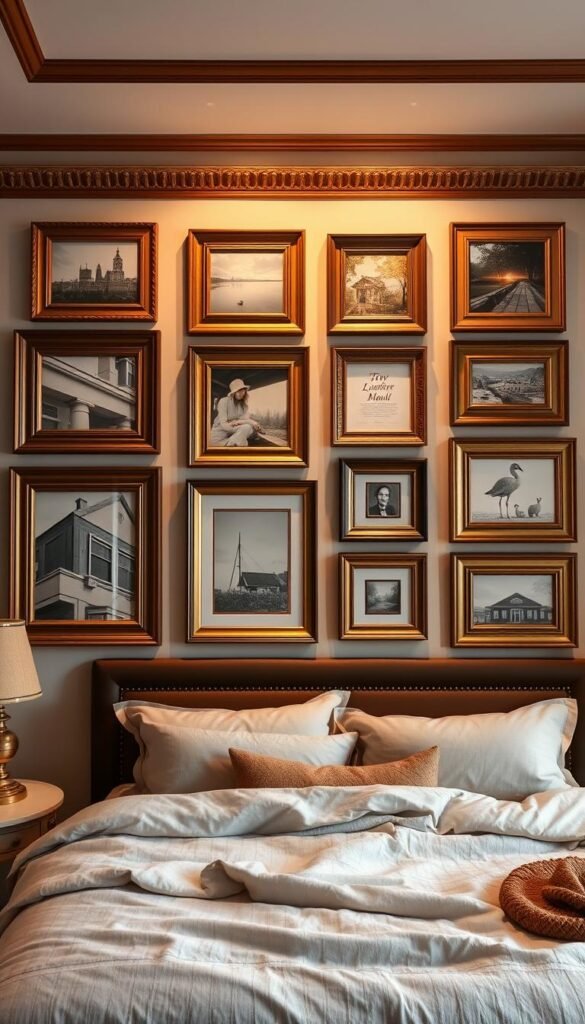
Transform ordinary surfaces into a curated display with picture frame trim. This approach creates a gallery effect that showcases your personal style. It adds architectural interest while providing functional display space.
These framed sections bring artistic dimension to your personal space. They create perfect spots for highlighting favorite artwork or photographs. The result feels both sophisticated and deeply personal.
Creating Symmetrical and Asymmetrical Layouts
Symmetrical arrangements offer classic balance and order. They create a sense of harmony throughout your room. This traditional approach works well with formal decor styles.
Measure carefully for symmetrical designs. Use a level to ensure perfect alignment. Templates help maintain consistent spacing between frames.
Asymmetrical layouts bring modern energy and dynamic interest. They allow for creative expression and unique compositions. This approach suits eclectic or contemporary interiors.
Both styles transform your wall into a structured canvas. They provide organization while adding visual appeal. Choose the layout that matches your personal taste.
Painting Techniques for Maximum Impact
Contrasting colors make your frames stand out dramatically. Dark frames on light walls create bold definition. This technique emphasizes the architectural pattern.
Monochromatic schemes offer subtle elegance. Matching frame and wall colors creates soft dimension. The effect is sophisticated without being overwhelming.
Consider accent colors for creative expression. Use shades that complement your existing decor. This approach ties the design into your overall scheme.
Experiment with finishes for added interest. Glossy paint catches light differently than matte. These subtle differences enhance the visual effect.
| Layout Style | Best For | Visual Effect | Difficulty Level |
|---|---|---|---|
| Symmetrical | Traditional spaces, balanced decor | Orderly and classic | Moderate (requires precise measuring) |
| Asymmetrical | Modern rooms, eclectic styles | Dynamic and creative | Easy (allows for flexibility) |
Material choices affect both appearance and installation. Wood offers custom sizing and natural warmth. MDF provides affordability and easy painting.
Select profiles that complement your room’s style. Simple designs work well in contemporary spaces. More elaborate patterns suit traditional environments.
This feature protects your surfaces from everyday wear. The frames guard against scuffs and scratches. You gain both beauty and practical benefits.
Change artwork within the frames over time. This versatility keeps your space feeling fresh. You can update the look without major changes.
Combine with other trim types for layered interest. Crown moulding above creates complete framing. Wainscoting below adds structural balance.
Experiment with different arrangements and colors. Find what makes your space feel truly yours. The result will be a personalized gallery that reflects your unique taste.
Fluted Wooden Moulding for Subtle Warmth and Rhythm
Vertical grooves create a gentle pattern that adds movement to your space. This design brings natural charm through repeating lines. It offers a sophisticated alternative to flat surfaces.
Fluted panels introduce texture without overwhelming your room. They work beautifully in various interior styles. From modern minimalist to cozy rustic, these elements adapt effortlessly.
These rhythmic patterns guide the eye upward. They make ceilings feel higher and rooms more spacious. The effect is both elegant and functional.
Using Fluted Panels as a Headboard Accent Wall
Create a stunning focal point behind your bed. Fluted panels frame your sleeping area with structured beauty. They add depth and interest to this important spot.
Installation is straightforward with proper planning. Measure your space carefully before beginning. Consistent spacing between grooves ensures visual harmony.
Consider these placement tips:
- Center the design behind your bed for balance
- Extend panels from floor to ceiling for maximum impact
- Frame with simple trim for a finished look
This approach transforms an ordinary wall into something special. It becomes a backdrop that enhances your entire room.
Pairing with Natural Light for a Cozy Effect
Sunlight plays beautifully with fluted surfaces. It creates soft shadows that change throughout the day. This dynamic effect adds life to your space.
Artificial lighting also works wonderfully. Directional lights highlight the texture beautifully. The result is a warm, inviting atmosphere.
Consider these lighting strategies:
- Place bedside lamps to cast light across the grooves
- Install sconces that graze the surface at an angle
- Use dimmable options to control the mood
These techniques maximize the cozy effect of your fluted design. They create a sanctuary that feels both stylish and comfortable.
Material choices affect both appearance and installation. Solid wood offers authentic grain patterns. It brings natural warmth that synthetic materials can’t match.
MDF provides an affordable alternative. It paints beautifully and installs easily. This option works well for budget-conscious projects.
Color selection influences the final result. Stained wood shows off natural beauty. Painted options offer more versatility with your decor.
Neutral tones maintain a calm environment. They create a serene backdrop for your personal space. Bold colors make a stronger statement if that’s your preference.
Combine fluted elements with other textures for balance. Soft bedding complements the structured lines. Metallic accents add subtle shine against the matte surface.
Installation requires attention to detail. Use adhesive and nails for secure placement. Check each panel for level placement as you work.
This design works across various styles. It adds character without dominating your room. The result is a harmonious environment that feels complete.
Fluted moulding creates rhythm and warmth throughout your space. It elevates your design with subtle sophistication. Enjoy the transformed atmosphere it brings to your room.
Panel Moulding for a Structured and Sophisticated Look
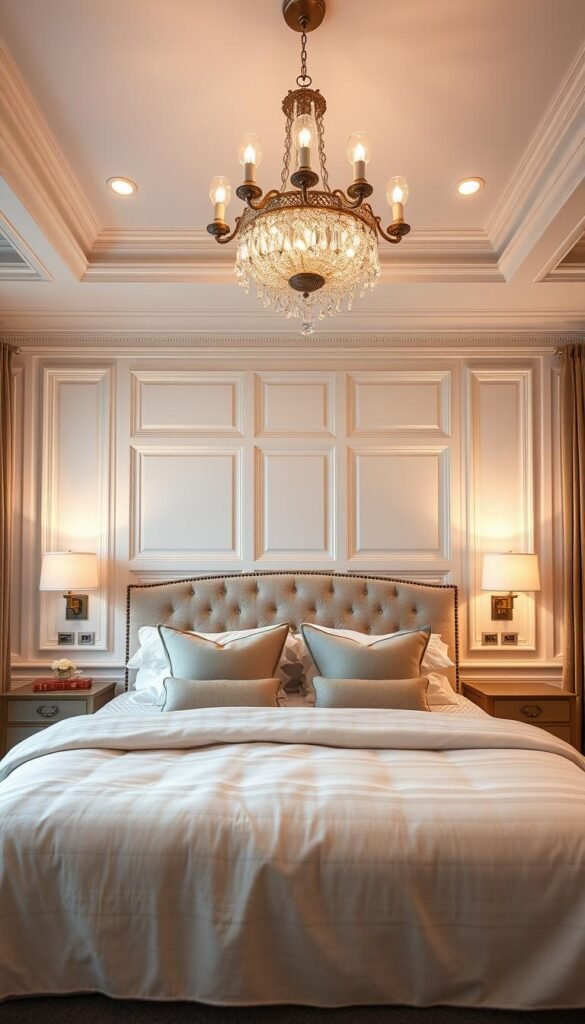
Geometric designs bring order and elegance to your personal space. These structured elements create visual rhythm across your surfaces. They transform plain areas into sophisticated focal points.
This approach adds architectural interest to your room. It creates a tailored environment that feels both organized and luxurious. The clean lines and defined shapes work beautifully in sleeping spaces.
Geometric Patterns to Define Your Space
Grid patterns create harmony and balance throughout your room. They establish a sense of order that feels both calming and refined. These designs work with various furniture arrangements.
Rectangular frames add vertical or horizontal emphasis. They can make ceilings appear higher or rooms feel wider. This visual trick enhances your space’s proportions.
Consider these design tips:
- Start with a focal wall behind your bed
- Use a level and measuring tape for precise placement
- Align patterns with existing architectural features
- Maintain consistent spacing between elements
Smaller patterns suit cozy rooms beautifully. They add detail without overwhelming the space. Larger designs make spacious areas feel more intimate.
Color Contrast Strategies for Depth and Drama
Dark panels on light surfaces create striking definition. This contrast adds depth and draws attention to your design. It makes the geometric patterns stand out dramatically.
Monochromatic schemes offer subtle sophistication. Matching colors create soft shadow play and texture. This approach feels cohesive and calming.
Consider these painting techniques:
- Gloss finishes reflect light for added shine
- Matte paints provide understated elegance
- Accent colors tie into your existing decor
Lighting enhances your color choices beautifully. Wall sconces or LED strips highlight the patterns. They create ambiance while emphasizing the design’s depth.
Material selection affects your final look. Wood brings traditional warmth and grain patterns. MDF offers smooth surfaces for perfect painting.
These panels conceal imperfections while adding beauty. They protect your surfaces from everyday wear. You gain both practical and aesthetic benefits.
Panel moulding creates a tailored environment that reflects your style. It brings structure and sophistication to your personal retreat. Explore more wall moulding designs for additional inspiration.
Box Moulding: Creating Intricate Details and Luxury
Rectangular patterns bring sophisticated structure to your personal space. This approach adds architectural interest through clean, geometric forms. It creates a backdrop that feels both organized and luxurious.
These framed sections transform ordinary surfaces into something special. They add depth and character to your environment. The result is a curated look that elevates your entire room.
This technique offers both beauty and practical benefits. It protects your surfaces from everyday wear. You gain elegance that also serves a functional purpose.
Sizing and Spacing Your Boxes for Visual Balance
Proper proportions create harmony throughout your space. Measure your wall dimensions before planning the layout. This ensures your design feels balanced and intentional.
Consider these spacing strategies:
- Maintain equal distance between boxes for symmetry
- Vary sizes for dynamic visual interest
- Align with furniture placement for cohesion
- Use templates to ensure consistent spacing
Smaller rooms benefit from modestly sized frames. They add detail without overwhelming the area. Larger spaces can handle more substantial patterns.
The goal is enhancement, not domination. Your design should complement rather than compete. Thoughtful planning creates a result that feels both sophisticated and comfortable.
Integrating with Wallpaper for a Layered Effect
Combining structured frames with patterned surfaces adds wonderful depth. This approach creates visual texture through contrasting elements. It brings dimension and personality to your space.
Choose wallpaper that complements your overall decor style. Bold patterns make a dramatic statement. Subtle textures offer understated elegance.
Consider these application tips:
- Install boxes first, then apply wallpaper within the frames
- Use removable wallpaper for easy future changes
- Match or contrast with your existing color scheme
This technique allows for creative expression. You can change the wallpaper over time. This flexibility keeps your space feeling fresh and current.
Material selection affects both appearance and installation. Wood offers custom sizing and natural warmth. MDF provides affordability and easy painting.
Pre-made boxes simplify DIY projects. They ensure consistent proportions throughout your design. This option works well for those new to this technique.
Color strategies influence your final result. Contrasting paints make frames stand out boldly. Matching colors create subtle, cohesive elegance.
Consider combining with other trim types. Crown details above complete the framed look. This layered approach maximizes visual appeal.
Installation requires attention to detail. Use adhesive for lightweight materials. Nails provide additional stability for heavier options.
Always check for level placement as you work. Proper installation ensures professional-looking results. Your effort will create a beautiful, lasting feature.
This design works across various interior styles. From traditional to contemporary, it adapts beautifully. The result is a personalized environment that reflects your taste.
Box moulding creates a luxurious, detailed backdrop for your space. It elevates your room with sophisticated structure. Enjoy the transformed atmosphere it brings to your personal retreat.
Embracing Natural Beauty with Wooden Wall Moulding
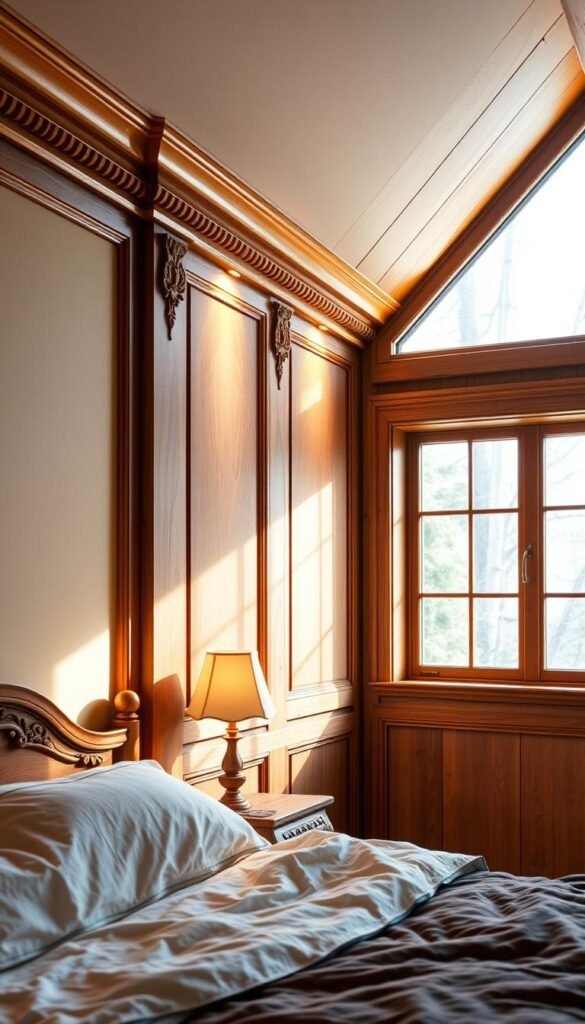
Bringing nature indoors creates a calming atmosphere in your personal space. Wood trim adds organic warmth and visual interest. It connects your environment to the natural world outside.
These elements introduce rich textures and grain patterns. They make your room feel cozy and inviting. Each piece tells its own story through unique markings.
Natural materials work with various design approaches. They complement both rustic charm and modern simplicity. This versatility makes wood a timeless choice.
You gain both beauty and practical benefits. Wood protects your surfaces while adding character. It’s a smart investment that ages gracefully.
Selecting Wood Types: Oak, Pine, and Walnut
Different woods offer distinct characteristics for your project. Each brings unique colors and grain patterns. Your choice affects both appearance and durability.
Oak provides exceptional strength and classic appeal. Its prominent grain adds texture and character. This hardwood withstands daily wear beautifully.
Pine offers affordability and easy workability. It’s perfect for DIY projects and custom designs. This softwood accepts stains and paints well.
Walnut delivers rich, luxurious depth and dark tones. Its fine grain creates sophisticated elegance. This premium choice makes a dramatic statement.
Consider these factors when selecting:
- Room humidity levels affect wood stability
- Existing furniture finishes influence color choices
- Budget constraints guide material selection
- Maintenance preferences determine finish options
Staining vs. Painting for Your Desired Aesthetic
Staining enhances wood’s natural beauty and grain patterns. It allows the material’s character to shine through. This approach celebrates organic textures.
Stains come in various transparency levels. Light stains maintain wood’s natural appearance. Dark stains create richer, deeper colors.
Painting offers complete color control and uniformity. It covers grain for a solid, consistent look. This option works with any color scheme.
Consider these finishing techniques:
- Sealants protect against moisture and wear
- Multiple thin coats ensure even coverage
- Sanding between layers creates smooth results
- Test samples on scrap pieces first
Your choice depends on the look you want. Staining highlights natural variations. Painting provides color consistency.
Design possibilities with wood are endless. Use strips as accent features on plain surfaces. Create frames for artwork or mirrors.
Vertical patterns draw the eye upward. Horizontal lines make spaces feel wider. Mixed directions add dynamic interest.
Reclaimed wood offers eco-friendly charm. It brings history and character to your room. Each piece has unique imperfections.
Pair wood with other natural elements. Stone accents complement its organic feel. Plants enhance the connection to nature.
Installation requires proper preparation. Acclimate wood to room humidity first. Use appropriate adhesives and fasteners.
Wood works across various design styles. It brings warmth to contemporary spaces. It enhances traditional environments.
Choose based on your maintenance preferences. Stained wood may need occasional resealing. Painted surfaces might require touch-ups.
This natural material creates a welcoming atmosphere. It makes your space feel grounded and peaceful. Enjoy the beauty it brings to your room.
Stone Finish Moulding for an Industrial or Rustic Edge
Introduce rugged character to your personal space with stone finish treatments. These elements bring authentic texture reminiscent of natural materials. They create a striking visual impact that transforms ordinary surfaces.
This approach works beautifully for industrial or rustic themes. It adds depth and dimension through realistic stone patterns. Your room gains an earthy, grounded feeling that feels both cozy and sophisticated.
Stone treatments protect your surfaces while adding dramatic appeal. They guard against wear while creating visual interest. This dual benefit makes them a smart choice for any space.
Lightweight Options for Easy Bedroom Installation
Modern materials make stone effects accessible for DIY projects. PVC and faux stone panels offer realistic appearance without heavy weight. They install easily using standard adhesives and basic tools.
These lightweight alternatives simplify the installation process. You achieve professional results without specialized skills. The finished look rivals traditional stone at a fraction of the cost.
Consider these installation tips:
- Clean surfaces thoroughly before applying adhesive
- Use a level to ensure straight, even placement
- Allow proper curing time before adding finishing touches
- Measure twice and cut once for perfect fit
Pre-made panels ensure consistent pattern repetition. They create a seamless appearance across your entire design. This approach saves time while delivering beautiful results.
Complementing with Minimalist Furniture and Decor
Balance stone textures with clean, simple furnishings. Minimalist pieces prevent the space from feeling overwhelming. They create harmony between rugged surfaces and refined elements.
Neutral color palettes enhance the natural stone effect. Shades of gray, beige, and taupe create calming backdrops. These tones emphasize the texture without competing for attention.
Consider these design strategies:
- Choose furniture with straight lines and simple profiles
- Select bedding and textiles in solid, neutral colors
- Incorporate metallic accents for subtle shine
- Add wood elements for warmth and natural balance
Lighting plays a crucial role in highlighting texture. Directional lights cast shadows across the stone surface. This creates dynamic visual interest throughout the day.
| Material Type | Weight | Installation Method | Cost Factor | Maintenance |
|---|---|---|---|---|
| Faux Stone Panels | Light | Adhesive | $$ | Dust regularly |
| PVC Stone Finish | Very Light | Adhesive/Nails | $ | Wipe clean |
| Real Stone Veneer | Heavy | Mortar/Professional | $$$ | Seal periodically |
Create focal points behind your bed or on accent walls. This draws attention to the most dramatic features. It maximizes visual impact without overwhelming the entire room.
Stone finish treatments offer excellent durability. They withstand daily wear while maintaining their beauty. This makes them practical for high-use areas like sleeping spaces.
The cost-effectiveness of faux options makes them accessible. You achieve luxury looks without luxury prices. This smart approach delivers big style on reasonable budgets.
Experiment with different application techniques. Combine stone panels with other trim types for layered interest. This creates custom designs that reflect your personal taste.
Stone finish moulding brings authentic character to your environment. It creates a grounded, textured backdrop for your personal retreat. Enjoy the rugged elegance it adds to your space.
Metallic Finish Moulding for a Touch of Glamour and Shine
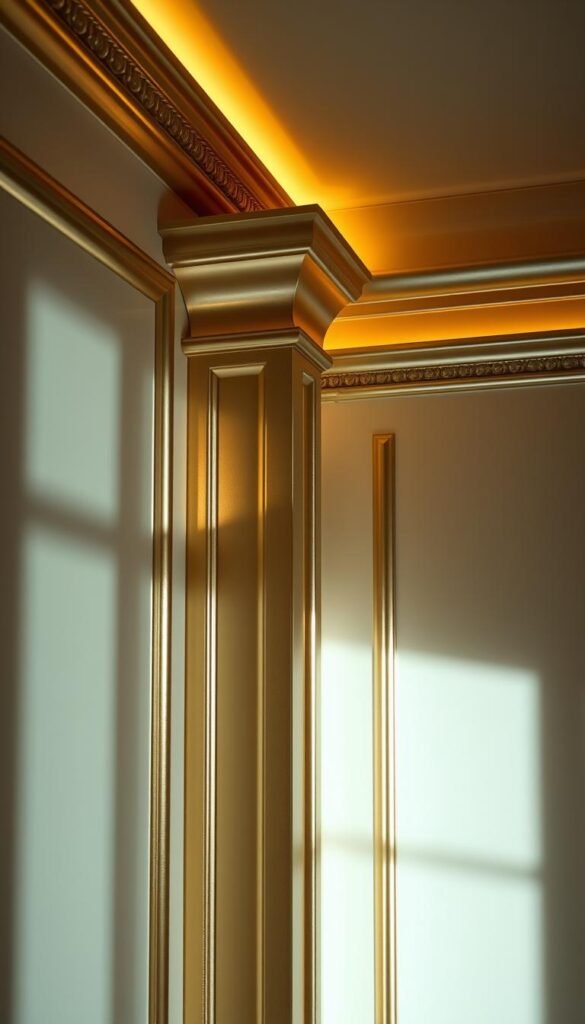
Add instant sophistication with metallic trim that catches and reflects light. These shiny accents bring a luxurious feel to your personal retreat. They create focal points that draw the eye and elevate the entire space.
Metallic elements work with various design approaches. They introduce glamour without overwhelming your room. The reflective quality makes your environment feel brighter and more dynamic.
Copper, Gold, and Bronze Accents
Each metal finish offers a distinct personality for your decor. Copper brings warm, earthy tones that feel inviting. It creates a cozy atmosphere with its rich reddish-brown hue.
Gold delivers opulent brilliance and classic luxury. It makes a bold statement that feels both timeless and contemporary. This choice adds dramatic elegance to any setting.
Bronze provides vintage charm with its deep, muted tones. It offers a sophisticated alternative to brighter metals. This finish works beautifully in traditional and modern spaces.
Using Metallic Strips to Highlight Architectural Features
Frame doorways and windows with thin metallic strips. This technique emphasizes existing architectural details. It adds definition and elegance to these structural elements.
Outline ceiling beams or wall niches for added impact. The metallic finish draws attention to these special features. Your room gains depth and visual interest.
Consider these application ideas:
- Run copper strips along chair rail height
- Add gold accents to picture frame moulding
- Use bronze to outline archways or built-in shelves
Material options suit various budgets and skill levels. Pre-made metallic trim offers convenience and consistent finish. DIY approaches using metallic paint provide cost-effective alternatives.
Color strategies enhance the metallic effect. Dark walls make shiny accents stand out dramatically. Light surfaces create subtle shimmer and reflection.
Pair metallic elements with complementary textures. Velvet bedding amplifies the luxurious atmosphere. Glass accessories add sparkling contrast.
Installation requires clean surfaces for proper adhesion. Use appropriate adhesives for secure placement. Thin metallic strips typically don’t need mechanical fasteners.
This approach works across various design styles. Art deco spaces embrace bold metallic statements. Modern rooms use subtle accents for refined elegance.
Metallic finish moulding brings glamour and sophistication to your environment. It creates a dynamic, light-reflecting backdrop for your personal sanctuary.
How to Choose the Right Moulding Material for Your Bedroom
Selecting the perfect material for your bedroom trim makes all the difference. It affects durability, maintenance, and overall appearance. Your choice should balance beauty with practical needs.
Think about your daily life and long-term goals. The right material enhances your space while fitting your lifestyle. Let’s explore popular options to help you decide.
Durability and Maintenance: MDF vs. Solid Wood vs. PVC
MDF offers an affordable and smooth surface for painting. It’s easy to cut and shape for custom designs. However, it can swell if exposed to moisture.
Solid wood brings natural strength and timeless beauty. Each piece has unique grain patterns that add character. It requires regular care to prevent warping or damage.
PVC stands out for its resistance to humidity and simple upkeep. This lightweight option won’t rot or attract pests. It maintains its look with minimal effort over time.
Considering Your Budget and DIY Skill Level
Your budget plays a key role in material selection. MDF and PVC provide cost-effective solutions for many projects. Solid wood offers long-term value but comes at a higher initial price.
DIY skills also influence your choice. Beginners often find PVC and MDF easier to handle. These materials cut cleanly and install with basic tools.
Solid wood may need advanced tools and techniques. It can require professional help for the best results. Consider your comfort level before making a decision.
Evaluate your room’s environment before choosing. Humid spaces benefit from PVC’s moisture resistance. Dry areas can handle wood or MDF without issues.
Maintenance needs vary between materials. PVC and MDF need only occasional cleaning. Wood might need staining or sealing to keep its beauty.
Eco-friendly options like reclaimed wood add sustainable charm. Recycled PVC also offers green benefits. These choices align with environmentally conscious values.
Test material samples in your room before committing. See how they look with your lighting and existing decor. This step ensures a perfect match for your space.
Material choice affects how paint or stain appears. MDF and PVC take paint evenly for a uniform finish. Wood grain shows through stains, highlighting natural patterns.
Select a material that fits your vision and practical needs. Your bedroom will gain both beauty and functionality. Enjoy the process of creating a space that truly reflects you.
The Power of Color and Paint in Your Moulding Design
Color transforms your decorative trim from simple detail to design statement. It sets the mood and defines your personal space. Your choices create harmony or contrast throughout the room.
Paint offers incredible flexibility for expressing your style. You can change it over time without replacing the trim itself. This makes color a powerful tool in your design toolkit.
Timeless Whites and Neutrals for a Clean Look
White and neutral tones create a fresh, elegant atmosphere. They reflect light beautifully, making your space feel larger. These colors work with any decor style.
Soft beiges and warm grays offer subtle sophistication. They provide a calm backdrop for your furniture and artwork. Your room gains a serene, cohesive feeling.
Consider these benefits of neutral palettes:
- They create a sense of spaciousness and airiness
- Neutrals provide a timeless foundation that won’t date quickly
- These colors highlight the trim’s shape and texture
- They allow other elements in your room to stand out
Light-colored trim makes ceilings appear higher. It draws the eye upward, enhancing your room’s proportions. This visual trick works especially well in smaller spaces.
Bold Contrasts and Accent Colors for Personality
Dark trim on light surfaces makes a dramatic statement. It defines patterns clearly and adds depth to your design. This approach creates visual interest and personality.
Vibrant accent colors bring energy and playfulness. They turn functional elements into artistic features. Your space gains character and reflects your unique taste.
Try these techniques for maximum impact:
- Paint different trim elements in contrasting colors
- Use darker shades on lower panels for grounding effect
- Match trim color to existing decor accents for cohesion
- Experiment with unexpected color combinations
Color blocking creates modern, artistic effects. It transforms architectural details into graphic elements. This technique adds contemporary flair to traditional designs.
| Color Strategy | Visual Effect | Room Size Impact | Maintenance Level |
|---|---|---|---|
| All-White | Clean and expansive | Makes small rooms feel larger | Shows dirt but easy to touch up |
| Light Neutrals | Soft and sophisticated | Creates airy feeling | Hides minor imperfections |
| Dark Contrasts | Dramatic and defined | Can make small spaces feel cozy | Shows dust but hides scuffs |
| Accent Colors | Playful and personal | Draws attention to features | May require more frequent updates |
Paint finish affects both appearance and practicality. Semi-gloss offers easy cleaning and subtle shine. It works well in areas that might need frequent wiping.
Matte finishes provide sophisticated, velvety appearance. They minimize light reflection for a softer effect. This choice hides surface imperfections beautifully.
Consider your room’s lighting when selecting colors. Natural light shows true color tones throughout the day. Artificial lighting can alter how colors appear.
Test paint samples on your trim before committing. Observe how they look at different times of day. This ensures you’ll love the final result.
Color psychology influences your room’s atmosphere. Cool tones like blues and greens create calming environments. Warm colors like reds and oranges add energy and warmth.
Your trim color should complement your overall scheme. Pull colors from existing bedding, rugs, or artwork. This creates harmony throughout your personal space.
Don’t be afraid to experiment with color. It’s the easiest element to change if you want a new look. Your trim can evolve with your changing tastes over time.
Color transforms functional elements into design features. It adds personality and character to your room. Embrace the power of paint to create a space that truly reflects you.
Practical Benefits: More Than Just a Pretty Feature
While decorative trim certainly enhances visual appeal, its value extends far beyond surface beauty. These architectural elements serve practical purposes that improve your daily living experience. They protect surfaces while creating smarter, more functional spaces.
Protecting Walls from Wear and Tear
High-traffic areas in your sleeping space face constant contact. Furniture movement, accidental bumps, and daily activities can damage surfaces. Trim acts as a protective barrier against these common hazards.
Lower panels guard against scuffs from shoes and furniture. They take the impact instead of your main surfaces. This protection maintains your room’s fresh appearance over time.
Choose materials based on your protection needs. PVC resists moisture in humid environments. Wood offers sturdy defense against physical impacts. Each material brings different protective qualities.
Strategic placement maximizes protection benefits. Install panels behind beds where contact occurs frequently. Frame doorways where movement concentrates. This approach safeguards vulnerable areas effectively.
Creating the Illusion of Space in Smaller Bedrooms
Visual tricks can transform how your room feels. Vertical lines draw the eye upward, making ceilings appear higher. This technique works wonders in compact spaces.
Light colors reflect natural and artificial illumination. They brighten your environment and create airy feelings. Pale tones make walls seem to recede, expanding perceived dimensions.
Consider these space-enhancing strategies:
- Install vertical strips from floor to ceiling
- Choose white or light neutral finishes
- Use glossy paints to maximize light reflection
- Keep patterns simple to avoid visual clutter
Mirrored or metallic accents amplify light effects. They bounce illumination around your room. This creates brighter, more expansive feelings.
Proper scale ensures successful results. Smaller rooms need simpler, more delicate patterns. Overly elaborate designs can overwhelm limited areas.
These techniques work with various trim styles. Picture frames create organized visual interest. Fluted panels add rhythm without crowding. Each option offers spatial benefits.
Your room gains both beauty and functionality. Protection and spatial enhancement combine beautifully. These practical advantages make trim a smart investment for any space.
Transforming Your Space with These Unique Wall Moulding Ideas That Elevate Your Aesthetic Bedroom
These decorative treatments truly transform your personal space. They add character and depth to any room’s design.
You can choose from many styles to match your taste. From classic crown to modern geometric patterns, there’s something for every home.
These elements combine beauty with practical benefits. They protect your surfaces while creating visual interest.
Start with one simple project like picture frames. Then build up layers over time for a custom look.
Consider your budget and skill level when selecting materials. Wood offers natural warmth, while paint opens endless color options.
Draw inspiration from these ideas but adapt them to your specific space. Your room will reflect your personal style perfectly.
This investment enhances both your daily comfort and your home’s value. You’ll create a retreat you love spending time in.
Consult professionals for complex installations if needed. Always test samples before making final decisions.
With careful planning, your space becomes a stylish, functional sanctuary. Begin your transformation today!