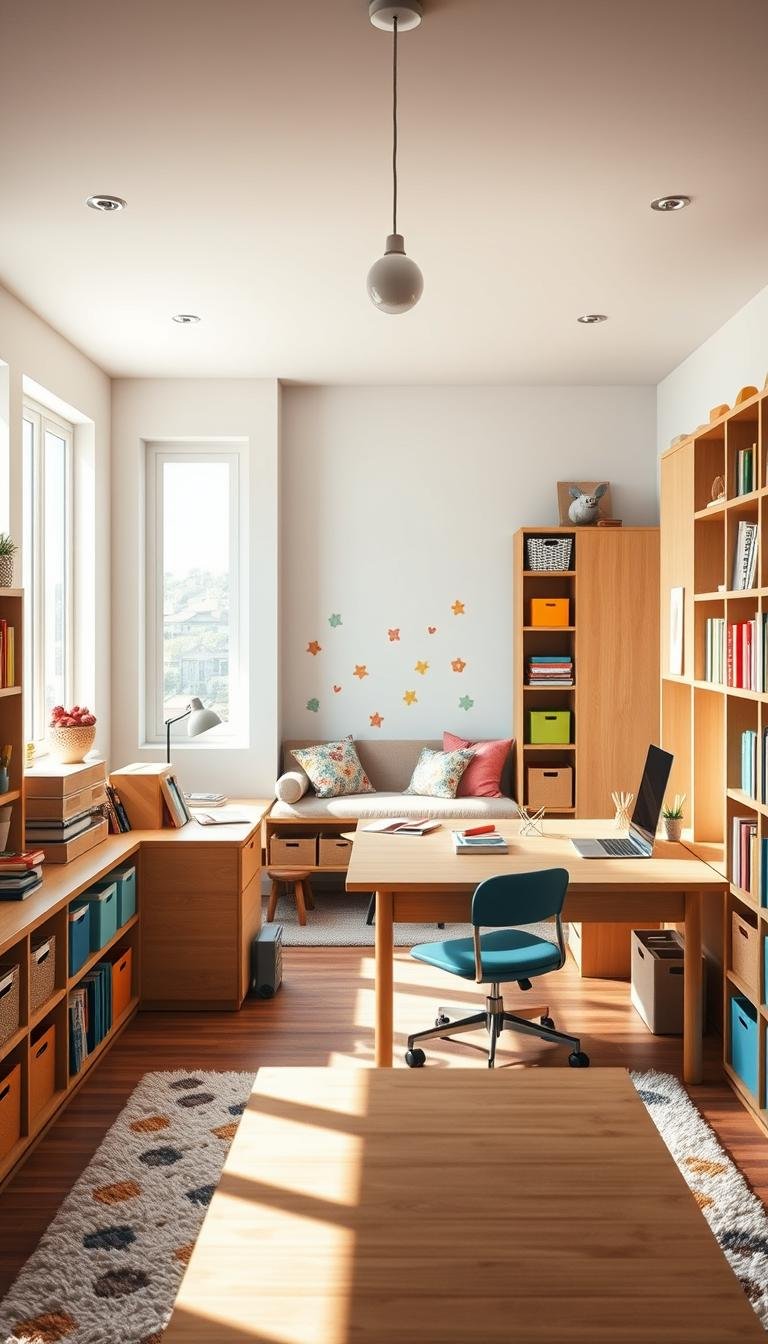
Creating a dedicated learning space for your child makes a huge difference. This special area helps boost concentration and organization skills. It turns homework time into a more productive experience.
A well-designed study environment is more than just furniture. It’s a powerful tool for developing good habits. This setup reduces distractions and encourages better learning.
We’ll share practical, creative solutions tailored for boys’ needs. Our ideas range from ergonomic setups to fun themes. These suggestions come from expert insights and real-world examples.
Our goal is simple: help you create a space your child will love. A place where learning becomes enjoyable and effective. Let’s build an area that supports both focus and creativity!
1. Why a Dedicated Study Space is Your Secret Weapon
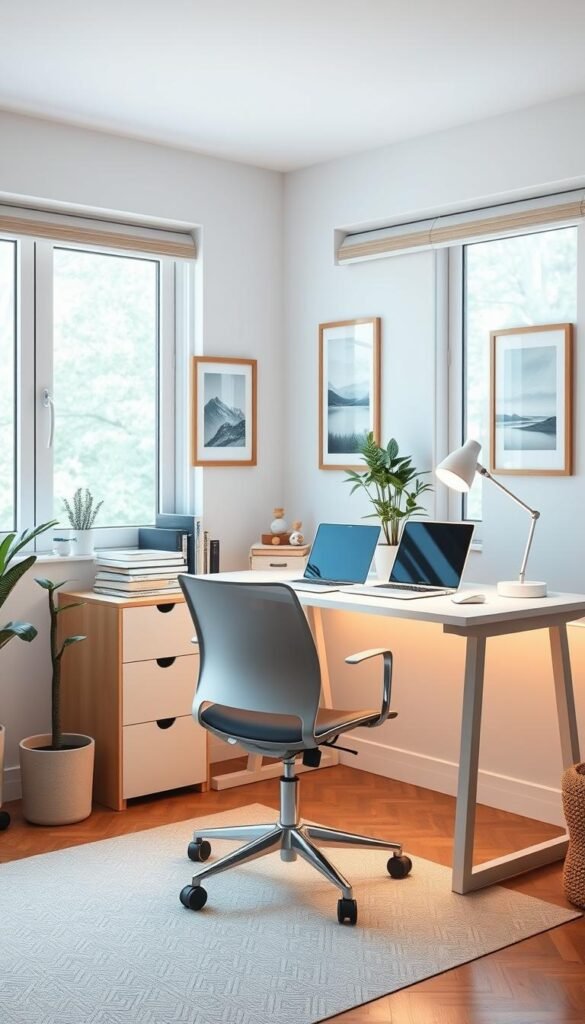
Establishing a specific area for schoolwork provides psychological cues that enhance focus and productivity. This special zone tells your child’s brain it’s time to shift gears from play to serious learning.
Experts agree that physical separation between relaxation and work areas creates mental boundaries. This division helps children psychologically prepare for concentration. It turns homework into a more efficient and enjoyable experience.
More Than Just a Desk and Chair
A truly effective learning environment extends far beyond basic furniture. Proper organization systems keep materials within easy reach. Good lighting reduces eye strain during those long study sessions.
Personal touches make the space inviting and uniquely theirs. These elements work together to create an atmosphere that supports academic success. The right setup can transform how your child approaches schoolwork.
Creating a Mental Zone for Concentration
Choosing the right location within a room makes a significant difference. Position the workspace away from high-traffic areas and noisy appliances. This minimizes interruptions from siblings or household activities.
The separation between play and work areas becomes clearer in your child’s mind. This mental distinction is crucial for developing strong study habits. It helps them transition into learning mode more quickly and effectively.
When a space feels exclusively designed for work, engagement naturally increases. Your child will associate this area with productivity and accomplishment. This psychological connection is the true secret weapon for academic success.
2. The Non-Negotiable Foundation: Ergonomics and Posture
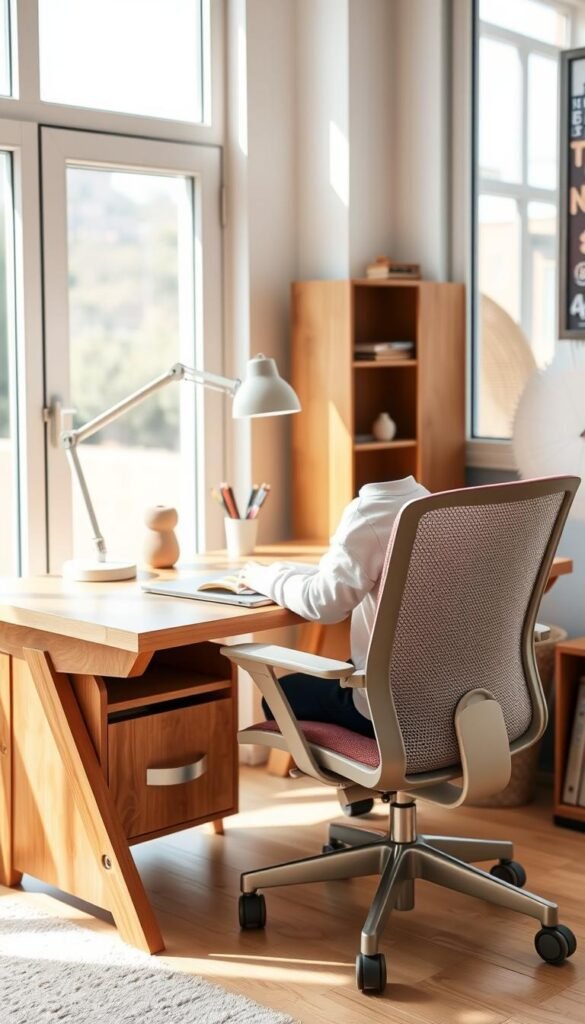
Proper body positioning forms the bedrock of any successful learning environment. When your child sits comfortably, their mind stays sharp and ready to absorb information.
Good ergonomics prevent physical discomfort during long sessions. This directly impacts their ability to concentrate on schoolwork. Investing in the right setup pays dividends in both health and academic performance.
Finding the Perfect Desk and Chair Height
Measure your child’s elbow height while seated to determine ideal desk height. Their forearms should rest comfortably with elbows bent at 90 degrees. This prevents shoulder strain during writing and computer work.
For chair height, ensure feet sit flat on the floor. Knees should form a right angle with thighs parallel to the ground. If feet don’t reach, use a sturdy footrest for proper support.
Adjustable furniture grows with your child, offering long-term value. Look for desks with rounded edges and chairs with lumbar support. These features provide both safety and comfort during daily use.
The Right Posture for Extended Study Sessions
Teach your child to sit with their bottom all the way back in the chair. Their back should maintain contact with the chair’s support. This position distributes weight evenly and reduces spinal pressure.
Keep elbows close to the body at a 90-120 degree angle. This relaxed arm position prevents neck and shoulder tension. Proper alignment makes writing and typing feel effortless.
Feet should remain flat on the floor or footrest throughout sessions. This stable base improves circulation and prevents fidgeting. Good posture becomes second nature with consistent practice.
Poor positioning leads to fatigue and distractibility within minutes. Proper alignment sustains energy and mental clarity for longer periods. These habits protect their developing bodies while boosting academic performance.
3. Lighting the Way to Better Concentration
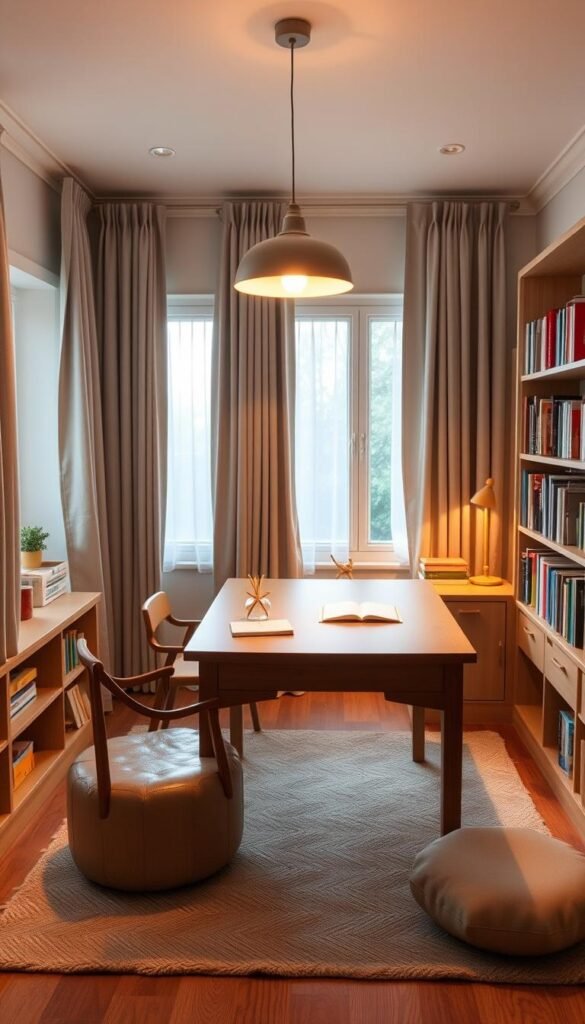
Proper lighting transforms any study environment from ordinary to extraordinary. The right illumination dramatically improves your child’s ability to concentrate during homework sessions.
Quality light reduces eye strain and mental fatigue. This creates a more productive atmosphere for academic work. Smart lighting choices make a significant difference in learning outcomes.
Harnessing the Power of Natural Light
Natural daylight offers incredible benefits for young learners. It reduces eye strain while boosting mood and energy levels. Position the desk near a window to maximize these advantages.
Place the workspace perpendicular to the window rather than directly facing it. This prevents glare on screens and books while still capturing abundant daylight. The indirect approach maintains comfort throughout the day.
Morning light provides the most natural energy boost for early study sessions. The soft quality of daylight helps maintain alertness without causing visual discomfort. This natural approach supports sustained concentration.
Choosing the Best Desk Lamp for Evening Work
Evening study requires artificial lighting that mimics natural conditions. Select a desk lamp with adjustable brightness settings. Warm white LEDs around 2700-3000K create the most comfortable atmosphere.
Look for lamps with flexible necks that allow targeted illumination. This lets your child direct light exactly where needed. Proper task lighting prevents shadows and reduces eye strain.
Consider adding LED strips under shelves for ambient lighting. This layered approach reduces contrast between the task light and room darkness. The result is a cozy, focused environment perfect for evening work.
Research shows proper illumination can increase productivity by up to 20%. Good lighting prevents fatigue and maintains mental clarity. This scientific approach to illumination makes study time more effective.
4. Conquer Clutter: Smart Storage Solutions That Work
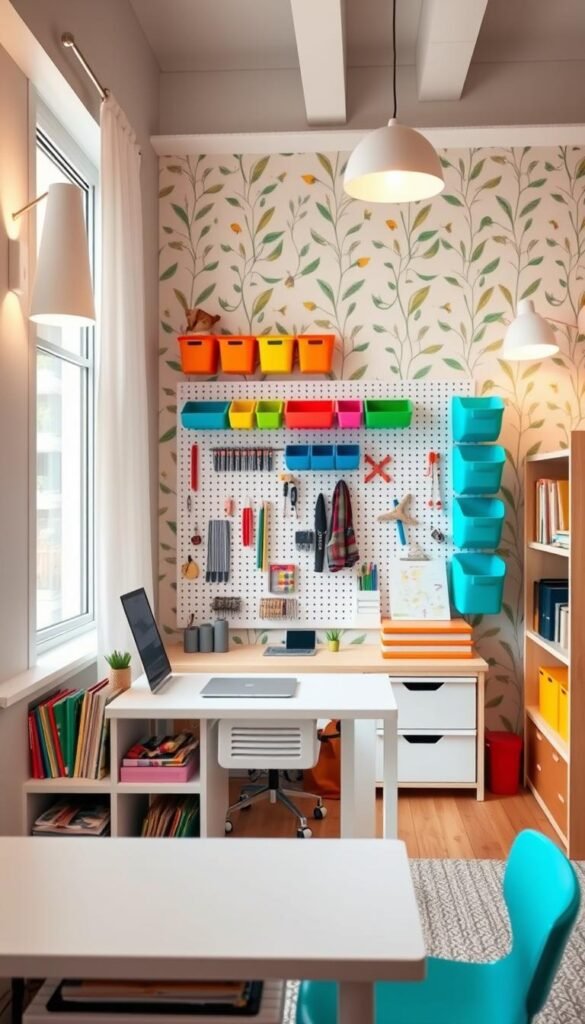
Visual chaos creates mental distraction. When your child’s workspace overflows with materials, their brain struggles to concentrate. The solution lies in strategic organization systems that keep essentials accessible yet out of sight.
Effective storage transforms a chaotic area into a productive environment. It teaches valuable life skills while supporting academic success. Let’s explore practical ways to tame the mess.
Wall-Mounted Shelves and Floating Desks
Vertical space offers untapped potential for organization. Wall-mounted shelves keep materials off the work surface while remaining within easy reach. This approach maximizes floor space for movement and comfort.
Floating desks create a sleek, modern look while providing essential work surfaces. They make cleaning underneath effortless and create an open, airy feel. This design works particularly well in smaller rooms.
Consider installing a pegboard above the work area. It offers flexible storage for frequently used items. Hooks and baskets can hold everything from headphones to art supplies.
Using Bins, Boxes, and Drawers Effectively
Categorization is key to maintaining order. Use different containers for various types of materials. Clear bins allow quick identification of contents without opening.
Assign specific purposes to each storage solution:
- Small drawers for stationery and art supplies
- Medium boxes for books and notebooks
- Large bins for bulkier items like projects or sports equipment
Modular storage systems grow with your child’s changing needs. Stackable units can be reconfigured as requirements evolve. This flexibility ensures long-term functionality.
The Power of Labels and a “Home for Everything”
Labeling transforms random storage into an organized system. It eliminates guesswork and saves precious time during homework sessions. Your child can find what they need without assistance.
Color-coded labels make organization visually intuitive. They help younger children associate colors with specific categories. This approach builds independence and confidence.
“A place for everything and everything in its place creates calm from chaos.”
Establishing “homes” for items teaches responsibility and consistency. Your child learns to return materials after use, maintaining order naturally. This habit reduces pre-work cleanup time significantly.
| Storage Solution | Best For | Age Appropriateness |
|---|---|---|
| Clear plastic bins with lids | Art supplies, LEGO pieces, science projects | All ages |
| Magnetic strips | Scissors, metal rulers, paper clips | 6+ years |
| Rolling cart with drawers | Homework supplies, craft materials | 8+ years |
| Hanging file organizer | School papers, artwork, important notices | 10+ years |
Simple repurposing projects add character while solving storage challenges. Mason jars become perfect pencil holders. Egg cartons transform into small parts organizers. These creative solutions make organization fun.
The right storage system reduces visual noise and mental clutter. It creates an environment where concentration comes naturally. Your child will spend less time searching and more time learning.
5. Designing a Distraction-Free Zone
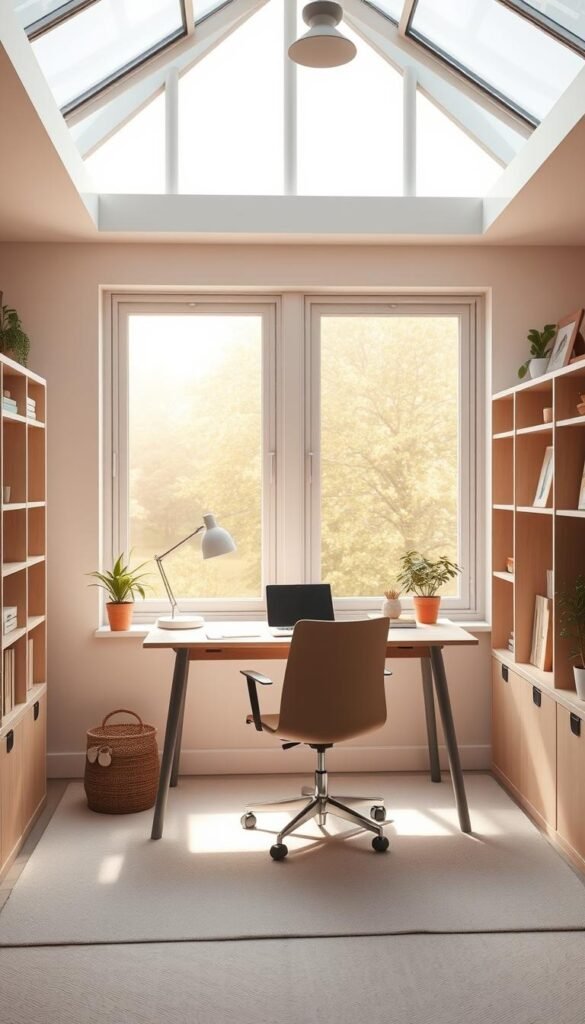
Strategic positioning within the room can make or break your child’s concentration during homework. The right setup transforms ordinary spaces into productivity powerhouses that support deep focus.
Choosing the Right Location in the Room
Select a corner away from doors and high-traffic areas. This minimizes interruptions from family movement throughout the house.
Avoid placing the workspace directly facing windows with outdoor activity. Instead, position the desk perpendicular to natural light sources. This reduces visual distractions while maintaining good illumination.
Consider using room dividers or bookshelves to create a semi-enclosed area. These physical boundaries help establish mental separation between play and work zones.
Managing Noise and Digital Interruptions
Household sounds can disrupt your child’s concentration. Noise-canceling headphones effectively block ambient noise during important tasks.
Soft instrumental music creates a calming background atmosphere. This masks disruptive sounds without becoming distracting itself.
Establish clear rules for device usage during learning time. Designate a specific storage spot for phones and tablets when not in use.
Tech-friendly organizers keep gadgets out of sight but accessible when needed. This reduces the temptation to check notifications constantly.
A well-designed distraction-free environment helps children enter a flow state. This mental zone makes learning more efficient and less stressful.
Simple timers can structure work sessions with planned breaks. The Pomodoro technique (25 minutes work, 5 minutes break) works wonderfully for maintaining focus.
“The quality of your attention determines the quality of your results.”
Real-life solutions include creating dedicated corners with simple partitions. Even a strategically placed bookshelf can define the space effectively.
Remember that every child responds differently to environmental factors. Experiment with these strategies to discover what works best for your family’s unique situation.
6. Spark Creativity with Fun and Functional Themes
Personalized decor and imaginative themes create an inspiring atmosphere that makes learning feel less like work and more like exploration. The right design elements can transform your child’s relationship with their educational environment.
Adventure-Inspired Jungle and Space Themes
Transform your child’s learning zone into an exciting expedition destination. Earthy green tones combined with animal print accents create a jungle safari feeling. Cosmic wall decals and dark blue colors evoke the mystery of outer space exploration.
These adventurous environments spark imagination during homework sessions. Your child might feel like an explorer discovering new knowledge. The thematic elements make each learning session feel like a new adventure.
Wooden furniture with natural textures complements jungle themes perfectly. For space-inspired areas, sleek metallic accents and glow-in-the-dark stars add cosmic charm. Both styles use colors and textures that stimulate creative thinking.
Minimalist and Scandinavian Designs for Calm Focus
Clean, uncluttered spaces promote mental clarity and sustained attention. Light wood tones and white surfaces create a serene atmosphere. Simple lines and functional furniture reduce visual distractions.
Scandinavian design principles emphasize natural materials and neutral colors. This approach creates a peaceful environment perfect for concentration. The minimalist aesthetic helps your child focus on tasks without unnecessary stimulation.
Storage solutions blend seamlessly into the overall design. Everything has its place, maintaining organizational habits. The calm environment supports deep thinking and problem-solving skills.
Thematic personalization builds ownership and motivation. When children feel connected to their space, they’re more likely to use it regularly. This emotional investment translates into better learning habits.
Both adventurous and minimalist approaches serve different needs. Some children thrive with stimulating environments that spark creativity. Others perform better in calm, distraction-free zones.
Consider your child’s personality when choosing a theme. The right design can make their educational journey more enjoyable and effective.
7. Space-Saving Ideas for Smaller Rooms
Limited square footage doesn’t have to limit your child’s learning potential when you implement smart space solutions. Compact rooms can become highly functional environments with the right approach to furniture selection and layout.
Creative thinking transforms tight spaces into productive zones. The key lies in maximizing vertical real estate and choosing pieces that serve multiple purposes. These strategies make small areas feel spacious and organized.
Wall-Mounted and Fold-Down Desk Designs
Wall-mounted options free up valuable floor space while providing essential work surfaces. These designs fold flat against the wall when not in use. This creates open areas for other activities during non-learning hours.
Fold-down models offer excellent flexibility for tight quarters. They typically feature built-in storage for writing tools and materials. Some include drop-leaf extensions for additional workspace when needed.
Measure your available wall space before selecting a mounted unit. Ensure there’s adequate clearance for comfortable seating. Proper installation is crucial for safety and stability during use.
Multi-Functional Furniture like Loft Beds with Desks
Loft beds with integrated workstations maximize vertical space beautifully. The elevated sleeping area creates room underneath for a dedicated learning zone. This approach effectively doubles the functionality of limited square footage.
These multi-purpose pieces often include built-in shelving and organization systems. They keep supplies within easy reach while maintaining a clean appearance. The design creates natural separation between rest and work areas.
Consider convertible desks that transform from compact to expanded sizes. These adaptable solutions grow with your child’s changing needs. They provide flexibility without requiring additional floor space.
“Small spaces require big ideas that make every inch count toward functionality.”
Smart organization prevents clutter from overwhelming compact environments. Use vertical storage solutions like magnetic boards and hanging organizers. These keep essentials accessible without consuming precious surface area.
The right furniture choices create an efficient learning environment regardless of room size. Your child will appreciate having a dedicated spot that feels both functional and comfortable.
8. The Psychology of Color and Personalization
Color choices transform how your child experiences their educational environment. The right palette creates an atmosphere that supports both concentration and creativity. Strategic color selection makes a significant impact on learning outcomes.
Choosing Colors That Enhance Focus and Mood
Cool tones like blue and green create calming effects perfect for concentration. These shades lower stress levels while maintaining mental alertness. They work beautifully for walls and larger furniture pieces.
Warmer yellows add energy to the space when used as accents. This vibrant color stimulates creativity during artistic projects. Balance is key to avoid overstimulation during homework time.
- Blue walls for main surfaces to promote calm focus
- Green accents through chair fabrics or storage bins
- Yellow details in artwork or accessory items
- Neutral tones for flooring and larger furniture
The color scheme should support rather than dominate the space. Too much stimulation becomes distracting. Too little personality makes the area feel sterile and uninviting.
Letting Your Child Own the Space
Personalization builds emotional connection to the learning environment. When children help design their area, they develop pride in maintaining it. This ownership translates into better organizational habits.
Involve your child in selection processes from the beginning. Let them choose their chair color from pre-approved options. Allow them to select posters of their favorite heroes or interests.
“When children feel their space reflects their identity, they naturally want to care for it.”
Create display areas for their artwork and achievements. This validation encourages continued effort and engagement. The space becomes a reflection of their growing capabilities.
Balance personal touches with functional requirements. Favorite colors can appear in manageable elements like pencil holders. Special items should have designated homes to prevent clutter.
The right combination of color psychology and personal expression creates magic. Your child will enjoy spending time in a space that truly feels like their own. This emotional connection makes learning more enjoyable and effective.
9. Building and Maintaining Productive Habits
Consistent routines transform your child’s educational experience from chaotic to controlled. These daily practices build a foundation for long-term academic success. They turn organization from a chore into a natural part of life.
Good habits create a structured environment where learning thrives. Your child develops self-discipline without constant reminders. This independence boosts confidence and academic performance.
Establishing a Daily Tidy-Up Routine
A quick end-of-day cleanup keeps the workspace functional and inviting. This five-minute habit prevents clutter from accumulating. It makes each new session begin with a fresh start.
Create a simple checklist for your child to follow:
- Return books to their designated shelves
- Place writing tools in their proper containers
- File completed papers in appropriate folders
- Wipe the work surface clean
Make this routine fun with music or a timer challenge. Celebrate consistency with small rewards like extra story time. These positive associations reinforce the habit naturally.
According to organization expert Daniel Wong, daily clean-up routines significantly reduce stress and make learning time more efficient. His research shows that students who maintain tidy spaces complete assignments 25% faster.
Using Planners and Whiteboards for Visual Organization
Visual tools make abstract concepts concrete for young minds. They transform overwhelming tasks into manageable steps. Your child sees progress clearly, which builds motivation.
Large wall-mounted whiteboards serve as command centers for weekly plans. Use different colors for various subjects or priority levels. This color-coding system makes complex schedules understandable.
Personal planners help children track assignments and deadlines. Teach them to break big projects into smaller steps. This approach prevents last-minute rushing and reduces anxiety.
Interactive calendars with movable stickers engage younger children. They physically move tasks from “to-do” to “done” columns. This tactile experience reinforces accomplishment feelings.
| Organization Tool | Best For | Age Group |
|---|---|---|
| Weekly whiteboard planner | Family schedules and major assignments | All ages |
| Digital planning apps | Teenagers with multiple commitments | 13+ years |
| Color-coded binders | Subject separation and paper organization | 8+ years |
| Magnetic weekly calendar | Visual learners and younger children | 6-12 years |
Involve your child in maintaining these systems. Let them choose their favorite planner style or whiteboard markers. This ownership makes them more likely to use the tools consistently.
Remember that habits form through repetition, not perfection. Celebrate small victories and gently redirect missed opportunities. Your supportive approach makes organization a positive journey.
10. Bringing It All Together: Your Action Plan
Creating an effective learning zone combines several key elements. Start by measuring your child’s room and needs. Choose ergonomic furniture that supports good posture and comfort.
Focus on reducing distractions first. Position the desk away from high-traffic areas. Add proper lighting to reduce eye strain during homework sessions.
Incorporate smart storage solutions to keep supplies organized. Use shelves and bins to minimize clutter. This maintains a clean, productive atmosphere.
Add personal touches and themes last. Let your child pick colors and decor they love. This builds ownership and makes the space inviting.
Remember—small changes create big impacts. A well-designed area transforms learning habits. Your child will enjoy spending time in their special zone!