Does your daughter’s room feel like a constant battle against clutter? You want to create a cozy, peaceful haven for her, but it often becomes a dumping ground for items without a proper home.
This guide is here to help you reclaim that space. We provide over twenty-five practical strategies that actually work for real families. It all starts with a solid foundation of decluttering before you even think about storage solutions.
Involving your child in the process makes a huge difference. When she helps, she becomes more invested in keeping her area tidy long-term. Our advice is based on real-life examples, like using wall pockets for storage or adding a simple charging station.
Organization is about creating simple systems, not just bins and labels. Small, consistent efforts lead to a functional space your daughter will love spending time in.
Start with a Solid Decluttering Foundation
Before you buy any bins or baskets, you need to clear the decks. A room packed with unused stuff can never feel calm or tidy, no matter how many organizers you add. This first step is about creating breathing room.
Why Decluttering is the First Step to Organization
Think of your child’s area like a closet. If it’s jammed full, you can’t find anything. The same goes for her space. Letting go of unused items creates physical and mental clarity. It makes every other step simpler.
Holding onto things “just in case” wastes valuable real estate. It makes the room feel busy and overwhelming. A clear floor and surfaces help everyone relax.
Making Tough Decisions: What to Keep and What to Let Go
This part can feel challenging. Use simple questions to guide choices. Has she used this in the past year? Does it bring her joy? These questions help separate treasures from clutter.
Set up three simple piles: keep, donate, toss. This system makes decisions clear and keeps things moving. Be honest about what truly belongs in her home.
| Category | Questions to Ask | Action |
|---|---|---|
| Toys | Played with recently? Favorite? | Keep or donate |
| Clothes | Fits? Worn in last season? | Keep or donate |
| Artwork | Special meaning? Display worthy? | Keep or photo then recycle |
| Broken Items | Fixable? Worth repairing? | Repair or toss |
Involving Your Daughter in the Decluttering Process
When she helps make choices, she cares more about keeping things neat. It becomes her space, not just a place mom cleaned. This teaches lifelong skills.
Make it fun! Set a timer for 20-minute bursts. Play music. Celebrate progress with a favorite snack. For sentimental items, take photos before donating. This honors memories without keeping physical stuff.
Keep a donation box in her room. This makes ongoing decluttering easy. When she outgrows clothes or toys, they can go straight in the box. The process becomes part of your routine.
Remember: you’re creating a peaceful retreat, not a storage unit. Every item that leaves makes room for what matters most.
Create Designated Homes for Every Item
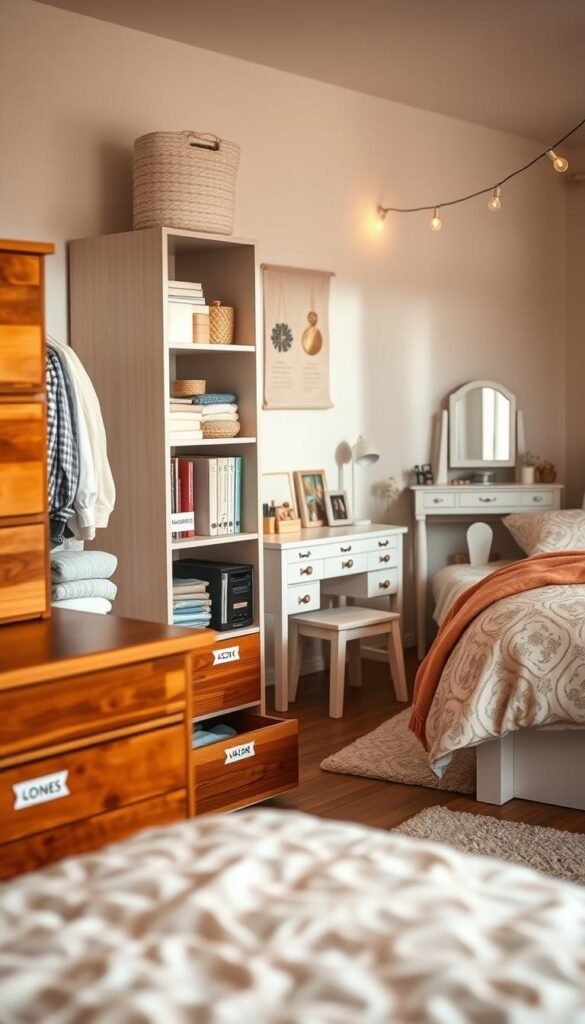
The secret to a tidy room lies in giving each item a permanent home. This simple concept transforms daily cleanup from a chore into a quick, easy habit. When everything has its own spot, your daughter can maintain order independently.
Assigning Permanent Spots for Bedroom Belongings
Start by considering what truly belongs in this space. Each thing should serve a purpose here. Clothes need drawer space, while books deserve shelves.
Label drawers and containers with words or pictures. This visual guidance helps younger children remember where things go. It turns cleanup into a matching game they can win every day.
Relocating Items That Don’t Belong in the Bedroom
Some stuff accumulates where it doesn’t belong. Craft supplies might migrate from another area. Sports equipment might land on the floor.
Be honest about what functions better elsewhere. Items used elsewhere should live where they’re used most. This keeps the sleeping area focused on relaxation.
| Item Type | Better Location | Reason |
|---|---|---|
| Craft supplies | Playroom or family area | Used with supervision, messy activities |
| School backpack | Entryway or homework station | Belongs with school preparation items |
| Outdoor toys | Garage or mudroom | Often dirty, used outside |
| Family board games | Living room shelf | Shared items belong in shared space |
Solutions for Items That Must Stay in the Room
Some things naturally belong in this personal space. Stuffed animals, special collections, and extra bedding need smart solutions.
Use under-bed storage for seasonal clothes or extra blankets. A trunk at the foot of the bed holds purses or memorabilia. Wall pockets keep books and small items accessible but tidy.
The key is consistency. Once you establish homes, encourage returning items after use. This daily habit maintains order with minimal effort.
Designated homes create calm through predictability. Your daughter will appreciate knowing exactly where everything belongs in her personal area.
Maximize Your Vertical and Under-Bed Storage
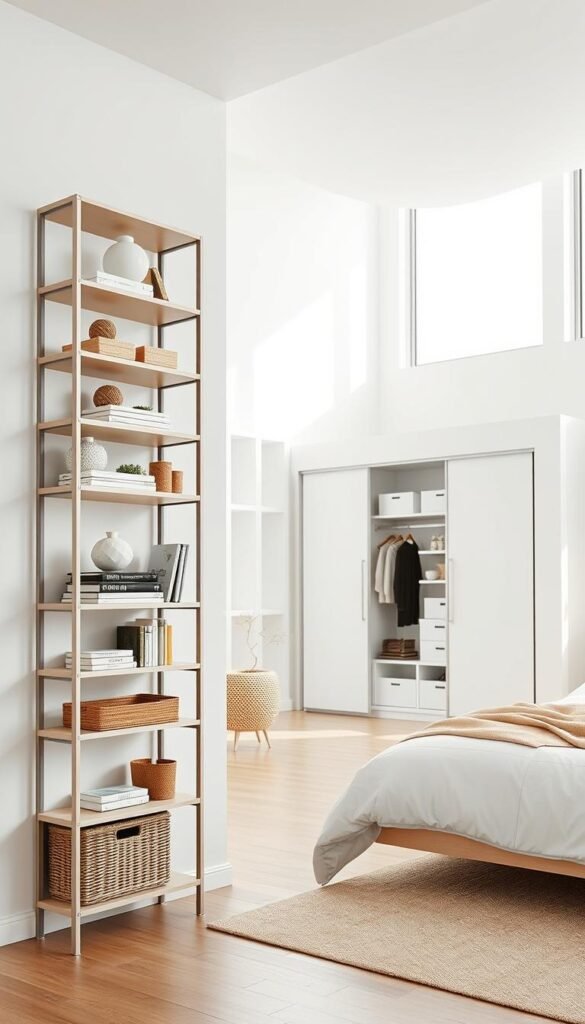
When floor space feels limited, look up and down for clever solutions. Using vertical areas and hidden spaces creates room for belongings without crowding the area. This approach keeps your child’s personal space feeling open and functional.
Utilizing Wall Space with Shelves and Hooks
Walls offer valuable real estate for keeping things organized. Install floating shelves to display special collections or favorite books. This keeps surfaces clear while adding decorative charm.
Place hooks near the door for bags, hats, and robes. Choose sturdy hooks at your child’s height for easy access. Wall pockets work great for small items like hair accessories or art supplies.
Consider a wall-to-wall shelf above desk height. This creates a display area for treasures without consuming floor space. It becomes a rotating gallery for special creations.
Smart Under-Bed Storage Solutions for Two Girls
The space under the bed holds surprising potential. Use rolling bins that slide out smoothly for easy access. These are perfect for stuffed animals, extra bedding, or seasonal clothing.
For shared rooms, assign specific bins to each child. Use different colors or labels to distinguish personal storage areas. This system prevents arguments over whose stuff goes where.
Line the back wall under bunk beds with laundry baskets. This creates hidden storage that’s still within reach. Treasure boxes under the bed keep special items safe yet accessible.
| Storage Type | Best For | Child-Friendly Features |
|---|---|---|
| Rolling bins | Toys, stuffed animals | Easy slide-out, clear lids |
| Flat boxes | Seasonal clothes, extra bedding | Low profile, stackable |
| Fabric drawers | Arts and crafts supplies | Lightweight, colorful options |
| Specialty containers | Collections, memorabilia | Locking lids, dividers |
Implementing Storage Ottomans and Trunks
Multi-functional furniture solves two problems at once. A storage ottoman at the foot of the bed provides seating and hidden space. Use it for blankets, purses, or board games.
Trunks offer sturdy solutions for heavier items. They can serve as both storage and a decorative element. Choose options with smooth-closing lids for safety.
These pieces help keep the floor clear of clutter. They provide homes for items that don’t fit elsewhere. The best part? They look like regular furniture while working hard.
Affordable options exist at stores like IKEA and Target. Their SKUBB boxes and rolling carts offer customizable solutions. You can also repurpose items like spice racks for small things.
Remember to choose storage that matches your child’s abilities. Bins should open easily and hooks should reachable. When kids can use the system themselves, cleanup becomes automatic.
Vertical and under-bed solutions make any room feel larger. They provide practical ways to keep belongings tidy without sacrificing style or function.
Organize the Closet for Maximum Efficiency
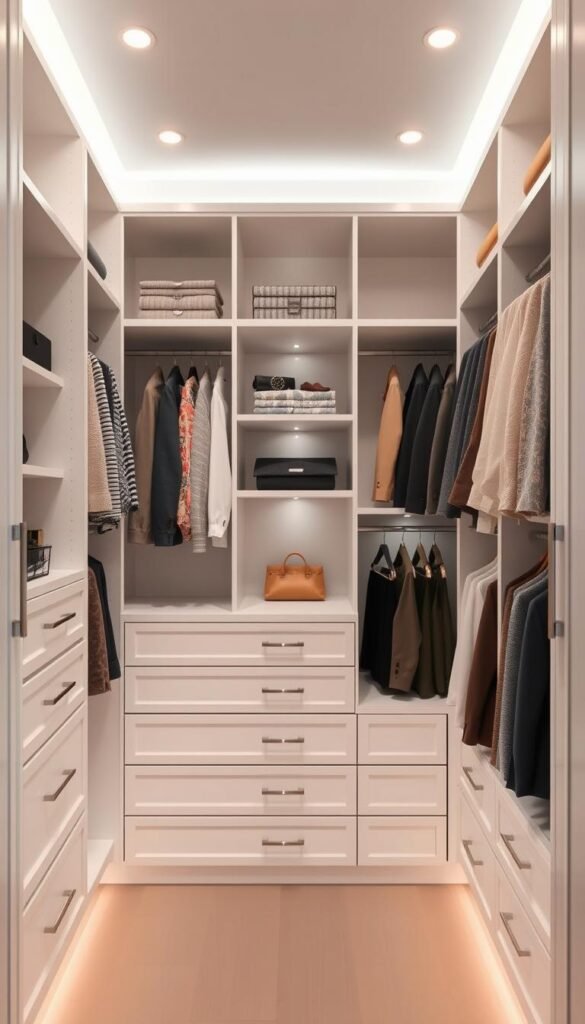
Your child’s closet can become the most organized part of her personal space with smart planning. Many standard closets waste valuable space below hanging clothes and on empty walls. Custom systems transform this area into a highly functional storage zone.
Custom Closet Systems for Optimal Space Use
Companies like EasyClosets and IKEA’s BOAXEL offer adjustable components. These systems let you create the perfect layout for your needs. You can add shelves, drawers, and even double hanging rods.
This approach maximizes every inch of available space. Adjustable shelves grow with your child’s changing storage requirements. Double rods work wonderfully for shorter items like shirts and skirts.
Stacking Drawers and Bins for Small Closets
Compact spaces benefit greatly from vertical solutions. Stacking drawers create additional storage for accessories or out-of-season clothing. Rolling carts maximize the often-wasted space under hanging clothes.
Consider adding a small dresser inside the closet for extra clothing storage. A tilting hamper provides easy access while keeping laundry contained. These solutions make small closets feel surprisingly spacious.
Keeping Shoes Off the Floor and Accessible
Shoes scattered on the floor create instant clutter. Over-the-door organizers provide perfect homes for frequently worn pairs. Stacking bins keep seasonal footwear neat and accessible.
Many closet systems include special components for shoe storage. These keep pairs together and prevent the morning scramble. A clean floor makes the entire space feel more organized.
| Storage Solution | Best Use | Child-Friendly Features |
|---|---|---|
| Adjustable shelving systems | Clothes, folded items | Customizable heights, easy access |
| Stacking drawers | Shoes, accessories | Clear fronts, smooth gliding |
| Over-door organizers | Frequently used items | At child’s eye level, easy reach |
| Uniform hangers | All hanging clothes | Consistent look, space-saving |
Use uniform hangers for a cohesive appearance. Slim velvet or white plastic options create visual harmony. They also save valuable rod space for more clothing.
Place frequently used items at your child’s height. Store rarely used things like heavy blankets on higher shelves. Label drawers and bins to foster independence during cleanup.
An organized closet reduces morning stress significantly. Everything becomes easy to find and put away. This efficient system saves precious time every single day.
Well-planned closet organization maximizes functionality. Even the smallest space can feel spacious and purposeful. Your daughter will appreciate having everything in its proper home.
Implement Smart Clothing Storage Solutions
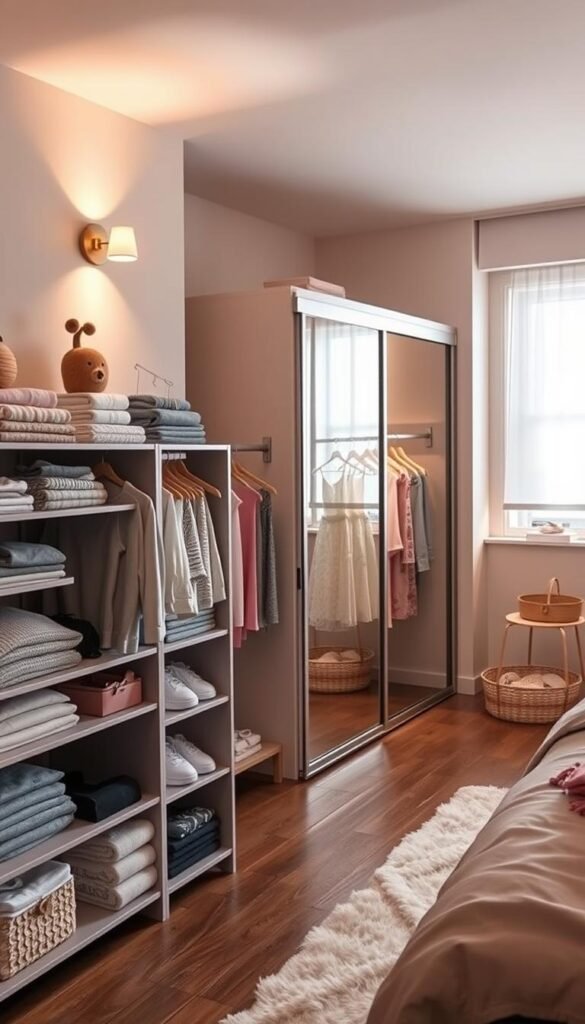
Smart clothing storage transforms daily dressing from chaotic to calm. The right system makes it easy for your child to find what she needs and put things away independently. This approach reduces morning stress and teaches valuable life skills.
Choosing the Right Folding Method for Your Family
Select a folding technique that works for your household. The best method is the one you’ll actually use consistently. File folding, popularized by Marie Kondo, lets you see all items at once in drawers.
This approach reduces rummaging and keeps clothes neat. It does require regular maintenance to stay organized. Some families prefer traditional stacking for its simplicity.
Hanging most items can save time on folding. This works well for dresses, shirts, and pants. Choose what feels sustainable for your routine.
Using Drawer Dividers to Keep Clothes Neat
Drawer dividers create compartments that keep items upright and organized. IKEA’s SKUBB boxes work wonderfully for this purpose. They help prevent clothes from toppling over and becoming messy.
Smaller items like socks and underwear benefit greatly from dividers. Adjustable options let you customize spaces as needs change. Smaller bins within drawers offer additional organization for accessories.
Labeling Systems for Easy Put-Away
Clear labels help your daughter know where everything belongs. Use a label maker with clear tape on drawer edges. This visual guidance encourages independent put-away after laundry.
Picture labels work well for younger children who can’t read yet. Consistent labeling creates a system that grows with your child. Everyone knows exactly where items live in the space.
These smart solutions make laundry day less stressful. Folding and putting away clothes becomes faster and more efficient. Your daughter learns organizational habits that will serve her for years.
Well-planned clothing storage keeps drawers clutter-free. It makes finding daily outfits simple and enjoyable. The entire family benefits from these practical systems.
Create Systems for Toys and Special Collections
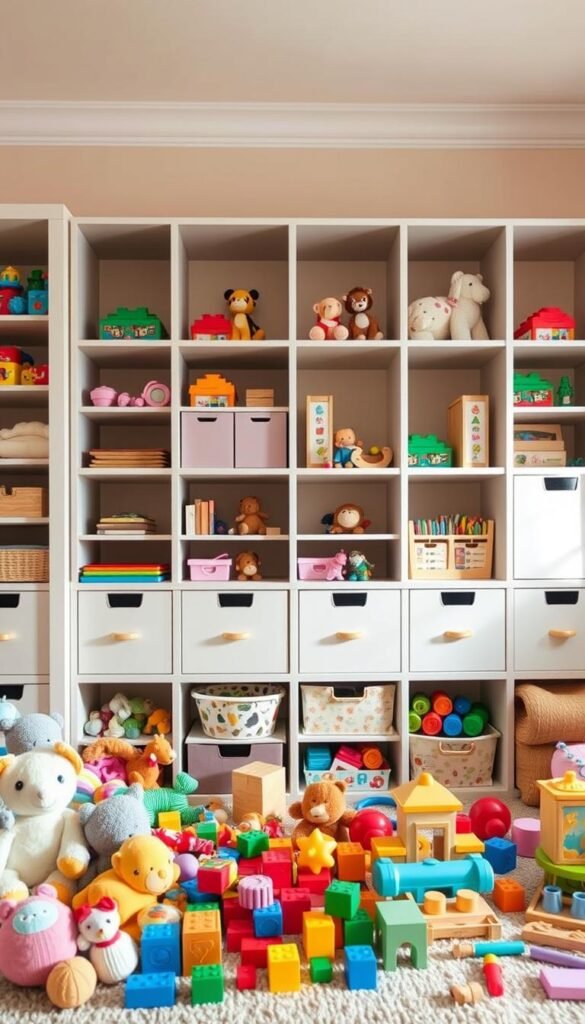
Toys and special treasures need thoughtful homes that honor their importance while keeping the space functional. When these items have proper places, your daughter can enjoy them without creating clutter. The right system makes cleanup feel like part of the fun rather than a chore.
Display Solutions for Treasured Items and Crafts
Open shelves work better than closed boxes for displaying special things. Your child can see her favorite creations and collections at a glance. This encourages her to actually use and enjoy them.
Wall shelves create perfect homes for craft projects and special finds. A dedicated dress-up area with accessory storage keeps costumes tidy. Clear containers let her see what’s inside without digging through stuff.
Involve your daughter in deciding how to display her collections. When she helps create the system, she feels ownership and maintains it better. This approach turns organization into creative expression.
Toy Storage That Encourages Clean-Up
Open shelving with labeled bins makes tidying up manageable for kids. Each type of toy gets its own special home. Your child knows exactly where everything belongs.
Color-coded containers add fun to the cleanup process. Small toys fit perfectly in IKEA’s TROFAST system with colorful totes. Labels with pictures help younger children match toys to their proper spots.
This way of storing items reduces visual clutter while keeping everything accessible. Your daughter can find what she wants without creating messes. Cleanup becomes quick and satisfying.
Managing Stuffed Animals and Doll Collections
Soft toys present a unique storage challenge. Limit quantities to only the most loved companions. Store favorites in accessible bins or directly on the bed.
Rarely used stuffed animals belong in higher closet areas. A hanging net creates a fun display while saving floor space. Baskets near the sleeping area keep special friends close at hand.
For doll collections, create dedicated homes with proper drawers for accessories. A small shelf unit displays favorite dolls while keeping them dust-free. This approach honors these special things without letting them overtake the room.
Command hooks on the door provide perfect homes for bags and hats. This keeps them off the floor and ready for daily use. Everything has its place yet remains within easy reach.
“When children can see their belongings, they’re more likely to use and appreciate them.”
Well-organized toy storage teaches responsibility while preserving creativity. Your daughter learns valuable habits that will serve her for years. The room stays tidy without sacrificing personal expression.
Maintain Clear Surfaces and Floors Daily
Keeping your child’s personal area tidy becomes effortless when you establish simple daily habits. Clear surfaces and floors create an immediate sense of order and calm throughout the space.
The Importance of “White Space” in a Room
“White space” refers to those clear areas that give the eye a place to rest. In any living area, these open spots create visual breathing room. They make the entire space feel more balanced and peaceful.
When surfaces stay clear, your daughter can actually use them for activities. The floor becomes safe for play rather than an obstacle course. This approach transforms the room into a functional, inviting environment.
Daily Reset Habits for Surfaces and Floors
Establish a simple five-minute reset routine at the end of each day. This quick tidy-up prevents small messes from growing into overwhelming clutter. It’s much easier than facing a major cleanup later.
Involve your child in this daily habit just like brushing teeth. Make it fun with music or a timer challenge. She learns that maintaining order is part of caring for her space.
Return everything to its proper home during this reset. Surfaces should stay clear except for intentional decorations. The floor deserves the same attention – keep it free of stray items.
Using Baskets and Bins for Quick Tidying
Decorative baskets from stores like Home Goods offer stylish solutions. Use them to temporarily corral items that lack permanent homes. A catch-all bin for toys makes quick cleanup simple.
Rolling carts with multiple levels provide flexible storage options. They can move where needed while keeping things organized. These solutions blend functionality with pleasing aesthetics.
“Clear surfaces create mental clarity – they allow both relaxation and creativity to flourish.”
Keep a donation bin in the closet for ongoing decluttering. An accessible hamper encourages clothes to stay off the floor. These systems make daily maintenance effortless.
Consistent attention to surfaces and floors reduces deep cleaning needs. Your daughter’s space remains inviting and functional every single day. This approach supports both relaxation and play without distraction.
Sustaining Your Organized Space Long-Term
Maintaining an organized area requires simple daily habits. Consistency is your greatest ally in keeping the room functional and peaceful.
Daily resets keep surfaces clear and items in their proper place. A donate bin in the closet makes ongoing decluttering effortless. Adapt your storage system as your child grows and interests change.
Celebrate small victories to stay motivated. Remember – perfection isn’t the goal. Functional systems that work for your family create lasting peace.
An organized space saves time and reduces stress. It becomes a haven for creativity and relaxation. Share your success stories to inspire others on this journey!