Welcome to your guide on creating a stunning space that combines dramatic elements with cozy comfort. This timeless pairing can transform your home into a sophisticated yet inviting retreat.
Discover why these materials work so well together. They create a perfect balance of modern elegance and natural warmth.
This approach works in various room sizes and styles. From contemporary to rustic, you can achieve a harmonious look.
Learn how to incorporate personal touches while maintaining a cohesive aesthetic. Your living area will feel both stylish and comfortable.
1. Understanding the Power of Black and Wood
Discover the remarkable synergy between dark sophistication and natural warmth in your home’s design. This combination creates a stunning visual dialogue that elevates any interior space.
The psychological impact of these elements is profound. Dark tones create an enveloping, cocoon-like atmosphere that feels surprisingly inviting. When balanced with organic materials, the result is both dramatic and comforting.
Paint choices offer incredible variety for your design. From true charcoal hues to nuanced shades with brown, blue, or green undertones, each variation creates a unique mood. These subtle differences interact beautifully with various wood species.
| Black Undertone | Best Wood Pairings | Resulting Atmosphere |
|---|---|---|
| True Charcoal | Light Oak, Maple | Modern & Crisp |
| Brown-Black | Walnut, Cherry | Warm & Rich |
| Blue-Black | Ash, Pine | Cool & Serene |
| Green-Black | Teak, Mahogany | Earthly & Grounded |
This pairing creates incredible depth and dimension throughout your space. The contrast between materials makes each element stand out while maintaining harmony. Your room gains character without feeling overwhelming.
Versatility is another key advantage. This approach works across numerous design philosophies. From minimalist contemporary to rustic farmhouse, the combination adapts beautifully. It brings timeless appeal to any aesthetic.
The magic lies in achieving both contemporary edge and enduring charm. Your space will feel current yet classic, sophisticated yet welcoming. This balance creates interiors that truly stand the test of time.
2. Choosing Your Perfect Black and Wood Tones
Your journey to a perfect dark and natural interior begins with selecting the right tones. This crucial step determines whether your space feels harmonious or disjointed.
Consider your room’s natural light and existing elements before making decisions. The right choices create a cohesive look that feels intentional and polished.
Exploring Shades of Black
Black paint offers more variety than you might expect. From true charcoal to nuanced shades with brown, blue, or green undertones, each creates a unique mood.
Lighting dramatically affects how these colors appear in your home. North-facing rooms might benefit from warmer undertones, while south-facing spaces can handle cooler shades.
Finish selection adds another layer to your design strategy. Different sheens interact with light in distinct ways, altering the overall feel.
Test samples on your actual walls before committing. Colors change throughout the day as natural light shifts.
| Finish Type | Light Reflection | Best For | Maintenance |
|---|---|---|---|
| Matte | Minimal | Large walls, ceilings | Shows marks easily |
| Textured | Variable | Feature walls, accents | Hides imperfections |
| High-Gloss | Maximum | Trim, small accents | Shows fingerprints |
Always test paint samples in multiple areas of the room. The color that looks perfect near a window might appear completely different in a corner.
Selecting Your Wood’s Character
Wood brings natural warmth that balances dark tones beautifully. Different species offer varying grain patterns and color depths.
Light woods like ash or maple create striking contrast against dark walls. They make your space feel airy and bright despite the moody palette.
Rich varieties such as walnut or cherry add sophistication and depth. These work particularly well in rooms with ample natural light.
Consider your existing flooring and architectural features when selecting new pieces. Coordination creates flow throughout your interior.
Grain patterns add visual interest that breaks up solid surfaces. This texture prevents your decor from feeling flat or one-dimensional.
Professional designers recommend bringing wood samples home before purchasing furniture. View them in your actual lighting conditions at different times of day.
This approach ensures your final selections work harmoniously with your chosen paint colors and existing elements.
3. Making a Statement with a Black Accent Wall
A bold dark wall transforms your room into a dramatic yet welcoming space. This design choice creates instant visual interest while anchoring your entire decor scheme.
Many homeowners hesitate to embrace such a powerful element. The right approach ensures your wall feels inviting rather than overwhelming.
Proper execution balances intensity with comfort. Your focal point should command attention while maintaining harmony with surrounding elements.
Ideas for Your Accent Wall Treatment
Several creative techniques elevate a simple painted surface. These treatments add character and prevent a flat, monotonous appearance.
Textured wallpaper introduces pattern and dimension unavailable with standard paint. This option works particularly well in spaces lacking architectural details.
Wood paneling brings natural warmth directly onto your vertical surfaces. Horizontal or vertical installations create different visual effects.
Architectural moldings add sophistication through geometric patterns. These elements break up large dark areas with elegant lines.
Built-in shelves provide functional beauty while reducing the wall’s mass. They create opportunities for displaying personal items and lighter decor.
| Treatment Type | Visual Impact | Installation Difficulty | Best Room Types |
|---|---|---|---|
| Textured Wallpaper | High dimension, pattern interest | Moderate | Living rooms, bedrooms |
| Wood Paneling | Natural warmth, texture | Moderate to High | Studies, dining areas |
| Molding Patterns | Architectural elegance | High | Formal spaces, entries |
| Partial Wainscoting | Balanced contrast | Moderate | Any room with existing trim |
Balancing the Boldness with Warmth
Softening a dramatic wall requires thoughtful companion elements. Warm neutrals and natural materials prevent the space from feeling cold.
Ivory, beige, and taupe provide gentle contrast against the dark background. These hues maintain sophistication while adding comfort.
Wood furnishings and decor introduce organic texture and warmth. Their natural variations create visual movement across the surface.
Patterned textiles in complementary colors break up solid areas. Pillows, throws, and rugs add layers of softness and interest.
Metallic accents reflect light throughout the space. Brass, copper, or gold elements provide subtle shimmer against the matte surface.
“The most successful dark walls feel intentional yet approachable. They should whisper drama rather than shout intensity.”
Lighting plays a crucial role in achieving the right atmosphere. Multiple light sources prevent shadows from making the wall feel cavernous.
Always test your color in the actual room before committing. Natural and artificial light significantly affect how the shade appears throughout the day.
4. Selecting Furniture that Anchors Your Space
Your furniture choices make or break your interior’s harmony. They provide the foundation for your entire design scheme.
These pieces should feel substantial yet inviting. They ground the space while creating visual interest.
Consider proportion and scale when selecting items. Your room needs balance between large statements and smaller accents.
Mix dark upholstery with natural grain patterns. This combination creates depth while maintaining warmth.
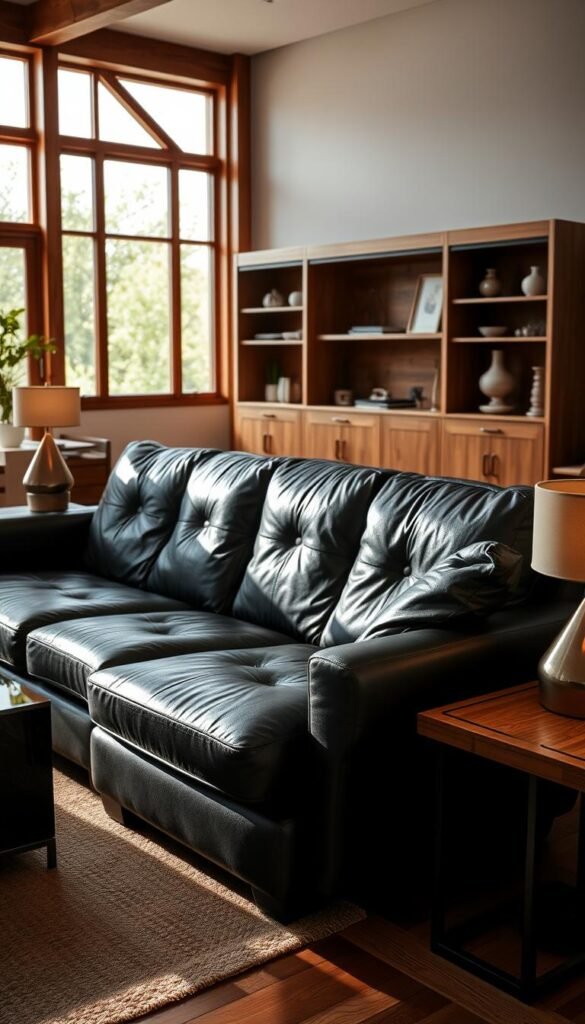
Your sofa often serves as the primary anchor piece. Choose one that complements your wall colors and flooring.
Leather or velvet in deep hues adds sophistication. Lighter fabrics bring softness to the dramatic palette.
Wooden tables and shelves introduce organic texture. Their natural variations break up solid color blocks beautifully.
| Furniture Type | Material Options | Scale Guidance | Style Pairings |
|---|---|---|---|
| Sofa | Leather, velvet, linen | 60-84 inches wide | Mid-century, contemporary |
| Coffee Table | Walnut, oak, metal base | 16-18 inches height | Industrial, rustic |
| Accent Chairs | Wood frame, upholstered | Compact footprint | Traditional, transitional |
| Media Console | Solid wood, mixed materials | Low profile | Modern, Scandinavian |
Create intimate conversation areas with your arrangement. Position seating to face each other comfortably.
Leave adequate walking space between pieces. Your room should feel open and functional.
Statement items define the character of your interior. They become focal points that express your personal style.
Professional designers suggest measuring twice before purchasing. Always verify dimensions against your actual space.
“Great furniture arrangement feels both intentional and effortless. It guides movement while encouraging relaxation.”
Upholstery fabrics contribute significantly to the overall feel. Textured materials add visual and tactile interest.
Finishes on wood pieces should complement other elements. Match undertones with existing flooring or trim work.
Your final layout should highlight architectural features. Frame windows or fireplaces with thoughtful placement.
Experiment with different configurations before settling. Sometimes the unexpected arrangement works best.
5. Illuminating Your Space with Warm Lighting
Lighting serves as the magical ingredient that balances intensity with comfort. It transforms your dramatic palette into an inviting sanctuary where every element shines.
The right glow elevates your sophisticated scheme from striking to welcoming. It highlights textures and creates atmosphere throughout your home.
Layering Your Light Sources
Create depth through strategic illumination layers. Ambient lighting provides overall brightness for your area.
Task illumination focuses on specific activities like reading. Accent lights highlight architectural features and artwork.
Combine ceiling fixtures with floor and table lamps. This approach eliminates harsh shadows and creates dimension.
Choosing the Right Light Temperature
Warm white bulbs (2700K-3000K) complement natural materials beautifully. They enhance wood grains and create cozy atmosphere.
Cool white lights can make your scheme feel stark. Always test bulbs in your actual environment before committing.
Dimmer switches offer incredible flexibility for mood control. They adjust brightness throughout the day effortlessly.
Consider black metal pendants or wood-based lamps for fixture selection. These pieces reinforce your design theme while providing function.
Position lights to wash walls gently or highlight specific zones. Professional placement reduces glare and enhances comfort.
Natural illumination plays a crucial role in your scheme. Sheer window treatments filter sunlight beautifully while maintaining privacy.
Mirrors strategically placed opposite windows amplify daylight. They make your interior feel brighter and more spacious.
“Lighting should whisper rather than shout. The best schemes feel intentional yet subtle.”
Your final arrangement should feel both functional and atmospheric. Test different configurations during evening hours for perfect results.
6. Incorporating Texture for Depth and Comfort
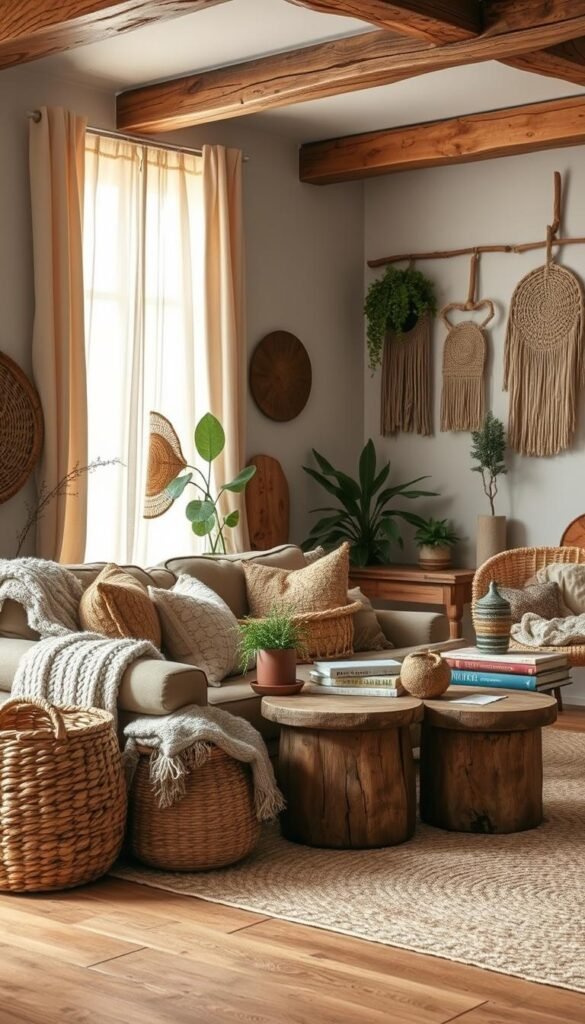
Texture transforms your space from flat to fascinating. It adds crucial dimension that prevents your design from feeling one-dimensional.
Different surfaces create visual interest throughout your room. Rough wood grains contrast beautifully with smooth finishes.
This approach makes your interior feel more inviting. Tactile elements encourage touch and engagement.
Textiles play a vital role in adding comfort. Area rugs anchor your furniture arrangement while providing softness underfoot.
Throw pillows introduce varied surfaces and colors. They break up solid upholstery with pattern and depth.
Curtains add vertical texture and movement. Their fabric softens hard edges around windows.
Mixing materials creates sophisticated visual interest. Combine natural elements with manufactured surfaces for balance.
| Material Type | Texture Quality | Best Applications | Comfort Level |
|---|---|---|---|
| Natural Fibers | Organic, varied | Rugs, baskets, accessories | High warmth |
| Smooth Surfaces | Polished, reflective | Tables, lamps, decor items | Modern feel |
| Textured Fabrics | Soft, dimensional | Pillows, throws, upholstery | Maximum comfort |
| Mixed Materials | Contrasting, layered | Statement pieces, accents | Visual interest |
Natural textures complement both dark and light elements beautifully. Rattan and jute bring earthy warmth to your scheme.
Wool provides cozy insulation and rich texture. Its natural variations add character to any room.
Wall treatments offer another opportunity for depth. Wood paneling creates rhythm and pattern on vertical surfaces.
Grasscloth wallpaper introduces organic texture behind furniture. Its subtle variations catch light differently throughout the day.
“Layered textures create a rich experience that engages multiple senses. Your space becomes more memorable and inviting through thoughtful tactile variety.”
Professional designers balance smooth and rough surfaces strategically. Too much texture feels chaotic, while too little appears flat.
Your goal is harmonious variation that feels intentional. Each textural element should complement rather than compete.
Test combinations in your actual lighting conditions. Some textures absorb light while others reflect it differently.
This approach ensures your final design feels cohesive. Your room will achieve both visual interest and comfort.
7. Designing a Captivating Focal Point
Every great room needs a star attraction that commands attention. Your focal area organizes the entire space while expressing your personal style.
This central feature becomes the heart of your interior. It guides furniture placement and creates visual hierarchy.
Successful designs balance drama with harmony. Your feature should stand out without overwhelming other elements.
Elements of a Successful Focal Point
Four key factors determine your feature’s impact. Scale, contrast, lighting, and placement work together beautifully.
Proper proportion ensures your element feels intentional. Too small gets lost; too large dominates the room.
Strategic contrast makes your feature pop against surroundings. This creates immediate visual interest upon entering.
Lighting enhances drama and directs attention. Well-placed illumination adds depth and dimension.
Thoughtful placement considers sightlines and traffic flow. Your feature should feel naturally integrated into the space.
| Focal Point Type | Best Scale | Contrast Technique | Lighting Approach |
|---|---|---|---|
| Fireplace | Architectural scale | Dark surround, light mantle | Overhead spot, ambient glow |
| Artwork | 60-75% of wall width | Bold frame, matte background | Picture lights, wall washers |
| Statement Furniture | Appropriate to room size | Unique shape, rich upholstery | Floor lamps, accent lighting |
| Architectural Feature | Existing proportions | Color emphasis, texture variation | Directional fixtures, natural light |
Dark elements create powerful emphasis for your feature. They make surrounding areas recede visually.
Natural materials frame your focal area gracefully. Their organic warmth balances dramatic contrasts.
Lighting transforms ordinary features into extraordinary statements. Layered illumination creates depth and mystery.
Professional designers often use the “triangle method” for placement. This creates balance between your feature and other elements.
“A great focal point feels both inevitable and surprising. It should capture attention while feeling completely natural in the space.”
Experiment with different arrangements before finalizing. Sometimes unexpected placements create the most engaging results.
Your final design should feel cohesive and intentional. Every element should support rather than compete with your central feature.
8. Our Favorite Black and Wood Living Room Decor: Warm Contrast Ideas
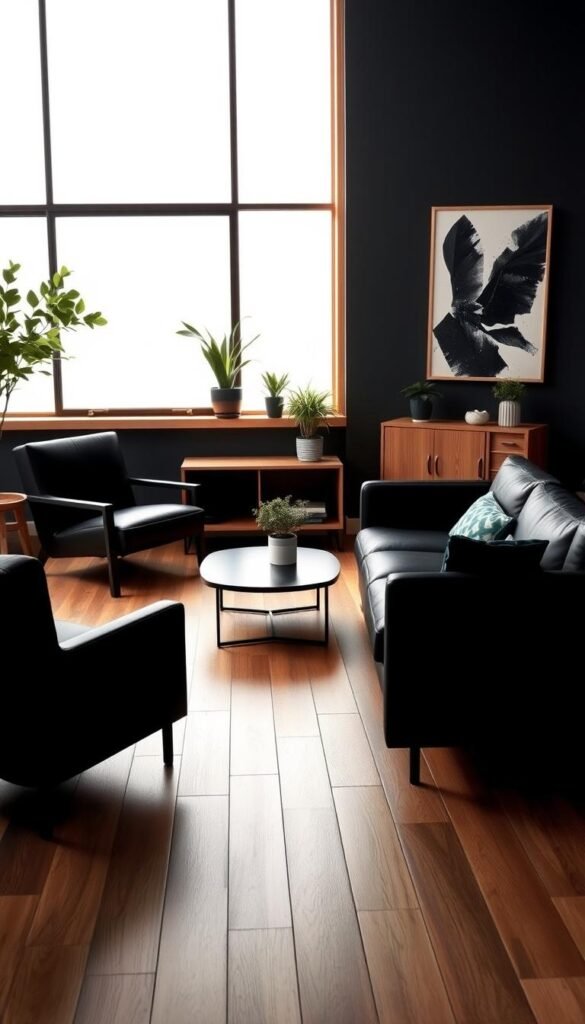
Let’s explore real spaces that master this striking combination. These examples show how different homes achieve harmony between depth and comfort.
Each design offers unique solutions for common challenges. You’ll see how various layouts and lighting conditions affect the final feel.
Modern minimalist retreats use clean lines and limited palettes. They focus on quality pieces rather than numerous items.
Scandinavian simplicity emphasizes natural light and functional furniture. These spaces feel airy yet grounded through careful material selection.
Industrial loft vibes incorporate raw elements and metallic accents. Exposed beams and concrete floors create urban character.
Modern farmhouse warmth blends rustic charm with contemporary elegance. Shiplap walls and reclaimed wood add historical texture.
Japandi-inspired balance merges Japanese minimalism with Scandinavian coziness. This style values craftsmanship and natural materials.
Mid-century modern charm features organic forms and sleek profiles. Iconic furniture pieces become artistic statements.
Art Deco glamour introduces geometric patterns and luxurious materials. Velvet upholstery and mirrored surfaces create opulence.
Coastal chic comfort uses lighter tones and casual textures. Woven elements and soft blues evoke beachside relaxation.
Each approach demonstrates how professionals solve design challenges. They balance bold elements with comforting touches.
“The most successful rooms tell a cohesive story through every choice. From large furniture to small accessories, each piece contributes to the overall narrative.”
Before-and-after transformations reveal the power of this palette. Dark walls can make rooms feel larger and more intimate simultaneously.
Different room sizes require tailored solutions. Small spaces benefit from reflective surfaces and multi-functional pieces.
Large areas need strategic zoning through furniture arrangement. Area rugs and lighting define separate conversation areas.
Accessories provide the finishing touches that complete each look. Artwork, textiles, and greenery add personal character.
These examples prove this combination works across numerous styles. Your home can achieve both dramatic impact and welcoming comfort.
9. Embracing Wood on the Floor and Ceiling
Your room gains incredible character when natural materials extend from ground to overhead. This approach creates a cohesive, enveloping atmosphere that feels both grounded and elevated.
Wood flooring provides a beautiful foundation for your design. It anchors furniture arrangements while adding organic warmth underfoot.
Different species offer unique visual effects. Light oak creates airy brightness, while walnut adds rich sophistication.
Ceiling treatments dramatically impact your space’s feel. Exposed beams or planked surfaces add architectural interest overhead.
Coordinating tones between surfaces creates harmony. Your flooring and overhead elements should complement rather than match exactly.
Consider your room’s proportions when selecting treatments. Higher ceilings handle more dramatic elements beautifully.
Area rugs define zones while showcasing beautiful floors. They add softness without hiding natural grain patterns.
Maintenance ensures lasting beauty in busy areas. Regular cleaning and protective coatings keep surfaces looking their best.
“The most successful spaces treat the ceiling as a fifth wall. This approach creates truly immersive environments that feel complete and intentional.”
Your final design should balance visual impact with comfort. Every element works together to create a harmonious, inviting interior.
10. Softening the Look with Textiles and Fabrics
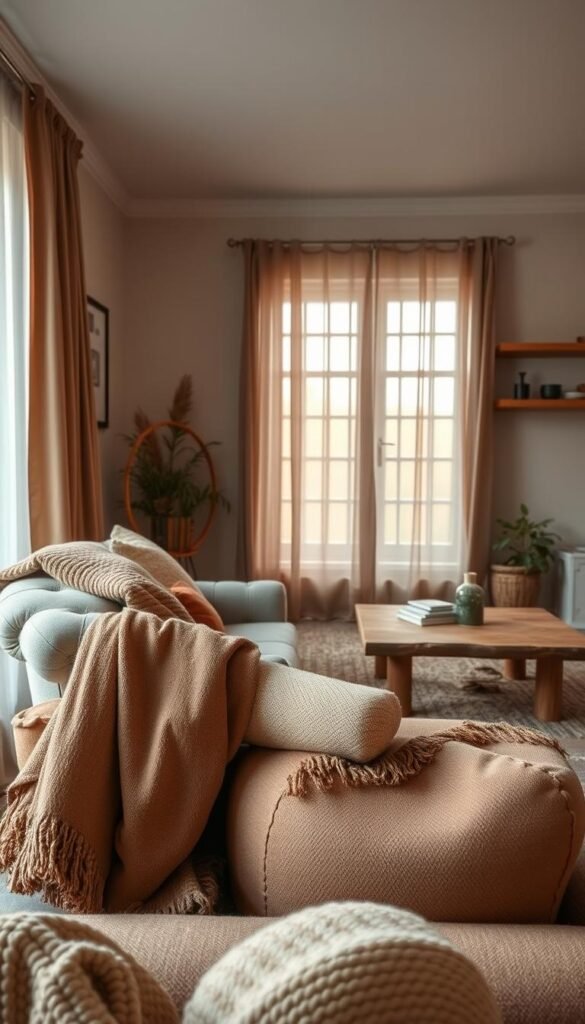
Your dramatic palette gains inviting comfort through thoughtful fabric selections. These soft elements bridge the gap between bold statements and cozy relaxation.
Textiles introduce crucial warmth that balances your scheme beautifully. They create visual softness against structured surfaces throughout your home.
Different materials offer unique benefits for your design approach. Natural fibers like linen and cotton provide breathable comfort year-round.
Luxurious velvet adds rich texture and depth to seating areas. Its subtle sheen catches light beautifully in evening hours.
Wool brings exceptional warmth and durability to high-traffic zones. This natural fiber handles daily use while maintaining elegance.
Area rugs define conversation spaces with softness underfoot. They anchor furniture arrangements while adding pattern interest.
Neutral tones create harmonious transitions between elements. They allow bolder pieces to shine without competition.
Your throw pillows introduce pops of color and varied textures. Mix sizes and shapes for dimensional interest on sofas and chairs.
Cozy blankets draped over furniture invite relaxation instantly. They add layers of comfort during cooler evenings.
Window treatments filter natural light while maintaining privacy. Sheer curtains soften harsh sunlight throughout the day.
Heavier drapes provide insulation and sound absorption. Their fabric weight adds substantial elegance to your windows.
Upholstery fabrics create continuity between different pieces. Repeat materials or colors for cohesive visual flow.
Pattern selection requires careful consideration of scale. Large motifs make bold statements in spacious areas.
Smaller prints work beautifully in compact settings. They add detail without overwhelming the eye.
“The best textile schemes feel collected rather than matched. They should appear thoughtfully curated over time.”
Professional designers recommend testing fabric samples in your actual lighting. Colors and textures change throughout the day.
Your final selections should balance practicality with beauty. Choose durable materials for high-use areas like seating.
Delicate fabrics work best in low-traffic zones. They add sophistication without worrying about wear.
Layering different textiles creates rich visual depth. Combine smooth and rough textures for engaging contrast.
Your space will achieve both dramatic impact and welcoming comfort. These soft touches make your interior feel truly lived-in.
11. Adding Metallic Accents for a Touch of Glamour
Metallic details introduce sophisticated sparkle to your interior. They create beautiful contrast against natural materials and dark surfaces.
These elements reflect light throughout your space. This brightens areas that might otherwise feel too intense.
Your choices range from subtle hints to bold statements. Even small touches make a significant visual impact.
Gold and brass finishes bring warm, rich tones to your decor. They complement wood grains beautifully while adding luxury.
Silver and chrome offer cooler, contemporary elegance. These work well in modern settings with clean lines.
Black iron and bronze provide earthy, industrial character. Their matte finishes add depth without shine.
Mixing multiple metal finishes creates collected charm. This layered approach feels curated rather than matched.
Light fixtures serve as perfect starting points. Pendant lights or table lamps become artistic features.
Hardware updates offer quick transformations. Cabinet pulls and switch plates refresh existing elements.
Decorative objects provide finishing touches. Trays, vases, and sculptures add personality throughout.
Mirrors with metal frames amplify light beautifully. They make spaces feel larger and brighter.
| Metal Type | Best Pairings | Light Reflection | Style Recommendations |
|---|---|---|---|
| Brass/Gold | Walnut, cherry woods | Warm glow | Traditional, glam |
| Chrome/Silver | Light oak, ash | Bright sparkle | Modern, contemporary |
| Black Iron | Reclaimed wood | Matte finish | Industrial, rustic |
| Mixed Metals | All wood types | Layered interest | Transitional, eclectic |
Consider your existing wood tones when selecting finishes. Warm metals enhance reddish-brown varieties.
Cool metals complement lighter, grayish woods. They create crisp, clean contrast.
Current trends embrace personalized combinations. There are no strict rules about mixing metals anymore.
Professional designers recommend choosing one dominant finish. Use others as supporting accents.
“Metals act as transitional elements that bridge dark and light surfaces. They create visual flow throughout your interior.”
Test samples in your actual lighting before deciding. Natural and artificial light change how finishes appear.
Your metallic touches should feel intentional yet effortless. They add glamour without overwhelming other elements.
12. Using Art and Mirrors to Enhance the Mood
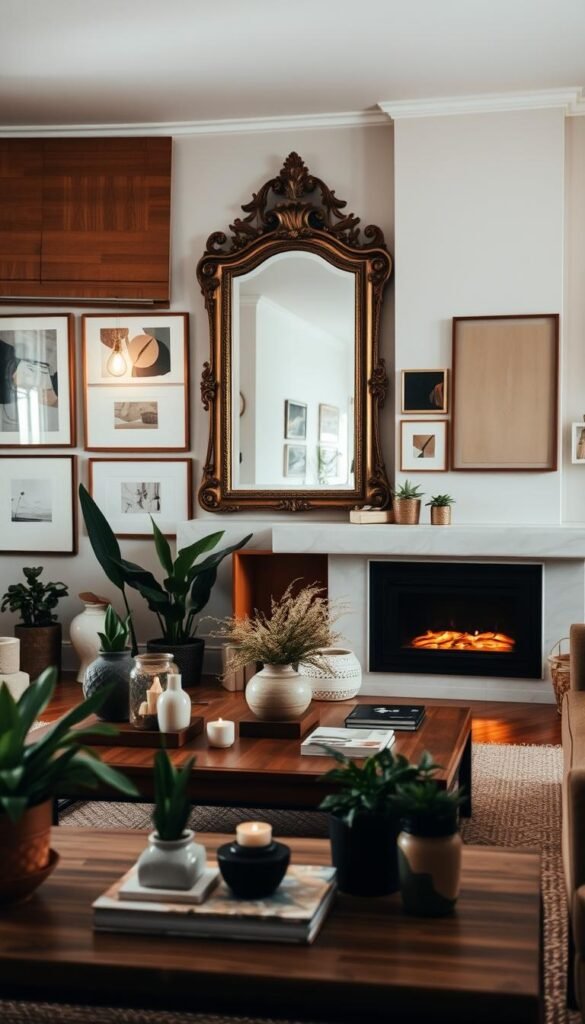
Artwork and mirrors transform your space from ordinary to extraordinary. They add personality while enhancing your sophisticated palette.
These elements create visual interest throughout your home. They reflect light and introduce complementary colors beautifully.
Choose pieces that speak to your personal style. Your selections should feel authentic rather than purely decorative.
Abstract works with neutral tones complement your scheme perfectly. They add modern elegance without overwhelming other elements.
Mirrors serve both functional and decorative purposes. They amplify natural light and create the illusion of more space.
Strategic placement maximizes their impact throughout your room. Position them opposite windows or interesting architectural features.
Framing choices significantly affect your overall look. Natural wood frames enhance the organic warmth in your design.
Metallic finishes add subtle glamour and reflection. They catch light beautifully throughout the day.
| Art Type | Best For | Framing Options | Placement Tips |
|---|---|---|---|
| Abstract Canvas | Modern spaces, large walls | Floating frame, natural wood | Eye level, above furniture |
| Photography | Personal touch, gallery walls | Minimal metal, simple matting | Grouped arrangements, hallways |
| Mirrored Art | Small spaces, light reflection | Beveled edge, ornate detail | Opposite windows, entryways |
| Textured Pieces | Adding dimension, focal points | Shadow box, deep profile | Spotlight placement, accent walls |
Gallery walls create dynamic focal points in your home. They tell visual stories through carefully curated arrangements.
Mix different sizes and orientations for engaging compositions. Include personal photographs alongside purchased artwork.
Maintain consistent spacing between pieces for cohesion. This creates organized visual flow across your surface.
Introduce additional colors through artistic elements. Soft neutrals and earthy tones work beautifully with your palette.
Textured artworks add another layer of dimension. They create shadow play that changes throughout the day.
“Great art arrangement feels both intentional and effortless. It should enhance your space without dominating it.”
Professional hanging height places center points at eye level. This typically ranges from 57 to 60 inches from the floor.
Scale your pieces appropriately to wall proportions. Larger walls can handle bigger statements comfortably.
Smaller works create intimate moments in compact areas. Group them together for greater visual impact.
Your final arrangement should feel balanced and personal. These touches make your interior truly unique.
13. Bringing Life into the Room with Greenery
Plants transform your sophisticated palette into a vibrant, breathing environment. They introduce living energy that balances structured elements throughout your home.
Greenery softens hard surfaces with organic movement. Leaves create natural patterns against solid backgrounds.
Different varieties thrive in various lighting conditions. Some love bright sunlight near windows.
Others prefer indirect light in room corners. Choose plants that match your actual environment.
Floor plants make dramatic statements in empty corners. They fill vertical space with lush foliage.
Hanging planters add interest at eye level. They create floating gardens that draw attention upward.
Tabletop arrangements provide intimate touches. Small pots cluster beautifully on surfaces.
Low-maintenance options work for busy lifestyles. Snake plants and pothos tolerate occasional neglect.
Their resilience makes them perfect for beginners. You can enjoy greenery without constant worry.
Planters become decorative elements themselves. Choose materials that complement your overall style.
Natural clay pots enhance earthy textures. Glazed ceramics add polished finishes.
Metallic containers introduce subtle shine. They reflect light around darker areas.
Plants improve your air quality naturally. They filter toxins while adding oxygen.
This creates healthier living environments for your family. You breathe easier with nature indoors.
“Greenery bridges the gap between manufactured and organic. It makes designed spaces feel alive and evolving.”
Professional tips ensure long-term success. Match plant needs to your actual conditions.
North-facing windows offer gentle light. South-facing provide intense illumination.
Water requirements vary by species and season. Most prefer drying between waterings.
Your living area gains freshness through leafy additions. The space feels more inviting and complete.
14. Curating a Cohesive Color Palette
Your color scheme ties everything together for a unified appearance. It creates harmony between different elements throughout your home.
A thoughtful palette makes your interior feel intentional. It guides the eye smoothly from one area to another.
Neutral tones work beautifully with your main materials. Beige, cream, and taupe add softness without competing.
These shades create gentle transitions between darker elements. They maintain sophistication while offering visual relief.
Earth tones bring natural warmth to your scheme. Olive green, terracotta, and mustard yellow complement wood grains.
These hues feel organic and grounded. They connect your interior to the natural world outside.
The 60-30-10 rule creates perfect balance in any room. Sixty percent forms your dominant shade throughout the space.
Thirty percent becomes your secondary color on furniture and textiles. Ten percent makes your accent shade on decor items.
“Color should flow like music through your home. Each room plays its part in the overall symphony.”
Test combinations in your actual lighting before deciding. Colors change dramatically throughout the day.
North-facing rooms often need warmer undertones. South-facing spaces handle cooler shades beautifully.
Create mood through strategic color placement. Soothing tones work well in relaxation areas.
Energetic hues add vitality to social spaces. Your palette should support how you use each zone.
Maintain continuity between adjacent rooms. Repeat one or two colors to create visual flow.
This approach makes your entire home feel connected. It avoids jarring transitions between spaces.
Accent colors should enhance rather than overwhelm. Use them sparingly for maximum impact.
Small pops create excitement without disturbing harmony. They draw attention to special features.
Professional designers recommend collecting physical samples. View them together in your actual environment.
This prevents surprises after implementation. Your final choices will work perfectly together.
15. Blending Design Styles for a Unique Feel
Your home deserves a personality that reflects your unique taste. Mixing different aesthetics creates a space that feels both curated and personal.
This combination works beautifully across various styles. You can achieve a cohesive yet interesting look.
Modern farmhouse blends clean lines with rustic charm. Think sleek black metal accents paired with reclaimed wood elements.
Industrial chic incorporates raw materials and urban edge. Exposed brick and metal fixtures complement dark finishes.
Scandinavian minimalism focuses on function and simplicity. Light wood tones balance the dramatic palette.
Mixing traditional and contemporary pieces creates depth. An antique wooden chest works wonderfully with modern black furniture.
Vintage items add character and history to your room. They create conversation points throughout your space.
Maintain cohesion through consistent color and material choices. Repeat similar tones and textures for harmony.
Different cultural influences can enhance your aesthetic. Japanese minimalism brings calm organization.
Mediterranean elements introduce warmth and texture. These touches make your interior feel inviting.
Balance masculine and feminine energies for equilibrium. Soft textiles offset structured black frames.
“The best interiors tell stories through their eclectic mix. They feel collected over time rather than decorated all at once.”
Choose pieces that genuinely speak to your personality. Your space should feel authentic to who you are.
Timeless elements ensure your design remains relevant. Quality materials and classic shapes never go out of style.
Experiment with arrangements before finalizing. Sometimes unexpected combinations work best.
Your blended style will feel both current and enduring. It creates a home that truly represents you.
16. Bringing Your Warm and Contrasting Vision to Life
Now you’re ready to transform your space into a stylish retreat. This design journey blends bold elements with cozy comfort for a polished look.
Start with a clear plan that fits your budget and timeline. Focus on foundational pieces first, like key furniture or wall treatments.
Make adjustments as you live with your new interior. Personal touches through textures and patterns make the area truly yours.
Maintain your stylish home with simple care routines. Refresh accents over time to keep the feel current and inviting.
Know when to hire experts versus tackling projects yourself. Your dream space awaits with thoughtful execution.