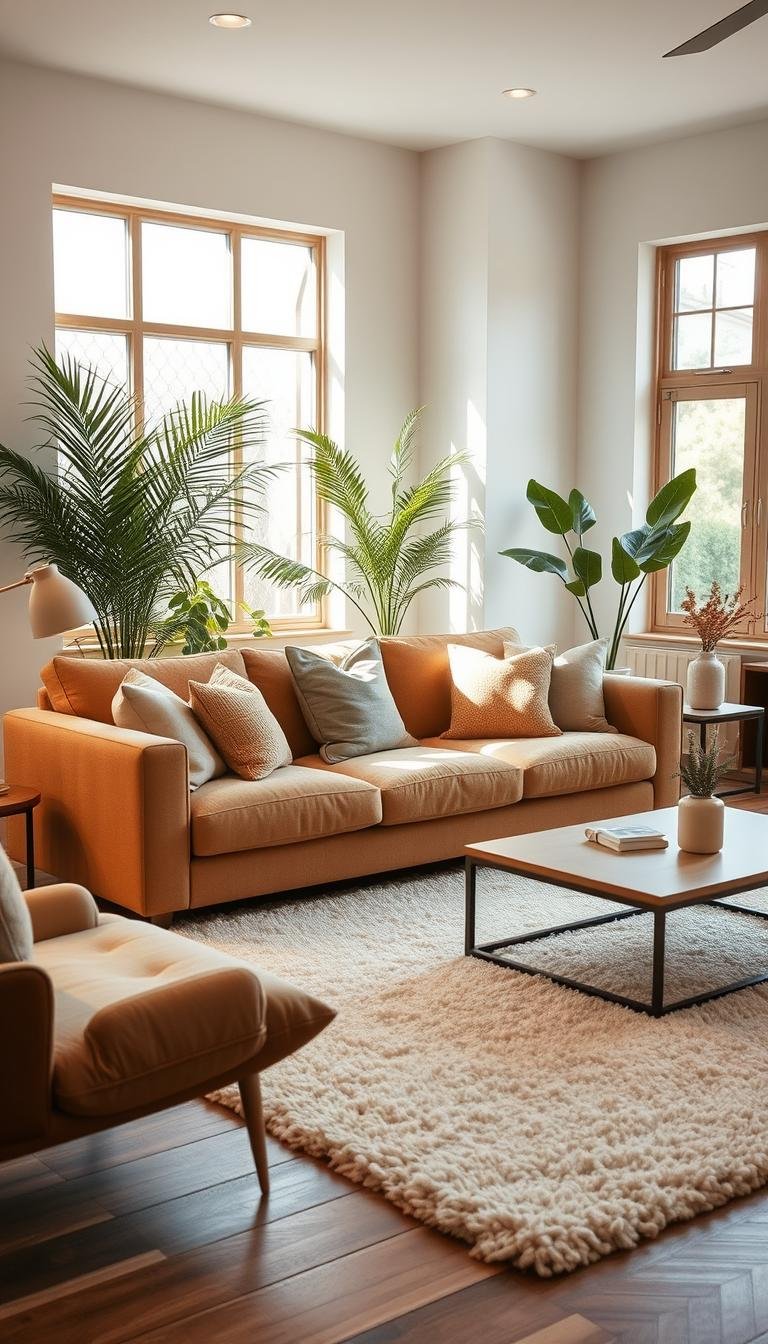
Choosing the perfect centerpiece for your home can feel overwhelming. With over a decade of interior design experience, I’ve found one piece stands out for its timeless appeal.
A neutral-toned seating arrangement serves as the ultimate foundation. It works like a blank canvas for your personal expression.
This approach is particularly effective in compact areas. The warm, light hue creates coziness without making the area feel crowded or heavy.
Current design trends continue to embrace these subtle, versatile furniture choices. They provide a wonderful base that adapts to various aesthetics and color schemes.
In this guide, you’ll discover practical styling techniques that bring your vision to life. We’ll explore everything from accent colors to texture mixing.
Get ready to transform your space with confidence and create a home that truly reflects your unique style.
1. Why a Tan Sofa is Your Living Room’s Best Foundation
Finding furniture that works for years rather than seasons is a smart move. This warm neutral seating option serves as your home’s perfect starting point.
The Ultimate Neutral Canvas
Think of your seating choice as a blank canvas for creative expression. Unlike bold patterns or dark colors, this versatile foundation lets your personality shine through accessories and accents.
You can completely transform the look with simple changes. Swap pillows, add throws, or introduce new art pieces whenever inspiration strikes.
Creating Warmth and Light in Your Space
This hue brings cozy vibes without visual weight. The gentle tone reflects light beautifully, making any area feel more open and inviting.
Smaller areas benefit particularly well from this approach. The color creates comfort without making the room feel crowded or closed in.
Compared to cooler neutrals, this warmth makes your home feel instantly welcoming. It’s like adding sunshine to your decor scheme.
Adapting to Any Style You Desire
Your foundation piece works with countless design directions. From clean minimalist looks to cozy boho vibes, this versatile choice supports them all.
- Minimalist: Pair with clean lines and monochromatic accents
- Bohemian: Add textured pillows and global-inspired patterns
- Modern: Combine with metallic accents and sleek furniture
- Rustic: Blend with natural wood tones and organic materials
Elle Decor notes that neutral foundations represent lasting design value. This investment piece will serve your evolving taste for years to come.
Now that you understand this powerful foundation, let’s explore how to build upon it with color, texture, and personal touches in the following sections.
2. Mastering the Color Palette: Pairing Hues with Your Tan Sofa
Color selection transforms your neutral foundation into a personalized sanctuary. The right combination creates harmony throughout your entire space.
Thoughtful coordination makes your seating piece shine. It establishes the mood and personality of your entire area.
Embracing Earthy Tones and Neutrals
Natural shades create warmth and connection in your design scheme. They complement the warm undertones of your furniture beautifully.
Think about soft beiges, warm grays, and creamy whites. These create a soothing backdrop that feels both current and timeless.
Consider these successful combinations:
- Warm beige walls with olive green accents
- Creamy white trim with natural wood elements
- Soft gray accessories with terracotta touches
These palettes work because they share similar warm undertones. They create cohesion without appearing too matchy-matchy.
The Power of a Deep Navy Accent
Rich blue tones add sophistication and depth to your arrangement. According to color psychology, navy promotes calmness and relaxation.
This makes it perfect for living areas where you want to unwind. The contrast against lighter neutrals creates visual interest.
Use navy strategically in throw pillows, artwork, or a single accent chair. This prevents the space from feeling too heavy or dark.
Many designers consider navy the perfect companion to warmer neutrals. It provides balance while maintaining a serene atmosphere.
Using Greige for a Perfect Balance
Greige offers the ideal blend of warm and cool undertones. This versatile shade works beautifully throughout your entire room.
It can appear gray in some light and beige in others. This chameleon-like quality makes it incredibly flexible.
Consider greige for larger elements like walls or area rugs. It creates a neutral foundation that allows other colors to pop.
Test your color choices before committing fully. Paint samples on walls and observe them at different times of day.
Place fabric swatches near your seating to see how they interact. Natural light changes how colors appear throughout the day.
Your color story should feel cohesive but not monotonous. Allow some variation to keep the space feeling dynamic and interesting.
3. The Art of Layering Textures for Maximum Comfort
Texture layering transforms your neutral foundation into a sensory experience. This technique adds depth and personality to your arrangement.
Strategic material combinations prevent that sterile, showroom feel. They create a space that welcomes relaxation and everyday living.
Mixing Knits, Linens, and Leather
Combine different materials for a rich, inviting atmosphere. Knitted throws offer softness and casual charm.
Linen pillows bring breathable comfort and natural texture. Leather accents introduce sophistication and durability.
These elements work together beautifully. They create visual interest through contrasting surfaces and finishes.
How Texture Adds Visual Interest
Varied materials create movement and dimension in your design. They guide the eye around the room naturally.
Smooth surfaces contrast beautifully with nubby fabrics. This interplay makes your space feel curated and intentional.
Texture provides visual weight without dark colors. It anchors your design while maintaining light, airy feelings.
Avoiding a Flat or Cold Feel
Neutral palettes risk feeling impersonal without texture. Layering prevents this common design challenge.
Contrast smooth leather with textured area rugs. This combination creates instant warmth and dimension.
Balance is key to successful texture mixing. Too many rough textures can feel overwhelming.
Too many smooth surfaces might seem cold. Aim for a harmonious blend that feels both interesting and comfortable.
Professional designers often follow the 60-30-10 rule. Sixty percent dominant texture, thirty percent secondary, ten percent accent.
This creates rhythm without overwhelming the senses. Your space feels both cohesive and dynamically interesting.
4. Incorporating Wood Accents to Enhance Warmth
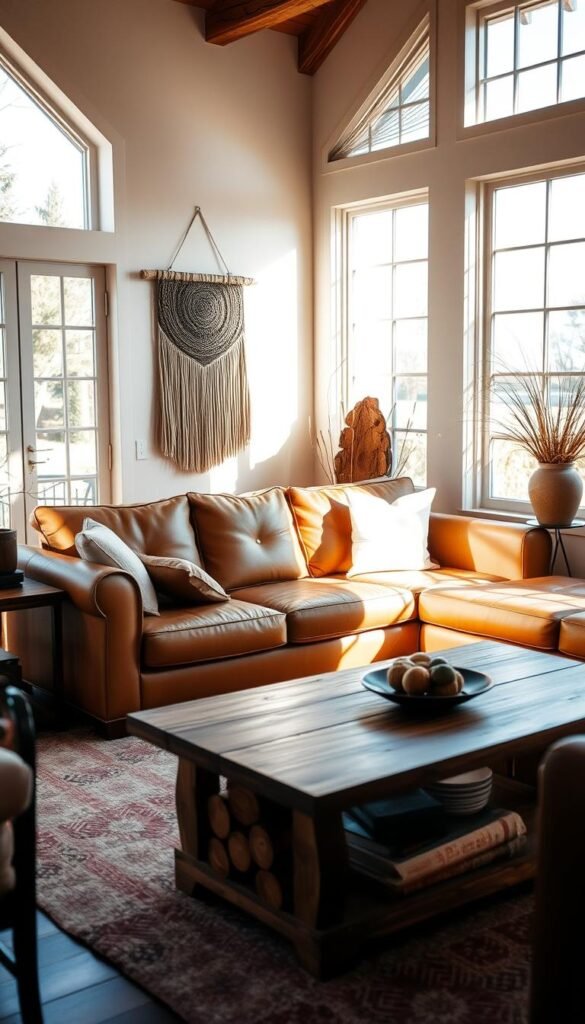
Natural materials bring organic beauty to your interior design. Wood elements create a special connection between your furniture and nature’s warmth.
These additions make your seating area feel more inviting. They add character without overwhelming your carefully chosen palette.
Choosing the Right Wood Tones
Selecting complementary wood tones makes your entire space feel cohesive. Warm mid-tone woods work beautifully with neutral upholstery.
Consider these excellent options:
- Walnut offers rich, chocolate tones with subtle grain patterns
- Oak provides honey-colored warmth with distinctive texture
- Maple brings light, creamy tones that brighten any area
Test wood samples against your seating during different daylight hours. Natural light changes how colors interact throughout the day.
From Coffee Tables to Shelving
Wooden pieces serve both functional and decorative purposes. A beautiful coffee table becomes your room’s natural gathering point.
Open shelving displays personal items while adding warmth. Floating shelves keep the area feeling light and airy.
Smaller accessories make big impacts too. Wooden trays, bowls, and picture frames add subtle natural touches.
Balancing Light and Dark Woods
Mixing different wood tones creates depth and visual interest. Too much dark wood can make smaller areas feel heavy.
Follow this simple guideline: use dark woods as accents rather than main pieces. A walnut coffee table paired with lighter oak shelves creates perfect balance.
Remember that variety keeps your design feeling fresh. Mix wood types rather than matching everything perfectly.
Your space should feel collected rather than overly coordinated. This approach creates that lived-in, welcoming feeling everyone loves.
5. Selecting the Perfect Rug to Anchor Your Space
The right floor covering transforms your seating arrangement from floating to grounded. It defines conversation areas and adds comfort underfoot.
Your choice creates visual boundaries in an open layout. This foundation piece ties all elements together beautifully.
Textured Rugs: Jute, Wool, and Moroccan
Natural fiber options bring wonderful texture to your design. Jute offers organic charm with its nubby, earthy appearance.
Wool provides plush comfort and durability. Moroccan styles feature beautiful patterns that add cultural richness.
These materials work exceptionally well with neutral furniture. They enhance the cozy, inviting atmosphere you want to create.
Choosing a Color that Complements
Select hues that enhance rather than compete with your foundation. Earthy tones like olive green or terracotta create harmony.
Neutral shades maintain a calm, cohesive look. Bold patterns can work when balanced with solid elements elsewhere.
Consider this helpful comparison for your selection:
| Rug Type | Best For | Maintenance Level | Style Impact |
|---|---|---|---|
| Jute Blend | Natural, casual spaces | Medium – spot clean | Organic texture |
| Wool Pile | Cozy, traditional rooms | High – professional clean | Plush comfort |
| Moroccan Pattern | Boho, global styles | Low – vacuum friendly | Cultural richness |
| Flatweave | Modern, busy households | Low – easy cleaning | Clean lines |
Sizing and Placement Tips
Proper dimensions create balance in your layout. The front legs of your seating should rest comfortably on the surface.
Allow 12-18 inches of bare floor around the edges. This framing technique makes the area feel intentional and complete.
For standard arrangements, these sizes work well:
- 8×10 feet for most conversation areas
- 9×12 feet for larger seating groups
- Runners work beautifully in narrow spaces
Remember that texture and pattern affect perceived size. Busy designs can make small areas feel more compact.
Solid colors or subtle textures create openness. They maintain that airy feeling you’ve worked so hard to achieve.
6. Using Throw Pillows for Seasonal Color Pops
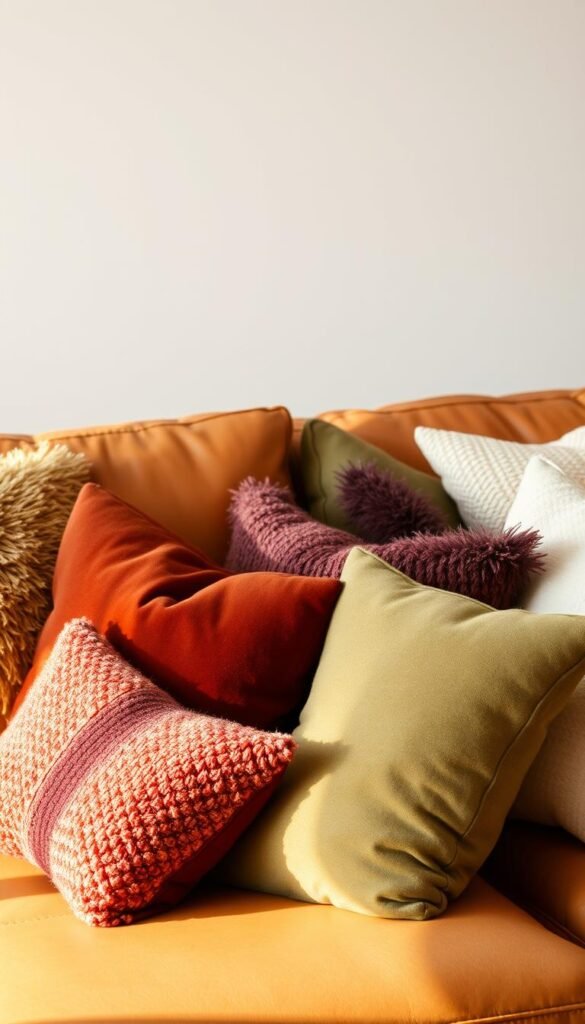
Discover how small pillow changes create big seasonal transformations. These versatile accessories offer the simplest way to refresh your entire room’s vibe.
They let you experiment with different looks without major investments. This approach keeps your space feeling current and personally expressive.
Strategic Use of Patterns and Prints
Choose one dominant pattern as your starting point. Balance it with solid-colored companions for visual harmony.
Geometric designs work well with organic prints. Stripes can complement floral motifs when color-coordinated properly.
Consider scale when mixing patterns. Large-scale prints need smaller patterns to create balance.
Refreshing Your Look Without Commitment
Pillows serve as perfect testing grounds for new color schemes. Try bold hues before painting walls or buying larger furniture.
Seasonal swaps keep your decor feeling fresh year-round. Deep jewel tones create cozy winter warmth.
Linen pastels bring summer freshness to your living area. These changes cost little but impact greatly.
Avoiding Clashing and Overcrowding
Too many patterns compete rather than complement. Limit yourself to three pillow designs maximum.
Ensure colors share common undertones for cohesion. Warm tones should mix with other warm tones.
Leave breathing room between patterned elements. Your neutral foundation should remain visible and calm.
Step back periodically to assess overall balance. Sometimes less truly creates more impact.
7. The Impact of a Statement Coffee Table
Your coffee table selection dramatically shapes your room’s personality. This central piece anchors your entire seating arrangement while serving practical needs.
The right choice complements your foundation beautifully. It can either enhance or compete with your overall vision.
Glass Tables for an Airy, Open Feel
Transparent surfaces create wonderful visual lightness in any area. They make your space appear more expansive and uncluttered.
This approach works particularly well in compact living areas. The see-through quality maintains sightlines throughout the room.
Glass tops require regular cleaning to maintain their sparkle. Fingerprints and dust show more easily on these smooth surfaces.
Consider tables with wooden or brass bases for added warmth. This combination offers the best of both visual lightness and cozy appeal.
Wooden Tables for Rustic Charm
Natural wood pieces bring organic warmth to your arrangement. They create instant cozy vibes that feel both timeless and inviting.
Different wood tones offer distinct personality options:
- Rich walnut adds depth and sophistication
- Light oak maintains airy feelings with natural texture
- Reclaimed wood offers character and sustainability
Wooden surfaces age beautifully over time. They develop patina that adds to their rustic charm and story.
Tables with Metal Bases for a Modern Edge
Metallic elements introduce contemporary flair to your design. They create interesting contrast against softer upholstery textures.
Black iron bases offer industrial sophistication. Brass or gold finishes provide luxurious warmth.
These options work well in urban-inspired spaces. They balance the neutral softness of your foundation piece.
Consider your room’s proportions when selecting sizes. Larger spaces can handle substantial tables as focal points.
Smaller areas benefit from slender designs or nested options. Always leave comfortable walking space around the piece.
Many designers successfully pair glass tops with metallic bases. This creates visual interest without overwhelming the space.
Your table should feel both functional and personally expressive. It becomes the gathering point that brings your entire room together.
8. Bringing Nature Indoors with Greenery
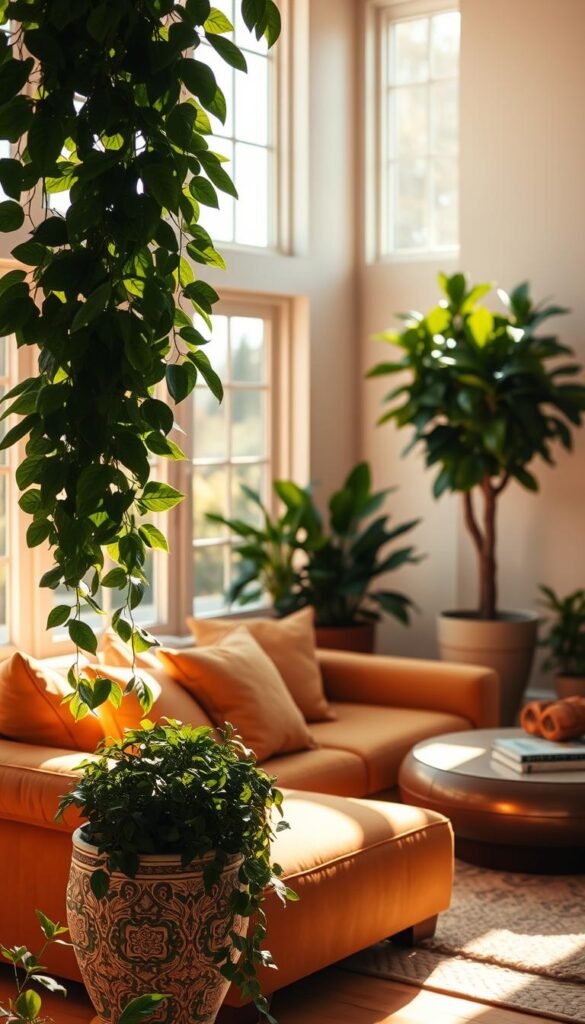
Adding plants transforms your seating area into a vibrant, living space. They bring organic beauty that complements your neutral foundation perfectly.
Greenery creates a refreshing atmosphere that feels both calming and energizing. It connects your interior design with the natural world outside.
Plants That Thrive in Living Room Light
Most homes receive bright, indirect light that many plants love. This environment supports healthy growth without direct sunlight exposure.
Fiddle-leaf figs make dramatic statements with their large, glossy leaves. They grow tall and become beautiful focal points in any arrangement.
Succulents offer wonderful options for sunny spots near windows. They store water in their leaves, making them forgiving if you forget watering occasionally.
Snake plants thrive in various light conditions, even lower light areas. Their vertical growth pattern adds interesting height variation.
Always assess your specific light situation before selecting greenery. Observe how sunlight moves through your space throughout the day.
Using Plants as Natural Decor Elements
Think of greenery as intentional design components rather than accessories. They soften furniture lines and add movement through their organic forms.
Large floor plants create instant focal points and anchor seating groups. Smaller potted plants bring life to shelves and side tables.
Group plants in odd numbers for visual appeal. Vary heights and leaf textures for a curated, natural look.
According to House Beautiful, plants significantly enhance room aesthetics while improving air quality.
Low-Maintenance Options for Busy Homes
Some plants require minimal attention while still providing beautiful benefits. These options work well for households with busy schedules.
ZZ plants tolerate low light and irregular watering. Their glossy leaves add shine to any corner.
Pothos vines trail beautifully from shelves or hanging planters. They grow quickly and indicate when they need water by drooping slightly.
Spider plants produce baby offshoots that you can share with friends. They purify air while adding grassy texture to your decor.
Remember that all plants need some care and attention. Choose varieties that match your lifestyle and available time.
The NASA Clean Air Study found that certain plants remove toxins from indoor air. This makes them functional and beautiful additions to your home.
Start with one or two easy plants to build confidence. Gradually expand your collection as you discover what works best in your space.
9. Designing a Layered Lighting Scheme
Lighting transforms your room from functional to magical. It adds depth and drama to your seating area.
A thoughtful approach makes your space feel both cozy and dynamic. The right combination highlights your furniture’s best features.
Ambient, Task, and Accent Lighting Basics
Every great lighting plan uses three types working together. Each serves a different purpose in your room.
Ambient lighting provides general illumination for the whole area. Think ceiling fixtures or recessed lights that create overall brightness.
Task lighting focuses on specific activities like reading or working. Table lamps and floor lamps offer directed light where you need it.
Accent lighting highlights architectural features or artwork. Spotlights and wall sconces draw attention to special elements.
This layered approach prevents flat, one-dimensional feelings. It creates visual interest throughout your entire space.
How Lighting Enhances Your Tan Sofa’s Glow
Warm light brings out the beautiful undertones in your upholstery. It makes the color appear richer and more inviting.
Position lamps to cast gentle light across the surface. This creates a soft glow that enhances the material’s natural warmth.
Different lighting angles change how colors appear. Side lighting emphasizes texture while overhead light shows true color.
Experiment with various bulb temperatures. Warm white bulbs (2700K-3000K) complement neutral tones perfectly.
Choosing Cohesive Fixtures
Select fixtures that share common design elements. This creates harmony rather than visual competition.
Consider finish, style, and scale when making selections. Matching these aspects ties your lighting scheme together beautifully.
Many designers recommend warm metal finishes like brass. These complement neutral color schemes while adding subtle elegance.
Here’s a helpful comparison of popular lighting options:
| Fixture Type | Best Placement | Light Type | Style Impact |
|---|---|---|---|
| Floor Lamp | Beside seating | Task/Ambient | Vertical interest |
| Table Lamp | On side tables | Task/Accent | Personal touch |
| Pendant Light | Over coffee table | Ambient/Accent | Focal point |
| Wall Sconce | Beside artwork | Accent/Task | Architectural detail |
Avoid mixing too many different fixture styles. This can create visual clutter that distracts from your beautiful foundation.
Instead, choose two or three complementary designs. Repeat these throughout your space for a cohesive look.
Remember that lighting affects how everything appears. Test your scheme at different times to ensure it works perfectly.
Your layered approach should feel intentional yet comfortable. It will make your room shine in the best possible way.
10. Creating a Focal Point with an Accent Wall
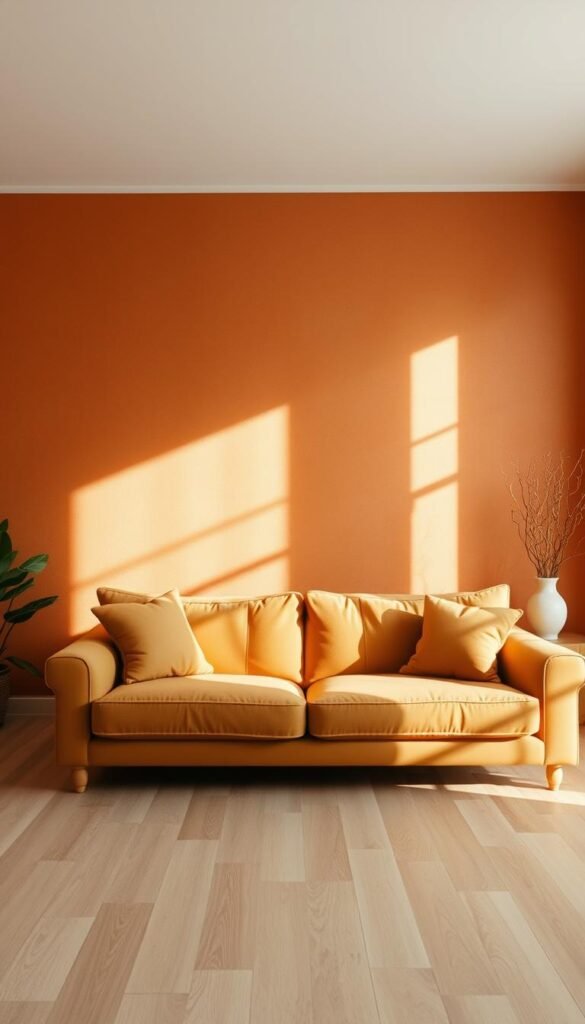
An accent wall instantly transforms your living area into a designer space. This single feature creates visual interest without overwhelming your entire room.
It draws attention to your beautiful seating arrangement. The technique adds depth and personality to your overall design.
Color vs. Textured Wallpaper
You have two excellent options for creating your feature wall. Painted walls offer simplicity and clean lines.
Textured wallpaper brings dimension and tactile interest. Both choices work beautifully with neutral furniture.
Consider these factors when deciding:
| Option | Best For | Installation | Visual Impact |
|---|---|---|---|
| Painted Wall | Clean, modern spaces | DIY friendly | Bold color statement |
| Textured Wallpaper | Traditional, cozy rooms | Professional recommended | Dimensional interest |
| Grasscloth | Organic, natural styles | Moderate difficulty | Subtle texture |
| Patterned Paper | Eclectic, bold designs | Skill required | Graphic impact |
Many designers recommend starting with paint. It’s easier to change if your tastes evolve.
Positioning Your Sofa Against the Feature
Place your seating directly against the accent wall for maximum impact. This creates a natural focal point in your living room.
The arrangement makes your furniture stand out beautifully. It establishes a clear center of attention.
Leave some breathing space between the wall and your piece. This prevents the area from feeling cramped.
Consider floating your seating slightly away from the wall. This creates depth and makes the space feel larger.
Keeping the Rest of the Room Balanced
Balance your bold wall with softer elements throughout the room. Keep other walls neutral to prevent competition.
Choose accessories that complement rather than match your feature. This creates harmony without monotony.
Dark colors can make small spaces feel smaller. Use them strategically and in moderation.
A navy wall behind a tan sofa creates a rich, balanced look. The combination feels both sophisticated and welcoming.
Remember that your accent wall should enhance your space. It shouldn’t overwhelm your carefully curated design.
Step back frequently to assess the overall balance. Your room should feel cohesive and intentionally designed.
11. Choosing Functional and Stylish Seating Options
Beyond your main piece, complementary seating options complete your room’s functionality. These additions serve both practical and aesthetic purposes in your design.
They accommodate more guests during gatherings. They also add visual interest through varied shapes and materials.
Your choices should enhance rather than compete with your foundation. Thoughtful selection creates harmony throughout your entire area.
The Versatility of an L-Shaped Sectional
L-shaped configurations offer excellent flexibility for many homes. They create cozy, communal seating perfect for family time.
This layout works beautifully in open-plan areas. It defines your living space without needing physical walls.
You maximize seating capacity with this smart arrangement. It provides comfortable spots for multiple people.
- Measure your area carefully to ensure proper fit
- Look for modular options that offer reconfiguration flexibility
- Test different orientations to find the best flow
Fixed L-shapes present challenges if you relocate. They might not work in your next home’s layout.
Modular sectionals solve this potential issue. You can rearrange pieces to suit different spaces.
Incorporating Accent Chairs
Additional chairs bring both style and function to your arrangement. They offer extra seating when you host guests.
Choose pieces that complement your main furniture. They should share some design elements for cohesion.
Consider these popular options:
- Wingback chairs add traditional elegance
- Slipper chairs offer compact sophistication
- Armchairs provide comfortable relaxation spots
Vary textures and materials for visual interest. A leather chair pairs beautifully with fabric upholstery.
Your additional seating should feel intentional. It completes your room’s story rather than cluttering it.
Ensuring Good Flow and Conversation Areas
Proper arrangement makes your space functional and inviting. It allows easy movement throughout the room.
Create clear pathways between furniture pieces. Leave at least 30 inches for comfortable walking.
Arrange seating to facilitate natural conversation. Face pieces toward each other rather than walls.
Consider these layout tips for different room sizes:
- Small spaces benefit from floating arrangements away from walls
- Large areas work well with multiple conversation groupings
- Square rooms often suit symmetrical arrangements best
Test different configurations before finalizing. Walk through the space to ensure comfortable flow.
Your seating should serve your lifestyle needs. It should work for both daily living and special occasions.
Many designers create flexible arrangements that adapt. They use movable pieces that can be rearranged easily.
Remember that your space should feel both beautiful and functional. The right seating choices achieve this balance perfectly.
12. Adding Personality with Art and Mirrors
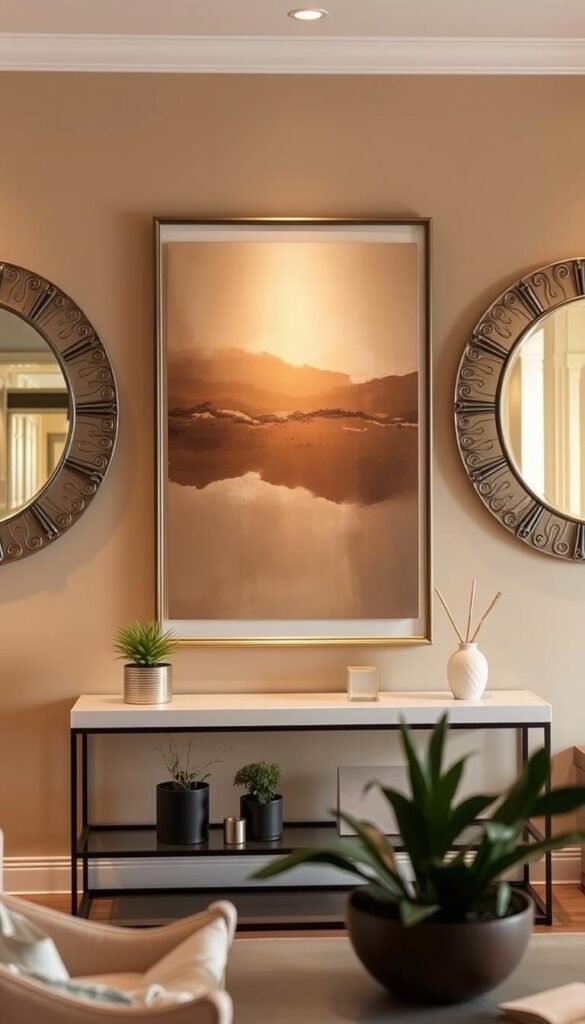
Art and mirrors transform your neutral foundation into a space that truly reflects your unique character. These elements add depth and personality while maintaining the calm atmosphere you’ve created.
Selecting Artwork that Complements the Palette
Choose pieces that enhance your color scheme rather than compete with it. Earth tones and muted colors work beautifully with neutral backgrounds.
Consider artwork with subtle blues or greens. These colors create harmony while adding visual interest.
Large canvas paintings make stunning focal points. They draw attention without overwhelming your arrangement.
Abstract pieces work particularly well in modern spaces. They spark conversation and add sophisticated touches.
Remember that art should speak to your personal taste. Select pieces that you genuinely enjoy looking at daily.
Using Mirrors to Reflect Light and Space
Strategic mirror placement creates the illusion of more square footage. They bounce light around your area, making it feel brighter and more open.
Position mirrors opposite windows for maximum effect. This technique doubles the natural light entering your space.
Consider these popular mirror styles:
- Ornate frames add traditional elegance
- Minimalist designs suit contemporary spaces
- Sunburst mirrors create dramatic focal points
Oversized mirrors work beautifully above consoles or fireplaces. They become statement pieces while serving practical purposes.
Gallery Walls for a Personal Touch
Curated collections tell your unique story through visual elements. They transform blank walls into personal galleries.
Mix framed photographs with artwork and small mirrors. This variety creates dynamic visual interest.
Start by laying out your arrangement on the floor first. This helps you visualize the final look before committing to wall placement.
Maintain consistent spacing between pieces for a polished appearance. Two to three inches between frames usually works well.
Gallery walls allow you to display cherished memories alongside beautiful art. They make your space feel truly lived-in and personal.
These decorative elements should enhance rather than overwhelm your foundation. They add the final layer that makes your design complete.
13. Incorporating Metallic Finishes for Elegance
Metallic elements bring sophisticated sparkle to your neutral foundation. They create visual interest through reflective surfaces and warm tones.
These finishes elevate your overall design scheme. They add dimension without overwhelming your carefully curated palette.
Warm Metals: Brass, Bronze, and Copper
Warm-toned metals complement neutral upholstery beautifully. They enhance the cozy atmosphere you’ve created.
Brass offers golden warmth with timeless appeal. Its slightly reflective surface bounces light around your area.
Bronze provides deeper, richer tones with earthy undertones. It works particularly well with natural materials like wood and stone.
Copper brings reddish warmth and organic charm. It develops a beautiful patina over time that adds character.
These options share similar warm undertones with your foundation piece. This creates harmony throughout your design.
Using Metals in Lamps, Frames, and Decor
Incorporate metallic touches through various decorative elements. Table lamps with brass bases make excellent starting points.
Picture frames in warm metal finishes add subtle shine. They draw attention to your favorite artwork and photographs.
Small accessories like trays and bowls offer functional elegance. They serve practical purposes while enhancing your decor.
Consider these placement ideas for balanced distribution:
- Brass lamp on your side table
- Bronze-framed mirror above the console
- Copper vase with dried arrangements
- Metallic bookends on shelving units
Distribute these elements throughout your space. This creates rhythm without concentrating shine in one area.
Mixing Metals for a Curated Look
Combining different metal finishes creates depth and interest. This approach feels collected rather than overly matched.
Choose one dominant metal as your main finish. Add secondary metals as accents throughout the room.
Brass works beautifully with darker bronze accents. The contrast creates visual excitement while maintaining warmth.
Follow this simple guideline for successful mixing:
| Dominant Metal | Complementary Accents | Best Use Cases | Style Impact |
|---|---|---|---|
| Brass | Bronze, Black Iron | Traditional, Transitional | Warm Elegance |
| Bronze | Brass, Copper | Rustic, Industrial | Earthly Richness |
| Copper | Brass, Nickel | Bohemian, Organic | Artisanal Charm |
| Mixed Metals | All Warm Tones | Eclectic, Collected | Personal Expression |
Avoid using more than three metal types in one space. This prevents visual competition and maintains cohesion.
Remember that balance is key to elegant metal incorporation. Your metallic elements should enhance rather than dominate.
Step back periodically to assess overall shine distribution. Your space should feel thoughtfully curated, not overly metallic.
14. The Final Touch: Drapes, Throws, and Blankets
Your finishing touches transform a well-designed area into a truly inviting sanctuary. These soft elements add the cozy warmth and personality that makes your house feel like home.
They complete your design story beautifully. These details create that lived-in comfort everyone loves.
Selecting Curtains to Frame Your Windows
Window treatments should enhance natural light rather than block it. Sheer white curtains create an airy, open feeling throughout your space.
They filter sunlight beautifully while maintaining privacy. This approach makes any area feel larger and more welcoming.
Heavy drapes can sometimes feel formal or imposing. Lighter options maintain that casual elegance you want to achieve.
| Curtain Type | Light Control | Privacy Level | Style Impact |
|---|---|---|---|
| Sheer White | Soft diffusion | Medium – daytime | Airy, bright |
| Linen Blend | Gentle filtering | Good – layered | Casual texture |
| Blackout Lined | Complete darkness | Maximum | Formal, heavy |
| Patterned Sheer | Soft diffusion | Medium – decorative | Subtle interest |
Hang curtains higher than your window frame. This creates the illusion of taller ceilings and more grandeur.
Let panels pool slightly on the floor for elegant drape. This small detail adds sophistication to your entire room.
Draping Throws for Casual Elegance
Artfully arranged throws create instant cozy vibes. Drape them over armrests or across seat backs for that lived-in look.
This technique says “comfort” without saying “clutter.” It invites relaxation and casual enjoyment of your space.
Chunky knit options add wonderful texture and warmth. Their substantial feel creates visual weight without dark colors.
Experiment with different folding and draping techniques. Each creates a distinct mood and personality.
Choosing Fabrics for Year-Round Comfort
Select materials that work through changing seasons. Lightweight cotton and linen work beautifully for warmer months.
They offer breathable comfort without overheating. These natural fibers feel cool against skin during summer.
Heavier wool and knit blends provide winter warmth. They create that cozy nest-like feeling during colder weather.
Consider having two sets for seasonal rotation. This keeps your space feeling fresh and appropriately comfortable.
Here’s a helpful guide for year-round fabric selection:
- Spring/Summer: Light cotton, linen, bamboo blends
- Fall/Winter: Wool, chunky knits, fleece accents
- Transitional: Cotton-wool blends, medium-weight weaves
Textured blankets contribute to layered comfort schemes. They add visual interest while providing physical warmth.
Mix different fabric types for dimensional appeal. Smooth cotton against nubby wool creates wonderful contrast.
Your final soft furnishings complete the entire look. They add that personal touch that makes your design uniquely yours.
15. Curating a Collected Look with Vintage Finds
Vintage pieces add soul and personality to your home. They create a space that feels truly yours.
These unique items bring character and history into your design. They make your area feel collected over time.
Your neutral foundation provides the perfect backdrop. It lets vintage treasures shine without competition.
Hunting for Unique Pieces at Thrift Stores
Thrift stores and flea markets offer wonderful hunting grounds. You never know what treasures you might discover.
Look for pieces with good bones and interesting details. Don’t worry about perfect condition—character matters more.
Mid-century coffee tables often feature beautiful woodwork. Weathered trunks provide storage with rustic charm.
Bring measurements and fabric samples when shopping. This helps you visualize how pieces will work in your room.
Don’t feel pressured to buy everything at once. The best collections develop gradually over time.
Mixing Eras for Character and Depth
Combining different time periods creates visual interest. It prevents your space from feeling too matchy-matchy.
A modern piece paired with vintage accents feels fresh. This balance creates cozy, inviting atmospheres.
Think about how pieces conversationally interact. Each item should contribute to your overall story.
Vintage elements often feature craftsmanship missing today. They add quality and uniqueness to your design.
Letting Your Personality Shine Through
Your vintage finds should reflect your personal taste. Choose pieces that genuinely speak to you.
These items become conversation starters when guests visit. They share stories about your travels and discoveries.
Remember that perfection isn’t the goal here. Embrace the charming imperfections that make vintage special.
Your collected look will evolve beautifully over years. It becomes a living record of your design journey.
16. Your Journey to Effortless Neutrals Starts Now
Your neutral-toned seating is a creative canvas for personal expression. It adapts beautifully to any design direction you choose.
Versatile foundations remain the heart of lasting style. They support evolving tastes through years of use.
Now you have all the tools to begin your transformation. Trust your instincts and enjoy the process.
Share your styling adventures with fellow design enthusiasts. Your unique approach inspires others.
Remember: great spaces develop over time. Start with confidence and let your personality shine through.