Welcome to your guide for creating a stunning and elegant space. This rich, nature-inspired color creates a soothing yet striking statement in your home.
Discover why this timeless shade has become a top choice for designers. It brings both luxury and a grounded feeling to any area.
Learn how this palette can transform your area into a sanctuary of style and comfort. We explore color psychology and practical tips that work in real homes.
See how these walls serve as the perfect backdrop for various decor styles. This comprehensive guide helps you avoid common pitfalls while achieving professional results.
Whether starting fresh or refreshing your existing space, these living room ideas will inspire your transformation. Get ready to create a space that feels both luxurious and effortlessly elegant.
Why Dark Green Creates the Ultimate Sophisticated Living Space
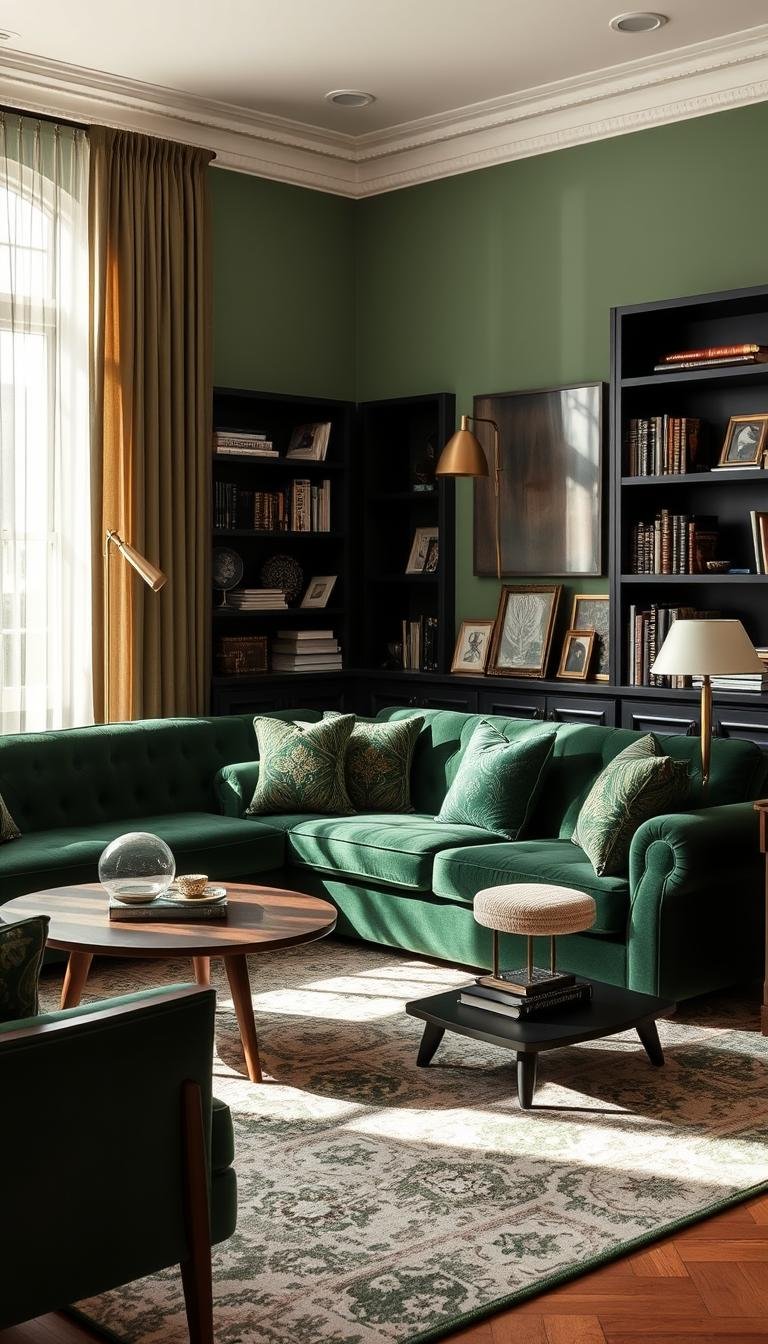
Imagine walking into a room that instantly makes you feel both grounded and inspired. That’s the magic of this deep, nature-inspired shade. It transforms ordinary areas into extraordinary sanctuaries of style.
The Psychology of Green in Your Home
Color psychology reveals why this palette creates such peaceful environments. Green tones naturally reduce stress and promote restoration. They bring the calming effect of nature right into your space.
This specific shade promotes feelings of stability and renewal. It connects us to the outdoors through biophilic design principles. Your wellbeing gets a natural boost just by being in the room.
Few colors offer such remarkable versatility. As one expert notes:
“Green can cocoon a space in warmth and intimacy or evoke refined vibrancy”
How This Deep Tone Elevates Your Design
This rich hue adds instant sophistication by creating depth and dimension. It serves as an excellent backdrop that makes other elements stand out beautifully. Your furniture and artwork will pop against this luxurious background.
The color works wonderfully with both warm and cool undertones. It can make large areas feel more intimate while making compact spaces feel curated. Designers often call it a “neutral with personality” that anchors diverse elements.
| Room Size | Effect | Design Approach |
|---|---|---|
| Large Spaces | Creates intimacy and coziness | Use on all walls for a cocooning effect |
| Small Areas | Adds depth and intentionality | Perfect for accent walls or built-ins |
| Open Floor Plans | Defines spaces elegantly | Great for distinguishing living areas |
In 2025, this continues as the definitive color choice. It speaks to our desire for calm, balance and connection to the natural world. Transform your space into a magazine-worthy showcase of elegance and comfort.
Choosing Your Perfect Dark Green Shade
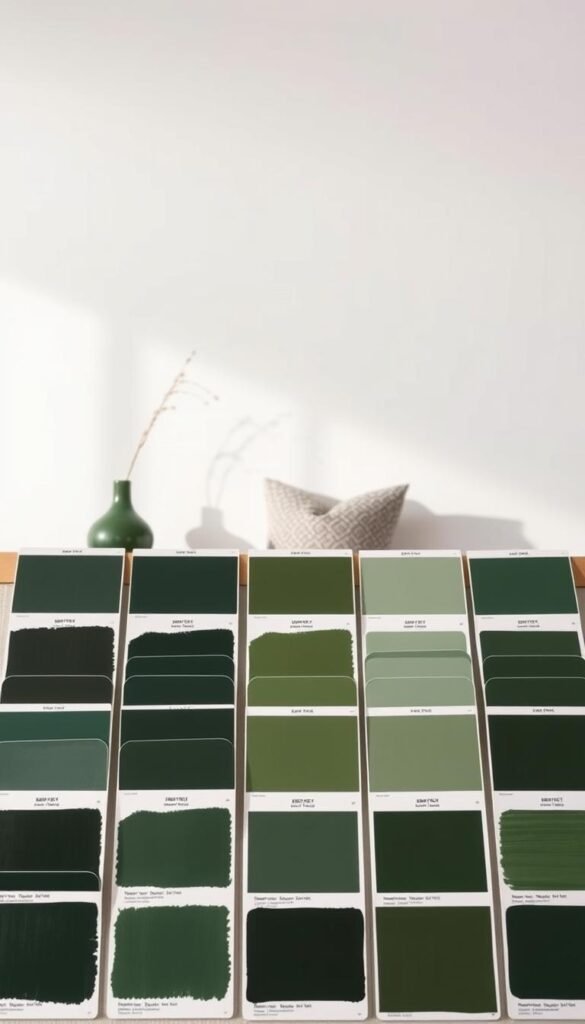
Selecting the right hue transforms your space from ordinary to extraordinary. The perfect shade creates harmony between your walls, furniture, and natural light.
Your choice depends on personal preference and practical considerations. Test samples in your actual room before making final decisions.
Forest Green vs Emerald: Finding Your Tone
Forest green offers an earthy, natural feel that connects to the outdoors. It creates a grounded, calming atmosphere perfect for relaxation.
Emerald green brings jewel-toned brilliance and luxurious vibrancy. This shade makes a bold statement with its rich, saturated appearance.
Consider your existing furniture and flooring when choosing between these tones. Warm wood tones often pair better with forest green’s natural quality.
2025’s Most Sophisticated Green Paint Colors
This year’s trending palette features earthy, muted tones with incredible depth. Olive green and teal continue as popular choices for modern spaces.
Mylands offers several exceptional options for your green living room. Serpentine™ No.192 creates a fresh, uplifting atmosphere with balanced tones.
Beauvais™ No.195 provides a classic light green shade that brightens rooms. Burlington Arcade™ No.216 delivers a moody, timeless atmosphere perfect for accent walls.
Artillery Ground™ No.164 offers a rich green-brown shade that exudes tradition. Pleasure Gardens Green™ No.214 brings deep woodland character that feels both familiar and dramatic.
Always test paint samples on your actual wall before committing. Observe how colors change throughout the day under different lighting conditions.
Consider sheen options too—matte finishes hide imperfections while satin offers easy cleaning. Your perfect shade awaits among these sophisticated options.
Dark Green Living Room Decor for Sophisticated Interiors: Your Essential Guide
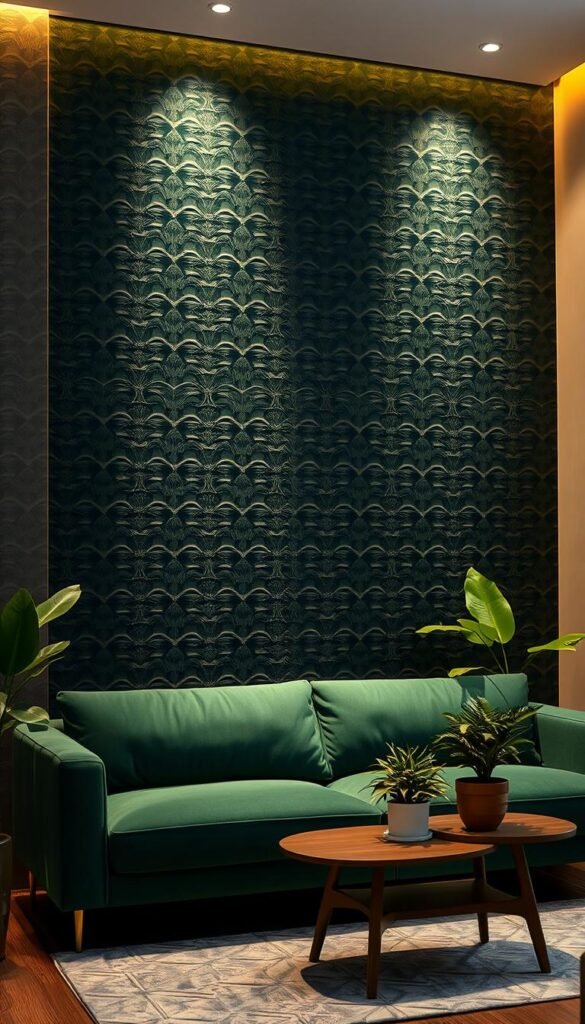
Now let’s dive into the practical steps to bring your vision to life. We’ll explore wall treatments and furniture choices that work together beautifully.
These foundational decisions set the stage for your entire design. They create the backdrop against which all other elements will shine.
Starting with Walls: Paint vs Accent Walls
Choosing between painting all walls or creating an accent wall depends on your space and goals. Each approach offers distinct advantages for different situations.
Full wall coverage creates a dramatic, cocoon-like effect perfect for larger areas. It makes a bold statement and provides a rich background for your decor.
Accent walls offer a more subtle introduction to this deep hue. They work well in smaller rooms or open floor plans where you want definition without overwhelm.
For compact spaces with limited natural light, consider embracing the cozy factor. Transform it into an intimate snug using deep woodland green on all surfaces.
Proper wall preparation ensures professional results that last. Follow these steps for flawless application:
- Clean walls thoroughly to remove dust and grease
- Repair any cracks or imperfections with spackling compound
- Apply high-quality primer to create an even base
- Use painter’s tape for clean edges and sharp lines
- Consider matte finishes to minimize light reflection
An alternative to wallpaper is creating a gallery wall featuring framed botanical prints. This adds visual interest while maintaining flexibility for future changes.
To increase light reflection in darker rooms, add white or neutral elements on ceilings and trim. This technique brightens the space while maintaining your rich color scheme.
Selecting Furniture in Complementary Shades
Your furniture choices should enhance rather than compete with your wall color. The right pieces create harmony and balance throughout the space.
A deep emerald green sofa makes an excellent centerpiece that commands attention. This bold choice works particularly well against neutral wall treatments.
Velvet upholstery in forest or emerald green creates particularly luxurious results. The fabric’s texture plays beautifully with light, adding depth and sophistication.
Consider scale and proportion when selecting statement pieces. Oversized furniture can overwhelm smaller rooms, while too-small items may get lost in larger spaces.
Mixing wood tones with green furniture creates a layered, sophisticated look. Warm woods like walnut or teak complement earthy greens beautifully.
Even if you’re not ready for green walls, you can incorporate this hue through furniture. A green armchair or side table introduces color without full commitment.
As one designer notes:
“The right furniture transforms a color scheme from good to extraordinary”
Remember that your pieces should work together to create a cohesive look. Test fabric samples against your wall color to ensure perfect harmony.
Creating Balance with Neutral Elements
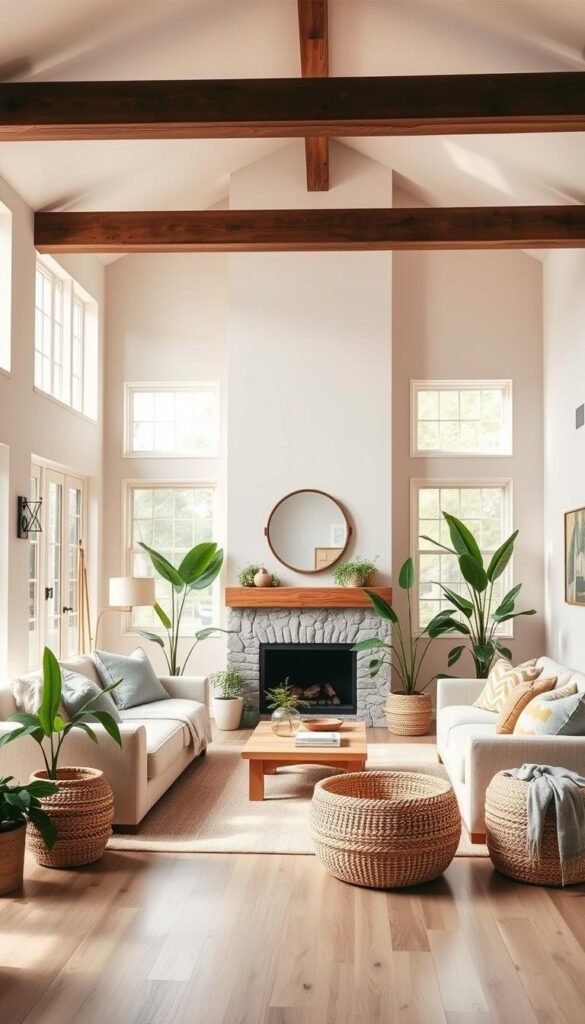
Neutral tones create the perfect harmony with deep emerald or forest shades. They add visual breathing room while enhancing your overall palette.
This approach prevents your space from feeling too intense. It brings a sense of calm sophistication to your home.
Pairing Deep Green with Creams and Beiges
Cream and beige shades offer beautiful contrast without competition. They create elegant trim that frames your walls perfectly.
Professionals often use specific paint colors for this purpose. Benjamin Moore’s Simply White or Manchester Tan work wonderfully.
These neutrals introduce soothing balance against rich walls. A pale sofa or ottoman provides this same calming effect.
Textiles in linen, cotton, or wool soften the richness beautifully. They add comfort while maintaining your sophisticated look.
Incorporating Natural Wood Tones
Wood brings organic warmth that complements nature-inspired shades. Different species offer varying levels of warmth and character.
Oak provides light, casual tones that brighten a room. Walnut adds deeper, richer notes perfect for traditional spaces.
Teak offers golden undertones that enhance olive green walls. You can mix multiple wood types while maintaining cohesion.
Focus on similar undertones rather than matching exact colors. This creates a collected, intentional design feel.
Natural wood furniture pieces ground rooms with organic warmth. A fireplace surround or built-in shelves add architectural interest.
Area rugs in neutral tones anchor furniture arrangements beautifully. They define spaces while adding texture underfoot.
“Wood elements transform color schemes from flat to dimensional”
These neutral touches create a welcoming atmosphere in any room. They make your space feel both elegant and effortlessly comfortable.
Adding Luxury with Metallic Accents
Elevate your home with shimmering details that catch the eye. These elements bring glamour and contrast to your palette.
They create a polished finish that feels both elegant and inviting. This approach adds depth without overwhelming your design.
Gold and Brass Touches for Elegance
Warm metals like gold and brass create a timeless partnership with rich hues. They introduce a feeling of opulence that enhances your entire space.
These finishes work beautifully against deep tones. They reflect light and add visual interest throughout your area.
Consider these placement ideas for maximum impact:
- Statement lighting fixtures create focal points
- Hardware on cabinets and doors adds subtle shine
- Decorative objects like trays and vases provide portable luxury
- Picture frames on artwork or mirrors introduce refined borders
Mix different metallic finishes for layered sophistication. Combine brushed, polished, and antique variations for curated charm.
Distribute these elements evenly around your room. This creates balanced sparkle without clustering effects.
Choosing the Right Metallic Finishes
Select metals that complement your specific wall color. Warm gold tones enhance earthy shades beautifully.
Cooler silvers work better with blue-based greens. Always test samples against your paint in actual lighting.
Scale matters when incorporating metallic details. Large chandeliers make dramatic statements in spacious areas.
Smaller items like bookends or coasters add subtle touches in compact spaces. Metallic threads in textiles provide understated luxury.
| Metal Type | Best For | Visual Effect |
|---|---|---|
| Polished Brass | Traditional spaces | High shine, formal elegance |
| Brushed Gold | Modern designs | Soft glow, contemporary feel |
| Antique Bronze | Vintage styles | Muted sophistication, aged charm |
| Satin Nickel | Cool-toned greens | Subtle reflection, modern crispness |
These metallic additions transform your space into a luxurious retreat. They provide the perfect finishing touch to your design vision.
Incorporating Texture and Pattern
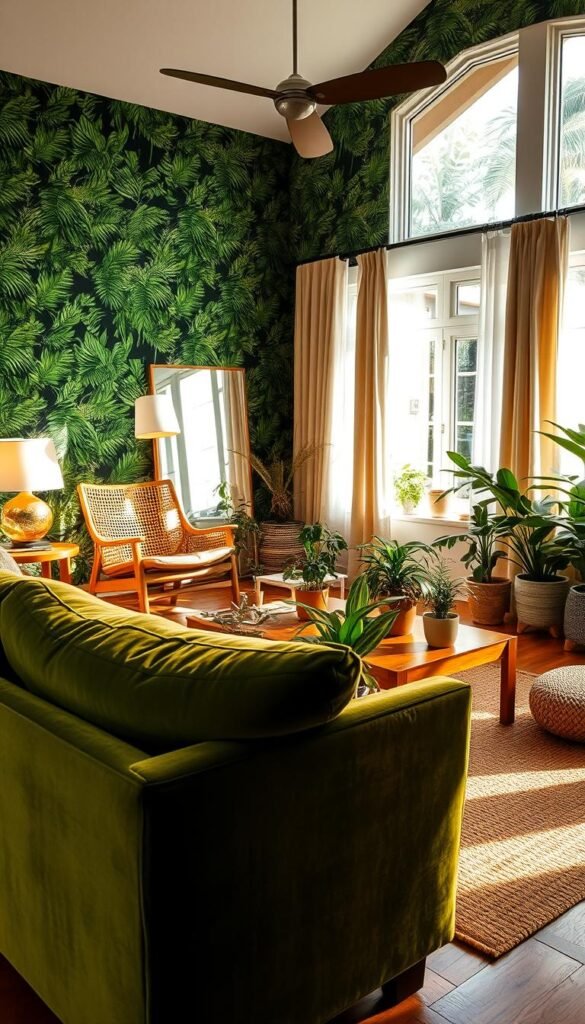
Texture and pattern transform your space from beautiful to breathtaking. They add layers of visual interest that make your home feel curated and complete.
These elements work together to create a rich, inviting atmosphere. They bring warmth and personality to your design.
Velvet Fabrics for Depth and Sophistication
Velvet upholstery and draperies enhance your palette with luxurious texture. The fabric’s unique pile catches light beautifully, creating depth.
This material feels incredibly soft and inviting. It adds a touch of elegance that elevates your entire room.
Velvet works particularly well with deep, nature-inspired shades. The combination creates a rich, layered look that feels both cozy and refined.
Consider these velvet applications for maximum impact:
- Sofas and armchairs as statement pieces
- Curtains that add softness and drama
- Accent pillows for smaller touches of luxury
- Ottomans that provide both function and style
Velvet’s light-reflecting qualities help brighten your space. It adds dimension without overwhelming your color scheme.
Patterned Rugs and Throw Pillows
Patterns introduce energy and movement to your design. They prevent your space from feeling too uniform or flat.
Mixing multiple patterns creates visual interest without chaos. Follow these guidelines for successful pattern mixing:
| Pattern Type | Scale Recommendation | Best Placement |
|---|---|---|
| Large-scale patterns | Use as focal points | Area rugs or statement chairs |
| Medium patterns | Balance bold walls | Throw pillows or window treatments |
| Small patterns | Add subtle detail | Accent pieces or artwork mats |
Botanical prints complement nature-inspired shades beautifully. Geometric patterns add modern contrast to traditional colors.
Stripes can make compact areas feel more spacious. Always test pattern combinations in your actual lighting.
Layering different textures creates additional depth and interest. Combine chunky knits with smooth leathers and nubby linens.
Textured wall treatments like grasscloth add dimension behind furniture. They provide visual texture without competing with your patterns.
Strategic placement guides the eye through your space effectively. Layer rugs to define different functional areas within open layouts.
Choose throw pillow patterns that complement rather than compete. Window treatments in textured fabrics add softness and sophistication.
“Pattern and texture work together to create spaces that feel both designed and lived-in”
These elements make your home uniquely yours. They add personality and comfort to every corner.
Enhancing with Natural Elements
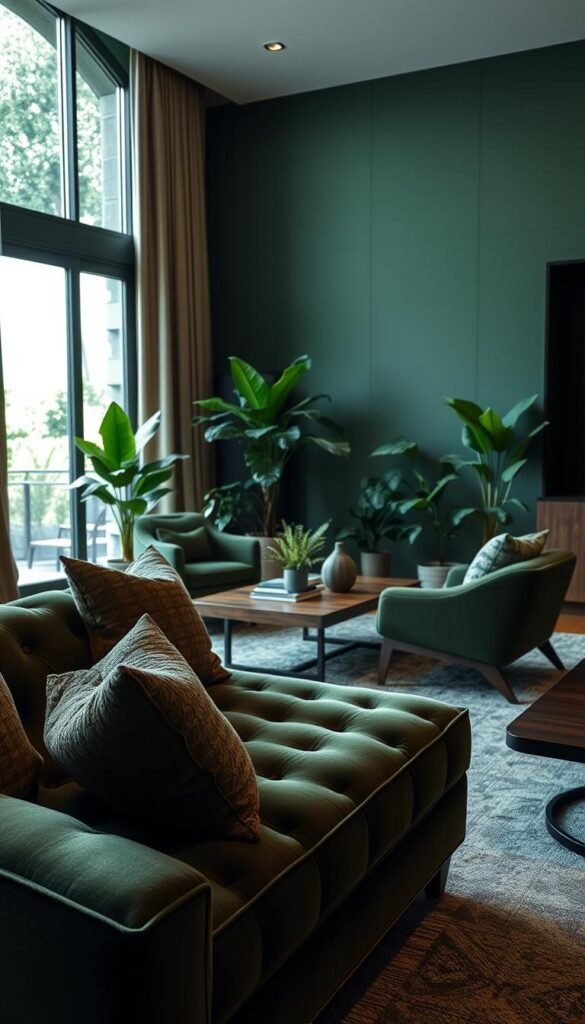
Bringing nature indoors creates a fresh, organic feel that complements your color scheme perfectly. These elements add life and movement to your space while reinforcing the natural theme.
Strategic placement makes all the difference in achieving a curated look. You’ll create an inviting atmosphere that feels both designed and effortlessly natural.
Strategic Plant Placement for Maximum Impact
Plants soften your space and create a calming ambience that enhances your overall design. They amplify that wonderful feeling of being connected to nature throughout your home.
Trailing varieties like cascading ferns or spider plants soften hard edges beautifully. Their flowing forms add movement and organic shape to your room.
Structural plants like succulents serve as living ornaments that command attention. They create focal points without overwhelming your existing decor.
Layer plants at different heights for added visual interest and depth. This technique guides the eye through your space in a natural, flowing way.
Consider these low-light tolerant options for rooms with limited natural light:
| Plant Type | Light Requirements | Visual Effect | Care Level |
|---|---|---|---|
| Snake Plant | Low to bright indirect | Vertical accent, architectural | Very easy |
| ZZ Plant | Low to moderate | Glossy leaves, modern look | Easy |
| Pothos | Low to bright indirect | Trailing, softening effect | Very easy |
| Peace Lily | Low to moderate | White blooms, elegant contrast | Moderate |
| Cast Iron Plant | Very low light tolerant | Broad leaves, tropical feel | Easy |
Hanging plant installations create vertical gardens that maximize your space. They draw the eye upward and make ceilings feel higher.
Group plants intentionally rather than scattering them randomly. Create curated collections that feel designed rather than accidental.
Choose planters that complement your overall style while supporting plant health. Materials like ceramic, terracotta, and woven baskets add texture.
For areas unsuitable for live plants, consider preserved options or moss walls. They provide greenery without maintenance requirements.
Botanical Prints and Natural Materials
Botanical artwork offers a fresh, natural element that reinforces your theme beautifully. These prints bring nature-inspired beauty without requiring any care.
Framed herbarium specimens or vintage botanical illustrations add character. They create conversation pieces that reflect your personal style.
Natural materials like stone, rattan, and jute enhance the organic aspect of your design. They introduce texture and warmth that balances rich wall colors.
Seagrass baskets provide storage while adding natural texture. Stone coasters or trays bring earthy elements to tabletops.
Wood accents continue the natural theme throughout your space. They add warmth and organic character that complements your palette.
Mix these elements thoughtfully to create a layered, sophisticated look. Your room will feel both elegant and comfortably connected to nature.
Lighting Strategies for Dark Green Rooms
Light transforms your space in magical ways. The right approach makes your walls glow with warmth and depth.
Smart lighting choices enhance your beautiful palette. They create both function and mood throughout your day.
Layered Lighting for Mood and Function
Layered lighting creates a balanced, inviting atmosphere. You need three types working together beautifully.
Ambient lighting provides overall illumination for your area. It sets the foundation for all other light sources.
Task lighting focuses on specific activities like reading. It ensures you have proper light where you need it most.
Accent lighting highlights architectural features or artwork. It adds drama and dimension to your design.
Balance these layers for a harmonious effect. Too much of one type creates uneven illumination.
Consider these fixture types for your walls:
- Recessed lighting for clean, modern ambient light
- Adjustable track lighting for flexible accent options
- Picture lights to highlight artwork without glare
- Under-cabinet lighting for functional task illumination
Smart bulbs like Philips Hue offer incredible control. You can adjust intensity and color temperature throughout the day.
Warm white light (2700K-3000K) enhances earthy tones beautifully. It creates a cozy, inviting atmosphere for evenings.
Cool white light (3500K-4100K) works better for task areas. It provides clearer visibility for reading or crafts.
Maximizing Natural Light in Dark Spaces
Natural light makes your space feel fresh and inviting. Strategic approaches amplify what you already have.
Mirrors are your best friend for bouncing light around. Place them opposite windows for maximum reflection.
A large round mirror above your fireplace works wonderfully. It subtly amplifies both space and available light.
Window treatments should control light without blocking it. Sheer curtains filter light while maintaining privacy.
Keep window areas clear of large furniture pieces. This allows light to penetrate deeper into your room.
White or neutral elements on ceilings increase light reflection. They brighten your space while maintaining your rich color scheme.
Consider these reflective surfaces to enhance natural light:
| Surface Type | Placement | Light Effect |
|---|---|---|
| Metallic accents | Tables, frames, accessories | Subtle sparkle, light reflection |
| Glass elements | Tabletops, cabinet doors | Light transmission, airy feel |
| High-gloss finishes | Trim, furniture pieces | Bright reflection, modern touch |
| Light-colored rugs | Floor coverage | Upward light bounce |
Lamp shades in light-diffusing materials work beautifully. They soften light while complementing your color scheme.
Candlelight and fireplace glow create magical evening ambiance. They add warmth and movement to your atmosphere.
Architectural lighting highlights design features effectively. Use shelf lighting to display collections or books.
These strategies work together to transform your space. They ensure your beautiful walls shine in their best light.
Bringing Your Sophisticated Dark Green Vision to Life
You now have all the tools to create your dream space. Remember that balance is key to making this intense color work beautifully.
Start with a phased approach that fits your timeline. Paint one wall first to test the effect. Add furniture and decor pieces gradually.
Trust your vision but stay flexible during the process. Edit as you go, ensuring each element adds to the overall sophistication.
Avoid common mistakes like poor lighting or cluttered arrangements. Use mirrors and strategic lamps to brighten your area.
Add personal touches through artwork and natural elements. These make the space uniquely yours while maintaining elegance.
Consult professionals for complex projects like electrical work. DIY painting and decor placement can save budget.
Your finished room will provide both style and comforting sanctuary. Embrace the transformative power of this rich palette.