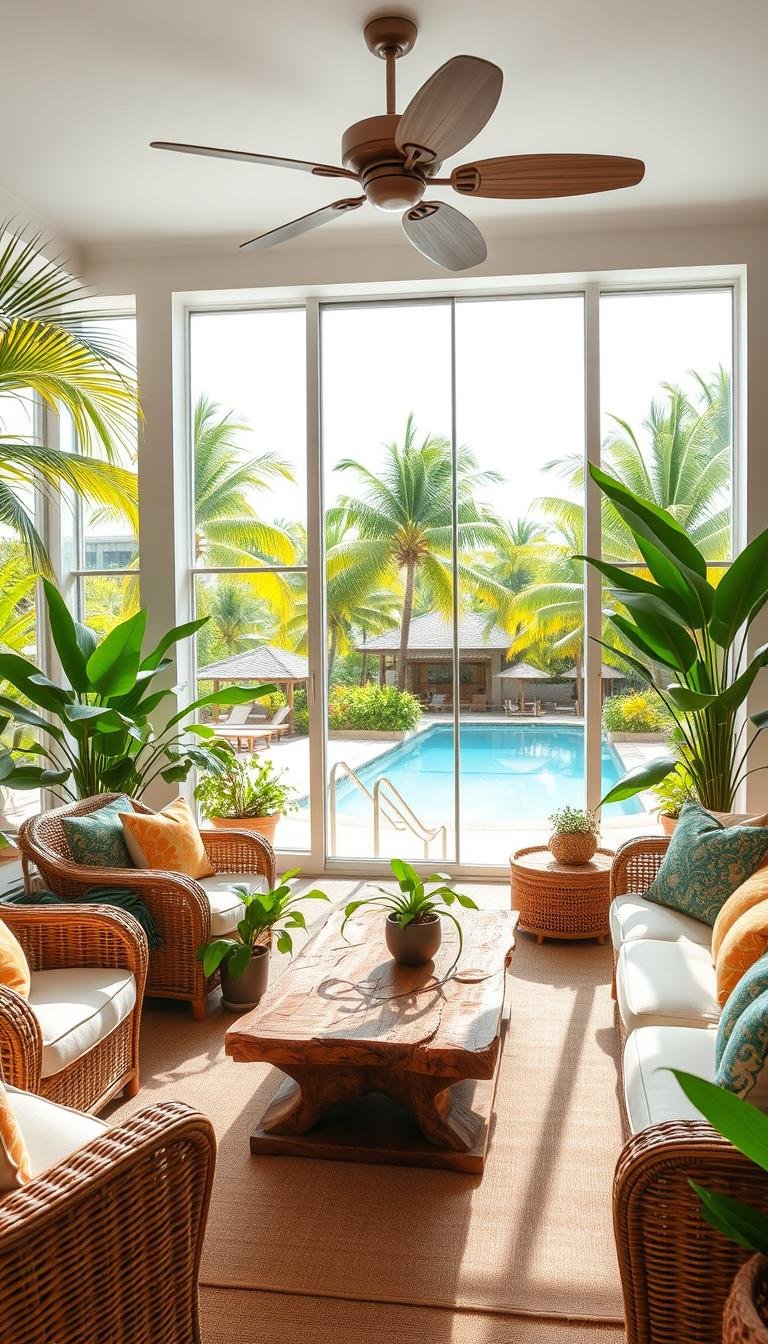
Imagine walking into your living room and feeling like you’ve stepped into a peaceful island retreat. This style blends indoor comfort with outdoor freshness using natural elements.
This approach focuses on bringing nature inside. You’ll find plenty of natural light, lush greenery, and materials like wood and rattan.
Industry experts highlight how these spaces promote wellness and relaxation. They create a sense of vitality and connection to the natural world.
Whether you live near the coast or in a city apartment, this style adapts beautifully. It offers the emotional benefit of feeling like a permanent vacation.
Our guide will show you how to transform your space with practical tips for different climates. Let’s create your personal sanctuary together!
What Is Tropical Living Room Decor for a Resort-Inspired Home?
Picture stepping into a breezy sanctuary that instantly whisks you away to a tranquil island escape. This nature-forward aesthetic combines indoor comfort with the freshness of the outdoors.
Defining the Breezy, Nature-Forward Aesthetic
This design style creates open, easy spaces connected to nature. It merges natural materials like rattan, teak, and linen with sun-washed or vibrant colors.
Think sandy neutrals, coral accents, and emerald greens. These elements work together to form a cohesive, inviting look.
Core Principles: Biophilic Design and Wellness
Biophilic design is key here. It incorporates plants, daylight, and natural views into your space.
The World Green Building Council links these elements to improved comfort and wellness. Access to greenery and light boosts how you feel every day.
Spaces with ample daylight and greenery significantly enhance perceived wellness and comfort.
Proper humidity control matters too. The U.S. EPA recommends keeping indoor humidity between 30% and 50%. This reduces mold growth in humid climates.
Key Benefits: Comfort, Durability, and Timeless Style
This approach offers many advantages. You get a comfortable space that feels like a permanent vacation.
Performance fabrics and sealed materials stand up to humidity. They offer durability without sacrificing style.
The timeless aesthetic adapts to various preferences. From minimal to maximal, it always feels fresh.
Smart airflow designs can reduce cooling costs. Your room stays comfortable with less energy.
| Element | Benefit | Example |
|---|---|---|
| Natural Materials | Breathable, climate-smart | Rattan, teak, linen |
| Color Palette | Serene to vibrant tones | Sands, corals, emeralds |
| Biophilic Features | Wellness enhancement | Plants, daylight, views |
| Humidity Control | Mold prevention | 30-50% indoor humidity |
Embrace these ideas to craft a personal sanctuary. Your home will become a retreat that promotes relaxation and joy.
1. Embrace the Indoor-Outdoor Connection
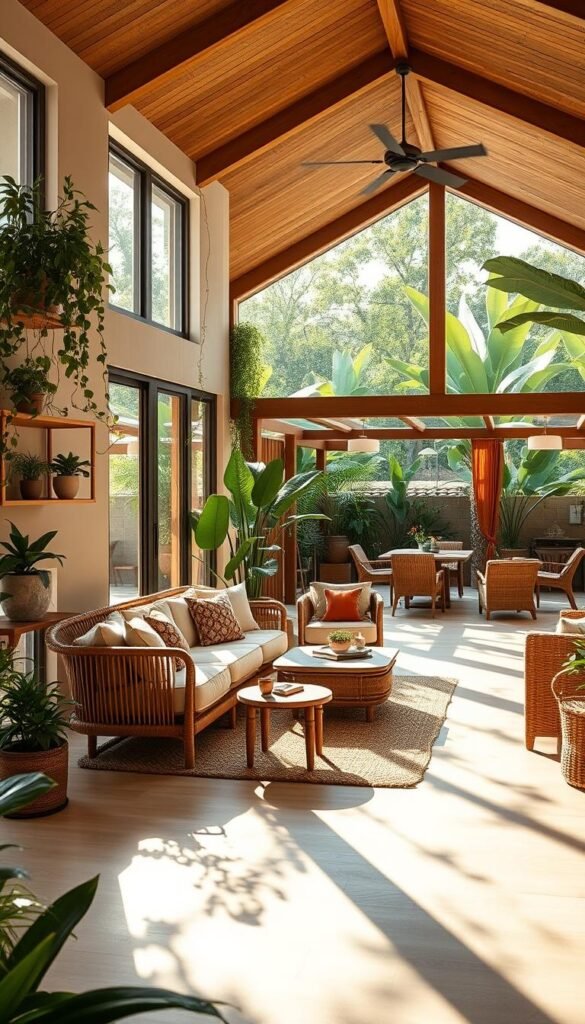
Your home should feel like a seamless extension of the natural world outside. This connection brings fresh air, sunlight, and a sense of freedom into your daily life.
It transforms ordinary areas into vibrant, refreshing retreats. You can achieve this with smart design choices and durable materials.
Maximizing Natural Light and Airflow
Floor-to-ceiling windows are a game changer. They flood your space with sunshine and offer stunning views of the outdoors.
Operable windows and doors create cross-ventilation. This natural airflow keeps your room feeling fresh and reduces reliance on AC.
Ceiling fans also boost comfort while saving energy. The U.S. Department of Energy states they let you raise your thermostat by 4°F without losing comfort.
Choosing Climate-Smart Doors and Windows
Pocket or bifold doors can open an entire wall to your patio or garden. This creates a smooth transition between inside and outside areas.
Proper window placement manages sunlight while preserving your view. Choose treatments that filter light without blocking it completely.
These features support better airflow and temperature control. They make your home more adaptable to different weather conditions.
Selecting Durable Indoor-Outdoor Materials
Continuous flooring blurs the line between interior and exterior spaces. Stone or porcelain planks work beautifully in both areas.
Performance fabrics resist sun and moisture damage. Solution-dyed acrylics offer UV and mildew resistance for lasting use.
Climate-smart materials handle humidity and heat well. They keep your space looking great with minimal upkeep.
- Floor-to-ceiling windows maximize light and visual connections
- Operable openings create healthy cross-ventilation
- Ceiling fans improve comfort and cut energy costs
- Unified flooring creates cohesive indoor-outdoor flow
- Performance fabrics withstand sun and humidity
These elements work together to create a space that feels both open and inviting. You’ll enjoy the emotional boost of being connected to nature every day.
With proper material choices, your room will stay beautiful through various climate conditions. It becomes a true sanctuary that blends inside comfort with outdoor freshness.
2. Curate a Palette of Natural Materials
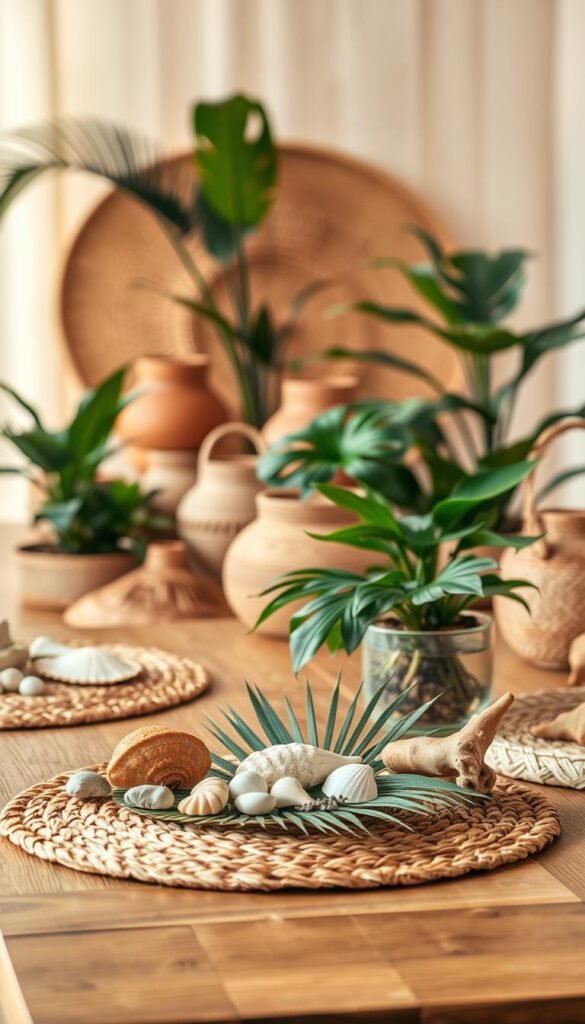
Choosing the right elements transforms ordinary rooms into nature-connected sanctuaries. Your material selection creates the authentic feel of an island retreat while standing up to real-world conditions.
The Essential Textures: Rattan, Teak, and Seagrass
Rattan brings organic warmth and breathability to your space. This versatile material works beautifully for chairs, side tables, and decorative accents.
Teak offers exceptional durability in humid environments. Its natural oils resist moisture damage, making it perfect for coastal homes.
Seagrass provides textural interest and practical benefits. It resists stains better than jute and handles moisture well.
Proper maintenance ensures these materials last for years. Teak requires annual oiling to maintain its rich color and protection.
Natural materials like rattan and teak create spaces that feel both grounded and elevated, connecting you to the outdoors even when you’re inside.
Performance Fabrics for Sun and Humidity Resistance
Today’s advanced fabrics offer incredible durability without sacrificing comfort. Solution-dyed acrylics provide excellent UV and mildew resistance.
Recycled PET blends create soft, durable textiles that stand up to sunlight. These materials maintain their color and integrity through years of use.
Performance fabrics work beautifully for sofa covers, pillows, and outdoor cushions. They resist fading and staining while feeling comfortable against your skin.
- Solution-dyed acrylics offer maximum sun resistance
- Recycled PET fabrics provide eco-friendly durability
- Performance blends maintain comfort in humid conditions
- UV-resistant materials prevent fading from sunlight exposure
Mixing Woven Elements with Smooth Surfaces
Balance creates visual interest in your island-inspired space. Combine woven rattan or seagrass with smooth stone or glass surfaces.
A rattan coffee table paired with a stone-top console creates beautiful contrast. This mixing of textures adds depth to your design while maintaining cohesion.
Consider limewash or mineral paints for your walls. These breathable finishes offer beautiful movement and work well with natural materials.
For flooring, seagrass and PET rugs outperform jute in humid environments. They provide better stain resistance and handle moisture more effectively.
When sourcing materials, look for ethical and sustainable options. Many companies now offer certified sustainable rattan and reclaimed teak furniture.
3. Infuse Your Space with Lush Greenery
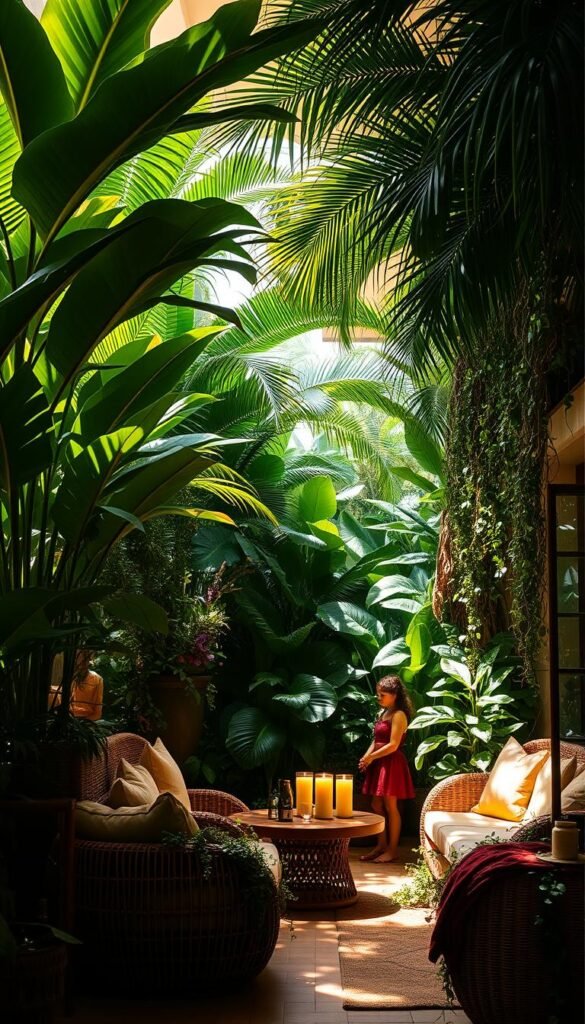
Plants transform ordinary areas into vibrant, breathing spaces. They bring life and movement to your island-inspired design while improving air quality.
Greenery creates that resort feeling you love. It connects you to nature even when you’re indoors.
Choosing the Right Plants for Your Light Conditions
Different areas of your room receive varying light levels. South-facing windows offer bright light perfect for bird of paradise plants.
North-facing spaces work well with medium-light lovers like philodendrons. These adaptable plants thrive with indirect sunlight.
Consider your window placement when selecting greenery. The right choice ensures healthy growth and beautiful displays.
Creating Vertical Gardens and Cascading Displays
Vertical gardens turn blank walls into living art features. Mounted plant installations create dramatic focal points.
Cascading plants from ceilings form beautiful living canopies. They add movement and visual interest to your space.
Hanging installations maximize your available area. They work beautifully in smaller rooms where floor space is limited.
Using Greenery as Natural Art and Room Dividers
Large plants like rubber trees or palms make bold statements. Oversized planters create natural room dividers.
These living screens maintain open sight lines while defining areas. They work better than solid partitions in open layouts.
Elevate pots to improve airflow and prevent floor damage. This simple trick also adds height variation to your design.
Plants serve as natural air purifiers while creating emotional connections to outdoor environments.
Proper plant care ensures lasting beauty in your home. Most tropical varieties prefer consistent moisture and good drainage.
Scale matters when selecting plants for different areas. A large fiddle-leaf fig makes a stunning statement near seating areas.
Smaller plants complement side tables and windowsills. Mix sizes for a layered, natural look.
- Bright light plants: Bird of paradise, fiddle-leaf fig
- Medium light choices: Philodendron, snake plant
- Vertical garden options: Mounted staghorn ferns, trailing pothos
- Air-purifying varieties: Peace lily, spider plant
- Statement plants: Majesty palm, rubber tree
Greenery complements other natural materials beautifully. Woven baskets hold plants while matching rattan furniture.
Wood plant stands echo other organic elements in your design. The textures work together to create harmony.
Your plants become living art that changes over time. They bring constant renewal to your personal sanctuary.
4. Play with a Serene Tropical Color Palette

Color transforms your environment more powerfully than any other design element. The right palette creates instant vacation vibes while making your space feel larger and more connected to nature.
Thoughtful color choices work with your natural light to enhance the overall atmosphere. They create emotional responses that range from calming serenity to energizing vitality.
From Sun-Bleached Sands to Vibrant Emeralds
Tropical palettes offer incredible range from soft neutrals to bold jewel tones. Sun-bleached sands, shell whites, and creamy ecrus create serene backdrops.
Vibrant emeralds, seafoam greens, and coral accents bring energy to your space. Deep navy blues anchor these brighter hues with sophistication.
Different colors affect your mood in distinct ways. Soft neutrals promote relaxation while vibrant tones create excitement and energy.
Consider your room’s orientation when selecting colors. North-facing spaces benefit from warmer tones to counter cooler light.
South-facing rooms can handle cooler shades that balance abundant sunlight. This ensures your colors look their best throughout the day.
How to Layer Tones and Textures Monochromatically
Monochromatic schemes create sophisticated, spa-like atmospheres. They rely on texture variation rather than color changes for visual interest.
Layer at least five distinct textures within the same color family. This prevents flatness while maintaining cohesive elegance.
Combine smooth surfaces with woven elements for beautiful contrast. A rattan coffee table against limewash walls creates depth through texture.
Add a single dark wood accent to monochromatic sandscapes. This provides visual weight and grounds the lighter tones.
Performance fabrics in similar hues but different weaves add richness. Your space feels curated rather than matchy-matchy.
Texture does for monochromatic spaces what color does for varied palettes – it creates movement, depth, and visual storytelling.
Adding Pops of Coastal Color with Accents
Accent colors create focal points without overwhelming your space. They guide the eye and add personality to neutral foundations.
Emerald-and-brass combinations offer tropical glam with jewel-toned moments. These rich pairings work beautifully against neutral backdrops.
Color-blocking with coral, ultramarine, and palm green creates graphic punch. Use these bold combinations on accent walls or through artwork.
Patterns like botanical prints or batik motifs incorporate multiple colors harmoniously. They bring cultural authenticity to your island-inspired design.
Pillows and throws offer the easiest way to experiment with accent colors. You can change them seasonally for fresh looks.
Balance bold color choices with plenty of neutral elements. This ensures your space feels harmonious rather than chaotic.
Your color palette should enhance the connection to outdoors. Choose hues that complement your view and natural light quality.
Remember that colors appear different under various lighting conditions. Test samples at different times of day before committing.
5. Select Furniture for Style and Function
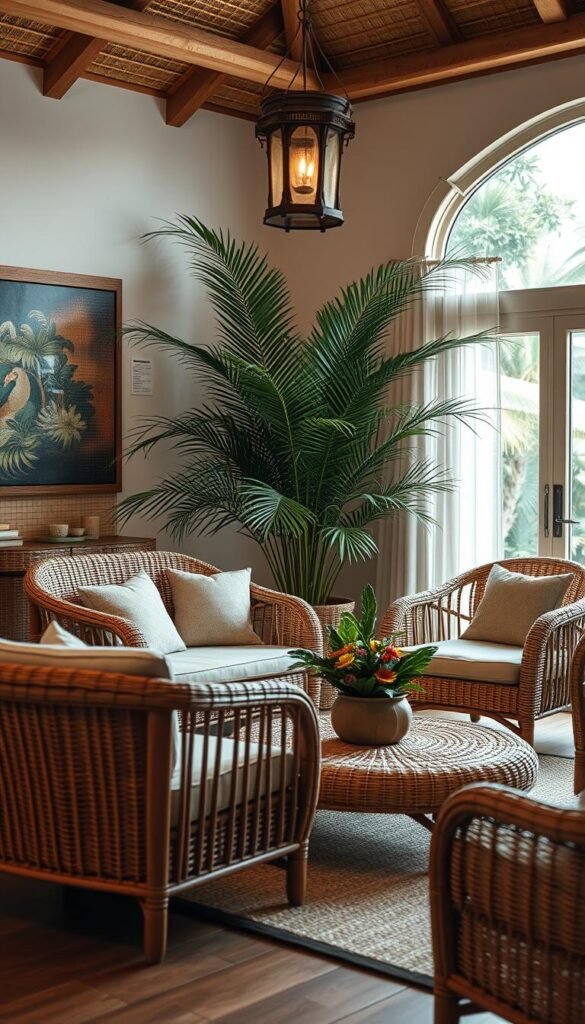
Your furniture choices make all the difference in creating that perfect island vibe. They need to blend beauty with practicality to handle humidity and heat.
Smart selections keep your area feeling open and breezy. They also provide comfort while standing up to daily use.
Low-Profile and Leggy Pieces for Air Circulation
Furniture with exposed legs improves airflow throughout your space. This design helps prevent stuffiness in warmer weather.
Choose sofas and chairs that sit closer to the ground. Their lower profile maintains sight lines and enhances that open feel.
Slatted benches and open-weave designs allow air to move freely. They work beautifully while offering hidden storage solutions.
Multifunctional and Modular Seating Solutions
Modular sectionals adapt to different entertaining needs with ease. You can rearrange pieces for conversations or movie nights.
Washable slipcovers make maintenance simple in humid conditions. They protect your investment while keeping things fresh.
Storage ottomans serve as extra seats, tables, or hidden organization. Nesting side tables offer flexibility when you need more surface area.
“The right furniture balances aesthetic appeal with climate-smart performance, creating spaces that feel both beautiful and practical.”
Incorporating Vintage and Artisanal Finds
Vintage teak sideboards bring character and warmth to your design. Their aged patina tells a story while offering durable storage.
Handwoven bamboo armchairs represent timeless craftsmanship. These pieces add texture and cultural authenticity to your scheme.
Rattan cocktail tables with glass tops protect the natural weave underneath. The glass surface stabilizes drinks while showing off the beautiful material.
When mixing styles, maintain cohesion through material choices. Repeated use of rattan, teak, or bamboo creates visual harmony.
Consider ergonomics alongside aesthetics for true comfort. Your furniture should invite relaxation while supporting proper posture.
Performance fabrics resist sun damage and moisture in challenging climates. They maintain their beauty through years of enjoyment.
Your selections should enhance rather than overwhelm the space. The right pieces create that effortless island feeling you love.
6. Layer Lighting for Ambiance and Comfort
Lighting transforms your space from ordinary to extraordinary while keeping you comfortable in any weather. The right approach balances function with beautiful atmosphere throughout your day.
Smart lighting choices enhance your natural materials and color palette. They create that perfect island feeling you love.
The Role of Ceiling Fans in Climate Control
Ceiling fans do more than just move air around your room. They allow you to set your thermostat higher while maintaining comfort.
This simple change can significantly reduce your energy costs. Modern options offer quiet operation and app control for convenience.
Choose fans with natural material blades that complement your design. Woven or wood finishes blend beautifully with other elements.
Combining Woven Pendants with Task Lights
Woven pendants and bamboo fixtures add natural texture overhead. They create beautiful patterns when illuminated.
Layer these with task lighting for reading or activities. Table lamps with rattan bases work well beside seating areas.
Accent lights highlight your favorite plants or artwork. This combination ensures proper illumination for different needs.
Proper lighting layering reduces eye strain while creating adaptable spaces for various activities throughout the day.
Using Solar Shades to Manage Sunlight
Solar shades protect your fabrics and art from harsh sun damage. They filter light while preserving your outdoor views.
These window treatments help maintain comfortable temperatures. They reduce glare without making your space feel dark.
Add sheer overlayers for softness after sunset. This double treatment offers both sun protection and evening ambiance.
Consider these lighting solutions for your climate:
| Lighting Type | Primary Function | Best Placement | Material Options |
|---|---|---|---|
| Ceiling Fans | Climate control & air movement | Center of room | Wood, woven materials |
| Woven Pendants | Ambient lighting & texture | Over seating areas | Rattan, bamboo, seagrass |
| Task Lighting | Focused illumination | Beside chairs, tables | Metal with natural accents |
| Solar Shades | Sun protection & glare reduction | Windows, glass doors | UV-resistant fabrics |
Your lighting scheme should adapt to different times and activities. Dimmable options offer the most flexibility for mood setting.
Choose fixtures that withstand humid conditions in various climates. Moisture-resistant materials ensure longevity and safety.
Smart systems can integrate lighting with climate control. This creates a seamlessly comfortable environment throughout your home.
Bringing Your Resort-Inspired Vision to Life
Your journey to a personal paradise begins with simple, thoughtful choices. Focus on natural materials that breathe and perform well in your climate.
Start by auditing your space for light, airflow, and humidity levels. Choose plants that thrive in your specific conditions. Opt for performance fabrics that resist sun and moisture.
Avoid overusing wicker and skip jute in damp areas. Instead, select woven pieces like rattan for texture. Protect investments with annual teak oiling and proper fabric care.
Refresh with paint, new lighting, or colorful pillows for budget updates. Gather inspiration images that reflect your personal style.
Your sanctuary awaits—take that first step today!