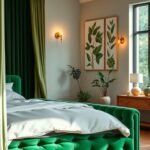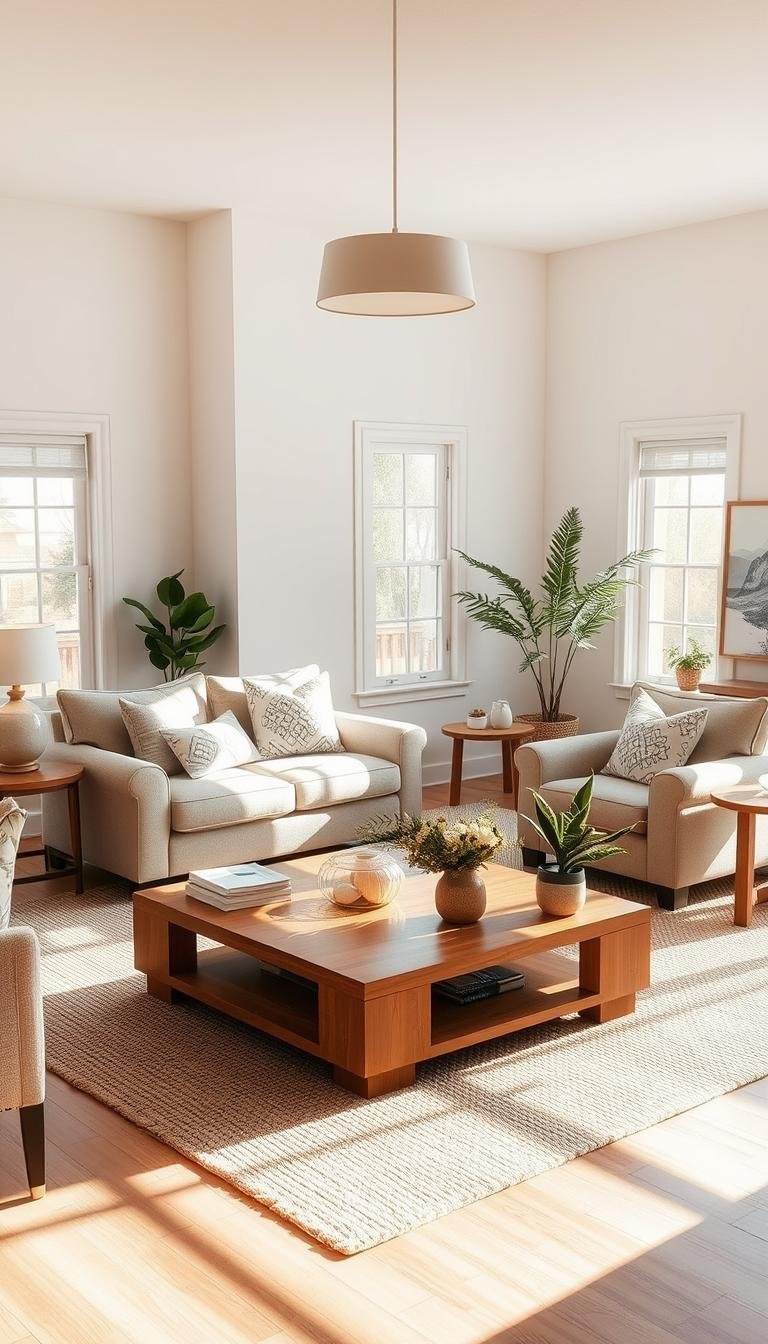
Welcome to your guide for creating a beautiful, inviting space. A well-designed area should be both comfortable and sophisticated.
Many people think simple color schemes lack personality. But with careful planning, you can create something truly special.
This approach works with various architectural styles. It also fits different personal tastes and preferences.
You’ll discover how to build a cozy yet stylish environment. This is a space you’ll enjoy for many years to come.
Get ready to transform your home into a place that balances elegance with everyday comfort.
Why Choose a Warm Neutral Living Room Design?
The foundation of any inviting interior begins with colors that welcome you home. These palettes create spaces that feel both comfortable and sophisticated.
Versatile color schemes adapt beautifully to changing trends. Your personal style can evolve over time without needing a complete redesign. This flexibility makes your investment last for years.
Soothing color palettes create a welcoming atmosphere. They’re perfect for both relaxation and entertaining guests. Your home becomes a true sanctuary.
These backgrounds reduce visual clutter significantly. They promote mental clarity and a sense of calm. Your mind can rest in an organized environment.
Favorite furniture and artwork stand out beautifully against subtle backgrounds. Each piece gets the attention it deserves. Your collections become the stars of the show.
Light behaves wonderfully throughout the day. Morning sun creates soft glows while evening light adds depth. Your space transforms with natural rhythms.
| Benefit | Impact on Your Home | Long-Term Value |
|---|---|---|
| Adaptability | Easy style updates over time | Reduces renovation costs |
| Atmosphere | Creates welcoming feeling | Enhances daily enjoyment |
| Visual Harmony | Reduces clutter perception | Maintains peaceful environment |
| Highlight Features | Accentuates favorite pieces | Preserves design integrity |
| Light Performance | Works in all conditions | Consistent beauty day and night |
| Resale Appeal | Broad buyer attraction | Higher property value |
Practical advantages extend beyond daily enjoyment. These schemes appeal to most buyers when selling your property. You maintain excellent resale value while enjoying your space now.
The warmth in these palettes creates emotional connections. You’ll find yourself loving your home more each year. It becomes a true reflection of your best life.
Beyond Boring: The Core Principles of Warm Neutrals
The secret to creating spaces that radiate comfort lies in mastering these key design approaches. These techniques transform simple color schemes into environments full of personality and charm.
Embrace Warm Undertones in Your Paint
Your choice of paint sets the foundation for the entire space. Colors with warm undertones create coziness instead of sterile environments.
Think about creams, beiges, and greiges for a balanced mix. These shades work beautifully on your walls throughout the day.
Consider special techniques like lime wash finishes. The Office of Tangible Space’s Brooklyn apartment shows how this adds depth and character.
Layer Textures and Natural Materials
Layering different texture elements creates visual interest and depth. This approach prevents your space from feeling flat or monotonous.
Mix bouclé fabrics with clay plaster walls for contrast. Natural materials like wood, stone, and linen bring organic warmth to rooms.
These elements work together to create an inviting feel. They add tactile qualities that make your space more engaging.
Incorporate Metallic Finishes for a Glow
Metallic accents add reflective qualities that make spaces glow. Brass, bronze, and copper finishes catch light beautifully.
These metal elements contribute to the overall warmth of your environment. They create subtle highlights throughout the room.
Strategic placement ensures these finishes enhance without overwhelming. They become integral parts of your cohesive design story.
Your Guide to the Best Neutral Color Palettes
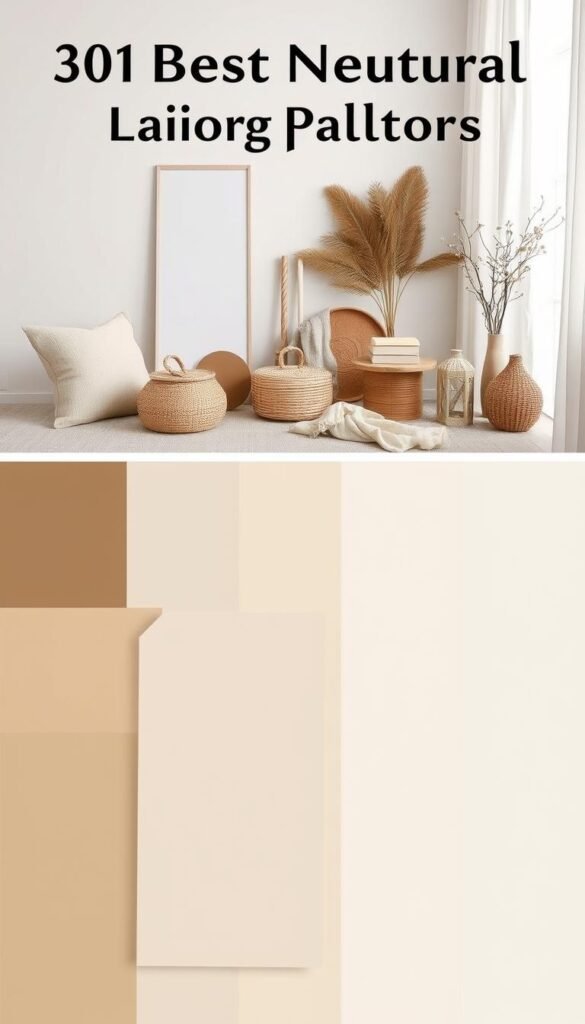
Discover the perfect foundation for your space with these timeless color schemes. The right background colors create harmony throughout your home.
These versatile shades work with any style from modern to traditional. They provide the ideal canvas for your personal expression.
The Classics: Cream, Beige, and Greige
Cream tones offer soft warmth that feels both elegant and inviting. They create beautiful light reflection throughout the day.
Beige hues bring earthy comfort to any environment. They pair wonderfully with natural materials like wood and stone.
Greige provides the perfect balance between cool and warm tones. This sophisticated blend works in various lighting conditions.
Expanding the Definition: Taupe, Gray, and Even Black
Taupe adds depth and complexity to your neutral palette. Designer Eva Bradley used this shade beautifully in her San Francisco Victorian.
Deep grays create moody yet comfortable atmospheres. Jeremiah Brent’s office lounge demonstrates this effect perfectly.
Charcoal tones add dramatic contrast while maintaining warmth. They work especially well in rooms with abundant natural light.
Black functions as a neutral color in interior design. Alfredo Paredes showcased this with jet black Venetian plaster.
Consider your room’s orientation when selecting shades. North-facing spaces need warmer tones to balance cool light.
South-facing rooms can handle cooler colors without feeling sterile. Test your chosen palette at different times of day.
Sample paints on large boards before committing. View them under both natural and artificial lighting conditions.
Your perfect neutrals should feel harmonious in all lighting. This ensures your space remains beautiful around the clock.
Neutral Living Room Designs That Feel Warm, Not Boring
Think a simple color scheme means sacrificing personality? Think again. Today’s approach to decorating with neutrals creates spaces bursting with character and charm.
These innovative ideas transform traditional concepts into something extraordinary. They prove that subtle palettes can deliver maximum impact.
Each example ahead showcases unique approaches to creating inviting rooms. You’ll discover how designers blend current trends with timeless appeal.
The following spaces demonstrate incredible diversity in style and execution. From minimalist sanctuaries to art-filled environments, there’s inspiration for every taste.
What makes these designs special is their ability to balance warmth with visual interest. They avoid the sterile feeling sometimes associated with neutral palettes.
These neutral living room concepts incorporate tactile elements and natural materials. They create depth through thoughtful layering and strategic accents.
You’ll see how restrained color schemes actually highlight personality rather than hide it. Favorite pieces and collections become the true stars of each space.
Prepare to explore twelve distinct approaches that redefine what neutrals can achieve. Each offers different inspiration points for various preferences and architectural styles.
| Design Approach | Key Characteristics | Best For |
|---|---|---|
| Contemporary Cream | Soft tones, clean lines, modern elegance | Urban apartments, minimalist lovers |
| Taupe Spectrum | Earthy depth, sophisticated layering | Traditional homes, texture enthusiasts |
| Maximalist Neutrals | Bold patterns, curated collections | Art collectors, eclectic tastes |
| Mural Walls | Artistic focal points, scenic elements | Statement seekers, nature lovers |
| Expanded Spectrum | Unexpected colors, broad palette | Adventurous decorators, color explorers |
| Black & White | High contrast, graphic elements | Modern spaces, dramatic effects |
These designs share one important quality: they age beautifully over time. You can enjoy your space today while knowing it will remain relevant for years.
The diversity ahead proves that neutral doesn’t mean limited. It means having a canvas that lets your personal style shine through.
1. The Contemporary Cream Sanctuary
Discover how a monochromatic cream palette can create depth and character. New York based designer Chad Dorsey masterfully demonstrates this approach in his projects.
Dorsey’s secret lies in strategic variation within a single color family. He uses different cream tones for walls, furnishings, and accessories. This creates visual harmony without monotony.
Pattern mixing plays a crucial role in adding interest. The feathery print on the main sofa introduces movement and personality. These subtle patterns catch the eye without overwhelming the space.
Texture variation is equally important for creating dimension. The Rug Company piece features varying pile heights that add tactile interest. Natural materials like wood and linen contribute to this layered effect.
Contemporary furniture silhouettes keep the design feeling fresh and modern. Clean lines and thoughtful proportions maintain visual lightness. These pieces anchor the space while allowing other elements to shine.
Artwork and accessories provide subtle contrast within the cream palette. Metallic accents catch light beautifully throughout the day. Carefully chosen objects add personal meaning and visual depth.
You can achieve this look in your own home with these key elements. Focus on quality pieces that offer both comfort and style. Remember that variation within a color family creates the most interesting results.
| Element | Product Suggestion | Why It Works |
|---|---|---|
| Sofa | Feather-print cream sofa | Adds pattern interest while maintaining color harmony |
| Rug | Textured cream area rug | Provides tactile variation underfoot |
| Wall Treatment | Cream lime wash paint | Creates subtle movement and depth on surfaces |
| Accessories | Brass and ceramic objects | Adds reflective qualities and organic shapes |
| Lighting | Modern cream shade lamps | Maintains color story while providing illumination |
2. The Taupe-Toned Spectrum
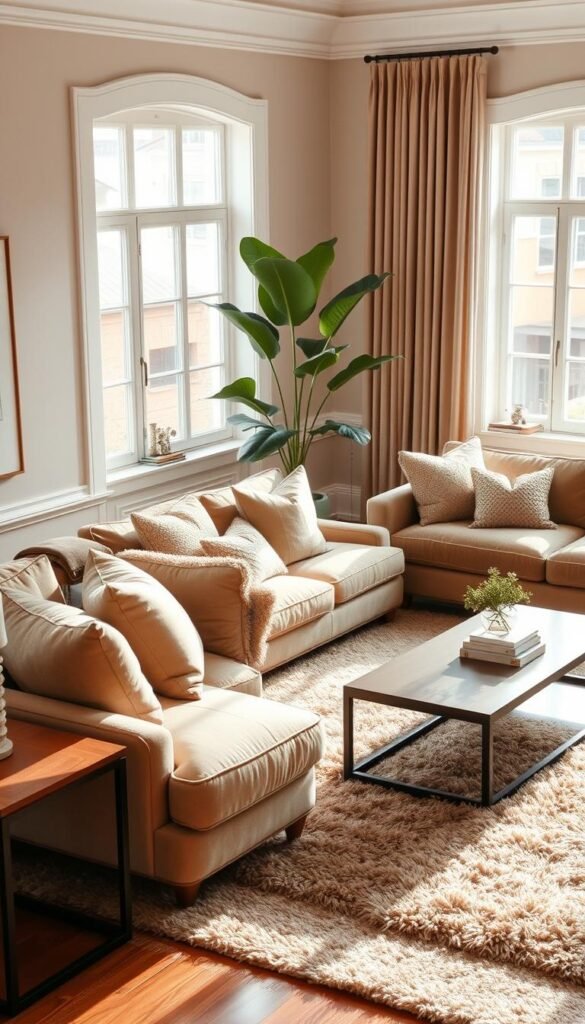
Unlock the power of subtle color gradation in your decor scheme. Designer Eva Bradley demonstrates this beautifully in her San Francisco Victorian home.
She uses multiple taupe shades to create remarkable depth. This approach makes spaces feel richly dimensional rather than flat.
The classic Mario Bellini sofa anchors the entire space. Its timeless design becomes the focal point of the tonal palette. This piece shows how furniture can harmonize with surrounding colors.
Ombré striped curtains add graceful movement throughout the room. They create visual interest without disrupting the cohesive color story. These subtle transitions guide your eye around the space.
This technique works especially well in period homes. Victorian architecture’s detailed moldings benefit from nuanced color variations. The layered tones highlight architectural features beautifully.
Selecting your color range requires careful consideration. Choose shades within the same family but different intensities. Test samples in your actual lighting conditions.
Prevent monotony by incorporating various textures and finishes. Mix matte surfaces with glossy accents for visual diversity. Add natural materials to enhance the organic feel.
Your space will feel both cohesive and dynamically interesting. This approach creates environments that are restful yet visually engaging.
3. Elegant Neutrals with Maximalist Flair
Who says subtle colors can’t make a bold statement? Redd Kaihoi’s stunning Upper East Side apartment proves otherwise. Their approach redefines what maximalism means within a restrained palette.
The designers embraced their client’s desire for a subdued New York aesthetic. They channeled maximalist energy through texture and material richness instead of bright colors. This creates depth without overwhelming the senses.
“Usually, we do like a fair amount of color,” the client told us. “But in New York, it felt right that the palette should be more subdued.”
Metallic finishes play a crucial role in adding luxury. Bronze, brass, and gilt wood elements catch light beautifully. These metal accents create subtle sparkle throughout the space.
The effect adds both glamour and warmth to the neutral foundation. These reflective surfaces make rooms feel brighter and more inviting. They transform simple color schemes into something special.
Rich materials create tactile interest everywhere you look. Think plush velvets, glossy ceramics, and matte wall finishes. This variety prevents the space from feeling flat or boring.
Pattern mixing adds another layer of visual complexity. Stripes, florals, and geometrics work together harmoniously. They create movement within the calm color story.
Urban settings benefit greatly from this sophisticated approach. The subdued palette provides a peaceful retreat from city chaos. It feels both elegant and completely livable.
You can achieve this look by starting with a solid neutral base. Add ornate details gradually to maintain balance. Let each decorative element have its moment to shine.
Consider oversized furniture pieces for dramatic impact. A grand tufted sofa makes a statement without bright colors. It becomes the focal point of your elegant space.
For more inspiration on balancing maximalist elements with neutrals, explore Mandy Moore’s approach to neutral maximalism. Her home demonstrates how to create rich, layered environments using similar principles.
Remember that maximalism in neutrals is about curated abundance. It’s not about filling space but about choosing meaningful pieces. Each addition should contribute to the overall harmony.
Your home can feel both luxurious and completely comfortable. This approach proves that restraint and richness can coexist beautifully. You’ll create a space that truly reflects sophisticated taste.
4. The Scenic and Serene Mural Wall
Transform your blank canvas into a breathtaking landscape without breaking your color scheme. The late design legend Suzanne Rheinstein mastered this approach in her New York apartment.
She created a bucolic oasis in the heart of concrete jungle using hand-painted murals. These artistic features became the soul of her space while maintaining neutral elegance.
Scenic elements create powerful focal points without introducing bright colors. They draw the eye while complementing your overall palette. Nature-inspired scenes bring organic warmth to urban environments.
Consider the difference between murals and wallpaper for your project. Hand-painted murals offer custom artistry and unique character. They become one-of-a-kind statements in your home.
Wallpaper provides more predictable patterns and easier installation. Both options work beautifully within restrained color schemes. Your choice depends on budget and desired artistic impact.
Select mural subjects that enhance rather than compete with your decor. Soft landscape scenes work wonderfully with neutral furnishings. Botanical themes add life without overwhelming the space.
Practical tips for incorporating large-scale artwork:
- Choose a wall with minimal architectural interruptions
- Ensure proper lighting to highlight the artwork’s details
- Keep surrounding furnishings simple to let the mural shine
- Consider the room’s sight lines from various angles
- Balance the mural with complementary textures elsewhere
This approach turns your plain wall into a conversation piece. It maintains serenity while adding incredible visual interest. Your space gains depth and personality without sacrificing calm.
5. The Expanded Neutral Spectrum

Modern design thinking challenges traditional boundaries of what constitutes a neutral palette. Andre Herrero of Charlap Hyman & Herrero demonstrates this beautifully in a California residence.
His approach expands the definition beyond conventional beiges and grays. Olive green and stainless steel become integral parts of the sophisticated scheme.
These unexpected elements function as neutrals when balanced properly. They add contemporary edge while maintaining overall harmony.
The warm beiges create a comforting foundation throughout the space. Cooler stainless steel elements provide refreshing contrast.
This balancing act prevents the environment from feeling too warm or too cold. It achieves perfect temperature equilibrium.
A surreal wall sculpture adds artistic interest without disrupting the neutral vibe. It becomes a focal point that complements rather than competes.
Testing unconventional colors in your space requires careful consideration. View samples in different lighting conditions throughout the day.
Notice how olive green can feel earthy and calming in certain contexts. It might work beautifully as a neutral in your environment.
Metallic elements like stainless steel bring modern sophistication to neutral designs. They reflect light and add subtle shimmer.
Consider incorporating metallic accents through lighting fixtures or hardware. These touches elevate the entire space without overwhelming.
Your expanded neutral palette should feel cohesive and intentional. Each addition should enhance the overall calming atmosphere.
This approach lets you personalize your space while maintaining serenity. You create something truly unique that still feels beautifully balanced.
6. The Bold Black and White Statement
Black and white create striking drama when balanced with thoughtful design. ELLE DECOR A-List designer Alfredo Paredes demonstrates this beautifully in a Vermont alpine retreat.
He painted the entire space white except for one dramatic feature. The chimney breast received jet black Venetian plaster treatment.
This creates an immediate focal point that anchors the room. Paredes described it as “more modern and kind of like an exclamation point against the slopes.”
High-contrast schemes can feel incredibly inviting when executed properly. The secret lies in balancing dramatic elements with comforting textures.
Venetian plaster adds remarkable depth and visual interest. Its subtle variations catch light differently throughout the day.
This approach works especially well in vacation homes and retreat settings. The bold statement complements natural surroundings without competing.
You can incorporate black elements gradually into your neutral scheme. Start with smaller accents before committing to larger features.
Consider these tips for using bold contrasts successfully:
- Balance black elements with plenty of natural light sources
- Incorporate warm wood tones and soft textiles to add warmth
- Use matte finishes rather than glossy for a softer appearance
- Create visual pathways that lead the eye around the space
- Test your contrast levels by viewing the space at different times
This design proves that dramatic contrast can feel both exciting and comfortable. Your space becomes memorable while maintaining cozy appeal.
| Element | Purpose | Effect |
|---|---|---|
| Black Venetian Plaster | Creates focal point | Adds modern drama and depth |
| White Walls | Provides background | Enhances brightness and space |
| Natural Materials | Adds texture | Brings organic warmth to contrast |
| Strategic Lighting | Highlights features | Creates dynamic shadows and highlights |
| Wood Accents | Provides balance | Softens the stark contrast effect |
Your high-contrast scheme should feel intentional and harmonious. Each element should contribute to the overall welcoming atmosphere.
This approach transforms simple color combinations into something extraordinary. You create spaces that are both dramatic and completely livable.
7. The Moody Charcoal Retreat
Dark color schemes can actually boost your home’s value while creating incredible style. Prospective buyers often pay more for spaces with sophisticated charcoal and gray paint.
Celebrity designer Jeremiah Brent shows how dramatic this approach can be. In his New York office lounge, he used ash-colored paint on every surface. Walls, ceilings, and window treatments all received the same deep treatment.
This comprehensive approach creates a cocoon-like effect that feels both intimate and luxurious. The dark tones wrap around you like a comfortable embrace.
Rich materials play a crucial role in making the scheme work beautifully. Black velvet armchairs add softness against the dramatic background. A bold marble mantel and gilt mirror introduce enigmatic luxury.
Deep charcoal shades work wonderfully in various lighting conditions. North-facing rooms benefit from their warmth-enhancing qualities. South-facing spaces gain sophistication and depth.
Balance dark walls with strategic lighting and reflective surfaces. Use multiple light sources at different heights. Incorporate metallic accents that catch and bounce light around the room.
Test your chosen paint colors in the actual space before committing. View samples at different times of day. Notice how natural light transforms the tones throughout daylight hours.
This moody approach creates spaces that feel both dramatic and completely inviting. You’ll enjoy the luxurious atmosphere every day while knowing it adds value to your home.
8. The Modern Farmhouse Neutral
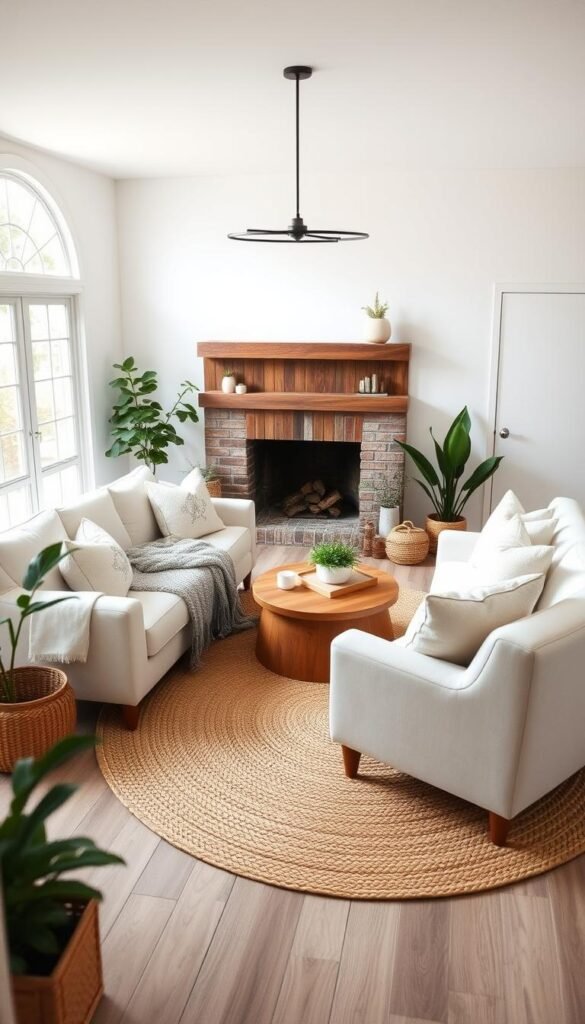
Love the modern farmhouse style but want something more subtle? Try this elegant neutral approach. ELLE DECOR A-List designer David Netto shows how it’s done in a beautiful new york country home.
He masterfully blends antique furniture from different time periods. The pieces create a collected-over-time feeling that feels authentic. This approach adds depth to your space.
Folk-inspired fabrics bring wonderful character to the scheme. Think simple patterns and natural textures. These elements add warmth without bright colors.
Netto uses complementary tones throughout the space. Everything feels connected yet interesting. The result is cohesive but never boring.
One brilliant touch? The painted ceiling! This technique draws your eye upward. It makes the room feel more complete and intentional.
“The magic happens when you mix pieces with soul. Each item should tell its own story while contributing to the whole.”
This style combines rustic charm with contemporary sophistication. It feels both timeless and current. You get farmhouse warmth without traditional country colors.
Here’s how to achieve this look in your home:
| Element | Selection Tips | Why It Works |
|---|---|---|
| Antique Furniture | Mix 2-3 eras maximum | Creatates depth and history |
| Fabrics | Choose natural fibers | Adds texture and comfort |
| Color Palette | Stick to 3-4 complementary tones | Maintains cohesion |
| Wood Elements | Mix finishes carefully | Adds organic warmth |
| Ceiling Treatment | Paint lighter than walls | Enhances height and light |
Start with one special antique piece you love. Build around it with simpler items. Let each piece have breathing room.
Choose wood finishes that complement each other. They don’t need to match perfectly. The variation adds character.
Keep patterns simple and repetitive. Stripes, checks, and small prints work well. They add movement without overwhelming.
Your modern farmhouse neutral will feel both fresh and familiar. It’s a style you’ll enjoy for years to come.
9. Nature’s Neutral: Letting the View Shine
When nature provides the perfect backdrop, your interior design should step aside and let the scenery shine. ELLE DECOR A-List designer Nicole Hollis mastered this approach in a stunning desert retreat.
Her strategy celebrates the surrounding landscape as the primary color source. The interior palette features travertine, bleached oak, and limestone. These elements harmonize beautifully with the desert environment.
Natural materials complement outdoor views without competing for attention. Travertine’s earthy tones mirror desert sands. Bleached oak adds warmth while maintaining lightness.
Limestone surfaces reflect natural light throughout the day. They create subtle transitions as sunlight changes. The materials feel both luxurious and completely organic.
This concept involves “getting out of the way” of beautiful settings. Minimal interiors allow architectural features to stand out. Your view becomes the main focal point.
Seamless transitions between indoor and outdoor areas enhance the experience. Large glass openings blur boundaries between environments. You feel connected to nature from every angle.
“The desert taught me that sometimes silence speaks louder than decoration. Letting the landscape dominate creates powerful serenity.”
Select materials that reflect your specific environment. Consider local stone varieties and native wood species. These choices create authentic connections to your surroundings.
Create quiet backgrounds that highlight your home’s best features. Neutral surfaces let architectural details command attention. Your view remains the undeniable star.
| Material | Environmental Benefit | Visual Effect |
|---|---|---|
| Travertine | Natural heat regulation | Earthy texture and warmth |
| Bleached Oak | Sustainable sourcing | Light, airy feeling |
| Limestone | Durable and timeless | Soft reflective qualities |
| Large Glass | Maximizes natural light | Seamless visual connection |
This approach creates spaces that feel both expansive and intimate. You enjoy breathtaking views without visual competition. Your home becomes a peaceful sanctuary.
Remember that sometimes less design creates more impact. Let your environment guide your material choices. The results will feel both intentional and effortlessly beautiful.
10. The Artful All-White Oasis
White interiors can transform your home into a serene yet sophisticated sanctuary. Alyssa Kapito’s New York City project demonstrates this approach beautifully. Her layered technique creates depth where you might expect simplicity.
Kapito uses multiple seating areas in soft white tones throughout the space. This arrangement works perfectly for entertaining while maintaining visual harmony. Each area feels connected yet distinct within the overall scheme.
The secret lies in varying shades and textures of white. Different materials catch light in unique ways throughout the day. This creates subtle movement and interest within the monochromatic palette.
Architectural lighting elements play a crucial role in this design. The plaster chandelier by Eric Schmitt provides both illumination and artistic presence. Kapito notes it “gives this lovely glow and a sense of architecture” to the room.
Selecting white paints requires attention to undertones and lighting conditions. North-facing rooms need warmer whites to balance cool light. South-facing spaces can handle cooler tones without feeling sterile.
Test paint samples on large boards before committing. View them at different times under both natural and artificial light. Your chosen white should feel harmonious in all conditions.
Maintain visual interest through varied textures and forms. Mix smooth surfaces with nubby fabrics and carved details. These elements create tactile richness that prevents flatness.
| White Type | Best For | Lighting Consideration |
|---|---|---|
| Warm White | North-facing rooms, cozy spaces | Balances cool natural light |
| Cool White | South-facing rooms, modern spaces | Enhances bright natural light |
| Pure White | Well-lit areas, crisp environments | Works with multiple light sources |
| Off-White | Traditional spaces, warm atmospheres | Softens harsh artificial light |
Your all-white space should feel both calming and character-filled. The right balance creates an environment that’s restful yet visually engaging. You’ll enjoy the serene atmosphere every day.
11. Earthy Neutrals with Lime Wash Texture
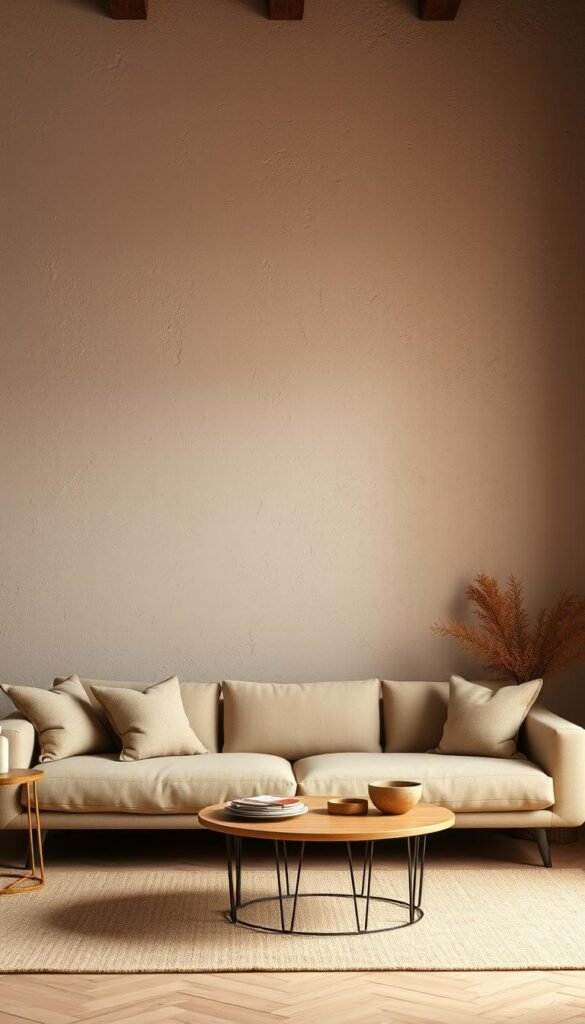
Lime wash paint brings ancient charm to modern interiors. This traditional technique creates surfaces that feel both timeless and contemporary.
The Office of Tangible Space transformed a Brooklyn apartment with this approach. They used lime wash to create organic texture throughout the space.
This finish produces subtle color variations that flat paint cannot achieve. Each brushstroke creates unique depth and character on your walls.
The result feels like living “in an acorn” according to the designers. This describes the cozy, protective quality lime wash provides.
Textured finishes make spaces feel more organic and natural. They connect your interior to earthy elements in a beautiful way.
That cavelike warmth comes from the finish’s soft, irregular surface. It catches light differently than smooth walls, creating visual interest.
Applying lime wash requires special techniques for best results:
- Start with properly prepared surfaces
- Use natural bristle brushes for authentic application
- Apply in cross-hatch patterns for even coverage
- Work in manageable sections for consistent results
Coordinate other elements carefully with textured walls. Choose simple furnishings that complement rather than compete.
Natural materials like wood and stone enhance the organic feel. They create harmony with the lime wash’s earthy character.
This approach adds emotional warmth through tactile surfaces. Your space becomes inviting in both visual and physical ways.
12. The Graceful Mix of Old and New
Augusta Hoffman’s refined approach shows how different eras can create beautiful harmony. Her work demonstrates a masterful blend of contemporary pieces with substantial antique elements.
She embraces timber’s natural materiality as a striking contrast. The dark wood elements stand out against lighter surroundings. This creates visual interest without overwhelming the space.
“We decided to embrace [timber’s] materiality and use it as a contrast to the surrounding spaces. With that, we had to make cognizant choices to make the rest of the space feel bright and open so that the dark wood tone didn’t overpower everything.”
Strategic balance is crucial when working with darker elements. Lighter walls and open layouts prevent the space from feeling heavy. This maintains an airy atmosphere despite substantial pieces.
Intentional material choices make mixed-era designs successful. Each piece should contribute to the overall harmony. Consider both visual weight and emotional impact.
Select antique pieces that complement your modern scheme. Look for clean lines that bridge historical and contemporary styles. The right antiques add character without dating your space.
When incorporating statement wood furniture, consider these balancing techniques:
| Element | Balancing Technique | Result |
|---|---|---|
| Dark wood antiques | Light wall colors | Creates contrast without heaviness |
| Substantial pieces | Open floor plan | Maintains spacious feeling |
| Rich wood tones | Matte finishes | Adds warmth without glare |
| Traditional shapes | Modern accessories | Bridges time periods beautifully |
| Detailed carvings | Simple backgrounds | Highlights craftsmanship |
Your mixed-era space should feel both collected and cohesive. Each piece tells its own story while contributing to the whole. The result is a home that feels both timeless and personally meaningful.
This approach lets you honor tradition while embracing modern comfort. You create environments that feel both grounded and forward-looking. It’s a style that grows more beautiful with time.
How to Pull Your Warm Neutral Look Together
Bringing your vision to life involves thoughtful layering of elements. This process creates a space that feels both cohesive and personally meaningful.
Start with your foundation pieces and build upward gradually. Each addition should enhance the overall warmth and harmony.
Selecting Your Key Furniture Pieces
Your main furniture sets the tone for the entire space. Choose pieces with clean lines and comfortable proportions.
Look for sofas and chairs in warm hues like cream or light taupe. These shades create an inviting foundation.
A sturdy coffee table in natural wood adds organic warmth. It becomes both functional and beautiful.
Consider scale when arranging your key pieces. Leave enough space for easy movement and conversation.
Choosing Textiles and Accents
Textiles introduce softness and personality to your neutral living room. A quality rug anchors the space while adding comfort underfoot.
Layer throw pillows in various textures and patterns. Mix knits, linens, and velvets for visual interest.
Window treatments should filter light gently. Sheer curtains maintain brightness while adding softness.
Decorative accents add warmth through material choices. Wood bowls, ceramic vases, and metal objects create depth.
The Final Layers: Art and Lighting
Artwork personalizes your space without disrupting the calm palette. Choose pieces that resonate emotionally while complementing your color story.
Frame selections matter as much as the art itself. Natural wood frames enhance warmth while black frames add contrast.
Lighting transforms your decor throughout the day. Combine overhead light with table lamps and floor lamps.
Warm bulb temperatures make living rooms feel cozy and inviting. Dimmers allow adjustment for different moods.
An interior designer might suggest testing your layout before finalizing. Move pieces around until the flow feels natural.
Remember that creating your perfect space takes time. Add elements gradually as you discover what works best.
For more inspiration on pulling together neutral schemes, explore ELLE DECOR’s collection of neutral living room. You’ll find numerous approaches that balance warmth with personal style.
Creating a Living Room You’ll Love for Years to Come
A well-planned space grows with you over time. It adapts to your changing tastes and life stages beautifully.
Your home should feel both comfortable and inspiring every day. This approach creates lasting emotional connections.
Take your time selecting pieces that truly resonate. Quality items age gracefully alongside your personal story.
Refresh your look with new textiles and accessories occasionally. Small updates keep your environment feeling fresh and current.
Your personalized design reflects who you are today. It also welcomes who you’ll become tomorrow.