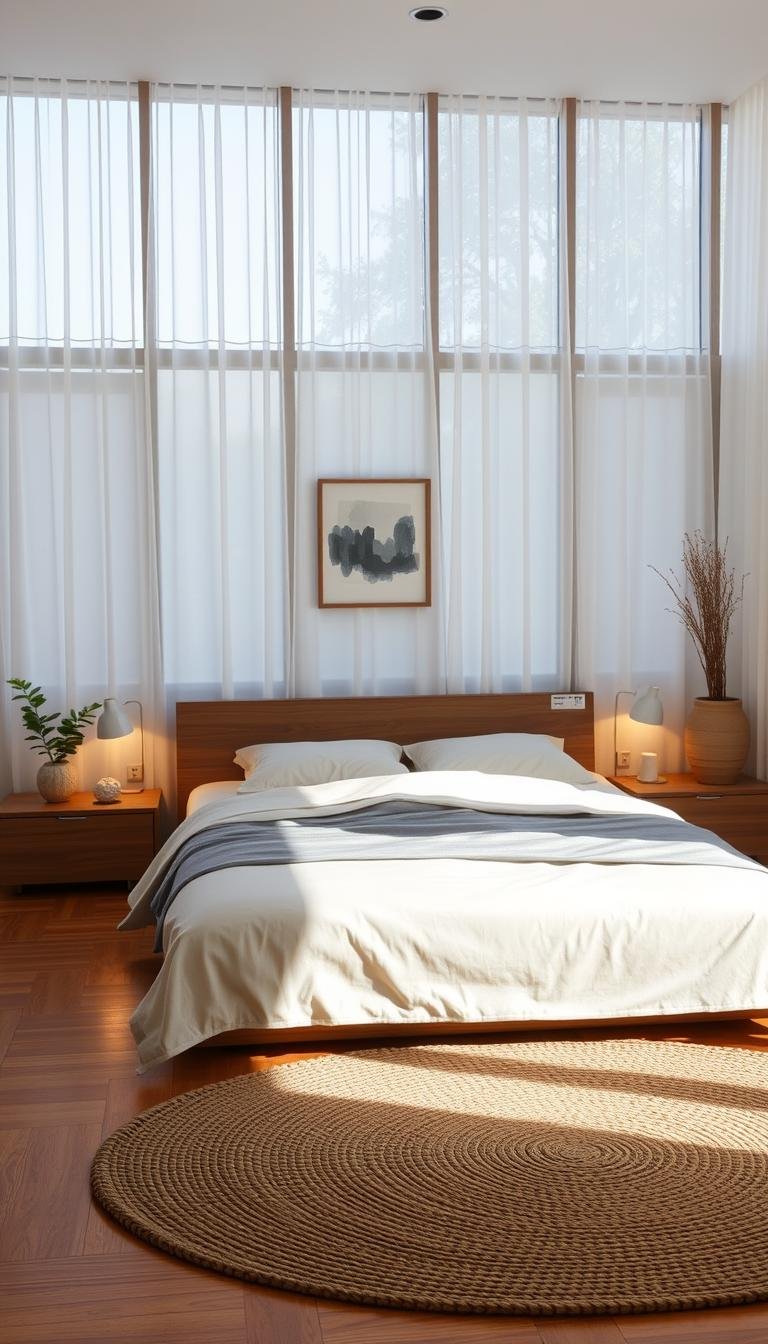
Your personal space should be a true sanctuary. It’s where you recharge and find peace. That’s why so many people are turning to a special design blend.
This look combines Japanese minimalism with Scandinavian coziness. It creates a room that feels both clean and incredibly warm. You get a space that is good for your soul.
Your sleeping area is the perfect spot for this aesthetic. It naturally promotes relaxation and a sense of retreat. We will show you how to achieve this beautiful and practical look.
Our guide offers fresh ideas for your home. We focus on creating a timeless yet current feel. You will learn how to build a room that supports your well-being every single day.
What Defines the Modern Japandi Bedroom Style?
The foundation of this look lies in blending two seemingly opposite approaches to living spaces. It brings together Nordic comfort with Eastern tranquility in a way that feels both fresh and timeless.
This design philosophy didn’t appear overnight. It grew from decades of cultural exchange between Scandinavia and Japan. Both regions value quality craftsmanship and thoughtful living.
The Fusion of Scandinavian Hygge and Japanese Wabi-Sabi
Scandinavian design brings the concept of hygge to the table. This Danish word describes that warm, cozy feeling you get when surrounded by meaningful objects and soft lighting.
Japanese design contributes wabi-sabi, which celebrates natural authenticity. It finds beauty in imperfection and values the marks that time leaves on materials.
These two philosophies might seem different at first. But they actually complement each other perfectly. One adds warmth while the other brings peaceful acceptance.
Here’s how these design traditions compare and combine:
| Scandinavian Elements | Japanese Elements | Combined Result |
|---|---|---|
| Hygge (cozy atmosphere) | Ma (appreciation of space) | Warm but uncluttered spaces |
| Functional practicality | Refined simplicity | Purposeful minimalism |
| Natural light emphasis | Natural material respect | Organic, light-filled rooms |
| Textural layers | Artisan craftsmanship | Tactile, handcrafted quality |
Core Principles: Simplicity, Functionality, and Natural Connection
Three main ideas guide this aesthetic. They help create spaces that are both beautiful and practical for daily life.
Simplicity means choosing quality over quantity. Every item in your space should serve a purpose or bring you joy. This approach reduces visual noise and mental clutter.
Functionality ensures your room works well for you. Furniture should be comfortable and practical. Storage solutions need to be smart and accessible.
Natural connection brings the outside world indoors. Use materials like wood, linen, and cotton. Include plants and allow natural light to flow freely.
When these principles work together, they create a special balance. You get the cozy comfort of Scandinavian design with the peaceful minimalism of Japanese aesthetics. The result is a space that feels both inviting and serene.
This fusion creates rooms that are not just pretty to look at. They actually support your wellbeing and help you feel more grounded every day.
Establish a Soothing and Neutral Color Palette
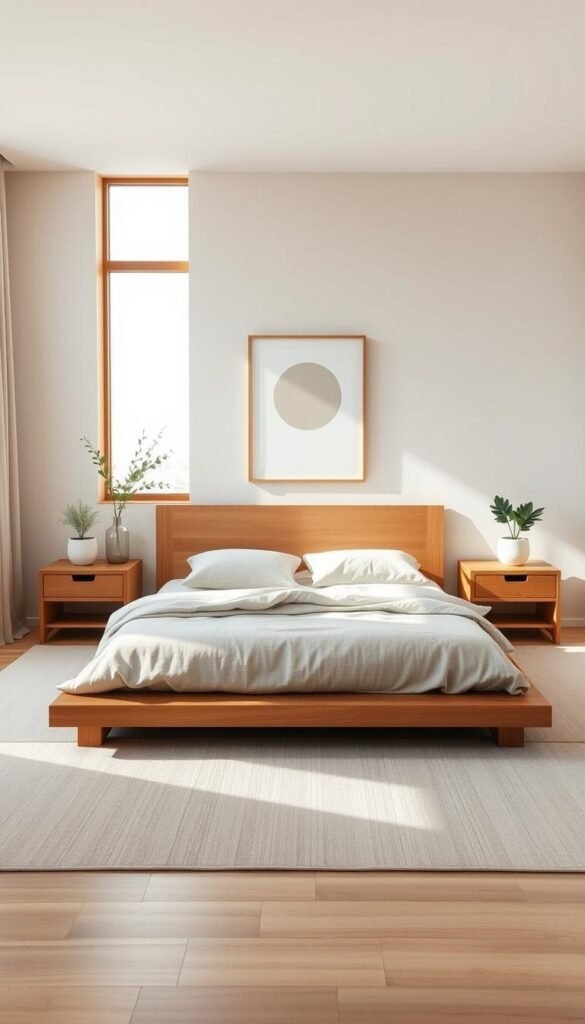
Color selection plays a crucial role in creating the peaceful atmosphere you desire. The right palette sets the emotional tone for your entire personal retreat.
This design approach favors soft, neutral schemes that promote deep tranquility. You’ll find these colors work together to create a harmonious look.
Embrace Earthy Tones and Warm Neutrals
Start with a foundation of earthy tones that ground your space. Think warm grays, soft tans, and gentle browns.
These colors create a calming effect that helps you unwind. They bring nature’s serenity right into your room.
Warm neutrals have a psychological impact on relaxation. They reduce visual stress and promote peaceful feelings.
Consider these soothing combinations:
- Warm gray walls with tan bedding
- Soft brown furniture against off-white tones
- Cream accents with earthy base colors
Incorporating Subtle Pops of Pastel Color
Add gentle color accents to create visual interest without overwhelming your space. Pastel shades work beautifully in this aesthetic.
Light blue or green tones bring ultimate calm to your retreat. They create a serene atmosphere perfect for relaxation.
Pale yellow adds warmth and positive energy to your room. It brightens the space while maintaining peaceful vibes.
Steely blue colors feel ethereal and complement natural surroundings. They work well with wood tones and natural materials.
Always test color samples in your specific lighting conditions. Natural light can change how colors appear throughout the day.
Your color choices should enhance natural light and create airy feelings. Lighter tones make rooms feel more spacious and open.
Remember to use texture for definition rather than filling your space with colors. This maintains a simple yet sophisticated palette.
Prioritize Quality and Natural Materials
The foundation of your serene space begins with thoughtful material selection. Choosing the right elements creates a room that feels both authentic and comforting.
Natural substances bring warmth and character that synthetic options simply cannot match. They develop a beautiful patina over time, telling the story of your daily life.
The Beauty of Wood: Oak, Cherry, and Maple
Wood forms the backbone of this aesthetic, offering both strength and visual appeal. Different species bring unique qualities to your personal retreat.
Oak stands out for its remarkable durability and distinctive grain patterns. It handles daily use beautifully while maintaining its structural integrity.
Cherry wood develops a richer, deeper color as it ages. This natural evolution adds character and depth to your space over time.
Maple provides a lighter, more elegant option with its smooth texture. It creates an airy feeling while still offering substantial strength.
“The best materials are those that grow more beautiful with each passing year, telling the story of a life well-lived.”
Consider this comparison when selecting wood for your space:
| Wood Type | Primary Characteristics | Best Use in Your Space |
|---|---|---|
| Oak | Exceptional durability, prominent grain | Bed frames, nightstands, flooring |
| Cherry | Rich color that deepens with age | Dressers, accent pieces, shelving |
| Maple | Light elegance, smooth finish | Desks, chairs, decorative elements |
Layering Textures with Linen, Wool, and Rattan
Texture plays a crucial role in creating visual and tactile interest. Layering different materials adds depth without overwhelming your senses.
Start with linen bedding for its breathable, casual elegance. This fabric feels wonderful against your skin and wrinkles beautifully.
Add wool throws for cozy warmth during cooler evenings. Their natural insulation properties provide comfort without bulk.
Incorporate rattan accessories for organic texture and visual lightness. These pieces bring natural rhythm to your arrangement.
Follow these simple guidelines for maintaining your natural materials:
- Dust wood surfaces regularly with a soft, dry cloth
- Clean linen and wool according to manufacturer instructions
- Protect rattan from excessive moisture and direct sunlight
- Use natural cleaning products to preserve material integrity
Mixing hard and soft substances creates balanced tactile experiences. The combination engages multiple senses simultaneously.
Your choices also support environmental sustainability. Natural options often outlast synthetic alternatives while being kinder to our planet.
Every material contributes to the overall sensory experience of your retreat. They work together to create a space that feels both grounded and inviting.
Choose Low-Profile and Functional Furniture
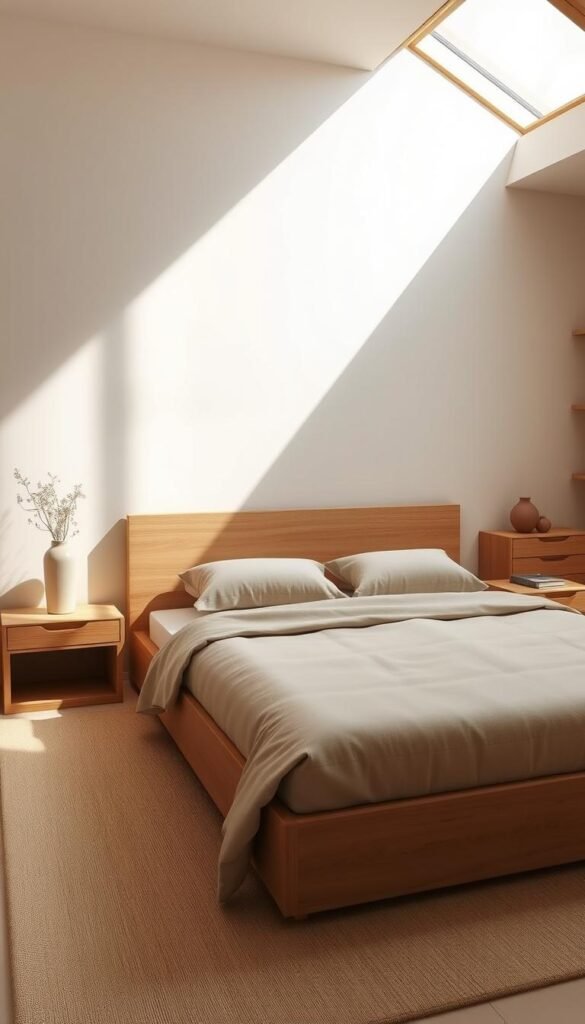
The pieces you select for your room set the tone for daily living. They should support both physical comfort and mental clarity.
This approach to furniture focuses on pieces that serve you well. Every item should have purpose and bring peace to your space.
The Significance of a Low-Slung Bed
Low beds connect you to traditional Japanese living. They honor the cultural practice of sitting and sleeping close to the floor.
This style creates an open, airy feeling in your room. It makes ceilings appear higher and spaces feel larger.
Your bed becomes a grounding element in your daily routine. Getting up and down fosters mindful movement throughout your day.
These beds work beautifully with various mattress types. They provide excellent support while maintaining their low profile.
Selecting Pieces with Clean Lines and Simple Shapes
Look for furniture with straight lines and minimal decoration. This approach emphasizes simplicity and function over ornamentation.
Clean designs create visual calm in your personal space. They allow other elements like textures and materials to shine.
Consider these practical benefits when selecting pieces:
- Low dressers with smooth, drawer operation
- Nightstands with hidden storage compartments
- Benches that serve as both seating and storage
Multifunctional pieces work especially well in this aesthetic. A storage ottoman can hold blankets while providing extra seating.
Mixing low pieces with standard height items creates balance. A tall wardrobe can complement your low bed beautifully.
| Furniture Type | Ideal Characteristics | Functional Benefits |
|---|---|---|
| Bed Frame | Low profile, hidden storage | Space saving, easy access |
| Nightstand | Minimal design, clean lines | Uncluttered surface, organized storage |
| Dresser | Simple hardware, quality joinery | Durability, smooth operation |
| Seating | Low height, natural materials | Comfort, aesthetic harmony |
Scale matters when arranging your room. Properly sized pieces make your space feel intentional and peaceful.
Every furniture choice should contribute to your overall wellbeing. They support a lifestyle centered on mindfulness and comfort.
Implement Smart and Streamlined Storage Solutions
A peaceful retreat begins with thoughtful organization. Clever storage keeps your space calm and clutter-free.
Everything needs a proper place in your personal sanctuary. This approach supports both visual harmony and mental clarity.
Integrating Built-In Wardrobes and Millwork
Custom storage solutions blend seamlessly with your room’s architecture. They create a unified look that feels intentional and peaceful.
Built-in wardrobes maximize your available space beautifully. They provide ample room for clothing while maintaining clean lines.
Flat-fronted doors honor Japanese simplicity principles. They offer functional storage without visual distraction.
Consider these benefits of integrated storage systems:
- Custom sizing for perfect fit in your specific space
- Hidden compartments that maintain minimalist aesthetics
- Quality craftsmanship that lasts for years
- Seamless integration with room design
Millwork creates storage that feels like part of the architecture. It transforms practical needs into design features.
Using Natural Reed and Seagrass Baskets
Natural storage solutions add texture while serving practical purposes. They keep everyday items accessible yet out of sight.
Reed and seagrass baskets bring organic warmth to your home. Their natural variations celebrate beautiful imperfections.
These containers work perfectly for storing frequently used items. Think bedding, reading materials, or personal care products.
Follow these simple guidelines for basket selection:
- Choose sizes that fit your specific storage needs
- Mix different shapes for visual interest
- Select materials that complement your existing decor
- Consider handles for easy transportation
Baskets help maintain the “everything in its place” philosophy. They contribute to mental clarity by reducing visual clutter.
Before implementing new storage solutions, declutter your existing items. This process ensures you only keep what truly serves you.
Hidden storage opportunities exist in unexpected places. Consider under-bed drawers or wall niches for discreet organization.
Smart storage supports the core principle of functionality. It ensures your space works efficiently while maintaining serene atmosphere.
For more inspiration on creating peaceful retreats, explore these japandi bedroom ideas that balance beauty and practicality.
Incorporate Thoughtful Lighting for an Ambient Glow
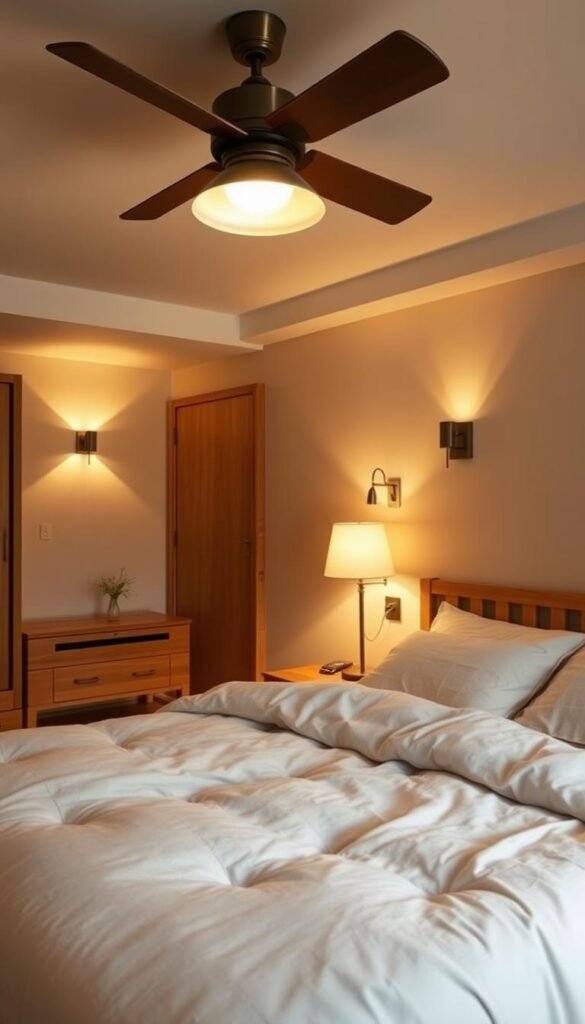
Lighting transforms your room from functional to deeply personal. It creates emotional resonance that affects your mood throughout the day.
The right illumination brings warmth and dimension to your interior. It highlights textures and colors in beautiful ways.
Your lighting strategy should include three main types working together. Each serves a different purpose in your space.
Integrating Discreet Architectural Lighting
Built-in lighting creates clean lines without visual clutter. It hides within your architecture for a seamless look.
Consider recessed ceiling lights that wash walls with soft illumination. Cove lighting tucked behind crown molding adds gentle upward glow.
Picture lights highlight artwork without overwhelming your space. Under-cabinet lighting provides practical task illumination.
Integrated lighting behind wall panels eliminates table lamps and wires. This approach maintains minimalist principles beautifully.
The Importance of Dimmers and Ambient Lamps
Dimmer switches give you complete control over light intensity. They let you adjust brightness for different times and activities.
Ambient lamps create pools of warm light throughout your room. They add depth and flexibility to your lighting design.
Consider these lighting types and their ideal placements:
| Lighting Type | Primary Function | Best Placement |
|---|---|---|
| Recessed Lighting | General ambient illumination | Ceiling, spaced evenly |
| Pendant Lights | Focused task lighting | Above nightstands, reading areas |
| Wall Sconces | Accent and mood lighting | Beside bed, above seating |
| LED Strips | Architectural highlighting | Behind headboard, under furniture |
Layer different sources for depth and flexibility. Combine overhead lights with floor lamps and subtle accent lighting.
Natural light enhancement comes through strategic window treatments. Sheer curtains diffuse sunlight while maintaining privacy.
Your lighting choices affect how colors and textures appear. Warm tones make natural materials look richer and more inviting.
Select fixtures with simple shapes and natural materials. Paper lanterns, wood bases, and matte metal finishes align perfectly with this aesthetic.
Remember that lighting should serve both practical and emotional needs. It creates atmosphere while helping you see clearly.
Bring the Outdoors In with Strategic Greenery
Nature’s presence transforms your personal space into a living sanctuary. It bridges the gap between your interior and the natural world outside.
This connection goes beyond simple decoration. It taps into biophilic design principles that humans naturally crave.
Plants do more than just look beautiful. They actively contribute to your wellbeing and air quality.
Choosing the right greenery creates harmony rather than clutter. It brings life to your space without overwhelming it.
Selecting a Single, Statement Houseplant
Less truly is more when it comes to plant selection. One well-chosen specimen makes a stronger impact than many small ones.
Your statement plant becomes a focal point in the room. It draws the eye without competing with other design elements.
Consider these factors when choosing your centerpiece plant:
- Proportion to your room size and furniture scale
- Growth habits and maintenance requirements
- Visual compatibility with your color scheme
- Leaf shape and texture variations
Tall plants like fiddle leaf figs work well in corners. They add vertical interest without taking up floor space.
Your plant should feel like it belongs in its place. It should complement rather than dominate your design.
Choosing Air-Purifying Varieties for Wellbeing
Some plants actively clean your air while adding beauty. They remove toxins and increase oxygen levels overnight.
NASA studies show certain varieties excel at air purification. These make perfect companions for your sleeping space.
Snake plants work particularly well in bedroom environments. They release oxygen at night while absorbing carbon dioxide.
Money plants filter common household pollutants effectively. Their trailing vines add graceful movement to your space.
English ivy helps reduce airborne mold particles. Weeping figs remove formaldehyde from your environment.
All these varieties thrive in typical indoor conditions. They require minimal care while providing maximum benefits.
“Plants breathe life into our homes literally and figuratively, creating environments that nurture both body and soul.”
Proper placement ensures your plants stay healthy and effective. Most air-purifying varieties prefer bright, indirect light.
Keep plants away from direct heat sources or drafts. Rotate them occasionally for even growth and light exposure.
Water according to each plant’s specific needs. Overwatering causes more problems than underwatering.
Clean leaves regularly to maintain optimal air purification. Dust-free leaves perform their functions better.
The psychological benefits of greenery are equally important. Studies show plants reduce stress and improve mood.
They create a sense of vitality and connection to nature. This supports mental clarity and emotional balance.
Your green companion becomes part of your daily routine. Caring for it provides mindful moments of connection.
This simple act reinforces the peaceful atmosphere you’ve created. It brings the outdoors in beautifully.
Accessorize with Meaningful and Handcrafted Decor
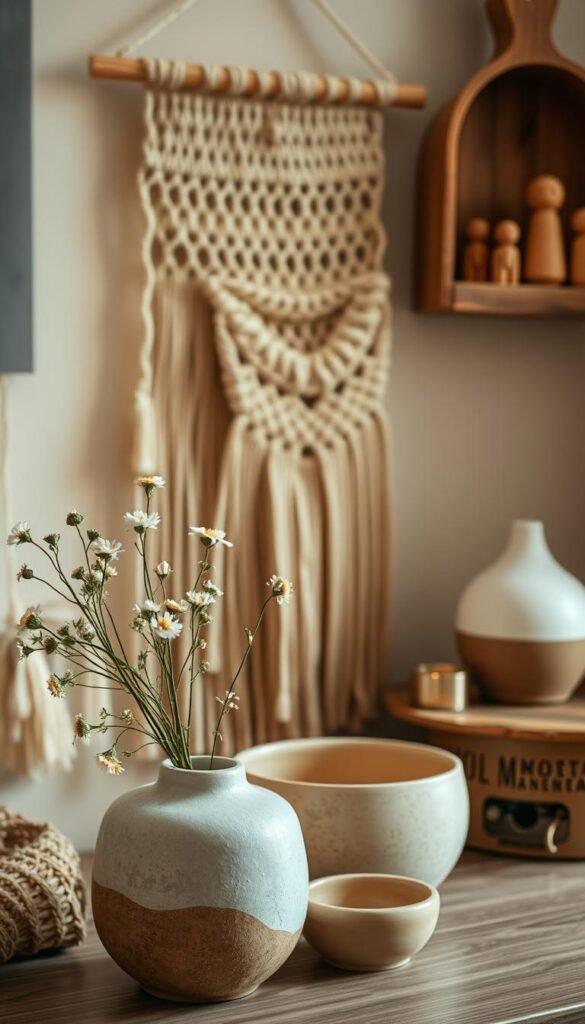
The final layer of your personal retreat comes through thoughtful decoration. These finishing touches should reflect your values and bring daily joy.
This approach values substance over superficial decoration. Every object you display should have purpose or personal meaning.
Your accessories tell the story of who you are and what you love. They transform a beautiful space into your unique sanctuary.
Celebrating Imperfection with Wabi-Sabi Pieces
The Japanese concept of wabi-sabi finds beauty in natural imperfection. It honors the marks that time and use leave on objects.
This philosophy encourages you to appreciate items with character. A ceramic vase with slight asymmetry becomes more interesting than a perfect one.
Handcrafted wooden bowls often show the artisan’s touch through subtle variations. These details make each piece truly one-of-a-kind.
Look for these qualities when selecting wabi-sabi inspired items:
- Natural materials that age gracefully over time
- Visible craftsmanship that shows human hands at work
- Subtle imperfections that add character and story
- Organic shapes that feel natural rather than manufactured
These pieces develop richer patinas as the years pass. They become more beautiful with each passing season.
Opting for Vintage and Second-Hand Finds
Previously loved items bring history and soul into your space. They often showcase quality craftsmanship from earlier eras.
Vintage shopping offers unique discoveries you won’t find in mass production. Each find feels special because it has already stood the test of time.
Consider these benefits when exploring second-hand options:
- Superior materials and construction methods from past decades
- Environmental sustainability through reuse and recycling
- Cost savings compared to new items of similar quality
- Unique character that cannot be replicated in new production
Evaluate potential finds using these quality indicators:
| Material Type | Quality Signs | Red Flags |
|---|---|---|
| Wood | Solid construction, dovetail joints | Particle board, plastic veneers |
| Ceramics | Weighty feel, consistent glazing | Cracks, chips, unstable bases |
| Textiles | Natural fibers, tight weaving | Pilling, stains, weak seams |
Functional accessories serve dual purposes in your space. A beautiful teapot becomes both decor and practical item for daily use.
Books you actually read add personal meaning while serving as decorative elements. They share your interests and values with visitors.
Curate your collection rather than accumulating clutter. Each piece should have breathing room to be properly appreciated.
Balance decorative items with empty surfaces. This negative space allows your eyes to rest and appreciate each object fully.
“The most meaningful spaces contain objects that whisper stories of lives well-lived and moments cherished.”
Your accessories should reflect journeys and memories. They personalize your space in ways that new mass-produced items cannot.
Take time to find pieces that truly resonate with you. The search itself becomes part of your design journey.
Play with Subtle Pattern and Texture
The surfaces around you shape how your space feels every day. They add depth and character without overwhelming your senses.
This approach focuses on tactile experiences rather than bold statements. It creates visual interest through gentle variations.
Natural materials bring organic warmth to your walls and surfaces. They celebrate imperfections that make each piece unique.
Introducing Delicate, Nature-Inspired Prints
Choose patterns that reflect the natural world around you. Flowing botanical motifs work beautifully in serene spaces.
Look for designs with soft, organic shapes rather than sharp geometrics. These create a calming effect on your eyes.
Consider these elements when selecting prints:
- Subtle leaf or branch patterns on textiles
- Water-inspired flowing designs on accent pieces
- Stone or wood grain patterns on smaller items
Scale matters with pattern selection. Smaller repeats feel more delicate in minimalist spaces.
Using Textured Wallpapers like Grasscloth
Textured wall coverings add dimension without strong color. They create gentle shadow play throughout your room.
Grasscloth brings natural fiber texture to vertical surfaces. Its woven quality adds handmade character to your space.
Other options include:
- Brushed suede finishes for soft tactile appeal
- Washed linen textures for casual elegance
- Raw silk wall coverings for subtle shimmer
Test samples in your actual lighting conditions. Texture appears differently throughout the day.
Mixing various surfaces creates rich sensory experiences. Combine smooth wood with nubby textiles and woven elements.
This layering approach adds warmth to minimalist principles. It makes your space feel inviting rather than stark.
Remember that texture often replaces bold pattern in this design philosophy. It provides visual interest without visual noise.
Your choices should feel cohesive rather than random. Let materials guide your selection process.
Tactile surfaces contribute significantly to your comfort. They make your space feel grounded and authentic.
Every texture you introduce should serve your overall vision. It should enhance rather than distract from your peaceful retreat.
Minimize Clutter to Maximize Calm
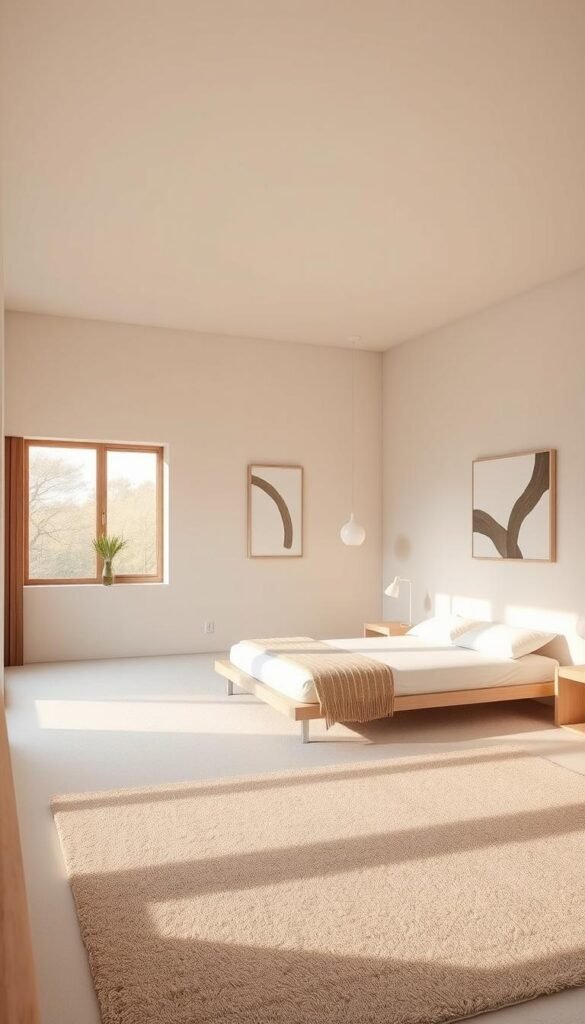
True peace begins with open, breathable environments. The absence of excess creates room for mental clarity and daily renewal.
Japanese philosophy honors emptiness as much as presence. This approach transforms how you experience your personal area.
The “Ma” Principle: Embracing Negative Space
Ma represents the beautiful pause between objects. It’s the thoughtful gap that gives meaning to what surrounds it.
This concept values emptiness as active design element. Negative space becomes part of your room’s visual language.
Empty areas allow your eyes to rest comfortably. They create visual breathing room throughout your environment.
Think of Ma as the silence between musical notes. Both elements need each other to create harmony.
“In the space between clutter and emptiness, we find room to breathe and simply be.”
Curating Your Belongings for a Clear Space
Start by gathering everything from one category. Clothing, books, and personal items work well for this process.
Ask yourself three simple questions about each piece:
- Do I use this regularly?
- Does it bring me genuine joy?
- Does it serve a practical purpose?
Be honest about what truly deserves your space. Let go of items that no longer serve your current life.
Create three piles: keep, donate, and discard. This system makes decisions clearer and more manageable.
Sentimental pieces deserve special consideration. Display meaningful items rather than storing them unseen.
Choose a few cherished objects to keep visible. They should tell your story without creating visual noise.
Physical clutter directly affects mental clarity. A clear environment supports peaceful thinking and relaxation.
Maintain your organized space with daily habits. Return items to their designated place after use.
Implement a “one in, one out” rule for new acquisitions. This prevents gradual accumulation over time.
Regular mini-decluttering sessions work wonders. Spend five minutes daily tidying one small area.
Your efforts create a sanctuary of simplicity. Every object has purpose, and every space breathes freely.
This approach honors both your belongings and the emptiness between them. You create balance through thoughtful curation.
Your Guide to Modern Japandi Bedroom Styling Tips for 2026
Creating your perfect retreat involves understanding both the principles and practical application of this beautiful aesthetic. You now have the foundation to build a space that serves your wellbeing for years to come.
Key Takeaways for a Successful Design
Remember these core principles when creating your space. They form the backbone of this timeless approach to living.
Start with a neutral color palette using earthy tones and warm neutrals. Add subtle pastel accents for gentle visual interest without overwhelming the senses.
Choose natural materials that age beautifully over time. Wood, linen, and rattan bring organic warmth and character to your environment.
Select low-profile furniture with clean lines and simple shapes. Each piece should serve multiple functions while maintaining visual calm.
Implement smart storage solutions that keep clutter out of sight. Built-in options and natural baskets work beautifully in this aesthetic.
Layer lighting to create ambient glow throughout your space. Use dimmers and ambient lamps for flexible illumination.
Incorporate strategic greenery with air-purifying plants. They improve air quality while adding life to your room.
Accessorize with meaningful, handcrafted pieces that tell your story. Choose items with character and personal significance.
Embrace texture over bold pattern for visual interest. Natural variations create depth without visual noise.
Maintain negative space as an active design element. Allow your eyes to rest between objects and arrangements.
Future-Proofing Your Japandi Sanctuary
This design approach transcends temporary trends by focusing on timeless principles. Your space will feel relevant and beautiful for many years.
Invest in quality pieces that withstand the test of time. Well-crafted furniture and materials develop character as they age.
Adapt these principles to any room size or layout. The aesthetic works equally well in compact spaces and larger areas.
Incorporate your personal style within the framework. Choose colors and accessories that reflect your unique tastes.
Implement budget-friendly versions by focusing on key elements. Start with foundational pieces and add gradually over time.
Maintain your space through regular curation and editing. Remove items that no longer serve your current needs.
The long-term benefits include improved mental clarity and daily comfort. Your investment pays dividends in wellbeing.
Continue learning through reputable design resources and publications. Stay inspired while maintaining core principles.
“A well-designed space grows with you, reflecting life’s changes while providing constant comfort and peace.”
Your personal retreat should evolve as your needs change. The flexibility of this approach allows for natural progression over time.
Remember that true style comes from authenticity rather than strict rules. Let your space reflect what brings you genuine joy and comfort.
Embracing the Japandi Mindset for Lasting Tranquility
Your home becomes a true retreat when you embrace this design philosophy fully. It’s about more than just beautiful interiors.
This approach transforms how you live day to day. You learn to find beauty in simple moments and imperfect details.
Connect with nature through small daily rituals. Enjoy morning light or the texture of handmade objects around you.
Your space supports mindfulness and calm thinking. It encourages you to slow down and appreciate life’s simple pleasures.
This style creates a personal world that nurtures your wellbeing. It’s a sanctuary that grows more meaningful over time.
Let these principles guide your choices beyond decoration. They help build a life filled with intention and peace.