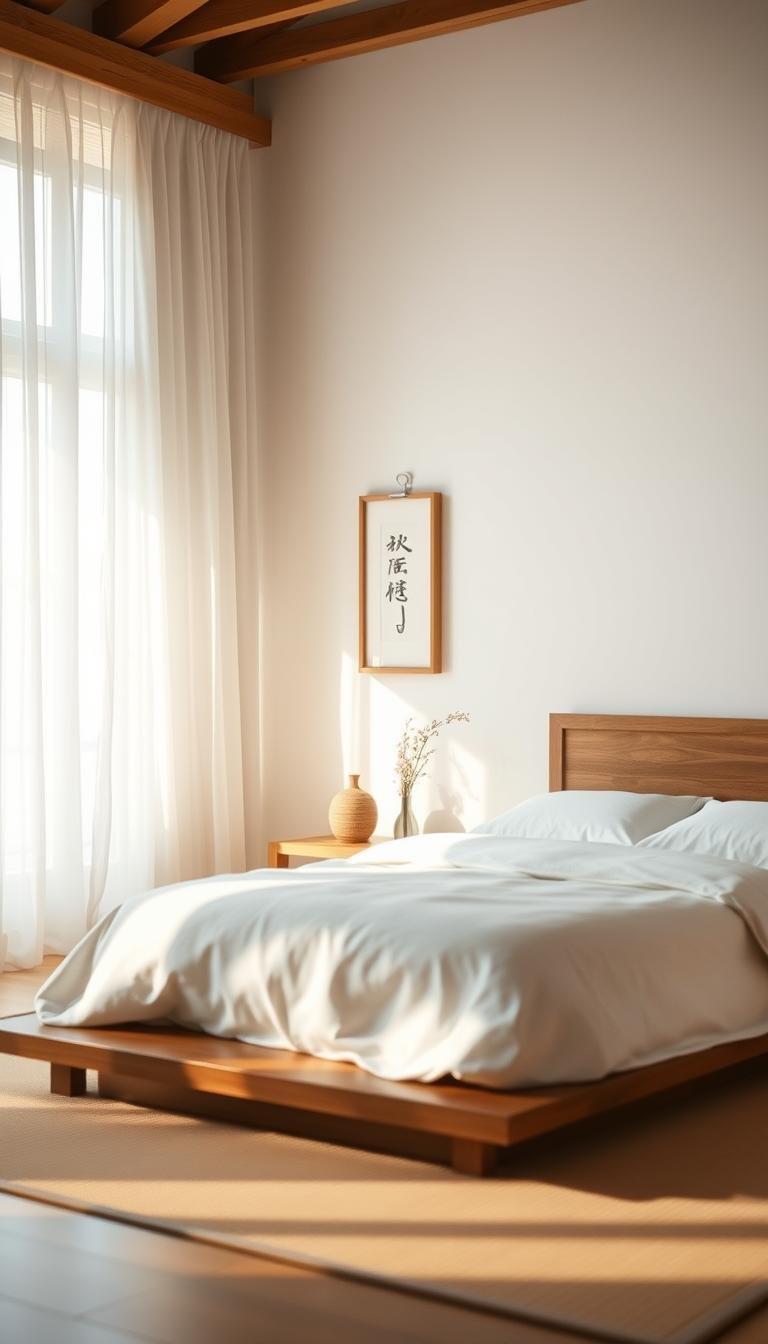
Imagine transforming your personal space into a peaceful sanctuary. This design approach creates a harmonious environment perfect for unwinding.
The style combines minimalist principles with natural elements. It brings warmth and simplicity to your room.
Many modern homes now embrace these design ideas. They create a serene atmosphere that promotes better sleep.
This guide will show you how to implement these elements. You’ll learn about color tones, lighting, and materials like wood.
Discover how to achieve comfort and balance in your space. These principles work in various room sizes and layouts.
Understanding the Core of Japanese Bedroom Design
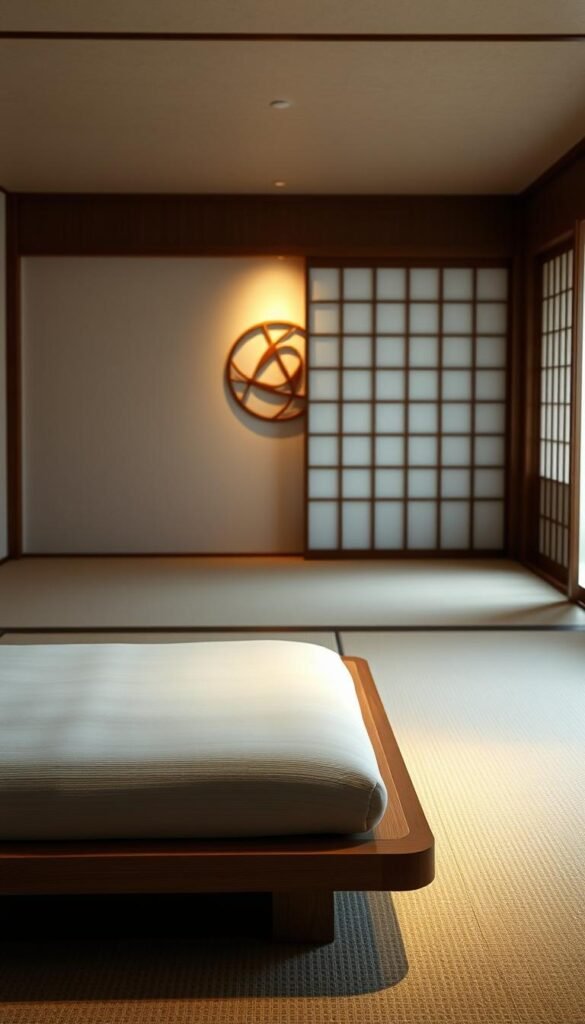
At the heart of this serene approach lies a deep connection between design and philosophy. These principles transform ordinary rooms into peaceful retreats. They focus on creating harmony between all elements in your space.
The Philosophy of Wa (Harmony) and Ma (Space)
Wa represents the beautiful balance between all components in your room. It ensures every piece works together seamlessly. This creates a sense of unity throughout your environment.
Ma celebrates the importance of empty areas between objects. It values negative space as much as physical elements. This philosophy helps your mind relax in uncluttered surroundings.
These concepts work together to create tranquil spaces. They encourage mindfulness through intentional arrangement. Your room becomes a reflection of thoughtful design choices.
Blending Minimalism with Warmth
This design approach combines clean lines with natural comfort. It avoids cold sterility through thoughtful material selection. The result feels both organized and inviting.
Different wood tones add visual interest while maintaining simplicity. Raw materials like bamboo bring organic texture. These elements create warmth without adding clutter.
The balance between rustic and refined characterizes authentic designs. It mixes natural imperfections with precise craftsmanship. This creates a lived-in yet polished atmosphere.
| Design Element | Traditional Approach | Modern Adaptation |
|---|---|---|
| Space Utilization | Emphasis on empty areas (Ma) | Strategic negative space planning |
| Material Selection | Natural materials like wood and paper | Sustainable materials with natural finishes |
| Color Palette | Earth tones from natural elements | Neutral bases with earthy accents |
| Furniture Pieces | Low-profile, multi-functional items | Streamlined furniture with clean lines |
| Light Management | Soft, diffused natural light | Layered ambient lighting solutions |
These principles differ from Western decoration approaches. They prioritize atmosphere over ornamentation. Your space becomes a functional sanctuary for daily life.
You can apply these concepts in various room sizes. They work in both large master suites and cozy spaces. The focus remains on creating personal harmony.
Embrace Minimalism for a Clutter-Free Sanctuary
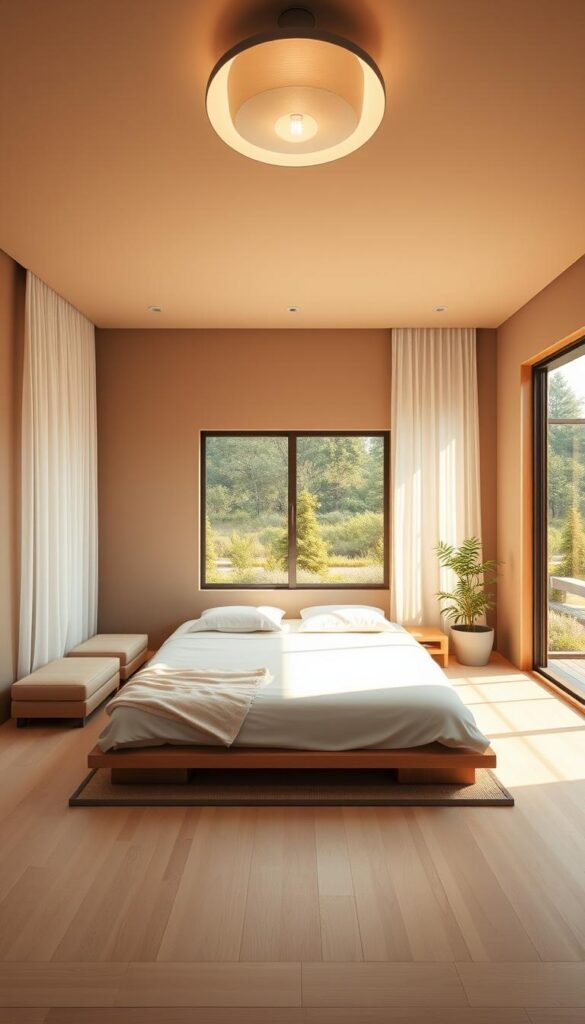
Transform your sleeping area into a clutter-free haven through thoughtful editing. This approach creates mental clarity and physical comfort in your personal space.
Minimalist design focuses on what truly matters in your room. It removes distractions while keeping essential elements.
Streamlining Your Belongings
Decluttering forms the foundation of a peaceful environment. Start by removing items that don’t serve purpose or bring joy.
Create designated homes for necessary belongings. Use hidden storage solutions to maintain clean surfaces.
Regular editing prevents accumulation over time. Schedule seasonal reviews of your possessions.
Designer Erin Roberts emphasizes balanced, calming spaces through intentional reduction. Her approach combines minimalism with warm tones for comfort.
This editing process creates visual breathing room. Your mind can relax in uncluttered surroundings.
Choosing Multi-Functional Furniture
Select pieces that serve multiple purposes without compromising style. These solutions maximize functionality in limited space.
Platform beds with built-in drawers offer smart storage. They maintain clean lines while providing practical organization.
Folding furniture adapts to changing needs throughout the day. It disappears when not in use, preserving open areas.
| Furniture Type | Primary Function | Secondary Benefits | Best For |
|---|---|---|---|
| Platform Storage Bed | Sleeping surface | Hidden drawer storage | Small rooms needing organization |
| Foldable Nightstand | Surface space | Collapses when not needed | Flexible space arrangements |
| Modular Shelving | Display and storage | Reconfigurable layouts | Changing storage needs |
| Bench with Storage | Seating | Internal compartment | End of bed solutions |
Quality pieces outperform numerous cheaper items. Invest in well-crafted furniture that lasts years.
These choices align with Japanese design principles of simplicity and function. They create harmony between form and purpose.
Your space becomes both beautiful and practical. This balance supports relaxation and mental clarity.
Maintain your minimalist environment through consistent habits. Put items away immediately after use.
Edit new acquisitions carefully before introducing them. Ask if each piece serves multiple functions or brings joy.
This ongoing practice preserves your serene sanctuary. It becomes a refreshing retreat from daily chaos.
Select a Soothing, Nature-Inspired Color Palette
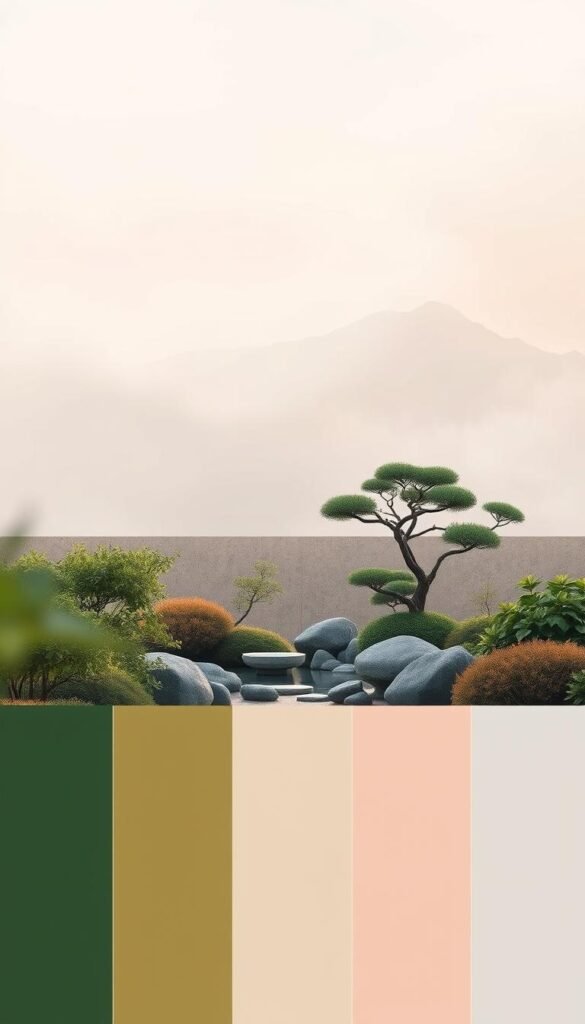
Your color choices create the foundation for a tranquil retreat. They set the mood before you add any furniture or decor.
Nature provides the perfect inspiration for calming hues. Think of soft skies, earthy tones, and organic materials.
Designer Julee Wray explains the approach:
We combine neutral bases with natural accents like deep browns and soft greens to capture that serene feel.
Foundational Neutral Tones
Start with a neutral base for your walls and large surfaces. These colors create a calm backdrop for your entire space.
Soft beiges work beautifully as foundation colors. They bring warmth without overwhelming your senses.
Warm taupes add depth while maintaining serenity. Creamy whites reflect light and create airy openness.
These neutral foundations support the overall design principles. They allow other elements to shine without competition.
Accenting with Earthy Hues
Add depth and interest with nature-inspired accent colors. These hues bring the outside world into your personal environment.
Deep browns complement wood tones beautifully. They create harmony with natural materials throughout your room.
Soft greens echo peaceful forest settings. Muted blues reflect calm water and sky elements.
Gray-ish greens offer sophisticated earthy accents. They work well with both traditional and modern design styles.
Balance your color scheme with careful proportion. Use the 60-30-10 rule for best results.
Let neutrals cover 60% of your visual space. Choose one accent color for 30% coverage.
Use a second accent for the remaining 10%. This creates visual interest without overwhelming harmony.
Colors affect your mood and sleep quality profoundly. Soft neutrals promote relaxation and mental clarity.
Earthy greens and blues lower stress levels naturally. They create the perfect environment for rest and meditation.
Test colors in your actual space before committing. Lighting conditions change how colors appear throughout the day.
North-facing rooms need warmer tones. South-facing spaces can handle cooler hues.
Sample paints on large boards first. Observe them at different times before final decisions.
Implement your palette through various elements. Paint forms the foundation for your color story.
Textiles add softness and depth through bedding and curtains. Accessories provide pops of accent color throughout.
Natural materials like wood and paper enhance your scheme. They bring organic warmth that complements any palette.
Your color choices create the overall sense of elegance and comfort. They transform ordinary spaces into peaceful retreats.
These ideas work in rooms of any size or layout. They help you achieve perfect balance in your personal sanctuary.
Incorporate Natural Materials for Authentic Warmth
Natural elements form the soul of this design approach. They bring earth’s beauty into your personal space.
These materials create genuine warmth and character. They connect your room to the natural world outside.
Each piece tells a story through its texture and grain. This adds depth to your overall design.
The Essential Use of Wood
Wood serves as the foundation for authentic design. It provides both structure and visual warmth.
Choose different wood tones for interesting contrasts. Lighter woods like ash or maple create airy feelings.
Darker woods like walnut add depth and richness. They work well for statement pieces like your bed frame.
Consider these popular wood choices:
- Oak: Durable with prominent grain patterns
- Cherry: Rich color that deepens over time
- Maple: Light tone with subtle grain
- Walnut: Dark, luxurious appearance
Mix wood tones carefully for visual harmony. Keep undertones consistent throughout your space.
Wood brings natural elegance to any room. It ages beautifully, gaining character over years.
Textural Elements: Bamboo, Rice Paper, and Stone
Bamboo adds wonderful texture and sustainability. Use it for flooring, blinds, or decorative accents.
It grows quickly, making it eco-friendly. Bamboo’s vertical lines create visual height in your room.
Rice paper offers soft, diffused lighting effects. Traditional Shoji screens use this material beautifully.
It filters light gently throughout your space. This creates a peaceful atmosphere for relaxation.
Stone elements bring earthy grounding energy. Use small stone accents in decor or planters.
These materials work together in perfect balance. They create layered interest without clutter.
Designer Michael Chen explains the approach:
We combine wood’s warmth with stone’s coolness and bamboo’s texture. This trio creates depth while maintaining simplicity.
Maintain natural materials with proper care. Use gentle cleaners that preserve their character.
These elements support sustainable living choices. They biodegrade naturally at end of life.
Your space becomes an authentic retreat. It feels both timeless and deeply comforting.
Illuminate Your Space with Soft, Natural Light
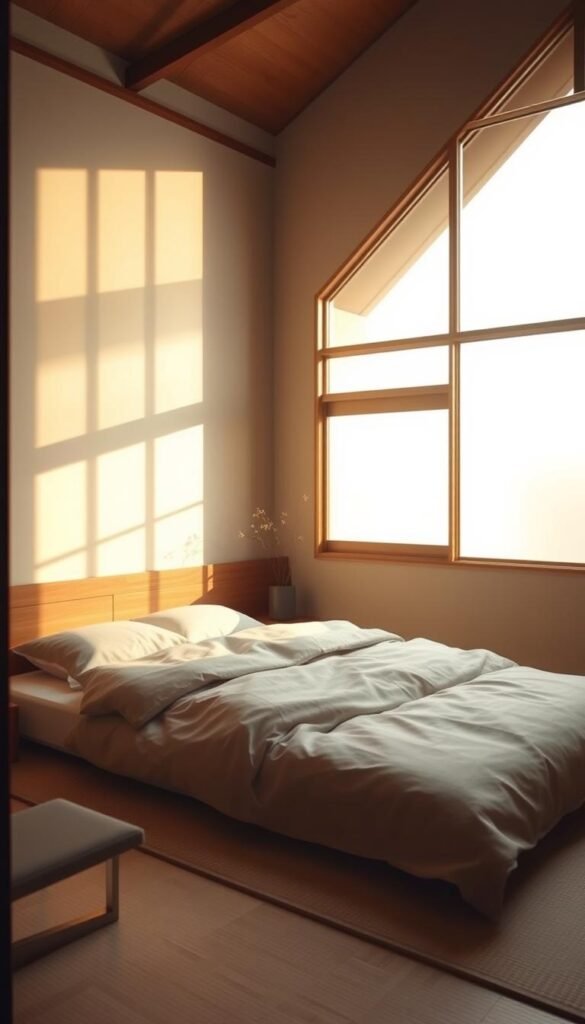
The right illumination creates a serene atmosphere that elevates your entire space. Lighting serves as the invisible decor that transforms ordinary rooms into peaceful retreats.
It works in harmony with your color palette and materials. This approach brings both elegance and comfort to your environment.
Designer Erin Roberts emphasizes the importance of layered lighting. She combines soft hues with natural textures for optimal effect.
Natural light remains crucial for creating that authentic sense of peace. It connects your room to the outside world beautifully.
Maximizing Daylight
Large windows maximize daylight exposure throughout your space. They flood your room with soft, natural illumination.
Position your bed to benefit from morning light. This gentle wake-up feels more natural than harsh alarms.
Choose window treatments that balance light and privacy. Sheer fabrics filter sunlight while maintaining your personal space.
Light-colored walls reflect daylight deeper into your room. This creates brighter, more open-feeling environments.
Mirrors strategically placed opposite windows amplify natural light. They bounce illumination around your entire space.
Keep window areas clear of heavy furniture. This allows light to travel freely through your room.
Choosing Ambient Artificial Lighting
Paper lanterns provide soft, diffused lighting for evening hours. They create an ethereal glow throughout your space.
These lighting elements align with minimalist design principles. They offer function without visual clutter.
Layer different light sources for optimal ambiance. Combine overhead lighting with task and accent options.
Consider these energy-efficient lighting choices:
- LED bulbs with warm color temperatures (2700K-3000K)
- Dimmable fixtures for adjustable mood lighting
- Smart lighting systems that mimic natural daylight patterns
Lighting affects how you perceive colors in your room. Warm tones enhance earthy palettes and wood elements.
Your lighting choices significantly impact relaxation quality. Soft, indirect light prepares your mind for rest.
Professional designers often use three-point lighting schemes. This includes general, task, and accent illumination.
Create a lighting plan that serves different daily activities. Bright light for reading, soft light for meditation.
Test your lighting at various times before finalizing. Evening ambiance differs greatly from daytime effects.
The right lighting transforms your space into a true sanctuary. It completes the harmonious design you’ve created.
Define Your Space with Traditional Japanese Elements
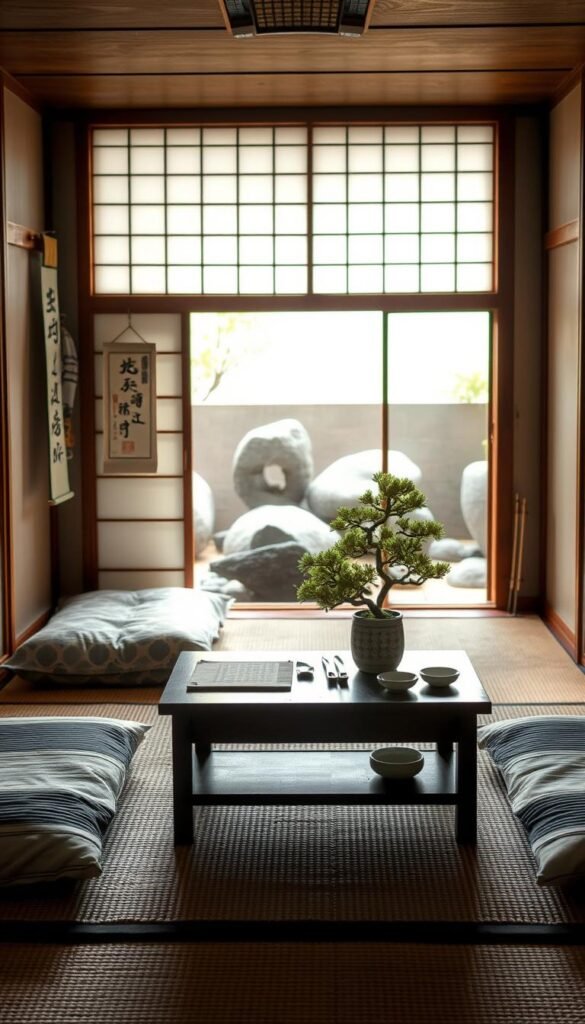
Traditional design pieces bring authentic character to your personal environment. They connect modern spaces with timeless cultural practices.
These elements create both visual interest and practical function. They support the overall sense of peace in your room.
Shoji Screens for Privacy and Light
Shoji screens serve as beautiful room dividers with paper panels. They filter light softly while maintaining your privacy.
Traditional designs use wooden frames with washi paper inserts. This creates a gentle glow throughout your space.
Modern adaptations offer similar aesthetics with durable materials. Some versions use translucent acrylic instead of paper.
These screens work wonderfully in open-concept layouts. They define areas without closing off the flow of light.
Design expert Kenzo Tanaka explains their cultural significance:
Shoji represent the balance between openness and intimacy. They create separation while maintaining visual connection.
Place them between sleeping and sitting areas. They can also conceal closets or storage spaces beautifully.
Maintain your screens with gentle dusting and careful handling. Avoid moisture exposure to preserve the materials.
Tatami Mats for Flooring and Seating
Tatami mats provide traditional flooring with natural materials. They use rice straw cores wrapped in rush grass.
These mats offer comfortable cushioning underfoot. They create a warm, textured surface throughout your room.
Authentic tatami releases a subtle earthy scent. This adds to the sensory experience of your space.
Modern versions adapt these elements for contemporary homes. Some use tatami-inspired flooring with easier maintenance.
Consider these practical benefits:
- Natural insulation against cold floors
- Shock absorption for comfortable seating
- Moisture regulation through breathable materials
Use tatami areas for meditation or tea ceremonies. They create dedicated zones for peaceful activities.
Rotate mats periodically to ensure even wear. Keep them dry and well-ventilated for longevity.
These traditional elements bring authentic cultural connection. They transform ordinary rooms into special retreats.
Your space gains depth through these meaningful additions. They honor tradition while serving modern needs.
Choose a Low-Profile Bed for a Grounded Feel
Your sleeping area becomes the heart of your peaceful retreat. The right bed choice creates a foundation for both rest and design harmony.
Low-profile designs connect you to your space differently than elevated frames. They create a cozy, secure feeling that enhances relaxation.
This approach aligns with minimalist principles while offering exceptional comfort. It transforms your room into a true sanctuary.
Platform Beds and Futon Mattresses
Platform beds offer clean lines and practical storage solutions. Their low height creates an open, spacious feel in your room.
Wood frames bring natural warmth and timeless elegance. Choose sustainable options like bamboo or reclaimed timber.
Traditional futon mattresses provide minimalist sleeping arrangements. They promote connection to the floor and easy storage.
Modern adaptations combine comfort with space-saving benefits. Many feature organic materials for better sleep health.
Interior designer Lisa Wong explains the benefits:
Low beds create visual stability and emotional grounding. They make your space feel more expansive while providing comfort.
Consider these factors when selecting your bed frame:
| Bed Type | Height Range | Best For | Maintenance Needs |
|---|---|---|---|
| Solid Wood Platform | 8-12 inches | Durability and natural appeal | Regular dusting, occasional polishing |
| Tatami Platform | 4-6 inches | Traditional style and firm support | Rotation every 3-6 months |
| Modern Futon Frame | 6-8 inches | Space flexibility and minimalist design | Frequent airing and flipping |
| Storage Platform | 10-14 inches | Organization in smaller rooms | Drawer lubrication and cleaning |
Styling with Simple, Natural Bedding
Your bedding choices complete the serene atmosphere. Natural materials enhance both comfort and design harmony.
Organic cotton offers breathable softness against your skin. It regulates temperature throughout the night for better sleep.
Linen bedding brings rustic texture and casual elegance. It becomes softer with each wash while maintaining durability.
Neutral colors create visual calm in your sleeping space. They complement wood tones and maintain minimalist appeal.
Layer your bedding for both style and practical comfort. Start with a quality mattress protector for longevity.
Add organic cotton sheets in neutral hues. Top with a breathable blanket or lightweight duvet.
Finish with textured throws for visual interest. This layering approach supports temperature regulation.
Choose bedding that aligns with your overall design ideas. Simple patterns or solid colors work best for balance.
Your bed becomes a beautiful centerpiece that promotes rest. It supports meditation practices and daily relaxation.
Maintain your bedding with proper care instructions. Air out mattresses regularly and wash linens frequently.
This attention to detail creates a healthy sleep environment. It completes your peaceful retreat with style and comfort.
Create Balance and Harmony with Decor
Thoughtful decorative elements transform your space into a cohesive sanctuary. They complete the visual story while maintaining peaceful energy.
Every piece should contribute to the overall sense of calm. This approach honors both beauty and function in your environment.
Incorporating Rustic and Refined Elements
Balance rough textures with smooth surfaces for visual interest. A handcrafted wooden stool brings organic charm near your bed.
Polished ceramic vases offer refined contrast against natural materials. This combination creates depth without clutter.
Designer Kenzo Tanaka explains the philosophy:
True elegance emerges when imperfect forms meet precise craftsmanship. This dialogue between rustic and refined defines authentic style.
Choose pieces that feel both intentional and effortless. Their arrangement should appear natural yet thoughtfully composed.
Using Artwork and Ikebana Arrangements
Ikebana flower arrangements introduce living elegance through minimalism. They follow strict principles of balance and negative space.
Select seasonal branches or single blooms for maximum impact. Their simplicity creates focal points without overwhelming your environment.
Artwork should complement your color tones and materials. Subtle ink wash paintings work beautifully with neutral palettes.
Consider these placement guidelines:
- Position artwork at eye level for proper viewing
- Allow breathing room around each piece
- Group items in odd numbers for natural harmony
Every decorative element should serve a purpose beyond mere ornamentation. Functional pieces like woven baskets add texture while storing items.
Edit your arrangements regularly to maintain visual clarity. Remove anything that disrupts the peaceful atmosphere.
Your decor choices directly influence the room’s energy. They support meditation practices and daily tranquility.
Integrate Principles of Zen for Ultimate Tranquility
Zen philosophy offers powerful tools for transforming your personal space into a sanctuary of peace. These timeless ideas help create an environment that supports both relaxation and mindfulness.
By embracing these concepts, you cultivate a deeper sense of calm in your daily life. Your room becomes more than just a sleeping area—it transforms into a retreat for mental clarity.
Zen principles teach us to find beauty in simplicity and meaning in emptiness. When applied to your environment, they create spaces that truly nourish the spirit.
Creating a Dedicated Meditation Corner
Designate a special area for quiet reflection within your room. This doesn’t require much space—just a thoughtful arrangement.
Start with a comfortable sitting surface. A simple cushion or tatami mat works perfectly for this purpose.
Position your meditation spot near natural light if possible. Morning sun creates an especially peaceful atmosphere for practice.
Keep this area completely free of clutter. The emptiness itself becomes part of the experience.
You might add a small shelf for meaningful items. A single candle or meaningful stone can anchor your practice.
This dedicated space invites regular mindfulness moments. It becomes your personal retreat within the larger room.
Adding a Water Feature or Bonsai Tree
Water features introduce soothing auditory elements to your environment. The gentle sound of flowing water promotes deep relaxation.
Small tabletop fountains work beautifully in limited space. They create movement and sound without overwhelming the area.
Bonsai trees bring living nature into your personal space. These miniature trees represent patience and careful attention.
Choose species that thrive indoors with proper care. Juniper and ficus varieties adapt well to indoor conditions.
Both elements connect you to natural rhythms and cycles. They remind us of growth, change, and peaceful persistence.
As noted in resources about Japanese bedroom design, incorporating natural elements significantly enhances the sense of harmony in your space.
These Zen elements work together to create multi-sensory experiences. Visual beauty combines with soothing sounds and natural textures.
Your space becomes a true sanctuary for both rest and reflection. It supports your journey toward greater peace and balance.
Bringing the Japanese Bedroom Aesthetic to Life in Your Home
Now comes the exciting part—translating these beautiful concepts into your actual living space. You’ll discover how to adapt these principles regardless of your room’s dimensions or existing decor.
The magic happens when timeless traditions meet modern living needs. Your personal sanctuary should reflect both cultural authenticity and contemporary comfort.
Adapting Ideas for Different Room Sizes
Small spaces actually benefit tremendously from these design principles. The focus on minimalism and open areas makes compact rooms feel more spacious.
Start by choosing multi-functional furniture that serves several purposes. A platform bed with built-in storage solves both sleeping and organization needs.
Use light colors on walls and floors to create visual expansion. Pale tones reflect light and make your room feel airier.
Consider these space-saving strategies:
- Vertical storage utilizing wall space rather than floor area
- Foldable furniture that tucks away when not in use
- Strategic lighting to highlight room depth and dimensions
Even in larger rooms, maintain the sense of intentional emptiness. Don’t feel compelled to fill every available space with objects.
Designer Maya Johnson notes:
The most successful adaptations honor the spirit of the design while respecting spatial limitations. It’s about creating feeling rather than replicating exact elements.
Mixing Traditional and Modern Pieces
Blending old and new creates spaces that feel both authentic and personally relevant. You don’t need to choose between traditional charm and modern convenience.
Start with foundational elements that establish the overall tone. A tatami-inspired area rug can define your space while providing traditional texture.
Pair traditional materials with contemporary silhouettes. A modern platform bed crafted from natural wood bridges both worlds beautifully.
Balance is key when combining different eras and styles. Too many traditional pieces might feel like a museum rather than a living space.
Consider this approach for mixing elements:
| Traditional Element | Modern Counterpart | Balancing Technique |
|---|---|---|
| Shoji screen | Minimalist room divider | Use similar proportions and light-diffusing qualities |
| Tatami mat | Low-profile platform bed | Maintain low height and natural materials |
| Ikebana arrangement | Contemporary vase | Focus on negative space and single stem emphasis |
Your personal comfort should guide all decisions. The goal is creating a space that feels peaceful and authentically yours.
Implement changes gradually rather than all at once. Start with one focal piece and build around it over time.
This approach allows you to live with each addition. You’ll discover what truly brings you peace and what merely occupies space.
Remember that the deepest sense of elegance comes from harmony, not perfection. Your personal retreat should reflect your journey toward balance.
Begin Crafting Your Personal Zen Retreat Today
Your journey toward a peaceful environment starts with small, meaningful steps. Embrace the core principles of harmony and simplicity to transform your space.
Start by selecting natural materials like wood and soft lighting. These elements create an atmosphere of comfort and elegance. Focus on creating balance through thoughtful design choices.
Remember that even simple changes make a big difference. Try adding tatami-inspired elements or calming bedding. Your room will gradually become a sanctuary for meditation and rest.
This approach brings long-term benefits to your daily life. You’ll enjoy a renewed sense of peace and well-being. Your personal retreat awaits—begin creating it today.
Share your progress and discoveries along the way. Each step brings you closer to the tranquil space you deserve.