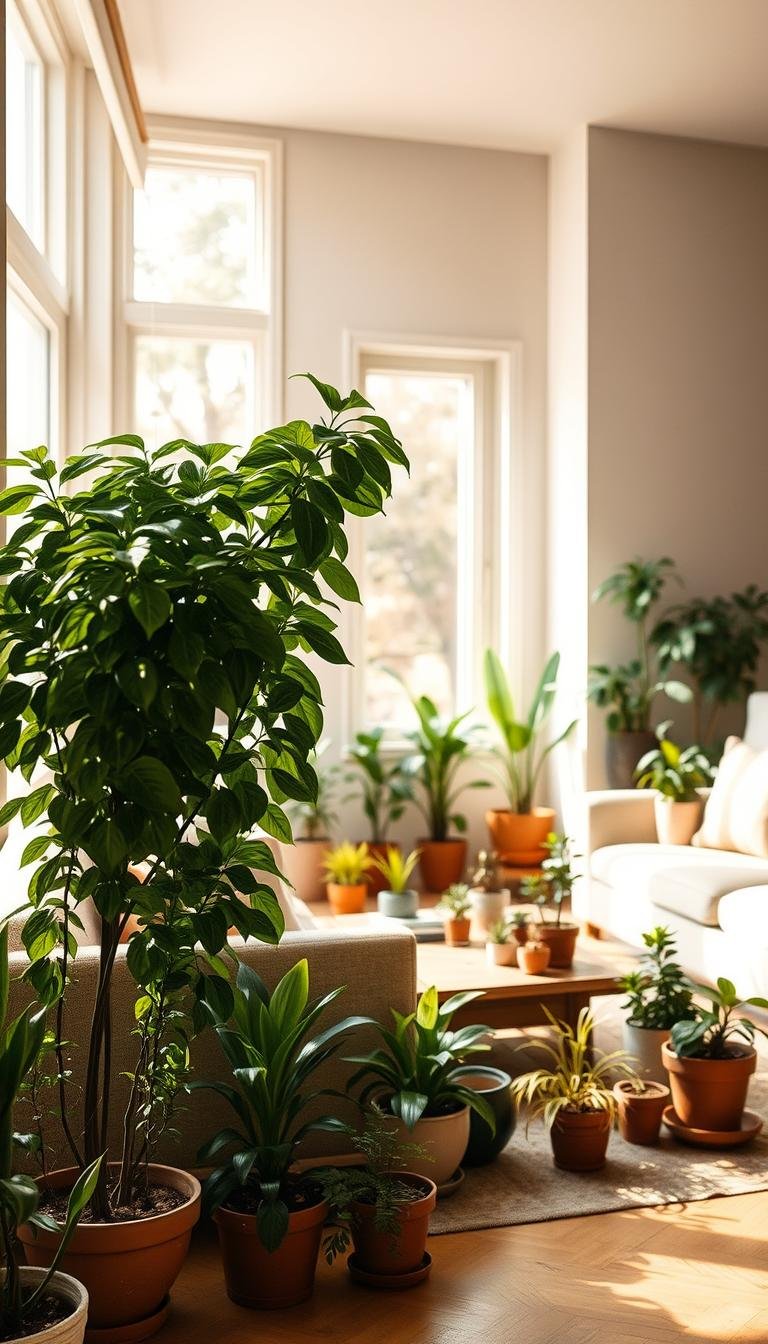
Bringing greenery into your home adds life and beauty to any space. Indoor plants create a fresh, inviting atmosphere that boosts your mood.
These natural elements do more than just look good. They filter toxins from the air, making your indoor environment healthier. Many people find caring for houseplants reduces stress and improves sleep.
You don’t need expert skills to enjoy these benefits. This guide makes decorate plants simple and enjoyable for everyone. Start with easy-care varieties to build confidence.
The popularity of indoor plants continues to grow. Today’s market offers countless styles and species to match your living room aesthetic. Let’s explore how you can transform your home with nature’s touch.
Start with the Right Plant: Your Foundation for Success
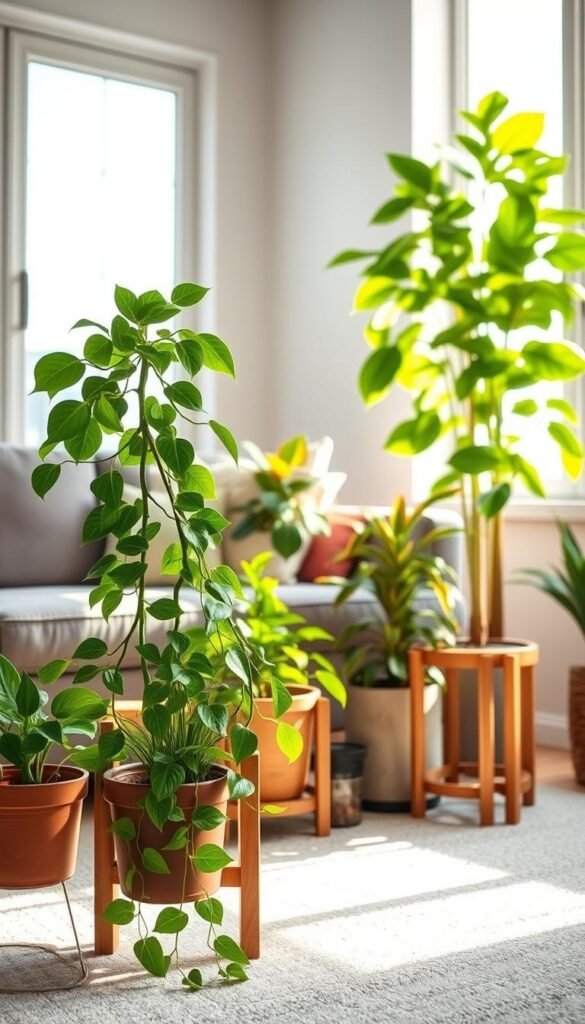
Choosing the perfect plants for your space makes all the difference. It sets you up for a rewarding experience with indoor greenery.
The right selection turns plant care from a chore into a joy. You’ll watch your green companions thrive instead of struggle.
Research Light and Care Needs Before You Buy
Every plant has unique requirements for light, temperature, and humidity. Understanding these needs is crucial for success.
Assess your living room’s conditions first. Note which spots get bright light versus low light throughout the day.
Consider how often you can water your plants. Some varieties prefer moist soil, while others like to dry out between waterings.
“The right plant in the right place will thrive with minimal effort.”
This approach saves you from disappointment. It ensures your green investments flourish in their new home.
Top Beginner-Friendly Plants: Snake, Pothos, ZZ, and More
Some houseplants are remarkably forgiving of beginner mistakes. These resilient varieties bounce back from occasional neglect.
They’re perfect for building confidence in your plant care skills. Start with one or two before expanding your collection.
| Plant Name | Light Needs | Water Frequency | Special Features |
|---|---|---|---|
| Snake Plant | Low to Bright | Every 2-6 weeks | Air purifying, very drought tolerant |
| Pothos | Low to Medium | Every 1-2 weeks | Fast growing, trailing vines |
| ZZ Plant | Low to Bright | Every 2-3 weeks | Extremely low maintenance |
| Spider Plant | Medium to Bright | Weekly | Produces baby plants, pet-friendly |
| Philodendron | Medium | Weekly | Heart-shaped leaves, easy propagation |
These easy care options adapt to various living conditions. They’re virtually fail-proof for new plant parents.
You can find these plants at local garden centers or retailers like The Home Depot. They come in different sizes to fit any space.
Starting with a small collection is the best way to begin. Add more variety as you gain experience and confidence.
This approach transforms plant care from overwhelming to enjoyable. You’ll soon discover the joy of nurturing living things in your home.
Embrace Core Design Principles for Plant Styling
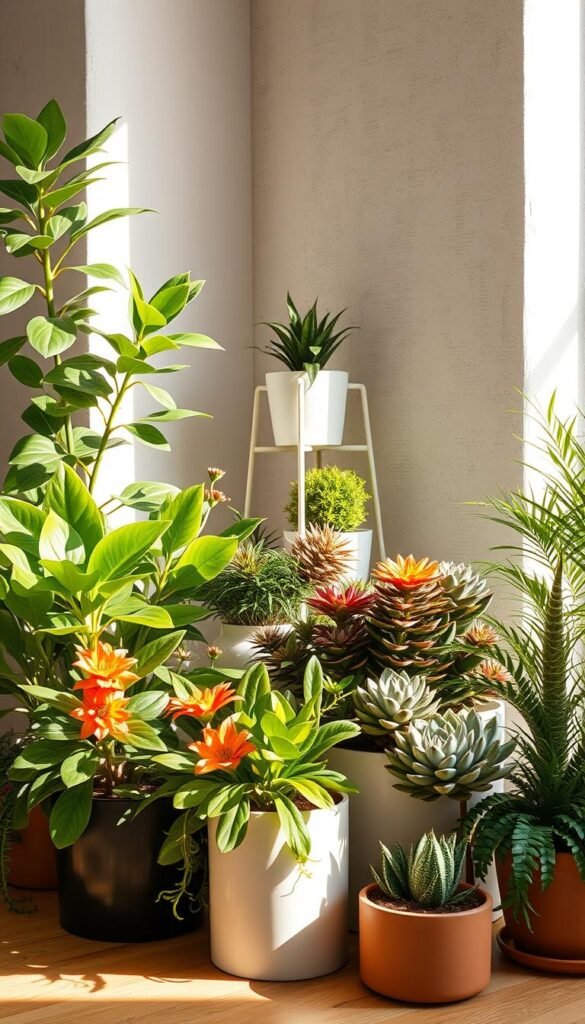
Good design transforms random pots into intentional displays. It turns your collection into a cohesive part of your home’s personality.
Strategic placement makes your green plants work together. They create visual harmony rather than compete for attention.
These simple tips help you arrange with confidence. You’ll create magazine-worthy displays without professional help.
Use Plants to Add Height and Pull the Eye Up
Tall specimens draw attention upward in any room. They create the illusion of more space through vertical interest.
Place a snake plant or fiddle leaf fig in empty corners. Their upward growth makes ceilings appear higher.
Varying heights adds dimension to your arrangement. Mix floor plants with medium-sized tabletop varieties.
“Vertical elements make small spaces feel grand and intentional.”
This approach works especially well in compact areas. It maximizes visual impact without consuming precious floor space.
Softening Hard Lines and Angles with Trailing Greens
Trailing varieties soften sharp edges throughout your room. They bring organic movement to structured furniture pieces.
Drape pothos or philodendron over bookshelf edges. Their cascading leaves break up rigid silhouettes.
Use these plants near windowsills or cabinet tops. They create flowing transitions between different areas.
This style choice adds gentle movement to static environments. Your space feels more dynamic and naturally balanced.
Grouping Plants for a Cohesive and Impactful Look
Clustered arrangements make stronger statements than scattered singles. They create miniature ecosystems with shared light and humidity needs.
Combine plants with similar care requirements. Group drought-tolerant succulents or moisture-loving ferns together.
Use matching pots for a unified look. Alternatively, mix complementary colors and textures for curated variety.
Try combining a snake plant, pothos, and ZZ plant. Their different leaf shapes create visual interest while sharing similar care needs.
This grouping idea makes maintenance easier too. You water and care for several plants in one convenient location.
Grouped green plants bring authentic life to your space. Their slight imperfections make rooms feel genuinely lived-in and loved.
Transform Shelves and Surfaces with Greenery
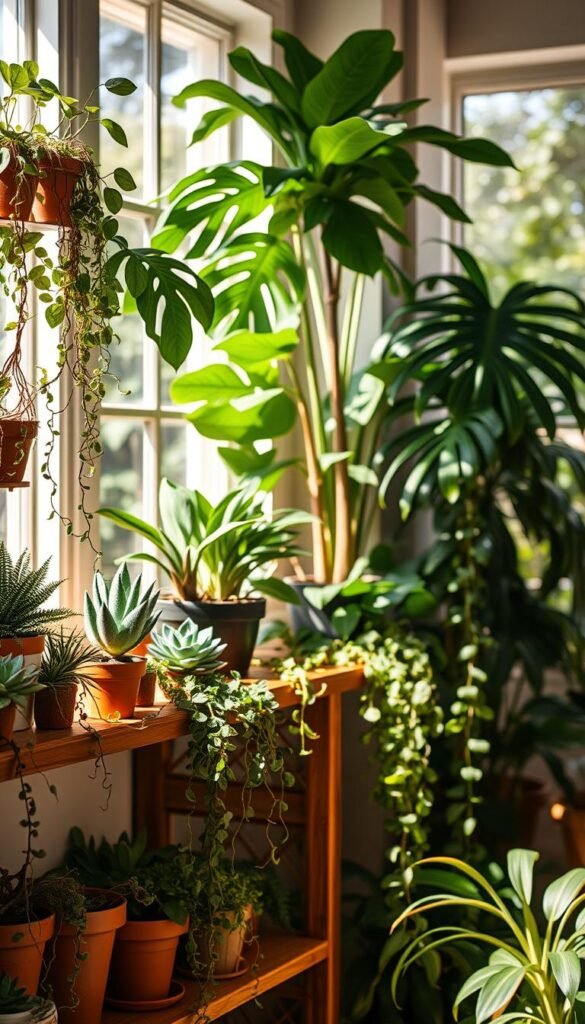
Your flat surfaces offer perfect opportunities for green displays. These areas become natural stages for showcasing your favorite plants.
Strategic placement turns ordinary furniture into living art. You create focal points that draw attention and admiration.
The Dedicated Plant Shelf for Maximum Drama
Choose one shelf to dedicate entirely to your green collection. This bold idea creates an instant conversation piece.
Arrange different sizes and textures for visual interest. Place taller specimens at the back, trailing varieties at the front.
This approach makes ordinary shelving units extraordinary. Your dedicated shelf becomes a miniature indoor garden.
Styling Your Mantle or TV Unit with Potted Plants
Fireplace mantles provide ideal platforms for green displays. Balance your arrangement with candles or small art pieces.
TV units benefit greatly from living accents. Plants soften the hard edges of electronics and create harmony.
Choose low-maintenance varieties for these areas. They’ll thrive with minimal attention while enhancing your decorating scheme.
Elevating Your Coffee and Side Tables with Small Plants
Small surfaces deserve green attention too. Compact plant varieties fit perfectly on these intimate spaces.
Group several small pots on a decorative tray. This creates a tidy arrangement that’s easy to maintain.
Varying heights add depth without clutter. Use books or stands to elevate some plants above others.
| Surface Type | Best Plant Choices | Styling Tips | Maintenance Level |
|---|---|---|---|
| Dedicated Shelf | Mix of sizes and textures | Create height variation | Medium |
| Fireplace Mantle | Small to medium pots | Balance with decor items | Low |
| TV Unit | Low-light tolerant varieties | Soften electronics | Low |
| Coffee Table | Compact specimens | Group on trays | Easy |
| Side Table | Single statement plant | Use as focal point | Very low |
This way of incorporating greenery transforms your entire house. Every surface contributes to your overall look.
You’ll find these arrangements become living parts of your daily life. They bring nature’s beauty into your most used spaces.
Revitalize Awkward Corners and Empty Spaces
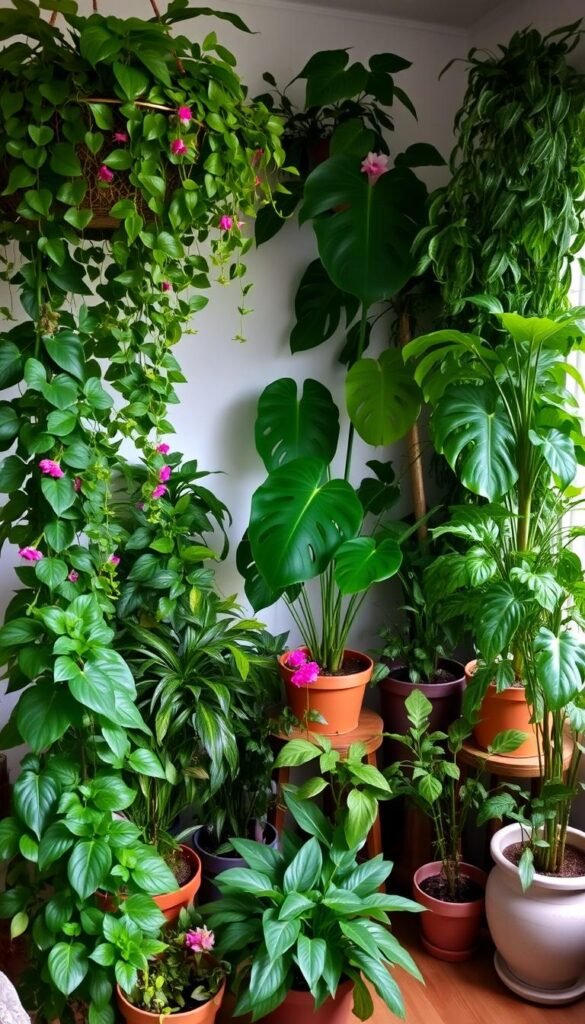
Every home has those neglected areas that feel incomplete. These spots often lack purpose and visual appeal.
Greenery provides the perfect solution for these design challenges. A simple plant arrangement can transform dead space into a vibrant focal point.
This approach brings life to forgotten areas of your house. You’ll discover new ways to appreciate every inch of your living environment.
Using a Tall Statement Plant to Fill a Blank Corner
Empty corners cry out for vertical interest. Tall specimens create instant drama where nothing existed before.
Choose varieties that reach toward the ceiling. Fiddle leaf figs or corn plants make excellent choices.
These green giants draw the eye upward. They make rooms feel more spacious and intentionally designed.
“A single tall plant can anchor an entire room’s design scheme.”
Position your statement piece in a corner receiving indirect light. Rotate it occasionally for even growth.
This simple idea maximizes impact with minimal effort. Your blank space becomes a celebrated feature.
Creating a Lush Reading Nook with a Plant Canopy
Transform any chair into a cozy retreat with surrounding greenery. Cluster plants at various heights around your seating area.
Place taller specimens behind your chair. Use medium-sized plants on either side.
Add hanging varieties above for a true canopy effect. Their trailing leaves will create a sense of enclosure.
This arrangement makes your reading spot feel private and peaceful. You’ll enjoy hours surrounded by nature’s beauty.
| Space Type | Recommended Plants | Light Requirements | Arrangement Tips |
|---|---|---|---|
| Empty Corner | Fiddle Leaf Fig, Corn Plant, Majesty Palm | Bright Indirect | Use plant stand for extra height |
| Reading Nook | Pothos, Philodendron, Spider Plant | Medium to Bright | Mix floor and hanging varieties |
| Dark Corner | Snake Plant, ZZ Plant, Cast Iron Plant | Low Light | Group multiple plants together |
| Narrow Space | Madagascar Dragon Tree, Umbrella Tree | Medium Indirect | Use tall, narrow containers |
Experiment with different plant sizes and varieties. Find what works best for your specific conditions.
This creative way of using plants solves common design dilemmas. Your previously awkward areas become favorite spots.
Even challenging spaces can host thriving green plants. The right selection and placement make all the difference.
You’ll love how these transformations enhance your daily life. Every corner contributes to your home’s welcoming atmosphere.
Incorporate Plants with Your Existing Furniture
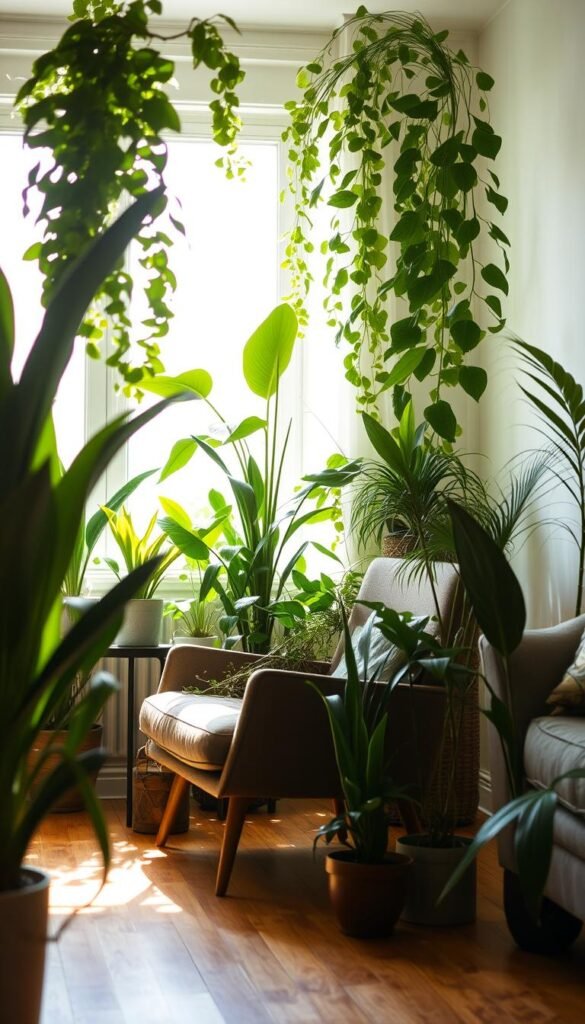
Your current furniture pieces offer wonderful opportunities to blend nature with your decor. They provide natural platforms and backdrops for showcasing beautiful greenery.
This approach makes plant integration feel organic rather than forced. You create a cohesive look that enhances your entire room.
Placing a Plant Behind the Sofa to Break Up Large Furniture
Large sofas can sometimes dominate a space. A well-placed plant behind them softens their appearance instantly.
Choose a tall specimen that peeks over the sofa back. This creates depth and adds a natural element to your seating area.
This clever idea transforms bulky furniture into part of your green display. It makes your room feel more balanced and inviting.
Snake plants or fiddle leaf figs work perfectly here. Their vertical growth complements the sofa’s horizontal lines.
“Plants behind furniture create delightful surprises that reveal themselves as you move through the room.”
Ensure your plant receives adequate light in this position. Rotate it occasionally for even growth toward the light source.
Utilizing Bookcases and Sideboards for Multi-Level Displays
Bookcases and sideboards become perfect stages for tiered plant arrangements. Their shelves offer built-in platforms at varying heights.
Mix different plant sizes and types across the levels. Place taller specimens on lower shelves, trailing varieties up higher.
This approach creates visual interest through layered greenery. Your furniture becomes a living display that evolves over time.
Vintage pieces particularly complement this look. Their character contrasts beautifully with fresh, growing plants.
| Furniture Type | Best Plant Choices | Light Considerations | Style Tips |
|---|---|---|---|
| Bookcase | Pothos, Spider Plant, Small Succulents | Adjust plant choice to shelf height light levels | Mix books and plants for cozy feel |
| Sideboard | ZZ Plant, Philodendron, Peace Lily | Medium indirect light works best | Use decorative pots that complement furniture style |
| Vintage Cabinet | Ferns, Prayer Plant, Chinese Evergreen | Choose plants matching the light available | Embrace the contrast between old wood and new growth |
Select plants that thrive in your specific conditions. Consider light exposure and maintenance needs for each location.
View your furniture as opportunities rather than obstacles. This perspective opens up countless decorating possibilities.
Your entire home benefits from this integrated approach. Every piece contributes to your overall green aesthetic.
Explore Creative and Space-Saving Display Ideas
Limited square footage shouldn’t limit your green ambitions. Clever arrangements let you enjoy lush greenery without sacrificing precious floor space.
These innovative approaches work beautifully in compact homes. They transform vertical areas and unused surfaces into vibrant plant displays.
Hanging Plants from the Ceiling for a Boho Vibe
Suspend your favorite trailing plants to create floating gardens. Macramé hangers add beautiful texture while saving surface area.
Choose varieties that cascade beautifully when hung. Pothos and philodendron develop long vines that create movement.
Position hanging plants near windows for optimal light exposure. Ensure they remain accessible for regular watering.
“Hanging elements draw the eye upward, making ceilings appear higher and rooms feel more spacious.”
This approach works particularly well in rental homes. It adds personality without permanent modifications.
Building a Mini Terrarium for a Contained Garden
Glass containers create self-contained ecosystems for your plants. They’re perfect for small spaces like shelves or desks.
Select slow-growing varieties that enjoy humidity. Ferns and mosses thrive in these enclosed environments.
Layer gravel, charcoal, and soil for proper drainage. This foundation keeps your miniature garden healthy.
Terrariums require minimal maintenance once established. They’re ideal for busy plant enthusiasts.
Using Wall-Mounted Planters for Small, Blank Walls
Vertical surfaces offer untapped potential for plant displays. Wall-mounted planters turn blank walls into living art.
Choose lightweight containers that secure properly. Modern designs include self-watering systems for convenience.
Create patterns or clusters for visual impact. Mix different leaf textures and colors for added interest.
This idea brings nature to eye level throughout your room. It’s an affordable way to maximize your green display.
| Display Type | Best Plant Choices | Space Required | Maintenance Level | Special Considerations |
|---|---|---|---|---|
| Hanging Plants | Pothos, Philodendron, String of Pearls | Vertical air space | Medium | Ensure secure mounting, accessible for watering |
| Terrariums | Ferns, Mosses, Small Fittonia | Small surface area | Low | Monitor humidity levels, avoid direct sunlight |
| Wall Planters | Succulents, Air Plants, Small Herbs | Vertical wall space | Medium | Choose lightweight soil, secure mounting hardware |
| Window Shelves | Herbs, Small Flowering Plants | Window frame space | Medium | Maximize light exposure, rotate plants regularly |
These space-efficient solutions prove that any home can host beautiful indoor plants. You’ll enjoy fresh greenery without compromising your living area.
Remember to check your hanging and wall-mounted plants regularly. They may need more frequent watering than their surface-dwelling counterparts.
Your creative displays will become conversation starters. They showcase your personal style while bringing nature’s beauty indoors.
Selecting the Perfect Pots and Planters
Your choice of containers makes a huge difference in your overall design. The right pots elevate your plants from simple greenery to intentional decor.
They frame your green companions beautifully. Matching your planter style to your room’s aesthetic creates harmony.
Think of containers as the finishing touch. They complete your vision and tie everything together.
Choosing a Style: Baskets, Ceramic, Metal, and More
Different materials create distinct moods in your space. Your selection depends on the feeling you want to achieve.
Baskets bring natural warmth and texture. They work wonderfully for rustic or bohemian styles.
Ceramic pots offer sleek modern appeal. Their smooth surfaces complement contemporary furniture.
Metal containers add industrial elegance. They create striking contrasts against soft green leaves.
“The right container doesn’t just hold your plant—it becomes part of your room’s personality.”
Consider both aesthetics and function. Some materials help regulate soil moisture better than others.
Unifying Your Look with Consistent Planter Colors
Consistency creates visual harmony throughout your space. Choose a color palette that complements your existing decor.
Group plants in similar-toned planters for a cohesive display. This approach makes random arrangements feel intentional.
Neutral colors work beautifully in most settings. They let your green stars take center stage.
This simple idea transforms scattered pots into a unified collection. Your house gains a polished, designer look.
Wicker baskets offer practical benefits too. They easily conceal basic nursery pots while adding texture.
Select containers that enhance your room’s color scheme. Consider your furniture finishes and wall colors.
Remember that pots serve both functional and decorative roles. They protect your plants while defining your style.
This attention to detail completes your green transformation. Your living space becomes truly cohesive and inviting.
Simple Care and Styling Tips to Keep Plants Thriving
Maintaining your green companions becomes second nature with a few straightforward practices. These simple routines ensure your indoor garden stays vibrant and healthy.
Consistent care transforms plant maintenance from a chore into a relaxing ritual. You’ll develop an intuitive understanding of your green friends’ needs.
This approach keeps your living space fresh and inviting. Your efforts reward you with growing, thriving plants that enhance your daily life.
Easy Watering and Maintenance Routines for Beginners
Establishing a simple watering schedule prevents overwatering or underwatering. Check soil moisture by inserting your finger about an inch deep.
If the soil feels dry, it’s time to water. If moist, wait another day or two. This basic test works for most common houseplant varieties.
Use these practical tools for best results:
- Watering cans with long spouts for precise application
- Misters for increasing humidity around tropical plants
- Moisture meters for eliminating guesswork
- Self-watering pots for extended vacation periods
Low-maintenance plants like snake plants or pothos tolerate occasional mistakes. They bounce back quickly if you forget a watering session.
“Consistent care creates a rhythm that both you and your plants will appreciate.”
This practical way of caring for green things builds confidence. You’ll soon recognize your plants’ unique needs and responses.
Embracing Imperfection for an Authentic, Lived-In Look
Natural variations in growth patterns add character to your space. Slightly yellow leaves or uneven growth create authentic charm.
These imperfections tell the story of a living, breathing collection. They make your home feel genuinely lived-in rather than perfectly staged.
Consider these natural features as design elements:
- Asymmetrical growth patterns that create visual interest
- Varied leaf sizes that demonstrate healthy adaptation
- Natural color variations that add depth to your display
- Unique shapes that distinguish each plant’s personality
This design philosophy celebrates nature’s unpredictable beauty. Your space gains warmth and character through these organic details.
Embrace the unique qualities of each plant in your collection. Their individual characteristics contribute to your overall variety.
This idea of accepting natural imperfections creates a welcoming atmosphere. Your home feels comfortable and authentic rather than overly curated.
For ongoing support, explore plant care guides or mobile applications. These resources provide valuable tips as your green thumb develops.
Remember that easy care plants thrive with minimal intervention. Their resilience makes plant parenting enjoyable rather than stressful.
Your Journey to a Greener Living Room Starts Now
Embrace the joy of adding life to your space today. One small plant can spark a beautiful transformation in your home.
This simple idea brings cleaner air and calm feelings. Your living room gains texture and natural beauty.
Start your greenery journey without pressure. Learning is part of the fun with houseplants.
Visit a local garden center for inspiration. Online resources offer endless decor ideas too.
Remember—every expert began as a beginner. Your way to a lush, inviting room is truly rewarding.