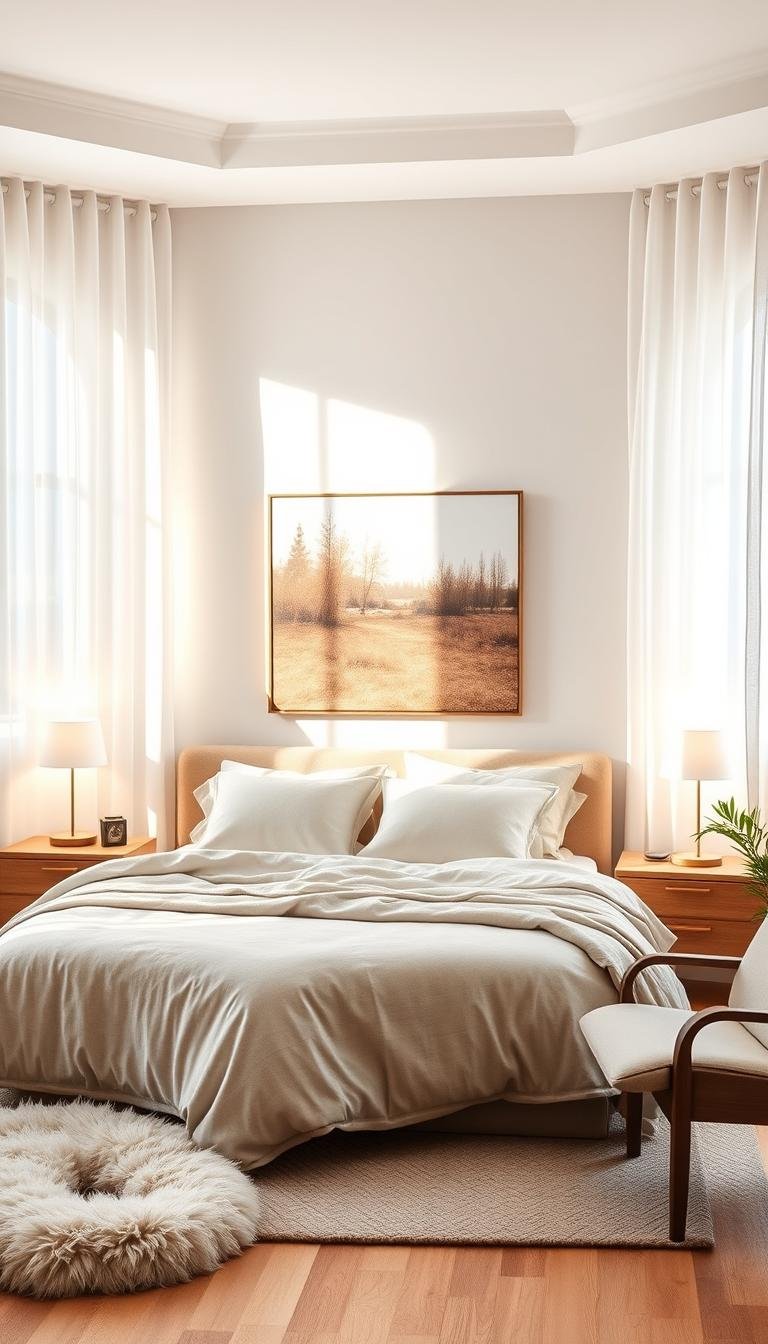
Your bedroom should be your personal sanctuary. A neutral bedroom offers timeless tranquility and peaceful energy. This design approach creates a calming environment perfect for unwinding after long days.
Choosing a neutral palette provides a versatile foundation for your personal style. It works beautifully with minimalist, rustic, or bohemian aesthetics. The key lies in balancing warm and cool tones to avoid a sterile look.
This guide walks you through creating a space that feels both elegant and inviting. We’ll explore essential elements like texture, lighting, and natural materials. These components add crucial warmth and character to your retreat.
You’ll discover practical tips for layering textiles and selecting decor that reflects your personality. Transforming your sleeping area into a cozy haven is both accessible and rewarding. Let’s begin this journey toward your perfect peaceful escape.
Understanding the Foundation of a Warm Neutral Bedroom
A truly restful retreat begins with thoughtful color choices. The right palette sets the mood for your entire space.
Neutrals create a calm atmosphere perfect for relaxation. They provide a versatile backdrop that adapts to your evolving style.
Why Choose a Neutral Palette for Serenity
Soft colors work wonders for mental calmness. They reduce visual noise and create peaceful energy.
Research shows these hues can lower stress levels. They also promote better sleep quality in your personal sanctuary.
Timeless appeal means your space won’t feel dated. You can refresh with accessories rather than full renovations.
Balancing Warm and Cool Tones for Depth
The secret lies in mixing undertones strategically. This approach prevents flatness and adds dimension.
Warm shades like cream and beige bring coziness. Cooler options like gray and taupe provide sophistication.
Greige has become a designer favorite for good reason. It blends warm and cool characteristics beautifully.
Always test samples in your actual room lighting. Colors transform throughout the day with natural light changes.
| Warm Neutrals | Cool Neutrals | Best Uses |
|---|---|---|
| Cream | Pure Gray | Wall colors |
| Beige | Taupe | Furniture finishes |
| Warm White | Greige | Textile foundations |
| Camel | Slate | Accent pieces |
Start with a base shade that speaks to you. Layer complementary tones through textiles and decor elements.
This approach creates visual interest while maintaining harmony. For more inspiration, explore these neutral master bedroom ideas that demonstrate beautiful tone balancing.
Remember your personal preferences matter most. Your retreat should reflect what makes you feel most at peace.
How to Create a Modern Neutral Bedroom with Warmth

Your walls form the canvas for your entire design vision. Selecting the right hues creates harmony throughout your space.
Starting with Your Core Color Palette
Begin with three to five coordinating shades. This creates a versatile foundation for your room.
Consider your existing furniture and flooring. These elements should complement your new wall color.
Popular designer choices include soft taupe and warm beige. These shades add instant coziness to any bedroom.
Selecting Paint Colors for a Serene Backdrop
Always test samples on your actual walls. Natural light changes colors throughout the day.
Matte finishes help hide imperfections while adding depth. Eggshell provides subtle reflection for added dimension.
Consider an accent wall with textured wallpaper. This adds interest without disrupting the calm atmosphere.
Pair your main wall color with slightly contrasting trim. This creates definition while maintaining cohesion.
Your ceiling deserves attention too. A lighter shade than your walls enhances the room’s height.
| Paint Finish | Best For | Light Reflection |
|---|---|---|
| Matte | Hiding imperfections | Low |
| Eggshell | Moderate durability | Soft glow |
| Satin | High-traffic areas | Medium |
| Semi-gloss | Trim and doors | High |
Choose bedding in complementary tones like cream or off-white. Textured fabrics like waffle weave prevent a sterile look.
This approach ensures longevity for your design. You can easily update accessories without repainting.
Remember that your personal comfort matters most. Your retreat should reflect what makes you feel truly at peace.
Mastering the Art of Textural Layering
The magic of a neutral space lies in its textural richness and dimensional depth. When bold colors step aside, textures become the star performers in your design. This approach creates visual interest that keeps your room engaging without overwhelming your senses.
Strategic layering transforms a simple scheme into a sensory experience. Different materials work together to build warmth and character. Your bedroom becomes a tapestry of tactile experiences.
Mixing Materials: Linen, Cotton, Wool, and Silk
Begin with your bedding as the foundation. Cotton sheets offer crisp comfort and breathability. They provide a perfect base for additional layers.
Linen brings natural texture and casual elegance to your space. Its slightly rough surface adds wonderful contrast to smoother fabrics. This material works beautifully for duvet covers and pillowcases.
Wool throws deliver cozy warmth during cooler months. Their chunky knit patterns add dimension without color. Silk pillowcases introduce luxury and smoothness against your skin.
- Start with crisp cotton sheets as your base layer
- Add a linen duvet cover for natural texture
- Layer wool throws for warmth and visual weight
- Finish with silk pillowcases for luxury contrast
Each material contributes unique qualities to your sanctuary. The combination creates a rich tapestry of tactile experiences. Your bed becomes the ultimate comfort zone.
Using Rugs to Add Softness and Dimension
Rugs anchor your space while adding comfort underfoot. They define areas and create visual boundaries. Choose natural fiber options for organic texture.
Jute and sisal rugs bring earthy texture to hard floors. Wool varieties offer plush softness and warmth. Layer a smaller decorative piece over a larger neutral base.
Consider these placement strategies for maximum impact:
- Extend the rug 18-24 inches beyond the bed sides
- Choose a size that frames your sleeping area beautifully
- Layer patterns subtly for added dimension
- Ensure proper padding for safety and comfort
Textured curtains or woven blinds complete the layered effect. They filter light while adding vertical interest. These elements work together to create a cohesive look.
Remember to balance aesthetics with functionality. Choose durable materials that suit your lifestyle. Your layered design should feel as practical as it looks beautiful.
Building Your Bed: The Centerpiece of Comfort
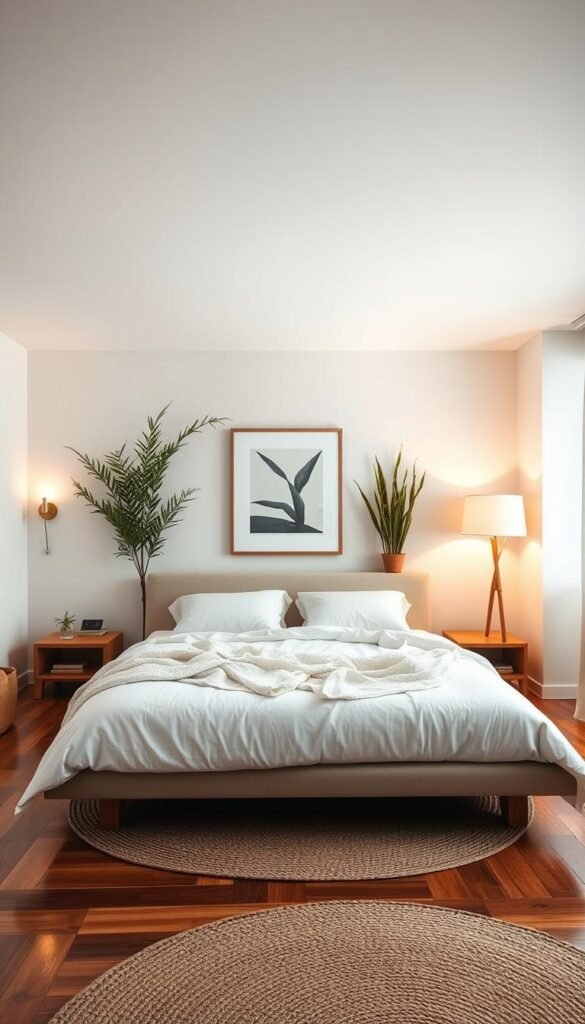
The heart of any bedroom is a beautifully crafted bed that invites relaxation. This focal point combines style and comfort through strategic layering choices.
Your sleeping area becomes a personal oasis when designed with intention. The right combination of textiles creates both visual appeal and physical comfort.
Layering Bedding in Complementary Tones
Begin with crisp cotton sheets as your foundation layer. Choose breathable fabrics in white or natural shades for comfort.
Add a linen duvet cover for wonderful texture and casual elegance. This material brings organic character to your sleeping space.
Incorporate a quilt or knit throw for additional warmth and dimension. These layers create visual interest through varied textures.
Follow these steps for a perfectly made bed:
- Start with fitted and flat sheets tucked neatly
- Add your duvet or comforter, smoothing out wrinkles
- Fold the top sheet and duvet down for a luxurious look
- Arrange pillows strategically for both function and style
Mix similar shades like whites, creams, and beiges for harmony. This approach maintains your neutral palette while adding depth.
Choosing the Perfect Throw Pillows and Blankets
Select pillows in various sizes and shapes for dynamic arrangement. Standard shams, euro squares, and lumbar pillows work beautifully together.
Consider these material combinations for your pillow display:
- Velvet for luxury and subtle sheen
- Knit textures for cozy appeal
- Linen for casual sophistication
- Cotton for crisp, clean lines
Blankets should provide both aesthetic and practical value. Wool offers warmth during cooler months while lighter cotton works for summer.
Functional considerations matter alongside style. Hypoallergenic materials benefit sensitive sleepers. Easy-care fabrics simplify maintenance.
Seasonal adjustments keep your space comfortable year-round. Switch to lighter layers in summer and add chunky knits in winter.
Your bed should reflect your personal taste while maintaining cohesion. Choose pieces that speak to you within the neutral scheme.
Designer inspiration often includes oatmeal-toned chunky throws. These additions enhance warmth and texture beautifully.
Selecting Timeless and Functional Furniture
Your furniture choices form the backbone of your personal retreat. These pieces should blend beauty with everyday practicality. They create the foundation for your entire design scheme.
Classic shapes and neutral tones ensure lasting appeal. You want pieces that feel fresh for years to come. This approach saves money and reduces waste over time.
Opting for Clean Lines and Neutral Finishes
Simple silhouettes create a calm, uncluttered atmosphere. They allow your textiles and accents to take center stage. Your room feels organized and intentionally designed.
Neutral finishes offer incredible versatility for your space. White, beige, or gray furniture adapts to changing decor. You can easily update your look without replacing major pieces.
Consider these essential furniture items for your retreat:
- A well-crafted bed frame with understated elegance
- Nightstands offering both surface space and storage
- A comfortable chair or bench for reading and relaxing
- A dresser that combines function with beautiful form
Built-in storage solutions keep your environment peaceful. Beds with drawers or nightstands with shelves hide clutter beautifully. Your space maintains its serene feel through smart organization.
Incorporating Natural Wood for Organic Warmth
Wood elements bring wonderful texture and organic character to your room. They add visual interest through natural grain patterns. Your space gains depth and tactile appeal.
Different wood tones create distinct moods within your scheme. Light oak offers a fresh, Scandinavian feel. Darker walnut provides rich contrast against lighter elements.
Mix wood finishes with other materials for balanced appeal. A wooden headboard pairs beautifully with metal accents. This combination adds character while maintaining cohesion.
Quality construction ensures your furniture lasts for years. Invest in pieces that support daily comfort and organization. Your retreat deserves foundation items that stand the test of time.
Remember to consider scale and placement in your layout. Your furniture should facilitate easy movement and functionality. Every piece should contribute to your peaceful environment.
Implementing a Soft and Layered Lighting Plan
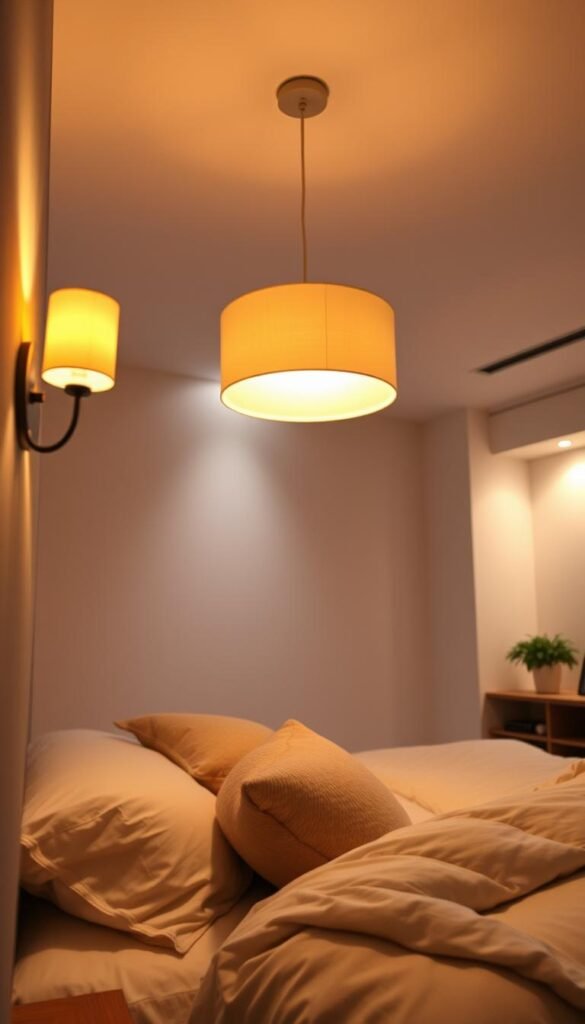
Lighting transforms your personal space from functional to magical. The right illumination adds depth and character to your design scheme. It creates an inviting atmosphere that welcomes relaxation.
Layered approaches work best for versatile functionality. You need different types for various activities and moods. This strategy ensures your room always feels comfortable.
Choosing Ambient, Task, and Accent Lighting
Ambient lighting provides overall illumination for your space. Pendant lights or flush mounts offer beautiful general light. They create a soft glow throughout your entire room.
Task lighting serves specific purposes like reading or dressing. Bedside lamps with adjustable arms provide perfect focused light. They ensure you have proper illumination for daily activities.
Accent lighting highlights special elements in your design. Wall sconces can draw attention to artwork or architectural features. This type adds visual interest and dimension.
The Importance of Dimmable and Warm-Toned Bulbs
Dimmable options give you complete control over brightness levels. Lower settings create a cozy evening atmosphere for unwinding. Brighter levels help you wake up refreshed each morning.
Warm white bulbs (2700K-3000K) enhance your neutral colors beautifully. They make textiles and surfaces appear more inviting. Cool tones can make a space feel sterile and harsh.
Position lights carefully to avoid glare and shadows. Place table lamps at eye level when seated. Use multiple sources for even, flattering illumination.
Consider these smart options for added convenience:
- Programmable systems that adjust throughout the day
- Bulbs with adjustable color temperatures
- Voice-controlled options for hands-free operation
Choose fixture designs that complement your decor style. Materials like brass or rattan add wonderful texture. These accents contribute to the overall warmth.
Sheer curtains help diffuse natural daylight softly. They maintain privacy while welcoming beautiful morning light. This natural touch enhances your artificial lighting plan.
Your layered approach should create a balanced environment. Multiple sources work together for perfect ambiance. The right lighting makes your space feel both functional and magical.
Incorporating Subtle Patterns for Visual Interest
Patterns bring life to your space without disrupting its peaceful atmosphere. They add dimension and character while maintaining a calm environment.
Strategic pattern use prevents your room from feeling flat or boring. These elements work with your existing textures and colors.
Your approach should feel intentional yet effortless. Patterns should complement rather than dominate your overall design.
Using Stripes, Geometrics, and Minimalist Prints
Subtle stripes create movement in your space. They work beautifully on pillows or bedding in neutral tones.
Geometric patterns add modern flair to your decor. Choose simple shapes in similar color families for cohesion.
Minimalist prints offer understated elegance. Consider organic motifs like delicate ferns or abstract designs.
These pattern types work well in various applications:
- Pillow covers with tone-on-tone designs
- Throws featuring subtle herringbone or chevron weaves
- Bedding with embroidered or woven patterns
- Window treatments with textured fabrics
Scale matters when selecting your patterns. Smaller designs provide subtle background interest. Larger patterns make bolder statements on accent pieces.
Selecting a Textured or Patterned Wallpaper Accent Wall
An accent wall adds depth to your room’s design. Wallpaper offers wonderful opportunities for texture and pattern.
Grasscloth wallpaper brings natural texture to your space. Its organic look complements neutral color schemes beautifully.
Subtle printed patterns work well for feature walls. Choose designs that echo your room’s color palette.
Consider these placement and selection tips:
- Position your accent wall behind the bed as a focal point
- Choose wallpapers with texture rather than bold colors
- Test samples in your lighting before committing
- Balance patterned walls with solid elements elsewhere
Your accent wall should enhance the room’s serenity. It adds visual interest without overwhelming the space.
Patterns serve practical purposes too. They can hide wear on high-use items like rugs. Choose durable materials that maintain their beauty.
Experiment with pattern mixing in controlled ways. Combine stripes with geometrics in similar color families. This approach creates cohesion while adding depth.
Remember that patterns should enhance your retreat. They contribute to a look that feels both restful and engaging.
Adding Depth with Thoughtful Wall Decor
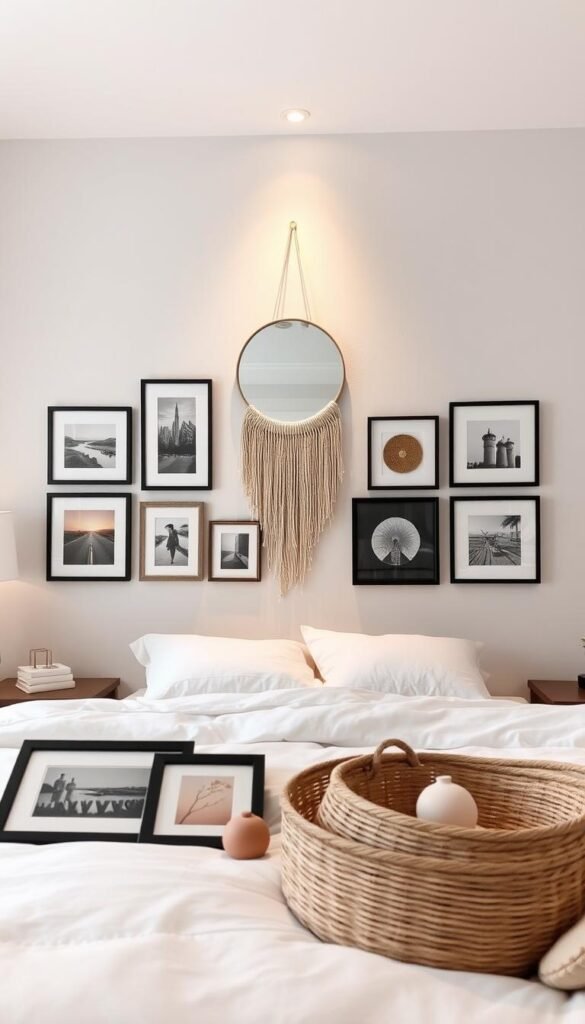
Your walls offer a perfect canvas for personal expression without overwhelming your peaceful retreat. Thoughtful decor adds character and dimension to your space. It creates focal points that draw the eye and enhance the room’s atmosphere.
Strategic placement prevents visual clutter while maintaining serenity. Your choices should reflect your personality while harmonizing with the overall design. This approach transforms blank spaces into engaging visual elements.
Choosing Artwork that Complements Your Palette
Select pieces that echo your room’s soft color scheme. Abstract art brings sophistication without introducing disruptive colors. Nature photography in sepia or gray tones adds organic beauty.
Minimalist line drawings offer understated elegance. They create visual interest through simplicity and clean lines. These pieces work beautifully in serene environments.
Consider the emotional impact of your artwork choices. Calming subjects like landscapes or abstract forms promote relaxation. Your selections should align with the room’s tranquil atmosphere.
Proper sizing ensures your artwork feels balanced in the space. A large piece above the bed makes a dramatic statement. Smaller works arranged in a gallery wall create curated interest.
Follow these placement guidelines for optimal impact:
- Center large pieces at eye level when standing
- Allow adequate breathing room around each artwork
- Balance visual weight across your wall space
- Consider sight lines from various room positions
Selecting Frames for a Cohesive Look
Frames should enhance rather than compete with your artwork. Light wood finishes bring natural warmth to your pieces. Off-white options create seamless integration with your walls.
Black frames offer crisp definition for modern spaces. They provide contrast without introducing color. Choose finishes that complement your furniture and fixtures.
Consider these framing materials for different styles:
| Frame Material | Best For | Visual Effect |
|---|---|---|
| Light Wood | Organic, warm styles | Adds natural texture |
| Off-White | Seamless integration | Creates cohesive look |
| Black | Modern definitions | Provides crisp contrast |
| Brass | Subtle luxury accents | Adds refined touch |
Alternative decor options bring both beauty and function. Mirrors expand visual space and reflect light beautifully. Woven tapestries add wonderful texture to your walls.
Floating shelves display functional accessories with style. They keep essentials accessible while maintaining organization. These elements contribute to both form and function.
Lighting plays a crucial role in showcasing your wall pieces. Adjustable spotlights highlight specific artworks beautifully. They create shadows that add dimension and drama.
DIY options make personalization accessible on any budget. Create your own artwork using neutral materials and tones. Affordable prints from online sources offer quality without high cost.
Your wall decor should reflect meaningful memories and tastes. Family photos in monochromatic tones maintain neutrality. Travel souvenirs displayed thoughtfully add personal touch.
Balance decorated areas with empty wall space. This prevents visual overload and maintains peaceful energy. Your room feels both curated and comfortably open.
Bringing the Outdoors In with Natural Elements
Nature’s touch transforms your space into a living sanctuary. Organic elements introduce texture and vitality while maintaining serenity. This approach creates harmony between your interior and the natural world.
Biophilic design principles reduce stress and improve well-being. Studies show connections with nature lower cortisol levels. Your room becomes a true restorative environment.
Using Plants to Purify Air and Add Life
Living plants serve as beautiful functional accents. They filter toxins while adding fresh energy to your space. Choose varieties that thrive in bedroom conditions.
Snake plants work perfectly for low-light situations. They release oxygen at night for better sleep quality. Peace lilies filter common household pollutants effectively.
Pothos vines bring graceful movement to shelves or nightstands. Their trailing habit adds softness to angular furniture. These plants require minimal maintenance too.
Consider these placement strategies for optimal growth:
- Position near north-facing windows for indirect light
- Use decorative pots that complement your color scheme
- Group plants for visual impact and easier care
- Rotate periodically for even growth patterns
Simple care routines keep your plants thriving. Water when soil feels dry to the touch. Wipe leaves monthly to maintain optimal photosynthesis.
Incorporating Wicker, Rattan, and Stone Accents
Natural materials add wonderful texture and organic warmth. Wicker baskets offer stylish storage solutions. They hide clutter while contributing to your design scheme.
Rattan furniture brings lightweight elegance to your space. A chair or headboard introduces beautiful craftsmanship. These pieces work with various decor styles seamlessly.
Stone elements provide grounding energy and cool contrast. Marble trays or slate coasters serve functional purposes. They add sophistication without overwhelming your palette.
Mix these materials with existing textiles for depth. A wooden bench paired with linen pillows creates interest. Stone table lamps complement wool throws beautifully.
Sustainability matters when selecting natural accents. Choose ethically sourced materials when possible. This approach aligns with mindful living principles.
Balance is key to maintaining peaceful energy. Select a few statement pieces rather than many small items. Your space feels curated rather than crowded.
Organic shapes enhance visual appeal without color. Driftwood sculptures or ceramic vases with dried grasses work wonderfully. These elements celebrate nature’s imperfect beauty.
Creating Ambiance with Personal Touches and Decor
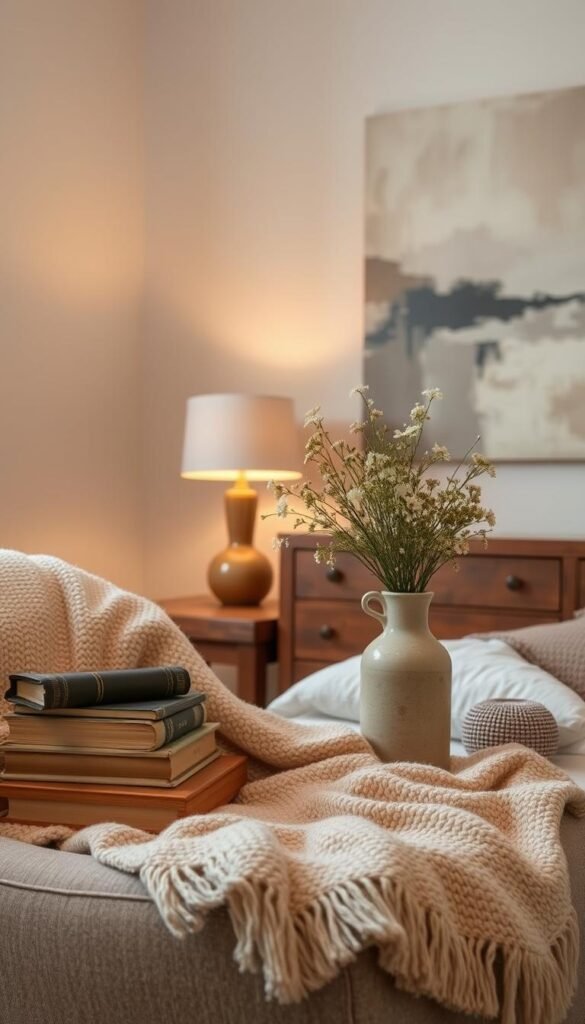
Thoughtful accessories bring life and character to your serene retreat. These final layers transform a beautiful space into your personal sanctuary. They add meaning without disrupting the calm atmosphere.
Your choices should reflect what makes you feel most at home. Select items that serve both aesthetic and practical purposes. This approach maintains functionality while adding personality.
Curating a Minimalist Display of Functional Accessories
Choose pieces that enhance your daily routine while looking beautiful. A sleek clock keeps time while adding modern style. Decorative trays organize small items on nightstands.
Bookshelves offer opportunities for curated displays. Select books with neutral covers that complement your color scheme. Add small objects that hold personal significance.
Consider these functional accents for your bedroom:
- Ceramic lamps that provide soft light
- Stoneware bowls for storing jewelry
- Wooden boxes that hide charging cables
- Textured baskets for extra blankets
Arrange items in groups of three for visual appeal. Vary heights to create interesting sight lines. Leave breathing room between objects to prevent clutter.
Adding Scent and Texture with Candles and Ceramics
Fragrance creates another layer of sensory experience. Neutral scents like lavender promote relaxation. Vanilla and sandalwood add subtle warmth.
Ceramic elements introduce wonderful tactile quality. Clay vases hold dried grasses or single stems. Stoneware bowls add organic texture to surfaces.
Consider these placement ideas for maximum impact:
- Cluster candles on a decorative tray for safety
- Use ceramic diffusers for continuous subtle scent
- Place textured objects where light catches their surface
- Rotate seasonal scents to keep your space fresh
Personal items add meaning without bold colors. Black-and-white photos maintain neutrality while telling your story. Travel mementos spark joyful memories.
Regular editing keeps your decor aligned with current tastes. Remove items that no longer serve you. This maintains balance between personalization and simplicity.
Your space should feel both curated and comfortably lived-in. Every touch should contribute to your overall wellbeing. The right accents make your retreat truly yours.
Maintaining a Clutter-Free and Peaceful Environment
A tranquil atmosphere begins with intentional organization. Your personal retreat deserves thoughtful systems that support daily calmness. Smart solutions keep your space feeling open and restful.
Utilizing Smart Storage Solutions
Built-in options maximize your room’s potential beautifully. Custom closets with adjustable shelving adapt to changing needs. They keep clothing organized while maintaining clean lines.
Multi-functional furniture serves dual purposes with style. Storage ottomans offer seating while hiding extra blankets. Beds with drawers provide space for seasonal textiles.
Decorative baskets bring organic texture to your scheme. Woven pieces in natural materials blend seamlessly. They corral items like books or accessories attractively.
Consider these practical storage ideas:
- Floating shelves for displaying meaningful pieces
- Under-bed containers for out-of-season clothing
- Nightstands with drawers for personal items
- Bench seating with hidden compartments
Choose storage that complements your overall design. Neutral colors and natural materials maintain cohesion. Your solutions should feel integrated rather than added.
Keeping Surfaces Clear for a Serene Feel
Clean surfaces promote mental clarity and visual peace. Nightstands deserve special attention in your routine. Keep only essential items within easy reach.
Designated homes prevent random clutter accumulation. Assign specific spots for charging devices and reading materials. This habit maintains order without daily struggle.
Regular editing keeps your space aligned with its purpose. Seasonal decluttering sessions reassess what belongs. Remove items that no longer serve your comfort.
Daily habits make maintenance effortless:
- Make your bed each morning to establish order
- Return items to their designated places nightly
- Quickly tidy surfaces before leaving the room
- Weekly dusting prevents buildup on clear areas
Your efforts preserve the room’s designed integrity. Textures and lighting stand out without visual competition. The space feels both beautiful and functionally supportive.
View organization as an ongoing creative process. Adjust systems as your needs evolve over time. Your retreat should always reflect your current peace.
Exploring Style Variations Within a Neutral Scheme
A neutral foundation opens doors to countless design possibilities. Your personal taste can shine through while maintaining a peaceful atmosphere. This versatility lets you create a space that truly reflects your unique style.
Whether you lean toward crisp minimalism or earthy bohemian vibes, your palette provides the perfect canvas. The key lies in selecting elements that reinforce your chosen aesthetic. Consistency in material and color choices unifies diverse pieces beautifully.
Achieving a Modern Minimalist Look
Clean lines and uncluttered spaces define this approach. Your room feels open, airy, and intentionally curated. Every piece serves a purpose while contributing to the overall harmony.
Choose low-profile furniture with simple silhouettes. A platform bed without elaborate headboards works perfectly. Nightstands with sleek metal legs add lightness to the space.
Keep your color palette restrained and monochromatic. Shades of white, gray, and cream create serene cohesion. This limited selection prevents visual noise and promotes calmness.
Functional decor replaces unnecessary embellishments. A single piece of abstract art makes a quiet statement. Simple ceramic vessels hold practical items with elegance.
Consider these elements for a minimalist retreat:
- Sleek, low-profile furniture with clean lines
- Limited color palette using similar shades throughout
- Functional decor that serves practical purposes
- Ample negative space to prevent visual overload
Your textiles should feel luxurious yet understated. High-quality cotton bedding in solid tones works beautifully. A wool throw in a similar shade adds texture without pattern.
Lighting plays a crucial role in this style. Choose fixtures with geometric shapes and metallic finishes. Their simplicity enhances the overall minimalist aesthetic.
Incorporating Rustic or Bohemian Flair
Rustic charm brings organic warmth through natural materials. Distressed wood pieces add character and history to your space. Handwoven textiles introduce wonderful texture and craftsmanship.
This style celebrates imperfections and natural variations. A reclaimed wood headboard becomes the room’s focal point. Woven baskets provide storage while adding earthy appeal.
Bohemian flair embraces layered textures and global influences. Macramé wall hangings bring softness to your walls. Plants introduce life and vitality to your neutral scheme.
Both styles work beautifully within a neutral palette. They add depth and personality without overwhelming colors. Your space feels collected rather than designed.
Key pieces define these styles effectively:
| Style | Defining Elements | Material Choices |
|---|---|---|
| Rustic | Reclaimed wood, wrought iron | Distressed finishes, natural textiles |
| Bohemian | Macramé, mixed patterns | Rattan, fringe, embroidered details |
Blend elements from different styles for personal expression. A modern room gains warmth with a rustic wood bench. Bohemian pillows add softness to minimalist bedding.
Your rug choice significantly influences the overall feel. A jute rug enhances rustic charm with its natural texture. A vintage-inspired patterned rug adds bohemian character.
Identify what makes you feel most at home. Select pieces that reinforce your preferred style while maintaining neutrality. Your retreat becomes a true reflection of your personality.
Consistency creates harmony among diverse elements. Similar wood tones throughout unite different furniture pieces. Complementary textures ensure visual cohesion.
Your space should feel both intentional and effortlessly comfortable. The right balance makes your bedroom uniquely yours.
Finalizing Your Room with Cohesive Accents
Cohesive accents transform your space from beautiful to perfectly balanced. These final touches create that magical feeling of everything belonging together. Your attention now turns to harmony and flow throughout the entire room.
Step back and view your design as a complete picture. Notice how colors and textures interact across different areas. This perspective reveals opportunities for refinement.
Ensuring a Harmonious Flow of Colors and Textures
Maintain consistency with your chosen palette throughout the space. Repeat key shades in multiple areas for visual continuity. This technique creates rhythm and connection.
Distribute textures evenly across your room. Balance smooth surfaces with rough ones for interest. Each texture should appear in at least two locations.
Use this quick checklist for balance assessment:
- Do all tones complement rather than compete?
- Are textures distributed evenly throughout?
- Does the eye move smoothly without interruption?
- Is there visual weight balance on all walls?
Edit your decor with a critical eye. Remove items that disrupt the flow or add clutter. Sometimes less creates more impact.
Making Last-Minute Adjustments for Balance
Small changes often make significant differences. Shift furniture placement to improve traffic flow. Adjust lighting angles to highlight best features.
Add missing textures where surfaces feel too similar. A woven basket can break up smooth walls. Soft throws add warmth to wooden surfaces.
Consider these final tweaks for perfection:
- Photograph your room to spot imbalances
- Ask a friend for objective feedback
- Unify hardware finishes throughout
- Repeat a signature color in three places
Patience proves valuable during this phase. Your space may evolve over weeks as you live in it. Allow yourself permission to make gradual changes.
Every element should support your overall vision. Cohesion creates that restful, intentional feeling. Your retreat now feels completely unified and perfectly yours.
Enjoying Your New Serene and Stylish Retreat
You’ve crafted a personal haven that balances beauty and comfort. Your space now reflects thoughtful choices in textures, tones, and natural elements.
This timeless design adapts to your evolving tastes. It remains fresh through seasonal updates with new textiles or decor pieces.
Regular care maintains its peaceful appeal. Simple cleaning and occasional refreshes keep the room inviting.
Share your success with others seeking inspiration. Your journey demonstrates how intentional design creates lasting tranquility.
This sanctuary supports your wellbeing every day. It’s a testament to investing in environments that nurture peace.