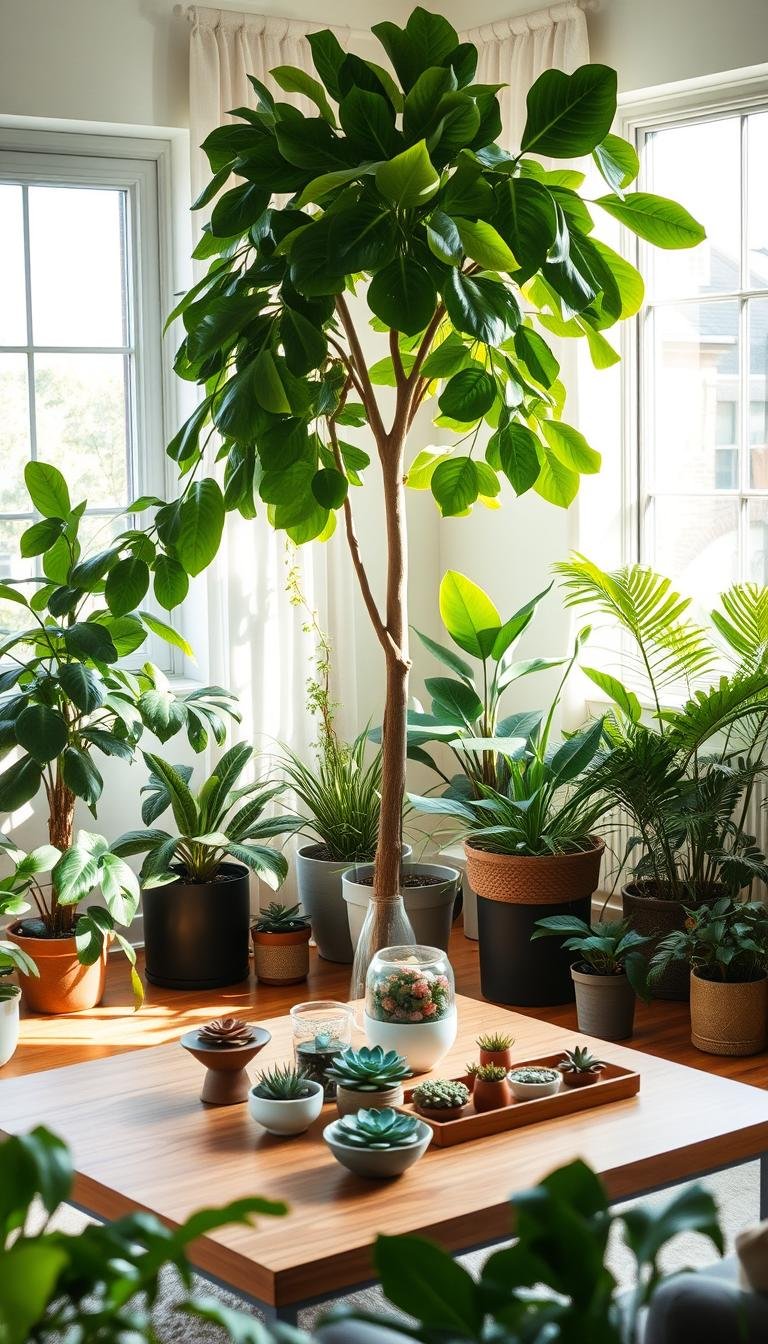
Welcome to your guide for transforming your space with beautiful greenery. Indoor plants add life and energy to your home decor while creating a more natural atmosphere.
Strategically placed houseplants can completely change your room’s aesthetic. They create an inviting environment that feels fresh and alive.
These living elements offer dual benefits. They serve as stunning decorative pieces while improving your air quality and mental wellbeing.
The right plant selection complements your existing furniture and interior style. Whether you prefer modern minimalism or cozy traditional designs, there’s a perfect match.
Living greenery adds a dynamic element that artificial decor cannot replicate. You’ll discover varieties specifically suited for indoor conditions with minimal maintenance needs.
Learn how to create visual harmony by considering plant sizes, colors, and textures. This approach ensures your space feels balanced and beautifully designed.
Why Your Living Room Needs Indoor Plants
Greenery does more than just beautify your space. It transforms your entire living experience with remarkable benefits you can feel every day.
Boosting Your Mood and Reducing Stress
Living with plants creates a calming atmosphere in your most-used space. Studies show they significantly reduce stress levels and may even improve sleep quality.
Being near lush green plants lowers daily tension. This connection to nature indoors offers psychological benefits including improved mood.
Surrounding yourself with living foliage increases productivity too. It brings a natural touch that artificial decor cannot replicate.
Naturally Purifying Your Air Quality
Your indoor plants work as natural air purifiers. They constantly filter harmful toxins without using electricity.
NASA research confirms certain houseplants remove formaldehyde and benzene. This dramatically improves your home’s air quality.
Different plant varieties contribute to home wellness in various ways. Some regulate humidity while others purify the air.
Adding a Dynamic Layer to Your Home Decor
Plants add a dynamic, ever-changing element to your design. They evolve with seasons and growth patterns.
This creates visual interest that keeps your living room fresh. The right variety complements your existing interior style.
According to Feng Shui principles, greenery brings positive energy. It creates balance and luck in your space.
Your living area becomes more inviting with natural elements. They add life and energy that transform ordinary rooms into special spaces.
How to Pick the Perfect Plant for Your Space
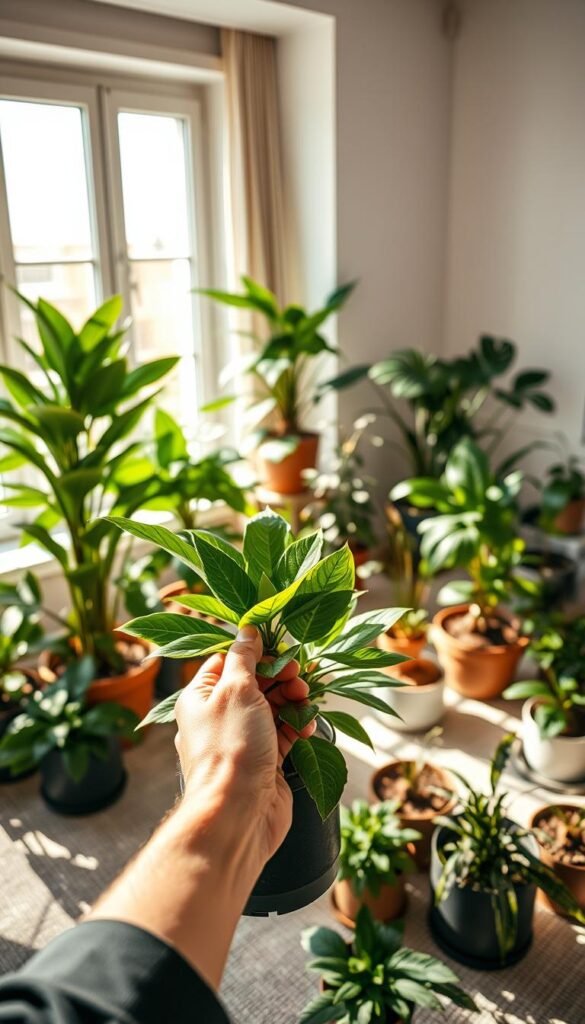
Your journey to perfect plant selection begins with three key considerations. The right choices will create a harmonious environment where both you and your greenery can flourish together.
Understanding your specific conditions ensures your botanical companions will thrive. This approach saves you time and money while creating a healthier indoor ecosystem.
Matching Plants to Your Living Room’s Light
Light availability determines which varieties will succeed in your space. Different species have specific light requirements that affect their growth and health.
Assess your room’s light conditions throughout the day. Notice how sunlight moves across your space and where shadows fall.
North-facing windows provide soft, consistent light perfect for many indoor plants. South-facing exposures offer brighter conditions that some species prefer.
| Light Condition | Plant Examples | Care Level |
|---|---|---|
| Bright Indirect Light | Rubber Plant, Fiddle Leaf Fig | Moderate |
| Medium Light | Pothos, Peace Lily | Easy |
| Low Light | Snake Plant, ZZ Plant | Very Easy |
Many plants thrive in low light conditions common in modern homes. The resilient snake plant tolerates dim corners while purifying your air.
Considering Your Space and Furniture Layout
Your room’s dimensions and arrangement guide your plant choices. Consider both horizontal and vertical space when selecting your green companions.
Measure areas where you want to place greenery. Ensure there’s enough room for growth without crowding your furniture or walkways.
Tall plants make excellent statement pieces beside sofas or empty corners. Smaller varieties work beautifully on shelves, tables, and windowsills.
Consider the mature size of each plant rather than its current dimensions. This prevents overcrowding as your greenery grows over time.
Choosing Pet-Friendly and Easy-Care Options
Safety comes first when selecting greenery for homes with curious pets. Many common houseplants can be toxic if ingested by animals.
The cheerful spider plant remains completely safe for cats and dogs. Its arching leaves add movement and visual interest to any room.
Easy care options suit beginners and busy homeowners alike. These resilient varieties forgive occasional missed waterings and adapt to various conditions.
Consider your schedule and plant care commitment before making selections. Low-maintenance choices ensure long-term success and enjoyment.
Essential Care Tips for Thriving Houseplants
Proper care transforms your green companions from surviving to truly flourishing. Mastering these fundamentals ensures your botanical collection remains healthy and vibrant.
Each plant variety has unique needs, but core principles apply across most species. Understanding these basics creates a strong foundation for long-term success.
Mastering the Art of Watering Schedules
Watering correctly prevents most common plant problems. Different species have varying moisture requirements.
The resilient snake plant tolerates dry conditions beautifully. Peace Lilies prefer soil that dries between drinks.
Check soil moisture before watering. Insert your finger two inches deep—if dry, it’s time to water.
Golden Pothos needs water every 1-2 weeks. Rubber trees only when dry to the touch.
Overwatering causes root rot while underwatering leads to dehydration. Learn your plants’ specific needs.
Understanding Humidity and Temperature Needs
Most houseplants prefer consistent home environments. They thrive in temperatures between 65-75°F.
Tropical varieties love higher humidity levels. Grouping plants together naturally increases moisture.
Place pebble trays beneath pots for extra humidity. Mist leaves regularly for moisture-loving species.
Avoid drafty windows and heating vents. Sudden temperature changes stress your green companions.
ZZ plants enjoy warm, stable conditions. They adapt well to typical home environments.
The Importance of Proper Potting and Soil
Good drainage prevents waterlogged roots. Choose containers with drainage holes.
Select soil mixes tailored to your plants’ needs. Succulents need fast-draining mixes while tropicals prefer moisture retention.
Repot when roots outgrow containers. This ensures continued growth and prevents root-binding.
Refresh soil every 1-2 years to replenish nutrients. Your plants will reward you with vigorous growth.
Monstera varieties enjoy chunky, well-draining mixes. They develop strong root systems in proper medium.
Creative House Plants Decor Ideas for Living Rooms That Thrive Indoors
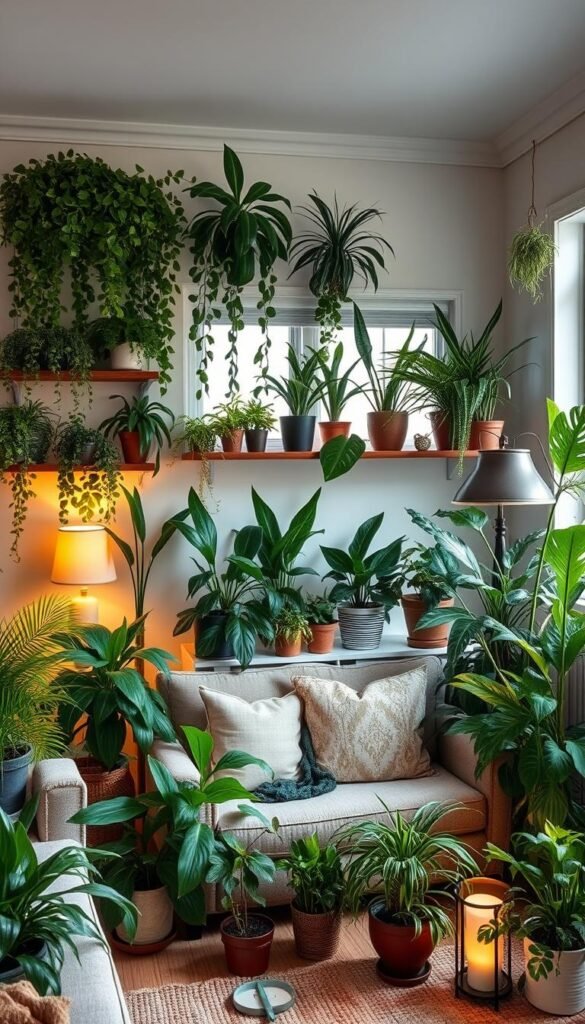
Transform your space into a green sanctuary with these imaginative display techniques. Your botanical collection deserves presentation that highlights its natural beauty while complementing your interior design.
Strategic placement turns ordinary greenery into extraordinary focal points. These methods work with any size collection and adapt to various room layouts.
Discover how simple adjustments create dramatic visual impact. You’ll learn to maximize both horizontal and vertical space effectively.
Using Furniture and Stands for Elevated Displays
Your existing furnishings become perfect platforms for greenery. Bookshelves create natural tiers for arranging specimens at different heights.
Side tables offer ideal spots for smaller specimens. They bring life to empty corners without overwhelming your space.
Plant stands introduce varying levels that draw the eye upward. This technique adds dimension and makes your collection appear more extensive.
Mantles provide excellent staging areas for trailing varieties. Their elevated position allows vines to cascade gracefully downward.
Mix stand heights throughout your room. This creates rhythm and guides visual movement through your space.
Grouping Plants for a Cohesive and Lush Look
Cluster greenery together to create miniature indoor gardens. Grouping specimens creates a lush, professional appearance.
Coordinate pot colors and styles for unified displays. Matching containers create harmony among different plant varieties.
Combine specimens with contrasting leaf shapes and textures. Broad leaves beside delicate fronds create engaging visual interest.
Arrange groups in odd numbers for natural appeal. Three or five plants together often look more balanced than even numbers.
Place groupings in key areas like conversation zones. They become natural focal points that enhance your room’s atmosphere.
Incorporating Trailing Plants for Vertical Interest
Vining varieties add movement and softness to your decor. Their cascading habit brings dynamic energy to any space.
English Ivy thrives in hanging planters near windows. Its trailing stems create beautiful green curtains of foliage.
String of Pearls offers elegant cascades from high shelves. Its unique bead-like leaves provide unusual textural appeal.
Use trailing specimens to soften architectural edges. They gracefully drape over shelves and furniture corners.
Combine upright and trailing varieties in single displays. This creates full, dimensional arrangements that captivate attention.
Best Low-Light Plants for Dimmer Living Rooms
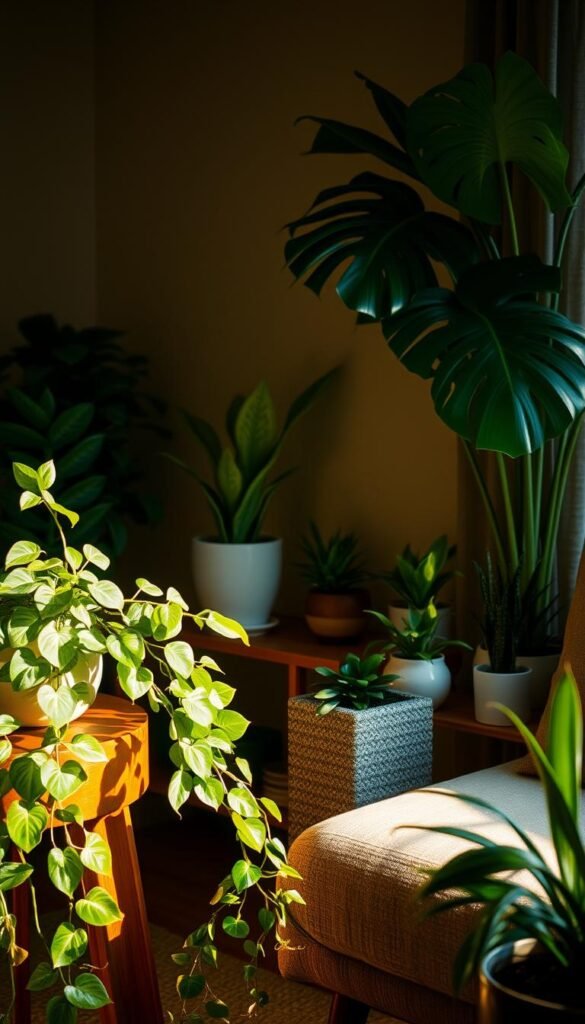
Not every room gets abundant sunlight, but that doesn’t mean you can’t enjoy lush greenery. Many beautiful varieties actually prefer shaded conditions and bring life to darker corners.
These resilient specimens adapt well to spaces with limited natural light. They create vibrant focal points where other plants might struggle.
Discover perfect options for your dimmer areas. Each brings unique beauty while requiring minimal maintenance.
ZZ Plant: The Unkillable Office Favorite
ZZ plants thrive on neglect, making them perfect for beginners. Their glossy, dark green leaves add elegance to any space.
This variety needs only low to medium light conditions. It tolerates irregular watering and stable room temperatures.
Place your ZZ plant in corners far from windows. It will grow slowly but steadily, purifying your air while looking beautiful.
Snake Plant: A Striking, Architectural Statement
Snake plants offer vertical interest with their upright, sword-like leaves. Their variegated patterns create visual drama in dim rooms.
This hardy specimen handles infrequent watering beautifully. Water every 7-10 days when soil feels dry to the touch.
Its architectural form complements modern interior designs. The snake plant also removes toxins from your air efficiently.
Parlor Palm: A Touch of Tropical Drama
Parlor palms bring soft, feathery texture to your decor. Their graceful fronds create movement and tropical appeal.
They tolerate moderate to low light levels perfectly. Average home humidity satisfies their needs without extra effort.
Water when the soil feels slightly dry. This palm grows slowly but creates substantial visual impact over time.
| Plant Variety | Light Preference | Watering Frequency | Special Features |
|---|---|---|---|
| ZZ Plant | Low to Medium | When completely dry | Glossy foliage, air purifying |
| Snake Plant | Low light | Every 7-10 days | Architectural shape, very drought tolerant |
| Parlor Palm | Low to Moderate | When slightly dry | Tropical appearance, soft texture |
| Cast Iron Plant | Low light | Infrequently | Extremely durable, deep green leaves |
Consider cast iron plants for particularly challenging spots. Their deep green foliage remains vibrant in very low light.
Certain philodendron varieties also adapt well to limited light. They offer heart-shaped leaves that bring warmth to your space.
Identify areas in your room that receive indirect light throughout the day. These spots often work perfectly for low-light varieties.
Remember that plants in dim conditions typically grow slower. This actually makes them easier to maintain long-term.
Your low-light selections will create beautiful, living decor that enhances your home’s atmosphere. They prove that every space can host thriving greenery.
Statement-Making Large Floor Plants
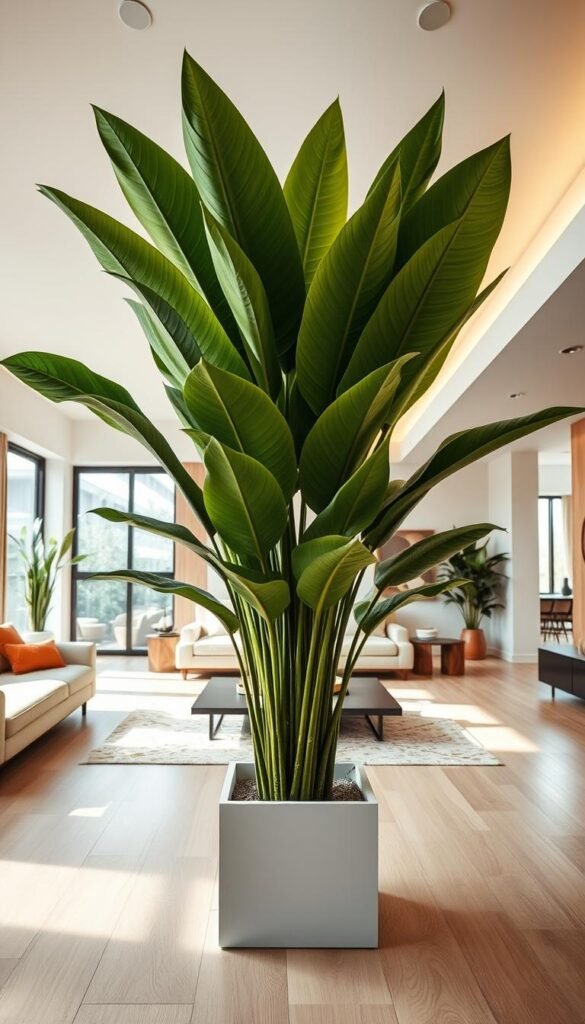
Big botanical specimens transform your room into an impressive oasis. These towering beauties create instant focal points that command attention.
Their substantial presence anchors your entire design scheme. You get living sculptures that grow more magnificent with time.
Proper placement ensures these giants enhance rather than overwhelm your space. Consider traffic flow and viewing angles when positioning them.
Large specimens need appropriate care to maintain their majestic appearance. Their size demands specific attention to watering and light conditions.
Fiddle-Leaf Fig Tree: The Interior Designer’s Choice
This popular plant features large, violin-shaped leaves that make dramatic statements. Its architectural form brings sophisticated elegance to any room.
Fiddle-leaf figs demand bright, indirect light near east-facing windows. They thrive with consistent care and stable environments.
Water thoroughly when the top inch of soil dries out. Avoid overwatering to prevent root rot issues.
Dust those broad leaves regularly to maintain their glossy appearance. This helps your fig breathe and absorb more light.
Though sometimes finicky, their visual impact justifies the extra attention. A healthy fiddle-leaf becomes the centerpiece of your living room.
Monstera: Trendy and Tropical with Split Leaves
Monstera varieties showcase spectacular split leaves that create jungle vibes. Their natural fenestrations develop as the plant matures.
These tropical beauties prefer bright, filtered light but tolerate lower levels. The stunning Monstera Thai Constellation features creamy variegation.
Allow soil to dry between waterings for optimal health. These plants appreciate consistent humidity levels.
Their sprawling growth habit makes them perfect floor specimens. Provide support poles for vertical guidance as they expand.
Monsteras have become social media darlings for good reason. Their unique foliage adds instant personality to your space.
Bird-of-Paradise: A Bold, Upright Stunner
This dramatic variety offers tall, banana-like leaves and spectacular flowers. Its upright growth creates impressive vertical height.
Bird-of-paradise thrives in bright, indirect light near south-facing windows. It needs space to spread its magnificent foliage.
Water when the soil feels slightly dry to the touch. This tropical beauty enjoys warm, humid conditions.
Mature specimens may produce exotic, bird-like blooms. These colorful flowers make extraordinary statements in your home.
Its architectural form brings tropical luxury to contemporary interior designs. This plant makes every day feel like vacation.
| Large Plant Variety | Light Requirements | Watering Needs | Mature Height | Special Considerations |
|---|---|---|---|---|
| Fiddle-Leaf Fig | Bright indirect light | When top inch dry | 6-10 feet | Dust leaves regularly |
| Monstera Deliciosa | Bright to medium light | When soil dries | 5-8 feet | Provide support pole |
| Bird-of-Paradise | Bright indirect light | When slightly dry | 5-7 feet | Needs space to spread |
| Rubber Tree | Bright indirect light | When soil dries | 6-10 feet | Wipe leaves monthly |
| Dwarf Banana Tree | Bright direct light | Keep consistently moist | 6-9 feet | High humidity preferred |
Rubber trees offer surprisingly sturdy options for big houseplants. Their glossy leaves bring rich color and visual weight.
The Dwarf Cavendish Banana Tree injects tropical energy into your space. It grows rapidly under proper conditions.
Always measure your available floor space before selecting large specimens. Leave adequate room for growth and maintenance access.
These statement plants become living art that evolves with your design style. They bring unparalleled life and energy to your living room.
Colorful and Unique Plants for a Pop of Interest
Your green collection deserves some vibrant companions that stand out from the crowd. These special varieties bring exciting hues and patterns that transform ordinary spaces into extraordinary displays.
Colorful specimens create focal points that draw attention beautifully. They complement your existing decor while adding personality and charm.
Discover how these unique varieties can enhance your interior design. Each offers distinctive beauty with specific care needs.
Ruby Rubber Tree: Rosy-Leaved Wonder
The stunning ruby rubber tree features pink-tinged leaves that add unexpected color. Its large, glossy variegated foliage creates dramatic visual impact.
This variety can reach 8 feet indoors with proper care. It makes an impressive statement in any room.
Water when soil dries out completely between sessions. Bright indirect light maintains those beautiful pink hues.
According to plant care experts, ruby rubber trees purify your air while adding elegance. Their colorful foliage brings warmth to modern interior designs.
Pink Polka Dot Plant: A Playful Splash of Color
Pink polka dot plants bring vibrant color patterns to shelves and tabletops. Their green leaves feature charming reddish-pink splashes.
Keep soil consistently moist but not soggy for best results. These cheerful plants prefer medium to bright indirect light.
Their compact size makes them perfect for small spaces. They add playful charm to any home decor arrangement.
Pinch back stems to encourage bushier growth. This maintains their beautiful spotted appearance.
Blushing Bromeliad: A Fiery, Flowering Centerpiece
Blushing bromeliads serve as living floral arrangements with spectacular blooms. Their vibrant red flowers last for months, creating long-lasting drama.
These tropical beauties prefer bright indirect light and occasional spritzing for humidity. Water into their central cup rather than the soil.
Their striking appearance makes them perfect centerpiece plants. They bring fiery color to any living room setup.
After flowering, they produce pups that can grow into new plants. This gives you more colorful specimens for your collection.
| Colorful Plant Variety | Light Requirements | Watering Needs | Special Features | Mature Height |
|---|---|---|---|---|
| Ruby Rubber Tree | Bright indirect light | When soil dries | Pink-tinged variegated leaves | Up to 8 feet |
| Pink Polka Dot Plant | Medium to bright indirect | Keep consistently moist | Reddish-pink speckled foliage | 12-18 inches |
| Blushing Bromeliad | Bright indirect light | Central cup watering | Long-lasting red blooms | 12-24 inches |
| Watermelon Peperomia | Medium indirect light | When top soil dries | Watermelon-patterned leaves | 8-12 inches |
| Red Prayer Plant | Medium to low light | Keep slightly moist | Leaves move daily | 12-18 inches |
Watermelon peperomia offers unique foliage with green-and-silver patterns. Its leaves resemble watermelon rinds, adding textural interest.
Red prayer plants feature leaves that lift in evening and lower each morning. They require consistent moisture and can’t handle drying out.
Consider crotons and coleus for additional colorful options. Their stunning leaf patterns create visual excitement.
Use these vibrant specimens as accent pieces throughout your space. They draw attention to specific areas beautifully.
Colorful plants often need specific light conditions to maintain their vibrant hues. Position them carefully to preserve their beautiful appearance.
These unique varieties integrate seamlessly into your existing design. They bring personality and charm that ordinary green plants cannot match.
Ideal Plants for Shelves, Mantles, and Tables
Elevate your surfaces with greenery that fits perfectly on elevated spots. These compact beauties bring life to your favorite display areas without overwhelming your space.
Each selection offers unique charm and practical benefits. You’ll find options for various light conditions and care preferences.
Discover how small specimens create big impact throughout your room. Their strategic placement draws attention to your most cherished surfaces.
String of Pearls: An Elegant Cascading Vine
This stunning variety features bead-like leaves that cascade gracefully. Its trailing habit creates living jewelry effects on shelves and mantles.
String of pearls thrives in bright, indirect light. It enjoys drying out completely between waterings.
This drought-resistant plant forgives occasional neglect. Its unique appearance adds textural interest to any arrangement.
Hang these beauties in macrame planters near windows. Their pearl-like strands create mesmerizing movement as they grow.
Jade Plant: A Resilient and Lucky Succulent
Jade plants bring traditional good luck symbolism to your space. Their thick, glossy leaves store water for dry periods.
This resilient succulent requires bright, indirect light for optimal growth. It needs minimal care beyond occasional watering.
Allow soil to dry completely between water sessions. Overwatering can cause root issues with these moisture-sensitive specimens.
Jade’s compact growth makes it perfect for tabletops and shelves. Its tree-like appearance adds structural interest to your decor.
Air Plant: A Soil-Free Novelty for Creative Displays
Air plants offer innovative growing without traditional soil. Their unique requirements open endless creative display possibilities.
These fascinating specimens absorb moisture through their leaves. Soak them weekly and spritz regularly for proper hydration.
Mount them on driftwood or place in glass terrariums. Their versatility allows placement anywhere in your room.
Bright, indirect light keeps these unusual plants healthy. They bring conversation-starting appeal to your interior.
| Surface Plant | Light Needs | Water Schedule | Special Features | Ideal Placement |
|---|---|---|---|---|
| String of Pearls | Bright indirect | When completely dry | Cascading pearl-like leaves | High shelves, hanging planters |
| Jade Plant | Bright indirect | Infrequently | Luck symbolism, tree-like form | Tables, mantles, windowsills |
| Air Plant | Bright indirect | Weekly soak + misting | No soil needed | Creative mounts, terrariums |
| English Ivy | Low to medium | When soil dries | Trailing habit, air purifying | Bookshelves, shaded areas |
| Lemon Button Fern | Medium indirect | Keep slightly moist | Lemony fragrance | Coffee tables, bathrooms |
English ivy thrives in not-so-well-lit spaces with its trailing beauty. It prefers soil to dry between waterings for optimal health.
Lemon button fern offers delicate fragrance perfect for coffee tables. Its compact size and moisture love make it ideal for humid spaces.
Combine different specimens at various heights for visual interest. This approach creates dynamic displays that captivate attention.
Consider each plant’s mature size when selecting containers. Proper proportion ensures your arrangements look balanced and intentional.
These surface plants bring life to every level of your room. They prove that even small spaces can host thriving greenery.
Pet-Friendly and Air-Purifying Options
Your home deserves greenery that keeps everyone safe while enhancing your environment. These remarkable selections offer dual benefits of beauty and functionality.
They create healthier spaces for your entire family. You get peace of mind alongside natural elegance.
Spider Plant: An Easy-Going Classic for Busy Homes
Spider plants rank among the most effective air-purifying varieties available. Their arching leaves and baby plantlets create charming displays.
This resilient plant thrives in various light conditions. It tolerates occasional neglect while maintaining its beautiful appearance.
Water when soil feels dry to the touch. Spider plants prefer drying out between waterings.
Their non-toxic nature makes them perfect for homes with pets and children. You can enjoy their beauty without safety concerns.
Areca Palm: A Graceful, Easy-Going Air Purifier
Areca palms bring tropical elegance to your interior with feathery, arching fronds. They create soft movement and visual interest in any room.
This palm variety prefers medium, indirect light for optimal growth. It enjoys consistent moisture without becoming waterlogged.
Water approximately every ten days during warmer months. Reduce frequency slightly in winter.
Areca palms effectively remove toxins from your indoor air. Their graceful form adds height and texture to your space.
Money Tree: A Symbol of Luck with Braided Stems
Money trees feature distinctive braided trunks that symbolize good fortune and prosperity. Their glossy green leaves create cheerful accents.
This attractive variety prefers medium to bright indirect light. Avoid direct sunlight which can scorch its leaves.
Water thoroughly when the top few inches of soil dry out. Allow excess water to drain completely.
Money trees adapt well to typical home humidity levels. Their manageable size makes them perfect for various room locations.
| Plant Variety | Light Requirements | Watering Frequency | Air Purifying Ability | Pet Safety |
|---|---|---|---|---|
| Spider Plant | Bright to low indirect | When soil dries | Removes formaldehyde | Completely safe |
| Areca Palm | Medium indirect | Every 7-10 days | Removes benzene | Non-toxic |
| Money Tree | Medium to bright indirect | When top soil dries | General air purification | Non-toxic |
| Boston Fern | Medium indirect | Keep consistently moist | Removes formaldehyde | Safe for pets |
| Parlor Palm | Low to medium | When slightly dry | General air purification | Pet-friendly |
Additional safe options include certain palm varieties and peperomia. These combine beautiful appearance with complete safety for animals.
NASA research confirms many common houseplants effectively remove household toxins. Spider plants specifically target formaldehyde and carbon monoxide.
Place air-purifying plants throughout your living area for maximum effectiveness. Group several varieties together for enhanced benefits.
Always verify plant safety before introducing new greenery to your home. Many common varieties can pose risks to curious pets.
These remarkable plants create healthier, more beautiful living environments. They prove that safety and style can coexist perfectly.
Bringing Your Plant Decor Vision to Life
Begin your green journey with a few simple, easy-care varieties. This approach builds confidence as you learn each plant’s unique needs.
Gradually expand your collection as your skills grow. Experiment with placement and creative displays to find what works best for your space.
Consider your room’s layout and style when selecting new additions. This ensures your greenery complements your existing interior design beautifully.
Remember that patience is key—your botanical companions will grow and evolve over time. Enjoy watching your living space transform into a personal oasis.