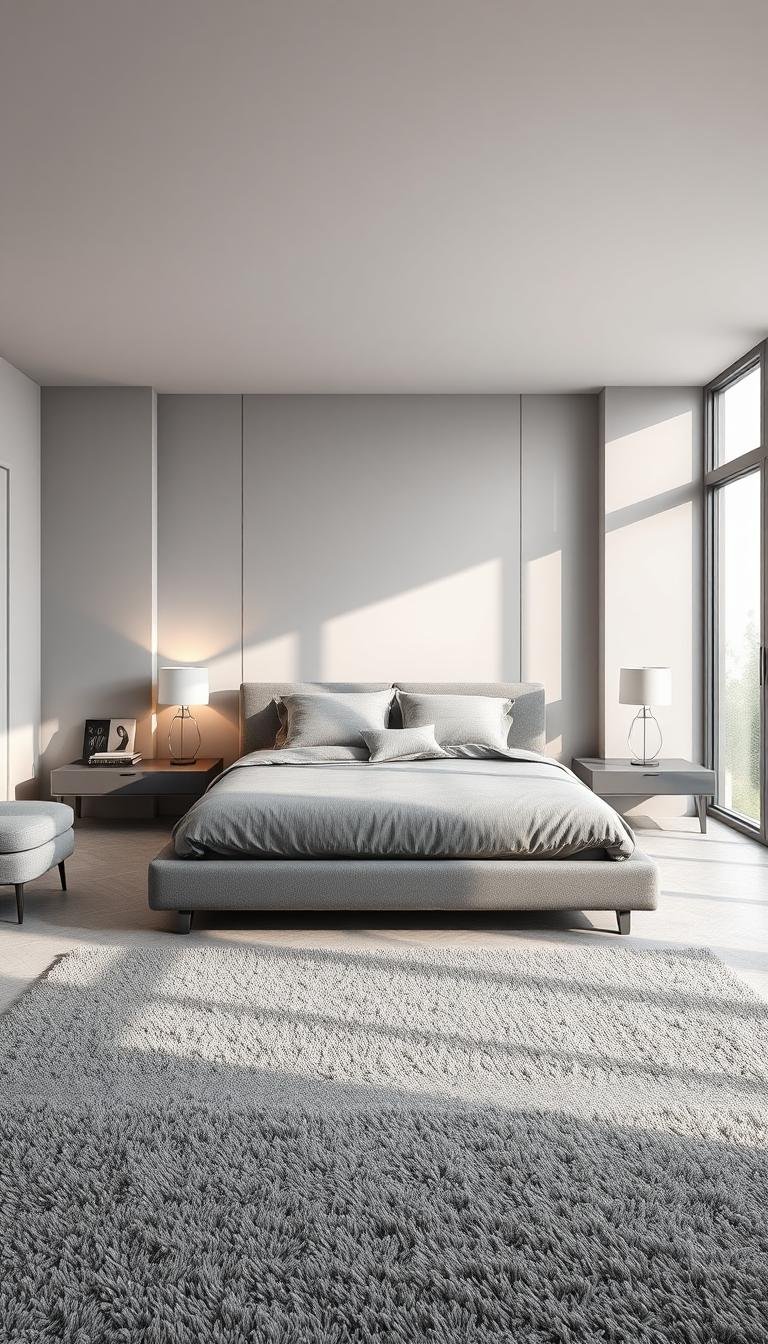
Welcome to your go-to guide for creating a peaceful and stylish sleep retreat. Grey remains a top choice for bedrooms this year. Its versatility brings both calm and sophistication to your personal space.
This neutral shade works in many settings. Light tones make a room feel airy and open. Darker shades add depth and drama. Grey pairs well with many colors, from soft neutrals to bold accents.
We will show you how to pick the perfect grey tone for your room. You’ll learn to mix textures and add art for a custom look. Get tips on furniture, lighting, and bedding to complete your design.
Our advice comes from top designers with real-life examples. Discover how to blend grey with popular colors like gold or teal. Create a space that reflects your unique taste and feels both current and cozy.
1. Find Your Perfect Shade of Grey
Choosing the right grey is your first step to a beautiful space. This neutral offers endless possibilities. You can create a room that feels calm and personal.
Your choice depends on light and mood. Some greys feel soft and airy. Others bring drama and depth. The key is finding what works for you.
From Airy Pearl to Dramatic Charcoal
Pearl grey is a warm, soft alternative to white. It adds elegance without being too stark. Designer Joe Lucas uses it in beachy spaces for a relaxed feel.
Charcoal grey offers a bold, moody option. It works well for accent walls or bedding. Stephen Shubel pairs it with blackout curtains for striking contrast.
Understanding Warm vs. Cool Undertones
Warm greys have hints of beige or yellow. They feel cozy and inviting. Pair them with earthy tones or metallic accents for a rich look.
Cool greys have blue or green undertones. They create a tranquil, serene atmosphere. Slate grey, with its subtle azure quality, fits modern or coastal settings.
Consider your room’s natural light. Cool tones work in sunny spaces. Warm tones add comfort to north-facing rooms. Test samples on your walls to see how they change throughout the day.
| Grey Shade | Undertone | Best For | Designer Example |
|---|---|---|---|
| Pearl Grey | Warm | Soft, elegant looks | Joe Lucas – beachy spaces |
| Charcoal | Neutral to Cool | Accent walls, drama | Stephen Shubel – contrast with black |
| Slate Grey | Cool (azure) | Modern, coastal settings | Nina Farmer – paired with blue |
| Warm Grey | Beige/yellow | Cozy, earthy palettes | Vern Yip – citrine yellow accents |
Look at real rooms for inspiration. Stephen Shubel used charcoal in a bright cottage. Frances Merrill chose a neutral grey for a laid-back vibe. Your perfect shade is out there.
Take your time testing samples. See how they look in morning and evening light. Your choice will make the space truly yours.
2. Master the Art of the Grey Accent Wall
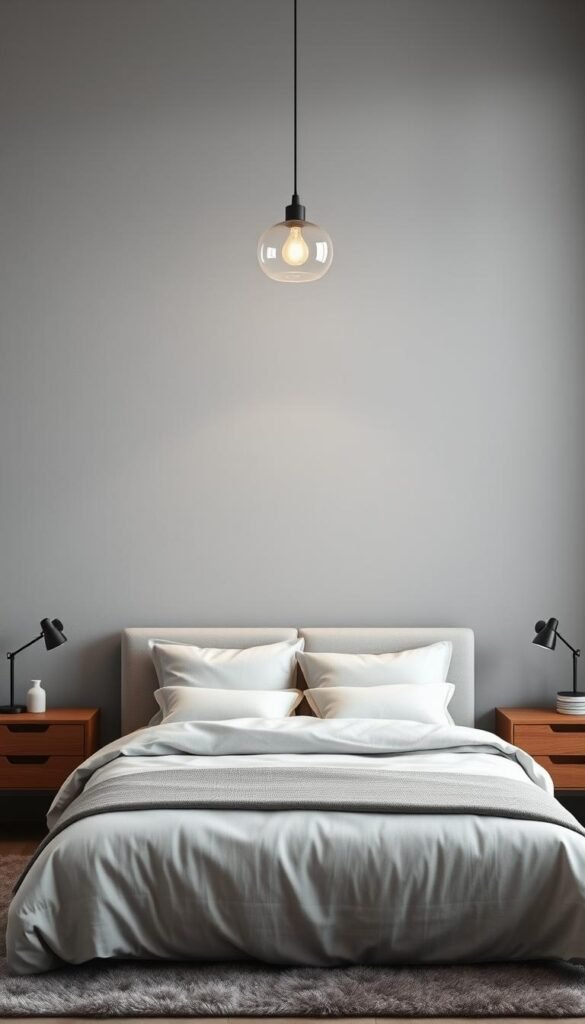
A single wall can change your entire room. It becomes the star of your space. Grey accent walls bring focus and style.
They add depth without overwhelming. You can go bold or keep it subtle. The right choice depends on your taste and light.
Creating Depth with Dark, Moody Hues
Dark greys make a room feel cozy. Charcoal shades create a cocooning effect. They work well in bright rooms.
Stephen Shubel used charcoal walls with blackout curtains. This combo fights harsh light. It also adds drama.
Dark walls make art and bedding pop. They provide a striking backdrop. Your decor stands out against the deep color.
Using Textured Wallcoverings for a Cozy Feel
Texture adds warmth and interest. Wool flannel gives an industrial vibe. Robert Stilin used it in a Tribeca loft.
Faux-book wallpaper adds charm. Reclaimed wood brings rustic appeal. Susan Ferrier used rough-cut pine in a lake house.
These options make your space feel intimate. They invite touch and add character. Your room gains a unique personality.
Framed Wallpaper Panels for an Elegant Touch
Framed panels offer a custom look. They are less permanent than full wallpaper. You can change them easily.
Maxime Vandal and Richard Ouellette framed Zoffany wallcovering. They used soft gray walls as a base. The result is sophisticated.
This approach adds elegance without commitment. It works well in guest rooms. You can create a gallery wall effect.
| Accent Wall Type | Best For | Designer Example | Key Benefit |
|---|---|---|---|
| Charcoal Paint | Drama, light control | Stephen Shubel | Creates striking contrast |
| Wool Flannel | Industrial spaces | Robert Stilin | Adds tactile warmth |
| Framed Panels | Elegant, customizable looks | Les Ensembliers | Easy to update or change |
| Reclaimed Wood | Rustic charm | Susan Ferrier | Adds natural texture |
| Limewashed Walls | Modern, timeless appeal | Various designers | Allows walls to breathe |
Balance your accent wall with lighter elements. Use pale bedding or furniture. This keeps the room from feeling heavy.
Consider function along with style. Blackout curtains help with sleep. Textured surfaces add comfort.
Your accent wall should reflect your personality. It can be bold or subtle. Either way, it makes your space special.
3. Layer Your Bedding in Grey Tones
Your bed is the heart of your sleep space. Layering different shades creates a rich, inviting feel. This approach adds both comfort and style to your room.
Start with a base of solid sheets. Add patterned pieces for visual interest. Finish with textured throws for coziness.
Mixing Shades and Patterns for Interest
Combine light and dark tones for depth. Try pearl grey sheets with charcoal pillows. Add geometric or striped patterns for movement.
Keep your color palette cohesive. Stick to three main shades maximum. This prevents a chaotic look.
Designer Joe Lucas blended gray, cerulean, and indigo in a beach setting. The result feels both relaxed and purposeful.
Choosing the Right Fabric: Linen, Velvet, and Cotton
Select fabrics based on your desired atmosphere. Each material brings a unique feel to your space.
Linen offers breathable comfort. It works well in coastal or Scandinavian styles. Joe Lucas used it for an ocean-inspired Hermosa Beach palette.
Velvet adds luxury and warmth. Alison Victoria paired it with a fur throw in Chicago. It created a Four Seasons in Paris ambiance.
Cotton provides everyday versatility. Combine it with quilted pillows or faux fur blankets. This enhances both comfort and style.
Consider seasonal changes in your fabric choices. Light linens keep you cool in summer. Heavy velvets and layered throws add warmth in winter.
Heather Chadduck Hillegas combined soft fabrics in a farmhouse bedroom. She created a relaxing haven with classic elements.
Use bedding to introduce subtle color accents. Add rusty red for warmth or blue for coastal vibes. These touches enhance your neutral base without overwhelming it.
4. Select Furniture that Complements Your Grey Palette
The right pieces bring your vision together. They create harmony and function in your space. Your choices should enhance the calming grey tones.
Think about both form and purpose. Each item should serve a need while adding beauty. The best rooms balance aesthetics with everyday use.
Upholstered Beds for a Soft, Cohesive Look
Fabric headboards add instant comfort. They create a plush backdrop for relaxation. Grey upholstery ties various elements together seamlessly.
Alison Victoria combined grey fabric with leather accents. This mix adds texture while maintaining a unified appearance. The result feels both luxurious and inviting.
Choose a style that matches your overall vision. Tufted designs offer classic elegance. Simple panels provide modern minimalism.
Wood Pieces with Gray Stains or Finishes
Natural materials bring warmth to cool tones. Grey-stained wood maintains organic charm while fitting your palette. It works especially well in rustic or coastal settings.
Weathered finishes on nightstands add character. Grey-washed bed frames offer subtle sophistication. These pieces blend nature with contemporary style.
Nina Farmer warmed up a space with brown and sepia tones. Wood elements provided earthy balance to cool grey walls.
Incorporating Metallic Accents in Lighting and Hardware
Metal details provide brilliant contrast. They catch light and add dimension to your room. Choose finishes that complement your grey shades.
Brass sconces offer warm glow against cool walls. Copper drawer pulls create rich accents. These touches elevate the entire space’s sophistication.
David Mann used metallic silver in a New York City retreat. The result felt spa-like and soothing. Vern Yip added citrine yellow pops with metallic elements for joy.
| Furniture Type | Best Application | Designer Example | Style Effect |
|---|---|---|---|
| Upholstered Bed | Creating cohesive, textured look | Alison Victoria | Adds softness and luxury |
| Grey-Stained Wood | Blending natural warmth with modern tones | Nina Farmer | Provides rustic charm |
| Metallic Hardware | Lighting and drawer pulls | David Mann | Adds sophistication and glow |
| Wainscoting | Architectural interest on walls | Alexandra Angle | Creates patriotic theme |
| Mixed Materials | Combining wood, metal, fabric | Vern Yip | Achieves balanced, joyful vibe |
Remember functionality alongside beauty. Nightstands with storage keep essentials handy. Comfortable seating offers a place to relax beyond the bed.
Lighting should enhance both mood and task performance. Choose pieces that work well for reading and relaxation. Your room becomes both stylish and practical.
Draw inspiration from real designer examples. Alexandra Angle used wainscoting in Farrow & Ball’s Lamp Room Gray. This added architectural interest to a classic scheme.
Your furniture choices define the room’s character. They can make it feel industrial, Scandinavian, or coastal. Select pieces that truly reflect your personal style.
5. Play with Texture to Add Depth and Comfort
Texture transforms your room from flat to fascinating. It creates visual interest and physical comfort. The right mix makes your space feel complete and inviting.
Think about how different materials feel and look. Soft throws invite relaxation. Rough rugs add earthy charm. Each element contributes to the overall vibe.
Plush Throws and Faux Fur Blankets
Add instant coziness with soft layers. A faux fur blanket brings luxury and warmth. Alison Victoria used one in Chicago for a Parisian feel.
Drape throws over chairs or the bed foot. They provide extra comfort on cool nights. Choose materials that complement your existing bedding.
Woven Rugs and Natural Fiber Accents
Ground your space with organic textures. Jute or sisal rugs add natural appeal. They work beautifully with grey tones.
These elements bring earthy balance to modern decor. Place a woven basket for storage. Add a seagrass stool for extra seating.
Tufted Headboards and Quilted Pillows
Create tailored elegance with detailed pieces. A tufted headboard adds sophistication. Quilted pillows provide dimension and comfort.
These elements enhance your overall aesthetic. They make your bed look inviting and polished. Mix them with smoother surfaces for contrast.
Balance is key when layering textures. Stick to a cohesive color palette. Vary materials to keep things interesting without chaos.
Draw inspiration from top designers. Frances Merrill focused on texture for calm escapes. Jeff Andrews used textured wallcoverings for Kaley Cuoco’s guest room.
Your layered approach should feel personal and lived-in. Combine different shades and materials. Create a space that welcomes you home.
6. Use Artwork to Personalize Your Grey Backdrop
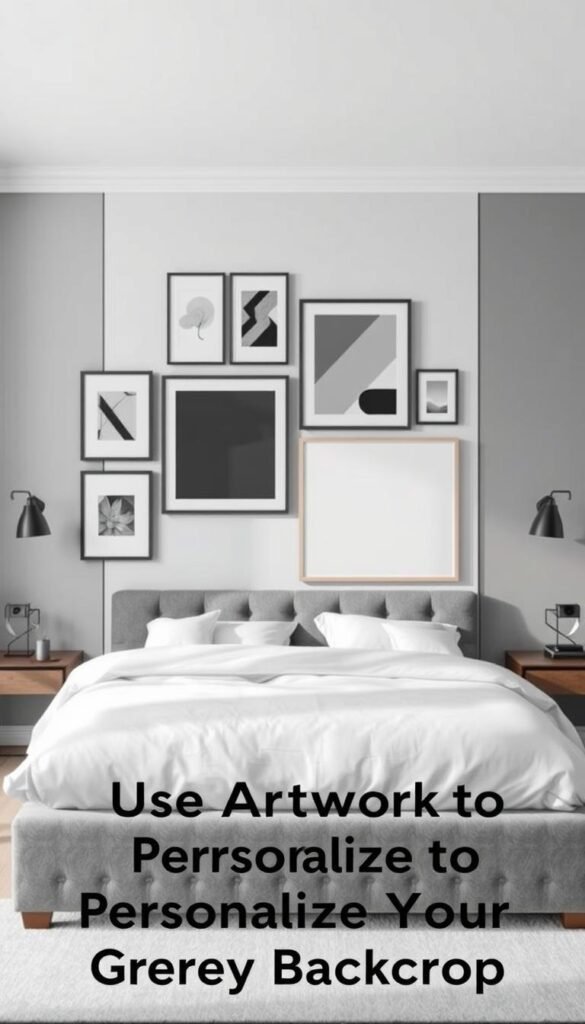
Your walls are a canvas waiting for your personal touch. The right artwork transforms a simple grey backdrop into a space that truly reflects your personality. This final layer completes your room’s story.
Art adds visual interest and emotional connection. It can set the mood from modern to classic. Your choices make the space uniquely yours.
Architectural Prints for a Modern Edge
Architectural elements bring sophistication to your space. Metal sculptures or building sketches create depth. They work beautifully against cool grey walls.
These pieces add a contemporary atmosphere. They feel both structured and artistic. Consider framed blueprints or geometric designs.
Black and White Photography for Classic Contrast
Monochrome images create timeless elegance. They stand out against grey walls without competing. This combination always feels balanced.
Juan Carretero used this approach in his Catskills home. He paired black-and-white photos with scenic wallpaper. The result was both dramatic and cohesive.
Bold, Colorful Pieces to Make a Statement
Vibrant artwork injects energy into neutral spaces. A single colorful piece becomes an instant focal point. It draws the eye and sparks joy.
Vern Yip added citrine yellow art inspired by his travels. This pop of color brightened a grey-and-tan palette. The room felt both personal and lively.
Consider your wall’s undertones when selecting art. Cool greys pair well with blue-hinted pieces. Warm greys work with earthy tones.
Think about size and placement too. A large piece above the bed anchors the space. A gallery wall of smaller prints adds eclectic charm.
Frames enhance your artwork’s impact. Metallic options add glamour and shine. Simple wood frames keep the look clean and minimalist.
For truly personal touches, think beyond traditional art. A collection of felt hats or travel souvenirs works beautifully. These items tell your unique story.
Your artwork should connect with other room elements. Match it to your bedding or accent colors. This creates a cohesive design that feels intentional.
Remember that accent colors like blush pink or navy can be introduced through artwork. This approach personalizes your space while maintaining harmony.
| Artwork Type | Best For | Designer Example | Visual Effect |
|---|---|---|---|
| Architectural Prints | Modern, sophisticated spaces | Various designers | Adds depth and structure |
| Black & White Photography | Classic, timeless contrast | Juan Carretero | Creates dramatic focal points |
| Bold Color Pieces | Personal statement pieces | Vern Yip | Injects energy and joy |
| Personal Collections | Unique, story-driven spaces | Various approaches | Adds authentic character |
| Metallic-Framed Art | Glamorous, refined looks | Designer examples | Enhances sophistication |
Take inspiration from real spaces but make it your own. Your artwork collection should reflect what you love. This final layer makes your room truly special.
7. Incorporate Strategic Pops of Color
Thoughtful color accents transform a neutral base into a personalized retreat. These intentional touches add energy and personality without overwhelming your calming foundation.
Choose shades that complement your existing tones. Consider both mood and style when selecting. Small, strategic additions create maximum impact.
Warming Up the Space with Rusty Reds and Oranges
Earth tones bring cozy warmth to cool foundations. Rusty reds and burnt oranges create inviting energy. They pair beautifully with warm grey undertones.
Nina Farmer used brown and sepia to warm up a bedroom palette. These rich additions make the space feel welcoming. They work especially well in rooms with limited natural light.
Add these colors through throw pillows or artwork. A terracotta vase or rust-colored blanket adds instant comfort. These touches create a harmonious, lived-in feel.
Creating a Coastal Vibe with Blues and Cerulean
Ocean-inspired hues bring serene tranquility to your room. Blues and cerulean create relaxed, coastal atmosphere. They complement both warm and cool grey tones.
Joe Lucas chose cerulean and indigo for a beachy bedroom. This combination evokes peaceful waterfront settings. The result feels both refreshing and calming.
Consider navy accents for sophisticated contrast. This deep blue pairs elegantly with charcoal tones. It creates a refined, nautical-inspired look.
Adding a Hint of Glamour with Metallics
Metallic elements introduce sophistication and shine. Gold, brass, or copper accents add luxurious touch. They catch light beautifully against matte surfaces.
Copper pairs particularly well with grey tones. These warm metals bring elegant contrast to neutral backgrounds. Vern Yip used citrine yellow for joyful metallic pops.
Incorporate these through lighting fixtures or decorative objects. A brass tray or gold-frame mirror adds instant refinement. These details elevate the entire space’s aesthetic.
Remember to keep color additions strategic and intentional. Use them in small doses through accessories and art. This approach maintains balance while adding personal flair.
Your color choices should reflect both your style and desired atmosphere. Warm tones create energy and coziness. Cool shades promote relaxation and serenity.
Mix colors thoughtfully with your neutral foundation. Pair navy with grey and brown for safe, refined combination. Let your personality shine through these carefully chosen accents.
8. Design with Light in Mind
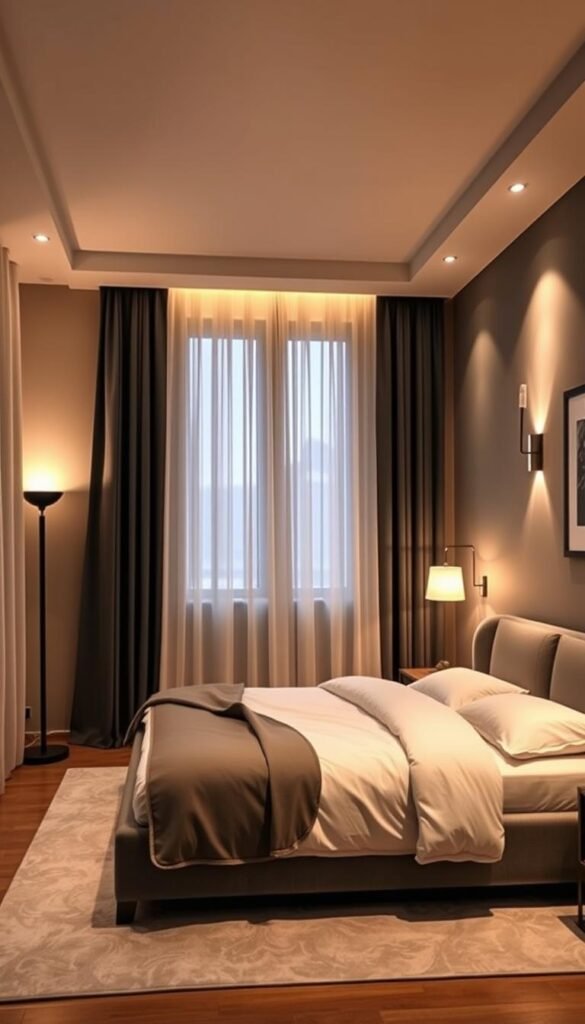
Lighting transforms your room from ordinary to extraordinary. It affects both mood and function in your personal retreat. The right approach makes your space feel inviting and practical.
Choosing Window Treatments: Blackout vs. Sheer
Window coverings serve both style and purpose. They control light and privacy in your room. Your choice depends on your needs and preferences.
Blackout curtains offer complete light control. They create ideal sleeping conditions in bright spaces. Stephen Shubel used them with charcoal walls in a California cottage.
Sheer curtains provide soft, diffused light. They maintain privacy while allowing natural glow. This option works well for creating airy, open atmospheres.
Layered Lighting: Overhead, Task, and Ambient
Multiple light sources create balanced illumination. Each type serves a different purpose in your room. Together they form a complete lighting scheme.
Overhead fixtures provide general brightness. They ensure your entire space feels well-lit. Choose dimmable options for adjustable intensity.
Task lighting focuses on specific activities. Bedside sconces offer perfect reading light. Desk lamps provide illumination for work areas.
Ambient lights set the overall mood. Dimmable lamps create cozy evening atmosphere. They make your room feel warm and welcoming.
David Mann used metallic silver for soothing glow. This approach enhanced his spa-like retreat feel. The result was both functional and beautiful.
| Lighting Type | Primary Function | Best Applications | Designer Example |
|---|---|---|---|
| Blackout Curtains | Complete light control | Bright rooms, sleep quality | Stephen Shubel – California cottage |
| Sheer Curtains | Soft, diffused light | Airy, open atmospheres | Various designer applications |
| Overhead Lighting | General illumination | Ceiling fixtures, chandeliers | Standard in most designs |
| Task Lighting | Focused activity light | Bedside reading, desk work | Sconces, adjustable lamps |
| Ambient Lighting | Mood setting | Dimmable lamps, indirect light | David Mann – metallic glow |
Consider color temperature when selecting bulbs. Warm whites enhance cozy grey tones beautifully. Cool whites complement modern, crisp aesthetics.
Use lighting to highlight special features. Sculptural pendant lights draw attention upward. Picture lights showcase artwork effectively.
Balance natural and artificial light sources. Grey walls reflect light beautifully when positioned correctly. This makes your room feel larger and more open.
Smart lighting offers ultimate flexibility. Adjustable brightness caters to different times of day. Color-changing options adapt to various activities.
Ensure your lighting serves practical needs too. Bedside lamps with USB ports charge devices conveniently. Overhead lights with dimmers provide adaptable illumination.
Your lighting choices should work together harmoniously. They create both visual appeal and functional comfort. The right combination makes your space truly special.
9. Define Your Grey Bedroom’s Style
Your sleep space should reflect your personal taste. Grey serves as the perfect foundation for various design styles. It creates a neutral backdrop that lets your chosen aesthetic shine.
Whether you prefer industrial edge or coastal calm, grey adapts beautifully. Your room’s mood depends on the elements you combine with this versatile hue. Let’s explore how to achieve different looks with grey as your base.
Industrial: Raw Materials and Rich Flannel
Industrial design celebrates raw, unfinished elements. Exposed brick and metal accents create urban sophistication. These features pair wonderfully with grey’s neutral character.
Robert Stilin used wool flannel walls in a Tribeca loft. This choice created a moody, textured look. The space felt both industrial and inviting.
Consider concrete finishes or steel bed frames. These materials enhance the industrial vibe. Add vintage factory lighting for authentic charm.
Scandinavian: Soft Wallpapers and Clean Lines
Scandinavian style emphasizes simplicity and function. Clean lines and minimal decor create calm spaces. Soft grey tones enhance this airy aesthetic.
Liliane Hart transformed a Sag Harbor home with Engblad & Co. wallpaper. The soft gray pattern added subtle interest. The room achieved perfect Scandinavian simplicity.
Choose light wood furniture and simple bedding. Keep decorations minimal and purposeful. Your space will feel both peaceful and practical.
Coastal: Nautical Touches and Ocean-Inspired Palettes
Coastal design brings breezy, relaxed energy to your room. Nautical touches and ocean colors create vacation vibes. Grey forms the perfect base for these watery hues.
Joe Lucas created a coastal vibe in Hermosa Beach. He used gray, cerulean, and indigo throughout. The palette felt both refreshing and calming.
Incorporate light fabrics like linen or cotton. Add driftwood accents or seashell collections. Your space will transport you to waterfront relaxation.
Other styles work beautifully with grey too. Susan Ferrier used rough-cut plank pine in an Alabama lake house. This created rustic charm with natural warmth.
Modern styles benefit from sleek furniture and metallic accents. Grey provides sophistication without overwhelming other elements. Your personal touches make the design uniquely yours.
| Design Style | Key Elements | Designer Example | Grey Application |
|---|---|---|---|
| Industrial | Raw materials, metal accents | Robert Stilin – wool flannel | Moody, textured backdrop |
| Scandinavian | Clean lines, minimal decor | Liliane Hart – soft wallpaper | Airy, neutral foundation |
| Coastal | Nautical touches, ocean colors | Joe Lucas – cerulean palette | Base for watery hues |
| Rustic | Natural wood, organic textures | Susan Ferrier – plank pine | Warm, earthy complement |
| Modern | Sleek furniture, metallic accents | Various designers | Sophisticated neutral base |
Draw inspiration from real designer examples. Notice how they use grey to anchor different styles. Your space can achieve similar cohesion with thoughtful planning.
Personalize your chosen style with unique touches. Add a surfboard lean for coastal vibes. Use geometric patterns for modern edge. These details make the space truly yours.
Ensure all elements work together harmoniously. From bedding to lighting, everything should align with your chosen aesthetic. This creates a cohesive, intentional design that feels both personal and polished.
10. Don’t Neglect Your Fifth Wall: The Ceiling
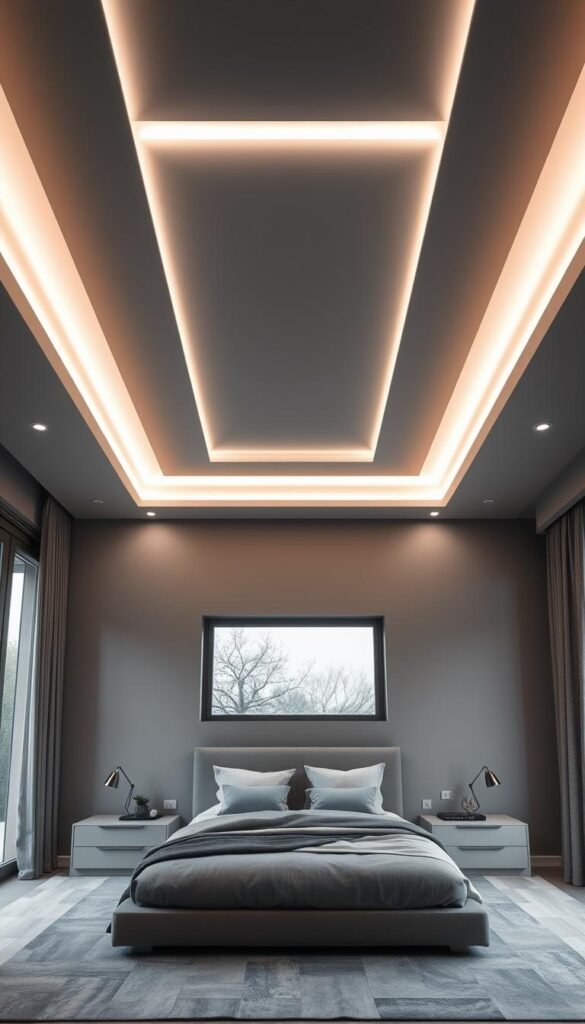
Often overlooked, your ceiling presents exciting design opportunities. This fifth wall can dramatically transform your room’s atmosphere. Thoughtful ceiling treatments add depth and personality to your space.
From bold paint choices to soft fabric treatments, the options are plentiful. Your ceiling can create intimacy or openness depending on your approach. It’s the final touch that completes your overall design vision.
A Bold Paint Choice for a Cocooning Effect
Painting your ceiling a rich grey creates an intimate, enveloping feel. Dark tones make the ceiling appear lower for cozy comfort. This approach works beautifully in rooms with high ceilings.
David Mann used this technique in a New York City retreat. He painted the ceiling in metallic silver grey. The result was a spa-like atmosphere with soothing glow.
Consider your room’s natural light when choosing shades. Dark ceilings in bright rooms create dramatic contrast. They make the space feel more intimate and personal.
A Linen Canopy for Airy Softness
Fabric treatments add texture and softness overhead. A linen canopy creates dreamy, relaxed atmosphere. This approach works well for achieving airy elegance.
Maxwell Ryan sourced a linen canopy from Etsy for his Hamptons bedroom. The natural fabric added gentle texture and movement. It created a breezy, vacation-like feel.
Canopies work particularly well in coastal or bohemian styles. They add visual interest without overwhelming the space. Choose light, breathable fabrics for best results.
Your ceiling treatment should complement your overall color scheme. Match it to your wall color for seamless look. Or create intentional contrast for dramatic effect.
Consider functional elements alongside aesthetic choices. A ceiling fan with grey finish adds practical comfort. Subtle lighting coves integrate illumination with design.
| Ceiling Treatment | Best For | Designer Example | Visual Effect |
|---|---|---|---|
| Bold Grey Paint | Cocooning intimacy | David Mann – metallic silver | Creates spa-like atmosphere |
| Linen Canopy | Airy softness | Maxwell Ryan – Etsy find | Adds dreamy texture |
| Coffered Ceiling | Traditional elegance | Various applications | Adds architectural interest |
| Light Grey Paint | Opening up space | Common technique | Creates airy feel |
| Textured Wallpaper | Adding dimension | Designer approaches | Enhances visual interest |
Draw inspiration from real design examples. Notice how professionals use ceilings to enhance rooms. Your fifth wall can become your most impactful design element.
Don’t overlook this important surface. It can transform your room’s feel completely. A well-designed ceiling makes your space more cohesive and visually interesting.
11. Create a Focal Point Behind the Bed
The area behind your bed offers a prime opportunity to make a design statement. This space naturally draws attention and sets the tone for your entire room. A well-designed backdrop creates visual interest and personal character.
Your focal point can range from simple to elaborate. The choice depends on your style and desired atmosphere. Consider scale, texture, and color when planning this feature.
An Ornate Headboard Against a Simple Wall
An elaborate headboard stands out beautifully against plain surfaces. This combination creates instant drama and luxury. The contrast between intricate and simple elements makes both features shine.
Choose a headboard that reflects your personal style. Tufted designs offer classic elegance. Carved wood brings rustic charm. Metal frames provide industrial edge.
Keep the wall color neutral to highlight your headboard. Light grey makes dark furniture pop. Dark grey adds sophistication to lighter pieces. This approach ensures your bed remains the room’s star.
A Textured Shiplap or Plank Wall
Textured walls add warmth and character to your space. Shiplap or plank surfaces create rustic appeal. These materials bring natural beauty and tactile interest.
Susan Ferrier used rough-cut pine in an Alabama lake house. The wood added organic warmth to the bedroom. This choice created cozy, inviting atmosphere perfect for relaxation.
Consider painted planks for a cohesive look. Grey-washed wood maintains natural grain while fitting your palette. This treatment works well in various styles from farmhouse to coastal.
A Dramatic Piece of Wall Art or a Tapestry
Artwork personalizes your space and expresses your taste. A large piece makes a bold statement above your bed. This approach turns your wall into a personal gallery.
Juan Carretero used scenic wallpaper in his Catskills home. The dreamy backdrop created atmospheric depth. This choice made the room feel both artistic and relaxing.
Consider scale when selecting artwork. A single large piece anchors the space effectively. Smaller works can be grouped for eclectic interest. Choose pieces that complement your overall color scheme.
Jeff Andrews used textured wallcoverings in Kaley Cuoco’s guest room. The tactile surface added coziness and focal depth. This approach made the space feel both stylish and inviting.
Ensure your focal point works with other room elements. Match it to your bedding or lighting choices. This creates balanced, intentional design that feels cohesive.
Add functional elements to your backdrop wall. Built-in shelving offers storage and display space. Integrated sconces provide perfect reading light. These features combine practicality with style.
Your focal point should reflect your personal aesthetic. Choose industrial metal art for urban edge. Select nautical prints for coastal vibe. Abstract pieces work well in modern settings.
This area becomes your room’s visual anchor. It sets the mood and expresses your personality. A well-designed backdrop makes your space truly special.
12. Choose the Right Flooring and Rugs
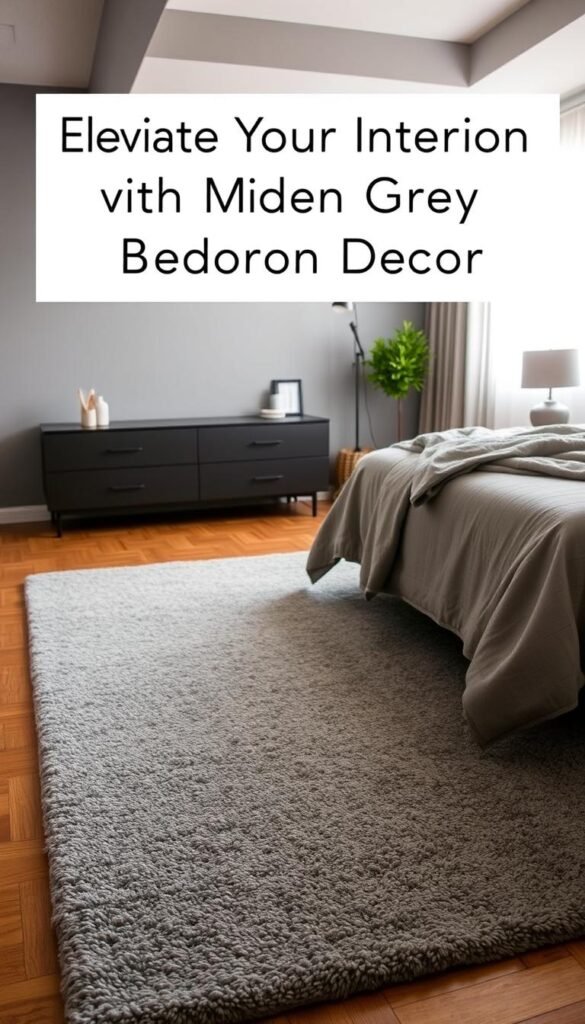
Your floor is the foundation that ties everything together. It affects both the feel and function of your room. The right choice enhances comfort and completes your design vision.
Consider both materials and colors when selecting. Each option brings different benefits to your space. Your flooring should work with your walls and furniture.
Area Rugs to Anchor the Space and Add Warmth
Rugs create cozy zones within your room. They define areas and add softness underfoot. A well-chosen rug makes your space feel complete.
Choose textures that match your style. Wool offers plush comfort and durability. Jute brings natural, earthy appeal to your decor.
Layering rugs adds depth and interest. Try a striped pattern over wall-to-wall carpet. This technique creates rich texture under your feet.
Position your rug to anchor key furniture. Place a large piece under your bed frame. This creates a unified look that feels intentional.
How Grey Works with Wood, Carpet, and Tile
Grey flooring offers versatile styling options. It complements various materials beautifully. Your choice depends on both look and lifestyle.
Grey-stained wood provides modern rustic charm. It warms up contemporary spaces naturally. This finish works well on nightstands and bed frames.
Carpet adds softness and sound absorption. It creates a cozy, inviting atmosphere. Choose low-pile options for easy cleaning.
Tile offers practical, easy maintenance. Concrete-look tiles suit industrial styles perfectly. They provide durability with stylish appeal.
Pair your floors with complementary colors. Warm grey works with brown wood tones. Cool grey coordinates beautifully with blue accents.
Consider your overall design style when choosing. Scandinavian looks favor light wood finishes. Coastal spaces shine with natural sisal rugs.
Industrial decor embraces concrete-like tiles. Each material supports different aesthetic goals. Your flooring should enhance your chosen look.
Balance your floor with walls and ceiling. Light floors with dark walls create striking contrast. Matching tones provide seamless elegance.
Your flooring choice impacts daily comfort. Select materials that suit your lifestyle needs. This ensures your space remains both beautiful and functional.
13. Accessorize with Intention
Your final layer makes your space feel complete and personal. Thoughtful accessories add character without clutter. They bring both beauty and function to your room.
Choose pieces that reflect your style and needs. Every item should have purpose or meaning. This approach creates a space that feels both designed and lived-in.
Curated Collections on Nightstands and Shelves
Small groupings tell your unique story. Books, photos, or decorative objects add personal touch. Keep arrangements simple to avoid visual noise.
Heather Chadduck Hillegas used classic elements in a farmhouse bedroom. Pleated lamp shades and soft fabrics created timeless appeal. The result felt both relaxed and intentional.
Consider scale when arranging your collections. Larger pieces make bold statements. Smaller items work well for subtle accents. Balance ensures surfaces feel organized, not overcrowded.
Functional Decor: Mirrors, Trays, and Vases
Choose accessories that serve practical purposes. Mirrors expand the space and reflect light. Trays organize bedside essentials neatly.
Vases hold fresh flowers for natural beauty. These pieces combine utility with aesthetic appeal. Your room gains both function and style.
Vern Yip added citrine yellow accessories for joyful pops. This color introduced energy without overwhelming the grey palette. The look felt both personal and polished.
- Select items that enhance your color scheme
- Incorporate natural elements like plants or shells
- Choose materials that complement your overall design
- Edit regularly to maintain clean surfaces
Your accessories should feel intentional and cohesive. They complete your room’s story beautifully. The right choices make your space truly yours.
14. Blend Grey with Other Neutrals
Neutral combinations create sophisticated harmony in your sleep space. They offer timeless appeal that feels both current and cozy. Mixing grey with other neutrals builds a layered, interesting palette.
This approach works for various design styles. You can achieve anything from airy minimalism to earthy warmth. The key lies in understanding how different neutrals interact.
Creating a Serene Scheme with White and Off-White
White and off-white lighten grey tones beautifully. They create clean, tranquil backdrops for relaxation. These combinations make rooms feel airy and spacious.
Frances Merrill used neutral tones for calm escapes. Her designs capture laid-back vibes with texture focus. This approach feels both intentional and relaxed.
Consider your grey’s undertones when selecting whites. Cool greys pair best with crisp, bright whites. Warm greys work beautifully with creamy off-whites.
Adding Earthy Depth with Browns and Tans
Earth tones bring cozy warmth to grey foundations. Browns and tans create rich, inviting atmospheres. They make spaces feel grounded and comfortable.
Nina Farmer used brown and sepia to warm up grey. She created silk-and-abaca-clad walls in Boston. This combination achieved perfect earthy richness.
Try tan bedding or brown wood furniture. These elements add natural warmth to your scheme. Your room gains depth without losing sophistication.
The Versatility of Greige (Grey + Beige)
Greige offers the perfect balance between grey and beige. This up-and-coming shade provides warmth with modernity. It works as a versatile neutral for any interior.
This color adapts to various lighting conditions. It feels neither too cool nor too warm. Greige creates harmonious backdrops for diverse decor styles.
Use greige on walls for a cohesive foundation. It pairs beautifully with both cool and warm accents. This shade offers maximum flexibility in your design.
Apply these neutral combinations throughout your room. Use them on walls, bedding, and furniture. This creates a cohesive look that feels intentional.
Personalize your neutral palette with colorful accents. Add art or throws to prevent monotony. These touches keep your space feeling lively and personal.
15. How to Elevate Your Interior with Modern Grey Bedroom Decor on a Budget
Creating a beautiful sleep space doesn’t require a huge budget. Smart choices and creative approaches can transform your room affordably. Grey’s versatility makes it perfect for cost-effective makeovers.
Focus on high-impact changes that deliver maximum visual reward. Small updates refresh your space without complete renovation. Thoughtful selections create luxury feelings at friendly prices.
Small Changes with Big Impact: Paint and Textiles
A fresh coat of paint works wonders for minimal cost. Grey tones instantly update walls or furniture pieces. This simple change creates dramatic transformation quickly.
Choose affordable paint from quality brands. Test samples to find your perfect shade. Proper preparation ensures professional-looking results.
Update textiles for instant refreshment. New bedding, curtains, or throws change the entire feel. Mix grey tones with patterns for visual interest.
These elements introduce texture and color accents. They’re easy to switch seasonally for variety. Your space stays current without major investment.
DIY Projects: Limewash and Upcycled Furniture
Limewashing creates beautiful, timeworn effects affordably. This technique allows walls to breathe naturally. It adds character with subtle grey patina.
Upcycle existing furniture with grey stain or paint. Nightstands, dressers, or bed frames gain new life. Personal touches add unique charm to your space.
These projects require minimal financial investment. They deliver maximum personality and customization. Your room reflects your creativity and style.
Strategic Shopping for Key Pieces
Thrift stores offer unique finds at bargain prices. Look for quality pieces with good bones. A little paint can transform outdated items beautifully.
Watch sales for versatile grey basics. Invest in items you’ll use daily. Save on decorative accessories and DIY elements.
Prioritize spending on foundational pieces. A grey upholstered bed or area rug anchors the space. These items provide long-term value and style.
Grey’s neutral nature blends new and old seamlessly. This flexibility makes budget decorating easier. Your space feels cohesive without matching everything perfectly.
Remember that small changes accumulate into big transformations. Paint, textiles, and DIY projects refresh affordably. Strategic shopping maximizes your decorating budget beautifully.
16. Bring Your Modern Grey Bedroom Vision to Life
You now have all the tools to create your perfect sleep space. It’s time to put these ideas into action with confidence.
Start by choosing your favorite grey shade and style. Add bedding, furniture, and accessories gradually. Balance colors and textures for a harmonious look.
Remember to use tips from top designers. Grey is versatile, so feel free to experiment. Your personal touch makes the space truly special.
Enjoy creating a sanctuary you’ll love. For more inspiration, visit our design blog. Transform your home one step at a time.