Welcome to your personal guide for transforming your most personal space. The right palette can completely change how you experience your room.
Color choices do more than just look pretty. They create feelings of happiness, comfort, and warmth. Your environment directly impacts your mood and even your sleep quality.
Whether you prefer vibrant energy or calming neutrals, this guide will inspire you. We combine timeless design principles with current trends used by professionals.
Discover how to make even compact areas feel more open and welcoming. Learn to balance bold statements with peaceful retreat elements.
Get ready to create a sanctuary that reflects your unique personality. Transform your space into somewhere you truly love waking up and relaxing in.
Why Your Bedroom’s Color Palette Matters for Sleep and Style
Your sleeping space deserves thoughtful attention to its visual design. Many people overlook this room since guests rarely see it. Yet this personal area impacts your daily life more than any other.
Establishing a cohesive color palette transforms ordinary rooms into special places. It creates visual harmony that feels both intentional and relaxing. This approach gives your space that designer polish without the high cost.
Colors do more than decorate walls. They directly influence your nervous system and sleep patterns. Specific hues can either energize your mind or prepare it for rest.
Warm tones like burgundy and blush create feelings of comfort and optimism. Cool shades like blue and green naturally calm and soothe. Lighter, softer shades help create a soothing while deeper tones establish tranquility.
Your color choices affect both mood and relaxation levels. A harmonious scheme reduces mental clutter and visual noise. This creates the serene vibe essential for quality rest.
Professional designers understand color’s power to shape atmosphere. They use specific palettes to evoke particular moods and feelings. This expertise helps create true personal retreats.
Limited color schemes make decorating decisions simpler. Sticking to two to four colors creates instant cohesion. This strategy works whether you prefer vibrant energy or calming neutrals.
Your sleeping environment deserves the same design attention as more public areas. Thoughtful color selection pays dividends in daily comfort and well-being. It transforms your space into somewhere you truly love being.
Color can manipulate perception of space itself. The right palette makes rooms feel larger, cozier, or more luxurious. This visual magic turns basic bedrooms into personalized sanctuaries.
Investing time in your color scheme creates lasting benefits. It establishes a foundation that simplifies future design choices. Your efforts will reward you every morning and evening.
1. Timeless Black and White with Soft Accents
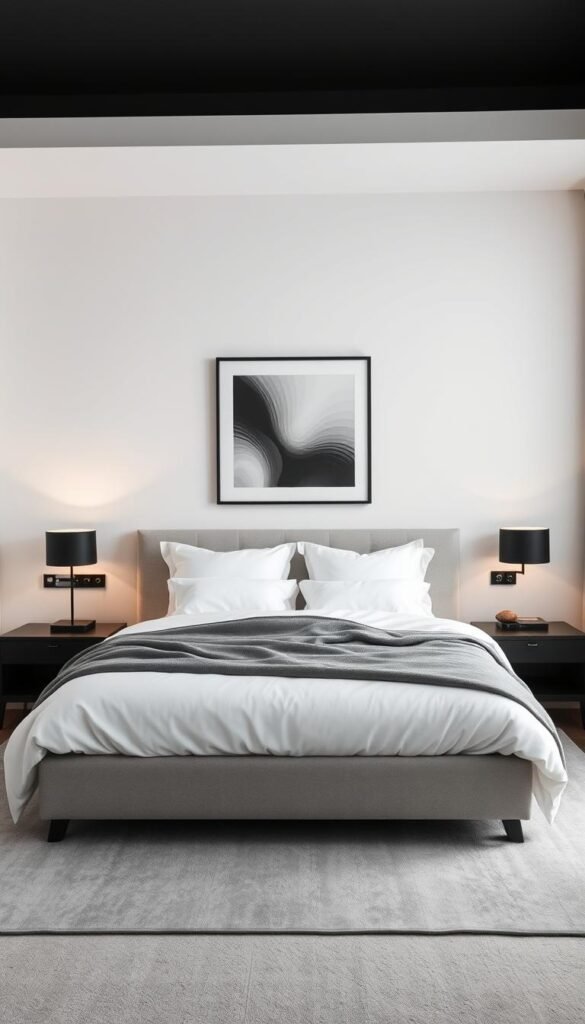
Black and white remains one of the most sophisticated pairings for any personal space. This classic combination offers endless versatility and timeless appeal. Adding soft accents creates a welcoming atmosphere without losing its clean aesthetic.
Grounding Dark Walls and Balancing Light
Dark walls create a dramatic foundation for your retreat. They add depth and sophistication to the overall design. The effect changes based on your room’s natural light conditions.
Rooms with abundant sunlight handle dark colors beautifully. The contrast feels grounding and intentional. Spaces with limited light gain a cozy, cocoon-like quality instead.
Consider these lighting strategies for dark walls:
| Light Condition | Wall Strategy | Resulting Atmosphere |
|---|---|---|
| Abundant natural light | Dark lower walls | Grounding and balanced |
| Limited natural light | Dark accent wall | Cozy and cocooning |
| Mixed lighting | Dark bedroom furniture | Sophisticated contrast |
Incorporating Muted Blush Pink and Brass
Introduce warmth through subtle blush pink accents. This soft hue complements the monochromatic base perfectly. It adds personality without overwhelming the simplicity.
Brass fixtures bring luxurious warmth to the scheme. Their shiny surface catches light beautifully. This creates visual interest through reflective surfaces.
Effective accent placement includes:
- Floral artwork on walls
- Throw blankets with subtle pink tones
- Brass hardware on furniture pieces
- Bedside lamps with brass finishes
These touches maintain the scheme’s clean lines while adding depth. The combination works in both contemporary and traditional settings. Layering textures within this palette creates additional visual interest.
2. The Dynamic Balance of Warm and Cool Tones
The secret to a vibrant yet restful atmosphere lies in skillfully blending warm and cool color families. This approach creates visual energy while maintaining the serenity essential for quality rest. You achieve both stimulation and calm through careful coordination.
Professional designers often use this technique to create spaces that feel both energizing and relaxing. The combination works beautifully throughout different seasons and lighting conditions. Strategic placement creates focal points without visual chaos.
Squash Yellow and Creamy White Base
Squash yellow paired with creamy white establishes a warm, inviting foundation for your scheme. This combination brings sunshine and cheer into your personal space. The creamy white provides a clean backdrop that lets the yellow shine.
Subtle gray bedding softens these bold warm tones for perfect balance. This neutral shade acts as a calming buffer between the vibrant elements. The effect creates harmony rather than competition between colors.
This base palette works wonderfully in rooms with various light exposures. Morning sunlight enhances the cheerful yellow tones. Evening artificial lighting brings out the creamy warmth of the white elements.
Pops of Emerald Green for a Modern Flair
Deep emerald green accents bring sophisticated coolness to balance the warmth. Use this rich hue in pillows and wall art for modern elegance. The contrast creates visual interest without overwhelming the space.
Mirrored nightstands add contemporary flair while enhancing light reflection. Their reflective surfaces bounce light around the room, making it feel more spacious. This is an excellent way to add functionality and style.
Consider these placement strategies for optimal impact:
- Emerald green throw pillows on neutral bedding
- Botanical artwork featuring deep green elements
- Mirrored surfaces on nightstands and decorative objects
- Green accents in small doses throughout the space
The psychological impact of combining warm and cool tones creates balanced energy. Yellow stimulates optimism and creativity. Green promotes tranquility and balance. Together, they create an environment that supports both activity and rest.
This balanced approach results in a personal retreat that feels both energizing and relaxing. You wake up feeling inspired and go to bed feeling peaceful. The combination truly offers the best of both worlds.
3. Creating a Welcoming Country Feel with Restrained Hues
Bring the comfort of countryside living into your personal retreat. A restrained palette of antiqued blue and soft red creates instant warmth. This approach feels both traditional and fresh.
Patterned textiles in muted red and blue add character throughout the space. Use them on curtains, pillows, and bedding for cohesive charm. The effect is inviting without feeling overwhelming.
Antiqued Blue and Soft Red Textiles
Choose fabrics with subtle patterns in these classic hues. Stripes, checks, or floral designs work beautifully. Mix patterns while keeping the color story simple.
Layer different textiles for depth and visual interest. A blue patterned duvet looks perfect with solid red pillows. This balance creates rhythm without chaos.
Consider these textile combinations:
| Textile Type | Color Application | Pattern Style |
|---|---|---|
| Curtains | Antiqued blue base | Subtle stripe |
| Throw pillows | Soft red accents | Small check |
| Bedding | Mixed patterns | Floral details |
| Blankets | Neutral background | Textural interest |
Warm White Walls and Vintage Brass Accents
Paint your walls in warm white to create a neutral foundation. This tone enhances both blue and red elements beautifully. It makes the space feel bright yet cozy.
Add a textured off-white rug to complete the base layer. This adds comfort underfoot and visual softness. The combination feels welcoming year-round.
Aged brass sconces and fixtures bring vintage flair. Their warm metallic finish complements the color scheme perfectly. These details add character without overwhelming the space.
This palette works wonderfully with various furniture styles. Both antique pieces and reproductions fit seamlessly. A wooden headboard completes the country aesthetic.
For additional charm, consider subtle wallpaper on a focal wall. Choose patterns that echo the textile designs. This creates harmony throughout the entire space.
4. Global-Inspired Energy with Poppy Red and Black
Transform your personal space into an exotic retreat with vibrant global colors. This scheme combines intense poppy red and deep black for dramatic impact. White elements provide essential balance to prevent overwhelming the senses.
This approach creates an energetic yet restful atmosphere. It evokes memories of distant markets and cultural celebrations. Your space becomes a personal sanctuary with international flair.
Using a Bold Tapestry as a Focal Point
Choose a dramatic red-and-black tapestry as your room’s centerpiece. Hang it behind your bed or on the largest wall. This piece sets the entire room’s visual tone and style.
Select tapestries with traditional patterns from various cultures. Moroccan, Indian, or African designs work beautifully. These patterns add authenticity to your global theme.
Consider these tapestry placement strategies:
| Tapestry Size | Wall Position | Complementary Elements |
|---|---|---|
| Large (bedspread size) | Behind headboard | Matching pillow shams |
| Medium (art piece size) | Opposite bed | Coordinating artwork |
| Small (accent size) | Above dresser | Similar pattern accessories |
Crisp White Bedding to Maintain Balance
Pure white bedding creates visual breathing room between bold elements. It prevents the intense colors from feeling too heavy. This contrast makes the scheme feel intentional rather than chaotic.
Choose high-quality cotton or linen sheets in bright white. These materials enhance the crisp, clean effect. They also provide comfort for daily use.
Layer soft orange ikat print pillows for bohemian character. This warm hue bridges the red and black beautifully. The pattern adds cultural richness without competing.
Add a wood bed frame in natural or dark stains. This organic element grounds the vibrant scheme. The natural texture complements both bold and neutral elements.
Consider pale blue accents in small decorative objects. This cool tone provides additional balance against warm reds and oranges. Use it sparingly for maximum effect.
Various lighting conditions affect how these shades appear throughout the day. Test your color choices in both natural and artificial light. This ensures your scheme works beautifully around the clock.
5. Serene Cottage Style with Pearly Whites and Wood Tones
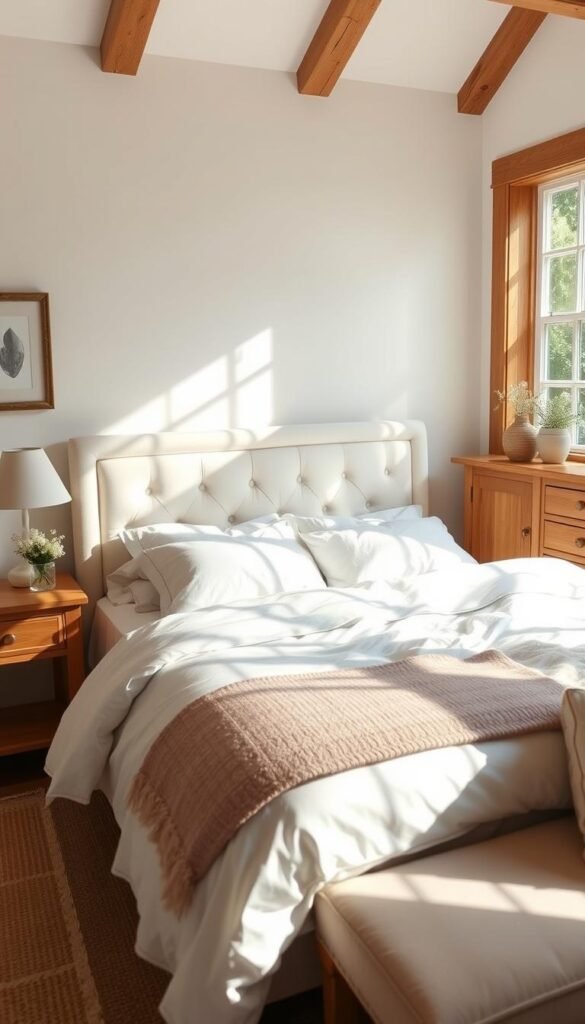
Imagine stepping into a peaceful retreat that feels like a quiet countryside escape. This approach combines soft pearly whites with natural wood tones for a look that’s both fresh and timeless. It creates a space where you can truly unwind and relax.
The magic lies in balancing simplicity with thoughtful details. You achieve a look that feels both curated and casually comfortable. This style works beautifully in various room sizes and lighting conditions.
Textural Shiplap Walls and Muted Patterns
Shiplap walls add wonderful character to your space. The horizontal lines create visual interest without overwhelming the senses. This treatment works well on accent walls or throughout the room.
Choose a warm white or soft cream paint for the shiplap. This creates a cozy backdrop that enhances natural light. The subtle shadow lines between boards add depth and dimension.
Incorporate muted patterns through your textiles and accessories. Think subtle stripes, small checks, or faded floral designs. These patterns add personality without competing with the serene atmosphere.
Consider these elements for incorporating texture:
- Woven baskets for storage
- Knit throw blankets in neutral tones
- Linen pillow covers with subtle embroidery
- Natural fiber rugs underfoot
Adding Contrast with Dark Charcoal Details
Dark charcoal accents provide the perfect counterpoint to light walls. Use this rich hue in strategic places throughout your space. It grounds the scheme and prevents it from feeling too light.
Choose charcoal for light fixtures, picture frames, or hardware. These small touches make a big impact on the overall look. The contrast creates visual depth and sophistication.
Consider charcoal curtains or throw pillows for softer applications. These things add weight to the scheme without feeling heavy. They create balance against the predominant light tones.
Different wood tones interact uniquely with white paints. Lighter woods like pine or ash keep the feeling airy and bright. Darker woods like walnut or mahogany add richness and warmth.
This palette creates a calming, retreat-like atmosphere perfect for relaxation. It feels both fresh and familiar, modern and traditional. You’ll love waking up in this serene environment every morning.
6. Sunset-Inspired Hues for a Lively and Warm Atmosphere
Bring the warmth of dusk into your personal retreat with colors that glow. This palette captures the magical transition from day to night in your space. It creates an environment that feels both energizing and deeply comforting.
Crisp white walls form the perfect canvas for these vibrant colors. They recede gracefully into the background while making other elements pop. This approach prevents the space from feeling overwhelming.
Burnt Orange and Dusty Pink Accents
Burnt orange brings rich, earthy energy to your scheme. It evokes the deep tones of a setting sun. This color works beautifully in textiles and artwork.
Dusty pink adds softness and romantic warmth. It complements the orange without competing for attention. Together they create a harmonious balance.
Consider these placement ideas for maximum impact:
- Throw pillows in both colors on neutral bedding
- Artwork featuring sunset landscapes
- Accent chairs in one dominant hue
- Small decorative objects throughout the space
Different lighting conditions dramatically affect these colors. Morning light enhances the pink tones beautifully. Evening light makes the orange glow with warmth.
Anchoring with Oil-Rubbed Bronze Fixtures
Oil-rubbed bronze provides the perfect grounding element. Its dark, rich finish balances the bright accent colors. This creates visual stability throughout the space.
Choose this finish for your bed frame and lighting fixtures. The metallic quality adds sophistication without shine. It works with both traditional and contemporary styles.
Every good editor knows metallic elements need careful placement. They should complement rather than dominate the scheme. This approach creates a cohesive statement.
Consider these bronze applications:
- Bed frame as the room’s foundation
- Table lamps for evening ambiance
- Switch plates and cabinet hardware
- Ceiling fixture for overhead warmth
This palette offers wonderful inspiration for personal expression. It feels both current and timeless in its appeal. The combination works across various decor styles.
You’ll love how the colors transform throughout the day. Morning brings soft pink tones to life. Evening enhances the rich orange warmth. It truly captures sunset’s magical quality.
7. A Nature-Inspired Retreat with Seafoam Green and Mustard

Bring the soothing essence of the outdoors into your personal sanctuary. This palette combines cool seafoam green with warm mustard yellow for a balanced, organic feel. It creates a space that feels both refreshing and deeply comforting.
Nature’s colors have a unique ability to calm the mind and restore energy. This pairing captures the essence of peaceful landscapes and sunlit meadows. Your room becomes a true retreat from daily stresses.
Calming Color Pairing for Tranquility
Seafoam green brings the cool serenity of ocean waters into your space. It creates a refreshing backdrop that feels light and airy. This shade works beautifully on walls or larger furniture pieces.
Mustard yellow adds warm, sunny energy to balance the cool green. Use it in accents like throw pillows or decorative objects. The combination feels both energizing and peaceful.
Professional designers often use nature-inspired palettes for their restorative qualities. Benjamin Moore offers excellent shades in both color families. Their greens and yellows work beautifully together.
“Nature’s color combinations always harmonize perfectly—they’re the original designer palette.”
Test your color choices in different lighting conditions. Morning light enhances the yellow tones beautifully. Evening light makes the green feel deeper and more serene.
Incorporating Tactile Textures and Organic Patterns
Add depth through natural materials and woven elements. A rattan headboard brings wonderful texture to the space. Woven baskets provide both storage and visual interest.
Choose bedding with delicate floral patterns in mustard yellow. These designs enhance the organic theme without overwhelming. They create a gentle connection to garden landscapes.
Consider these textural elements for your nature-inspired retreat:
- Linen curtains that filter light softly
- Wooden nightstands with natural grain patterns
- Braided rugs for underfoot comfort
- Ceramic vases with organic shapes
This approach works with both contemporary and rustic design elements. It creates a bedroom that feels like a peaceful garden escape. The palette promotes relaxation and improves sleep quality.
For those who want to continue reading about natural palettes, many resources explore this concept further. The combination truly brings the outdoors inside in the most beautiful way.
8. Bold Elevation with Blue, White, and Fuchsia
Transform your personal retreat with a striking combination of blue, white, and fuchsia. This trio takes traditional blue and white to new heights of contemporary style. The result feels both vibrant and perfectly balanced for modern living.
This palette creates instant visual impact without overwhelming your senses. It combines cool tranquility with warm energy in perfect harmony. Your space becomes a true expression of confident design.
Letting a Floral Duet Set the Color Inspiration
Begin with a floral-patterned duvet as your starting point. This textile becomes the foundation for your entire color story. Its pattern naturally combines multiple hues in perfect proportion.
Look for designs that blend blue and white with fuchsia accents. The flowers should feature these colors in varying intensities. This creates a ready-made palette that professionals would approve.
Consider these pattern characteristics for optimal results:
| Pattern Element | Color Role | Design Impact |
|---|---|---|
| Large floral motifs | Dominant blue base | Establishes primary color |
| Background elements | Crisp white space | Creates visual breathing room |
| Small decorative details | Fuchsia accents | Adds vibrant punctuation |
| Leaf and stem elements | Varied blue tones | Builds depth within the scheme |
Your duvet becomes the roadmap for everything that follows. Pull colors directly from its pattern for walls and accents. This method ensures perfect harmony throughout your room.
Medium-Dose Teal Walls and Vibrant Accents
Paint your walls in a medium-tone teal blue for saturated color impact. This shade provides depth without making the space feel too dark. It creates a rich backdrop that makes other elements pop.
Balance the teal with off-white trim and ceiling treatments. This contrast prevents the color from feeling overwhelming. The combination feels both bold and perfectly controlled.
Introduce fuchsia through carefully placed accessories and textiles. Throw blankets and decorative pillows offer perfect opportunities. Wall art above the bed creates a dramatic focal point.
“The most successful rooms often use pattern as their starting point—it provides built-in color relationships that always work.”
This approach works beautifully in various room sizes and layouts. Smaller spaces gain personality without feeling cramped. Larger rooms achieve cozy intimacy through color saturation.
You’ll love how this scheme transforms throughout the day. Morning light reveals the blue’s cool undertones. Evening illumination brings out its warm, greenish qualities.
The combination creates a space that makes a dramatic style statement. It feels both contemporary and timeless in its appeal. Your retreat becomes a true expression of confident personal style.
9. Warm and Sophisticated Neutral Schemes

Neutral palettes create the ultimate foundation for a sophisticated personal retreat. They offer timeless appeal that feels both calming and intentionally designed. This approach works beautifully in various room sizes and lighting conditions.
Warm neutrals wrap your space in comfort without overwhelming visual stimulation. They provide the perfect backdrop for rich textures and natural materials. Your room becomes a sanctuary that feels both elegant and welcoming.
Rich Textures from Wood and Linen
A wood plank accent wall adds instant warmth and character to your space. The natural grain patterns create visual interest while maintaining a neutral foundation. This treatment works beautifully behind the bed or on a focal wall.
Minimalistic wood furniture complements the textured wall perfectly. Clean lines prevent the space from feeling too rustic or heavy. The combination achieves balance between natural warmth and contemporary sophistication.
Soft linen bedding introduces wonderful tactile quality to your sleeping area. This natural fabric feels comfortable against the skin year-round. Its subtle texture adds depth without competing with other elements.
Consider these textural combinations for optimal warmth:
| Element Type | Material Choice | Design Impact |
|---|---|---|
| Wall Treatment | Wood Planks | Adds natural warmth and character |
| Bedding | Linen Fabric | Provides soft texture and comfort |
| Floor Covering | Sheepskin Rug | Adds luxury underfoot |
| Furniture | Knotty Wood | Enhances natural aesthetic |
Small Doses of Charcoal for a Woodland Theme
Charcoal gray accents create subtle sophistication within your neutral scheme. Use this rich hue in strategic places throughout your space. It grounds the warm tones and prevents them from feeling too light.
A woodland theme emerges through careful material selection and color placement. Think forest floor rather than literal forest motifs. The effect feels sophisticated rather than theme-park obvious.
Knotty wood elements enhance the natural warmth of your palette. Their unique patterns and imperfections add character. These details make your space feel curated rather than perfectly matched.
This approach offers wonderful flexibility for changing accessories over time. Neutral foundations allow you to experiment with different accent colors. Your room can evolve with your tastes while maintaining its sophisticated base.
Texture becomes the primary design element in predominantly neutral spaces. Layering different materials creates visual interest without color competition. The result feels both sophisticated and invitingly comfortable.
Large expansive rooms benefit from the cozy intimacy this scheme creates. More intimate spaces gain sophistication without feeling cramped. The palette works beautifully across various room sizes and layouts.
10. Coastal Escape with Sandy Browns and Dusty Blues
Imagine waking up to the gentle calm of ocean breezes every morning. This palette brings seaside relaxation directly into your personal space. Sandy browns and dusty blues create an instant vacation atmosphere.
These colors work together to evoke peaceful coastal landscapes. They transform ordinary rooms into serene beach retreats. The combination feels both refreshing and deeply comforting.
Evoking Seaside Landscapes with Your Palette
Start with weathered white as your foundation color. This soft hue resembles sun-bleached driftwood and sandy shores. It creates a bright backdrop that enhances other coastal colors.
Sandy brown adds warm, earthy energy to balance cool blues. Use this tone in textiles and natural wood elements. The combination feels both organic and intentionally designed.
Dusty blue brings the cool serenity of distant ocean waters. This shade works beautifully on accent walls or decorative accessories. It creates visual interest without overwhelming the space.
Consider these coastal color applications:
| Color Family | Application Area | Atmospheric Effect |
|---|---|---|
| Weathered White | Main wall color | Creates bright, airy foundation |
| Sandy Brown | Textiles and wood | Adds warm, earthy balance |
| Dusty Blue | Accent wall | Provides cool serenity |
| Seafoam Green | Decorative items | Suggests coastal vegetation |
Going Beyond Paint: Raffia Wallpaper and Slate Tiles
Hand-glazed woven raffia wallpaper adds wonderful texture to your space. This material brings authentic coastal character to your wall treatments. The natural fibers create subtle shadow patterns that change with light.
Slate tiles introduce rugged, natural elegance to your floor or accent areas. Their cool gray tones complement both sandy browns and dusty blues. The textured surface feels wonderfully authentic underfoot.
These material choices go beyond simple color application. They create multi-sensory experiences that truly evoke coastal environments. The combination feels both sophisticated and casually beachy.
Consider these professional texture techniques:
- Raffia wallpaper on a focal wall behind the bed
- Slate tile accents in bathroom or fireplace areas
- Woven seagrass baskets for storage solutions
- Driftwood elements as decorative objects
This approach works beautifully in various geographic locations and architectural styles. It creates a bedroom that feels both beachy fresh and sophisticated. The palette brings vacation relaxation into your daily experience.
You’ll love how the colors and textures work together throughout different times of day. Morning light enhances the warm sandy tones. Evening illumination makes the blues feel deeper and more serene.
Every thoughtful touch contributes to the overall coastal atmosphere. Your space becomes a personal retreat that truly captures seaside essence.
11. How to Find Your Perfect Elegant & Sleek: Modern Bedroom Color Schemes You’ll Love

Finding your ideal palette becomes simpler when you begin with items you already adore. This approach takes the guesswork out of color selection. It ensures your space reflects your authentic personal style.
Starting with a Pillow or Bedspread You Love
Look around your home for textiles that make you happy. A favorite pillow or bedspread often holds the key to your perfect palette. These items already contain colors that resonate with you personally.
Pull two or three dominant hues from your chosen textile. These become your foundation colors. Build your entire scheme around these trusted favorites.
Test your colors in different lighting conditions. Morning light reveals different tones than evening illumination. This ensures your scheme works beautifully around the clock.
Consider painting sample swatches on your walls. Live with them for a few days before committing. This prevents costly repainting later.
Mixing and Matching Bedding Sets for Uniqueness
Bedding collections offer coordinated colors but don’t feel locked into using everything. Breaking up matched sets creates more personalized results. It adds sophistication through intentional selection.
For example, skip the matching bed skirt if it feels too predictable. Choose a solid shade that complements your other elements instead. This way maintains cohesion while adding individuality.
Mix patterns within the same color family for visual interest. Try pairing stripes with florals in similar hues. The combination feels curated rather than matchy-matchy.
Add a pop of sunny yellow through accent pillows if your base feels too neutral. This brings cheerful energy without overwhelming. The contrast creates wonderful visual balance.
Layer different textures within your color story for added depth. A chunky knit throw adds wonderful warmth to smooth cotton sheets. These tactile variations enhance the overall experience.
This method works whether you’re starting fresh or refreshing existing decor. It creates a space that truly feels like your personal sanctuary. You’ll love how your bedroom reflects your unique taste.
12. Drawing Inspiration from the Garden for a Fresh Look
The natural harmony found in outdoor spaces can guide your bedroom’s color story. Gardens demonstrate how colors work together in perfect balance. This approach creates a space that feels both fresh and intentionally designed.
Professional designers often look to nature for color inspiration. The combinations found in floral arrangements rarely disappoint. They offer ready-made palettes that feel both current and timeless.
Muted Floral Tones Paired with Verdant Green
Start with a soft floral tone like dusty peony pink for your walls. This gentle hue creates a warm foundation that feels both romantic and modern. It establishes a soothing backdrop for your entire space.
Add vibrant grass green accents through textiles and accessories. A bold throw blanket brings this lively color into your scheme. The combination evokes the natural beauty of blooming gardens.
Consider these placement strategies for optimal impact:
- Dusty pink walls with white trim
- Green throw pillows on neutral bedding
- Botanical artwork featuring both colors
- Live plants to enhance the natural theme
This palette works across various design styles from cottage to contemporary. It brings the refreshing energy of outdoor spaces indoors. Your room becomes a personal sanctuary that feels connected to nature.
Juxtaposing Color with Crisp White Linens
Crisp white bedding provides essential visual breathing room. It prevents the floral and green colors from feeling overwhelming. This contrast creates a clean, modern look that feels intentionally designed.
White furniture pieces enhance this fresh aesthetic. A simple white headboard keeps the focus on your color scheme. The combination feels both light and grounded.
For additional character, consider subtle floral wallpaper on an accent wall. Choose patterns that echo your color story without competing. This adds depth while maintaining the scheme’s freshness.
The white elements work beautifully throughout different lighting conditions. Morning light enhances their crisp quality. Evening illumination makes them feel soft and welcoming.
This approach creates a bedroom that feels both naturally inspired and deliberately designed. It brings garden freshness into your daily experience. You’ll love waking up in this vibrant yet peaceful environment.
13. Embracing Dark and Dramatic Color Schemes
Dramatic dark palettes create intimate spaces that feel both luxurious and restful. These bold choices transform ordinary rooms into sophisticated retreats. The key lies in strategic balance between deep tones and bright accents.
This approach works beautifully for creating cozy, cocoon-like environments. Dark walls absorb light and create a sense of enclosure. The effect feels both protective and elegantly intentional.
Using a Dark Color in One Large Dose
Commit to one dominant dark element for maximum impact. Rich navy blue on walls creates a stunning backdrop. This bold choice establishes the room’s dramatic atmosphere.
Burlap white furniture provides beautiful contrast against dark walls. A headboard, bench, and nightstand in this shade stand out beautifully. The combination creates visual interest through texture and tone.
Consider these placement strategies for dark colors:
| Room Feature | Dark Color Application | Balancing Element |
|---|---|---|
| Walls | Full navy blue coverage | White trim and ceiling |
| Flooring | Dark stained wood | Light area rug |
| Window treatment | Deep blue curtains | Sheer white underlayer |
| Accent wall | Charcoal feature wall | Mirrored surfaces |
Balancing Deep Navy with Bright White and Lipstick Pink
Snow white bedding creates essential visual relief against dark walls. Crisp sheets and comforters prevent the space from feeling too heavy. This contrast maintains airiness within the dramatic scheme.
Lipstick pink trim adds vibrant punctuation to the white bedding. This pop of color brings energy and sophistication. The combination feels both playful and elegantly controlled.
White drapes frame windows while maintaining light flow. They soften the transition between dark walls and outside views. This maintains connection to natural light sources.
Strategic lighting enhances this palette throughout different times. Daytime reveals the depth of navy blue tones. Evening illumination makes white elements glow warmly.
This style creates bedrooms with hotel-like luxury and comfort. The scheme works particularly well for spaces intended for relaxation. You’ll love how it transforms your personal retreat.
14. The Designer’s Secret: It’s More Than Just Color
Great rooms achieve their magic through elements beyond the paint palette. Professional designers know that texture, pattern, and metallic touches transform basic schemes into sophisticated spaces. These details create rooms that feel intentionally curated rather than simply decorated.
When working with neutral foundations, these elements become especially important. They provide visual interest where color variation might be limited. The result feels rich and layered rather than flat or boring.
The Critical Role of Texture and Pattern
Texture adds tactile dimension to your personal retreat. It creates visual interest through surface variation rather than color contrast. This approach works beautifully in predominantly neutral spaces.
Matelasse bedding introduces wonderful pattern through its quilted texture. This technique creates visual depth without overwhelming the senses. The effect feels both luxurious and comfortably casual.
Scrollwork carpets add intricate pattern underfoot. Their detailed designs create focal points without competing with other elements. These textiles contribute significantly to the room’s overall sensory experience.
Consider these textural combinations for your space:
| Element Type | Texture Application | Design Impact |
|---|---|---|
| Bedding | Matelasse coverlet | Adds dimensional pattern |
| Floor covering | Scrollwork carpet | Creates intricate detail |
| Window treatment | Linen curtains | Provides soft filtration |
| Accent pillows | Knit covers | Adds tactile warmth |
Moss green serves as an excellent accent in neutral schemes. This shade contains enough brown undertone to blend seamlessly. It adds visual interest while maintaining the overall serene atmosphere.
Using Metallics and Shimmer to Make Neutrals Sing
Metallic elements bring refinement to neutral color stories. Their reflective qualities catch and bounce light around the room. This creates movement and dimension in spaces with limited color variation.
A mercury glass lamp adds beautiful shimmer without overwhelming. Its aged silver finish complements both warm and cool neutrals. The piece becomes a focal point through texture rather than color.
Brass or bronze hardware on furniture provides subtle metallic accents. These small details contribute significantly to the overall sophisticated feel. They work across various design styles from traditional to contemporary.
Consider these metallic applications for your neutral scheme:
- Table lamps with mercury glass bases
- Picture frames in brushed brass finishes
- Switch plates and cabinet hardware in metallic tones
- Decorative objects with subtle shimmer effects
These techniques create depth and sophistication in any personal space. They transform basic color schemes into intentionally designed environments. Your room will feel both comfortable and elegantly curated.
15. Testing and Implementing Your Chosen Palette
Moving from inspiration to implementation requires careful planning and testing. This phase ensures your chosen colors work harmoniously in your actual space. Proper testing prevents costly mistakes and ensures complete satisfaction with your final results.
Every good interior editor knows that colors behave differently in various environments. Natural light, artificial lighting, and room orientation all affect how colors appear. Testing helps you understand these interactions before full commitment.
Considering Undertones and Natural Light
Colors contain subtle undertones that become apparent under different lighting conditions. Warm undertones might emerge in evening light while cool tones appear during daylight hours. Understanding these shifts helps you create a balanced scheme.
Research shows navy blue is scientifically proven as the most relaxing color worldwide. Its deep, cool undertones create a calming atmosphere perfect for rest. This shade works beautifully in rooms with ample natural light.
Test your colors at different times of day and under various lighting conditions. Morning light reveals different qualities than afternoon or evening illumination. This comprehensive testing ensures your palette works around the clock.
Consider these testing methods for optimal results:
| Testing Method | Implementation | Benefit |
|---|---|---|
| Paint samples | Apply large swatches on multiple walls | Shows color in different light conditions |
| Fabric swatches | Place near windows and in room corners | Tests how textiles interact with light |
| Digital preview | Use room visualization apps | Provides approximate color representation |
| Natural observation | Observe samples over 48 hours | Reveals color changes throughout day |
Pale pink grasscloth adds a hint of color while softening architectural features. This textured wall covering works particularly well on vaulted ceilings. The subtle pink tone maintains sophistication while adding visual interest.
Confidently Incorporating Your Accent Colors
Accent colors bring personality and depth to your overall scheme. The key lies in balanced distribution rather than overwhelming concentration. Strategic placement creates visual interest without chaos.
Mixing white bedding with colored sheets and shams maintains color sophistication. This approach prevents any single hue from feeling too dominant. The combination feels intentionally designed rather than random.
Candlelight yellow tones in artwork provide warm contrast within your scheme. This golden hue contributes to the overall glow of the room. A large area rug in complementary colors anchors the space beautifully.
Black elements provide necessary structure and definition to color schemes. A curvaceous bed frame establishes strong visual foundation. Table lamps and picture frames in black create sophisticated punctuation points.
Consider this balanced approach to accent color implementation:
- Start with your dominant color covering approximately 60% of the space
- Use your secondary color for about 30% of the room’s elements
- Reserve the remaining 10% for accent colors and metallic touches
- Distribute colors throughout the room rather than clustering them
This method creates a cohesive design statement that feels both intentional and effortlessly composed. Your space will reflect professional-level design sophistication.
Proper testing and implementation transform color concepts into beautiful realities. This process ensures your personal retreat becomes everything you envisioned. You’ll enjoy your space for years to come.
Transform Your Space with Confidence and Color
Ready to create your perfect personal retreat? You now have all the tools needed for success. Simple two-color combinations offer peaceful relief from daily visual noise.
Strategic white use makes rooms feel brighter and more spacious. It reflects natural light beautifully. Artwork provides smart contrast points that enhance your overall design.
Approach your project with the confidence gained from this guide. Your space will become a true sanctuary that reflects your unique personality. Benjamin Moore offers excellent options if you want to continue reading about specific shades.
These techniques work with any room size or lighting situation. Enjoy creating a space you’ll truly love spending time in every day.