Your sleeping space deserves an upgrade that combines timeless elegance with contemporary comfort. This popular design style creates calm, personal retreats that feel both stylish and functional.
This aesthetic emerged in the 1950s and 1960s, featuring clean lines and natural materials. Its muted color palette and functional approach remain incredibly popular today.
You’ll discover how to blend these elements with your existing decor. The best part? You don’t need a complete room overhaul to achieve this look.
Authentic and reproduction pieces are widely available to suit various budgets. This makes creating your dream modern bedroom more accessible than ever.
1. Understanding the Mid Century Modern Bedroom Vibe
This interior design philosophy centers on purposeful simplicity. It emerged during the post-war era, championing a less-is-more approach.
The core principle is functionality. Every item in your space should serve a clear purpose, eliminating clutter and visual noise.
You’ll notice distinct visual traits. Clean, straight lines mix with gentle, organic curves in furniture and decor. This creates a balanced and harmonious feel.
This style offers a timeless look. Its enduring popularity stems from its ability to blend beauty with practicality. Your bedroom becomes both beautiful and usable.
Why does this aesthetic remain so captivating decades later?
- Simplicity: It focuses on essential elements, creating a calm and uncluttered environment.
- Harmony: Each piece works together, forming a cohesive and purposeful space.
- Timelessness: The design avoids fleeting trends, ensuring your room never feels dated.
This approach transforms your personal retreat. It cultivates a profound sense of peace and sophistication that is both inviting and refreshing.
2. Laying the Foundation with a Neutral Color Palette
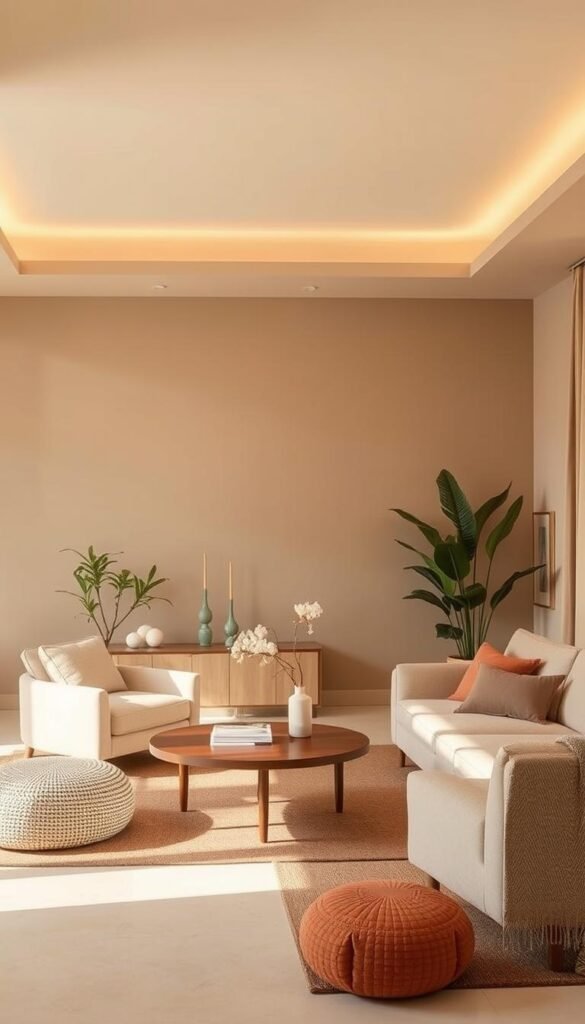
Color selection forms the emotional core of your bedroom transformation journey. The right palette establishes mood and defines your space’s character.
This design approach values harmony above all else. Your choices should create a cohesive environment that feels both intentional and inviting.
Embrace Warm, Earthy Tones
Nature-inspired tones bring warmth and authenticity to your sanctuary. Think warm wood finishes, olive greens, and mustard yellows.
These hues connect your interior to the natural world outside. They create that organic feel so central to this aesthetic.
Incorporate Pops of Bold, Retro Color
While neutrals form your foundation, vibrant accents provide personality. Teal, chartreuse, and burnt orange make stunning statements.
Use these bold colors strategically in accessories and artwork. They should complement rather than overwhelm your space.
Balancing Your Neutrals and Accents
The magic happens in the balance between subtle and striking. Follow the 60-30-10 rule for best results.
Let neutrals cover 60% of your space. Secondary color takes 30%, and accent shades complete the final 10%.
This creates visual interest without chaos. Your room feels designed rather than decorated.
Some timeless combinations include beige with orange accents. Grey with teal creates a cool, contemporary vibe.
White with mustard yellow offers bright contrast. These pairings honor historical preferences while feeling fresh today.
Your color choices directly influence the room’s energy. Soft neutrals promote relaxation and calm.
Bolder accents inject energy and creativity. You control the mood through your palette decisions.
3. Choosing the Right Mid Century Modern Furniture Pieces
Your furniture choices truly define the character of your sleeping sanctuary. These elements form the structural foundation that supports the entire room’s aesthetic.
Authentic pieces feature clean lines and purposeful simplicity. They combine beauty with everyday functionality for a space that works as beautifully as it looks.
3.1. The Bed as Your Focal Point
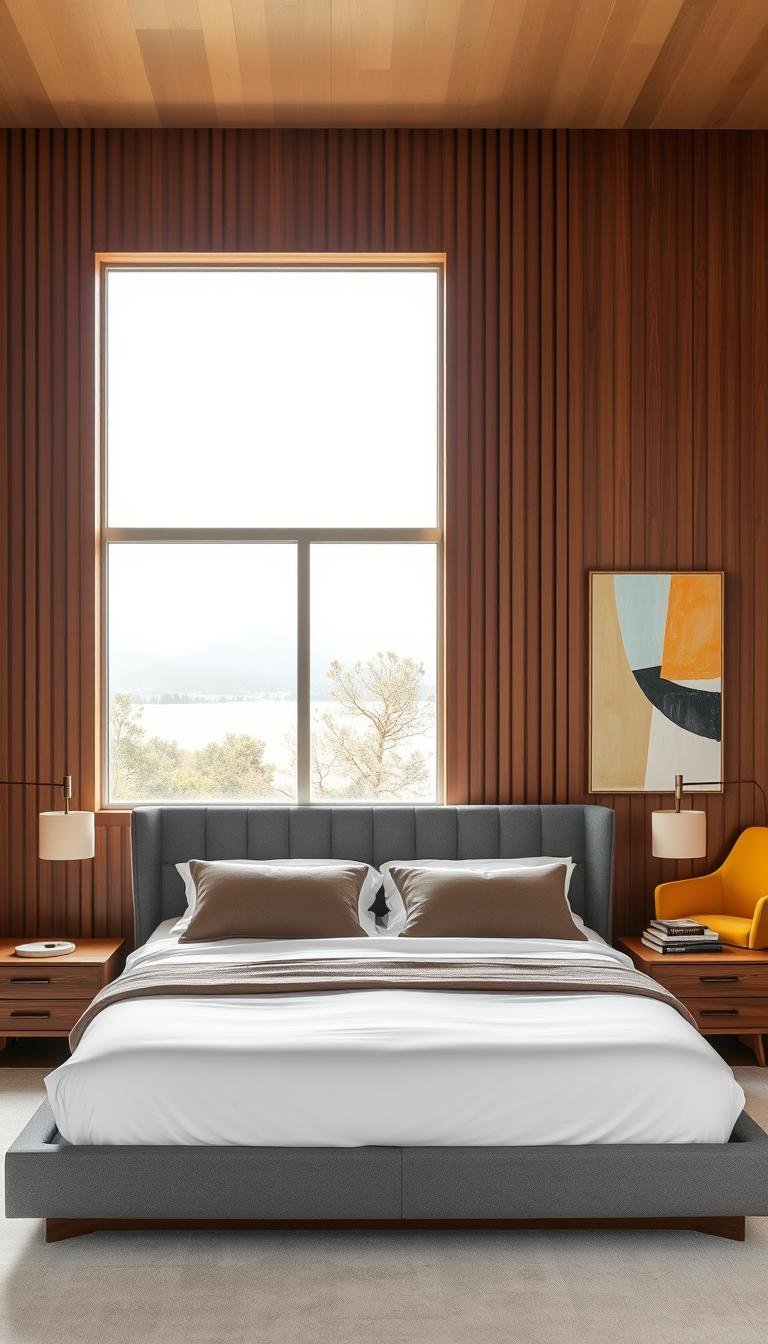
Your bed naturally becomes the room’s centerpiece. Look for designs with low profiles and tapered legs that create visual lightness.
These beds often feature straightforward headboards with minimal ornamentation. The focus remains on quality materials and elegant proportions.
3.2. Sleek and Functional Nightstands
Nightstands should offer practical storage without visual clutter. Simple geometric shapes with slender legs complement the overall aesthetic.
Many designs feature integrated drawers or open shelving. This maintains the clean look while providing essential bedside functionality.
3.3. Dressers and Storage with Geometric Flair
Storage pieces often showcase subtle geometric patterns. Clean lines and minimal hardware create a streamlined appearance.
These furnishings prioritize organization without sacrificing style. You get discreet storage that enhances rather than dominates your space.
Preferred wood types include teak, walnut, and rosewood. These materials develop rich patinas over time, adding character to your room.
Oak also works beautifully for a slightly different texture. Each wood brings its own unique warmth and grain patterns.
Every furniture piece serves multiple purposes in this design approach. Storage integrates seamlessly into the overall composition.
The result is a bedroom that feels both curated and completely usable. You achieve that perfect balance of form meeting function.
4. Incorporating Iconic and Creative Touches for a Mid Century Modern Bedroom Makeover
Distinctive elements transform ordinary rooms into extraordinary retreats. These finishing details elevate your design from standard to spectacular.
Iconic furniture legs create visual lightness throughout your space. Hairpin legs remain a hallmark feature of this aesthetic.
They allow pieces to appear floating above your floor. This creates an airy, open feel that defines the look.
Rattan headboards bring organic texture and warmth to your sleeping area. Both vintage and reproduction options work beautifully.
Statement chairs like the Eames lounge add instant authenticity. These pieces serve as functional art within your room.
Geometric patterns appear in bedding, rugs, and accessories. They provide that authentic retro feel you love.
Michelle Boudreau Design demonstrates brilliant texture mixing. Moroccan decor pieces like Beni Ourain rugs create wonderful contrast.
Jamie Bush+Co incorporates playful ’60s and ’70s elements. These retro pieces add personality and whimsical touch.
Explore various ideas that reflect your personal style. The key is maintaining design integrity while expressing yourself.
- Mix materials like wood, metal, and textiles for depth
- Choose pieces with historical significance and character
- Balance bold statements with subtle supporting elements
- Let each addition serve both aesthetic and functional purposes
These details create a space that feels both curated and completely personal. Your room becomes a true reflection of your taste.
5. Selecting Statement Lighting Fixtures
Proper illumination transforms your room from ordinary to extraordinary. The right fixtures serve dual purposes in your space.
They provide essential illumination while acting as sculptural art pieces. This balance defines the authentic aesthetic you want to achieve.
5.1. Sculptural Pendant Lights
Pendant lights create dramatic focal points above your bed or seating area. Their geometric forms add visual interest to your ceiling space.
Look for simple shapes that make strong statements. Globe pendants offer organic curves that soften angular furniture.
Sputnik chandeliers bring atomic age excitement to your room. Their radiating arms create dynamic lighting patterns on walls and ceilings.
5.2. Sleek Table and Floor Lamps
Task lighting combines sleek aesthetics with practical functionality. These pieces should offer adjustable illumination for reading and relaxation.
Choose designs with clean lines and minimal ornamentation. Brass or polished chrome finishes add subtle retro appeal.
Many iconic designs from the era remain available today. Their timeless appeal ensures they never look dated in your space.
5.3. Symmetrical Wall Sconces
Wall-mounted fixtures create balance and harmony in your layout. They provide targeted illumination without occupying surface space.
Flank your bed with matching sconces for perfect symmetry. This arrangement offers excellent reading light from both sides.
Choose designs that complement your other lighting choices. Their forms should echo shapes found elsewhere in your room.
| Fixture Type | Primary Function | Style Characteristics | Ideal Placement |
|---|---|---|---|
| Pendant Lights | Ambient lighting | Geometric shapes, organic forms | Above bed, seating areas |
| Table Lamps | Task lighting | Slim profiles, adjustable heads | Nightstands, dressers |
| Floor Lamps | Accent lighting | Arcing arms, tripod bases | Reading corners, beside chairs |
| Wall Sconces | Targeted lighting | Symmetrical designs, directional light | Bedside walls, above dressers |
Your lighting choices directly affect the room’s mood and functionality. Warm bulbs create cozy evening atmospheres perfect for relaxation.
Dimmer switches allow you to adjust intensity throughout the day. This flexibility helps your space adapt to different needs and times.
Each fixture should contribute to the overall harmony. They work together to create layered illumination that serves multiple purposes.
6. Softening the Space with Textiles and Fabrics
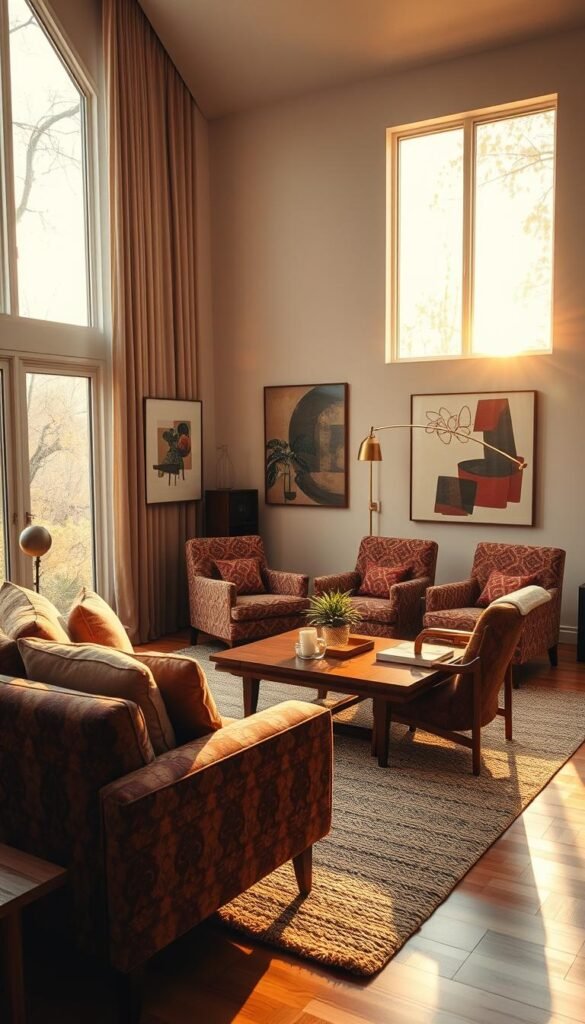
Textiles bring warmth and comfort to your minimalist retreat. They transform hard surfaces into inviting areas perfect for relaxation.
Fabrics introduce necessary softness against clean lines. This balance creates a harmonious environment that feels both stylish and cozy.
Your choices should enhance the overall aesthetic. Select pieces that complement rather than compete with your furniture.
6.1. Luxurious and Simple Bedding
Your bedding sets the tone for comfort and style. Choose high-quality materials that feel wonderful against your skin.
Simple patterns or solid colors work best. They maintain the clean look while providing visual interest.
Natural fibers like cotton and linen offer breathability. They keep you comfortable through all seasons.
Layer with textured throw pillows for added depth. Mix different sizes and shapes for a curated appearance.
6.2. Elegant, Light-Filtering Curtains
Window treatments should provide gentle light control. Sheer fabrics create soft, diffused illumination throughout your room.
Choose lightweight materials that hang beautifully. Flowing curtains add movement and elegance to your space.
Neutral tones maintain the serene atmosphere. They frame your windows without dominating the visual landscape.
Simple hardware completes the polished look. Minimalist rods keep the focus on the fabric itself.
6.3. Geometric and Textured Area Rugs
Rugs define specific areas within your room. They create visual boundaries while adding warmth underfoot.
Geometric patterns reference historical design elements. They bring authentic character to your floor plan.
Natural fibers like wool provide durability and texture. They feel luxurious and age beautifully over time.
Michelle Boudreau Design demonstrates brilliant texture mixing. Moroccan decor pieces add wonderful softness and color contrast.
Follow these textile selection principles:
- Choose natural materials for authenticity and comfort
- Mix patterns and textures for visual depth
- Maintain color harmony with your overall palette
- Select pieces that serve both aesthetic and functional purposes
These elements work together to create your perfect sanctuary. They transform your room into a true personal retreat.
7. Adding Character with Art and Wall Decor
Your walls become the perfect canvas for expressing personal style while honoring design principles. The right pieces add personality without overwhelming your serene space.
Choose art with bold graphic elements or abstract designs. Nature-inspired motifs work beautifully with the organic feel of this aesthetic.
Mirrors serve multiple purposes in your design scheme. They expand visual space and enhance natural light throughout the room.
Consider this perspective from design experts:
The most successful spaces balance minimalist principles with personal expression through carefully chosen art and objects.
Decorative objects should showcase iconic designs with sculptural forms. Look for pieces that make statements without creating clutter.
Vintage art pieces add authenticity and historical context to your design. They bring character that new reproductions often lack.
Gallery walls showcase personal style while maintaining design cohesion. Arrange pieces with consistent spacing and complementary frames.
Here’s how different wall elements contribute to your overall design:
| Element Type | Primary Purpose | Style Characteristics | Placement Tips |
|---|---|---|---|
| Artwork | Visual interest | Abstract forms, bold colors | Eye level above furniture |
| Mirrors | Space expansion | Clean frames, geometric shapes | Opposite windows or art |
| Sculptural Objects | Texture addition | Organic forms, natural materials | Shelves or wall mounts |
| Gallery Arrangements | Personal expression | Coordinated frames, varied sizes | Large blank walls |
Your wall decor should feel intentional rather than random. Each piece contributes to the room’s overall harmony.
Balance is key when arranging your elements. Too little looks sparse, while too much feels cluttered.
Step back periodically to view your arrangements from different angles. This ensures your choices enhance rather than dominate the space.
8. Embracing Biophilic Design with Indoor Plants
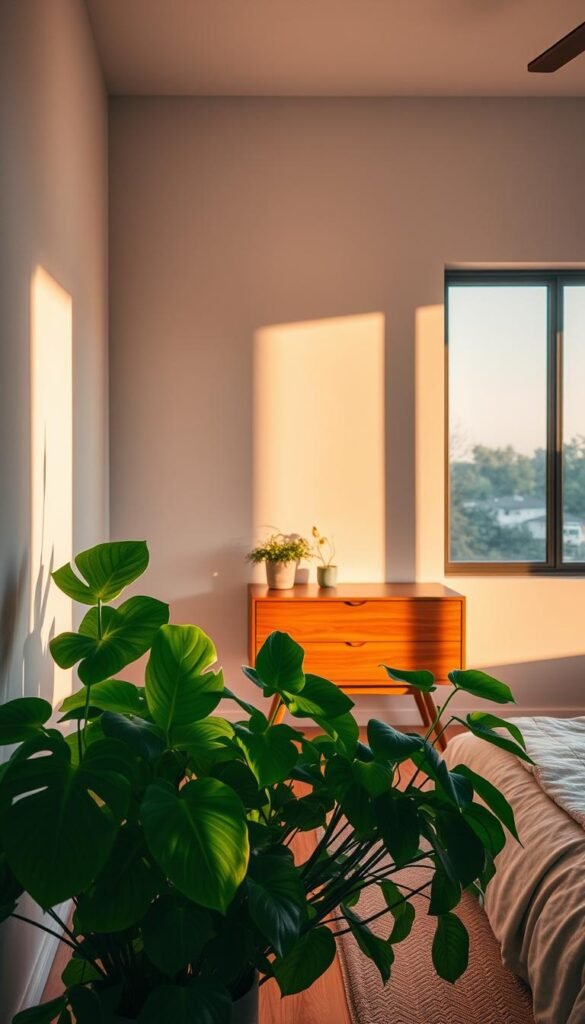
Nature’s touch transforms your personal retreat into a living sanctuary. Biophilic design connects your indoor space with the natural world outside.
This approach brings vitality and freshness to your room. Living elements create dynamic energy that changes with the seasons.
Choose plants with distinctive foliage for visual impact. Fiddle leaf figs make dramatic statements with their large, sculptural leaves.
Snake plants offer vertical interest with minimal care requirements. Rubber plants provide lush greenery and air-purifying benefits.
Select sleek, minimalist planters that complement your greenery. Neutral ceramics or simple terracotta pots work beautifully.
They should enhance rather than compete with your plants. The container becomes part of the overall aesthetic.
Natural materials deepen your connection to outdoors. Wood, stone, and linen elements reinforce organic themes.
These textures create warmth against clean lines. They add depth without overwhelming your minimalist look.
Organic shapes from plants soften geometric furniture lines. This creates balanced harmony between nature and structure.
Your greenery becomes living sculpture within the room. Each plant contributes to the overall composition.
Beyond beauty, plants offer tangible health benefits. They improve air quality by filtering common toxins.
Studies show they reduce stress and enhance well-being. Your bedroom becomes a true restorative sanctuary.
Integrate nature thoughtfully to maintain design integrity. Each addition should feel intentional and purposeful.
| Plant Type | Light Requirements | Care Level | Design Impact |
|---|---|---|---|
| Fiddle Leaf Fig | Bright indirect | Moderate | Large statement piece |
| Snake Plant | Low to bright | Easy | Vertical architectural element |
| Rubber Plant | Medium to bright | Easy | Lush foliage, air purifying |
| ZZ Plant | Low to bright | Very easy | Glossy leaves, drought tolerant |
As one designer notes about incorporating nature:
The most successful spaces balance architectural elements with organic forms, creating environments that feel both designed and naturally evolved.
Your plants become living art within the room. They change and grow alongside your personal style.
This dynamic quality keeps your space feeling fresh. You enjoy evolving beauty that static decor cannot provide.
Embrace biophilic principles to create true harmony. Your bedroom becomes a sanctuary that nourishes both body and spirit.
9. Playing with Texture and Pattern Layering
Layering textures and patterns brings warmth and dimension to your space. This technique adds visual interest while maintaining clean lines.
You create a rich, inviting environment through thoughtful combinations. Each layer contributes to the overall harmony.
Combine smooth surfaces with rough natural materials. Polished wood pairs beautifully with nubby textiles.
This contrast creates tactile appeal. Your room gains depth without feeling cluttered.
Use patterns sparingly for maximum impact. Simple geometric motifs work best.
Organic shapes add softness to angular furniture. Limit patterns to one or two elements per area.
Balance vintage pieces with contemporary items. This mix creates a timeless yet fresh look.
Your space feels both curated and current. The blend honors history while embracing today.
Different textures affect the room’s feel. Soft fabrics promote relaxation.
Smooth surfaces reflect light beautifully. Rough materials add earthy authenticity.
Consider these texture combinations:
- Sheepskin throws on sleek leather chairs
- Linen curtains against polished wood floors
- Wool rugs beneath metal frame beds
- Velvet pillows on crisp cotton bedding
Pattern layering follows similar principles. Start with a neutral foundation.
Add one bold pattern as your focal point. Use smaller patterns as supporting elements.
This approach creates visual hierarchy. Your eyes move naturally through the space.
As noted in this guide to mid-century decorating, combining materials like warm woods, linens, and rustic ceramics creates wonderful tactile appeal.
Your decor choices should feel intentional. Each texture and pattern serves a purpose.
They work together to create cohesive beauty. The result is a space that feels both designed and lived-in.
This table shows effective texture combinations:
| Primary Texture | Complementary Texture | Visual Effect | Room Application |
|---|---|---|---|
| Smooth polished wood | Nubby wool rug | Warm contrast | Flooring beneath furniture |
| Glossy ceramic | Matte linen | Tactile interest | Bedside accessories |
| Cool metal | Soft velvet | Temperature balance | Lighting and pillows |
| Rough stone | Silky cotton | Natural harmony | Decorative objects |
Texture and pattern layering completes your room’s design. It adds the final layer of personality.
Your space becomes truly inviting. Every element works together in beautiful harmony.
10. Incorporating Vintage and Thrifted Finds
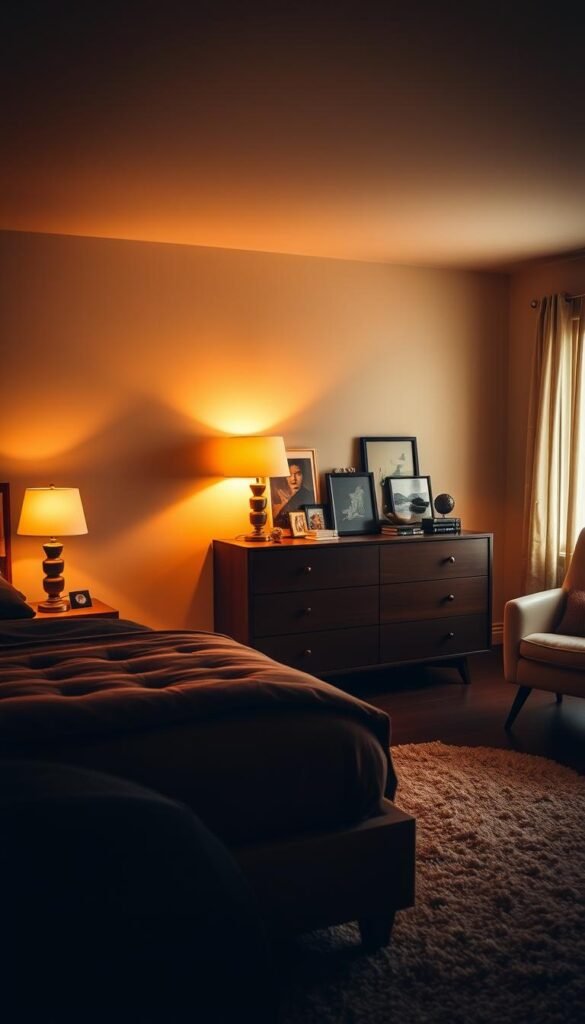
Hunting for vintage treasures brings soul and story to your sleeping space. These unique discoveries add layers of character that new items simply cannot replicate.
Authentic vintage pieces carry historical charm and craftsmanship. They connect your modern bedroom to design heritage in meaningful ways.
Thrift stores offer wonderful opportunities for budget-friendly finds. Estate sales often feature well-preserved items from actual mid-century homes.
Online marketplaces provide access to rare pieces worldwide. You can find exactly what you need without leaving home.
Look for these standout vintage items:
- Retro lamps with atomic age designs and warm glow
- Classic record players that blend functionality with nostalgia
- Starburst mirrors that create dramatic focal points
- Sculptural vases that showcase organic forms and materials
Quality vintage furniture often features solid wood construction. Look for dovetail joints and sturdy hardware that indicate lasting value.
Check for structural integrity before purchasing older pieces. Minor cosmetic issues can often be easily addressed.
Mixing vintage finds with contemporary items creates balanced style. Your room feels both curated and personally meaningful.
As noted in this guide to mid-century bedroom ideas, vintage items become natural conversation starters. They add unique personality that mass-produced items lack.
Thrifting makes authentic design accessible at various price points. You can build your dream space without overspending.
Each vintage find tells its own story within your room. They create a layered, personal environment that truly reflects your taste.
Your bedroom becomes a collection of meaningful pieces. This approach honors design history while creating something uniquely yours.
11. Utilizing Smart and Hidden Storage Solutions
Clever storage keeps your room looking neat and organized. It helps maintain that clean, uncluttered feeling you love.
Built-in shelving blends right into your walls. It becomes part of the room’s architecture rather than standing out.
Floating shelves offer minimalist display options. They keep surfaces clear while showing off your favorite items.
Hidden storage works magic in small spaces. Platform beds with built-in drawers provide extra room for linens.
Ottomans with removable tops offer dual functionality. They serve as seating and secret storage compartments.
Nightstands with concealed compartments keep essentials handy but out of sight. This maintains your serene environment.
Your storage furniture should serve multiple purposes. Each piece must work hard without compromising style.
Organization techniques keep clutter at bay. Everything has its place in your well-designed space.
Storage plays a vital role in minimalist design. It helps achieve those clean principles you admire.
Consider these smart solutions:
- Custom built-ins that match your wall color
- Multi-functional pieces like storage benches
- Under-bed drawers for seasonal items
- Wall-mounted units that free up floor space
Your room stays beautiful and functional. Smart storage makes daily life easier and more enjoyable.
12. Creating a Focal Point with an Accent Wall
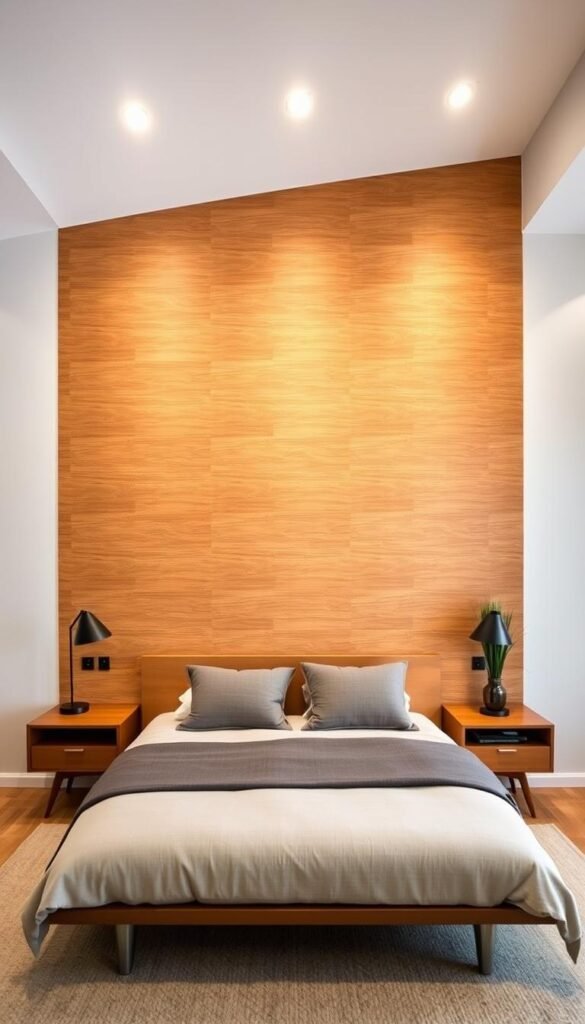
One bold design move can completely redefine your room’s personality. An accent wall creates instant drama and visual interest.
This technique draws attention to specific areas. It transforms ordinary spaces into extraordinary environments.
You have several exciting options to consider. Painting one wall a bold color makes the strongest statement.
Retro wallpaper patterns bring authentic character. 3D wall tiles add texture and dimension.
Choose colors that honor the era’s aesthetic. Earthy tones like mustard and olive work beautifully.
Bolder shades like teal or burnt orange create energy. These colors make strong visual statements.
Jamie House Design demonstrates perfect execution. Their grayish-blue accent wall creates sophistication.
Colorful throw pillows provide complementary contrast. This balance creates cohesive design harmony.
Accent walls highlight architectural features beautifully. They add interest to simple room layouts.
These design elements affect mood perception. Warm colors feel inviting and cozy.
Cooler tones create calm, serene atmospheres. You control the emotional impact.
Consider these implementation techniques:
- Choose the wall facing your bed for maximum impact
- Ensure proper lighting to showcase your accent feature
- Balance bold walls with neutral surrounding elements
- Use complementary accessories to enhance the overall effect
Your accent wall becomes the room’s star feature. It transforms your space with personality and style.
13. Mixing Mid Century Modern with Other Styles
Blending different aesthetics creates spaces that feel uniquely yours. This approach lets you honor classic principles while expressing personal taste.
Mid-century elements work beautifully with many popular interior styles. You can create harmonious combinations that feel both curated and personal.
Coastal influences bring light and airy feelings to your space. Louis Duncan-He Designs shows how this works with turquoise shiplap walls.
They paired this with blue throw pillows for ocean-inspired accents. The result feels fresh yet grounded in timeless principles.
Boho-inspired elements add wonderful texture and warmth. K Shan Design incorporated macrame wall hangings beautifully.
Natural textures like rattan and woven materials complement clean lines. This creates visual interest without overwhelming the space.
Scandinavian minimalism shares many core values with this aesthetic. Both prioritize functionality and clean aesthetics.
You can blend these approaches for ultimate simplicity. The focus remains on purposeful pieces and serene environments.
These mixing techniques offer several advantages:
- Personal expression through unique combinations
- Flexibility to incorporate existing pieces you love
- Opportunities to highlight special vintage finds
- Creation of spaces that feel both designed and lived-in
Your room becomes a true reflection of your personality. It honors design history while feeling completely current.
Experiment with different combinations to find your perfect balance. The best look often comes from thoughtful blending.
These ideas help you create something truly special. Your space becomes uniquely yours through clever style mixing.
14. Focusing on the Details: Hardware and Legs
The smallest details often make the biggest impact in your bedroom transformation. These finishing touches define the authentic character of your space.
Hairpin legs remain iconic hallmarks of this aesthetic. They create that floating furniture effect you love.
Virtual Studio Innovations beautifully captured this feature. Their photographed room shows hairpin legs supporting a bed as a defining style element.
Tapered legs create the characteristic silhouette on furniture pieces. They provide visual lightness throughout your room.
Hardware should be minimal and sleek in your design. Choose simple pulls that don’t distract from clean lines.
These details contribute to overall elegance and lightness. They complete your vision with authentic touches.
Quality construction shows in well-executed joints and finishes. Look for solid craftsmanship that ensures lasting beauty.
Your attention to these elements makes all the difference. They transform good design into great personal expression.
15. Curating a Serene and Inviting Atmosphere
Your personal sanctuary thrives when every element promotes peace and tranquility. This approach transforms your bedroom into a true wellness retreat that nurtures both body and mind.
Reducing visual noise creates immediate calm throughout your space. Keep surfaces clutter-free and maintain a limited color palette for harmonious visual flow.
Matthew Niemann Photography demonstrates this principle beautifully. Their tranquil white and natural wood scheme creates soothing visual harmony.
Aromatherapy engages your sense of smell for deeper relaxation. Essential oil diffusers offer continuous subtle fragrance throughout your room.
Scented candles create cozy evening ambiance with gentle flickering light. Herbal sachets provide natural fragrance without artificial chemicals.
Soundscapes complete your multi-sensory experience. White noise machines mask disruptive outside sounds for uninterrupted rest.
Calming music playlists set the perfect mood for relaxation. Nature sounds like ocean waves or forest rainfall create peaceful auditory environments.
These elements work together to create holistic wellness. Your bedroom becomes a true sanctuary that engages all senses.
The overall aesthetic should promote complete tranquility. Every design choice contributes to peaceful energy flow.
You’ll notice an immediate difference in how the room feels. Serene environments naturally lower stress and improve sleep quality.
This multi-sensory approach transforms your daily experience. Your bedroom becomes your favorite retreat for restoration and peace.
The final look balances beauty with functionality. Your space appears thoughtfully designed while feeling incredibly comfortable.
True serenity emerges when design engages all senses simultaneously, creating environments that feel both curated and naturally peaceful.
Your atmosphere curation makes the difference between ordinary and extraordinary. Enjoy your perfectly serene personal sanctuary every day.
16. Bringing Your Retro-Chic Oasis to Life
Your journey to a refreshed personal space begins with practical steps. Start with a platform bed as your foundation. Add iconic pieces like Eames chairs for authentic charm.
Incorporate geometric patterns and bold accent walls for visual impact. Statement lighting fixtures elevate the entire room’s atmosphere.
This design approach remains timeless for good reason. It blends retro appeal with contemporary comfort beautifully.
You can adapt these ideas to any room size or budget. Layer elements gradually to achieve your desired look over time.
Your bedroom becomes a personal retreat that balances style and relaxation. Start implementing these changes today and enjoy your new sanctuary.