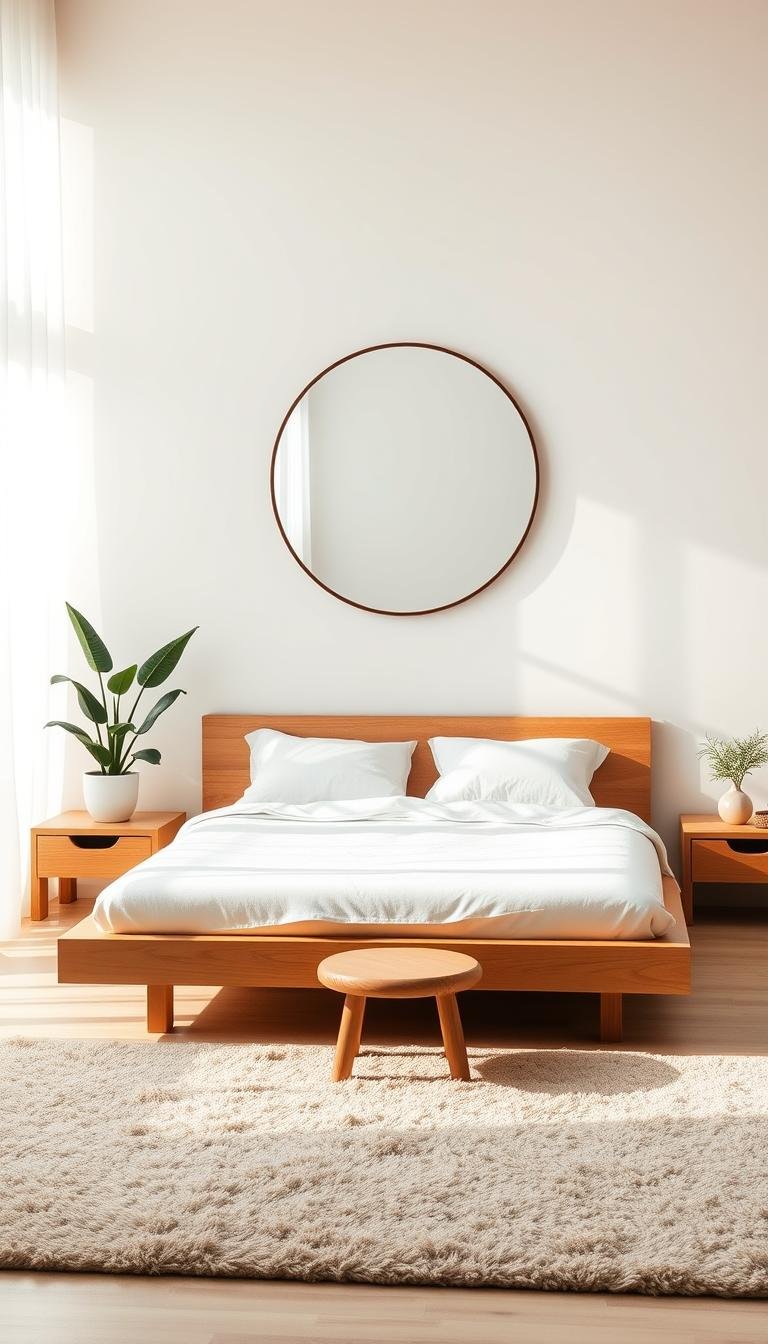
Your bedroom should be more than just a place to sleep. It can become your personal sanctuary. This special room offers peace away from the busy world.
This design philosophy comes from ancient traditions. It focuses on mindfulness and your well-being. Your environment plays a huge role in your mental health.
We will guide you through transforming your space. You will learn about simplicity, natural elements, and intentional choices. This process brings harmony and positive energy into your home.
Expect reduced stress and better sleep quality. You will create a true atmosphere of relaxation. Let’s begin this journey toward your perfect personal retreat.
Understanding the Zen Bedroom Philosophy
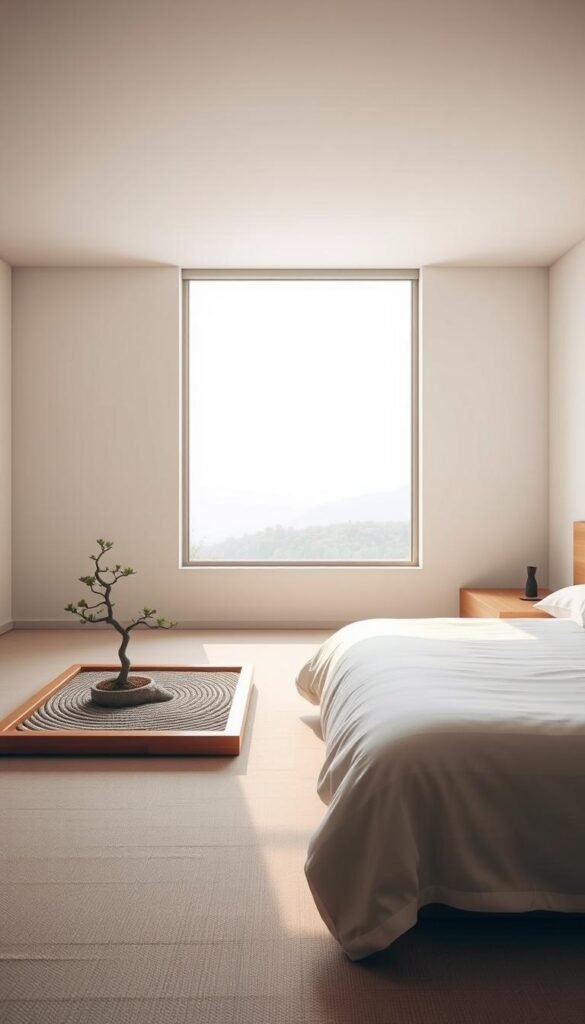
Your personal retreat draws inspiration from ancient Zen traditions. This philosophy values mindfulness and meditation. It seeks to create ultimate calm through intentional design.
The Core Principle: Simplicity and Harmony
Simplicity forms the foundation of this approach. It means reducing visual noise and mental clutter. Your space should feel open and peaceful.
This isn’t about empty rooms or starkness. True simplicity finds beauty in functionality. Every piece serves a purpose and brings joy.
Harmony balances all elements in your room. Colors, materials, and layout work together. They create a cohesive and calming atmosphere.
Designer Krista Hermanson emphasizes creating “snuggle spots”. These areas promote tranquility and comfort. They turn your room into a true sanctuary.
How Your Environment Impacts Your Wellbeing
Your surroundings directly affect your mental state. Clutter-free spaces promote peace and relaxation. They minimize distractions that cause anxiety.
Post-pandemic awareness highlights restful spaces. Your bedroom becomes crucial for recovery. It supports better sleep and reduced stress.
Natural elements connect you with the outdoors. Wood, plants, and sustainable materials bring nature inside. This alignment fosters deeper relaxation.
Every choice in your room supports wellbeing. From furniture to lighting, each detail matters. You create a reflection of inner peace.
For more inspiration on zen bedroom design, explore how these principles transform ordinary spaces into personal sanctuaries.
Start with a Clean Slate: Decluttering for Peace of Mind
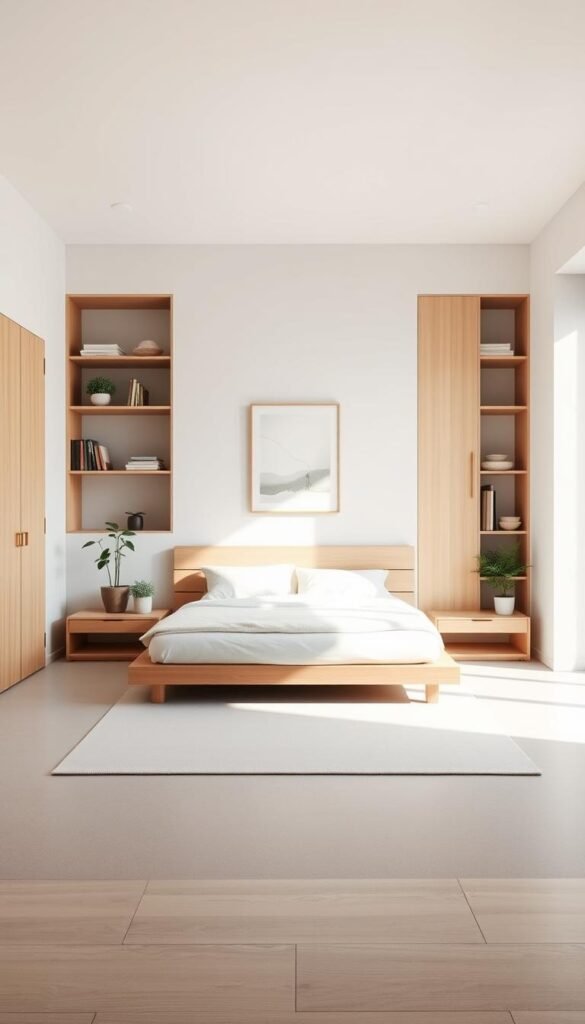
Think about your bedroom as a blank canvas. This fresh start begins with removing excess items. Your goal is to create an open, peaceful environment.
Clutter creates visual noise and mental chaos. It pulls your attention in many directions. A minimalist approach brings calm and focus to your space.
“Zen is a total state of focus that incorporates a total togetherness of body and mind.”
Try this simple 90-second exercise from home design experts. Picture your room and your daily routines. List only the items you actually use. This reveals what truly matters.
Integrating Smart and Discreet Storage Solutions
Smart storage keeps your room looking clean and simple. Katie Glaister of K&H Design recommends fitted joinery. This maximizes wall space beautifully.
Consider these storage ideas that maintain clean lines:
| Storage Type | Benefits | Best For |
|---|---|---|
| Under-bed drawers | Hidden, space-efficient | Linens, clothing |
| Painted built-ins | Blends with walls | Books, personal items |
| Floating shelves | Light, airy feel | Minimal decor |
Choose furniture made from natural materials like wood. These pieces add warmth while serving multiple functions. Your storage should work quietly in the background.
The Mental Benefits of a Minimalist Layout
A clutter-free room does wonders for your mind. It reduces anxiety and improves sleep quality. You gain a greater sense of control over your environment.
With fewer distractions, your brain can truly rest. This peaceful atmosphere supports meditation and relaxation. Your bedroom becomes a true retreat from the world.
Remember that decluttering is an ongoing process. Regular tidying maintains that peaceful feeling. Start small and notice how your mood improves each day.
This clean foundation allows other elements to shine. Colors, textures, and natural elements work better in an organized space. You create harmony through simplicity.
Choosing a Soothing Color Palette
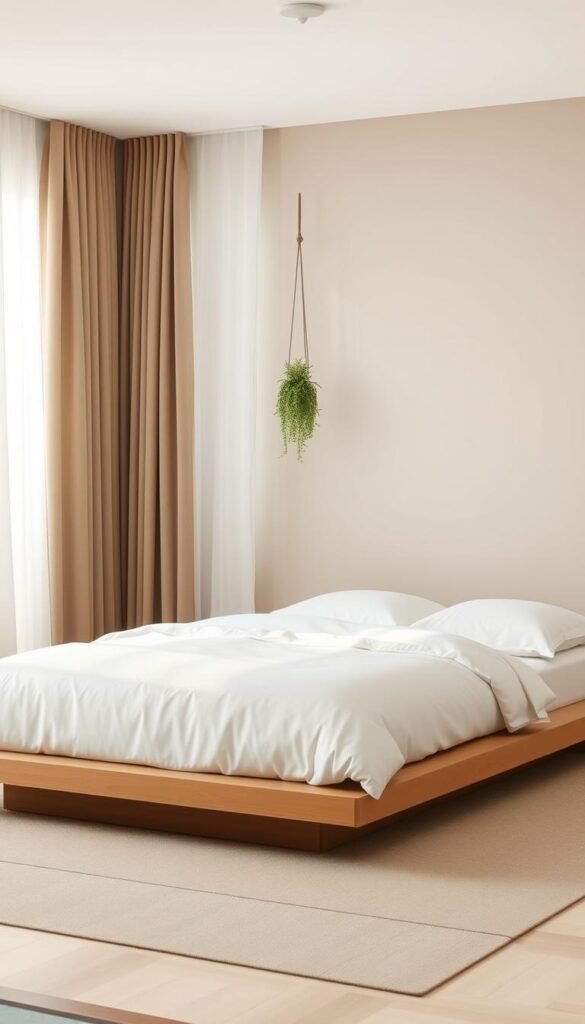
Color surrounds you in your personal retreat. It sets the emotional tone before you even speak. Your chosen palette becomes the foundation for all other elements.
Soothing colors work like a gentle whisper to your senses. They calm your nervous system after a long day. This visual harmony supports deeper relaxation and peace.
Why Warm Neutrals and Earthy Tones Work Best
Warm neutrals wrap your space in comfort. Think soft beige, warm taupe, and creamy whites. These shades create a cozy, enveloping atmosphere.
Justyna Korczynska of Crown recommends these hues for their calming effect. They provide a neutral backdrop that doesn’t overwhelm. Earthy tones bring natural warmth into your room.
These colors pair beautifully with wood elements and natural materials. They enhance the sense of simplicity and clean lines. Your space feels both grounded and light.
The Calming Power of Greens and Soft Blues
Greens connect you directly with nature’s renewal energy. Patrick O’Donnell of Farrow & Ball notes how green brings harmony. It’s the color of growth and balance.
Soft blues echo peaceful skies and calm waters. They create a cool, soothing environment perfect for rest. These tones reduce stress and encourage mental clarity.
Consider Farrow & Ball’s French Grey (which is actually a soft green) or pale blues. These desaturated shades work well with neutrals. They add depth without creating distractions.
| Color Family | Emotional Effect | Best Pairings |
|---|---|---|
| Warm Neutrals | Creates cozy, safe feeling | Wood tones, linen textures |
| Earthy Tones | Grounding and natural | Plants, stone elements |
| Soft Greens | Renewal and harmony | Natural light, neutral walls |
| Pale Blues | Cool and soothing | White trim, cotton fabrics |
Always test paint samples on your walls first. Colors change dramatically throughout the day. Natural lighting especially affects how tones appear.
Remember that even small color changes make a big impact. An accent wall or colored curtains can transform your atmosphere. Choose shades that reflect your personal preference while maintaining calm.
Your color choices should work together in harmony. Complementary shades create a cohesive look throughout your space. This visual unity supports the overall sense of peace.
Bold colors might feel overstimulating in your retreat. Stick to desaturated shades that promote relaxation. Your palette becomes a silent partner in your daily renewal.
Selecting Natural and Sustainable Materials
Sustainable choices in your room design reflect a deeper commitment to both personal and planetary wellbeing. These materials create an authentic connection to the natural world while supporting environmental health.
Natural elements bring warmth and texture to your space. They work in harmony with your color palette and layout. This approach creates a truly cohesive atmosphere.
Incorporating Wood, Linen, and Cotton
Wood brings grounding energy and organic beauty to your furniture and accents. Its natural grain patterns and warm tones create visual interest without clutter. Choose pieces with clean lines that showcase the material’s inherent character.
Linen and cotton offer breathable comfort for bedding and textiles. These natural fabrics regulate temperature throughout the night. They feel soft against your skin and develop a beautiful patina over time.
Consider these benefits of natural materials:
- Wood furniture provides durability and timeless appeal
- Linen curtains filter light beautifully while adding texture
- Cotton bedding offers hypoallergenic comfort for better sleep
- Natural textures create visual depth without overwhelming your senses
Choosing Eco-Friendly and Biodegradable Options
Eco-friendly materials minimize your environmental impact while enhancing your room’s atmosphere. Look for bamboo, jute, or recycled options that align with sustainable values. These choices support a healthier home and planet.
Wool carpeting provides excellent insulation and air purification properties. It’s naturally hypoallergenic and resistant to bacteria. This creates a cleaner environment for relaxation and rest.
When selecting materials, consider these certifications:
- Organic certifications ensure chemical-free production
- Fair trade verification supports ethical sourcing practices
- Forest Stewardship Council (FSC) certification for sustainable wood
- Global Organic Textile Standard (GOTS) for fabrics
Invest in quality pieces that will last for years. Natural materials often improve with age and proper care. This approach reduces waste and creates a more meaningful connection to your space.
Mixing materials like wood with linen adds depth while maintaining simplicity. Each element should feel intentional and harmonious. Your choices create a room that truly supports your wellbeing.
Furnishing Your Space with Intention
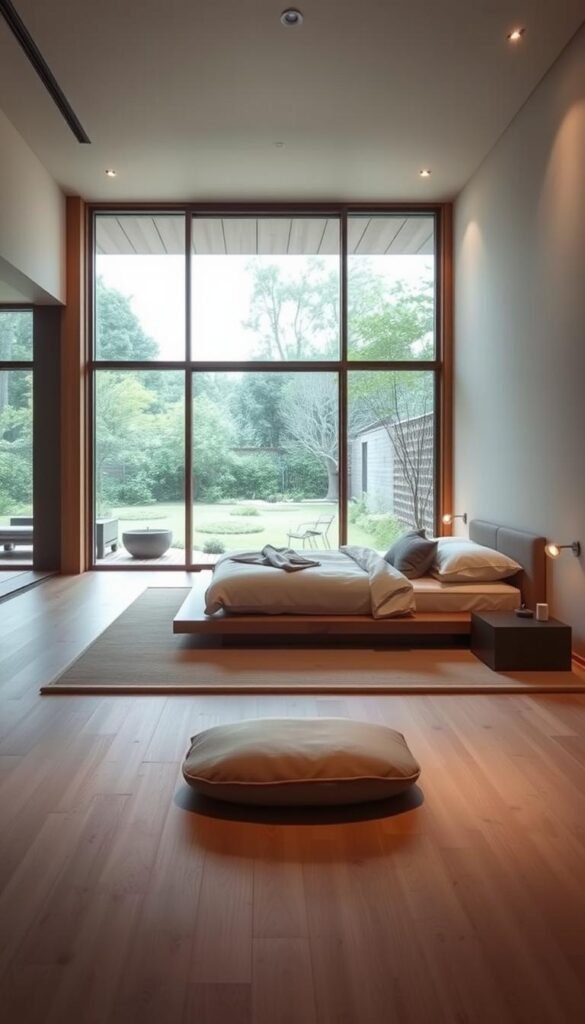
Your furniture choices shape your room’s energy and function. Each piece should serve a clear purpose while enhancing calm. This thoughtful approach creates harmony throughout your personal area.
Designer Luis Laplace emphasizes selecting items with meaning. Large minimalist bed frames add height without unnecessary layers. This creates depth while maintaining visual simplicity.
The Grounding Effect of a Low Platform Bed
A low platform bed symbolizes stability and connection. It brings you closer to the ground for enhanced relaxation. This design promotes peaceful sleep through its grounded presence.
These beds work beautifully with various ceiling heights. They create a sense of security without feeling cramped. The clean lines contribute to your room’s uncluttered vibe.
Choose beds made from natural materials like wood. Sustainable options support both your wellbeing and the environment. Their warmth adds organic texture to your space.
Selecting Minimalist Nightstands and Dressers
Your storage pieces should prioritize function and form. Minimalist nightstands with clean lines maintain visual peace. They provide necessary surface space without bulk.
Consider bespoke joinery for streamlined storage solutions. Built-in pieces blend seamlessly with your walls. This approach maximizes functionality while reducing clutter.
Matching nightstands create symmetry and balance. This arrangement enhances tranquility through visual harmony. Your furniture placement supports the overall calming atmosphere.
| Furniture Type | Key Features | Benefits |
|---|---|---|
| Low Platform Bed | Grounding design, clean lines | Promotes stability and better sleep |
| Minimalist Nightstands | Simple surfaces, functional storage | Reduces visual distractions |
| Streamlined Dressers | Built-in options, natural materials | Maintains uncluttered environment |
Always measure your space before selecting pieces. Proper sizing ensures everything fits harmoniously. This prevents overcrowding and maintains peaceful energy.
Invest in quality furniture that will last for years. Fewer, better pieces support the Zen philosophy. Each item should contribute to your relaxation and comfort.
Your furniture becomes part of your daily sanctuary. Every choice reflects intention and purpose. This mindful approach transforms your room into a true retreat.
Mastering the Art of Soft Lighting
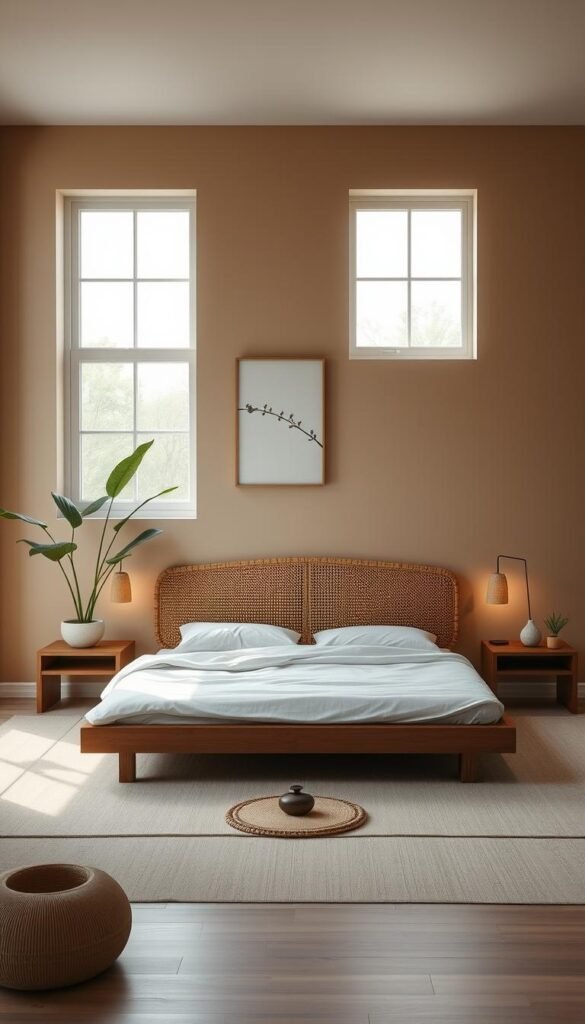
Light transforms your personal area into a peaceful retreat. The right illumination creates instant calm after a long day. Your lighting choices directly impact your mood and relaxation.
Soft, warm sources mimic beautiful natural light. They help your mind and body prepare for rest. This gentle approach reduces visual distractions in your space.
Using Dimmable Lights and Warm Bulbs
Dimmable options give you complete control over brightness. You can adjust illumination for different times of day. This flexibility supports your wind-down routines perfectly.
Warm bulbs create a cozy, inviting atmosphere. They cast a gentle glow throughout your room. Victoria Ninette used a frosted glass chandelier with dimmer for subdued effects.
Consider these lighting solutions for your home:
| Lighting Type | Best Placement | Atmosphere Created |
|---|---|---|
| Wall-mounted lights | Beside bed, reading nooks | Space-saving, focused glow |
| Ceramic pendants | Over seating areas | Soft, diffused illumination |
| Bone china fittings | Bedside tables, dressers | Elegant, warm radiance |
| Frosted glass fixtures | Central ceiling placement | Even, subdued lighting |
Layer different lighting types for full functionality. Combine overhead dimmers with bedside lamps. This approach creates beautiful ambient illumination.
Choose materials like bone china or frosted glass. These elements provide diffused light that feels inviting. They maintain clean lines while adding visual interest.
Enhancing Ambiance with Scented Candles
Scented candles add another dimension to your relaxation. Fragrances like lavender reduce anxiety naturally. They create aromatherapy benefits while providing soft light.
These elements work with your lighting to enhance mood. The flickering flame adds movement and warmth. Your space becomes multi-sensory experience.
Always prioritize safety with open flames. Battery-operated options offer worry-free ambiance. They provide the same visual effect without risk.
Place candles where they won’t interfere with furniture. Keep them away from curtains and bedding. This ensures beautiful atmosphere without concerns.
View lighting as your key transformation element. It turns your room into true sanctuary. Your careful choices reward you with perfect relaxation every evening.
Bringing Nature Indoors with Plants
Living plants create a vital connection to the outdoor world. They transform your personal area into a living, breathing environment. This natural touch enhances your overall sense of peace.
Greenery works beautifully with your existing design elements. Plants complement natural materials like wood and stone. They add organic textures without creating visual distractions.
Best Low-Maintenance Houseplants for Bedrooms
Some plants thrive with minimal attention. These varieties perfect for beginners or busy lifestyles. They bring nature inside without demanding constant care.
Consider these easy-care options for your room:
- Snake plants tolerate low light and irregular watering
- Spider plants purify air while adding graceful movement
- Pothos vines bring beautiful trailing greenery
All these plants adapt well to bedroom conditions. They require only basic sunlight and occasional watering. Even one plant makes a noticeable difference in your space.
Improving Air Quality and Visual Appeal
Plants naturally filter indoor air pollutants. NASA studies show they remove common toxins. This purification supports better sleep and overall health.
The visual impact of greenery enhances your room’s atmosphere. Living plants add dynamic color and texture. They create focal points that promote relaxation.
For those lacking green thumbs, botanical murals offer alternative solutions. Floor-to-ceiling nature scenes create immersive environments. These designs bring the outdoor world inside beautifully.
Plant care can become a meditative practice itself. Tending to greenery fosters mindfulness and connection. This ritual adds another layer to your peaceful routine.
Position plants near windows for optimal light exposure. Choose varieties that match your room’s conditions. The right placement ensures both plant health and visual harmony.
Select pots that complement your existing furniture and materials. Natural clay or ceramic containers enhance the organic feel. Their clean lines maintain your room’s simplicity.
Remember that plants should enhance rather than clutter your space. Start with one or two specimens if you’re new to plant care. Gradually build your indoor garden as confidence grows.
Investing in Luxurious, Natural Bedding
Your bed becomes the heart of your peaceful retreat. Quality bedding transforms ordinary sleep into a rejuvenating experience. It combines comfort, health benefits, and beautiful design.
Natural fabrics make a huge difference in your daily rest. They feel wonderful against your skin and support better sleep. Your investment pays off every single night.
The Importance of Breathable Fabrics like Cotton and Linen
Breathable materials regulate your body temperature perfectly. Cotton and linen keep you cool in summer and warm in winter. This natural climate control improves sleep quality.
These fabrics feel soft and get even better with time. They develop a beautiful, lived-in texture that adds character. Your bedding becomes more comfortable with each wash.
Natural materials offer health benefits too. They’re hypoallergenic and resist dust mites. This creates a cleaner sleeping environment for you.
Consider these advantages of natural bedding:
- Temperature regulation for comfortable sleep all year
- Moisture-wicking properties that keep you dry
- Durability that lasts for years with proper care
- Eco-friendly production that supports sustainability
Layering Textures for Comfort and Style
Layering creates depth and visual interest in your bed design. Start with quality sheets as your foundation. Add blankets and throws for extra warmth and texture.
Mixing materials creates a cozy, inviting look. Try cotton sheets with a wool throw or cashmere blanket. These combinations feel luxurious without overwhelming your space.
Neutral colors maintain your calm color palette. Different textures add visual variety instead of bold patterns. This approach keeps your room feeling peaceful.
Build your bedding collection gradually. Begin with essential sheets and pillowcases. Add decorative pillows and throws as you discover your preferences.
Your layered bed becomes a sanctuary within your sanctuary. It invites relaxation and promises restful nights. This focal point enhances your entire room’s atmosphere.
Easy care makes natural fabrics practical for daily use. Most improve with age and develop character over time. Your investment creates lasting comfort and beauty.
Adding Personal Touches Mindfully
Your retreat becomes truly yours through thoughtful details. These final elements should enhance peace, not create chaos. Every addition must serve your relaxation and joy.
Mindful personalization means choosing with purpose. Select items that tell your story quietly. They should blend seamlessly with your calm environment.
Curating Art and Decor that Promotes Calm
Artwork sets the mood in your personal area. Choose pieces that inspire tranquility and reflection. Nature photography or abstract works often work best.
Select art that complements your color scheme. Soft landscapes or minimalist prints maintain visual harmony. They become focal points without overwhelming your space.
Personal mementos add meaning to your room. Display items that spark happy memories. A special seashell or meaningful photograph tells your story.
Remember that less always creates more impact. One meaningful piece beats many random decorations. Your choices should feel intentional and peaceful.
| Decor Type | Emotional Effect | Placement Tips |
|---|---|---|
| Nature photography | Creates connection to outdoors | Above bed or seating area |
| Minimalist sculptures | Adds texture without clutter | Shelves or small tables |
| Personal mementos | Brings joy and meaning | Grouped thoughtfully together |
| Textile wall hangings | Softens acoustics and visuals | Opposite windows for best light |
Creating a Dedicated Meditation or Reading Nook
A special corner transforms your room’s functionality. This area becomes your spot for quiet reflection. It supports both meditation and reading practices.
Start with comfortable seating that invites relaxation. A plush chair or floor cushions work beautifully. Add soft textiles for warmth and comfort.
Lighting creates the perfect atmosphere here. A small lamp offers focused illumination. Sheer curtains can zone this area gently.
Include a small table for practical needs. It holds books, tea, or meditation items. This addition makes your nook fully functional.
Even simple touches elevate this space. Fresh flowers or a scent diffuser add sensory pleasure. They make your corner feel special and inviting.
Remember that comfort matters most here. Choose pieces that support relaxation completely. Your nook should feel like a true sanctuary within your sanctuary.
Regularly assess your personal items. Ensure they continue bringing peace and happiness. Edit anything that no longer serves your calm environment.
Embracing Your New Personal Sanctuary
Your transformed area now offers true peace and comfort. You have built a special environment through thoughtful choices. Every element works together to support your wellbeing.
Natural materials like wood bring warmth and harmony. Soothing colors and soft lighting create a calm mood. Clean lines reduce visual distractions in your space.
Enjoy your personal retreat for meditation and deep relaxation. Small rituals like morning reading or evening candle lighting enrich your daily life. This sanctuary becomes your refuge from the busy world.
Remember that maintaining this peaceful atmosphere requires ongoing care. Continue editing your space as your needs evolve. Your journey toward simplicity and balance brings lasting benefits to your home and life.