Living in a compact home presents unique challenges when creating your perfect sleeping area. Many people struggle with making their limited square footage both functional and beautiful.
This guide shows you how to maximize every inch of your room. You’ll discover practical approaches that work within rental constraints while creating a luxurious feel.
We’ve gathered expert interior design advice and real-world examples to help you. These solutions address common pain points while offering creative opportunities.
You’ll find comprehensive coverage of layout strategies, color choices, furniture selection, and storage options. Each recommendation focuses on achieving both style and functionality.
Even the most challenging spaces can become your favorite room in the home. Let’s explore how proper planning transforms limitations into design advantages.
1. Start by Mastering Your Bedroom Layout
Your journey to a better sleeping area begins with smart planning. A thoughtful layout transforms cramped quarters into comfortable retreats. You’ll create harmony between function and style.
Always measure your room before buying anything. Note window and door placements. Consider electrical outlets and light switches too.
Prioritizing Your Essential Furniture Pieces
Think about your daily routine first. Do you need clothing storage? A dresser might become your top priority.
Maybe you enjoy reading in bed. A comfortable headboard or daybed could serve you better. Your windowsill might replace a nightstand.
Interior designer Jessica Barr emphasizes simplicity:
“In compact rooms, every piece must justify its presence. Choose items that serve multiple purposes whenever possible.”
Common mistakes include overcrowding with too many pieces. People often forget to leave walking space. They select furniture that’s too large for the area.
Ensuring Clear Pathways for an Open Flow
Good flow makes your room feel larger instantly. Leave at least 30 inches between furniture pieces. This creates comfortable walking paths.
Think about how you move through the space. Can you access drawers easily? Does the bed placement feel natural?
Successful layouts often feature the bed against the longest wall. They use vertical space for storage. They maintain clear sightlines across the room.
Multifunctional furniture helps maximize your floor plan. Consider pieces that pull double duty early in your planning. This approach saves both space and money.
2. Embrace a Light and Airy Color Palette
Color choices transform how your sleeping area appears. They change the entire atmosphere instantly. Smart selections make compact quarters feel more open.
Your paint and wallpaper decisions impact spatial perception. They affect both natural and artificial lighting effects. Understanding color psychology helps you maximize your square footage.
Why Light Walls and Ceilings Create Openness
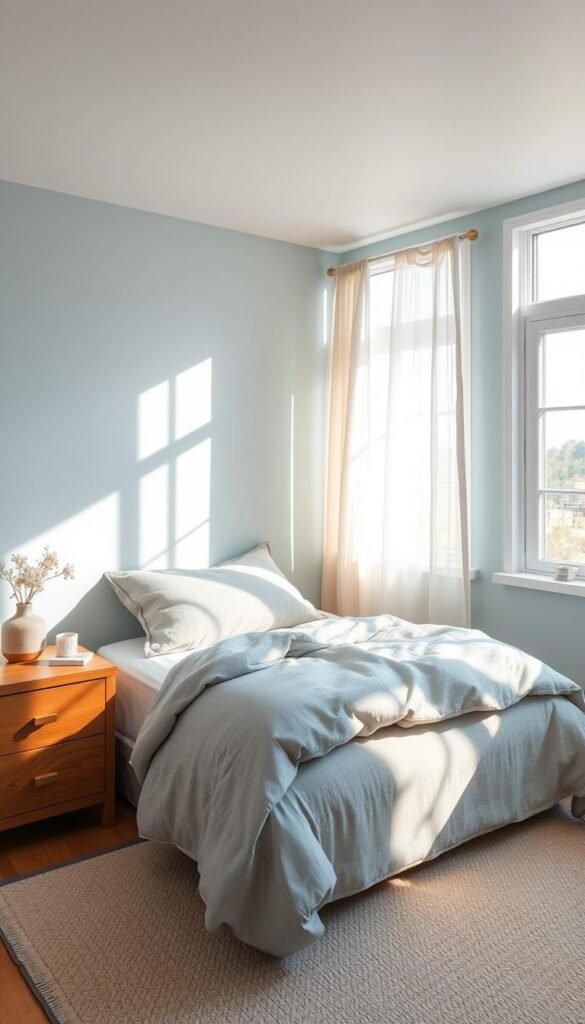
Light colors reflect available illumination beautifully. They make surfaces appear to recede visually. This creates an expanded sense of volume.
Soft neutrals work particularly well in limited areas. Consider these popular options:
- Warm whites with subtle yellow undertones
- Pale grays with blue or green bases
- Soft beiges that complement natural light
- Very light pastels for subtle personality
These hues maximize light reflection throughout your space. They make walls seem less imposing. The overall effect feels airy and welcoming.
Ceilings painted in light colors enhance height perception. They draw the eye upward naturally. This vertical emphasis makes rooms feel taller.
The Sophisticated Case for a Dark or Accent Wall
Dark colors create surprisingly positive effects in compact rooms. They add depth and sophistication when used strategically. Expert designers often recommend this approach.
Interior designer Higham explains the benefits:
“It may feel counterintuitive, but drenching the room in a darker hue can make it feel cozy and a bit more sophisticated.”
Consider limiting dark colors to a single accent wall. This creates visual interest without overwhelming the space. Dark ceilings can make rooms feel taller when contrasting with lighter walls.
Designer Maggio recommends this ceiling technique specifically. The contrast creates an illusion of added height. It adds personality while maintaining spaciousness.
Designer Zehner suggests avoiding overly neutral palettes. She recommends incorporating color and texture thoughtfully. This adds warmth and character to compact sleeping areas.
| Color Strategy | Best Application | Visual Effect |
|---|---|---|
| Light neutral walls | All walls and ceiling | Maximizes light reflection, creates openness |
| Dark accent wall | Wall behind bed or focal point | Adds depth and sophistication |
| Dark ceiling | Ceiling only with light walls | Creates height illusion through contrast |
| Colorful accents | Through decor and textiles | Adds personality without shrinking space |
Rental apartments often limit painting options. Use removable wallpaper for temporary color solutions. Large artwork and textiles can introduce color without permanent changes.
Consider how natural light affects your color choices throughout the day. North-facing rooms benefit from warmer tones. South-facing spaces can handle cooler hues.
Artificial lighting changes color appearance dramatically. Test samples under both daylight and evening lighting conditions. This ensures your chosen palette works around the clock.
Successful transformations often combine multiple color strategies. They might feature light walls with one dark accent element. Textiles and artwork provide additional color layers.
Remember that color interacts with every other design element. It affects how furniture and storage solutions appear. A cohesive palette ties everything together beautifully.
3. Choose a Bed That Fits Your Space Perfectly
Your bed selection makes or breaks your compact sleeping area. This choice impacts everything from movement to storage options. Getting it right creates harmony throughout your entire layout.
Jennifer Press, founder of Press Interiors in New York City, identifies common sizing errors:
“Many people prioritize having a king bed in a room that can really only truly fit a queen. This makes it impossible to add appropriately sized nightstands.”
Avoiding the Too-Large Bed Mistake
Oversized beds dominate limited square footage. They leave no room for essential furniture pieces. Your space becomes difficult to navigate comfortably.
Always measure your area before shopping. Note the distances between walls and doors. Consider how much walking space you need around the bed.
Standard bed sizes include:
- Twin: 38″ x 75″
- Full: 54″ x 75″
- Queen: 60″ x 80″
- King: 76″ x 80″
Leave at least 24 inches on each side for movement. This ensures comfortable access to your bedside table and storage areas.
Why You Shouldn’t Go Too Small Either
Undersized furniture creates visual imbalance. Zehner warns against playing things “too safe” with miniature pieces. This approach makes your room feel disjointed rather than cohesive.
Proper scale creates functional harmony. Your bed frame should relate well to other elements. Nightstands need adequate surface area for lamps and personal items.
Consider alternative options for tight spaces:
- Daybeds with built-in storage
- Trundle beds for guest accommodations
- Platform beds with lower profiles
- Murphy beds for multi-use rooms
These solutions maximize your square footage beautifully. They provide sleeping, seating, and storage in one piece. Your room feels intentional and well-planned.
Test different configurations before committing. Use painter’s tape to mark furniture placements on the floor. This visual guide helps you avoid costly mistakes.
Remember that proportion matters more than actual size. A properly scaled bed frame creates visual balance. Your space feels both functional and inviting.
4. Invest in Multifunctional Furniture Pieces
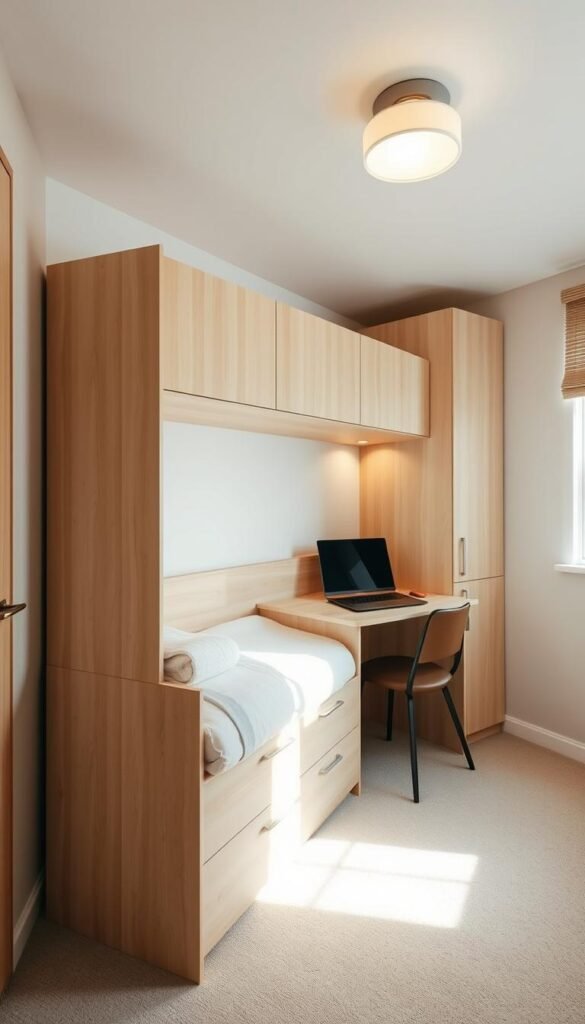
Smart furniture choices transform your compact sleeping area dramatically. These versatile items serve multiple purposes while saving precious square footage. You’ll create a more functional environment without sacrificing style.
Interior designer Downing offers crucial advice for limited spaces:
“Instead, focus on functionality: Fewer, high-quality, multifunctional pieces make the space work harder and feel less crowded.”
This approach maximizes every inch of your room. You eliminate clutter while maintaining all necessary functions. The result feels both spacious and intentionally designed.
Pieces That Pull Double Duty
Multipurpose furniture solves several problems at once. These innovative designs combine storage, seating, and surfaces seamlessly. They represent some of the smartest solutions for compact living.
Consider these versatile options for your space:
- Ottomans with hidden storage compartments
- Benches that open to reveal organization space
- Sofa beds providing daytime seating and nighttime sleeping
- Nesting tables that expand when needed
Higham emphasizes thoughtful selection:
“Think about the purpose of each piece of furniture, and, more importantly, aim for multifunctional furnishings.”
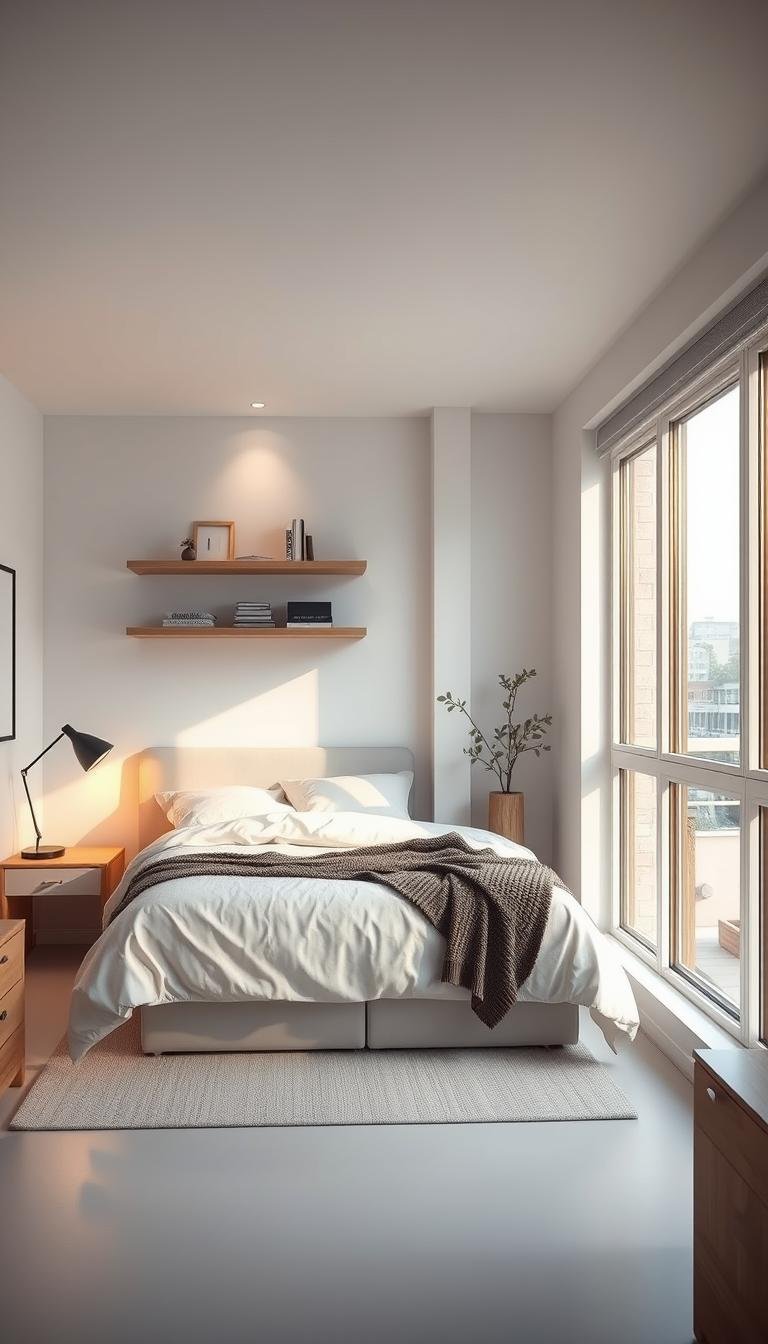
Wall-mounted options deserve special consideration. Floating shelves and sconces free up valuable floor area. Built-in cabinets provide storage without consuming walking space.
Desks as Nightstands and Dressers as Tables
Creative substitutions maximize functionality beautifully. A desk beside your bed replaces traditional nightstand furniture. This arrangement provides surface space while adding workspace functionality.
You maintain bedside convenience with added benefits. A table lamp offers perfect reading light. Your laptop finds a home right where you need it.
Dressers make excellent alternative tables too. Their flat tops accommodate lamps and personal items. You gain substantial storage beneath the surface.
These clever ideas demonstrate practical design thinking. They solve multiple challenges with single pieces. Your room maintains flow while gaining functionality.
| Multifunctional Piece | Primary Function | Secondary Benefits |
|---|---|---|
| Desk as nightstand | Bedside surface | Workstation, storage drawers |
| Dresser as table | Clothing storage | Surface area, display space |
| Storage ottoman | Seating | Hidden organization, footrest |
| Wall-mounted shelves | Display surface | Zero floor space, decorative |
Always prioritize quality over quantity when selecting pieces. Well-made furniture lasts longer and performs better. Your investment pays dividends in daily comfort and functionality.
Test each piece’s versatility before committing. Ensure it serves both intended purposes effectively. The right choices make your compact room feel spacious and well-organized.
5. Utilize Clever Under-Bed Storage Solutions
Don’t overlook the valuable real estate hiding under your sleeping surface. This often-wasted area can transform your organizational capabilities dramatically.
Interior designer Cristina Cleveland emphasizes this opportunity perfectly:
“Under-bed storage is such valuable real estate!”
Your bed naturally occupies the most floor space in your room. Using the area beneath it effectively doubles your storage capacity without consuming additional square footage.
Beds with Built-In Drawers
Integrated drawer systems offer the most seamless storage solution. These designs incorporate organization directly into your bed frame.
Built-in drawers provide several advantages. They maintain a clean aesthetic while offering concealed storage. You access everything without moving your bed or lifting heavy mattresses.
Always measure your clearance before selecting this option. Ensure you have enough room to open drawers completely. Consider what you’ll store and how frequently you’ll need access.
Excellent built-in options include:
- Room & Board Hudson Bed: Features four spacious drawers crafted from solid hardwood
- IKEA Malm Bed: Offers affordable solutions with either drawers or hinge-top storage
These pieces combine sleeping and storage in one elegant furniture solution. They maximize your available space beautifully.
Flexible and Affordable Under-Bed Bins
Freestanding storage containers offer incredible versatility. They work with any existing bed frame while providing customizable organization.
Plastic bins and drawers slide easily beneath most standard beds. They’re perfect for seasonal items or less-frequently used belongings.
Consider these factors when selecting containers:
- Choose low-profile designs that fit your clearance height
- Opt for clear bins to easily identify contents
- Select wheeled options for easier access
- Consider split-lid designs for convenient opening
Top recommendations include:
- Iris Under Bed Drawer from The Container Store: Plastic drawer units that roll smoothly
- IKEA Sockerbit bin: Features split-lid design for easy access to stored items
These solutions work particularly well for storing bedding, off-season clothing, or extra linens. They keep things organized while remaining easily accessible when needed.
Remember to measure both your under-bed space and the items you plan to store. This ensures everything fits properly and remains functional for daily use.
6. Maximize Every Inch of Vertical Space
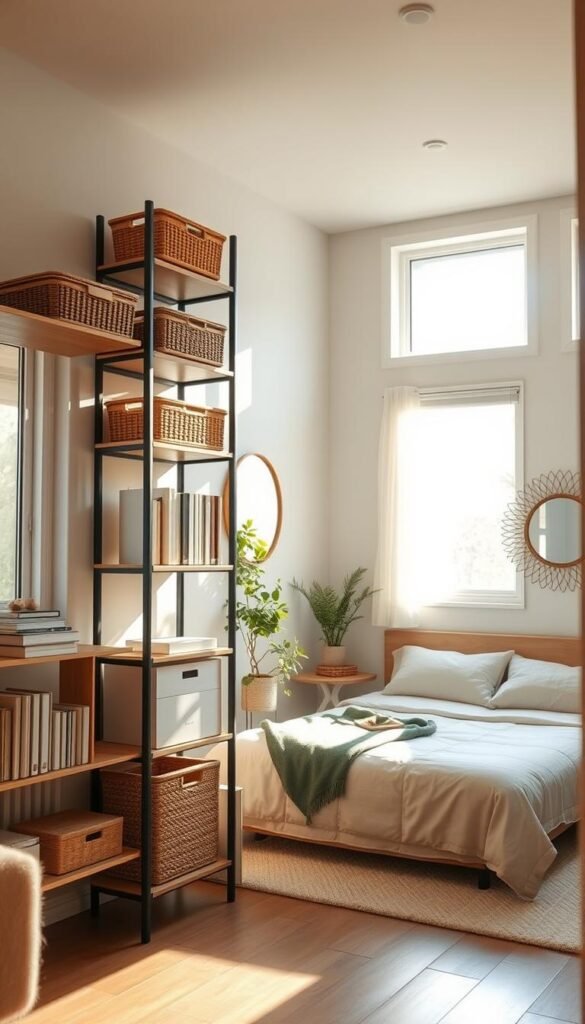
Your walls offer incredible potential for organization and style. Going upward transforms how you use your limited square footage.
Vertical solutions keep your floor area open and accessible. They create visual interest while providing practical benefits.
Installing Floating Shelves and Wall-Mounted Tables
Floating designs create a streamlined look while saving precious floor area. These installations appear to hover weightlessly against your wall surface.
Designer Maggio recommends these space-saving solutions:
“Floating shelves or full-height furniture can increase storage and surface area when designing a small bedroom.”
Wall-mounted tables serve multiple functions beautifully. They provide surface space without consuming walking room. Fold-down options offer flexibility when needed.
Consider these floating solutions:
- Shelves for books and decorative items
- Nightstands that mount directly to the wall
- Desk surfaces that fold away when not in use
- Display ledges for artwork and personal mementos
Using Tall Bookshelves and Full-Height Furniture
Tall pieces draw the eye upward, creating height illusion. They maximize storage capacity within a small footprint.
Higham offers thoughtful advice about displayed items:
“Incorporating some bookshelves horizontally is a great way to sneak in some more storage—just remember that these items will be on display. I would be thoughtful about what you put in them.”
Full-height furniture reaches from floor to ceiling. This approach utilizes every available inch. It creates a custom-built appearance.
Store frequently used items at lower levels. This ensures easy access and daily convenience. Reserve higher shelves for decorative pieces or seasonal items.
Excellent vertical storage ideas include:
- Floor-to-ceiling bookcases
- Wall sconces for bedside lighting
- Built-in shelving above desks
- Tall dressers with multiple drawers
These solutions keep your floor plan open and functional. They add character while serving practical purposes.
7. Implement Smart Lighting Strategies
Lighting transforms how you experience your compact sleeping area. It affects both functionality and atmosphere in powerful ways. Thoughtful illumination makes your space feel larger and more inviting.
Good lighting design creates visual depth and dimension. It highlights your best features while minimizing limitations. You’ll enjoy both practical benefits and beautiful ambiance.
Ditching Oppressive Overhead Lights for Lamps and Sconces
Single overhead fixtures often create harsh shadows and glare. They make ceilings feel lower and rooms appear smaller. This approach lacks flexibility for different activities and moods.
Designer Maggio explains the problem clearly:
“A single overhead light can make a small space feel oppressive. It’s important to have additional ambient lighting.”
Wall sconces free up valuable surface area on dressers or nightstands. They provide focused illumination without consuming precious real estate. These fixtures add architectural interest to your walls.
Table lamps offer portable lighting solutions. You can move them to wherever light is needed most. They create pools of warm light that make your room feel cozy.
Placing Lights for Ambiance and Function
Layer different light sources throughout your room. Combine general, task, and accent lighting for best results. This approach gives you complete control over brightness and mood.
Position reading lights beside your bed or favorite chair. Ensure they illuminate your book without causing eye strain. Adjustable arms offer perfect directional control.
Consider these placement strategies:
- Floor lamps in corners to bounce light off walls
- Sconces on either side of your bed instead of nightstand lamps
- Under-cabinet lighting for closet areas
- String lights for soft, decorative ambiance
Maximize natural light through your window treatments. Choose light, airy fabrics that diffuse sunlight beautifully. Sheer curtains maintain privacy while welcoming daylight.
Task lighting serves specific activities like reading or dressing. Place these fixtures where you actually perform the tasks. Proper positioning prevents shadows and improves functionality.
Ambient lighting creates overall illumination throughout your room. It establishes the general mood and atmosphere. Dimmer switches allow you to adjust brightness as needed.
Remember that light placement affects how your space feels. Well-placed fixtures make rooms appear larger and more open. They highlight architectural features and create visual interest.
8. Select Furniture with a Small Footprint
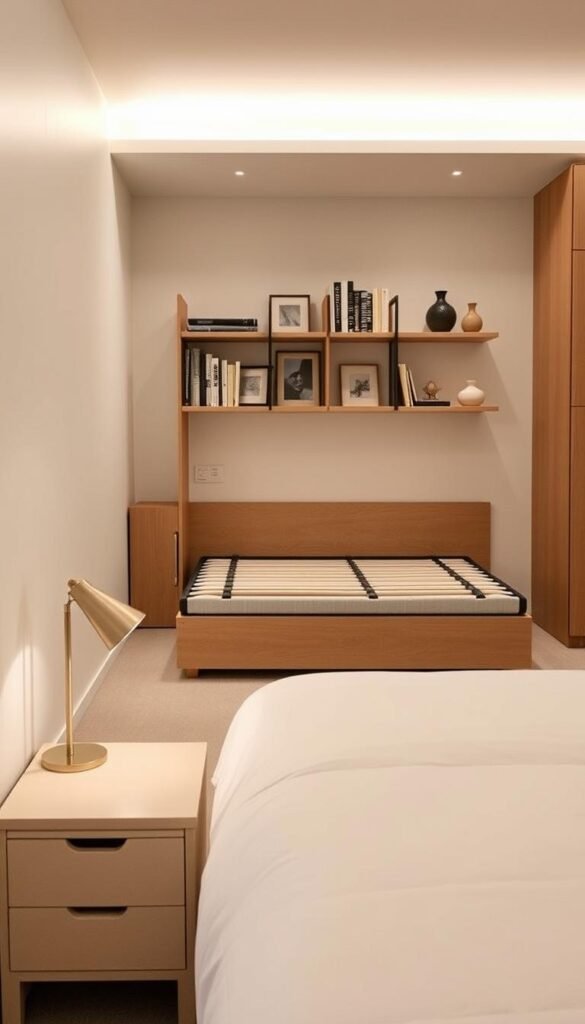
Finding the right furnishings makes all the difference in your cozy sleeping area. Pieces designed for limited square footage maximize function without sacrificing style.
You’ll discover how thoughtful selections create harmony throughout your layout. These choices ensure everything fits perfectly while maintaining beautiful aesthetics.
Looking for Pieces Designed for Small Spaces
Furniture with a small footprint refers to items designed specifically for limited areas. These pieces typically feature narrower widths, shallower depths, or clever multifunctional designs.
Interior designer Downing shares valuable insight about where to look:
“Midcentury furniture tends to be more minimal and smaller scale, so pieces from that era or inspired by the aesthetic often work well for small rooms.”
Many brands create furnishings specifically for compact living situations. You’ll find options that prioritize proportion and functionality. These designs help your room feel spacious and intentional.
Always measure your available space before shopping. Note ceiling heights, doorway widths, and existing furniture placements. This ensures everything fits comfortably without overcrowding.
The Benefits of Midcentury and “Teen” Furniture Lines
Midcentury designs offer clean lines and proportional scaling that work beautifully in limited areas. Their minimalist aesthetic reduces visual clutter while providing full functionality.
Press recommends exploring furniture lines created for younger users:
“Press recommends perusing lines made with a younger age range, like those for teenage bedrooms, in mind.”
Higham agrees with this approach, noting that vendors like Urban Outfitters often carry pieces sized for compact living. These collections understand space constraints while maintaining stylish appeal.
Specific expert recommendations include excellent options:
- Design Within Reach Corbel Shelf for floating storage solutions
- RH Teen Laguna 2-Drawer Nightstand offering substantial storage in minimal space
- Serena & Lily headboards that work with bed skirts when full frames won’t fit
- Room & Board Emerson bedside table available in multiple sizes including 19 inches
These pieces demonstrate how smaller-scale furnishings maximize your available area. They provide full functionality without overwhelming your room visually.
| Furniture Type | Space-Saving Feature | Recommended Product |
|---|---|---|
| Nightstands | Narrow width, integrated storage | RH Teen Laguna 2-Drawer Nightstand |
| Shelving | Wall-mounted, minimal depth | Design Within Reach Corbel Shelf |
| Bed Solutions | Headboard-only options | Serena & Lily headboard collection |
| Bedside Tables | Multiple size options | Room & Board Emerson table |
Mixing different furniture styles creates visual interest while maintaining cohesion. Stick to a consistent color palette or material family. This approach ensures everything feels intentional rather than random.
Small-footprint pieces contribute significantly to better space utilization. They leave room for movement and create breathing space between items. Your room feels organized and thoughtfully arranged.
Aesthetic considerations remain important when choosing smaller-scale furnishings. Look for quality materials and craftsmanship that elevate the pieces. Well-designed items make your space feel curated rather than cramped.
Remember that proportion matters more than actual dimensions. A properly scaled piece creates visual balance throughout your room. Everything works together harmoniously for both function and beauty.
9. Use Mirrors to Create the Illusion of Space
Mirrors work magic in compact sleeping areas. They visually expand your room while adding light and depth. This simple trick makes your space feel twice as large.
Reflective surfaces bounce light around your room. They create brightness where shadows might dominate. Your space feels more open and inviting instantly.
Strategic Placement for Maximum Impact
Position mirrors opposite windows whenever possible. This captures natural light and spreads it throughout your room. The effect brightens dark corners beautifully.
Consider these smart placement strategies:
- Hang a large mirror directly across from your window
- Place mirrors to reflect attractive views or artwork
- Position them at eye level for the most natural effect
- Angle mirrors slightly to bounce light toward the ceiling
Avoid placing mirrors where they’ll reflect clutter or unattractive areas. They should showcase your room’s best features. This approach enhances your overall design.
Mirrors work wonderfully with artificial lighting too. Position them near lamps or sconces to amplify their effect. You’ll need fewer light sources while achieving better illumination.
Choosing Mirrors as Decorative Statements
Your mirror selection contributes significantly to your room’s style. The right choice becomes both functional and decorative. It adds personality while serving practical purposes.
Consider these popular mirror types:
- Floor-length mirrors: Create height illusion and serve dressing needs
- Gallery wall arrangements: Multiple small mirrors create artistic interest
- Ornate frames: Add decorative detail without consuming floor space
- Leaner mirrors: Offer flexibility and easy repositioning
Large mirrors make the most dramatic impact in small rooms. They reflect more light and create greater depth perception. A single substantial piece often works better than several small ones.
Mirror placement mistakes include hanging them too high or too low. Ensure they reflect at eye level for natural viewing. Avoid placing them where they’ll create confusing reflections or glare.
Creative ideas include using mirrored furniture or accessories. A mirrored nightstand or dresser top adds sparkle while maintaining function. These touches contribute to the spacious feeling without overwhelming your design.
Remember that mirrors interact with every other element in your room. They amplify colors, textures, and lighting effects. Choose styles that complement your overall decor theme.
10. Keep Your Surfaces and Floor Clear of Clutter
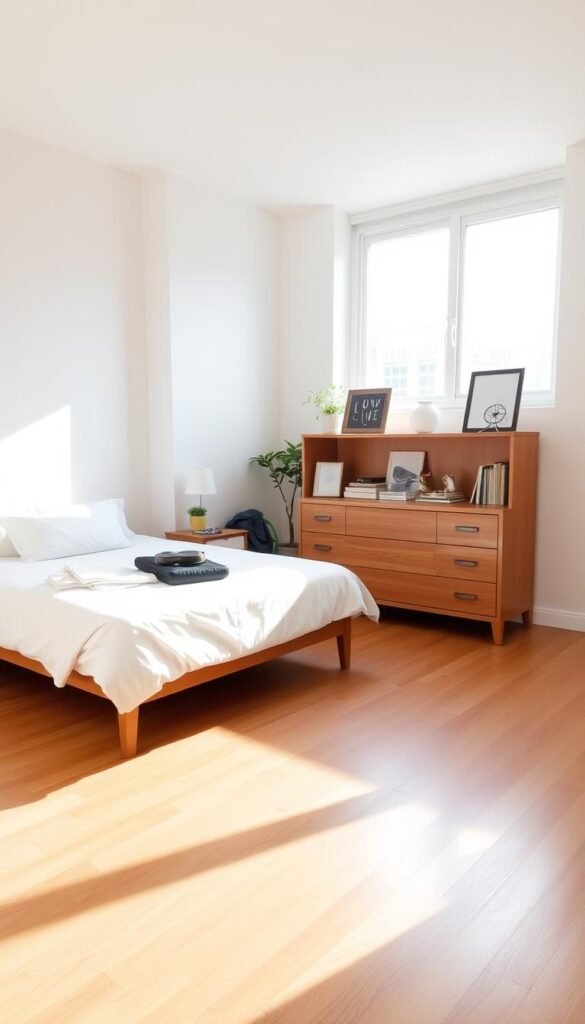
A tidy environment transforms how your room feels and functions. Clutter makes spaces appear smaller and more chaotic. Clearing surfaces creates visual breathing room that enhances your design.
Every item left out contributes to visual noise. Too many objects overwhelm the eye and shrink perceived space. Keeping things put away maintains an open, airy atmosphere.
The “Less is More” Decor Philosophy
Minimalist decor focuses on quality over quantity. This approach values empty space as much as filled areas. Your room gains sophistication through thoughtful restraint.
Consider each piece you add to your space carefully. Ensure it serves the mood you’re trying to create. This intentional editing process results in a cohesive, calming environment.
The benefits of this philosophy include:
- Enhanced visual spaciousness and airiness
- Reduced cleaning and maintenance time
- Increased focus on your favorite items
- Improved mental clarity and relaxation
Minimalism doesn’t mean sterile or impersonal. It means choosing pieces that truly matter to you. Your personality shines through more clearly when not hidden by clutter.
Every Item Must Have a Purpose or Spark Joy
This simple rule helps you make decisions about what to keep. Functional items deserve their space because they serve daily needs. Decorative pieces should genuinely delight you to earn their spot.
Practical tips for maintaining clear surfaces:
- Implement a “one in, one out” rule for new acquisitions
- Use attractive storage solutions that complement your decor
- Designate specific homes for frequently used items
- Schedule regular editing sessions to reassess possessions
Organizational strategies keep things out of sight but accessible. Closed storage hides necessities while maintaining clean lines. Baskets, boxes, and drawers contain essentials beautifully.
Editing possessions becomes especially important in limited areas. Each item should justify the space it occupies. This mindful approach creates room for both function and beauty.
Psychological benefits include reduced stress and improved sleep quality. A clutter-free environment promotes mental calmness. Your bedroom becomes a true sanctuary for relaxation.
Balance minimalism with personal style through curated displays. A single meaningful artwork makes more impact than several random pieces. Your favorite books or mementos deserve focused attention rather than crowded arrangements.
11. Incorporate Textures for Warmth and Interest
Texture transforms your sleeping space from flat to fascinating. It adds personality without consuming valuable square footage. You create a welcoming atmosphere that feels both cozy and sophisticated.
Layering different materials creates visual depth and tactile appeal. Your room gains character through thoughtful combinations. This approach makes your design feel complete and intentional.
Using Throws, Pillows, and Rugs to Add Depth
Soft furnishings introduce texture in flexible, removable ways. They allow you to experiment with different looks seasonally. These elements contribute warmth without permanent changes.
Consider this real project example for inspiration:
Much of the interest was added with pillows, utilizing tufted silk shams for a note of sheen and a Mongolian lamb throw pillow for a cozy luxe feel. The French lilac print on the boudoir pillow hides a lavender filled interior that fills the room with a delightful scent. The faux fur skin print throw at the foot of the bed adds another hint of warmth, while the neutral print rug adds sophistication and comfort.
Throws serve multiple purposes beautifully. They provide physical warmth on cooler evenings. Their texture adds visual interest when draped across your bed or chair.
Pillows offer the easiest texture update. Mix different fabrics and patterns for dimensional appeal. Varying sizes create a curated, collected look.
Area rugs anchor your space while adding comfort underfoot. They define sleeping areas in open layouts. Choose low-pile options for easier cleaning in compact rooms.
Mixing Materials Without Adding Visual Weight
Successful texture combinations maintain visual lightness. They enhance rather than overwhelm your limited space. The key lies in balanced proportion and thoughtful selection.
Follow these strategies for harmonious mixing:
- Combine smooth and rough textures for contrast
- Use similar color tones across different materials
- Limit pattern variations to maintain cohesion
- Introduce metallic accents for subtle reflection
Texture affects light perception significantly. Matte surfaces absorb light for a cozy feel. Glossy or sheer materials reflect illumination for brightness.
Seasonal changes keep your room feeling fresh. Lightweight linens work well for summer months. Heavier wools and knits create winter warmth.
Balance texture with minimalism through careful editing. Choose a few high-impact textural elements. Let them stand out against simpler backgrounds.
| Texture Type | Best Application | Visual Effect |
|---|---|---|
| Plush fabrics | Throw pillows, blankets | Adds coziness, tactile appeal |
| Natural fibers | Jute rugs, linen curtains | Brings organic warmth, texture |
| Metallic accents | Lamp bases, decorative objects | Reflects light, adds sophistication |
| Patterned textiles | Accent pillows, area rugs | Creates visual interest, depth |
Your textural choices should complement your color scheme. They work together to create a cohesive design story. The result feels both intentional and inviting.
Remember that texture contributes to your room’s overall mood. It makes spaces feel lived-in and personal. Your bedroom becomes a true sanctuary through thoughtful layering.
12. Get Creative with Your Clothing Storage
Limited square footage demands clever thinking about where to keep your wardrobe. This challenge becomes particularly important when traditional storage isn’t available.
Your clothing organization needs both functionality and style. Creative approaches turn necessities into decorative elements. You’ll maintain accessibility while maximizing your available area.
Solutions for Bedrooms Without a Closet
Many compact living situations lack built-in storage areas. This requires alternative approaches to clothing organization. You’ll need to prioritize either a dresser or clothing rack based on your specific needs.
Freestanding clothing racks offer excellent visibility and accessibility. They keep your favorite pieces within easy reach. These units work beautifully as room dividers in studio layouts.
Consider these innovative options:
- Ladder-style racks that lean against your wall
- Mobile garment racks with locking wheels
- Wall-mounted hanging systems with adjustable bars
- Over-the-door organizers for accessories and smaller items
Vertical solutions maximize your wall space effectively. Tall armoires provide substantial storage in minimal floor area. They often feature mirrors that enhance functionality.
Hidden storage keeps your room looking tidy. Trunks and storage benches serve as seating while concealing clothing. These pieces add character while solving practical problems.
Turning a Jewelry Rack into Wall Art
Your accessories deserve both organization and display space. Given space limitations, walls become valuable real estate for dual-purpose solutions. Instead of extra wall decorations, functional pieces become visual focal points.
Jewelry organization transforms into decorative art when approached creatively. Wall-mounted displays keep pieces untangled and accessible. They add personality while serving practical needs.
Designer Cristina Cleveland emphasizes this approach:
“Given the space limitations, the walls needed to be used, as well, so instead of extra wall art, the jewelry rack becomes a visual focus.”
Consider these artistic storage ideas:
- Decorative hooks arranged in pleasing patterns
- Framed mesh screens for hanging earrings
- Branch-style displays for necklaces and bracelets
- Shadow boxes with compartments for different pieces
These solutions keep your valuables organized and visible. They eliminate digging through tangled jewelry boxes. Your favorite accessories become part of your room’s decor.
| Storage Solution | Space Required | Best For |
|---|---|---|
| Freestanding clothing rack | Minimal floor space | Frequently worn items, seasonal rotation |
| Vertical dresser | Small footprint | Folded clothing, accessories |
| Wall-mounted jewelry display | Zero floor space | Accessories, decorative function |
| Under-bed storage containers | Hidden space utilization | Off-season clothing, special occasion items |
Prioritize accessibility for items you use daily. Store less frequently used pieces in harder-to-reach areas. This system maintains convenience while maximizing your storage capacity.
Remember that clothing storage should reflect your personal style. Choose solutions that complement your overall design aesthetic. Your organization system becomes an integrated part of your room’s character.
13. The Best Modern Apartment Bedroom Ideas for Small Spaces
Creating your perfect sleeping area requires thoughtful planning and intentional choices. Every decision contributes to the overall feeling of your personal retreat.
Your design should reflect your personality while maximizing functionality. This balance creates a space that feels both comfortable and efficient.
Curating a Cohesive and Intentional Mood
Every piece in your room should support the atmosphere you want to create. Consider the emotional impact of colors, textures, and furniture selections.
If you desire a relaxing environment, choose naturally toned paints over bright colors. Soothing hues promote calmness and restful sleep.
For a unique look, explore secondhand furniture instead of mass-produced options. Vintage pieces add character and tell a story.
Interior designer Emma Richardson emphasizes intentionality:
“Each element must contribute to your desired atmosphere. Edit ruthlessly and choose pieces that align with your vision.”
Maintain consistency through your color palette and material choices. This creates visual harmony throughout your limited area.
Your lighting choices significantly impact mood. Warm, dimmable lights create cozy evenings. Bright task lighting supports reading activities.
Making Compromises for a Shared Space
Designing for two people requires open communication and flexibility. Each person brings different needs and preferences to the room.
Begin by discussing your individual priorities for the space. Identify must-have features versus nice-to-have elements.
Create a shared vision that incorporates both personalities. This might mean blending color preferences or combining decor styles.
Practical compromises often involve storage solutions and furniture arrangements. You might need to prioritize functionality over aesthetic preferences.
Consider these strategies for harmonious shared design:
- Use neutral foundations that both partners enjoy
- Incorporate personal touches through accessories and artwork
- Create designated areas for individual storage needs
- Choose furniture that serves both people comfortably
Successful shared spaces balance individuality with togetherness. They feel personal yet welcoming to both occupants.
| Design Challenge | Compromise Solution | Benefits |
|---|---|---|
| Different color preferences | Neutral walls with colorful accents | Both personalities represented, cohesive look |
| Limited storage space | Dual-purpose furniture with divided sections | Individual organization, shared functionality |
| Varied lighting needs | Dimmable fixtures with individual controls | Customizable ambiance, energy efficiency |
| Space constraints | Modular furniture that adapts to different uses | Flexibility, efficient use of square footage |
Remember that compromise doesn’t mean sacrificing style. It means creating a space that works beautifully for everyone involved.
Your shared bedroom becomes a true sanctuary through thoughtful collaboration. The result reflects both personalities while maintaining functional excellence.
14. Anchor the Room with a Large Area Rug
Your floor covering choice makes a significant impact on your compact sleeping environment. A well-chosen rug creates visual harmony while adding comfort underfoot.
Many people select floor coverings that are too small for their area. This common mistake makes the layout feel disjointed rather than cohesive.
Instead, choose a substantial rug that anchors your furniture arrangement. This approach unifies your entire design scheme beautifully.
How a Big Rug Unifies the Space
A generously sized floor covering creates visual continuity throughout your area. It ties furniture pieces together into a harmonious arrangement.
Your rug should extend beyond your bed on all sides. Ideally, leave 18-24 inches of visible floor covering around your sleeping area.
This technique makes your entire layout feel intentional and well-planned. It defines the sleeping zone while maintaining open flow.
Consider these sizing guidelines for different bed configurations:
- Queen bed: 8×10 foot rug minimum
- Full bed: 6×9 foot rug works well
- Twin bed: 5×8 foot rug provides good coverage
Always measure your area before purchasing. Ensure the rug fits comfortably with your furniture arrangement.
Choosing Patterns and Colors That Expand the Room
Your rug’s visual characteristics affect spatial perception dramatically. Light colors and subtle patterns create an airy, open feeling.
Soft neutrals reflect light beautifully while maintaining a calm atmosphere. They make your floor area appear more extensive.
Consider these pattern strategies for different effects:
- Vertical stripes create height illusion
- Small-scale patterns maintain visual lightness
- Tone-on-tone designs add interest without overwhelming
- Geometric patterns in muted colors define areas subtly
Dark rugs can work when balanced with light walls and furniture. They add depth and sophistication to your decor scheme.
Your floor covering contributes significantly to thermal comfort and sound absorption. It creates a cozy atmosphere while reducing noise transmission.
Remember that your rug interacts with all other elements in your space. Choose colors that complement your overall color palette for a cohesive look.
15. Where to Shop for Small-Space Furniture
Finding the right pieces for your compact sleeping area becomes easier when you know where to look. Many retailers specialize in furniture designed specifically for limited square footage. You’ll discover options that maximize function without sacrificing style.
Quality matters when selecting furnishings for your personal retreat. Well-made pieces last longer and perform better in daily use. Your investment pays off through years of comfortable living.
Brands and Retailers Known for Scale-Appropriate Pieces
Several companies understand the unique needs of compact living situations. They create furnishings that prioritize proportion and functionality. These brands offer solutions that work beautifully in limited areas.
Design Within Reach provides modern pieces with clean lines. Their Corbel Shelf offers floating storage that saves valuable floor space. This approach maintains openness while providing display areas.
Urban Outfitters carries furniture sized for younger demographics. These collections work perfectly in compact rooms. They combine style with space-conscious dimensions.
RH Teen offers sophisticated options for limited areas. Their Laguna 2-Drawer Nightstand provides substantial storage in minimal space. The design feels both functional and elegant.
Serena & Lily creates headboards that work with bed skirts. This solution helps when full frames won’t fit your layout. You maintain style without compromising space.
Room & Board delivers quality craftsmanship in multiple sizes. Their Emerson bedside table comes in 19-inch widths. This flexibility ensures perfect proportion for your room.
West Elm’s Myla Pop-Up Storage Bed combines sleeping and organization. It features integrated drawers that maximize under-bed space. This multifunctional approach solves two needs at once.
Specific Product Recommendations for Key Items
Certain pieces stand out for their exceptional design and functionality. These recommendations come from interior design professionals. They’ve proven successful in real-world applications.
For under-bed storage, consider Room & Board’s Hudson Bed. It features four spacious drawers crafted from solid hardwood. The integrated system maintains a clean aesthetic.
IKEA’s Malm Bed offers affordable solutions with drawer or hinge-top options. This versatile piece works within various budgets and space constraints. It provides excellent value for money.
The Container Store’s Iris Under Bed Drawer units roll smoothly on wheels. They make accessing stored items simple and convenient. These containers work with any existing bed frame.
IKEA’s Sockerbit bin features a split-lid design for easy access. It’s perfect for storing seasonal clothing or extra linens. The clear plastic lets you see contents at a glance.
For clothing organization without a closet, consider The Container Store’s Boot Box. This versatile storage solution works for various items beyond footwear. It keeps things organized and accessible.
| Retailer | Recommended Product | Key Feature | Price Range |
|---|---|---|---|
| Design Within Reach | Corbel Shelf | Wall-mounted, saves floor space | $$$ |
| RH Teen | Laguna 2-Drawer Nightstand | Compact size, substantial storage | $$ |
| Room & Board | Emerson Bedside Table | Multiple size options available | $$ |
| West Elm | Myla Pop-Up Storage Bed | Integrated drawers, space-saving | $$$ |
| IKEA | Malm Bed | Affordable, multiple configurations |
Always measure your space before purchasing any furniture. Verify dimensions against your room’s actual measurements. This prevents costly mistakes and ensures proper fit.
Consider both online and in-store shopping options. Online retailers offer convenience and broader selection. Physical stores let you examine quality and scale firsthand.
Check return policies before making significant purchases. Ensure you can exchange or return items that don’t work in your space. Good customer service makes the process smoother.
Mixing pieces from different sources creates visual interest. Maintain cohesion through consistent color palettes or material choices. This approach results in a personalized, harmonious look.
Customization options might be available for certain pieces. Some retailers offer modified dimensions or finishes. This ensures perfect proportion for your specific layout.
Remember that quality furniture represents a long-term investment. Well-crafted pieces withstand daily use while maintaining their appearance. They contribute significantly to your room’s overall comfort and functionality.
16. Bringing Your Dream Small Bedroom to Life
Creating a cozy and functional room is within your reach. With smart planning and creative solutions, even the most compact area can become your favorite spot in the home.
Remember to focus on key elements like multifunctional furniture and clever storage. These choices help maximize every inch of your space. Patience during the process allows for adjustments that perfect your layout.
Consider starting with one change at a time. Prioritize improvements that offer the most impact. For complex projects, professional guidance can provide valuable insights.
Embrace the unique opportunities that come with designing a smaller room. Your personalized retreat awaits—begin your transformation today!