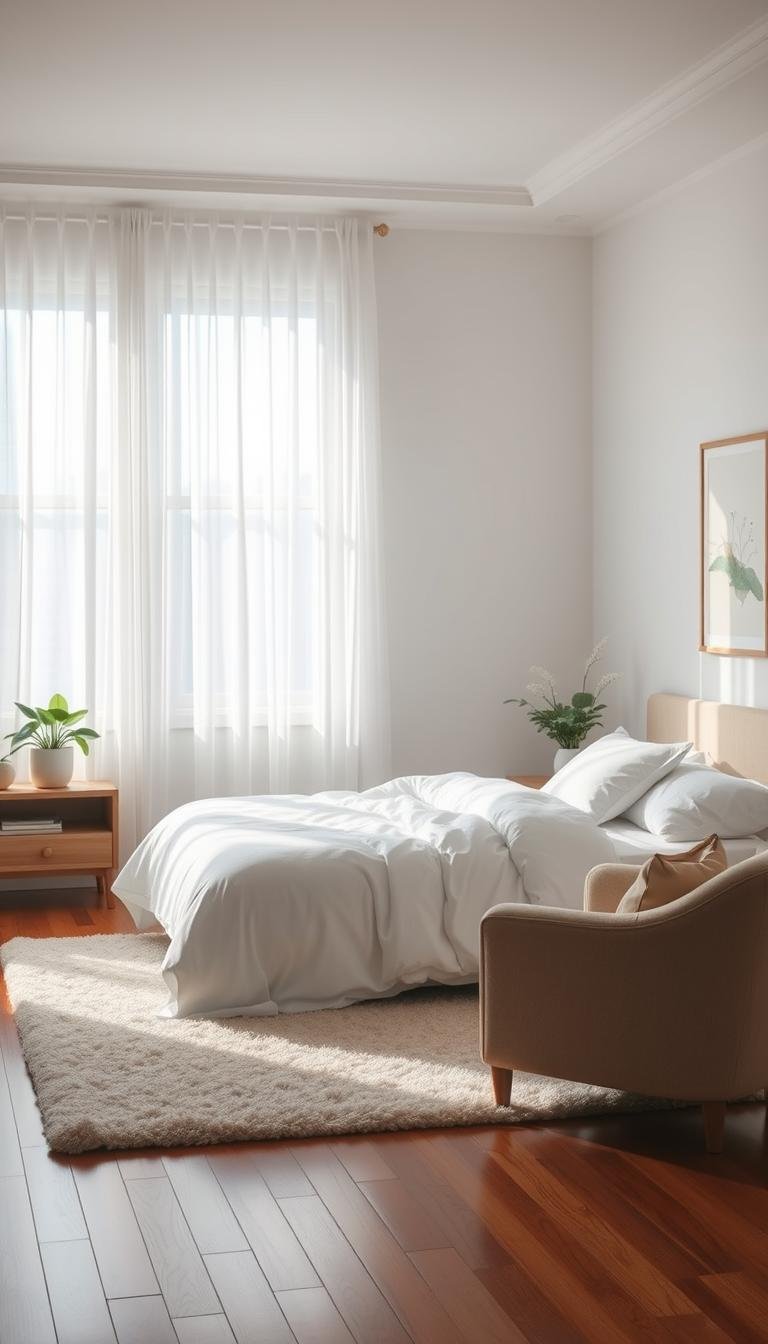
Your personal bedroom should be more than just a place to sleep. It can become your ultimate sanctuary for relaxation and peace.
A well-designed room offers a retreat from daily stress. It supports your overall well-being and helps you recharge.
Intentional design choices make a huge difference. From color schemes to furniture layout, every element creates a serene space.
This guide provides practical ideas to transform your bedrooms. You’ll discover how small changes create a cozy atmosphere.
We’ll cover everything from decluttering to long-term maintenance. You can achieve a restful environment tailored to your needs.
Your home deserves this special attention. Prioritize self-care by crafting a peaceful interior that looks and feels just right.
Why Your Primary Bedroom Deserves to Be a Sanctuary
Your main sleeping area should be more than just a place to lay your head. It deserves recognition as your personal haven for peace and rejuvenation.
Real estate professionals now widely use the term “primary bedroom” instead of outdated labels. This change promotes inclusivity and better reflects the room’s true purpose as your private retreat.
The Impact of Your Sleep Environment on Well-being
Research shows that optimized sleeping areas significantly improve rest quality. The Sleep Foundation confirms that temperature, noise control, and comfort directly affect your health.
People sleep better when their room supports their needs. This leads to improved daytime energy and mental clarity.
Consider these critical factors for your sleeping space:
| Element | Impact | Improvement Tip |
|---|---|---|
| Noise Levels | Reduces sleep interruptions | Use sound-absorbing materials |
| Light Control | Enhances melatonin production | Install blackout curtains |
| Comfort | Decreases physical stress | Choose supportive bedding |
| Temperature | Maintains optimal sleep cycles | Keep room between 60-67°F |
Reclaiming Your Space for Relaxation, Not Stress
Your sleeping area should serve as a refuge from daily pressures. Remove work-related items and household chores from this space.
Small changes create immediate peace. A cluttered room increases anxiety, while a thoughtful design promotes harmony.
You spend nearly half your life in bed. Make this area feel like a warm hug that reflects your inner calm.
Everyone deserves a personal refuge tailored to their comfort. This isn’t just about aesthetics—it’s a health necessity that reduces mental overload.
Prioritize this room for unwinding and rejuvenation. Your well-being depends on having a dedicated space for true relaxation.
Start Your Transformation: The Power of Decluttering
Your journey to a peaceful retreat begins with clearing the chaos. Visual clutter creates mental noise that disrupts your ability to unwind completely.
This process doesn’t require massive effort. Small, consistent actions create lasting change in your personal environment.
How Clutter Affects Your Mental Peace
Piles of laundry and scattered trinkets do more than create visual mess. They contribute to cognitive overload that keeps your mind racing.
Research shows that cluttered environments increase stress hormones. This makes relaxation and sleep more difficult to achieve.
As one expert notes:
“Removing anything that does not support the purpose of the bedroom allows the mind and heart to find profound peace.”
Your brain processes everything in your line of sight. Constant visual reminders of unfinished tasks create underlying anxiety.
Simple Steps to Achieve a Cozy Minimalist Bedroom
Begin with one small area to avoid feeling overwhelmed. Your nightstand or closet makes a perfect starting point.
Sort through your items using these three simple categories:
| Category | Action | Result |
|---|---|---|
| Keep | Organize into storage solutions | Reduced visual noise |
| Donate | Give usable items to charity | Clear conscience and space |
| Discard | Remove trash and broken pieces | Immediate visual improvement |
Make your bed every morning. This simple habit sets a tidy tone for the entire room and makes it feel more organized.
Clear all flat surfaces completely. Dressers, nightstands, and floors should remain free of clutter for a serene look.
Organize essentials into drawers and bins. Books, glasses, and jewelry deserve proper storage rather than sitting out.
Consider removing about one-third of your belongings. This creates incredible lightness and freedom in your personal space.
For more detailed ideas on creating your perfect retreat, explore this guide to bedroom serenity.
Decluttering becomes easier with practice. Maintain your peaceful area by addressing new items immediately.
Your efforts will reward you every night with better sleep and a renewed sense of control over your environment.
Set the Mood with a Soothing Color Palette
Your personal retreat deserves thoughtful color choices that support relaxation. The right palette transforms your room into a true sanctuary.
Colors affect your mood more than you might realize. They create an atmosphere that either calms or stimulates your nervous system.
Calming Hues: Blues, Greens, and Soft Neutrals
Science shows certain shades promote better rest. Blue tones lower blood pressure and encourage peaceful reflection.
Green creates harmony and balance in your personal space. It connects you to nature’s calming energy.
Consider these restful options for your walls and decor:
| Color Family | Psychological Effect | Implementation Ideas |
|---|---|---|
| Soft Blues | Lowers heart rate, promotes calm | Wall paint, bedding, accent pieces |
| Muted Greens | Creates balance, reduces anxiety | Curtains, plants, decorative accessories |
| Warm Neutrals | Provides comfort, feels welcoming | Flooring, furniture, textured elements |
| Subtle Grays | Offers sophistication, promotes rest | Wall color, rug selection, artwork frames |
Test paint samples near your window at different times. Natural light changes how colors feel throughout the day.
For specific shade recommendations, explore this guide to soothing bedroom paint colors.
Colors to Avoid for a Truly Restful Atmosphere
Some hues work against your relaxation goals. Bright red, orange, and yellow stimulate energy rather than calm.
These energetic colors can actually disrupt sleep patterns. They keep your mind active when you need to unwind.
High-contrast combinations create visual tension. Stick to muted tones that blend harmoniously.
If you love vibrant style, add small accents instead. Pale pink or lavender pillows provide subtle personality.
Your final design should reflect your taste while prioritizing peace. The right palette makes your home feel like a warm embrace.
Master the Art of Relaxing Bedroom Lighting
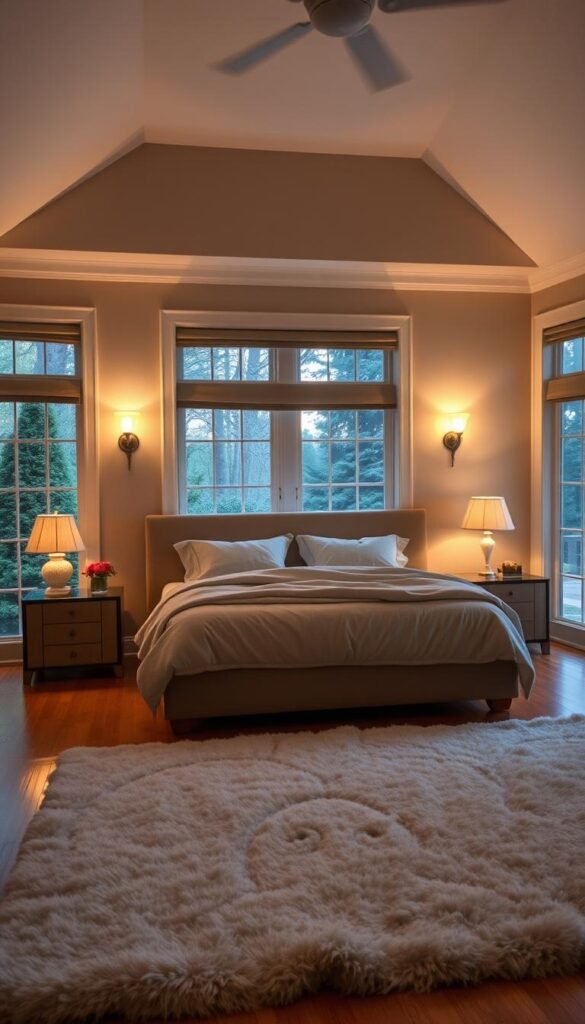
Your lighting choices dramatically impact your sleep quality and daily mood. The right approach creates harmony between your body’s natural rhythms and your environment.
Think of lighting as your personal sunrise and sunset controller. Proper illumination transforms your personal retreat into a true sanctuary.
Embrace Natural Light During the Day
Morning sunlight regulates your circadian rhythm naturally. It signals your brain to wake up and boosts serotonin levels for better mood.
Open your curtains wide during daylight hours. Position your bed to benefit from morning rays without glare.
Consider these daylight optimization strategies:
| Strategy | Benefit | Implementation |
|---|---|---|
| Window Treatment | Softens harsh sunlight | Sheer or light-filtering curtains |
| Mirror Placement | Amplifies natural illumination | Position opposite windows |
| Furniture Arrangement | Maximizes light exposure | Keep large pieces away from windows |
| Glass Elements | Enhances light diffusion | Glass bedside tables or decor |
Choosing Warm, Dimmable Lights for Evening
Evening illumination should mimic sunset’s warm glow. Choose bulbs rated under 3000 Kelvin for amber-toned light that prepares you for rest.
Dimmer switches offer perfect control over your evening atmosphere. They let you gradually reduce brightness as bedtime approaches.
As lighting expert James Thurber noted:
“There are two kinds of light—the glow that illuminates, and the glare that obscures.”
Replace cool white bulbs with warm alternatives. This simple change makes your entire space feel more inviting.
Consider these evening lighting solutions:
- Install dimmer switches on overhead fixtures
- Choose LED bulbs with warm color temperature
- Use lamps with three-way brightness settings
- Select fixtures with amber or frosted glass shades
Creating Ambiance with Lamps and Fairy Lights
Layer different light sources for depth and flexibility. Combine overhead, task, and ambient lighting for the perfect cozy feel.
Salt lamps emit a soft pink-orange glow that many find soothing. Their subtle light creates peaceful shadows without harshness.
Fairy lights add magical twinkle to any corner. Drape them around headboards or inside glass containers for gentle illumination.
Bamboo lanterns offer organic texture and diffused light. They bring natural elements into your lighting design.
Remember to eliminate blue light from electronics before bed. Keep screens out of your sleeping area for uninterrupted rest.
Blackout curtains block external light pollution when needed. They ensure complete darkness for those sensitive to streetlights or early sunrise.
Experiment with different combinations until you find what makes your space feel truly yours. Your perfect lighting setup awaits discovery.
Soundproof Your Space for Ultimate Peace and Quiet
Unwanted noise can ruin your rest. Traffic, neighbors, or household appliances create constant disruptions.
Your personal area deserves complete privacy from outside disturbances. Soundproofing creates that quiet atmosphere you crave.
Simple changes make a huge difference. You don’t need professional help to enjoy better acoustics.
Let’s explore practical ways to transform your room into a true auditory sanctuary.
Inexpensive DIY Solutions for Noise Reduction
Start by identifying your main noise sources. Street sounds often enter through window gaps.
Apply noiseproofing sealant around frames. This seals tiny openings that let sound through.
Insulation tape works wonders on doors. It reduces gaps where noise sneaks into your space.
Consider these affordable solutions for common problems:
| Noise Source | DIY Solution | Expected Result |
|---|---|---|
| Street Traffic | Soundproof curtains | Reduced exterior noise by 40% |
| Floor Echoes | Area rugs with soundproof pads | Softer footsteps and vibrations |
| Thin Walls | Sound-reducing wallpaper | Better sound absorption |
| Appliance Hum | Upholstered furniture placement | Natural sound barrier creation |
Soundproofing paint adds an extra layer of protection. It contains sound-absorbing compounds that dampen vibrations.
Extra throw pillows and cozy chairs serve dual purposes. They add comfort while absorbing echoes.
Area rugs with special padding make a noticeable difference. They reduce footstep sounds and floor-transmitted noise.
These improvements don’t require big investments. You can implement them gradually based on your budget.
Using White Noise Machines to Mask Disruptions
Sometimes blocking noise completely isn’t possible. Masking unwanted sounds provides an excellent alternative.
White noise machines create a consistent auditory environment. They cover up irregular disturbances that interrupt sleep.
As sleep expert Dr. Michael Breus explains:
“Consistent background sound helps the brain filter out sudden noise changes that normally trigger awakenings.”
Simple fans work wonderfully for this purpose. Their steady hum masks many common disruptions.
Consider these sound-masking options:
- Digital white noise machines with multiple sound options
- Air purifiers that provide both clean air and gentle noise
- Smart speakers playing nature sounds or pink noise
- Tabletop fountains creating soothing water sounds
Place your sound machine between you and the noise source. This positioning provides the most effective masking.
Experiment with volume levels until you find what works. The sound should cover disruptions without being distracting.
These solutions make your home feel more secluded. They create that sanctuary-like feel everyone deserves.
Remember to assess your specific noise issues first. Tailor your approach to your unique situation.
A quieter design supports deeper relaxation. Your peaceful oasis awaits with these simple additions.
The Foundation of Rest: Choosing the Right Mattress

Your mattress forms the core of your sleep experience. It supports your body through countless nights of rest and recovery.
Selecting the perfect mattress transforms your entire sleep quality. This choice impacts how you feel each morning and throughout your day.
Think of your mattress as the foundation of your personal retreat. The right one makes your bed feel like a cloud you sink into each evening.
This investment pays dividends in daily energy and long-term health. Your entire room benefits from this central piece of comfort.
Selecting Support Based on Your Sleep Position
Your preferred sleep position determines your ideal mattress type. Different sleeping styles require specific support features.
Back sleepers often benefit from memory foam or medium-firm options. These materials maintain spinal alignment throughout the night.
Side sleepers usually need softer surfaces for pressure relief. Softer mattresses cushion shoulders and hips comfortably.
Stomach sleepers generally require firm support for proper alignment. Firm mattresses keep your spine neutral and prevent arching.
Consider these recommendations for your sleep style:
| Sleep Position | Recommended Mattress Type | Key Benefits |
|---|---|---|
| Back Sleeper | Memory Foam or Medium-Firm | Spinal support, even weight distribution |
| Side Sleeper | Softer Mattress | Pressure relief for shoulders and hips |
| Stomach Sleeper | Firm Mattress | Spinal alignment, prevents back pain |
| Combination Sleeper | Hybrid or Latex | Balanced support for multiple positions |
Test mattresses in-store whenever possible. Lie down in your usual sleep positions for at least fifteen minutes.
Many companies offer generous trial periods. Take advantage of these to ensure your new mattress truly suits your needs.
Consider hybrid or latex options for added comfort. These materials often provide excellent support with responsive feel.
Knowing When It’s Time for a Replacement
Mattresses wear out gradually over time. Most need replacement after seven to ten years of use.
Visible sagging or indentations indicate declining support. These issues can cause morning aches and poor sleep quality.
If you wake up with stiffness or pain, consider your mattress age. Older mattresses lose their ability to properly support your body.
Noticeable noise from springs or foam breakdown signals replacement time. Your mattress should provide silent, consistent support.
Allergies might flare up from accumulated dust mites. Older mattresses can harbor allergens that affect your rest.
Upgrade your mattress if it no longer feels comfortable. Your sleep quality deserves the best possible foundation.
Pair your new mattress with supportive pillows and bedding. This combination creates the ultimate sleep environment for rejuvenation.
Investing in quality sleep products benefits your long-term well-being. Your daily energy and health reflect this important choice.
Arrange Your Furniture for Flow and Function
How you position your furniture transforms how your room functions. Smart placement creates harmony between movement and stillness.
Your personal area deserves thoughtful arrangement. Every piece should serve a purpose while maintaining visual balance.
Finding the “Goldilocks” Zone for Your Space
The perfect layout avoids both overcrowding and emptiness. This balanced approach makes your space feel just right.
Measure your room before making any addition. Planning prevents buying pieces that don’t fit properly.
Leave enough walking way around your bed. You should move freely without bumping into items.
Consider these layout principles:
| Room Size | Furniture Approach | Visual Result |
|---|---|---|
| Small Space | Multifunctional pieces | Open, uncluttered feel |
| Medium Space | Balanced arrangement | Cozy yet functional |
| Large Space | Defined zones | Purposeful areas |
Storage beds maximize smaller bedroom layouts. They provide hidden organization without extra furniture.
Your final design should support both rest and activity. A reading nook creates a lovely secondary area.
The Feng Shui of Bed Placement and Headboards
Position your bed so you can see the door comfortably. This ancient principle creates subconscious security.
Choose a sturdy headboard with soft or rounded edges. This style promotes peaceful energy in your sleeping space.
As feng shui expert Karen Kingston observes:
“The bed is the most important piece of furniture in your home for generating good energy flow.”
An overstuffed chair makes a wonderful addition when space allows. It provides a cozy spot for reading outside the bed.
Every piece should contribute to your overall calm. Your home becomes a true sanctuary through intentional arrangement.
Test different layouts until you find what feels right. Your perfect design awaits discovery through experimentation.
Incorporate Texture for a Cozy and Inviting Feel
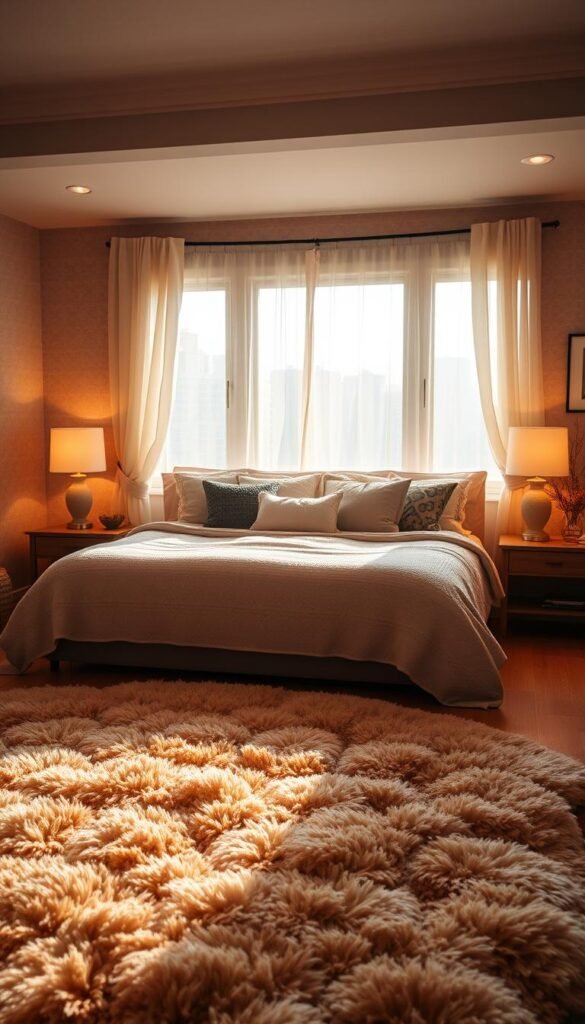
Texture transforms your room from ordinary to extraordinary. It adds depth and warmth that makes your space feel more personal and comforting.
The right tactile elements create a sensory experience. They make your area feel more nurturing and complete.
Layering different materials builds visual interest without clutter. This approach maintains a serene look while boosting comfort.
Your design benefits from thoughtful texture combinations. They make your home feel like a true retreat.
Layering Bedding, Rugs, and Throw Pillows
Start with a high-pile rug for softness underfoot. This addition provides immediate comfort when you step out of bed.
Layer your bedding with different fabrics. Combine crisp cotton sheets with a velvet quilt or faux fur throw.
Add plush pillows in various sizes and materials. Mix cashmere covers with linen cases for interesting contrast.
Consider these luxurious materials for your pieces:
| Material | Benefits | Best Use |
|---|---|---|
| Velvet | Rich appearance, soft feel | Throw blankets, accent pillows |
| Faux Fur | Ultra-soft texture, warm | Bedspreads, small rugs |
| Cashmere | Lightweight luxury, breathable | Premium pillow covers, throws |
| Quilted Cotton | Structured comfort, traditional | Bed coverings, decorative layers |
Weighted blankets offer anxiety-reducing pressure. They create a comforting hug-like sensation.
Silk pillowcases benefit skin and hair health. Their smooth surface reduces friction during sleep.
Mix patterns within a cohesive color palette. This maintains harmony while adding visual interest.
Choosing Seasonal Fabrics for Year-Round Comfort
Rotate your textiles with the changing seasons. This keeps your space feeling fresh and responsive.
Flannel sheets provide winter warmth and softness. Their brushed surface feels wonderfully cozy on cold nights.
Bamboo or cotton work best for summer months. These breathable materials keep you cool and comfortable.
Lightweight linen works beautifully during spring and fall. It offers texture without excessive warmth.
Consider these seasonal adjustments:
- Flannel or fleece for winter bedding
- Cotton or bamboo for summer comfort
- Light wool throws for transitional seasons
- Silk or satin for year-round luxury touches
Store off-season textiles in vacuum bags. This protects them while saving space.
Your layered approach allows easy temperature adjustment. Remove or add blankets as needed throughout the year.
These tactile elements contribute to a sensory-rich environment. They promote deeper relaxation and better rest.
Accessorize with Purpose for Style and Serenity
Every accessory in your personal area should serve your peace. Thoughtful pieces enhance your room’s atmosphere without creating visual noise.
Choose items that support relaxation and comfort. This approach maintains your space’s calm feel while adding personal style.
Your design benefits from carefully selected additions. They transform your home into a true sanctuary.
The Role of Plants and Natural Elements
Plants bring life and freshness into your space. They improve air quality while adding natural beauty.
Snake plants purify air efficiently. They release oxygen at night for better breathing during sleep.
Jasmine offers calming effects through its gentle fragrance. This plant promotes relaxation naturally.
Consider these beneficial plants for your room:
| Plant Type | Benefits | Care Level |
|---|---|---|
| Snake Plant | Air purification, oxygen production | Low maintenance |
| Lavender | Calming scent, stress reduction | Moderate sunlight |
| Jasmine | Relaxation promotion, natural fragrance | Regular watering |
| Aloe Vera | Air cleaning, healing properties | Minimal care |
Place plants near windows for optimal light. They thrive with proper sunlight exposure.
Natural elements like wood and stone create grounding energy. A wooden tray or stone sculpture adds organic texture.
These pieces connect you to nature’s calming influence. They foster tranquility in your personal area.
Using Aromatherapy for Stress Relief
Essential oils offer powerful relaxation benefits. They work through your sense of smell to calm your nervous system.
Lavender reduces anxiety and promotes sleep. Its soothing properties make it perfect for evening use.
Chamomile provides gentle relaxation effects. This oil helps quiet racing thoughts before bed.
Ylang ylang balances emotions and reduces stress. Its floral scent creates a peaceful atmosphere.
Use an essential oil diffuser on your nightstand. This placement makes aromatherapy easily accessible.
As wellness expert Dr. Jane Buckle explains:
“The olfactory system connects directly to the brain’s emotional center, making scent a powerful tool for creating calm.”
Consider these aromatherapy combinations:
- Lavender and chamomile for sleep preparation
- Ylang ylang and bergamot for stress relief
- Frankincense and sandalwood for meditation
- Peppermint and lemon for morning energy
Choose accessories that serve multiple purposes. A beautiful diffuser adds style while providing therapeutic benefits.
Storage baskets keep essentials organized and hidden. They maintain your room’s clean look while offering function.
Personal touches like crystals or seashells add meaning. Select items that resonate with your journey toward peace.
Every addition should align with your color scheme and overall design. Cohesion creates visual harmony that supports relaxation.
Avoid over-accessorizing your space. Curate a few meaningful pieces that contribute to the room’s serene vibe.
Thoughtful accessories make your area feel intentionally restful. They transform your room into a curated sanctuary.
Curate Your Walls with Calming Art and Decor
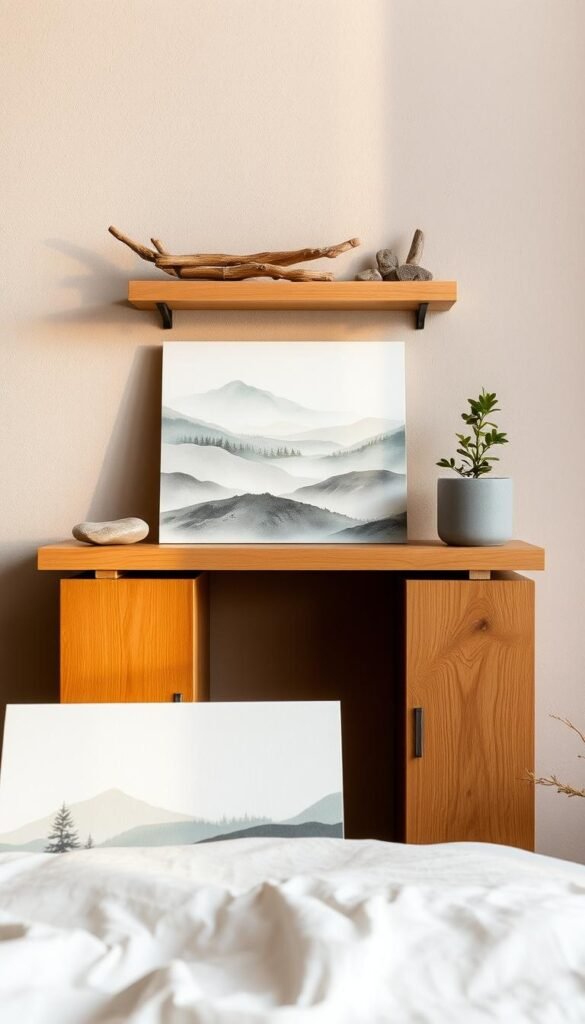
Your wall space offers a wonderful opportunity to enhance your room’s peaceful vibe. Thoughtful art choices create visual harmony that supports relaxation.
Every piece should contribute to your overall calm atmosphere. The right selections make your space feel intentionally designed for serenity.
Selecting Pieces that Promote a Peaceful Mind
Choose artwork that evokes tranquility and calm emotions. Nature scenes, abstract patterns, and personal photographs work beautifully.
Muted color palettes maintain your soothing design scheme. Soft browns, off-whites, and grays create harmonious visual flow.
As interior designer Jessica Helgerson notes:
“Art should whisper, not shout. In a bedroom, it needs to support rest rather than demand attention.”
Textural elements add depth without visual noise. Woven wall hangings or low-relief sculptures provide interesting tactile quality.
Consider these art selection guidelines:
| Art Type | Emotional Effect | Best Placement |
|---|---|---|
| Nature Photography | Creates connection to natural world | Above bed or seating area |
| Abstract Art | Encourages peaceful contemplation | Opposite bed for morning viewing |
| Personal Photos | Evokes positive memories | Bedside or dressing area |
| Textile Art | Adds softness and warmth | Accent wall or above console |
Avoid overly bright or chaotic imagery. These pieces can stimulate rather than relax your mind.
Your art should reflect personal taste while maintaining calm. Choose pieces that feel meaningful without creating visual stress.
Using Art to Balance Scale and Proportion
Artwork can dramatically affect how your room feels spatially. Oversized pieces anchor rooms with high ceilings beautifully.
Smaller works create intimacy in cozy spaces. Group them thoughtfully rather than scattering them randomly.
Hang pieces at eye level when seated or reclining. This ensures comfortable viewing from your bed or chair.
Consider your existing furniture and color scheme. New additions should harmonize with your current design elements.
Geometric shapes provide visual interest without clutter. Low-gloss finishes reduce distracting reflections.
Select a few statement pieces rather than many small items. This approach prevents visual overload and maintains calm.
Well-curated walls make your area feel complete. They demonstrate intentional design choices that support relaxation.
Your final look should feel balanced and harmonious. Every addition should contribute to your peaceful atmosphere.
Create a Tech-Free Zone for Uninterrupted Relaxation
Your personal sanctuary deserves protection from digital intrusions. Electronic devices often disrupt the peaceful atmosphere you’ve worked so hard to create.
Establishing clear boundaries around technology usage transforms your space. This approach supports deeper relaxation and better sleep quality.
The Negative Impact of Blue Light and Notifications
Blue light from screens mimics natural daylight. This tricks your brain into staying alert when you should be winding down.
Your circadian rhythm gets confused by this artificial stimulation. Melatonin production decreases, making sleep more difficult to achieve.
Constant notifications create mental clutter even when ignored. Each ping represents unfinished tasks or social obligations.
As sleep researcher Dr. Matthew Walker explains:
“The bedroom should be a sanctuary for sleep, not an extension of your waking life. Electronic devices fundamentally undermine this principle.”
These disruptions accumulate throughout your evening. They prevent your mind from entering the calm state needed for rest.
Establishing Clear Boundaries for Work and Leisure
Start by removing all electronics from your sleeping area. Charge phones and tablets in another room overnight.
Replace digital clocks with analog versions. Their gentle ticking provides soothing background noise without blue light.
Consider these practical steps for your tech-free transformation:
| Challenge | Solution | Benefit |
|---|---|---|
| Phone addiction | Designated charging station outside room | Reduced temptation to check notifications |
| Work documents | Closed storage for necessary papers | Visual separation from relaxation space |
| Television viewing | Remove TV entirely from area | Eliminates blue light source and noise |
If you must include work elements, use room dividers or screens. These create visual separation between different functional zones.
Establish a digital curfew one hour before bedtime. Use this time for reading, meditation, or gentle stretching instead.
Your mental health benefits from these clear distinctions. Work stress stays contained rather than infiltrating your personal refuge.
The improved sleep quality alone justifies these changes. You’ll wake feeling more refreshed and less anxious about daily demands.
This dedicated escape from digital overload feels luxurious. It represents conscious choice rather than default behavior.
Your entire home atmosphere improves with these boundaries. The tech-free approach supports long-term well-being and peaceful mindset.
What to Exclude for a Truly Restful Retreat
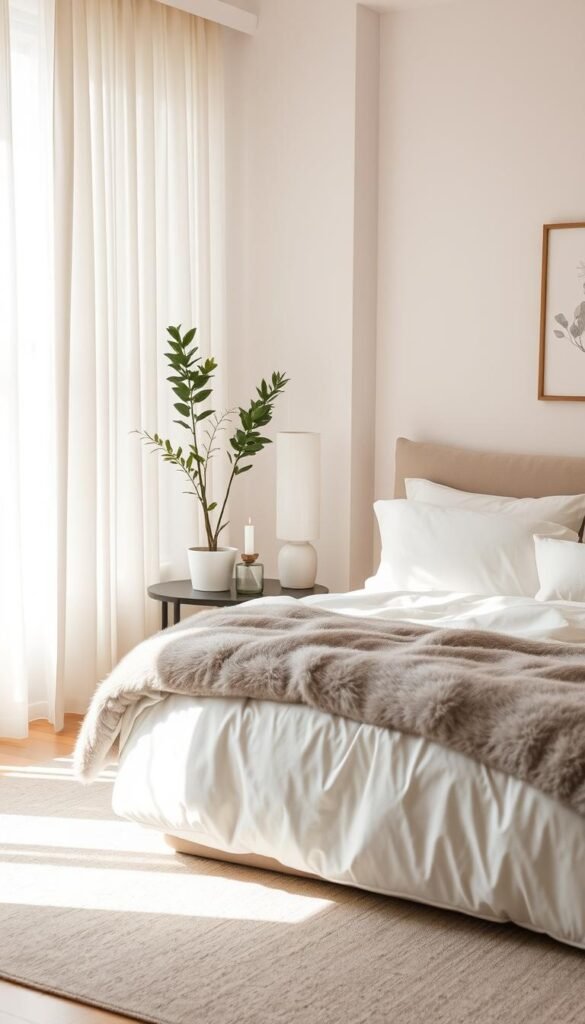
Creating a peaceful environment involves removing anything that disrupts calm. Your personal sanctuary deserves careful consideration of what stays and what goes.
Certain items work against your relaxation goals. They introduce visual noise and mental reminders of unfinished tasks.
Your space should feel dedicated solely to rest. Everything within it should support that single purpose.
Relocate Exercise Equipment and Laundry
Treadmills and weights belong in another area of your home. These pieces represent activity rather than relaxation.
Seeing exercise gear reminds you of workouts and goals. This mental association works against winding down for sleep.
Laundry introduces both odors and visual clutter. Even clean piles create a sense of unfinished chores.
As organizing expert Marie Kondo observes:
“The bedroom should contain only those items that spark joy and support rest. Everything else belongs elsewhere.”
Consider these relocation strategies:
| Item | Better Location | Benefit |
|---|---|---|
| Exercise Equipment | Basement or spare room | Separates activity from rest space |
| Dirty Laundry | Bathroom or laundry room | Contains odors and visual mess |
| Clean Laundry | Immediately put away | Maintains tidy appearance |
Built-in hampers in closets work wonderfully. They keep dirty clothes completely out of sight.
This approach maintains your room’s peaceful look. It reinforces the design purpose as a true sanctuary.
Keeping Daily Chores Out of Sight and Mind
Your sleeping area should feel separate from daily duties. Even organized storage of work materials creates mental clutter.
Paperwork and hobby supplies belong in other rooms. Their presence reminds you of tasks awaiting attention.
Evaluate every object through a simple question: Does this promote calm? If not, find it a new home elsewhere.
This minimalist style reduces stress significantly. Your room becomes a true escape from demands.
Consider these additional exclusions:
- Work documents and office supplies
- Craft materials and unfinished projects
- Excess decorative items that create visual noise
- Anything that doesn’t directly support relaxation
This careful editing transforms how your space feels. It becomes a dedicated retreat rather than multi-purpose area.
Your efforts create an environment that truly supports rest. Every evening becomes more peaceful with these boundaries.
Maintaining Your Bedroom Sanctuary Day to Day
Your peaceful retreat requires consistent care to remain perfect. Small daily actions preserve that wonderful atmosphere you’ve created.
Regular maintenance prevents clutter from returning. It keeps your special area feeling fresh and inviting every day.
Simple habits make a huge difference over time. They ensure your room always feels like a true sanctuary.
Quick Habits to Preserve the Peaceful Vibe
Start each morning by making your bed. This simple act instantly improves the entire room’s appearance.
Spend five minutes clearing surfaces before bedtime. Put away clothes and organize small items in their proper storage.
Consider these daily maintenance routines:
| Daily Habit | Time Required | Result |
|---|---|---|
| Bed Making | 2 minutes | Immediate tidy look |
| Surface Clearing | 5 minutes | Reduced visual clutter |
| Clothes Storage | 3 minutes | Maintained organization |
| Aromatherapy Refresh | 1 minute | Pleasant atmosphere |
Use essential oil sprays to maintain freshness. A quick spritz keeps your space smelling wonderful.
Address small issues immediately. Replace flickering bulbs and fix loose handles right away.
These quick actions prevent larger problems later. They maintain your room’s peaceful vibe effortlessly.
Seasonal Refreshes to Keep the Space Feeling New
Rotate your bedding with the changing seasons. This approach keeps your comfort level perfect year-round.
Flannel sheets provide cozy warmth during winter months. Lightweight cotton works beautifully for summer sleeping.
As designer Nate Berkus advises:
“Small seasonal changes keep a space feeling current and intentional. They prevent that stagnant feeling rooms sometimes develop.”
Swap decorative pillows and throws seasonally. Different textures and colors refresh your entire design.
Consider these seasonal adjustments:
- Heavier blankets and quilts for winter
- Lighter linens and breathable fabrics for summer
- Different curtain weights based on temperature needs
- Seasonal artwork or photography rotations
Deep clean your space with each season change. Dust baseboards, wash windows, and refresh your mattress cover.
These regular updates keep your area feeling special. They prevent that “stuck in time” feeling some rooms develop.
Your personal retreat deserves this ongoing attention. Consistent care ensures it remains your favorite place to unwind.
Embracing Your Newly Designed Personal Oasis
This carefully curated space now embodies the essence of peaceful living. Your thoughtful design choices—from decluttering to calming colors—create a true sanctuary.
Your room now serves as a dedicated haven for relaxation and rest. Enjoy reading, meditating, or simply breathing deeply in this peaceful atmosphere.
Remember this transformation continues evolving with your needs. Maintain daily habits to preserve that cozy feel.
Everyone deserves a personal retreat that supports wellbeing. Your renewed interior will enhance sleep and reduce stress beautifully.
Share what made your space uniquely calming. May your home bring many restful nights and peaceful moments.