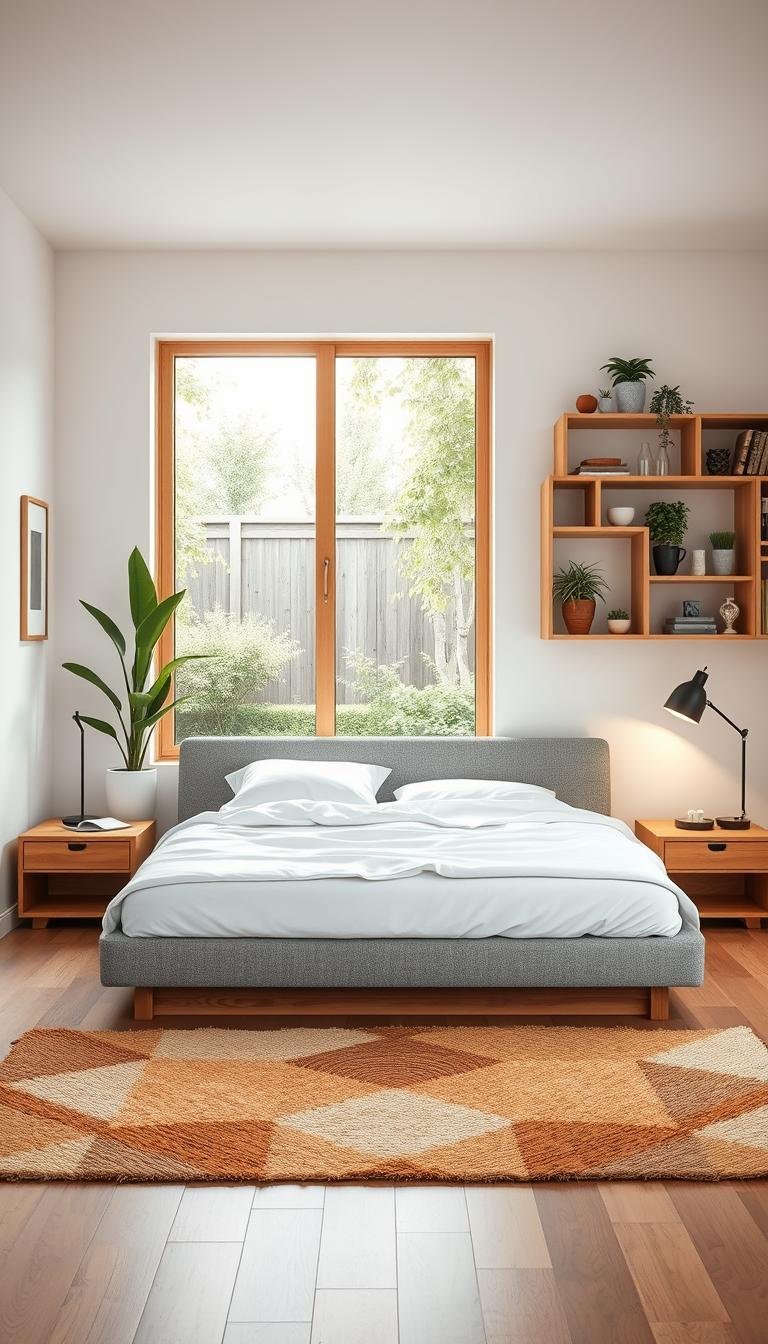
Imagine walking into your personal sanctuary every evening. A place where calm washes over you. Japandi style blends Japanese minimalism with Scandinavian coziness.
This fusion creates the perfect peaceful retreat. It focuses on natural materials and clean lines. Your space becomes both beautiful and functional.
We will guide you through transforming your room. You will learn to create balance and simplicity. Even small changes make a big difference.
Discover how to reduce stress and improve sleep. This design works in any room size. Find practical tips at House Beautiful’s Japandi guide.
Let’s build your dream escape together. Your new oasis awaits just ahead.
Welcome to Your Serene Japandi Bedroom Retreat
Step into a space where daily stress melts away the moment you enter. This design philosophy creates a special feel in your home that combines elegance with cozy comfort.
Japandi style beautifully merges Japanese minimalism with Scandinavian hygge. It brings together clean lines and warm textures. The result is a room that feels both structured and wonderfully inviting.
Your personal retreat should reflect your unique tastes while honoring these core principles. This isn’t just about aesthetics – it’s about creating an environment that promotes mindfulness and well-being.
This approach encourages you to keep only items that bring joy and serve a purpose. Even small spaces can feel larger and more open through intentional design choices.
Start with a clear vision and add elements gradually. Many people discover that such spaces improve sleep quality and morning refreshment.
Think of your bedroom as a sanctuary where you can truly unwind and recharge. Your personal oasis awaits through this harmonious design approach.
How to Achieve a Zen Vibe with Modern Japandi Design
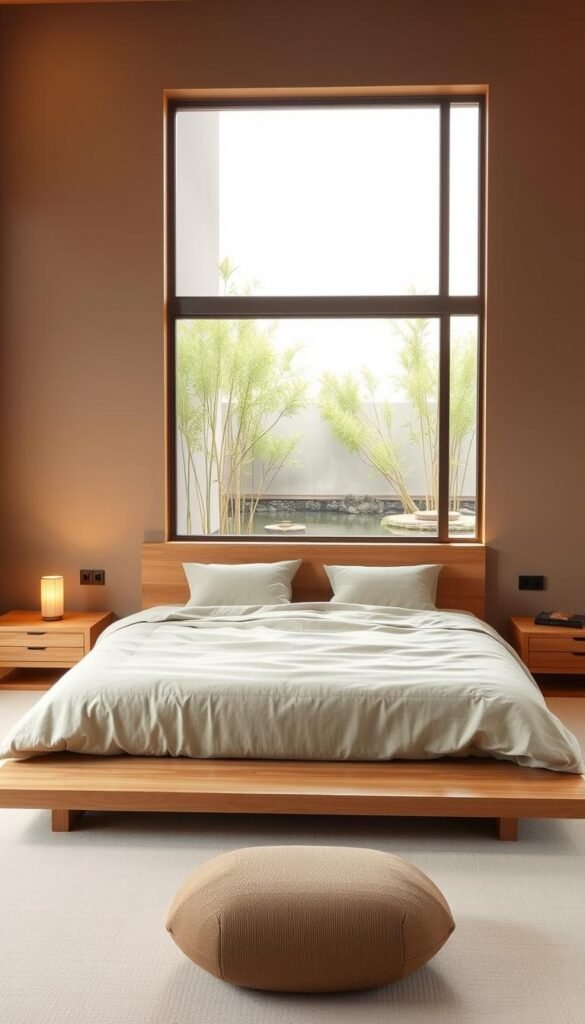
Your bedroom becomes a peaceful haven when you blend two beautiful design philosophies. This approach creates a unique look that feels both calming and cozy.
Blending Japanese Minimalism and Scandinavian Comfort
Japanese design focuses on clean lines and open spaces. It draws inspiration from nature and Zen philosophy. This creates a sense of order and peace.
Scandinavian design brings warmth and comfort. It uses soft fabrics and gentle lighting. This makes a room feel inviting and snug.
Combining these styles gives you the best of both worlds. You get a space that is tidy yet warm. It avoids feeling too empty or too cluttered.
The Core Principle: Wabi-Sabi Meets Hygge
Wabi-sabi is a Japanese idea. It finds beauty in things that are simple and imperfect. Think of a handmade clay pot with a slight unevenness.
Hygge is a Danish concept of cozy contentment. It’s about feeling happy and comfortable in your space. Soft blankets and warm light bulbs create this feeling.
These principles work together in Japandi design. They help you create a room that feels real and lived-in. Every item has a purpose and brings joy.
This balance makes your space serene but welcoming. You can learn more about applying these ideas from this harmonious minimalist inspiration guide.
Even small touches can make a big difference. A woven basket or a slightly rough wooden stool adds character. Your room will reflect a perfect blend of simplicity and function.
1. Combine Neutral and Natural Tones for a Warm Palette
Color plays a pivotal role in crafting that perfect balance between minimalism and comfort in your space. The right palette creates a soothing atmosphere that welcomes relaxation from the moment you enter.
Designer Julee Wray at Truss Interiors demonstrates this beautifully. She combines soft neutrals with earthy hues like deep browns and gray-ish greens. This approach creates depth while maintaining serenity.
Choosing Your Base: Whites, Beiges, and Grays
Begin with a foundation of soft neutral tones. Creamy whites, light beiges, and gentle grays form your calm base. These colors reflect light beautifully.
Your room will feel more open and airy with this approach. This is essential for achieving that minimalist yet cozy look. The space appears larger while feeling inviting.
Test these base colors at different times of day. Natural light changes how they appear. Ensure they remain soothing throughout daylight hours.
Adding Depth with Earthy Accents
Introduce earthy accent colors for visual interest. Forest green, navy blue, or muted terracotta work wonderfully. Add these through pillows, throws, or artwork.
Avoid bright or bold shades that disrupt tranquility. Stick to muted, natural colors that connect to nature. Think of sand, stone, sky, and foliage for inspiration.
Consider a monochromatic scheme using varying shades of one color. This maintains simplicity while adding depth. An accent wall in soft green or charcoal gray can ground the space beautifully.
Balance light and dark tones to achieve harmony. Too much light can feel sterile. Too much dark can feel heavy. The goal is a warm, inviting palette that promotes relaxation.
Remember – this isn’t about dramatic contrast. It’s about creating subtle warmth through carefully layered natural tones. Your personal oasis deserves this thoughtful approach to color.
2. Incorporate Different Wood Tones for Textural Interest
Wood brings warmth and character to your personal space. This natural material creates visual harmony through varied tones and textures.
Japandi design celebrates the beauty of raw materials. Think of how Truss Interiors combined a light-toned chair with a patterned wood dresser. This approach adds depth while maintaining simplicity.
Selecting Light and Natural Wood Finishes
Begin with light, airy wood finishes. Oak, ash, and pine work beautifully in bedroom spaces.
These lighter tones complement neutral color schemes. They enhance the sense of cleanliness and openness.
Visible grain patterns add character to your room. This aligns perfectly with wabi-sabi’s appreciation for imperfection.
Mixing Stains for a Curated, Organic Look
Combine different stains intentionally for visual interest. Pair a light oak bed frame with a darker walnut nightstand.
This creates a collected-over-time feel that appears authentic and relaxed. Avoid matching all pieces exactly.
Bamboo elements add subtle Japanese influence. Consider blinds or small decor items for lightness.
| Wood Type | Best Use | Visual Effect |
|---|---|---|
| Light Oak | Bed frames, shelving | Creates airy, open feeling |
| Walnut | Nightstands, accent pieces | Adds depth and contrast |
| Bamboo | Blinds, decorative items | Brings Japanese influence |
| Pine | Dressers, chairs | Offers rustic yet light touch |
Balance wood with other materials like metal or ceramic. This prevents the space from feeling too heavy.
Choose functional pieces with minimalist designs. Avoid ornate carvings that clash with Japandi principles.
The goal is a harmonious blend of natural wood tones. Your room will feel cohesive yet interesting.
This careful selection adds the perfect organic touch to your sanctuary. Every piece should serve both purpose and beauty.
3. Layer Different Textures for a Cozy, Tactile Feel
Your fingertips tell a story before your eyes even adjust to the light. Tactile experiences transform a room from simply looking good to genuinely feeling welcoming. This sensory approach creates depth through carefully chosen materials.
Truss Interiors demonstrates this beautifully with their cloth mural wall and fluffy quilted comforter. These elements blend Japanese artistry with Scandinavian coziness. The result is a space that invites touch and relaxation.
Soft Furnishings: Linen, Wool, and Woven Throws
Begin with your bedding as the foundation. Layer natural fiber sheets with wool blankets and cotton throws. This creates a surface that begs you to curl up and unwind.
Linen stands out for its breathable, slightly crumpled look. It embodies wabi-sabi’s appreciation for natural imperfection. You get both visual interest and physical comfort.
Add chunky knit throws or faux fur accents for hygge warmth. These elements introduce softness without visual clutter. They make your space feel lived-in and welcoming.
Contrasting Smooth and Rough Surfaces
Balance is key when working with different textures. Pair polished wood nightstands with rough ceramic vases. Add a jute rug beside smooth window blinds.
These contrasts create visual interest while maintaining minimalism. Your eyes move naturally through the space discovering subtle details. Nothing feels monotonous or overwhelming.
Choose textiles with subtle patterns like herringbone or basketweave. These add depth while keeping the overall aesthetic clean. Natural materials always work best for this organic feel.
Remember to layer gradually starting with larger pieces. Build up from your bed to accent pillows and window treatments. This ensures a cohesive look that feels intentionally curated.
Your room should welcome you with open arms through its tactile qualities. Every texture contributes to that overall sense of peace and warmth.
4. Use Nature Motifs to Connect the Indoors and Outdoors
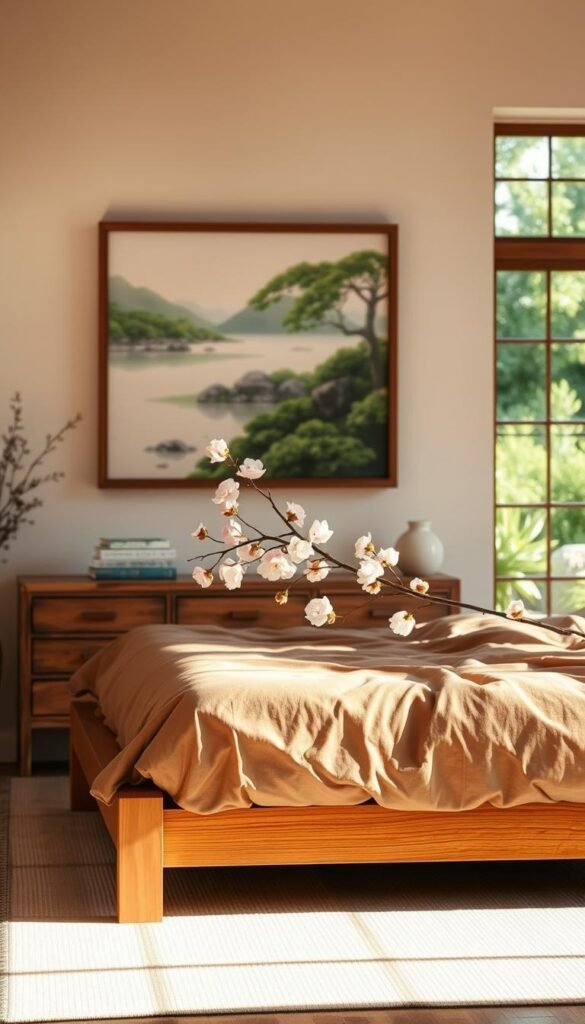
Nature whispers tranquility into your personal space through thoughtful design choices. This approach creates harmony between your room and the natural world outside. The connection feels both subtle and profound.
Designer Julee Wray demonstrates this beautifully with nature-print drapery behind the bed. This technique incorporates Scandinavian style while maintaining Japanese simplicity. Your space gains depth without visual clutter.
Botanical Prints on Drapery and Wallcoverings
Choose botanical patterns with organic lines for your window treatments. Leaf patterns or subtle branch motifs work wonderfully. Select muted colors that blend with your neutral palette.
Wallcoverings can feature nature themes without overwhelming the space. Grasscloth wallpaper adds texture while evoking natural elements. A forest scene mural creates depth on an accent wall.
Follow these guidelines for nature-inspired decor:
- Select abstract interpretations rather than literal representations
- Space patterns generously to maintain minimalist appeal
- Use tonal variations of your existing color scheme
- Consider bedding with subtle organic patterns
Incorporating Organic Shapes and Forms
Choose art and accessories with natural curves and forms. A curved ceramic vase echoes the flow of water or wind. Stone-based lamps bring earthy solidity to your space.
Functional items can reinforce the nature connection beautifully. Rattan baskets offer storage while adding organic texture. Stone coasters serve practical purposes with natural elegance.
Live plants complete the indoor-outdoor connection perfectly. Peace lilies or snake plants thrive in bedroom environments. They purify air while adding fresh greenery.
Remember to balance these elements with your minimalist foundation. Each piece should contribute to the overall serenity. Your room becomes a subtle tribute to the natural world.
5. Streamline Your Belongings with Intentional Minimalism
Creating a serene environment means being intentional about every item that occupies your space. This approach transforms your room into a true sanctuary where peace prevails over clutter.
Designer Erin Roberts demonstrates this beautifully. She maintains balanced spaces with muted colors and light wood tones. Her work shows how keeping only necessary pieces creates harmony.
The Art of Editing: Keeping Only What Sparks Joy
Begin your journey by evaluating each possession carefully. Ask yourself if each item serves a purpose or brings genuine happiness. This KonMari-inspired method helps create meaningful spaces.
Clear surfaces like nightstands and dressers immediately. This creates a clean, peaceful environment that promotes deep relaxation. Your mind can rest when visual clutter disappears.
Regularly reassess your belongings to prevent accumulation. This ensures your personal retreat remains tranquil and functional. It’s an ongoing practice of mindful curation.
Smart Storage Solutions for a Clutter-Free Space
Choose storage that aligns with Japandi aesthetics while serving practical needs. Woven baskets and minimalist wooden cabinets maintain style while providing organization.
Select multi-functional furniture pieces that maximize utility. A low bed frame with built-in drawers offers sleeping comfort and hidden storage. This approach maintains visual cleanliness.
Incorporate storage in unexpected places for efficiency. Consider hollow benches or built-in shelving that blend seamlessly with your design. These solutions keep essentials accessible but out of sight.
| Storage Solution | Best Application | Japandi Compatibility |
|---|---|---|
| Under-bed drawers | Seasonal clothing, extra bedding | High – maintains clean lines |
| Woven baskets | Small items, accessories | Excellent – natural materials |
| Built-in shelving | Books, decorative items | High – custom integration |
| Multi-functional furniture | Small spaces, dual purposes | Excellent – maximizes utility |
| Minimalist cabinets | Clothing, personal items | Perfect – clean aesthetic |
Remember that intentional minimalism isn’t about emptiness. It’s about careful curation of items that enhance your life. Your space should feel open and airy while containing everything you truly need.
Every piece in your room should have a designated place and purpose. This thoughtful approach creates the ultimate sense of calm and order. Your sanctuary becomes both beautiful and perfectly functional.
6. Use Plenty of Natural Light to Create Warmth and Airiness
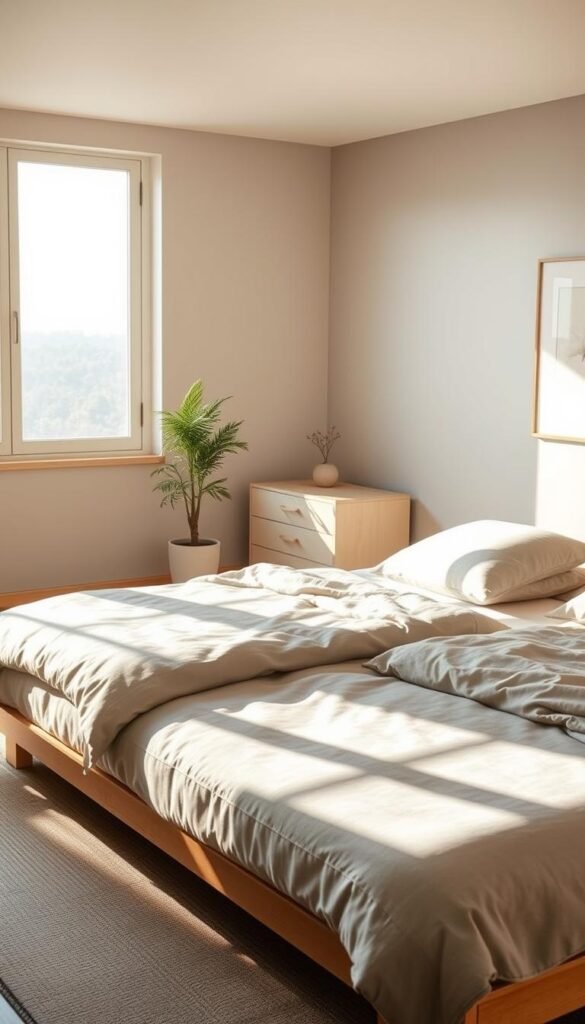
Lighting works magic in creating that perfect peaceful atmosphere. It transforms your space from simply functional to genuinely uplifting. The right illumination makes everything feel more inviting.
Designer Erin Roberts shows how this works beautifully. She layers soft desert hues with natural textures to capture both light and warmth. This approach creates a glow that feels both natural and intentional.
Maximizing Window Light with Sheer Curtains
Your windows become valuable assets in this design style. Sheer curtains or light-filtering shades allow sunlight to flood your room while maintaining privacy. They create a soft, diffused effect that enhances tranquility.
Position your bed and seating areas near windows to capture daylight. This creates a bright, airy feel that aligns perfectly with the aesthetic. Avoid heavy, dark window treatments that block precious natural light.
Choose materials like linen or cotton in light colors. These keep the space feeling open and connected to outdoors. They filter light beautifully while adding texture.
Mirrors serve as secret weapons for amplifying illumination. Place them opposite windows or in darker corners. They reflect light and make the room appear larger instantly.
Mimicking Sunlight with Soft Ambient Fixtures
Evening requires thoughtful artificial lighting solutions. Paper lanterns or dimmable fixtures maintain that cozy glow after sunset. They create soft shadows that enhance the peaceful atmosphere.
Choose fixtures with warm, diffused light rather than harsh bulbs. This mimics natural sunlight and supports relaxation. The goal is gentle illumination that feels inviting.
Candles or LED alternatives add flickering warmth. They contribute to tranquility while being practical. Consider their placement for maximum effect.
North-facing rooms might need more artificial assistance. Layer multiple light sources to achieve the desired warmth. The result should feel balanced throughout day and night.
| Lighting Type | Best Placement | Atmosphere Created |
|---|---|---|
| Sheer Curtains | All windows | Soft, diffused daylight |
| Floor Mirrors | Opposite windows | Amplified natural light |
| Paper Lanterns | Ceiling or corners | Gentle ambient glow |
| Dimmable Lamps | Bedside tables | Adjustable evening light |
| LED Candles | Surfaces throughout room | Warm, flickering accents |
Your lighting scheme should feel natural and inviting always. Good illumination makes the space welcoming and serene. It enhances the overall vibe perfectly.
Balance is the ultimate goal between natural and artificial sources. Your room will glow with warmth and tranquility. This creates the perfect atmosphere for rest and renewal.
7. Add Interest With Art That Complements the Minimalist Aesthetic
Art brings soul to your space without breaking the calm. It adds personality while keeping things simple and clean. The right pieces make your room feel complete.
Daytrip Studio shows how this works. They hung an abstract art piece with neutral tones. It had textured details that added depth quietly.
Your choices should feel intentional. They must blend with your room’s style. Every piece should add to the peace, not distract from it.
Selecting Abstract Pieces and Nature-Inspired Prints
Choose art that feels calm and thoughtful. Abstract works or nature prints fit perfectly. They bring interest without overwhelming your senses.
Stick to muted colors and organic shapes. This helps the art blend with your neutral palette. It becomes part of the room, not just an addition.
Handmade items add special texture. Think ceramic wall hangings or woven tapestries. These honor wabi-sabi’s love for imperfect beauty.
Simple frames in wood or metal keep the look cohesive. They should not stand out too much. The focus stays on the art itself.
Strategic Placement for a Focal Point
Place one large piece above your bed or on a main wall. This creates a clear focal point. It draws the eye and adds personality gently.
A single large work makes a stronger statement than many small ones. It keeps the minimalist feel intact. Your space stays open and serene.
You can rotate art with seasons or moods. This keeps things fresh without adding clutter. It’s an easy way to update your decor.
Every accent should feel personal and meaningful. Your choices reflect your style while respecting balance. The room remains harmonious.
| Art Type | Best For | Effect on Space |
|---|---|---|
| Abstract Art | Above bed, main wall | Adds modern interest quietly |
| Nature Prints | Secondary walls, near windows | Brings outdoor calm inside |
| Monochromatic Photos | Gallery corner, reading nook | Offers subtle visual depth |
| Handmade Textiles | As textural accents | Adds warmth and craftsmanship |
Art should whisper, not shout, in a peaceful space. It’s there to complement, not compete.
Your art choices complete the room’s story. They add layers of meaning quietly. Your sanctuary feels both personal and perfectly balanced.
8. Put in a Low, Wooden Bed Frame for an Open Feel
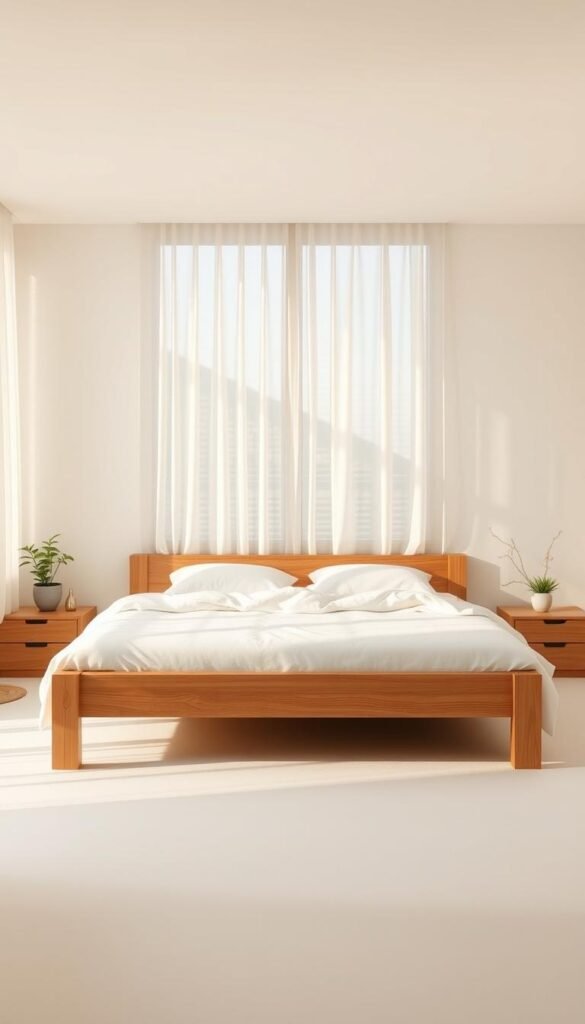
Your sleeping area becomes the heart of your peaceful retreat. The right foundation sets the tone for your entire space. A low wooden bed frame creates that perfect balance between grounded and airy.
Daytrip Studio shows this beautifully. They used a simple wooden bed frame with cozy layers. This approach makes the room feel both spacious and welcoming.
The Benefits of a Grounded, Unobtrusive Design
Low furniture connects you to the floor. This creates a sense of stability and calm. Your space feels more open and less crowded.
These designs follow Japanese principles of simplicity. They emphasize clean lines and natural materials. Your bed becomes part of the room’s harmony.
Avoid tall or ornate frames that dominate the space. Choose pieces with straight lines and light wood tones. This keeps the focus on tranquility.
Styling Your Low Bed with Cozy Linen Bedding
Layer your bed frame with natural linen bedding. Choose neutral colors like cream or soft gray. This adds texture while maintaining simplicity.
Add a woven throw blanket for extra warmth. Place a few soft pillows in complementary tones. These touches create hygge comfort without clutter.
Consider a platform bed with hidden storage. This maximizes function while keeping the low profile. Your space stays organized and serene.
Position your bed to allow walking space around it. This enhances the airy room feel. Add a simple rug underneath for definition.
Your sleeping area should invite relaxation instantly. The right combination makes your bed the perfect centerpiece. It blends comfort, function, and style beautifully.
9. Include Rustic Elements for an Earthy, Handcrafted Touch
Your space gains soul through items that feel real and authentic. These special pieces bring warmth and character to your room. They honor the beauty of natural imperfections.
Daytrip Studio shows this perfectly with handcrafted wooden stools. These bedside pieces offer organic, sculptural forms. They add that earthy touch your room needs.
Choosing Artisanal Pieces and Natural Materials
Select items that show the maker’s hand clearly. Look for slight unevenness in ceramic pots or woven baskets. These elements embody wabi-sabi principles beautifully.
Natural materials like raw stone or unfinished wood work best. They connect your space to the outdoors. Each piece tells its own unique story.
Consider these artisanal options for your room:
- Hand-thrown clay vases with subtle glaze variations
- Rough-hewn wooden shelves that show grain patterns
- Jute rugs with natural texture variations
- Rattan baskets woven by skilled artisans
These items add depth through their imperfections. They make your room feel lived-in and genuine. Your space becomes more interesting and personal.
Balancing Rustic Charm with Modern Clean Lines
Mix rustic elements with your minimalist furniture carefully. Place a handcrafted stool beside a sleek bed frame. This creates visual interest without clutter.
Use rustic touches in functional items for smart integration. A wooden tray on your nightstand holds essentials beautifully. A stone-based lamp provides both light and texture.
Follow this guide for balanced rustic integration:
| Rustic Element | Modern Counterpart | Design Effect |
|---|---|---|
| Handwoven basket | Sleek metal frame | Adds texture contrast |
| Rough ceramic vase | Smooth wood surface | Creates tactile interest |
| Natural stone accessory | Minimalist furniture | Brings organic balance |
| Artisanal textile | Clean-lined bedding | Offers visual warmth |
Remember that less is more with rustic elements. Choose a few meaningful pieces rather than many. Your room maintains its clean aesthetic this way.
These touches should complement your overall design. They add character without overwhelming the space. Your room feels both curated and comfortable.
This approach creates that perfect earthy touch. Your personal sanctuary gains depth and authenticity. It becomes a true reflection of balanced beauty.
10. Give the Room Multiple Purposes with Functional Furniture
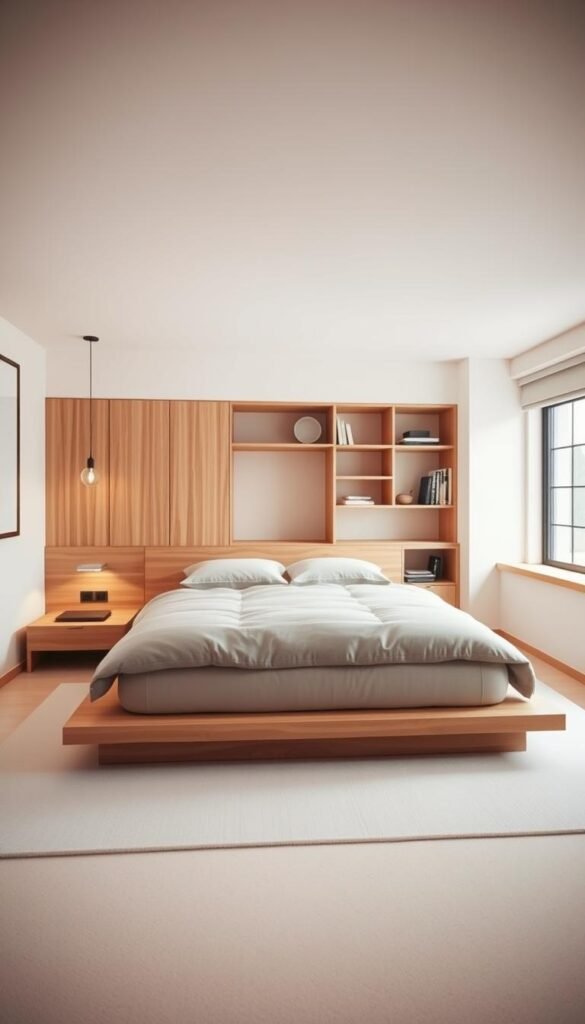
Your personal retreat can serve more than just sleep. Clever design choices transform your space into a versatile sanctuary. This approach maximizes every square foot beautifully.
Designer Erik Munro demonstrates this perfectly. He used a folding bed in a guest room. This created both a sleeping area and meditation space.
Incorporating Dual-Function Pieces
Choose items that serve multiple needs in your home. A storage ottoman offers seating and hidden organization. A desk can double as a vanity with the right mirror.
Murphy beds work wonderfully for guest rooms. They free up floor space when not in use. This maintains that open, airy feel you love.
Look for furniture with clean lines and simple designs. These pieces won’t overwhelm your space. They align perfectly with Japandi principles.
Zoning Your Space for Different Activities
Create distinct areas within your room for various functions. Use area rugs to define a reading nook. Different lighting can separate a meditation corner.
Screens or curtains work well for visual separation. They create privacy without permanent walls. Your room keeps its flowing atmosphere.
Consider these zoning strategies for your space:
- Sleeping area with bed as central focus
- Reading corner with comfortable chair and good light
- Meditation space with floor cushion and minimal decor
- Work zone with compact desk and organized supplies
| Furniture Type | Dual Function | Space Saving Benefit |
|---|---|---|
| Folding Bed | Sleeping + Exercise Area | Maximizes floor space when folded |
| Storage Ottoman | Seating + Organization | Hides clutter while providing extra seating |
| Desk/Vanity Combo | Work + Grooming Station | Serves two purposes in one footprint |
| Bench with Storage | Seating + Blanket Storage | Keeps essentials handy but out of sight |
The most functional rooms adapt to your life’s changing rhythms without losing their peaceful essence.
Choose pieces with hidden storage compartments. A bed with drawers underneath keeps linens organized. A hollow bench seat stores extra pillows or blankets.
Avoid bulky or complex furniture designs. Simple, versatile pieces work best. They maintain the minimalist aesthetic while serving multiple functions.
Your room becomes adaptable to different needs throughout the day. It can transition from sleep to relaxation to work seamlessly. This flexibility enhances your daily experience.
Each zone should feel intentional and purposeful. This organized approach contributes to overall tranquility. Your space serves you perfectly without sacrificing style.
11. Remember That Balance Is the Ultimate Key to Japandi
Your room finds its true harmony when opposing elements work together. This delicate equilibrium transforms your space into a peaceful retreat. Balance stands as the core principle of this beautiful design philosophy.
Erik Munro demonstrates this perfectly. He combined black woven benches with light off-white tones. This created a structured yet wonderfully serene atmosphere.
Mixing Light and Dark, Old and New, Yin and Yang
Opposites attract in the most beautiful ways within your space. Light walls gain depth from dark wood accents. Modern furniture finds warmth beside vintage rugs.
This yin-yang approach creates visual interest without chaos. Your eyes move comfortably around the room. Nothing feels too heavy or too empty.
Consider these balanced combinations:
- Pair sleek new bed frames with handcrafted antique nightstands
- Combine smooth ceramic vases with rough natural stone bookends
- Mix light linen curtains with darker wooden blind elements
- Balance open wall spaces with one meaningful art focal point
Each choice contributes to the overall harmony. Your space feels both curated and comfortable. This balance makes your room truly special.
Creating a Structured Yet Serene Atmosphere
Avoid extremes in your design choices. Too much minimalism can feel cold and unwelcoming. Too much coziness might become visually overwhelming.
Aim for that perfect middle ground where everything feels just right. Your room should invite relaxation while maintaining order. This creates the ideal peaceful atmosphere.
Follow these guidelines for harmonious arrangement:
| Design Element | Structured Aspect | Serene Counterpart |
|---|---|---|
| Furniture Layout | Clear pathways for movement | Asymmetrical placement for relaxed feel |
| Color Scheme | Defined neutral base palette | Soft earthy accents for warmth |
| Textures | Clean-lined wooden surfaces | Soft woven textiles for comfort |
| Decor Items | Intentional minimal selection | Natural imperfections for character |
Regularly assess your space from different angles. Make small adjustments as needed. Your design should evolve with your changing tastes.
Remember that true balance is dynamic rather than static. It adapts to your life while maintaining that core simplicity. Your sanctuary remains both beautiful and functional.
The most harmonious spaces feel both intentionally designed and effortlessly comfortable.
Every element should work together toward peace and well-being. Your room becomes a true reflection of balanced living. This approach transforms your space into the perfect personal retreat.
Begin Your Journey to a Peaceful Japandi Bedroom Sanctuary
Your personal retreat starts with a single step toward mindful design. This style blends clean minimalism with cozy warmth for true comfort.
Start small by adding one natural wood piece or decluttering your space. Your room will gradually transform into a peaceful haven.
Remember, perfection isn’t the goal. Focus on creating a space that feels personally meaningful and serene. Adapt these ideas to suit your unique home.
This design journey evolves as your needs change. Even busy lives can enjoy tranquil sanctuaries through intentional simplicity.
Share your progress and explore other Japandi spaces for inspiration. Your bedroom should promote relaxation and balance.
Thank you for embracing these design principles. May your new sanctuary bring daily joy and restorative peace.