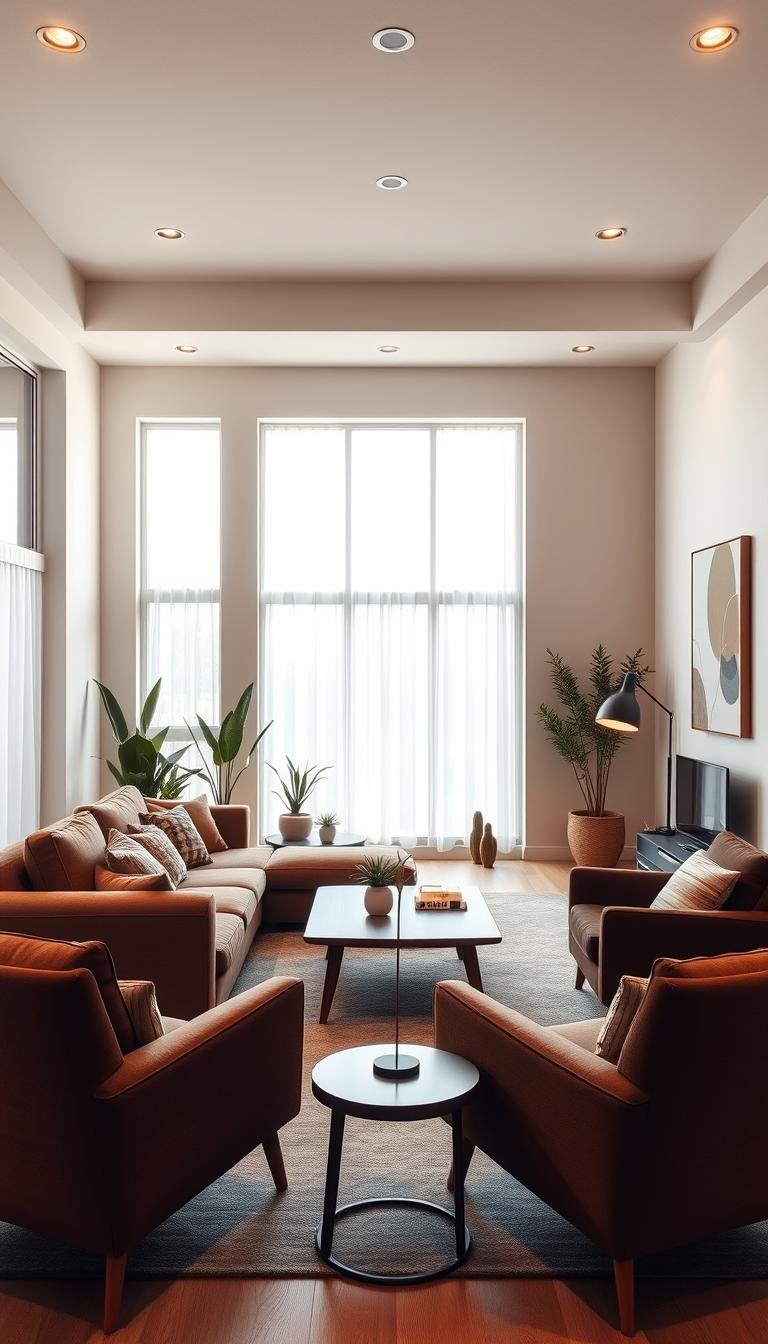
Welcome to your complete guide for creating inviting spaces that feel like a true sanctuary. We’ll show you how to transform your area using timeless design elements.
Brown serves as a versatile neutral that works with any style. You can achieve sleek contemporary looks or embrace rustic charm while maintaining that comforting warmth.
This color is particularly forgiving for active households. It hides everyday wear beautifully while creating an atmosphere that’s both stylish and functional.
We’ll share fifteen actionable suggestions to help you design your ideal space. These tips work whether you’re starting fresh or updating existing pieces.
Get ready to discover color combinations, furniture choices, and accessory ideas that make brown feel fresh rather than dated. Let’s create a space that reflects your personal style!
Why Brown is the Perfect Choice for Your Living Room
Have you ever wondered why this earthy hue feels so right in your home? It’s not just about color—it’s about creating a sanctuary that welcomes you every day.
This versatile neutral enhances any decor style. You can create a natural, earthy ambiance or achieve a sleek contemporary look. The range of shades offers incredible flexibility.
Deep espresso tones bring sophistication to your space. Soft caramel shades create welcoming environments. Rich walnut finishes add rustic charm without sacrificing elegance.
The psychological effects are remarkable. This color evokes feelings of stability and comfort. It brings natural elegance that never feels forced or artificial.
Your furniture becomes the anchor piece that grounds the entire area. A dark brown leather sofa or wooden coffee table creates visual weight. This helps balance your overall design scheme.
Practical benefits make this choice even smarter. It hides everyday wear beautifully. Spills and stains become less noticeable in busy households.
Material pairing creates dimensional interest. Combine with metallic accents for subtle glamour. Add textured fabrics for additional depth and comfort.
| Shade | Mood Created | Best For |
|---|---|---|
| Espresso | Sophisticated & Formal | Contemporary Spaces |
| Caramel | Warm & Inviting | Family Areas |
| Walnut | Rustic & Natural | Organic Designs |
| Taupe | Soft & Subtle | Small Rooms |
| Chocolate | Rich & Luxurious | Statement Pieces |
Scale doesn’t limit your options. Large open areas benefit from its grounding effect. Smaller spaces gain cozy intimacy through strategic use.
You can make it the dominant color or use it as an accent. Both approaches deliver beautiful results. The choice depends on your personal preference and existing elements.
Most importantly, this choice remains timeless. Unlike trendier colors that date quickly, earthy tones maintain their appeal. Your investment in quality pieces will serve you for years.
Embrace the warmth and versatility this palette offers. Your living area will transform into a comfortable retreat that reflects your unique style.
Modern Brown Living Room Ideas for Warm, Cozy Homes: Your Essential Guide
Get ready to discover 47 transformative approaches that will redefine your space. This complete resource covers every aspect of designing with rich, earthy hues.
We’ll break down specific strategies for achieving that welcoming atmosphere you desire. Our suggestions range from simple accent additions to complete makeovers.
Whether you have a generous budget or need affordable updates, we’ve got you covered. The guide accommodates all personal styles from minimalist to maximalist approaches.
Consider your room size, natural light, and architectural features before starting. These elements help determine which earthy elements would work best in your particular space.
You can mix and match these concepts according to your personal preference. Creating a comfortable atmosphere doesn’t mean sacrificing contemporary aesthetics.
Think of this guide as your personal toolkit for customized design solutions. Each suggestion helps you build toward your ideal environment.
| Design Approach | Budget Level | Style Compatibility | Impact Level |
|---|---|---|---|
| Accent Pieces | Low | All Styles | Subtle Transformation |
| Furniture Updates | Medium | Traditional to Contemporary | Moderate Change |
| Complete Redesign | High | Specific Themes | Dramatic Makeover |
| Textile Layering | Variable | Cozy Styles | Enhanced Comfort |
| Lighting Solutions | Low to Medium | All Environments | Mood Enhancement |
Assess your current setup before implementing changes. A beautiful brown leather chair might complement your existing furniture perfectly.
Different tones create varying atmospheric effects in your gathering area. Lighter shades make spaces feel airier while darker hues add depth and sophistication.
These living room ideas work whether you’re renting or own your home. Many solutions are temporary and reversible, giving you flexibility.
Remember that personal taste should guide your final decisions. Your space should reflect who you are and how you want to feel when spending time there.
1. Master the Art of Color Pairing
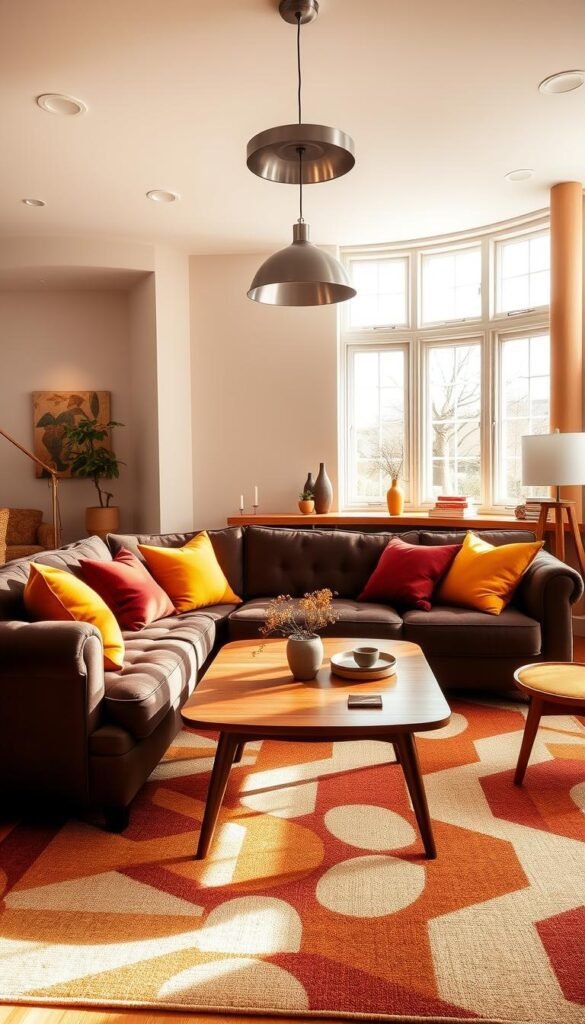
Your choice of companion colors can completely transform how your space feels. The right combinations enhance warmth while creating visual interest.
Think about the mood you want to create before selecting your palette. Some pairings feel crisp and modern while others create cozy, intimate atmospheres.
Crisp Whites and Soft Grays for a Modern Pop
White creates striking contrast that makes your furniture stand out beautifully. It turns dark pieces into instant focal points.
Choose bright white for contemporary spaces that need energy. This clean backdrop makes rich tones appear even deeper and more luxurious.
Soft gray provides a more subtle, sophisticated contrast. It maintains room warmth while still offering definition. Light gray walls work particularly well with medium wood tones.
Earthy Tones for a Natural, Grounded Feel
Earthy combinations enhance the natural qualities of your main color. Olive green creates organic harmony that feels both fresh and timeless.
Beige and cream tones build warmth upon warmth. They create seamless transitions between elements in your space.
Rust and terracotta accents add vibrant energy without overwhelming. These colors work beautifully in accessories like throw pillows and artwork.
Bold Blues and Greens for a Dramatic Backdrop
Deep blue walls create luxurious, sophisticated environments. Navy and sapphire tones make rich brown furniture appear even more elegant.
Emerald green delivers dramatic impact with natural appeal. This combination feels both bold and perfectly balanced.
Balance these strong wall colors with neutral furnishings. Let the walls provide drama while your furniture offers comfortable familiarity.
| Brown Shade | Recommended Wall Color | Accent Colors | Mood Created |
|---|---|---|---|
| Dark Espresso | Benjamin Moore White Dove | Mustard Yellow, Burnt Orange | Sophisticated Contrast |
| Medium Walnut | Sherwin-Williams Repose Gray | Olive Green, Cream | Warm Transitional |
| Light Taupe | Behr Blueprint | Gold, White | Dramatic Elegance |
| Rich Chocolate | Farrow & Ball Green Smoke | Terracotta, Navy | Luxurious Depth |
Test your color combinations before committing fully. Paint large swatches on different walls and observe them at various times of day.
Digital tools can help visualize complete room transformations. Many paint companies offer apps that show colors in virtual rooms.
Remember that lighting affects how colors appear throughout the day. North-facing rooms need warmer tones while south-facing spaces can handle cooler shades.
Your final palette should reflect both personal taste and practical considerations. The right combination creates harmony that feels both intentional and effortless.
2. Select Complementary Furniture Pieces
Your sofa sets the stage, but other furniture completes the picture. The right pieces balance visual weight while enhancing both style and function.
Think about how each item contributes to your overall aesthetic. You want harmony without everything matching perfectly.
Choosing the Right Coffee and Side Tables
Your coffee table selection makes a big impact. It can either lighten a dark scheme or reinforce your color palette.
Glass-top tables create visual lightness in darker spaces. They reflect light and maintain an airy feel despite dark furniture.
Wooden tables enhance warmth beautifully. They create a cohesive natural aesthetic that feels inviting.
Marble and stone options add elegance. They provide texture contrast while maintaining sophistication.
Incorporating Wooden Elements for Warmth
Wood brings natural warmth to any space. Beyond tables, consider shelves, consoles, and accent pieces.
Mix wood tones for a collected, layered look. Don’t worry about perfect matching—variation adds character.
Mid-century styles work particularly well with earthy tones. Their clean lines complement without competing.
Rustic pieces add organic texture. Modern designs keep things contemporary and fresh.
| Table Type | Best For | Style Pairing | Proportion Guide |
|---|---|---|---|
| Glass Top | Small spaces, dark rooms | Contemporary, minimalist | 2/3 sofa length, 18″ clearance |
| Solid Wood | Warmth enhancement | Traditional, rustic | Match sofa depth, 16-18″ height |
| Marble/Stone | Elegant contrast | Transitional, luxury | Slightly narrower than sofa |
| Metal Base | Industrial mixes | Eclectic, modern | Varies by style |
Arrange furniture to create conversation areas. Position pieces so people can talk comfortably.
Side tables should complement both sofa and coffee table. They don’t need to match exactly.
Keep proportions in mind. Your coffee table should be about two-thirds your sofa’s length.
Leave enough space for movement. About 18 inches between sofa and table works well.
These wooden elements contribute significantly to overall warmth. They create that collected look everyone loves.
3. Create a Striking Focal Point with Artwork
Your wall space offers incredible potential to define your entire space’s character. Thoughtfully chosen pieces transform empty areas into powerful statements.
Artwork draws attention to your seating arrangement beautifully. It creates visual weight that anchors your furniture perfectly.
Gallery walls bring dynamic energy behind sofas. Mix framed photos, prints, and objects for personal expression.
Choose colors that either harmonize or contrast intentionally. Earthy tones create cohesion while bold hues add excitement.
Framing choices significantly impact your overall aesthetic. Wood frames enhance warmth while metal adds contemporary edge.
Proper sizing ensures balanced proportions. Your largest piece should span about two-thirds of your sofa’s width.
Hang artwork at eye level for comfortable viewing. Center pieces approximately 57-60 inches from the floor.
Mirrors serve dual purposes in your arrangement. They reflect light and create spatial illusion while adding decorative interest.
Your selections should reflect personal taste while enhancing the overall design. Choose pieces that speak to you emotionally.
Mixed media galleries feel collected and interesting. Combine photographs, paintings, and dimensional objects for texture.
Proper lighting dramatically enhances artwork impact. Picture lights or track lighting highlight pieces beautifully.
As noted in this helpful guide to decorating with brown furniture, artwork transforms blank walls into intentional design statements that draw the eye and set the room’s tone.
“Art is the only way to run away without leaving home.”
Successful arrangements often feature one large anchor piece surrounded by smaller items. This creates hierarchy and visual interest.
Remember that your artwork should tell your unique story. It’s the finishing touch that makes your space truly yours.
4. Layer Textures for a Rich and Inviting Feel
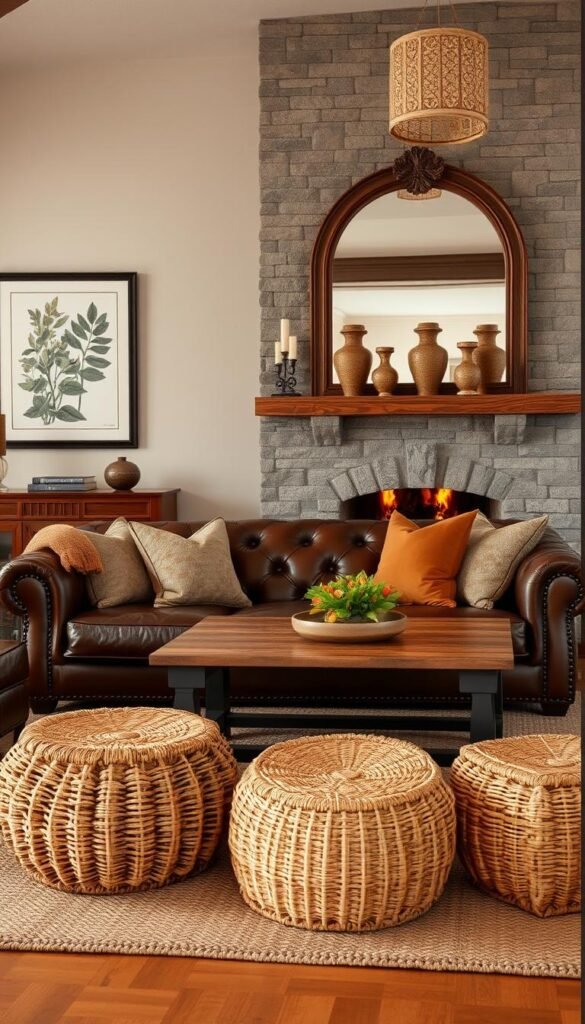
Your space transforms when you introduce varied tactile surfaces. This approach creates depth beyond color alone.
Texture mixing makes your area more engaging. It adds visual interest that keeps the eye moving around the room.
Different surfaces work together to build comfort. They create an environment that feels both luxurious and welcoming.
Start with foundational pieces like area rugs. Then layer smaller items for a collected, personal look.
Mixing Plush, Knitted, and Velvet Textiles
Plush textiles add instant comfort to any seating. Fake fur throws or sheepskin rugs create cozy spots.
These soft surfaces contrast beautifully with leather. They prevent sleek materials from feeling too cold.
Knitted throws offer practical elegance. Drape them over sofa arms for easy access during cooler evenings.
Their woven patterns add visual interest. Choose chunky knits for maximum texture impact.
Velvet pillows provide luxurious contrast. Their smooth, shiny surface plays against matte finishes.
Rich jewel tones enhance your color scheme. They create depth without overwhelming the space.
Balance multiple textures to avoid overload. Limit yourself to three or four main types in one area.
Different surfaces affect perceived warmth. Heavy wools feel cozier than light linens.
Adjust your textiles with the seasons. Switch to cotton throws in summer and wool blankets in winter.
Texture mixing helps balance dark furniture. Lighter, fluffier items prevent heavy pieces from dominating.
| Texture Type | Best Placement | Seasonal Use | Recommended Products |
|---|---|---|---|
| Faux Fur | Accent chairs, floor | Year-round | West Elm Faux Sheepskin Rug |
| Chunky Knit | Sofa throws, blankets | Fall/Winter | Pottery Barn Cable Knit Throw |
| Velvet | Pillows, ottomans | Year-round | Crate & Barrel Velvet Pillows |
| Woven Cotton | Light throws, curtains | Spring/Summer | Anthropologie Linen Blend Throws |
Choose quality pieces that feel good to touch. Your textiles should invite relaxation and comfort.
Mix patterns carefully with textures. Solid colors often work best with highly textured items.
Remember that texture creates emotion in your space. It turns a beautiful room into an inviting sanctuary.
5. Incorporate Metallic Accents for a Touch of Glamour
Shimmering metallic details can instantly elevate your space from ordinary to extraordinary. These elements add a sophisticated touch that complements your existing decor beautifully.
Metallic finishes create striking contrast against brown’s natural matte quality. The shine provides visual interest without overwhelming your comfortable atmosphere.
Gold and brass accents bring traditional warmth to your arrangement. They work particularly well with darker espresso tones and rich chocolate shades.
These finishes add timeless elegance through picture frames, decorative objects, and hardware details. Their yellowish undertones enhance the cozy feeling you want to maintain.
Copper and rose gold options offer more contemporary glamour effects. These metals work wonderfully in rustic or industrial-inspired spaces.
Their pinkish hues create unexpected harmony with medium walnut tones. You’ll achieve a fresh look that still feels inviting.
Metallic side tables and coffee table bases create visual lightness. They maintain style while preventing heavy wooden pieces from dominating your space.
Glass-top tables with metal frames work especially well. They reflect light and keep your area feeling open and airy.
Lighting fixtures make significant impact on overall ambiance. Metallic lamps, pendants, and sconces add glamour while providing functional illumination.
Floor lamps with brass finishes create beautiful pools of light. They enhance evening atmosphere while serving as decorative elements.
| Metallic Finish | Best Brown Pairing | Room Style | Application Ideas |
|---|---|---|---|
| Polished Brass | Espresso, Dark Walnut | Traditional, Transitional | Table bases, lamp bases, mirror frames |
| Brushed Gold | Medium Walnut, Caramel | Contemporary, Glam | Decorative trays, vase accents, hardware |
| Copper | Rustic Browns, Chocolate | Industrial, Rustic | Light fixtures, planters, accent tables |
| Rose Gold | Taupe, Light Walnut | Modern, Eclectic | Picture frames, small accessories, drawer pulls |
Select metallic finishes that complement your specific brown undertones. Cooler browns work well with silver tones while warmer browns prefer gold family metals.
Test samples in your actual lighting before making final decisions. Natural and artificial light changes how metals appear throughout the day.
Decorative metallic objects offer affordable glamour additions. Vases, trays, and sculptures provide sparkle without major investment.
These smaller items let you experiment with different metallic styles. You can easily change them if your taste evolves.
Balance metallic elements to avoid overwhelming your natural aesthetic. Use the 80/20 rule—80% natural materials, 20% metallic accents.
This ratio maintains warmth while adding just enough glamour. Your space feels luxurious without becoming cold or impersonal.
Metallic surfaces reflect light and help brighten darker spaces. They bounce illumination around the room, enhancing overall brightness.
This quality makes them particularly valuable in north-facing rooms. They compensate for limited natural light beautifully.
Successful incorporation examples include brass table lamps beside leather chairs. Copper pendant lights above wooden dining tables create stunning focal points.
Gold-framed mirrors opposite windows maximize light reflection. They make spaces feel larger and more open.
Remember that metallic accents should enhance rather than dominate. They provide the perfect finishing touch to your thoughtfully designed space.
6. Brighten the Space with Vibrant Color Accents
Vibrant accent colors bring energy and life to your design scheme. They prevent your space from feeling too neutral or monotonous.
Strategic pops of color create visual interest throughout your room. They draw attention to key furniture pieces and architectural features.
These bright accents work beautifully against earthy backgrounds. They provide refreshing contrast while maintaining overall harmony.
Using Throw Pillows in Mustard Yellow and Burnt Orange
Mustard yellow creates a warm, inviting atmosphere. This sunny hue complements brown’s natural warmth perfectly.
It adds cheerful energy without overwhelming your space. The golden undertones enhance the cozy feeling you want to maintain.
Burnt orange brings earthy vibrancy to your arrangement. This rich tone feels both natural and exciting.
It works particularly well with medium wood tones. The combination creates depth and dimension in your seating area.
Teal and blue-green shades offer cooling contrast. They balance warm browns with refreshing aquatic tones.
These colors prevent your space from feeling too warm. They create visual balance that feels both intentional and effortless.
Distribute accent colors evenly throughout your room. Place colorful pillows on sofas, chairs, and window seats.
This creates a cohesive look that feels designed rather than accidental. Your eye moves smoothly around the space.
Pillow shapes and sizes affect visual dynamics. Mix standard squares with lumbar and bolster shapes for interest.
Large pillows make bold statements. Smaller ones add subtle color touches without dominating.
Beyond pillows, consider other accent opportunities. Throws, artwork, and decorative objects offer additional color pops.
A yellow throw blanket draped over a chair adds instant warmth. Colorful vases or sculptures bring personality to shelves.
Choose accent colors that work with existing elements. Consider your wall color, flooring, and permanent fixtures.
Seasonal changes refresh your space easily. Switch to brighter shades in summer and richer tones in winter.
| Accent Color | Best Brown Pairing | Mood Created | Placement Ideas |
|---|---|---|---|
| Mustard Yellow | All brown shades | Warm & Cheerful | Pillows, throws, artwork |
| Burnt Orange | Medium to dark browns | Earthy & Vibrant | Accent chairs, ceramics |
| Teal | Light to medium browns | Refreshing & Balanced | Rugs, curtains, accessories |
| Emerald Green | Dark espresso browns | Luxurious & Natural | Velvet pillows, planters |
Test color combinations in your actual lighting. Colors appear different under natural versus artificial light.
Start with small, removable items before committing. Pillow covers offer affordable experimentation opportunities.
Remember that accent colors should enhance your overall design. They provide the perfect finishing touch to your thoughtfully curated space.
7. Bring the Outdoors In with Natural Elements
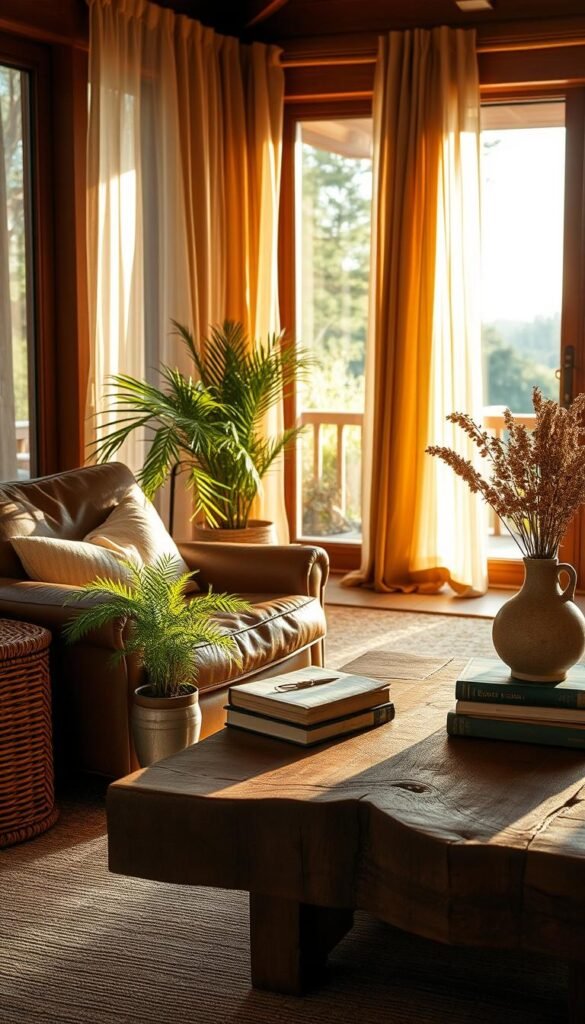
Nature offers the perfect complement to your earthy color scheme. These organic touches create harmony between your interior and the natural world outside.
Plants and natural materials enhance your room’s connection to earth. They make your area feel fresh, vibrant, and truly alive.
Living greenery brings movement and vitality to your arrangement. The varying shades of green contrast beautifully with rich brown tones.
Natural materials like wood and stone add authentic texture. They create visual interest that feels both intentional and effortless.
Adding Plants and Organic Materials
Choose plants that suit your light conditions and lifestyle. Consider maintenance requirements before making your selections.
Large statement plants create dramatic focal points. A fiddle leaf fig or ficus tree adds vertical interest and natural grandeur.
These taller plants work well in corners or beside furniture. They fill empty spaces with living beauty.
Smaller plant groupings offer flexibility throughout your room. Cluster succulents on shelves or place peace lilies on side tables.
Mix plant sizes for balanced visual impact. Combine floor plants with tabletop varieties for layered greenery.
Organic materials complement your existing furniture naturally. Reclaimed wood shelves add character and warmth.
Stone decorations like marble vases bring earthy elegance. Slate table centerpieces provide natural texture contrast.
Rattan and woven elements introduce additional natural textures. Baskets, trays, and light fixtures work beautifully.
These materials contribute to biophilic design principles. They create calming environments that reduce stress and improve wellbeing.
| Plant Type | Light Requirements | Maintenance Level | Best Placement |
|---|---|---|---|
| Snake Plant | Low to bright indirect | Very low | Corners, beside furniture |
| Fiddle Leaf Fig | Bright indirect | Moderate | Statement focal points |
| ZZ Plant | Low to moderate | Low | Shelves, tabletops |
| Pothos | Low to bright indirect | Low | Hanging, trailing surfaces |
| Succulents | Bright direct | Low | Windowsills, bright areas |
Balance live plants with low-maintenance options for busy households. Snake plants and ZZ plants tolerate occasional neglect.
Consider artificial plants for areas with challenging light conditions. High-quality faux greenery looks surprisingly realistic.
Natural elements contribute significantly to textural variety. They prevent brown-dominated spaces from feeling flat or monotonous.
The psychological benefits are remarkable. Studies show that biophilic design reduces stress and improves mental wellbeing.
Your room becomes a sanctuary that connects you to nature. This connection feels particularly valuable in urban environments.
Start with one or two plants and build gradually. Observe how they affect your room’s atmosphere before adding more.
Remember that natural elements should enhance rather than overwhelm. They provide the perfect organic complement to your design.
8. Play with Patterns on Rugs and Soft Furnishings
Patterns can transform your space from simple to spectacular with just a few thoughtful additions. They add movement and visual interest against solid brown backgrounds, creating dynamic energy throughout your room.
Geometric designs create modern, structured looks that complement contemporary furniture beautifully. Clean lines and repeating shapes bring order and sophistication to your arrangement.
Floral and organic patterns work wonderfully in softer, more traditional spaces. These designs add natural elegance that feels both timeless and inviting.
Pattern mixing creates incredible depth while maintaining cohesion through color linking. Choose designs that share at least one common color for harmonious results.
Scale selection matters for balanced visual impact. Larger patterns work best in spacious rooms, while smaller designs suit compact areas.
Your patterned rug anchors the entire space and defines the color palette for other elements. It becomes the foundation that ties everything together beautifully.
Patterned curtains serve as vertical elements that balance horizontal furniture lines. They draw the eye upward, creating balanced visual weight throughout your room.
Distribute patterns evenly for harmonious results. Place patterned pillows on sofas, chairs, and window seats for cohesive visual flow.
Mixing patterns without chaos requires thoughtful color coordination. Stick to a limited color palette that works with your existing elements.
Successful combinations often feature one large-scale pattern paired with medium and small designs. This creates visual hierarchy that feels intentional rather than random.
| Pattern Type | Best Room Size | Style Compatibility | Color Linking Strategy |
|---|---|---|---|
| Large Geometric | Spacious areas | Contemporary, Modern | Use one bold accent color throughout |
| Small Floral | Compact spaces | Traditional, Cottage | Match background colors to existing palette |
| Organic Textures | All sizes | Transitional, Rustic | Use natural earth tones for cohesion |
| Striped Patterns | Narrow rooms | Coastal, Classic | Pull colors from other patterned elements |
Remember that patterns should enhance rather than overwhelm your space. They provide the perfect finishing touch to your thoughtfully designed environment.
9. Embrace a Modern Rustic Theme
You can create a space that feels both contemporary and deeply connected to nature. This design style celebrates raw materials and clean lines in perfect harmony.
Think of it as bringing the cabin feel into today’s homes. You get that comforting warmth with a fresh, updated look.
Your brown leather sofa becomes the natural centerpiece in this setting. Its rich texture and color echo the organic elements around it.
Distressed wood furniture adds character and history. Pair it with sleek metal accents for balance.
Neutral color palettes work beautifully here. Think warm grays, soft whites, and earthy tones.
These colors let your natural materials shine. They create a calm backdrop for textural contrasts.
Lighting choices greatly affect your rustic-modern balance. Industrial fixtures with clean lines work wonderfully.
They provide contemporary contrast against rough wood surfaces. Natural materials like woven rattan shades add softness.
Accessories should enhance rather than overwhelm your theme. Choose simple, functional pieces with character.
Hand-thrown pottery, wool throws, and metal trays all work well. They add personality without clutter.
Architectural features can amplify your rustic appeal. Exposed beams or stone accents create instant character.
Don’t worry if your home lacks these features. You can create similar effects through careful styling.
Reclaimed wood shelves mimic exposed structural elements. Stone-look tiles bring natural texture to plain walls.
Your leather furniture particularly suits this aesthetic. It offers both rugged durability and refined elegance.
The natural aging process only enhances its character. Scratches and patina become part of its story.
This approach creates spaces that feel collected rather than designed. Everything seems to belong together naturally.
You achieve a look that’s both stylish and completely livable. It’s perfect for creating that welcoming sanctuary you desire.
10. Design a Cozy Conversation Area with Your Layout
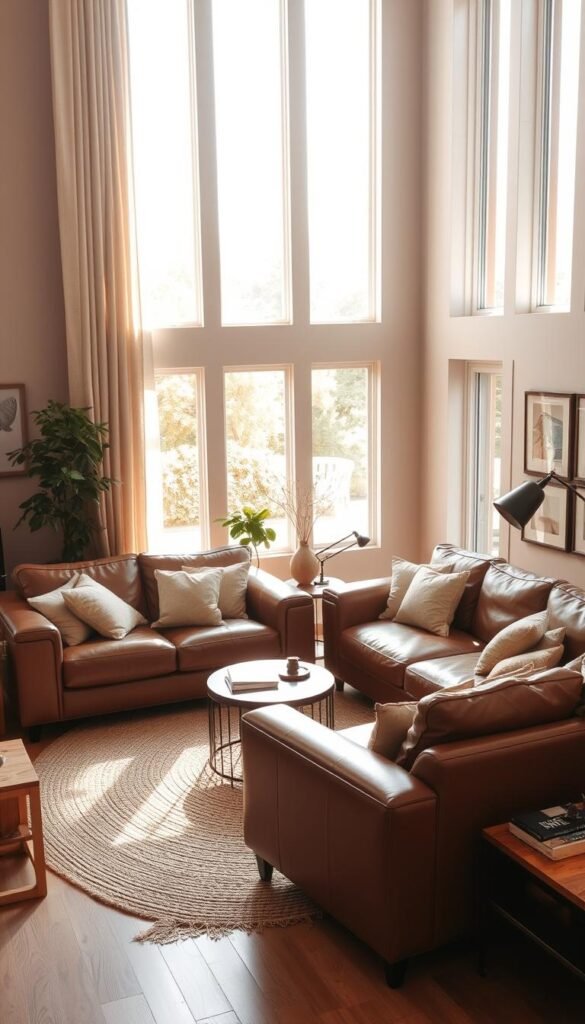
The way you arrange your seating determines the social dynamic of your space. Thoughtful placement encourages connection and makes your area more inviting for gatherings.
Facing two sofas toward each other creates an instant conversation zone. This arrangement feels natural and welcoming for both small talks and deep discussions.
You can use matching pieces for a symmetrical look. Alternatively, mix different shades and fabrics for added visual interest.
Your furniture arrangement significantly impacts how people interact. Open layouts with clear sightlines encourage participation from everyone.
Create intimate seating even in larger rooms by grouping pieces closer together. This makes the area feel cozy despite the spacious surroundings.
Place your coffee table between seating pieces for shared access. This central piece becomes the natural gathering point.
Consider traffic flow when positioning your furniture. Leave clear pathways so movement feels natural and unobstructed.
Area rugs help define conversation spaces within open floor plans. They create visual boundaries that make the area feel intentional.
Lighting placement ensures proper illumination for social interactions. Combine overhead lighting with table lamps for balanced brightness.
Balance furniture scale with your room dimensions. Oversized pieces can overwhelm, while too-small items may get lost in the space.
Accessory tables support conversation area functionality. End tables provide surface space for drinks and personal items.
“Good design is about creating spaces that people want to be in together.”
Different room shapes require customized layout approaches. Consider these examples for various scenarios.
| Room Shape | Recommended Layout | Furniture Placement | Traffic Flow Pattern |
|---|---|---|---|
| Square Room | Angled conversation area | Sofas at 45-degree angles | Circular path around perimeter |
| Rectangular Room | Parallel sofa arrangement | Pieces facing each other | Clear central pathway |
| Open Concept | Floating furniture group | Centered on area rug | Pathways around group |
| Small Space | L-shaped configuration | Sofa and loveseat combo | Single entry/exit point |
Your layout should make the space feel inviting rather than formal. Avoid pushing all furniture against walls in larger rooms.
Floating furniture arrangements often create more intimate settings. They make conversation areas feel dedicated and purposeful.
Remember that the best layouts encourage natural interaction. Your guests should feel comfortable starting conversations effortlessly.
11. Utilize Strategic Lighting to Set the Mood
Proper illumination completely transforms how your space feels throughout the day. It turns potentially dark areas into welcoming environments that invite relaxation.
Your lighting choices dramatically affect perceived warmth and comfort. They can make earthy tones feel either cozy or heavy depending on your approach.
Layered lighting creates the most inviting atmosphere. Combine three types for optimal results.
Ambient lighting provides overall illumination. This includes ceiling fixtures and natural sources.
Task lighting serves specific functions. Reading lamps and under-cabinet lights fall into this category.
Accent lighting highlights architectural features or artwork. Directional spots and picture lights work beautifully.
Warm light temperatures enhance cozy feelings. They make rich tones appear even more inviting.
Cooler temperatures create modern contrast. They work well in contemporary spaces with clean lines.
Dimmable options offer incredible flexibility. You can adjust brightness for different times and activities.
Morning might call for full brightness. Evening gatherings benefit from softer, more intimate settings.
Floor lamps provide excellent ambient illumination. They cast gentle light that fills corners beautifully.
Table lamps offer both task and accent lighting. Their focused light creates cozy pools of illumination.
Pendant lights make stylish statements above seating areas. They provide focused light while adding decorative interest.
Placement significantly impacts functionality and mood. Position lights to avoid shadows where people read or converse.
Natural light enhancement strategies brighten darker spaces. Mirrors opposite windows maximize daylight reflection.
Sheer curtains diffuse harsh sunlight while maintaining brightness. They prevent glare without sacrificing natural illumination.
Bulb selection affects how colors appear. Choose bulbs that flatter surfaces without unwanted yellowing.
LED options offer excellent color rendering. They provide clean, accurate light that shows true colors.
Metallic finishes on fixtures interact beautifully with earthy tones. Brass and copper add warm reflections.
These materials complement rather than compete with your palette. They provide that perfect finishing touch.
| Lighting Type | Best Placement | Bulb Temperature | Recommended Use |
|---|---|---|---|
| Floor Lamp | Beside seating groups | 2700-3000K | Evening ambient light |
| Table Lamp | End tables, consoles | 2700-2900K | Reading, task lighting |
| Pendant Light | Above coffee tables | 3000-3500K | Focused illumination |
| Track Lighting | Along walls, ceilings | Adjustable | Artwork highlighting |
Experiment with different combinations to find your perfect balance. Your lighting should support both function and atmosphere.
Remember that good lighting makes everything look better. It enhances colors, textures, and overall comfort in your space.
12. Style with Leather for Timeless Elegance
Leather furniture brings a special quality to your home that only improves with time. This material offers both durability and sophisticated style that works across many design approaches.
Natural leather develops a beautiful patina as it ages. Each scratch and mark tells a story, adding character to your space. This aging process creates unique pieces that reflect your life and experiences.
Different leather types offer varying aesthetic effects. Full-grain leather shows natural markings and develops rich character over years. Top-grain leather provides a smoother surface with consistent coloring.
Proper care maintains your leather’s beauty for decades. Regular conditioning prevents drying and cracking. Immediate cleaning of spills preserves the surface integrity.
Combine leather with other materials for balanced design. Soft fabrics like wool throws add comfort against cool leather surfaces. Wooden elements enhance the natural warmth of brown tones.
Metallic accents provide elegant contrast against rich leather. Brass lamp bases or chrome table legs create visual interest. These combinations work across traditional and contemporary settings.
Brown leather offers numerous color variations to match your palette. Light tan shades create airy, casual feelings. Dark espresso tones bring sophisticated depth to formal spaces.
Accessorize leather furniture to enhance comfort without hiding its beauty. Textured pillows provide softness against firm seating. Lightweight throws offer warmth during cooler evenings.
Leather contributes both visual and tactile warmth to your environment. Its rich surface reflects light beautifully. The material feels inviting to touch and sit upon.
Consider a brown leather sofa as your rustic room’s centerpiece. Pair it with shiplap walls and brick fireplace accents. Add a vintage-finish chandelier to complete the welcoming atmosphere.
This versatile material works equally well in modern industrial spaces. Clean lines and minimal ornamentation highlight leather’s natural beauty. The combination creates environments that feel both stylish and comfortable.
“Good leather is like fine wine—it only gets better with age.”
Your leather investment pays dividends through years of enjoyment. It becomes more beautiful with each passing season. This timeless choice will serve your family for generations.
13. Choose the Perfect Rug to Anchor Your Space
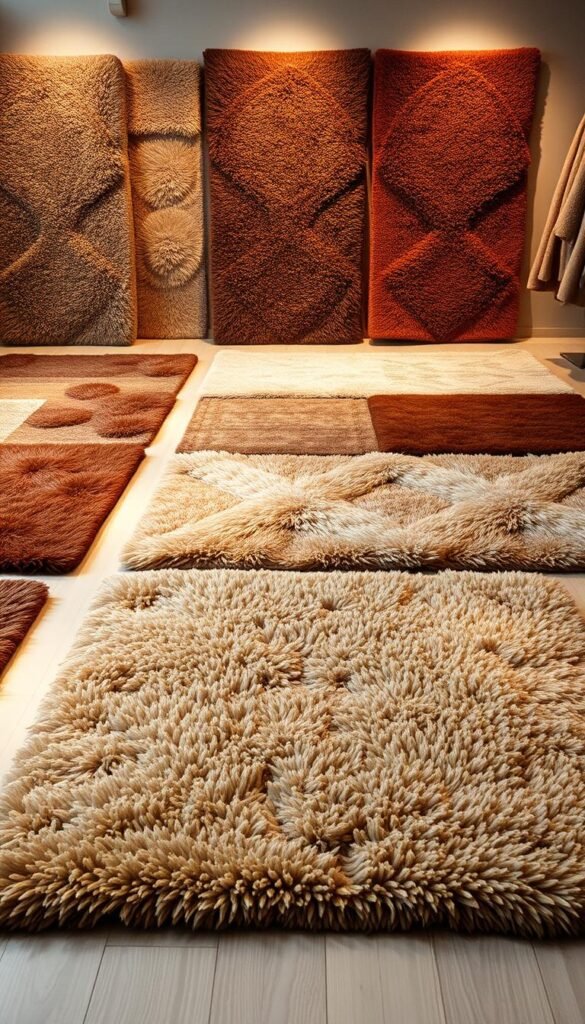
Your floor covering serves as the foundation that ties everything together beautifully. It defines the seating area while adding comfort underfoot.
A well-chosen rug creates visual boundaries in open floor plans. It makes your furniture arrangement feel intentional and complete.
Size selection depends on your furniture layout and room dimensions. The rug should extend beyond your sofa and chairs.
Leave about 12-18 inches of floor showing around the edges. This creates a balanced look that doesn’t overwhelm the space.
Pile height affects both comfort and maintenance. Low-pile options work well in high-traffic areas.
They’re easier to clean and maintain over time. High-pile rugs offer luxurious softness for cozy lounging.
Patterned rugs add visual interest against solid furniture. They create movement and energy in your arrangement.
Solid-colored options provide calm backdrops for busy rooms. They let other elements shine without competition.
Color selection can either complement or create intentional contrast. Navy or burgundy work beautifully with dark furniture.
Neutral tones create seamless transitions between elements. They maintain cohesion while adding texture.
Texture contributes significantly to tactile experience. Wool rugs feel soft and warm underfoot.
Synthetic options offer durability and stain resistance. Natural fibers like jute add organic texture.
Layering rugs creates dimensional luxury in your space. Place a smaller patterned rug over a larger neutral one.
This technique adds visual depth and personal style. It’s perfect for defining specific areas within larger rooms.
Placement affects furniture arrangement and room flow. All furniture legs should rest on the rug in formal settings.
For a more casual look, just the front legs can sit on the rug. This creates cohesion while saving on rug size.
| Rug Type | Best For | Maintenance Level | Color Recommendation |
|---|---|---|---|
| Wool | Durability & Comfort | Medium | Navy, Charcoal Gray |
| Polypropylene | High-Traffic Areas | Low | Burgundy, Forest Green |
| Jute/Sisal | Natural Texture | Medium | Natural Beige, Cream |
| Cotton | Easy Cleaning | Low | Soft Gray, Light Blue |
Consider your lifestyle when selecting materials. Pets and children may require more durable options.
Rotate your rug periodically to ensure even wear. This extends its life and maintains appearance.
Proper rug pads prevent slipping and add cushioning. They protect both your rug and flooring underneath.
Your choice should enhance your overall color palette. It provides the perfect finishing touch to your thoughtfully designed space.
14. Add Personality with Eclectic and Global Touches
Your space becomes truly yours when you blend different cultural influences. This approach creates a unique look that reflects your personal journey and tastes.
Eclectic elements prevent your design from feeling too safe. They add unexpected twists that keep the eye engaged and interested.
Global inspiration brings wonderful diversity to your arrangement. Moroccan patterns offer intricate geometric designs. Scandinavian simplicity provides clean, functional beauty.
Asian influences bring serene balance and natural harmony. These diverse sources work beautifully with earthy tones.
Mix cultural accents respectfully and authentically. Choose items that honor their origins rather than caricature them.
Support artisans from the cultures you admire. This ensures authenticity while contributing to traditional crafts.
Color combinations extend beyond typical earth tones. Vibrant pinks create exciting contrast against rich backgrounds.
Turquoise and coral add tropical energy to neutral spaces. These bold choices make your room feel lively and personal.
Curating collections prevents clutter in eclectic designs. Group similar items together for visual impact.
Display artifacts on dedicated shelves or in glass cabinets. This shows respect while keeping your space organized.
Personal artifacts and travel souvenirs add meaningful character. Each piece tells a story about your experiences.
These items transform your room into a personal museum. They spark conversations and create emotional connections.
Pattern mixing requires thoughtful coordination in global styles. Choose patterns that share at least one common color.
Vary pattern scales for visual interest. Combine large motifs with smaller designs for balanced complexity.
Balance eclectic elements with brown’s inherent stability. Let your furniture provide the grounding foundation.
Use accessories for cultural expressions. This allows flexibility while maintaining overall harmony.
Lighting choices enhance global eclectic themes dramatically. Moroccan lanterns cast beautiful patterned shadows.
Japanese paper lamps provide soft, diffused illumination. These fixtures become artistic statements themselves.
Successful eclectic spaces often feature a neutral foundation. Bold patterns and colors appear against calm backgrounds.
Everything feels intentional rather than random. The space tells a cohesive story through diverse elements.
Your room becomes a celebration of global beauty and personal history. It feels both collected and carefully designed.
15. Curate a Monochromatic Brown Palette for Sophistication
Working within one color family challenges you to explore texture and contrast. This approach creates remarkable depth through subtle variations rather than multiple colors.
A monochromatic scheme delivers instant elegance through tonal harmony. Everything feels intentionally coordinated yet beautifully layered.
Deep espresso walls set a cozy, intimate atmosphere. They create a rich backdrop that makes lighter furniture pop beautifully.
Your plush mocha sofa adds warmth against dark backgrounds. Matching throws and cushions enhance the cohesive theme perfectly.
Texture mixing prevents single-color spaces from feeling flat. Combine smooth leather with nubby wool and soft velvet fabrics.
Different materials create visual interest through tactile variation. This approach maintains cohesion while adding dimensional richness.
Shade selection requires thoughtful consideration of undertones. Stick within the same color family for harmonious results.
Balance dark and light values for visual comfort. Use deeper tones for anchoring pieces and lighter shades for accents.
Metallic accents work particularly well in monochromatic schemes. Brass and gold finishes add warmth without breaking the color story.
Patterns introduce movement within your single-hue palette. Geometric designs or organic motifs add energy without color disruption.
Lighting dramatically affects how different shades appear throughout the day. Natural light reveals subtle undertones in your brown tones.
Evening illumination creates cozy intimacy in darker schemes. Layer ambient, task, and accent lighting for optimal effect.
| Element | Dark Value | Medium Value | Light Value |
|---|---|---|---|
| Walls | Espresso | Walnut | Taupe |
| Furniture | Chocolate | Mocha | Caramel |
| Textiles | Dark Brown | Medium Brown | Tan |
| Accents | Mahogany | Cognac | Beige |
Successful monochromatic rooms feature at least three value variations. This creates natural depth and prevents visual flatness.
Your space becomes a study in sophisticated restraint. The limited palette highlights architectural details and furniture forms beautifully.
“Monochromatic design isn’t about limitation—it’s about revelation through refinement.”
This approach works particularly well in open-concept spaces. It creates visual continuity that flows seamlessly between areas.
Remember that monochromatic doesn’t mean monotonous. Your carefully curated palette delivers sophisticated comfort that feels both intentional and inviting.
Transform Your Space with These Warm and Welcoming Ideas
Your journey to a more inviting home starts with small, thoughtful changes. Brown’s versatility shines across various styles and budgets, making it easy to begin anywhere.
Remember to balance color, texture, pattern, and light for the best results. Start with pieces that match how you actually use your area daily.
Even simple updates can dramatically improve comfort and style. This earthy tone offers incredible transformative potential when applied thoughtfully.
Create a phased plan for larger projects to avoid feeling overwhelmed. Your personal taste should always guide final decisions.
Explore design blogs and showrooms for continued inspiration. Most importantly, build a space that truly reflects your personality and feels like home.