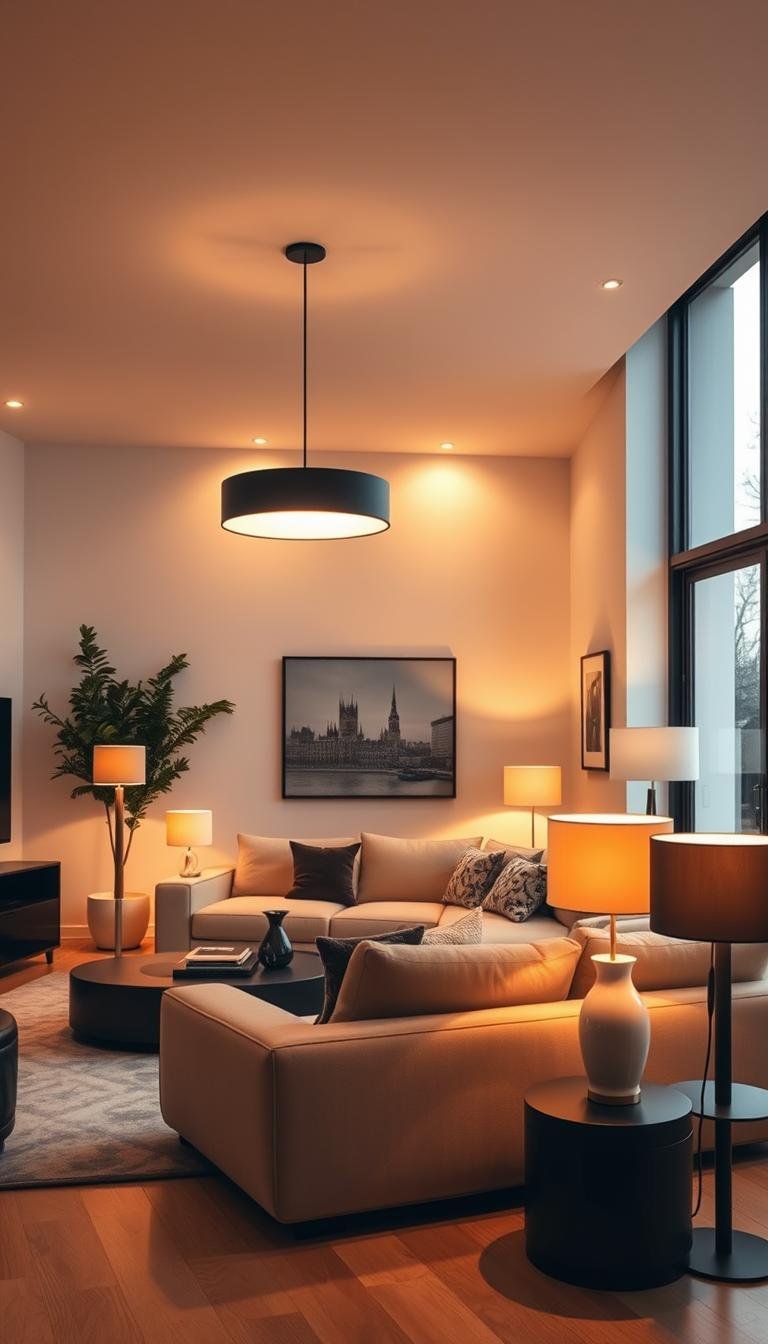
Welcome to your ultimate guide for transforming your home with brilliant illumination. The right glow can completely change how your space feels and functions.
Light is more than just practical. It’s a key design element that expresses your personal style. You can use it to highlight what matters most in your house.
This guide shows you how to create the perfect atmosphere. You’ll discover innovative ways to turn simple areas into something special. Prepare to move beyond basic solutions.
Learn to play with scale, shadow, and glow. Create an environment that feels entirely your own. Get ready to transform your everyday experience with carefully chosen illumination.
Why Your Living Room Lighting is the Key to Ambiance
Think about the last time you walked into a room that just felt right. That feeling wasn’t an accident. It was carefully crafted with illumination.
Your home’s atmosphere starts with the right lighting. It goes far beyond just letting you see. It shapes how you feel in your space every single day.
Good design uses light to tell a story. It highlights what you love. Your favorite chair, a piece of art, or a beautiful bookshelf can become the star of the show.
This approach turns a functional area into an emotional experience. It reflects your unique personality and style.
Top designers often say illumination is the jewelry of interior design. It adds that final layer of sparkle and sophistication. It makes everything come together.
You can use it to create different zones without walls. A well-placed lamp can define a reading nook. Overhead fixtures can highlight a conversation area.
The color temperature of your bulbs plays a huge role too. Warm tones make a space feel cozy and inviting. Cooler light can make the same area feel energetic and bright.
This isn’t just about looks. It’s about psychology. The right glow can turn an ordinary Tuesday night into something special.
Your illumination works with your furniture, colors, and textures. It helps create one cohesive design story throughout your home.
For more inspiration on creating the perfect glow, explore these lighting ideas for living rooms.
Remember: your choices have power. They can make a room feel larger or more intimate. They can add drama or create peace.
This is why professionals treat it as a centerpiece. It’s not an afterthought. It’s the secret ingredient to a home that truly feels like yours.
Focus Light with Strategic Picture Sconces
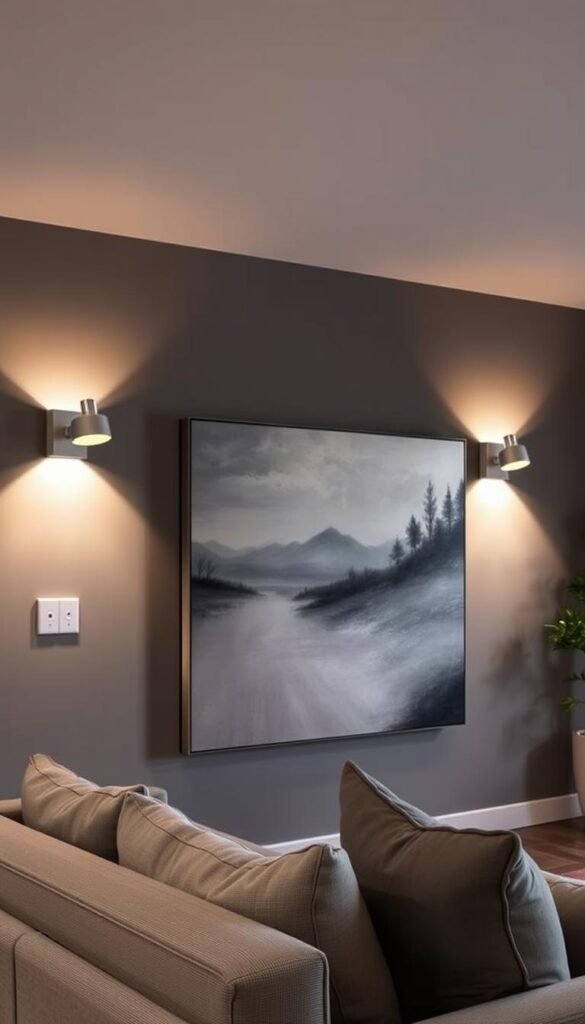
Picture sconces offer a brilliant solution for directing illumination exactly where you need it. These versatile fixtures mount directly to your wall and provide focused beams that highlight specific features.
Unlike general overhead options, they create intentional pools of light that draw attention to your favorite elements. This approach transforms how you experience your space.
Highlighting Art and Built-in Shelves
Professional interior design firms like Kemble Interiors use this technique masterfully. They position sconces to illuminate book spines and decorative objects on built-in shelves.
The result? Your collections become showcased features rather than hidden details. This method works equally well for artwork.
Position sconces about 18-24 inches above your pieces for optimal effect. Angle them slightly downward to avoid glare while maximizing visibility.
This creates a gallery-like atmosphere in your home. Your prized possessions finally get the attention they deserve.
Creating a Soft, Indirect Glow
The magic of directional lights lies in their ability to cast gentle illumination across your entire area. By focusing beams on specific points, they create reflected light that fills the space softly.
This eliminates harsh shadows and bright spots that can make a room feel uncomfortable. Instead, you get even, ambient brightness that feels natural and inviting.
Consider these installation tips for best results:
- Mount sconces at eye level or slightly higher
- Space them 6-8 feet apart for even coverage
- Choose warm white bulbs (2700-3000K) for cozy atmosphere
- Angle fixtures 30 degrees downward for optimal focus
Different sconce styles offer various look options. From minimalist designs to traditional brass finishes, there’s something for every interior scheme.
These fixtures can replace harsh overhead options in reading nooks or conversation areas. They create intimate lighting scenarios that make spaces feel larger and more welcoming.
Your existing decor will be enhanced rather than overwhelmed. Strategic placement draws the eye through your space in a deliberate, beautiful way.
Choose a Statement Chandelier for Dramatic Effect
Nothing transforms a space like a stunning centerpiece hanging from above. A well-chosen chandelier becomes the focal point that ties your entire room together.
These fixtures do more than provide illumination. They create instant drama and become conversation starters. Your choice reflects your personal style in a powerful way.
Designer Allison Willson proved this in a Toronto project. She used a tree-branch-inspired chandelier to bring nature indoors. The organic design created beautiful contrast against neutral walls.
This approach connects your interior with the outdoors. It adds organic texture while maintaining sophistication.
Drawing Inspiration from Nature
Natural elements make stunning chandelier designs. Think beyond traditional crystal options. Consider branch formations, leaf patterns, or organic shapes.
These designs bring warmth and texture to your ceiling. They work particularly well in spaces with large windows or natural materials.
The key is balance. Let your natural-inspired fixture stand out against simpler decor. This creates focus without overwhelming the space.
Complementing Your Home’s Architectural Style
Your chandelier should enhance your home’s existing character. It shouldn’t fight against it. Consider your architectural details when choosing.
Nicholas Obeid’s Albany project shows how this works. Modern chandeliers in traditional spaces create exciting tension. The contrast feels intentional and sophisticated.
Gilles & Boissier used a sputnik-style fixture in Milan. The modern design lifted the entire atmosphere. It added lightness while making a strong statement.
Use this table to find your perfect match:
| Your Home’s Style | Chandelier Recommendation | Effect Created |
|---|---|---|
| Traditional | Modern geometric designs | Interesting tension and contrast |
| Contemporary | Organic/natural inspired pieces | Warmth and texture balance |
| Minimalist | Statement sputnik or linear designs | Drama without clutter |
| Rustic | Metal or wood branch designs | Enhanced natural atmosphere |
Proper sizing matters too much to ignore. Follow this simple formula: Add your room’s length and width in feet. That number in inches equals your ideal chandelier diameter.
For height: Allow 7 feet clearance from floor to bottom. Hang 30-36 inches above tables in dining areas.
Placement creates different effects. Center placement makes a bold statement. Over coffee tables defines conversation areas beautifully.
Remember: Your chandelier works with other light sources. Layer it with sconces and lamps for complete illumination. This creates depth and flexibility in your lighting scheme.
Elevate Your Design by Concealing Cords Creatively
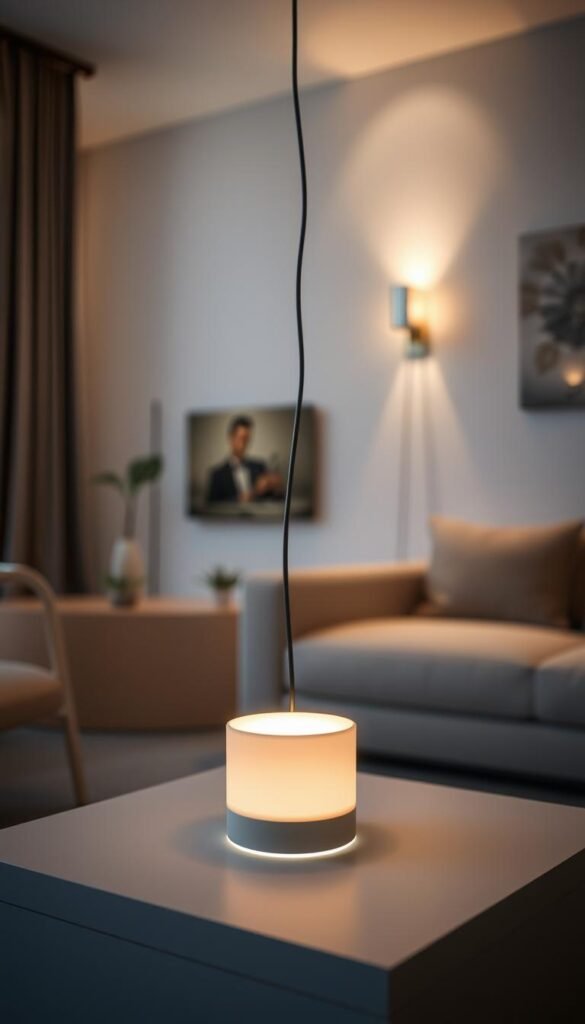
Beautiful fixtures deserve beautiful presentation. Unsightly cords can ruin your perfect setup. Creative concealment turns functional necessities into design features.
Designer Cecilia Casagrande proved this brilliantly. She used a tactile tassel to cover a pendant cord. This simple touch transformed plain wiring into decorative elegance.
Your approach matters just as much as your fixtures. Proper cord management creates polished installations. It shows attention to detail that separates good from great.
Explore these effective methods for hiding wires:
- Raceways and cord covers – plastic or metal channels that hide wires along walls
- Decorative sleeves – fabric or braided covers that match your decor
- Creative routing – using furniture or architectural features to hide wiring
- Wireless options – battery-powered or plug-in lights that eliminate cords
Professional installers use existing features beautifully. They might run wires behind crown molding or through baseboards. This approach requires minimal renovation work.
DIY techniques offer great results too. You can use paintable cord covers that blend into walls. Adhesive-backed channels work well for temporary solutions.
Safety always comes first when concealing electrical elements. Never cover cords with flammable materials. Maintain proper ventilation around electrical components.
Consider this comparison of concealment methods:
| Method | Difficulty Level | Cost Estimate | Best For |
|---|---|---|---|
| Decorative sleeves | Easy | $15-40 | Rental homes, temporary solutions |
| Cord covers | Moderate | $20-60 | Permanent installations, wall-mounted lights |
| Architectural integration | Advanced | $100-300+ | Custom homes, renovation projects |
| Wireless lighting | Easy | $50-200+ | Flexible arrangements, no-wire zones |
The right solution enhances your overall design. It creates cleaner lines and more focused attention on your fixtures. Your space gains professional polish without major construction.
High-end projects often combine multiple methods. They might use built-in raceways with decorative elements. This creates seamless integration that looks intentional.
Your creative cord solutions should complement your style. Match colors to your wall paint or fixture finishes. Choose materials that feel consistent with your overall decor.
Remember: great design considers every detail. Even the functional elements can become beautiful features. Your careful attention transforms ordinary installations into extraordinary statements.
Create Cohesion with a Color-Coordinated Lighting Scheme
Color coordination transforms good design into great design. When your illumination works with your color palette, everything feels intentional. This approach creates visual harmony throughout your space.
Think about how colors flow from one area to another. Your lighting can become part of this beautiful story. It connects different elements instead of standing alone.
Designer Colleen Simonds mastered this technique beautifully. She used chartreuse across multiple elements in a project. This vibrant hue appeared in lampshades, artwork, and throw pillows.
The repetition created rhythm and balance. It made the space feel thoughtfully curated rather than random. Your eye moves smoothly from one feature to another.
Matching Lampshades to Your Decor Palette
Your lamp shades offer perfect opportunities for color storytelling. They can pick up accent colors from your textiles or walls. This creates subtle connections throughout your room.
Choose shades that complement your existing decor. They don’t need to match exactly. Harmonious tones work better than perfect matches.
Consider these approaches for color coordination:
- Pull colors from your largest pattern (rug or curtains)
- Match shades to your wall color for a monochromatic scheme
- Choose complementary colors for dynamic contrast
- Use neutral shades with colored liners for versatility
Colored bulbs and filters offer additional options beyond shades. They can cast beautiful tones across your entire space. This works particularly well for setting specific moods.
Warm amber tones create cozy evenings. Cool blues feel refreshing and energetic. You can change them seasonally or for different occasions.
Balance is crucial when working with colored illumination. Too much color can feel overwhelming. Neutral backgrounds help colored lights shine beautifully.
Open-concept spaces benefit greatly from color-coordinated lighting ideas. They help define areas while maintaining visual flow. Your table lamps can connect your seating area to your dining space.
Psychology plays a role in color selection too. Different hues affect how we perceive space and atmosphere. Warm colors feel inviting and intimate.
Cool tones make areas feel more spacious and airy. Your choices should support how you want to feel in your living room.
Remember: cohesion doesn’t mean monotony. Variation within your color story adds interest and depth. Your fixtures become integral parts of your overall interior design.
Incorporate Texture Through Fixtures and Finishes
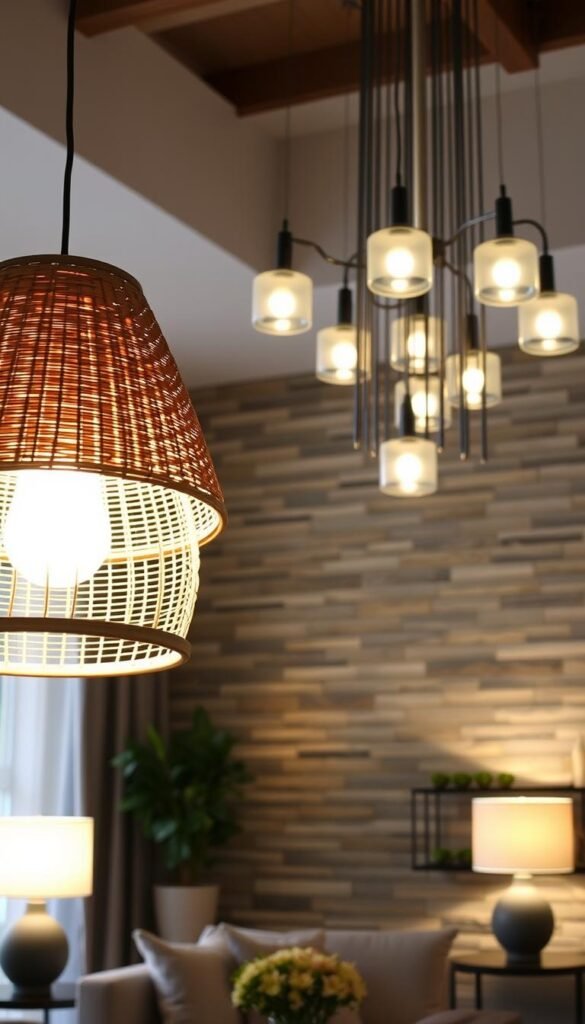
Texture adds depth and character to your space. It turns simple surfaces into engaging experiences. Your lighting choices can introduce wonderful tactile elements.
Wendy Labrum showed this beautifully in a Chicago home. She used textured plaster walls with matching ceiling fixtures. This created layered nuance throughout the space.
Delia Kenza took a similar approach with sculptural impact. She leaned a floor lamp against a plaster wall. This transformed functional illumination into artistic expression.
Using Plaster and Tactile Materials
Plaster brings organic warmth to your design. It catches light in soft, interesting ways. The material creates subtle shadows that add dimension.
Concrete offers industrial charm with natural variation. Each piece has unique characteristics. It works beautifully in contemporary spaces.
Woven fibers provide soft, diffused illumination. They create cozy atmospheres perfect for relaxation. Natural materials like rattan or bamboo add earthy texture.
Hammered metals offer reflective qualities with artistic flair. Their surfaces scatter light in captivating patterns. This adds movement and energy to your room.
Consider these material characteristics for your scheme:
| Material | Light Diffusion | Best For | Atmosphere Created |
|---|---|---|---|
| Plaster | Soft, even glow | Ambient illumination | Warm, organic feel |
| Concrete | Directional with soft edges | Statement pieces | Modern, industrial vibe |
| Woven fibers | Gentle, filtered light | Accent lighting | Cozy, natural mood |
| Hammered metal | Sparkling, dynamic patterns | Feature fixtures | Energetic, artistic space |
Artisan pieces emphasize craftsmanship through texture. They become conversation starters in your home. Each piece tells a story through its materiality.
Balance textured elements with smooth surfaces. This creates visual interest without overwhelming. Your space feels curated and intentional.
Texture affects how light behaves in your area. Rough surfaces scatter illumination softly. Smooth finishes create sharper, more defined beams.
Experiment with different combinations. A textured table lamp on a smooth surface creates beautiful contrast. This approach adds depth to your overall look.
Your lighting becomes part of your decor story. It works with other textured elements in your space. This creates harmony throughout your interior design.
Embrace Minimalism with Subtle, Tonal Fixtures
Sometimes the most powerful statements are made through quiet restraint rather than bold declarations. Minimalist lighting creates calm, serene environments that feel both intentional and peaceful.
This approach focuses on function without visual distraction. Your fixtures blend seamlessly rather than compete for attention.
Jeremiah Brent used tonal fixtures including a subtle wall sconce that blended with white paint and a paper lantern that added natural texture to an alpine-inspired space.
This concept of “quiet lighting” serves your needs without demanding visual attention. It makes small spaces feel larger and more open.
Blending Sconces into Walls
Installation techniques can make sconces disappear into wall surfaces. Choose fixtures that match your wall color exactly.
Paint the backplate the same shade as your wall. This creates a seamless integration that feels built-in rather than added.
Consider these approaches for invisible installation:
- Select flush-mounted designs that sit perfectly against the surface
- Use matte finishes that absorb rather than reflect light
- Install wiring through the wall rather than using visible cord covers
- Choose minimalist designs with clean, simple lines
This method focuses attention on other design elements in your room. Your artwork or furniture becomes the star.
Using Natural Textures like Paper Lanterns
Paper lanterns bring organic texture to minimalist designs. They create soft, diffused light that feels warm and inviting.
These natural materials connect to the Japanese concept of wabi-sabi. This philosophy celebrates imperfection and natural beauty.
Paper lanterns work beautifully in various areas:
- Hanging above reading nooks for gentle illumination
- Grouped in clusters for artistic statement pieces
- Used as table lamps for soft ambient glow
- Placed in corners to create cozy atmospheres
Integrated lighting solutions hide within architecture and furniture. This maintains your minimalist aesthetic while providing adequate illumination.
Your space gains visual peace through thoughtful reduction. Every element serves a purpose without unnecessary decoration.
Opt for Multi-Directional Lamps for Versatile Illumination
Imagine a single fixture that adapts to your changing needs throughout the day. Multi-directional lamps offer this incredible flexibility. They provide targeted illumination exactly where you need it most.
Designer Chenault James understood this power perfectly. She selected a lamp with multiple shades, arms, and bulbs. This choice ensured well-rounded coverage in every corner.
Fixed sconces or ceiling options cast beams in one direction only. Adjustable lamps solve this limitation beautifully. They let you direct beams toward specific tasks or features.
These fixtures provide both ambient and task lighting from one source. You get comprehensive coverage without multiple individual units. This simplifies your setup while enhancing functionality.
Explore these popular multi-directional styles:
- Arc lamps – sweeping curves that deliver overhead illumination
- Multi-head floor lamps – several adjustable arms from one base
- Adjustable task lights – perfect for reading nooks or workspaces
Placement strategies vary based on your room configuration. Position arc lamps behind seating areas to create overhead glow. Use multi-head designs between chairs for shared illumination.
These lamps accommodate different activities seamlessly. Adjust arms for reading in the evening. Redirect shades for ambient glow during movie nights.
Modern versions include impressive technological features. Dimmers let you control brightness levels. Color temperature adjustments match your desired atmosphere.
Smart controls offer ultimate convenience. Program settings for different times of day. Control everything from your phone or voice commands.
Design styles range from industrial to contemporary. Metal finishes work well in modern spaces. Natural materials complement organic decor schemes.
This table shows how multi-directional lamps compare to traditional options:
| Fixture Type | Beam Direction | Best Use | Flexibility Level |
|---|---|---|---|
| Multi-directional lamp | Adjustable multiple directions | Versatile task and ambient light | High |
| Traditional table lamp | Fixed upward or downward | Focused area illumination | Low |
| Ceiling fixture | Fixed downward | General overhead light | None |
| Wall sconce | Fixed single direction | Accent or task lighting | Low |
Reduce clutter by choosing one multi-functional fixture. You eliminate the need for several separate lights. Your space feels cleaner and more organized.
These lamps become functional sculptures in your decor. Their adjustable arms create dynamic visual interest. They serve practical needs while enhancing your overall design.
Experiment with different configurations regularly. Change settings based on your current activities. Discover new ways to illuminate your favorite spaces.
Layer Multiple Smaller Fixtures for an Even Glow
Multiple light sources work together to eliminate shadows and dark spots. This approach creates balanced illumination throughout your entire space.
Instead of relying on one bright overhead fixture, you distribute brightness evenly. Smaller units placed strategically provide better coverage.
Designer Colleen Simonds demonstrated this technique beautifully. She used several bronze-finished fixtures throughout a project. The consistent metal created visual harmony while providing excellent illumination.
Unifying the Look with Consistent Finishes
Matching finishes create rhythm across your lighting scheme. Your eye moves smoothly from one fixture to another. This creates a curated, intentional feel.
Bronze, brass, or black finishes work particularly well. They unify different types of fixtures throughout your area.
Consider these placement strategies for optimal effect:
- Space table lamps 6-8 feet apart for even coverage
- Place floor lamps in corners to brighten dark areas
- Install sconces at eye level for comfortable reading light
- Create overlapping circles of illumination for seamless blending
Different fixtures serve different purposes in your scheme. Table lamps provide focused task lighting. Floor lamps offer ambient glow throughout the space.
Wall sconces create beautiful accent illumination. They highlight architectural features or artwork.
This approach allows flexible furniture arrangements. You can move lamps as needed rather than being tied to fixed wiring. Your space adapts to your changing needs effortlessly.
Lighting zones define different activity areas beautifully. A reading nook gets brighter, focused illumination. Conversation areas receive softer, ambient glow.
Each zone gets appropriate brightness for its purpose. This creates a more functional and comfortable environment.
Consistent finishes make mixed fixture types feel intentional. Your design looks curated rather than random. Everything works together harmoniously.
Mix Metal Finishes for a Dynamic and Curated Look
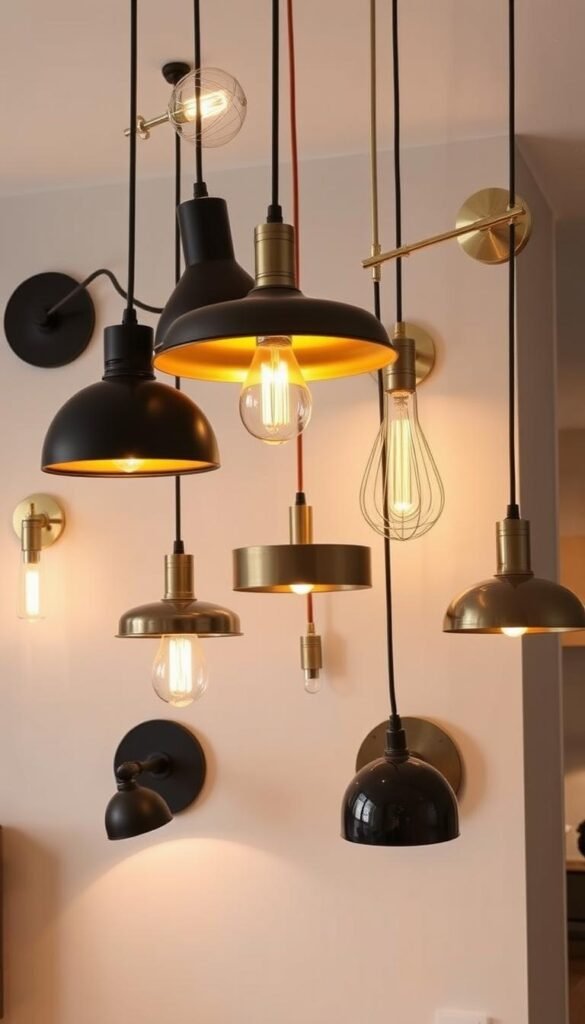
Forget matching everything perfectly. Mixing metals creates a collected, personal feel in your space. This approach adds depth and character to your overall scheme.
Design firm Kobel + Co proved this beautifully. They combined iron chandeliers with bronze floor lamps in a stunning project. The mixed finishes created visual interest without clashing.
Different metals bring unique personalities to your decor. Brass feels warm and traditional. Chrome offers cool, modern sophistication.
Bronze adds earthy richness to any scheme. Nickel provides subtle, versatile elegance. Iron brings industrial strength and character.
Balance is key when working with multiple finishes. Choose one dominant metal for about 70% of your fixtures. Use secondary metals for the remaining 30%.
This creates harmony while maintaining visual interest. Your space feels intentional rather than random.
Consider these techniques for successful mixing:
- Repeat each metal in at least two different locations
- Use similar finish types (all matte or all polished)
- Connect metals through other elements like hardware or accessories
- Consider the natural light in your space when choosing finishes
Patinas and finishes affect how metals reflect light. Brushed surfaces create soft, diffused illumination. Polished finishes offer brighter, more direct reflection.
Your mixed metal approach should complement your color palette. Warm metals like brass work well with earthy tones. Cool metals like chrome complement gray and blue schemes.
Historical design periods offer great inspiration. Art Deco mixed chrome with brass beautifully. Industrial styles combined iron with copper accents.
This table shows how different metals work together:
| Primary Metal | Best Secondary Metals | Design Style | Light Reflection Quality |
|---|---|---|---|
| Brass | Iron, Chrome | Traditional to Transitional | Warm, golden glow |
| Bronze | Nickel, Iron | Rustic to Industrial | Soft, earthy reflection |
| Chrome | Brass, Black Iron | Modern to Contemporary | Bright, clear beams |
| Black Iron | Brass, Bronze | Industrial to Farmhouse | Minimal reflection, dramatic effect |
Your lighting fixtures can introduce metal finishes that complement other room elements. A bronze lamp might pick up hardware finishes elsewhere. This creates cohesion throughout your space.
Don’t be afraid to break traditional “rules.” Sometimes the most interesting combinations come from unexpected pairings. Trust your personal taste and vision.
Mixed metals add visual drama and depth to your scheme. They tell a story of careful curation rather than perfect matching. Your space gains character and personality through thoughtful combination.
Experiment with different combinations in your own home. You might discover beautiful pairings that feel uniquely yours. This approach celebrates individuality in your decor choices.
Keep Lighting Intimate with Directional Lamps and Sconces
Ever needed illumination without flooding your entire space with brightness? Directional fixtures create cozy pockets of light exactly where you want them. They offer perfect solutions for those moments when others might be resting nearby.
These clever fixtures let you enjoy activities without disturbing the whole household. You can read, work, or relax while maintaining a peaceful atmosphere. They create personal zones within shared spaces beautifully.
Perfect for Late Nights or Early Mornings
Adjustable lamps shine light precisely where you need it most. They eliminate glare and reduce eye strain during focused tasks. Your reading experience becomes more comfortable and enjoyable.
Wall-mounted sconces provide excellent task illumination without taking up surface space. They direct beams downward or sideways based on your needs. This approach keeps your area organized and functional.
Consider these popular directional options:
- Adjustable arm lamps – perfect for directing light over books or projects
- Swivel wall sconces – can be angled to highlight specific spots
- Task lights with focused beams – provide intense illumination for detailed work
- Reading lamps with adjustable heads – offer personalized positioning
Placement strategies make all the difference in effectiveness. Position task lights about 15 inches from your work surface. Angle them to avoid shadows while minimizing glare.
For bedside lighting, choose fixtures that direct beams away from sleeping areas. This allows one person to read while another rests peacefully. It’s a game-changer for shared bedrooms.
Modern directional fixtures include impressive technological features. Dimmers let you control brightness levels precisely. Adjustable heads offer customized beam direction.
Focused beams reduce energy consumption too. You illuminate only what needs light rather than entire spaces. This approach is both practical and economical.
Design styles range from minimalist to traditional. Choose finishes that complement your existing decor. Your directional lighting can enhance your overall design scheme beautifully.
This table compares different directional lighting types:
| Fixture Type | Best Placement | Light Coverage | Ideal Use |
|---|---|---|---|
| Adjustable table lamp | Desk or bedside table | 2-3 foot radius | Reading, detailed work |
| Wall sconce with swivel | Eye level on walls | Directed beam pattern | Task lighting, accent pieces |
| Floor lamp with adjustable arm | Behind seating areas | 4-5 foot reach | Overhead task light |
| Clip-on task light | Shelves or headboards | Focused spot | Very specific illumination |
Directional lighting creates intimate spaces within larger rooms. It defines personal areas without physical barriers. Your space becomes more functional and comfortable.
Experiment with different configurations to find what works best. You might discover new ways to enjoy your favorite activities. These fixtures transform how you use your home after dark.
Remember to consider bulb choices too. Warm white bulbs (2700-3000K) create cozy atmospheres. They make late-night sessions more relaxing and enjoyable.
Your directional lighting should serve your specific needs perfectly. Take time to position each fixture thoughtfully. The right setup makes all the difference in your daily experience.
Define Spaces and Create Borders with Floor Lamps
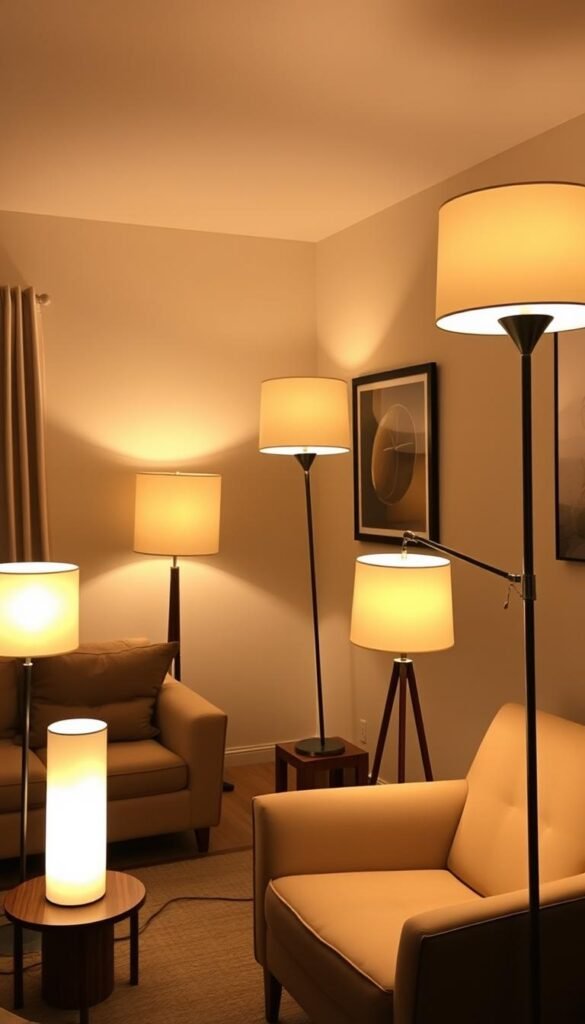
Floor lamps do more than just illuminate – they shape how you experience your space. These tall fixtures create visual boundaries without physical walls. They help organize open areas into cozy, functional zones.
Designer Jeremiah Brent demonstrated this beautifully in a Vermont project. He placed floor lamps at all four corners of a former schoolhouse living area. This simple technique made the large open layout feel intimate and separate.
Your floor lamps work as architectural elements in space planning. They create rhythm through repetition and strategic placement. This approach defines different functional areas within one large room.
Consider these popular floor lamp styles for space definition:
- Arc lamps – sweeping curves that deliver overhead illumination across seating areas
- Torchiere designs – upward-facing shades that bounce light off ceilings for ambient glow
- Multi-head fixtures – adjustable arms that direct light to multiple zones simultaneously
Placement strategies make all the difference in effectiveness. Position floor lamps where you want to create visual borders. Corner placement works particularly well for defining room perimeters.
Your lamp height affects spatial perception too. Taller fixtures make ceilings feel higher and spaces more grand. Lower profiles create intimate, human-scaled environments.
These vertical elements work with other lighting types beautifully. They complement table lamps and overhead fixtures. Together they create layered illumination that defines different activity zones.
Floor lamps can highlight architectural features or create focal points. Position them to draw attention to fireplaces, artwork, or beautiful windows. They guide the eye through your space in intentional ways.
This approach transforms how large rooms feel and function. You gain defined areas for conversation, reading, or relaxation. Your open layout becomes both spacious and intimate.
Experiment with different configurations in your own home. You might discover beautiful ways to organize your space through strategic lighting placement.
Set the Ultimate Mood with Dimmers and Smart Controls
Imagine changing your entire space with just a touch or voice command. That’s the power of modern controls. They let you craft the perfect atmosphere for every moment.
Whether you’re hosting friends or enjoying quiet time, these systems adapt instantly. Your home becomes more responsive to your needs. It feels alive and perfectly tuned to your lifestyle.
Even beautiful artisan pieces work better with smart technology. They gain new flexibility while keeping their unique charm. Function meets beauty in perfect harmony.
Adapting Your Lighting for Any Occasion
Create custom scenes for different activities with ease. A cozy movie night setting dims lights to just the right level. Brighter options work perfectly for game nights or reading.
Your system remembers your favorite combinations. One tap sets everything exactly how you like it. No more adjusting multiple switches individually.
Consider these popular preset options:
- Evening relaxation – warm, dimmed illumination throughout
- Entertaining guests – brighter, more energetic atmosphere
- Focus time – task-oriented beams where you need them
- Morning wake-up – gradually increasing brightness
These systems support your natural daily rhythms beautifully. They can mimic sunrise to help you wake gently. Evening settings promote relaxation and better sleep.
Your wellbeing improves with properly tuned illumination. The right brightness at the right time makes a real difference. It’s like having a personal lighting assistant.
Explore different control methods to find your perfect fit. Simple dimmer switches offer basic adjustment. Comprehensive smart systems provide total command.
Voice control lets you change things hands-free. App-based systems work from anywhere. Automated scenarios run on schedules or sensors.
Layering dimming across multiple sources creates depth. You can have bright task light while maintaining ambient glow. This flexibility transforms how you use your space.
Artisan fixtures become even more special with smart controls. Their beauty shines while gaining modern functionality. You enjoy both aesthetics and practical benefits.
Your area can feel completely different at various times. Morning brightness energizes your day. Evening softness creates peaceful relaxation.
Energy savings add up with proper control. You use only what you need, when you need it. This approach is both eco-friendly and economical.
Color temperature adjustment offers another dimension of control. Warm tones create cozy evenings. Cooler light helps with focus during daytime activities.
This table compares different control systems:
| System Type | Installation Complexity | Control Methods | Ideal For |
|---|---|---|---|
| Basic dimmer switches | Simple | Manual adjustment | Single fixture control |
| Smart dimmers | Moderate | App, voice, manual | Whole-room scenarios |
| Full smart system | Advanced | Voice, app, automation | Whole-home integration |
| Wireless plug-in systems | Easy | Remote, app control | Rental homes, flexibility |
The right illumination control transforms how we experience our homes, making every moment perfectly lit for memory-making and comfort.
Start with one room and expand as you discover what works. Your perfect system grows with your needs and preferences. The journey toward smarter living begins with that first dimmer switch.
Remember to choose systems that work with your existing fixtures. Compatibility ensures smooth operation and best results. Your investment brings lasting enjoyment and convenience.
Your home becomes more personal and responsive with these controls. They help create the perfect backdrop for your life’s moments. That’s the true power of smart illumination design.
Transform Your Space with These Modern Living Room Lighting Ideas That Set the Mood
Your home’s glow can completely reshape how you experience daily life. The right illumination balances function with feeling, turning ordinary moments into special ones.
Remember that good design serves both practical needs and emotional atmosphere. Small changes create big impacts in your personal retreat.
Your choices should reflect your unique style and daily routines. There’s no single solution that works for everyone.
Professional designers treat illumination as a central design element. It works with furniture, colors, and textures to create harmony.
Your space becomes more versatile for different activities. Proper planning considers both daytime brightness and evening coziness.
Embrace these concepts as an evolving part of your home’s story. Let your personal sanctuary grow with your changing needs over time.