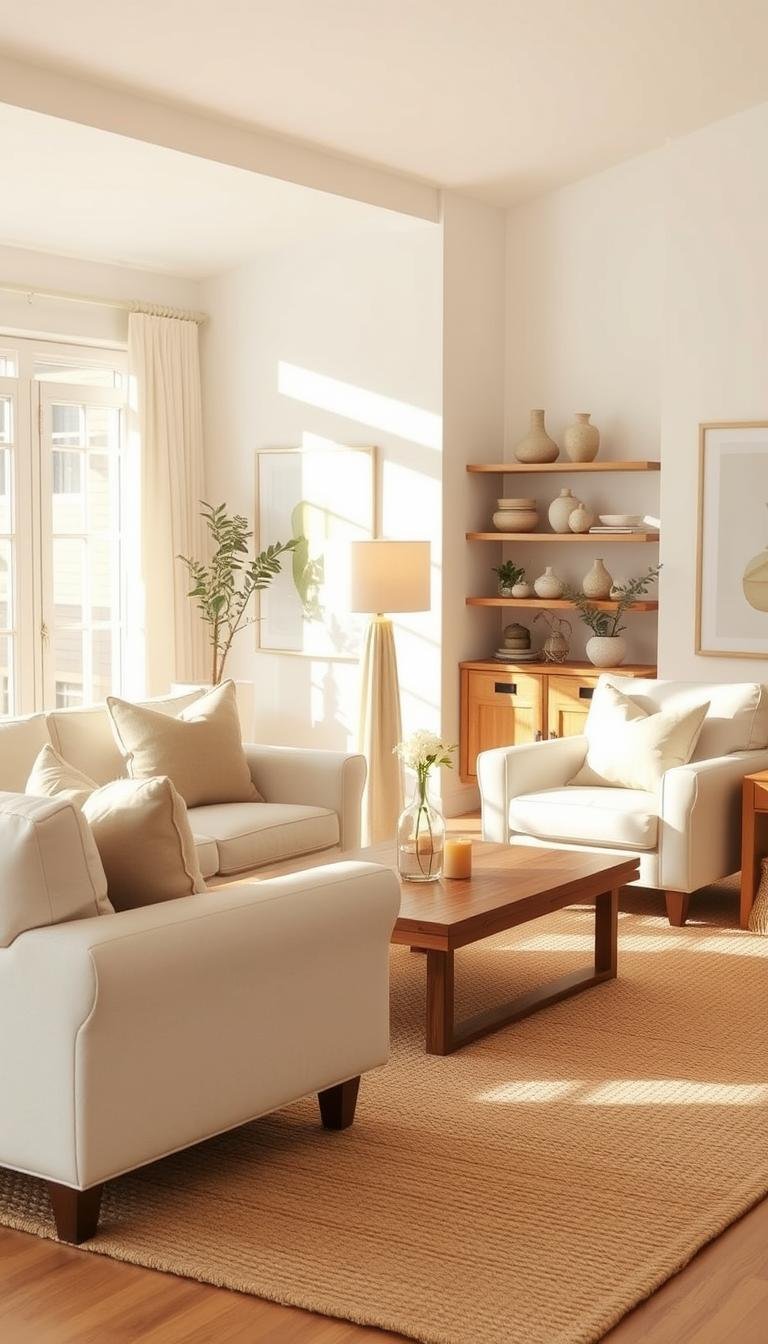
Welcome to your guide on creating a beautiful and welcoming space. This color is softer than cream and warmer than bone. It brings a cozy feeling to any area.
Interior designer Imani James shares, “We love designing with this hue. It is timeless and sophisticated. You can use it in many design styles.”
This shade is not as obvious as white, which makes it fun to work with. You will find 28 inspiration examples from designer spaces ahead.
Decorating with this elegant neutral has its challenges. But professional examples make it easier. Get ready for a comprehensive journey through design.
Why Ivory is the Perfect Neutral for Your Living Space
Choosing the right neutral for your home makes a big difference. This particular hue offers a special blend of warmth and elegance that stands out. It creates a cozy atmosphere while keeping things classy.
The Elegance of This Shade Compared to Other Neutrals
Not all neutrals are created equal. This tone sits beautifully between cream and bone. It has a softness that cream lacks and more warmth than bone.
Eggshell appears lighter and cooler in comparison. This makes our featured hue more inviting. It brings a gentle sophistication that feels both modern and timeless.
| Neutral Color | Warmth Level | Best Use |
|---|---|---|
| Cream | Medium | Traditional spaces |
| Bone | Low | Modern minimalism |
| Eggshell | Cool | Bright rooms |
| Our Featured Hue | High | Versatile elegance |
Designer Chad Dorsey demonstrates how to use similar tones effectively. He combines texture and pattern to avoid flatness. This approach keeps the space interesting without overwhelming it.
How This Tone Adds Warmth and Sophistication
The warm undertones in this shade make rooms feel welcoming. Unlike cooler neutrals, it doesn’t create a sterile environment. You get comfort and style in one package.
This color works with various design styles seamlessly. From contemporary to classic interiors, it adapts beautifully. It serves as an excellent foundation for your entire color scheme.
You can layer other colors and textures effortlessly. The versatility means your design won’t feel dated quickly. It’s a choice that maintains its appeal through changing trends.
Ivory Living Room Decor Ideas for Soft Neutral Homes
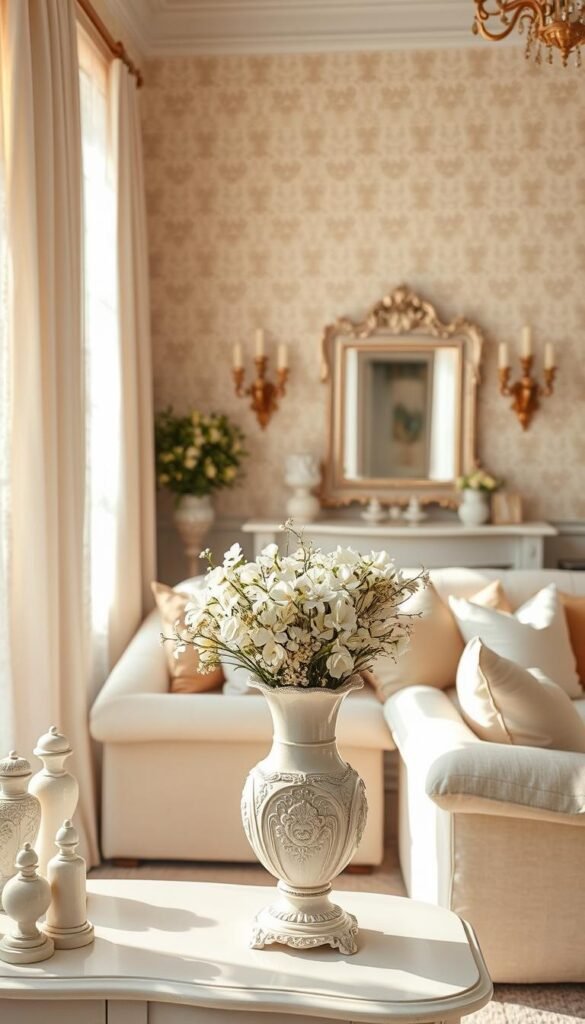
Building your dream space begins with a solid foundation. This approach ensures everything flows together beautifully. You create a harmonious environment that feels both intentional and inviting.
Starting with an Ivory Foundation
Begin with large elements that set the tone for your entire space. Designer Liz Potarazu suggests a cream-colored sofa in performance fabric. This creates the perfect starting point for your design journey.
Performance fabrics offer excellent durability for light-colored furniture. They resist stains and wear while maintaining their beautiful appearance. This practical choice makes maintaining your elegant space much easier.
Consider off-white paint for your walls to create a blank canvas. This neutral background allows other elements to shine. It provides flexibility for future changes to your color scheme.
Building Your Palette Around Ivory Tones
Your foundation color serves as the anchor for your entire palette. Build around it with complementary neutrals and thoughtful accents. This creates depth and interest while maintaining cohesion.
Layer your space with art, leather, brass, and wood elements. These additions bring an earthy yet glamorous feel to your room. They add character without overwhelming the soft neutral base.
Think of your foundation color as the constant in your design equation. It allows you to experiment with other elements freely. Your space evolves while maintaining its core elegance.
| Foundation Element | Best Material Choices | Complementary Accents |
|---|---|---|
| Sofa | Performance fabric | Leather pillows |
| Walls | Off-white paint | Wood frames |
| Large furniture | Sturdy construction | Brass hardware |
| Flooring | Neutral tones | Textured rugs |
Successful designer spaces often use this approach effectively. They create rooms that feel both curated and comfortable. Your home can achieve this same balanced feeling with careful planning.
Remember that your foundation choices impact everything that follows. Take time to select pieces you truly love. They will serve as the backbone of your beautiful space for years to come.
Choosing the Right Ivory Paint Color for Your Space
Selecting the perfect paint shade transforms your room’s atmosphere. The right choice creates harmony and warmth throughout your home. It’s about finding balance between light, mood, and personal style.
Understanding Undertones: Warm vs. Cool Ivories
Paint colors have hidden tones that affect their appearance. Warm versions contain yellow or pink bases. Cool options lean toward gray or blue undertones.
Benjamin Moore’s Helen Shaw explains why warmth matters. “Creams with warm undertones prevent clinical feelings. They make spaces feel inviting rather than sterile.”
North-facing rooms benefit especially from warm tones. They counteract cool natural light. Your space feels fresh yet cozy throughout the day.
Watch for colors that pull too yellow or gray. Test samples to find the perfect balance. The ideal tone should feel neutral yet warm.
Testing Colors in Your Natural Light
Colors change dramatically under different lighting conditions. Your room’s light affects how paint appears. Natural light varies throughout the day.
Designer Juliana Sorzano recommends considering multiple factors. Room size, lighting, and desired mood all matter. These elements influence your final choice.
Paint large sample areas before committing. Observe how colors look during morning, noon, and evening. This prevents surprises after painting the entire room.
Benjamin Moore’s Soft Chamois OC-13 works beautifully in living areas. White Down OC-131 offers versatile warmth. Both provide that perfect inviting tone.
Your paint selection sets the entire mood. Take time to find the shade that makes your heart sing. The right choice brings everything together beautifully.
Creating Depth with Textural Variations
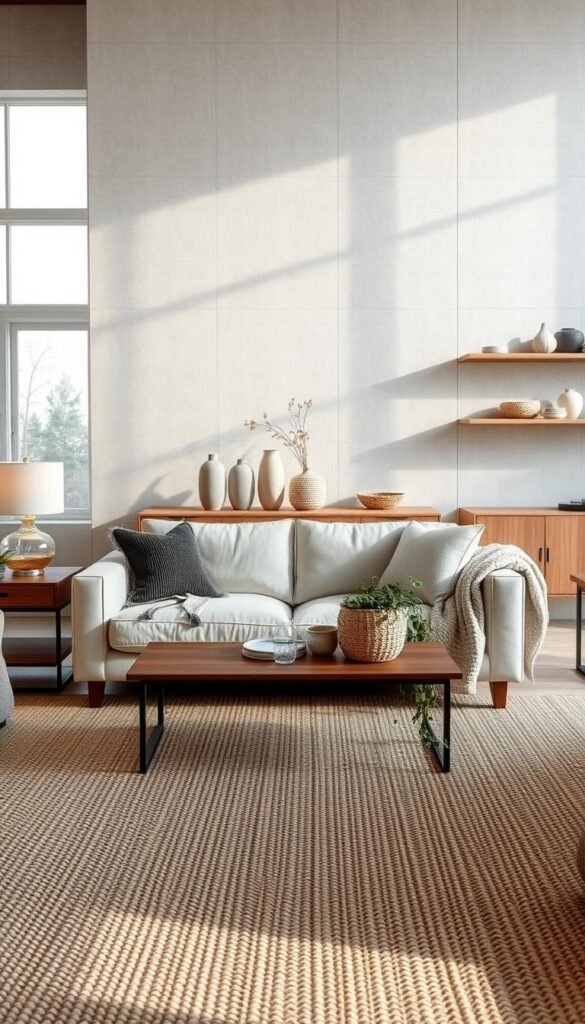
Your soft neutral space needs dimension to feel complete. Without thoughtful layers, it might appear flat or uninspiring. Textural variations bring life and character to your design.
Expert designers know this secret well. They use different elements to create visual interest. Your room gains personality through careful layering.
Mixing Materials for Visual Interest
Combine different surfaces to add depth to your space. Designer Cathleen Gruver suggests this approach. “Mixing patterns and textures prevents a washed-out look,” she notes.
Try combining wood, metal, glass, and various fabrics. Each material brings its own unique feel. They work together to create a rich, layered environment.
Natural elements like jute, cotton, and wood add warmth. Laura Ulam emphasizes their importance. “Adding personality through layers and texture is key,” she explains.
Pattern Play in Neutral Tones
Patterns add movement and energy to your room. Use them on lamps, floors, or area rugs. They provide visual interest without overwhelming your color scheme.
Consider herringbone floors or layered rugs. Textured lamps make excellent statement pieces. These elements stand out while maintaining cohesion.
Have fun with different patterns in neutral tones. Pillows and wall treatments offer great opportunities. They add dimension while keeping your space feeling calm.
Many designer spaces use this technique successfully. They prove that neutral doesn’t mean boring. Your room can feel both peaceful and exciting.
Furniture Selection for Your Ivory Living Room
Your furniture choices create the foundation for your entire space. They determine comfort, style, and daily enjoyment. Thoughtful selection ensures everything works together beautifully.
The Classic Sofa as a Centerpiece
Designer Liz Potarazu recommends a cream-colored sofa in performance fabric. This creates a timeless foundation for your entire design. Performance fabrics offer excellent durability for light-colored pieces.
They resist stains and wear while maintaining their beautiful appearance. This practical choice makes maintaining your elegant space much easier. Your sofa becomes both beautiful and functional.
Choose pieces that exude comfort and luxury. Blend cream, beige, and white shades for depth. These selections enhance the warmth of your overall scheme.
Mixing Wood Tones with Elements
Augusta Hoffman demonstrates how to mix contemporary silhouettes with weightier wood antiques. She uses timber for contrast while keeping the space bright. This approach adds character without overwhelming.
Ensure consistency for a cohesive look throughout your room. Select wood tones that complement rather than compete. Your space maintains harmony while gaining visual interest.
Incorporate materials like leather and brass to add depth. These elements bring elegance and sophistication. They work beautifully with your soft neutral foundation.
Balance modern and traditional pieces for transitional style. This creates a space that feels both current and timeless. Your furniture choices should enhance warmth and sophistication.
Remember that your selections impact daily living. Choose pieces that bring joy and comfort. They become the heart of your beautiful home.
Adding Warmth Through Layering Techniques
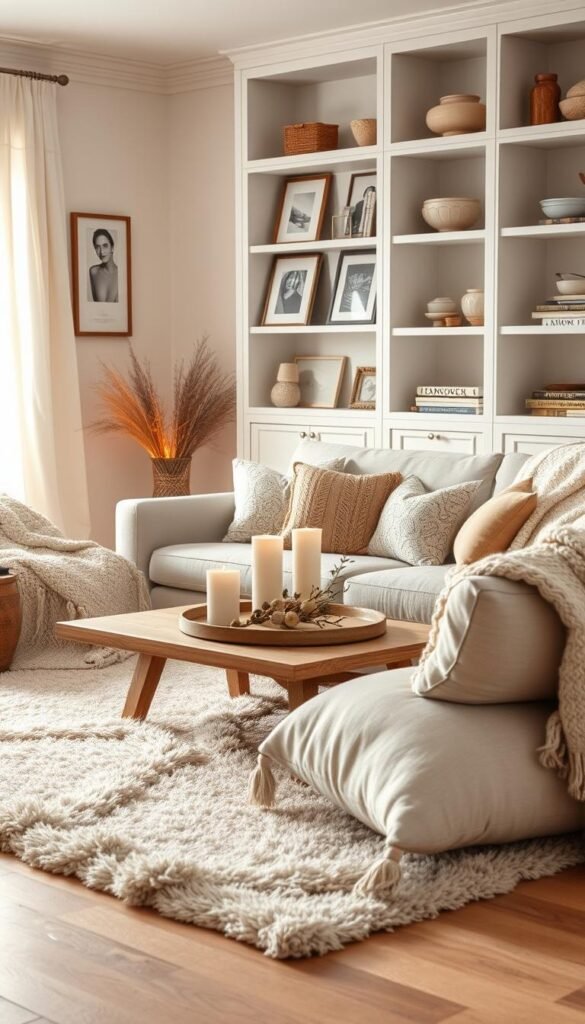
Transform your space from simple to spectacular with thoughtful layering techniques. This approach creates depth and personality while maintaining that beautiful soft foundation.
Layering textiles brings instant coziness to your environment. Throws, pillows, and curtains work together to add warmth and comfort.
Textile Combinations that Complement Your Scheme
Choose fabrics that enhance your soft color palette beautifully. Natural materials create wonderful texture and visual interest.
Consider these excellent combinations:
- Linen curtains with wool throw blankets
- Cotton pillow covers with velvet accents
- Silk drapery with chunky knit throws
Designer spaces often mix these materials like professionals. They create rich, inviting atmospheres through thoughtful fabric selection.
Rug Layering for Dimension
Cathleen Gruver suggests layering rugs to make your space stand out. This technique adds incredible dimension and interest.
Combine different pile heights and patterns for visual appeal. Try a flat-weave jute rug under a plush neutral carpet. The contrast creates wonderful texture underfoot.
Allison Kaminsky emphasizes lighting’s role in enhancing your layers. “A mix of overhead and accent lighting warms the space and highlights textures beautifully,” she notes.
Experiment with layers to personalize your environment. Each addition brings more character and warmth to your home.
Lighting Considerations for Ivory Spaces
Lighting transforms how your room feels throughout the day. It changes the mood and appearance of your color scheme. The right setup makes everything come together beautifully.
How Different Lighting Affects Ivory Tones
Natural daylight shows the true beauty of your chosen shade. Morning light brings out its gentle warmth. Evening light creates a cozy, inviting atmosphere.
Artificial lighting changes everything dramatically. Warm bulbs enhance the creamy undertones. Cool bulbs can make the same paint look stark and clinical.
Designer Juliana Sorzano shares important advice. “Always consider how lighting affects warm neutral colors. The same shade can feel completely different under various lights.”
Test your lighting options at different times. Observe how the color shifts throughout the day. This prevents surprises after your design is complete.
Choosing Fixtures that Enhance Warmth
Select fixtures that emit a soft, golden glow. These complement your scheme perfectly. They create an inviting environment everyone loves.
Allison Kaminsky recommends layered lighting solutions. “A combination of overhead and accent lighting warms the space. It brings everything to life beautifully.”
Consider these effective ways to light your room:
- Dimmable ceiling lights for adjustable ambiance
- Table lamps with warm white bulbs
- Wall sconces that cast gentle upward light
Use reflective surfaces to maximize natural light. Mirrors and metallic accents bounce light around. Your space feels brighter and more open.
Always highlight textures without overwhelming the eye. Good lighting should enhance, not dominate. Your beautiful room deserves perfect illumination.
Creating Contrast in Your Neutral Scheme
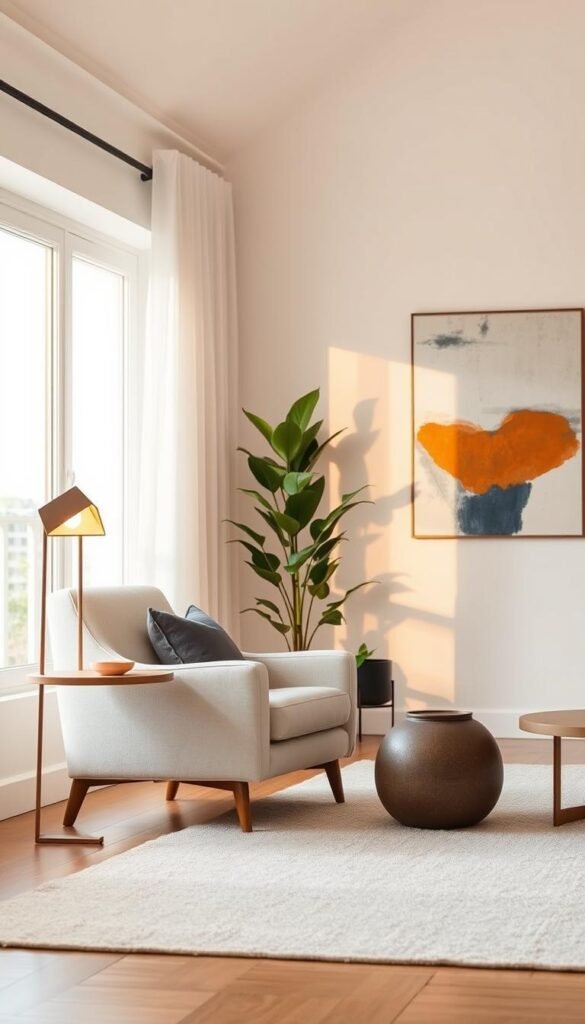
Your beautiful space needs thoughtful contrast to feel complete. Without it, even the most elegant design can appear flat. Strategic contrast adds depth and visual interest while maintaining your peaceful atmosphere.
Incorporating Darker Accents
Darker elements ground your design and create focal points. They add sophistication without overwhelming your soft palette. Choose colors that complement rather than compete with your foundation.
Tim Godbold demonstrates this perfectly with a deep blue carpet. It grounds the space and draws attention to a stone fireplace. This approach adds drama while keeping everything harmonious.
Consider these accent options:
- Black or charcoal throw pillows
- Navy blue artwork or accessories
- Dark wood furniture pieces
- Charcoal gray decorative objects
Designers at Ashe Leandro used an olive-green sofa as a seductive inflection point. This shows how color can create interest without disrupting your neutral scheme. The green adds life while feeling completely natural.
Using Natural Elements for Balance
Natural materials bring authenticity and calm to your space. They add organic texture that feels both timeless and current. These elements work beautifully with your soft foundation.
Wood tones provide wonderful warmth and character. Stone elements add earthy sophistication. Plants bring life and freshness to your environment.
Consider this comparison of natural elements:
| Natural Element | Best Use | Visual Impact |
|---|---|---|
| Wood | Furniture, frames | Adds warmth |
| Stone | Fireplaces, accents | Adds texture |
| Plants | Corner arrangements | Adds life |
| Natural fibers | Textiles, rugs | Adds comfort |
Use contrast sparingly for maximum impact. A few well-chosen pieces make all the difference. Your space maintains its peaceful feeling while gaining incredible depth.
Remember that balance is key. Your accents should enhance, not dominate. They become the perfect finishing touches to your beautiful design.
Wall Treatments Beyond Basic Paint
Your walls deserve more attention than just a coat of paint. Alternative finishes can transform your space with unique texture and character. These options create depth that standard paint cannot achieve.
Modern design trends embrace these artistic approaches. They add sophistication while maintaining your soft color scheme. Your room gains personality without overwhelming the peaceful atmosphere.
Lime Wash and Plaster Finishes
Lime wash creates a soft, matte finish with beautiful depth. It lends a sense of cavelike warmth to any space. The Office of Tangible Space demonstrated this beautifully in their Brooklyn apartment.
This technique allows subtle color variations across your wall surface. It creates movement and visual interest that flat paint cannot match. The result feels both ancient and contemporary.
Plaster finishes offer similar textural benefits. They provide a handmade quality that feels authentic and warm. These treatments work exceptionally well with soft color palettes.
Subtle Wallpaper and Mural Options
Wallpaper patterns in neutral tones add interest without dominating. Rodney Lawrence used gradient wallpaper to create a soothing mood. This approach maintains calm while introducing gentle movement.
Suzanne Rheinstein chose a hand-painted mural for a bucolic oasis effect. This creates a focal point that feels both artistic and serene. The mural becomes art rather than just background.
Consider these options when selecting patterns:
- Choose designs with subtle tonal variations
- Select patterns that complement rather than compete
- Opt for textures that enhance your overall scheme
These wall treatments serve as beautiful focal points. They add character beyond what standard paint can offer. Your space feels curated and uniquely yours.
Remember that your wall choices set the stage for everything else. They should enhance your foundation without overwhelming it. The right treatment brings incredible sophistication to your home.
Accessorizing Your Ivory Living Room
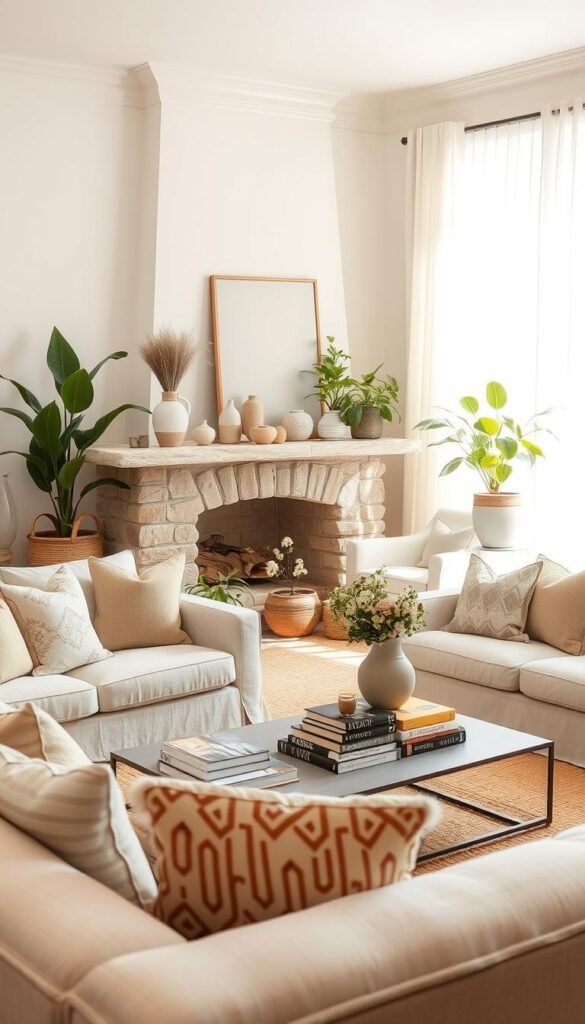
Thoughtful accessories transform your room from lovely to unforgettable. These final touches add character and complete your design story beautifully.
They bring that special spark that makes your space uniquely yours. The right pieces create perfect harmony in your elegant environment.
Art Selection for Neutral Spaces
Choose artwork that enhances your peaceful atmosphere. Large pieces work best for creating visual balance.
Natalia Avalos demonstrates this approach beautifully. “A substantial neutral art piece adds interest without overwhelming the scheme,” she notes.
Select art in complementary tones that work with your palette. Earthy hues and soft contrasts maintain cohesion. Your artwork should feel like a natural extension of your space.
Decorative Objects that Add Character
Carefully chosen objects add personality without clutter. Vases, sculptures, and books bring wonderful character.
Liz Potarazu layers various elements for a curated look. She combines art, leather, brass, and wood beautifully. This creates an earthy yet glamorous feel throughout the space.
Incorporate metals like brass or bronze for subtle glamour. These touches add sophistication without dominating. They provide just the right amount of visual interest.
Your accessories should reflect your personal style while maintaining the neutral scheme. Choose pieces that speak to your heart and tell your story.
Arrange items in groups for maximum impact. Vary heights and textures for visual appeal. This creates depth and keeps the eye moving pleasantly around your room.
Use accessories to inject that special personality into your beautiful space. They become the finishing touches that make everything feel complete and wonderfully yours.
Mixing Ivory with Other Neutrals
The art of mixing neutrals transforms simple spaces into beautifully layered environments. You create depth and interest while maintaining that peaceful atmosphere you love. This approach makes your home feel both curated and comfortable.
Creating a Tonal Palette
Building a tonal palette means working with shades that share similar undertones. You combine various intensities of the same color family. This creates a harmonious flow throughout your space.
Designer Eva Bradley demonstrates this beautifully in her San Francisco Victorian. She played with a spectrum of taupe variations to create depth. The result feels both cohesive and visually interesting.
A monochromatic scheme offers wonderful benefits for your home. It creates a serene environment that feels intentionally designed. You avoid visual clutter while maintaining sophistication.
This approach works particularly well in open-concept spaces. It helps different areas flow together seamlessly. Your home feels unified rather than disjointed.
Beige, Cream, and Combinations
Combining beige, cream, and similar shades creates wonderful warmth. These tones work together to build a rich, layered look. You avoid that flat appearance that sometimes happens with single colors.
Redd Kaihoi used cream and beige with bronze, brass, and gilt wood accents. This created a sun-kissed look that feels both elegant and inviting. The metallic touches add just enough sparkle.
Consider these successful combinations from designer spaces:
| Base Color | Complementary Shades | Accent Materials |
|---|---|---|
| Warm Beige | Soft cream, pale taupe | Brass, dark wood |
| Cool Cream | Light gray, off-white | Silver, light oak |
| Rich Taupe | Mocha, soft white | Bronze, walnut |
| Soft Ivory | Buttery yellow, warm white | Gilt wood, copper |
Balancing warm and cool tones within your palette matters greatly. Warm tones create coziness while cool tones add freshness. The right mix makes your space feel balanced and inviting.
Experiment with subtle variations to make the space uniquely yours. Try different textile combinations and material finishes. These personal touches make your design truly special.
Remember that mixing neutrals should feel natural and effortless. Your palette should enhance your daily living experience. It becomes the beautiful foundation for your entire home.
Incorporating Pops of Color Thoughtfully
Adding color to your space brings energy and personality. It creates focal points that draw the eye and add character. The key is choosing shades that enhance rather than overwhelm your beautiful foundation.
Thoughtful color additions make your room feel complete. They provide visual interest without disrupting the peaceful atmosphere. You maintain elegance while adding that special spark.
Using Green as a Neutral Accent
Green works wonderfully as a natural accent color. Pantone’s Leatrice Eiseman explains its versatility. “Green is ubiquitous in nature, making it feel organic and calming in any space,” she notes.
This hue complements warm undertones beautifully. It brings life to your room without feeling overwhelming. Designers often use it to create sophisticated focal points.
Ashe Leandro demonstrated this with an olive-green sofa. It served as an inflection point that added depth and interest. The green felt both natural and intentional within the neutral scheme.
Consider these green accent options:
- Olive or sage throw pillows
- Emerald green artwork or vases
- Forest green small furniture pieces
- Mossy green decorative objects
These additions bring nature indoors beautifully. They create a fresh, inviting atmosphere that feels both current and timeless.
Subtle Color Introductions
Start small when introducing new colors to your space. Begin with accessories that you can easily change or remove. This approach lets you experiment without commitment.
Paul Lamb incorporated regional flourishes with adobe walls and modern furniture. This showed how color can reflect personal style while maintaining sophistication. The result felt both authentic and designed.
Try these subtle introduction methods:
| Accent Type | Color Options | Impact Level |
|---|---|---|
| Pillows | Muted greens, soft blues | Low commitment |
| Artwork | Earth tones, warm hues | Medium impact |
| Small furniture | Rich greens, deep blues | High impact |
| Decorative objects | Various complementary shades | Flexible adjustment |
Draw inspiration from nature or regional styles around you. These sources provide authentic color combinations that feel organic. Your space gains personality that reflects your environment.
Remember that thoughtful color additions should enhance your daily experience. They become part of your home’s story without dominating it. The right accents make everything feel complete and wonderfully yours.
Window Treatments for Ivory Rooms
Your windows offer more than just views. They frame natural light and shape your entire atmosphere. The right treatments balance privacy with beautiful illumination.
Designers know that window dressings complete a room’s personality. They add softness and sophistication to your space. Your choices impact both style and daily comfort.
Choosing Curtains that Complement Ivory
Select curtains in soft whites or neutral tones. These shades enhance your walls without competing. They create a seamless, elegant flow throughout your room.
Alyssa Kapito demonstrated this beautifully. She used soft whites in multiple seating areas. A plaster chandelier added gentle glow to the entire space.
Eva Bradley chose ombré striped curtains in a taupe scheme. This added subtle movement and depth. The stripes created interest without overwhelming.
Consider these material options for your curtains:
- Linen for natural texture and light filtering
- Cotton for crispness and easy maintenance
- Sheer fabrics for maximum light diffusion
- Blended materials for durability and drape
Your curtains should frame windows rather than hide them. They add softness while maintaining elegance. Choose lengths that pool slightly on the floor for luxury.
Natural Light Optimization
Maximize daylight while maintaining privacy. Sheer or light-filtering fabrics work wonderfully. They diffuse harsh sunlight into soft, welcoming glow.
Measure windows carefully before selecting treatments. Consider these important factors:
- Window orientation and sun exposure
- Room function and privacy needs
- Ceiling height and window proportions
- Existing color scheme and textures
Hang curtains high and wide to enhance natural light. This makes windows appear larger and rooms feel more spacious. Use multiple layers for flexibility throughout the day.
Your treatments should enhance warmth without blocking light. They become functional art that improves daily living. The right choices make your space feel both bright and intimate.
Balance aesthetics with practical needs. Beautiful windows contribute significantly to your room’s character. They create that perfect atmosphere you’ll enjoy for years.
Flooring Options that Complement Ivory
Your flooring selection anchors your entire design. It creates the foundation upon which everything else builds. The right choice enhances both beauty and functionality in your space.
Consider how different materials interact with your color scheme. Some options create striking visual impact. Others promote seamless flow throughout your area.
Dark Wood Floors for Contrast
Dark wood creates beautiful contrast against lighter elements. Designer Lola recommends this approach to enhance warmth. The rich tones ground your space beautifully.
These floors add architectural interest and sophistication. They make walls and furniture appear brighter. Your room gains depth and character instantly.
Consider these dark wood options:
- Ebony or espresso finishes
- Dark walnut planks
- Charcoal-stained oak
- Mahogany with rich grain patterns
These choices work particularly well in sun-filled spaces. They balance abundant natural light beautifully. Your room feels both bright and grounded.
Neutral Flooring for Cohesive Flow
Neutral options create harmonious movement between areas. Nicole Hollis demonstrates this with travertine and bleached oak. These materials maintain a pared-back palette.
Light wood, stone, or tile promote seamless transitions. They allow other design elements to shine. Your space feels unified and intentionally designed.
Consider these factors when selecting neutral flooring:
| Flooring Type | Best For | Maintenance Level |
|---|---|---|
| Bleached oak | Modern spaces | Moderate |
| Limestone | Elegant interiors | High |
| Light tile | High-traffic areas | Low |
| Natural stone | Statement floors | Variable |
Area rugs add warmth and protect your investment. They introduce texture while defining seating areas. Choose patterns that complement your overall scheme.
Your flooring should suit your lifestyle and light conditions. Durable materials withstand daily use beautifully. They become the practical foundation of your beautiful home.
Maintaining Your Ivory Living Space
Keeping your beautiful area looking fresh requires thoughtful care. Proper maintenance preserves that elegant atmosphere you’ve created. It ensures your space stays inviting for years to come.
Cleaning and Care Tips
Regular care keeps surfaces looking their best. Dust walls weekly with a soft microfiber cloth. This prevents buildup and maintains that clean appearance.
For furniture, vacuum upholstery gently each week. Use a brush attachment to avoid fabric damage. Spot clean spills immediately with a mild detergent solution.
Behr’s Erika Woelfel highlights the advantage of neutrals. “These shades are easier to layer with other colors and decor over time,” she notes. This flexibility makes updates simpler.
Consider these recommended cleaning products:
- pH-neutral cleaners for delicate surfaces
- Microfiber cloths for dusting without scratches
- Gentle fabric sprays for textile maintenance
- Specialized wood cleaners for furniture care
Establish a simple weekly routine. This prevents overwhelming cleaning sessions later. Your space remains effortlessly elegant with consistent care.
Choosing Performance Fabrics
Selecting the right materials makes maintenance easier. Performance fabrics offer excellent durability for light-colored pieces. They resist stains while maintaining their beautiful appearance.
Designer Liz Potarazu emphasizes this choice. “I always recommend performance fabrics for cream sofas,” she advises. “They withstand daily use while keeping that sophisticated look.”
These fabrics handle family life beautifully. They repel spills and reduce visible wear. Your investment stays beautiful through years of enjoyment.
When selecting materials, consider these factors:
| Material Type | Durability | Maintenance Level |
|---|---|---|
| Performance velvet | High | Easy |
| Crypton fabric | Excellent | Simple |
| Stain-resistant cotton | Good | Low |
| Treatable linen blends | Medium | Moderate |
Invest in quality from the beginning. This reduces long-term maintenance efforts. Your beautiful design remains intact with proper material choices.
Make sure you follow manufacturer care instructions. This preserves fabric integrity and color vibrancy. Your pieces maintain their elegance through proper handling.
Regular care ensures your space always feels fresh and welcoming. These practices protect your investment while maintaining that sophisticated atmosphere you love.
Bringing Your Ivory Vision to Life
You now have all the tools to create your dream space. This elegant neutral offers warmth and sophistication that adapts to any style.
Start with inspiration from designer examples shared throughout. Focus on paint selection, furniture, texture, and thoughtful accents.
Remember lighting, contrast, and maintenance in your planning. Begin with small changes or a mood board before full commitment.
This timeless choice is both achievable and rewarding. Trust your instincts and bring your beautiful vision to life with confidence.
Share your results or explore more ideas to continue your design journey. Your perfect space awaits!