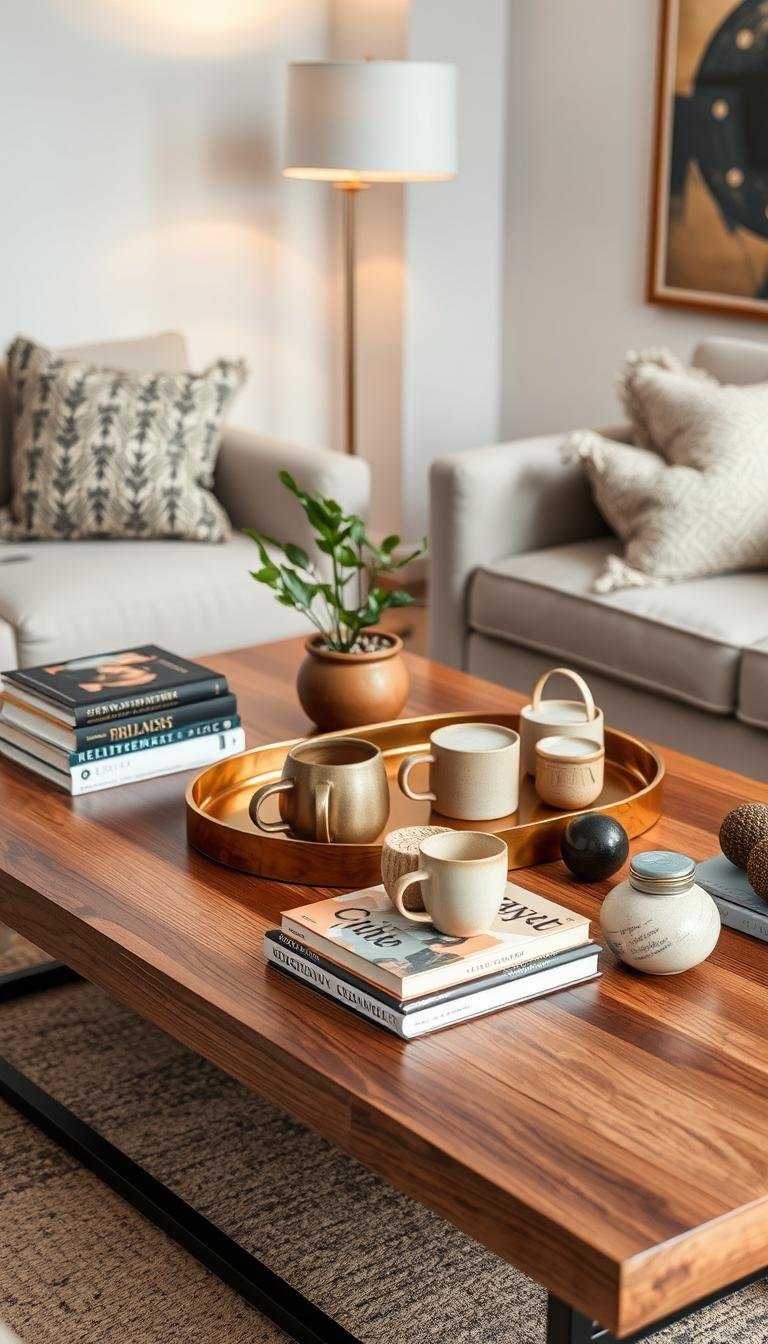
Your coffee table serves as the heart of your living space. It’s where you gather with family, enjoy morning coffee, and display your favorite items.
A well-designed surface balances beauty with function. Too much clutter makes practical use difficult. Intentional styling creates an inviting focal point.
Professional designers like Julia Stevens and Steve Cordony share their expert tips. They help you achieve a balanced, non-busy look that reflects your personality.
Common mistakes include overcrowding and poor item placement. Our guide provides step-by-step advice to avoid these errors. You’ll learn to create beautiful coffee table vignettes that enhance your room.
Transform your space with confidence. Discover specific techniques that make your home feel complete and welcoming.
Start With a Strong Foundation for Your Arrangement
The base layer of your arrangement sets the tone for the entire design. Think of it as building blocks that support everything else you’ll add. This approach prevents clutter and creates visual harmony.
Books make an excellent starting point for your composition. They ground the arrangement and provide height variation. This foundation makes layering other objects much easier.
Choose a Base Like Stacked Books
Stacked volumes create instant structure and interest. Interior stylist Julia Stevens recommends using 2-3 books per stack. Arrange them in what she calls a “messy, Tetris-like formation.”
Books should face different directions for a curated yet effortless look. This technique adds visual movement to your surface. Experiment with various sizes and orientations for maximum impact.
“Use books that reflect your personal interests or have visual appeal. They’re both functional reading material and decorative elements that tell your story.”
Select books you genuinely enjoy or find beautiful. Avoid using them as mere filler items. This thoughtful selection makes your space feel more authentic and personal.
Opt for Linen-Wrapped or Sleeve-Free Books
Book covers significantly affect your overall aesthetic. Plain covers often look more intentional and sophisticated. Remove dust jackets or choose linen-wrapped volumes for a cleaner look.
This simple adjustment enhances your table’s elegance. Neutral covers blend seamlessly with other decor elements. They create a cohesive background for your decorative pieces.
This foundational step is crucial for achieving that professional designer appearance. It establishes structure while maintaining functionality. Your surface will welcome both beauty and everyday use.
Layer Objects to Create Depth and Interest
Building upon your foundation brings your surface to life. This step adds personality and visual appeal to your arrangement. Strategic placement creates a dynamic yet balanced display.
Expert Kerrie Kelly recommends thoughtful layering after establishing your base. She suggests combining functional pieces with decorative accents. This approach maintains beauty while serving practical needs.
Add Greenery and Sculptural Elements
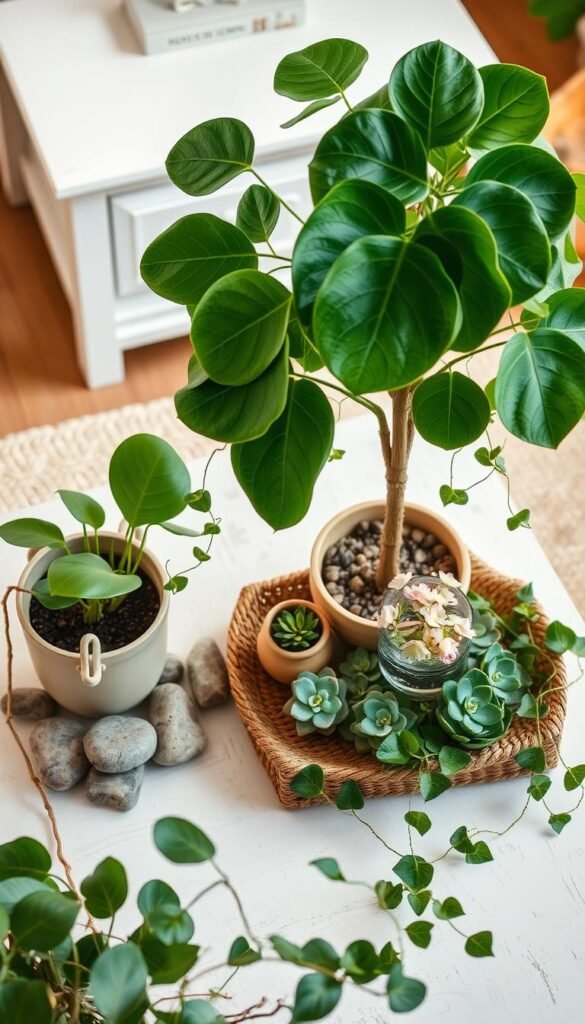
Natural elements instantly refresh your space. A simple vase with fresh flowers or greenery introduces organic texture. These pieces add softness and movement to your composition.
Plants bring life and color to your surface. They create visual height variation when placed strategically. Choose low-maintenance options that complement your decor style.
Sculptural objects inject artistic flair into your arrangement. Unique artifacts or art pieces reflect your personal taste. They serve as conversation starters while adding sophistication.
“Greenery adds height and softness, while sculptural objects bring artistry. Together they create a balanced, inviting composition that feels both natural and intentional.”
Mix organic and man-made elements for harmony. This combination prevents your display from feeling too sterile or too wild. The contrast between natural and crafted items creates visual tension.
Use Trays to Corral Smaller Items
Trays provide organization for frequently used objects. They keep remotes, coasters, and candles contained and accessible. This practical solution maintains cleanliness and order.
Smaller items gathered on a tray appear intentional rather than cluttered. The defined space creates mini-vignettes within your larger arrangement. Choose trays that complement your overall color scheme.
Multiple trays can organize different functional zones on your surface. One might hold beverage accessories while another displays decorative pieces. This approach balances beauty with everyday usability.
| Element Type | Purpose | Placement Tip |
|---|---|---|
| Greenery | Adds natural texture and height | Place off-center for dynamic balance |
| Sculptural Objects | Provides artistic interest | Use as focal points among other items |
| Decorative Trays | Organizes smaller pieces | Position for easy access and visual appeal |
| Candles | Creates ambiance and warmth | Group in odd numbers for best effect |
| Bowls | Holds functional or decorative items | Use low-profile versions to maintain sight lines |
Always step back to assess your arrangement as you build layers. Ensure each item has purpose and contributes to the overall harmony. Avoid overcrowding by leaving adequate negative space.
Varying textures and shapes keeps the eye moving across your composition. Mix smooth ceramics with natural wood and metallic accents. This diversity creates interest without overwhelming your space.
Effective layering transforms a basic setup into something special. Your surface becomes both beautiful and functional. It reflects your personality while serving daily needs.
Incorporate Personal and Meaningful Items
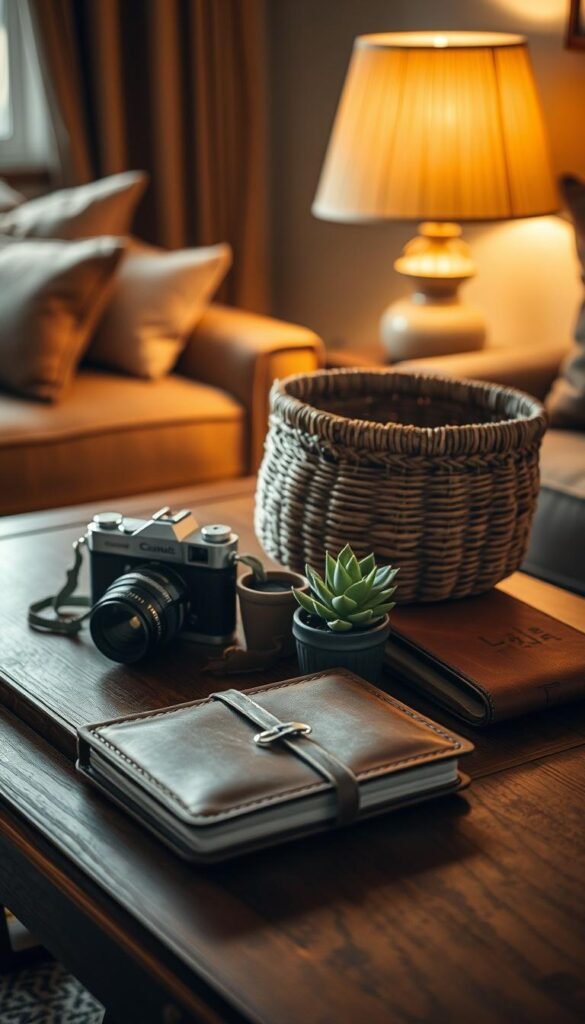
Your arrangement becomes truly special when it reflects who you are. This approach transforms your surface from generic to genuinely yours. It creates a space that feels warm and lived-in.
Designer Steve Cordony calls these “soulful items.” They carry memories and stories that make your home unique. These pieces spark conversations and create emotional connections.
Select Soulful Pieces That Tell Your Story
Choose objects that hold personal significance for you. A brass bowl from a Mexico City trip adds character. A sculpture gifted by a friend brings artistic flair.
Even simple mementos can add deep meaning to your coffee table decor. Avoid generic store-bought items that lack personal connection. Your selections should resonate with your experiences and tastes.
These meaningful pieces make your living room feel more like home. They create an inviting atmosphere that welcomes guests. Your personality shines through every carefully chosen element.
Mix Heirlooms and Travel Finds
Combine vintage family pieces with modern discoveries. A grandmother’s vase paired with contemporary books creates interesting contrast. This blend of old and new adds depth to your arrangement.
Travel souvenirs bring global inspiration to your space. Local artifacts from different cultures create unique visual interest. They remind you of adventures while enhancing your decor.
Balance these special items with other elements to avoid clutter. Position them prominently but leave breathing room. This thoughtful placement maintains both beauty and function.
“Soulful items don’t need to be expensive. They simply need to tell your story and create that emotional connection that makes a house feel like home.”
Your coffee table becomes a curated collection of life moments. Each piece contributes to your overall design while sharing your journey. This personal touch elevates your entire living space.
Play With Height, Scale, and Groupings
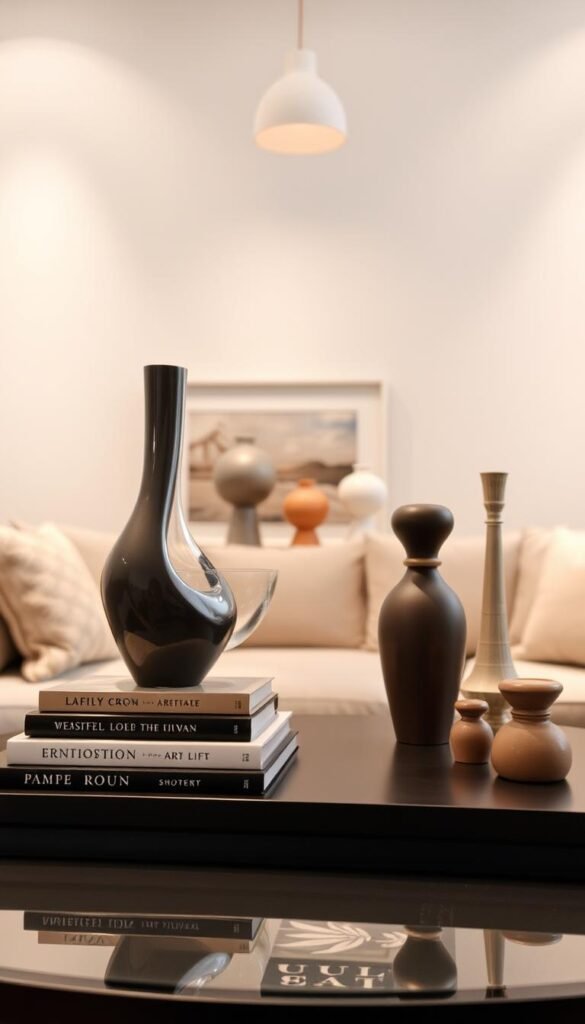
Professional designers know that varying levels create visual excitement. This technique prevents your surface from looking flat or boring. It guides the eye around your arrangement naturally.
Kerrie Kelly recommends a simple but effective method. She calls it the “high-medium-low” approach. This creates balance while adding dimension to your display.
Apply the High-Medium-Low Approach
Start with a tall element like a vase with branches. This adds vertical interest and draws attention upward. It creates a strong focal point for your composition.
Medium-height items like stacked books provide middle ground. They bridge the gap between tall and low pieces. This layering creates depth and sophistication.
Low-profile objects like a bowl or candle complete the arrangement. These pieces ground your design and add warmth. They make your surface feel complete and inviting.
“The high-medium-low technique creates rhythm and movement. It prevents your table from looking static while maintaining perfect visual balance.”
This approach works for any coffee table size or shape. It ensures your arrangement has dynamic energy. Your display will feel both curated and effortless.
Create 3-4 Visual Groupings per Table
Steve Cordony suggests dividing your surface into mini-collections. These groupings tell individual stories while working together. They create organized interest without strict symmetry.
Try a book stack with a candle on top. Add a small sculpture beside it for character. This creates a complete vignette within your larger arrangement.
Another grouping might feature a vase with fresh flowers. Place it next to a decorative tray holding smaller items. This combination balances natural beauty with function.
The number of groupings depends on your table size. Smaller surfaces may only accommodate two clusters. Larger coffee tables can handle four or more.
| Grouping Type | Components | Visual Effect |
|---|---|---|
| Reading Corner | Stacked books + reading candle + glasses | Creates functional elegance |
| Natural Display | Vase + greenery + natural elements | Adds organic texture |
| Personal Collection | Sculptural piece + mementos + decorative bowl | Shows personality |
| Entertainment Zone | Tray + coasters + remote holder | Combines style with function |
Always leave negative space between groupings. This prevents your coffee table from feeling crowded. It allows each cluster to breathe and shine.
Mix scales within each grouping for extra interest. Pair a large art book with a small ceramic piece. This contrast adds sophistication to your arrangement.
These techniques transform ordinary items into artful displays. Your surface becomes a dynamic collection of carefully curated moments. It reflects professional design principles while feeling uniquely yours.
Mix Materials and Textures for Visual Contrast
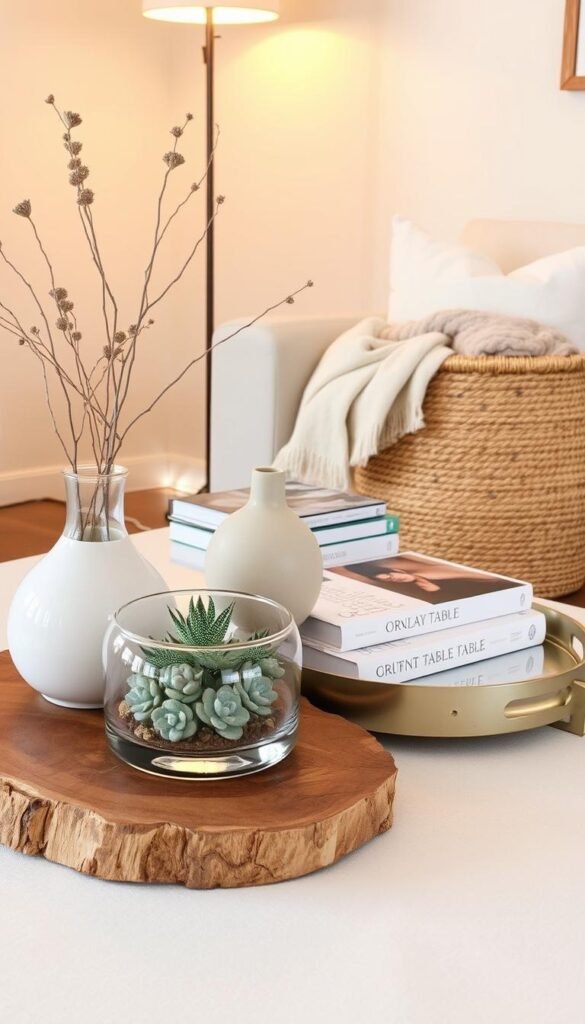
Texture combinations transform ordinary arrangements into extraordinary displays. This approach adds depth and prevents your surface from looking monotonous. Professional designers use material diversity to create engaging visual stories.
Julia Stevens recommends specific combinations for maximum impact. She suggests pairing veiny marble with porous travertine and slick metal. These contrasts create dynamic interest that captures attention.
Combine Wood, Metal, Glass, and Ceramic
Mixing different materials creates rich visual texture on your surface. Combine natural wood with reflective metal for warmth and shine. Add glass elements for transparency and light play.
Ceramic pieces bring earthy sophistication to your composition. They work beautifully with metallic accents and natural elements. This variety keeps the eye moving across your arrangement.
Experiment with unexpected pairings for unique character. Try woven textures against glossy finishes for exciting contrast. These combinations reflect light differently, adding dimension.
Material mixing follows proven interior design principles. Contrast creates beauty and visual harmony. Your surface becomes more engaging through thoughtful material selection.
“Avoid matching decor materials with your table surface. A wood bowl on a wood table lacks visual interest. Contrasting materials create the depth professional designs showcase.”
Avoid Matching Materials With the Table Surface
Choose pieces that contrast with your table’s material for best results. A marble bowl looks stunning on a metal tray or wood surface. Glass vases create beautiful contrast on wooden tables.
This approach prevents your arrangement from blending into the background. Each piece stands out while contributing to the whole composition. The variety makes your display more visually compelling.
Complementary materials create harmony without matching exactly. Veiny marbles pair beautifully with smooth metals. Natural textures work well with polished finishes.
Material mixing elevates your surface to designer status. It’s a simple way to add sophistication and visual interest. Your coffee table decor becomes both beautiful and engaging.
Balance Style With Functionality and Space
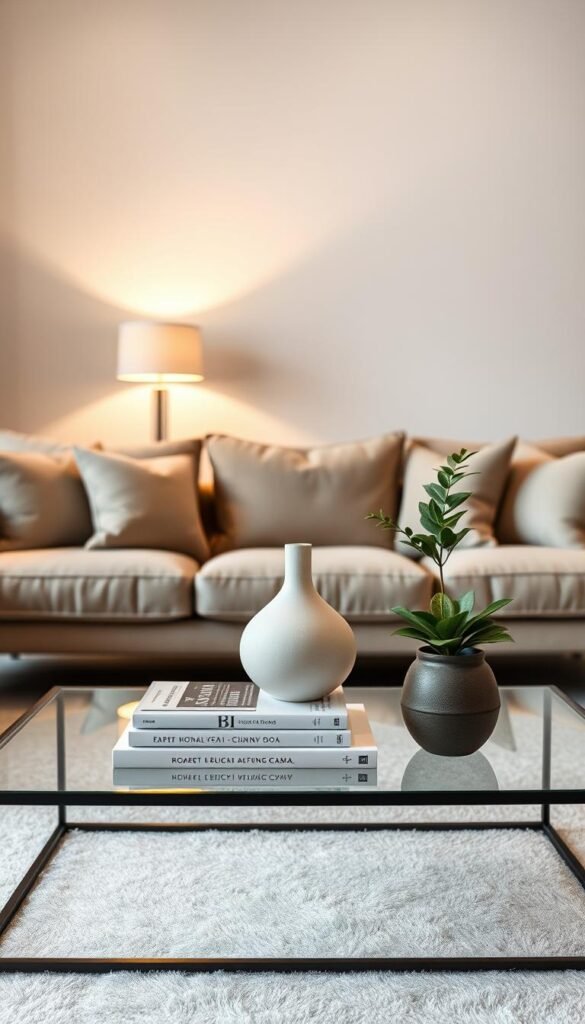
The most successful coffee table arrangements blend beauty with practical living. Your surface should welcome both decorative pieces and daily activities. This balance creates a space that feels both curated and comfortable.
Interior expert Julia Stevens emphasizes this crucial combination. She notes that items should generally remain low to match the table’s height. This approach maintains clear sight lines and prevents visual obstruction.
Leave Room for Everyday Use
Always reserve space for practical items like drinks or remotes. Negative space prevents your arrangement from feeling crowded. It allows your surface to serve its true purpose.
Consider your lifestyle when planning your layout. Families who eat meals at their coffee table need more open area. Single decorative trays can consolidate smaller functional items beautifully.
Decorative bowls with lids offer stylish storage solutions. They keep essentials handy while maintaining a clean appearance. This approach blends organization with aesthetic appeal.
Safety matters when styling your surface. Avoid fragile pieces if you have children or pets. Choose sturdy materials that withstand daily use without compromising style.
Periodically edit your arrangement as needs change. Remove seasonal items or refresh your display quarterly. This keeps your space functional and visually appealing year-round.
Consider Your Room’s Size and Ceiling Height
Your room’s proportions significantly impact your arrangement choices. Low items generally work best for standard ceiling heights. They create harmony with your furniture scale.
Spaces with high ceilings can handle taller arrangements. Branches in a vase add vertical interest without overwhelming. This technique draws the eye upward beautifully.
Large tables in small rooms require simpler compositions. Fewer substantial pieces prevent visual clutter. This maintains balance within your overall space.
“The best designs serve your life while looking beautiful. Leave adequate negative space for practical use—your table should work as hard as it looks good.”
Round coffee tables often need centered arrangements. Their shape naturally guides items toward the middle. This creates a focal point that enhances the room’s flow.
Always step back to view your composition from multiple angles. Ensure it complements your room’s overall design. Your arrangement should feel integrated, not isolated.
A well-styled surface enhances daily living while reflecting personal taste. It becomes a functional work of art in your home. This balance makes your space truly welcoming.
Final Tips to Perfect Your Coffee Table Styling
Mastering your coffee table decor brings everything together beautifully. These final tips ensure your arrangement feels complete and intentional.
Stick to a cohesive color scheme that matches your room. Add one vibrant pop for visual interest. This creates harmony throughout your space.
Mix vintage finds with modern pieces for unique contrast. Update your decor seasonally with fresh or dried florals. This keeps your table looking fresh year-round.
Prioritize safety with faux plants and LED candles. Remember that less often creates more impact. Leave adequate space for daily use.
Experiment freely and edit over time. Your perfect coffee table styling will emerge naturally. Enjoy creating a home that reflects your unique story!