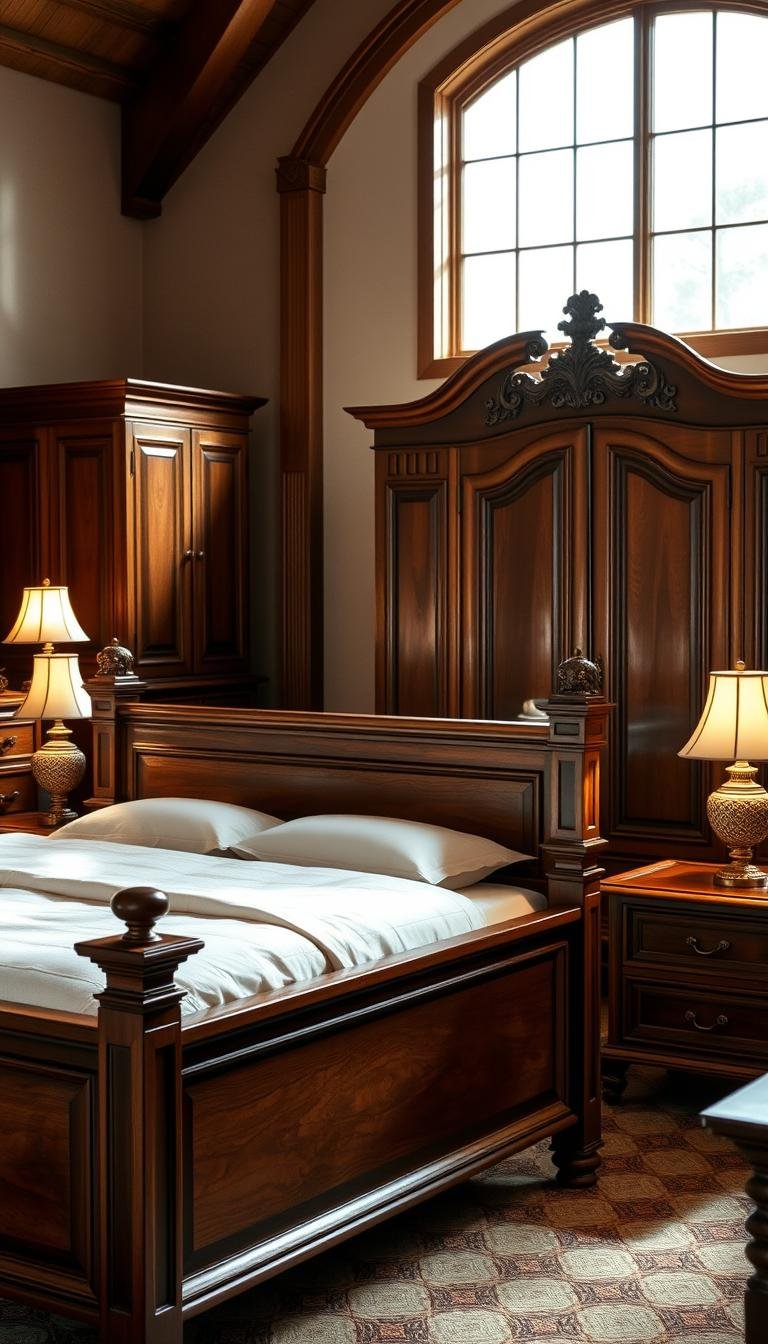
Your bedroom should be your personal sanctuary. It’s where you begin and end each day. The right pieces can transform this space into a warm, inviting retreat.
Timeless wood furniture blends beauty with function. These pieces create a natural warmth that makes your room feel cozy and complete.
This guide will help you choose and style these items. We cover everything from selection to avoiding common mistakes. Get ready to create a bedroom you truly love.
Why Choose Classic Wood Furniture for Your Bedroom
Creating a restful environment starts with selecting pieces that bring natural warmth and character. Each grain pattern tells a unique story, adding visual interest to your personal space.
Design expert Sarah Storms beautifully captures this essence, noting that these pieces provide “natural richness and textural change” that make a design feel “grounded.” The organic warmth from natural tones creates an atmosphere that’s difficult to replicate with other materials.
Beyond aesthetics, quality craftsmanship offers exceptional durability. These pieces withstand daily use while maintaining their beauty for years. They become investments that can be passed down through generations.
The versatility of natural materials allows them to adapt to changing tastes. Whether you prefer modern minimalism or traditional charm, these foundational elements work seamlessly with various decor approaches.
Storage solutions become both functional and beautiful. Thoughtfully designed pieces provide organization while enhancing the overall look of your room.
Choosing sustainable options supports environmental responsibility. Many manufacturers now prioritize eco-friendly sourcing and production methods.
The tactile experience adds another layer of comfort. Smooth surfaces and natural textures engage your senses, making your retreat feel more inviting.
Some worry about matching different elements, but natural materials offer surprising flexibility. They create harmony rather than conflict in your design scheme.
These pieces serve as anchors that tie your entire room together. They provide stability and coherence to your personal sanctuary.
“The warmth and organic elements from wood tones are near impossible to create with painted furniture or stone.”
Ultimately, selecting these timeless elements transforms your sleeping area into a true haven. They combine beauty, function, and emotional comfort in ways that enhance your daily life.
Understanding Different Wood Types and Finishes
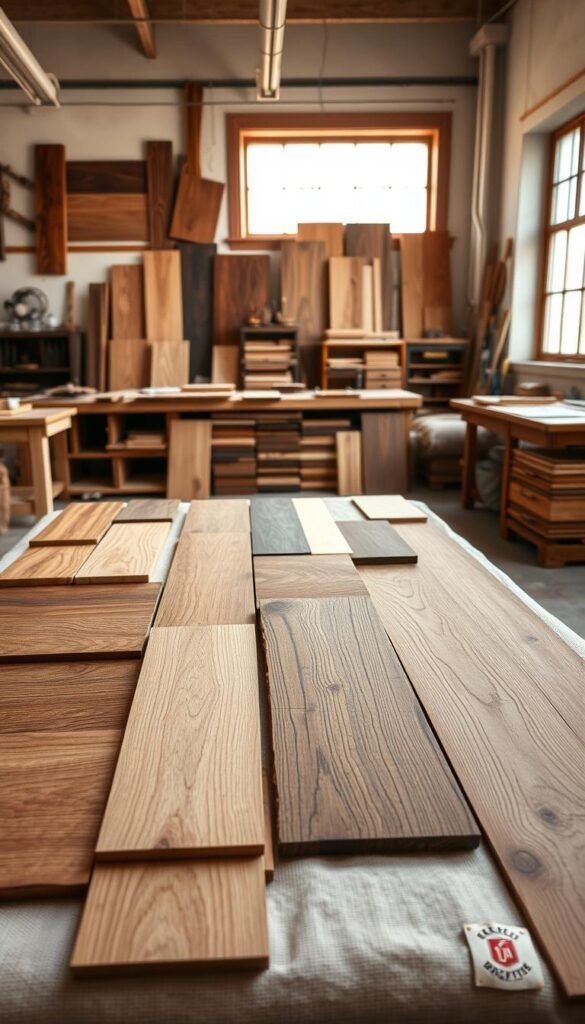
Your choice of materials sets the foundation for your bedroom’s entire aesthetic. Each species brings unique character through grain patterns, color variations, and natural durability.
Understanding these differences helps you create a cohesive look that lasts for years. The right selection balances beauty with practical maintenance needs.
The Warmth of Walnut and Oak
Walnut offers rich chocolate tones with subtle purple undertones. Its straight grain occasionally features beautiful curls or waves.
This hardwood ranks among the most durable options available. It resists shrinking and warping better than many other species.
Oak displays prominent grain patterns that create visual interest. Its light tan color accepts stains exceptionally well.
Both choices provide excellent longevity for your investment. They withstand daily use while maintaining their natural beauty.
Working With Dark Wood Stains
Dark stains create dramatic, sophisticated statements in any space. They add depth and richness that light finishes cannot match.
These finishes work particularly well in larger rooms with ample natural light. They help ground the space and create a cozy atmosphere.
Many dark wood options feature reddish or brown undertones. Ebony and espresso stains offer nearly black appearances for maximum contrast.
Proper maintenance keeps these deep colors looking their best. Regular dusting and occasional polishing prevent dullness over time.
Light Wood Options for Airy Spaces
Lighter species make smaller rooms feel more open and spacious. Maple, ash, and birch provide pale backgrounds that reflect light beautifully.
These materials work wonderfully in contemporary or Scandinavian designs. Their subtle grain patterns create clean, streamlined appearances.
Natural wood tones range from creamy whites to soft honey colors. Some species feature barely noticeable grain patterns for uniform looks.
Lighter finishes show scratches less obviously than darker alternatives. They maintain their fresh appearance with minimal upkeep.
Midcentury modern designs often feature teak and rosewood. These species offer distinctive grain patterns and natural oil content that enhances durability.
Design expert Sarah Storms recommends walnut, burl, and olive ash for their unique characteristics. She notes these materials offer “beautiful grain movement” that remains timeless.
Always consider your room’s natural light when selecting materials. North-facing rooms benefit from warmer tones, while south-facing spaces handle cooler tones well.
Your final wood finish choice should complement your overall design vision. Whether you choose natural oils or protective polyurethane, each option affects the material’s appearance differently.
How to Select the Perfect Wood Bed Frame
Finding the right centerpiece transforms your sleeping space into a true retreat. Your bed serves as the foundation of your entire room’s aesthetic.
Start by measuring your space carefully. Leave enough room for walking paths and other essential pieces. A good rule is to maintain at least two feet around three sides.
Consider height for both comfort and style. Lower profiles create modern minimalism while taller frames feel more traditional. Match this height to your nightstands for visual balance.
Midcentury styles often feature sleek hairpin legs. These create that popular floating effect above your floor. This design makes smaller rooms feel more open and airy.
Storage options add practical function to beautiful form. Some frames include drawers or open space beneath. Others integrate nightstand features directly into the bed frame design.
Your headboard choice makes a powerful style statement. Upholstered options add soft texture while carved designs showcase craftsmanship. This piece often becomes the room’s focal point.
Match your wood bed tone to existing elements for harmony. You don’t need perfect matching – complementary tones often work better. Consider your flooring and other furniture pieces when selecting.
Quality construction ensures your investment lasts years. Look for solid joinery like dovetail or mortise-and-tenon joints. Avoid frames with visible staples or excessive glue.
As experts note, hardwoods like oak offer superior durability. Softer woods provide affordability but may show wear faster.
Test frames in person whenever possible. Sit on the edge and check for stability. For online purchases, read reviews carefully and examine return policies.
Your final choice should reflect both your practical needs and personal style. The perfect bed frame combines beauty, function, and lasting quality.
Matching Nightstands: Creating Balance and Harmony
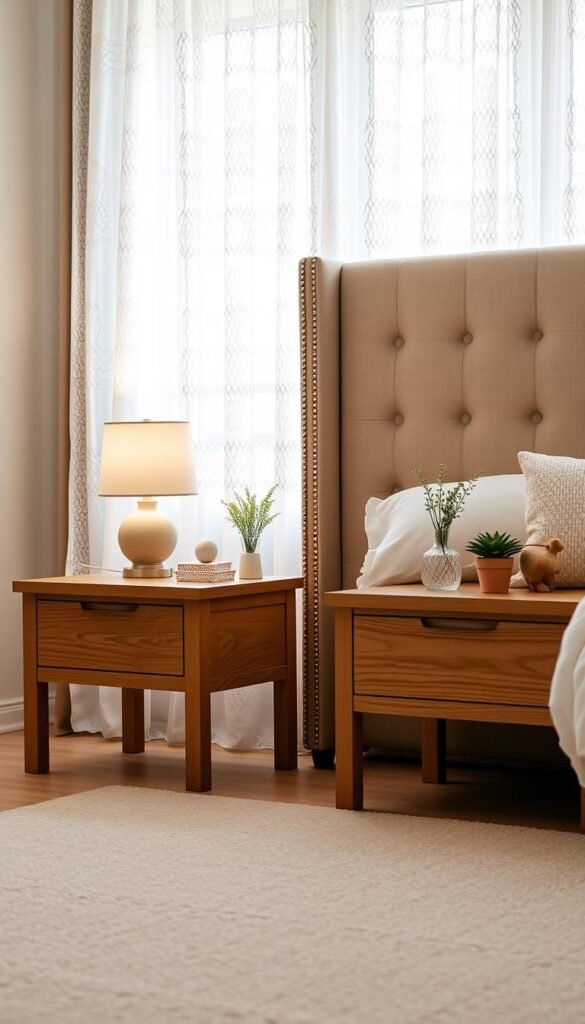
Your bedside tables play a crucial role in creating visual equilibrium around your bed. They frame your sleeping area with symmetry that feels both organized and inviting.
Design expert Sarah Storms recommends matching nightstands to “anchor the look of your bed while adding warmth and balance.” This approach creates a cohesive foundation for your entire room’s aesthetic.
Height matters when selecting these essential pieces. Aim for nightstands that sit level with your mattress top or just slightly below. This makes reaching for items comfortable and creates visual flow.
Consider your storage needs before choosing a style. Simple tables work for minimalists who need just lamp space. Multi-drawer designs help organize bedtime essentials out of sight.
Your nightstands should coordinate with your bed frame without matching exactly. Similar wood tones or complementary styles create harmony. Midcentury modern options are especially accessible and affordable.
Surface space is crucial for functionality. Ensure your chosen nightstands can accommodate lamps, books, and charging devices. At least 20 inches wide provides adequate room for essentials.
You can mix materials while maintaining consistency. Metal bases with wood tops offer interesting contrast. Glass surfaces on wooden frames create light, airy feelings.
“Matching nightstands and built-in vanities can give a retro feel, as seen in Michelle Boudreau Design’s Palm Springs bedroom.”
These wood pieces should complement other elements in your room. They don’t need to match perfectly but should share similar design characteristics.
Invest in quality construction for your primary bedroom pieces. Solid wood construction ensures durability. More decorative secondary pieces can be more budget-friendly.
When exact matches aren’t available, consider similar styles. Same height and proportion matter more than identical design. Similar wood tones create the harmony you want.
Your nightstands should offer both beauty and function. They complete your bed area while providing practical storage solutions. The right choice enhances your entire sleeping space.
Mixing Wood Finishes Like a Design Pro
Creating a beautifully layered space means mastering the art of mixing different materials. Instead of matching everything perfectly, you can blend various tones for a more personal and interesting look.
Design expert Sarah Storms advises against complete matching sets. She notes they can appear “overly antiquated” rather than stylish. The goal is curated harmony, not perfect uniformity.
Complementary Tone Combinations
Start by grouping your pieces into light, medium, and dark categories. This helps you visualize balance before making any changes.
Some excellent combinations include:
- Walnut with light oak
- Cherry with maple accents
- Espresso finishes with natural birch
Ryan Rhodes Design used mixed natural wood finishes to add rustic charm to a midcentury modern bedroom. The variation created depth without chaos.
Follow the 60-30-10 rule for distribution. Let one tone dominate (60%), another support (30%), and the last accent (10%). This creates rhythm throughout your space.
Avoiding Matchy-Matchy Looks
The biggest mistake is forcing pieces to match exactly. This often creates a flat, uninspired appearance rather than a collected style.
Instead, focus on shared undertones. Warm tones like cherry and walnut work together. Cool tones like ash and maple create another harmonious group.
Transition elements help blend different finishes. Area rugs, textiles, and metal details act as visual bridges between your various wood pieces.
Painted items can work beautifully in mixed schemes. Try a painted dresser with natural wood nightstands. Just ensure some color connection between the painted piece and other elements.
| Combination Type | Primary Wood | Secondary Wood | Accent Element |
|---|---|---|---|
| Warm Tone Mix | Dark walnut bed | Medium cherry nightstands | Light oak dresser |
| Cool Tone Blend | Ash wood frame | Maple night tables | Painted white cabinet |
| High Contrast | Espresso finish bed | Natural birch stands | Black metal accents |
Always test combinations before committing. Gather samples or photos of all pieces together. View them in your actual lighting at different times of day.
Remember that your decor choices complete the story. Textiles, artwork, and accessories help tie your mixed furniture into a cohesive whole.
The result should feel intentional, not accidental. Your space will showcase your personal style while maintaining visual comfort and harmony.
Coordinating Wood Furniture With Your Flooring
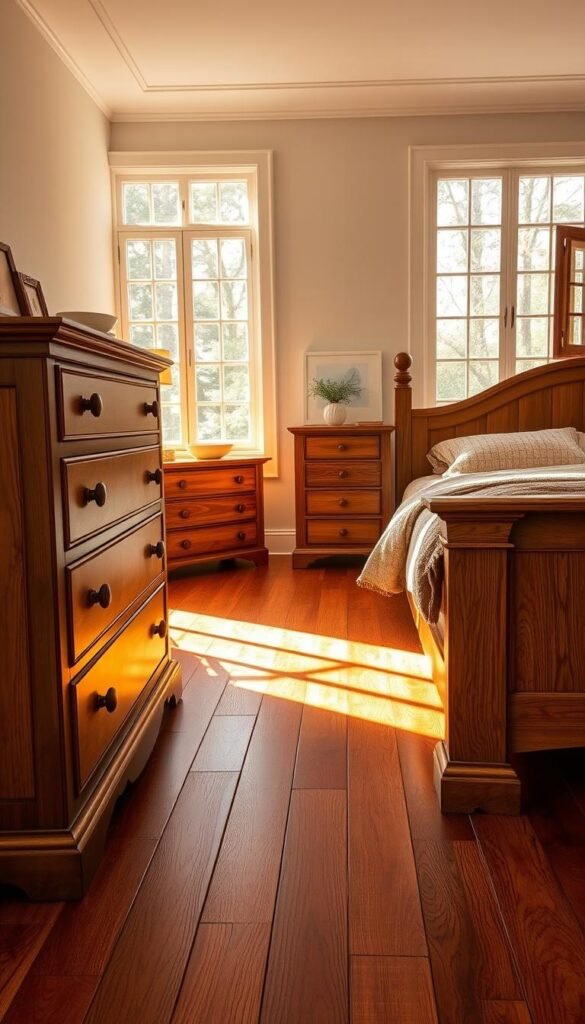
Your floor and furniture should work together to create a harmonious space. This coordination affects how your room feels and functions.
Design expert Sarah Storms suggests examining your floor’s undertones first. Look at the stained wood species beneath the surface finish.
With warm red oak flooring, avoid cool driftwood gray pieces. Choose warm-hued items instead for better visual flow.
Louis Duncan-He Designs shows how matching works beautifully. They paired dark stained midcentury pieces with similar hardwood floors.
This creates a seamless, intentional look throughout the space. Lighter floors can provide striking contrast against darker items.
Identifying Floor Undertones
Start by observing your flooring in natural light. Notice whether it leans warm, cool, or neutral.
Warm tones show reddish, yellow, or orange hints. Cool tones appear gray, blue, or ashy.
Neutral tones balance between warm and cool characteristics. This identification guides your furniture selection process.
Matching Versus Contrasting
Exact matching creates a unified, traditional appearance. Intentional contrast makes a more dynamic, modern statement.
Consider your overall design goals before deciding. Both approaches can work when executed thoughtfully.
Mixed schemes often deliver the most interesting results. They show personality while maintaining visual harmony.
Working With Different Floor Types
Light oak floors offer versatility with many furniture styles. They handle both light and dark pieces effectively.
Dark walnut floors create rich, dramatic backgrounds. They work well with medium-toned items that provide contrast.
Engineered wood and laminate require special consideration. Their printed patterns may limit coordination options.
Focus on overall color rather than grain patterns. This approach helps create cohesion with manufactured floors.
| Floor Type | Best Furniture Match | Contrast Option | Transition Element |
|---|---|---|---|
| Light Oak | Medium cherry | Dark walnut | Beige area rug |
| Dark Walnut | Medium mahogany | Light maple | Patterned runner |
| Gray Engineered | Cool-toned ash | Warm teak | Neutral jute rug |
| Red Oak | Warm cherry | Cool birch | Earth-tone carpet |
Visual Impact and Spaciousness
Matching tones make rooms feel larger and more open. The eye moves smoothly across continuous surfaces.
Contrasting tones define spaces more clearly. They create visual interest but can make areas feel smaller.
Consider your room’s size and natural light availability. These factors influence which approach works best.
Transitional Elements
Area rugs beautifully bridge different wood tones. They provide visual breaks between floor and furniture.
Choose rugs with colors that appear in both surfaces. This creates a deliberate connection between elements.
Textiles and accessories also help blend variations. Throw pillows and curtains can repeat important tones.
Challenging Situations
Some floors resist easy coordination. Very red or orange tones require careful furniture selection.
When perfect matching isn’t possible, embrace contrast. Choose pieces that clearly differ from your flooring.
This intentional difference looks better than near-matches. It shows design confidence rather than uncertainty.
Flooring Direction and Pattern
Horizontal floorboards can make rooms feel wider. Vertical installation creates height illusion.
Herringbone and parquet patterns demand simpler furniture. Let complex floors be the visual star.
Plain floors accommodate more elaborate pieces. They provide neutral backgrounds for statement items.
Lighting Considerations
Natural light changes how wood tones interact. Morning sun reveals different tones than evening light.
Test furniture samples at different times of day. Observe how colors change under various conditions.
Artificial lighting also affects perception. Warm bulbs enhance reddish tones while cool bulbs emphasize gray notes.
Solutions for Renters
You can’t change rental flooring but can work around it. Area rugs cover significant floor space effectively.
Choose furniture that either matches or clearly contrasts. Avoid pieces that almost-but-not-quite match.
Accessories help tie everything together creatively. They distract from less-than-perfect coordination.
Remember that personal items make a space yours. Photos, art, and collections override flooring concerns.
“Look at your wood floor and work with the undertone of the stained wood species for harmonious furniture selection.”
Proper coordination between surfaces creates a polished, intentional look. It makes your space feel designed rather than accidental.
Take time to understand your flooring’s character. This knowledge guides all your furniture decisions effectively.
The result will be a room that feels cohesive and comfortable. Every element works together to create your perfect retreat.
Choosing Colors That Complement Wood Furniture
The right color scheme makes your wood pieces shine. Your wall and accent choices affect how your room feels.
Colors can highlight natural beauty or create harmony. They set the mood for your entire space.
Understanding color relationships helps you make smart choices. You can create different effects with simple changes.
Wall Color Strategies for Different Woods
Your wall color changes how wood appears. Light walls make dark pieces stand out dramatically.
Dark moody walls help furniture blend seamlessly. This creates a serene, cohesive atmosphere.
Jamie House Design used grayish-blue accent walls beautifully. The cool tone complemented warm wood perfectly.
Consider these wall strategies for different tones:
- Dark wood: White or light walls for contrast
- Medium wood: Muted greens or blues for harmony
- Light wood: Warm neutrals to enhance natural tones
Lighting affects how colors interact. Natural sunlight shows true tones while artificial light changes appearances.
Test paint samples at different times of day. Observe how they change with your wood pieces.
Accent Colors That Make Wood Pop
Strategic accents highlight wood’s natural beauty. They add personality without overwhelming your space.
Chris Nguyen added pops of red to liven a neutral bedroom. The vibrant color created energy against midcentury pieces.
Muted greens, blues, purples, and blush work beautifully. These tones complement rather than compete with wood.
Use color theory principles for harmony. Complementary schemes create dynamic contrast.
Analogous colors offer subtle sophistication. They use neighboring hues on the color wheel.
White and neutrals balance stronger wood tones. Use them on trims, bedding, and curtains.
Create focal points through strategic placement. A single accent wall draws attention to your best piece.
| Wood Tone | Best Wall Colors | Accent Colors | Lighting Effect |
|---|---|---|---|
| Dark Walnut | Light gray, cream | Mustard yellow, blush | Needs ample light |
| Medium Oak | Sage green, soft blue | Terracotta, navy | Versatile in all light |
| Light Maple | Warm white, beige | Forest green, coral | Brightens spaces |
| Red Mahogany | Cool gray, pale blue | Emerald, gold | Balances warmth |
Ceiling and trim color complete your look. White trim frames darker walls beautifully.
You can make wood appear warmer or cooler. Warm walls enhance natural warmth while cool walls create balance.
Always test colors with wood samples first. Paint large swatches and observe for several days.
Your final choices should reflect your personal style. The right colors make your wood pieces truly sing.
Incorporating Vintage and Antique Wood Pieces
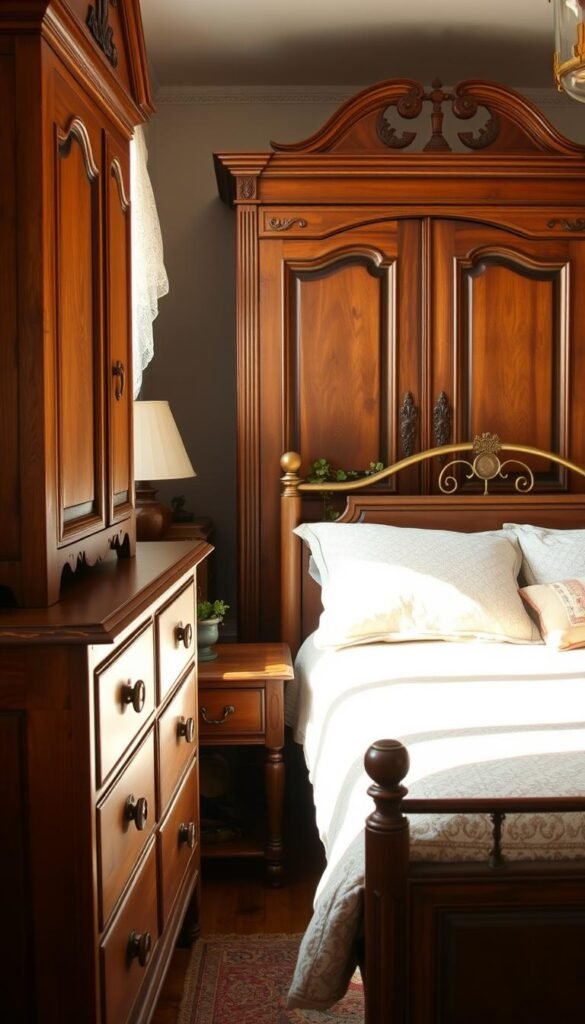
Adding older items to your room brings a special charm that new pieces cannot match. These treasures carry history and craftsmanship from another time. They make your space feel collected rather than store-bought.
Michelle Boudreau Design shows how beautifully these elements work. They mixed dark midcentury modern items with Moroccan accessories. This created softness and color against the rich wood tones.
Each antique piece tells its own unique story. The dents and scratches show years of use and love. This adds depth and personality to your room.
Look for quality construction when choosing older items. Check for solid joinery like dovetail or mortise-and-tenon joints. Avoid pieces with major cracks or unstable structures.
You can mix different periods while keeping harmony. Try an antique dresser with your modern bed frame. Use similar wood tones or complementary styles to connect them.
Some worry older items might look out of place. Actually, they add warmth and character to contemporary designs. They prevent your room from feeling too perfect or sterile.
Small updates can refresh vintage finds without losing their charm. New hardware or a light refinishing might be all they need. Always preserve the original character whenever possible.
These pieces often become conversation starters. Guests will notice the unique details and ask about their history. This makes your space feel more personal and interesting.
Good sources include estate sales, antique markets, and reputable dealers. Always inspect items carefully before purchasing. Look for solid construction and original features.
Sometimes professional restoration is necessary. Consult experts for structural repairs or valuable antiques. They can preserve the piece’s value and integrity.
Balance older items with contemporary elements for an updated look. Modern lighting or artwork can make antique pieces feel fresh. This creates a dynamic, layered appearance.
Beyond beauty, quality antique wood items can be good investments. Well-maintained pieces often appreciate in value over time. You enjoy them now while building value for the future.
Your room becomes a curated collection rather than a matching set. Each piece contributes its own story and character. The result feels uniquely yours and full of warmth.
Balancing Wood With Other Materials
Your room gains depth when you mix different textures and finishes. Combining materials creates visual interest that makes your space feel complete.
Design expert Sarah Storms recommends blending wood furniture with other elements. She suggests color lacquer, bone inlay, metal, or textured raffia for variety.
This approach prevents your room from feeling too heavy. It adds layers that engage both your eyes and your touch.
Mixing Metal and Wood Accents
Metal accents bring light reflection changes to your space. They catch and bounce light in ways that wood cannot.
Different metal finishes complement various wood tones. Warm brass works with rich walnut. Cool chrome pairs well with light maple.
Kelly Deck Design used a squat golden yellow lamp on a wood dresser. This created beautiful contrast through color and material.
You can add metal through lighting, hardware, or decorative objects. Even small touches make a big difference in your overall look.
Adding Textural Elements
Textures make your room feel more inviting and lived-in. They add softness against the solid presence of wood.
Michelle Boudreau Design complemented wood with Moroccan accessories. Pompom blankets, rugs, and poufs added both color and texture.
Natural materials like stone, rattan, and leather work beautifully. They share organic qualities with wood while offering different feels.
Textiles provide endless options for mixing. Linen offers casual elegance. Velvet brings luxury and depth.
Glass elements add lightness and transparency. They prevent visual weight while maintaining sophistication.
Your space should offer a tactile experience. Smooth wood, cool metal, and soft fabrics create sensory variety.
Start with one non-wood element if you’re unsure. Add a metal lamp or textured throw pillow first.
See how it changes your room’s feel. Then gradually introduce more variety over time.
The goal is balanced harmony, not perfect matching. Your personal style should shine through every choice.
Lighting Considerations for Wood Furniture Bedrooms
Lighting transforms your personal retreat from ordinary to extraordinary. It highlights the natural beauty of your pieces while creating the perfect mood for relaxation.
Different lighting types serve unique purposes in your space. Ambient lighting provides overall illumination for the entire room.
Task lighting focuses on specific activities like reading. Accent lighting highlights architectural features or special pieces.
Clerestory windows are a hallmark of midcentury modern rooms. Tyler Karu Design + Integration used them with a vintage stained bedframe. They provide excellent natural light while maintaining privacy.
Natural light changes how your items appear throughout the day. Morning sun brings out warm undertones in your pieces.
Afternoon light creates different shadows and highlights. Observe these changes before finalizing your lighting plan.
Choose lamp materials that complement your existing elements. Metal bases work well with various wood tones.
K Shan Design used matching vintage bedside lamps beautifully. They paired them with a rattan headboard for cohesive style.
Place lights strategically to highlight grain patterns. Position lamps to graze across surfaces for maximum effect.
Kelly Deck Design used a golden yellow lamp to crown a dresser. This created a beautiful focal point in the room.
Lighting creates atmosphere through intensity and placement. Dimmer switches allow you to adjust mood easily.
Bulb color temperature affects how tones appear. Warm white bulbs (2700K-3000K) enhance natural warmth.
Cool white bulbs (3500K-4100K) create more neutral appearances. Choose based on your desired atmosphere.
For rooms with limited natural light, layer artificial sources. Combine overhead lights with multiple lamps.
Mirrors strategically placed opposite windows amplify light. They bounce natural illumination around your space.
Window treatments should maximize light while maintaining privacy. Sheer curtains filter light beautifully.
Top-down bottom-up shades offer flexible light control. You can maintain privacy while allowing light from above.
Layering lighting ensures both function and beauty. Combine ambient, task, and accent sources thoughtfully.
Energy-efficient LED options now offer excellent color rendering. Look for CRI (Color Rendering Index) of 90+.
These bulbs show true colors while saving energy. They last longer than traditional incandescent options.
Your lighting choices should work with your overall design. They complete the atmosphere of your personal retreat.
Arranging Your Wood Furniture for Optimal Flow
Strategic furniture positioning turns your sleeping area into a perfectly flowing environment. The right layout makes your space feel larger and more functional.
Tyler Karu Design + Interiors placed a midcentury modern sofa at the bed’s end. This created a stylish seating area that enhanced the room’s purpose.
Start by considering your room’s shape and size. Smaller spaces need careful planning to avoid crowding. Larger rooms can accommodate more creative groupings.
Create clear pathways for easy movement. Leave at least two feet around your bed and other large pieces. This prevents the room from feeling cramped.
Weiss Architecture used built-in bookcases effectively in their layout. This approach maximizes storage while maintaining clean lines.
Establish a focal point in your arrangement. Usually this is your bed or a beautiful window view. Arrange other pieces to complement this centerpiece.
Balance visual weight throughout the space. Distribute heavier items evenly around the room. This creates harmony and prevents one area from feeling overloaded.
Consider your daily routines when positioning items. Place frequently used pieces within easy reach. Nightstands should accommodate bedtime essentials conveniently.
Natural light affects how your arrangement feels. Position reading chairs near windows for daytime use. Avoid blocking light sources with large pieces.
Challenging layouts need creative solutions. Awkward corners can become reading nooks with the right chair. Sloped ceilings might accommodate lower profile items.
Storage accessibility matters in your plan. Ensure drawers and cabinets open completely without obstruction. This makes your space truly functional.
Create conversation areas when space allows. Two chairs with a small table make a cozy spot for morning coffee. This adds another dimension to your room’s purpose.
Test your arrangement before committing to heavy lifting. Use painter’s tape to mark furniture footprints on the floor. Live with the layout for a day before making final decisions.
| Room Size | Best Layout Approach | Traffic Flow | Focal Point |
|---|---|---|---|
| Small (under 120 sq ft) | Minimal pieces against walls | Single clear pathway | Centered bed |
| Medium (120-200 sq ft) | Balanced symmetrical arrangement | Multiple access points | Bed with accent wall |
| Large (over 200 sq ft) | Multiple functional zones | Free-flowing circulation | Architectural feature |
| Irregular Shape | Custom built-ins for awkward spaces | Defined movement patterns | Largest uninterrupted wall |
Your final arrangement should reflect your personal style while maximizing function. The perfect layout makes your space both beautiful and practical for daily living.
Accessorizing Your Wood Furniture Pieces
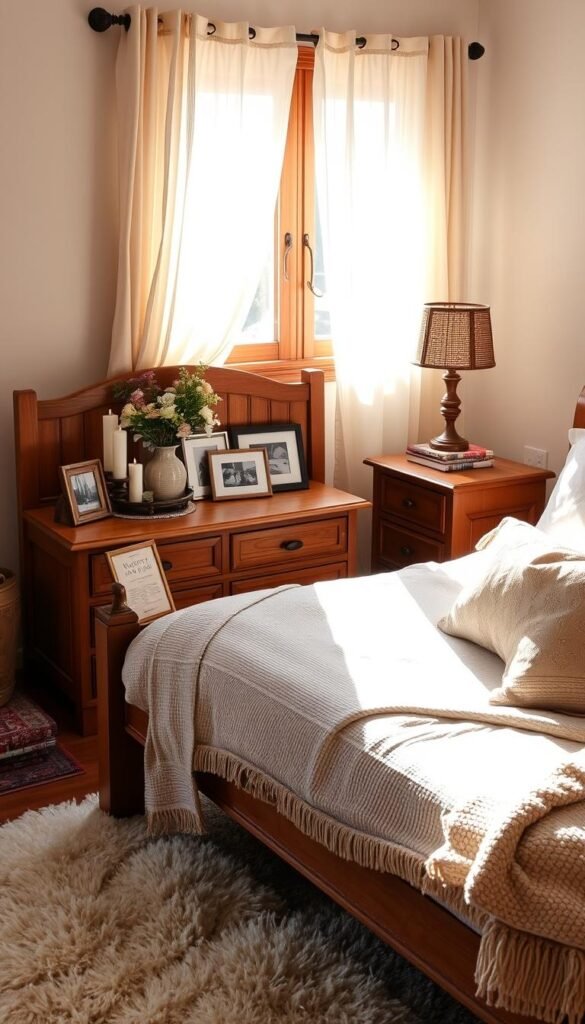
The right accents transform your space from functional to fabulous. They add personality and warmth to your natural pieces.
Michelle Boudreau Design shows how well this works. They used Moroccan accessories with dark midcentury items. Pompom blankets, rugs, and throw pillows added softness and color.
Brie Williams suggests vibrant patterned runners or bright tassels on handles. These small touches make a big impact on your overall look.
Selecting the Right Bedding
Your bedding choice sets the tone for your entire room. It should complement rather than compete with your natural pieces.
Choose colors that enhance your wood’s undertones. Warm woods pair well with cream, beige, or soft blue linens.
Cooler tones work with gray, white, or pale green bedding. These combinations create harmony throughout your space.
Patterns add visual interest without overwhelming. Stripes or subtle geometrics work beautifully. Avoid busy prints that clash with grain patterns.
Texture matters as much as color. Linen offers casual elegance. Cotton provides crisp freshness. Silk adds luxury and depth.
Layer different textures for maximum comfort. A quilted coverlet over smooth sheets creates inviting contrast.
Artwork and Mirror Placement
Artwork personalizes your space while balancing natural elements. Choose pieces that reflect your style and complement your room.
Size matters when selecting artwork. Large pieces anchor walls above dressers or beds. Smaller groupings create gallery walls with personality.
Place artwork at eye level for best viewing. Center pieces about 60 inches from the floor. This creates comfortable viewing from sitting or standing.
Mirrors serve both function and style. They reflect light and make spaces feel larger. Position them opposite windows for maximum brightness.
Ornamental mirrors add decorative appeal. Sunburst or carved designs become art themselves. They enhance your room’s character beautifully.
Consider scale when choosing mirrors. Large mirrors work above dressers or as statement pieces. Smaller mirrors complement nightstands or accent walls.
Textiles complete your room’s story. Throws and pillows add color and comfort. Rugs define spaces while adding texture underfoot.
Choose decorative objects that enhance surfaces without cluttering. A single beautiful vase or sculpture makes a stronger statement than many small items.
Personal items like photos or collections maintain aesthetic coherence. Display them in curated groupings rather than scattered arrangements.
Seasonal changes refresh your look without replacing furniture. Switch pillow covers or add a lighter throw for summer. These updates keep your space feeling current.
Accessories help transition between design styles. Modern lamps with traditional pieces create interesting contrast. This approach keeps your room feeling dynamic and personal.
Edit your accessories regularly to avoid visual overload. Remove items that no longer serve your style. This maintains interest without clutter.
Your final decor choices should feel authentically you. They complete your personal sanctuary with warmth and character.
Creating Focal Points With Statement Wood Pieces
A signature piece can instantly elevate your space from ordinary to extraordinary. These special items become the heart of your room’s personality and style.
Jenny Wolf Interiors demonstrated this beautifully with their iconic LC4 Lounge Chair selection. This midcentury modern masterpiece gave the bedroom an instant style boost.
Statement pieces serve as both conversation starters and design anchors. They create visual interest that draws attention and sets the tone.
What makes a piece truly statement-worthy? Exceptional craftsmanship, unique design, or impressive scale sets these items apart. They possess character that standard pieces simply cannot match.
K Shan Design chose a vintage rattan flower headboard as their focal point. Its charming pattern and texture immediately captured attention upon entering the room.
Kelly Deck Design’s classic midcentury dresser served dual purposes. It provided essential storage while making a strong style statement through its clean lines.
Choosing your focal point requires careful consideration. Select the piece that best represents your personal aesthetic vision. This item should naturally draw the eye when you enter the space.
Balance is crucial when working with bold pieces. Follow the 80/20 rule where 20% of your decor makes strong statements. The remaining 80% provides supporting harmony through shared colors and matching tones.
Strategic placement maximizes your statement piece’s impact. Position it where sight lines naturally converge upon entering. This could be opposite the doorway or centered on a primary wall.
Lighting plays a crucial role in highlighting your focal item. Use directed lighting to create emphasis and drama. Adjustable spotlights or focused lamps work beautifully for this purpose.
Negative space provides breathing room around important pieces. Allow adequate empty space around your statement item. This isolation makes it stand out more effectively.
Potential statement pieces vary widely based on your style. Consider these options for your space:
- Carved headboards with intricate details
- Unique dressers with exceptional grain patterns
- Sculptural tables with artistic forms
- Chairs with unexpected shapes and materials
Budget considerations matter when investing in signature items. Allocate more resources toward your focal piece than supporting elements. Quality craftsmanship justifies higher investment for pieces that define your room.
These anchor items often determine your overall design direction. They establish color palettes, style themes, and mood for the entire space. Your other choices should complement rather than compete.
Living with bold pieces long-term requires thoughtful selection. Choose items with timeless appeal rather than passing trends. Their unique character should grow more appealing over time.
Remember that your statement piece reflects your personality. It should bring you joy every time you enter your personal retreat. The right choice becomes a beloved part of your daily life.
Maintaining and Caring for Your Wood Furniture
Keeping your investment beautiful requires simple but consistent care. Proper maintenance preserves both appearance and value for years to come.
Different materials need specific approaches. Your daily routine should match your particular finish and wood type.
Start with gentle dusting using a soft, dry cloth. Microfiber works beautifully for catching dust without scratching. Avoid feather dusters that can leave fine scratches over time.
For deeper cleaning, use products made specifically for wood surfaces. Look for pH-balanced cleaners that won’t damage finishes. Always test new products in an inconspicuous area first.
Prevent sun damage by positioning pieces away from direct sunlight. Use curtains or blinds during peak hours. Rotate accessories occasionally to ensure even exposure.
Maintain consistent humidity levels in your home. Extreme dryness can cause cracking. Too much moisture may lead to warping.
Use coasters under all drinks and hot items. Place mats under decorative objects that might scratch surfaces. These simple habits prevent most common damage.
Address spills immediately with a soft, damp cloth. Blot gently rather than rubbing. Dry thoroughly afterward to prevent moisture penetration.
Minor scratches often respond well to simple solutions. Try rubbing a walnut meat over light scratches. For deeper marks, use a touch-up pen matching your finish.
Seasonal changes affect wood differently. In dry winters, consider using a humidifier. Humid summers might require more frequent dusting.
Professional help becomes valuable for significant issues. Seek expert refinishing when surfaces become dull or damaged. Structural repairs should always involve experienced craftspeople.
When moving pieces, lift rather than drag them across floors. Use furniture sliders for heavier items. Protect corners and edges with padding during transportation.
Create a simple maintenance schedule that works for your lifestyle. Monthly dusting and seasonal deep cleaning keep everything looking fresh. Consistent care makes each task quick and easy.
Your careful attention preserves both beauty and value. Well-maintained pieces become family treasures that last generations. They continue enhancing your home’s design for years to come.
Remember that quality items deserve quality care. Your efforts maintain that beautiful look you love. They ensure your space always feels warm and inviting.
Budget-Friendly Approaches to Classic Wood Designs
Smart shopping strategies let you create a beautiful space without breaking the bank. Today’s market offers authentic and reproduction items at various price points.
Vintage and secondhand shopping provides excellent value. You can find quality pieces that have stood the test of time.
Lauren Nelson Design notes that nightstands are especially accessible. Many affordable options exist that don’t compromise on style.
Mixing high and low pieces creates a curated design. This approach manages costs while maintaining visual appeal.
Here are effective strategies for building your dream space:
- Check local thrift stores and estate sales regularly
- Browse online marketplaces for gently used items
- Visit furniture outlets during seasonal sales
- Consider floor models or slightly imperfect pieces
Prioritize investment in frequently used pieces. Your bed frame and daily storage deserve higher budgets.
Supporting items like accent chairs can be more budget-friendly. This balanced approach maximizes value throughout your home.
DIY options offer significant savings. Refinishing existing furniture can transform outdated pieces.
“Nightstands are especially easy to find and many are quite affordable when shopping secondhand.”
Reproduction items mix beautifully with authentic pieces. They provide the same design aesthetic at lower costs.
Evaluate construction quality carefully at any price point. Solid joinery and durable materials ensure long-term value.
Consider these factors when deciding where to splurge or save:
- Visibility in your room layout
- Frequency of daily use
- Emotional importance to you
- Potential for future repurposing
Avoid false economies by investing in pieces that truly last. Quality craftsmanship justifies higher initial costs.
Build your collection gradually over time. This spreads out expenses while allowing you to refine your style.
Your perfect bedroom emerges through thoughtful, patient curation. Each addition should bring you joy and function.
Remember that beautiful spaces develop over time. Your personal retreat evolves with your tastes and budget.
Your Dream Bedroom With Timeless Wood Furniture
Creating your ideal personal retreat begins with thoughtful choices. Natural materials offer both beauty and function in your space.
These pieces provide lasting value and adapt to changing tastes. Your selections should reflect your unique personality and needs.
Focus on balance and coordination throughout your room. Mix styles confidently to create a look that feels authentically yours.
Start with key items and build around them gradually. Enjoy the process of crafting a space that brings you comfort and joy every day.
Your perfect bedroom awaits through these timeless design choices.