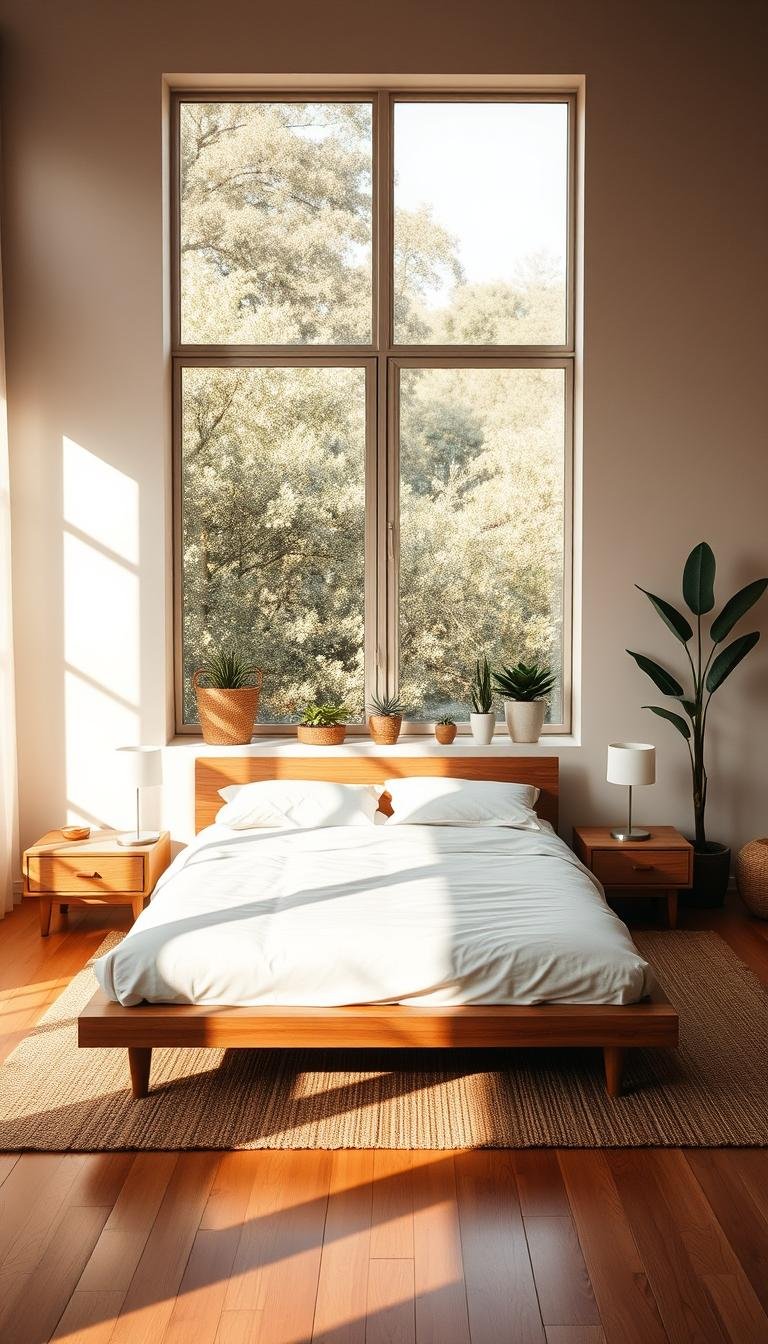
Welcome to your guide for creating a peaceful personal sanctuary. Your bedroom should be a calming retreat from daily life.
This approach blends clean, simple design with natural elements. It transforms your space into a place of true relaxation.
This style promotes well-being and a restful atmosphere. The look feels both timeless and deeply personal to you.
We will walk through each step, from big ideas to small details. Your room will reflect serenity and your unique style.
Get ready to embrace a nature-inspired feel that you will love coming home to.
Why Choose a Minimalist Earthy Bedroom?
Imagine stepping into a room that instantly calms your mind. This is what natural-inspired decor creates for your personal retreat.
Earthy tones and materials bring nature’s comfort indoors. They transform your sleeping area into a warm, inviting sanctuary.
This approach combines beauty with peace. Natural elements work together to reduce visual noise in your space.
Less clutter means more mental clarity. Your mind can finally unwind after a long day.
Organic textures and soothing colors promote better rest. They create a deeper connection to the natural world right in your room.
Real homes show this style balances looks with function. It proves practical beauty exists for everyday living.
You deserve a personal haven that supports your well-being. This design philosophy makes that possible through intentional choices.
Understanding the Core Elements of Earthy Design
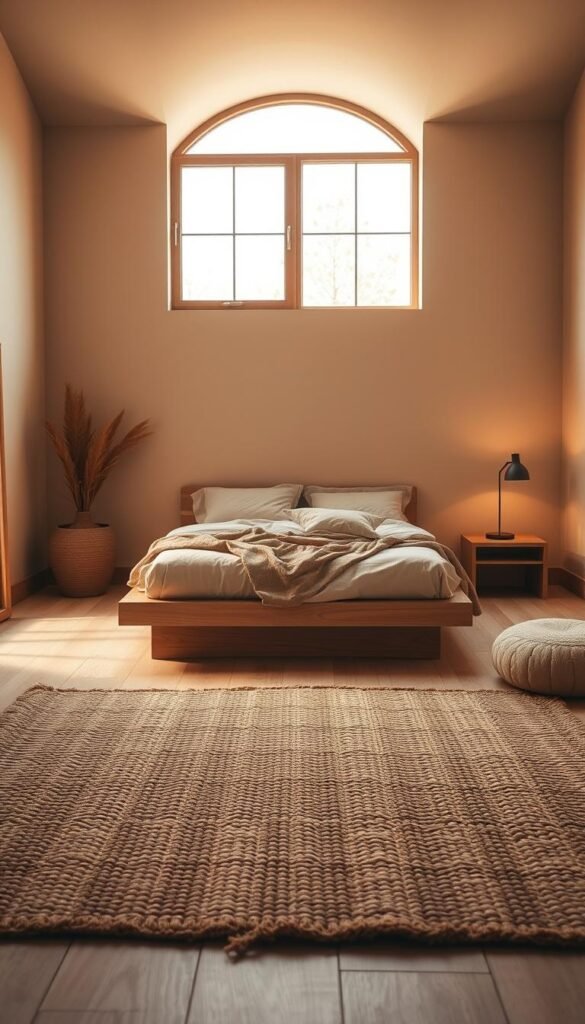
At the heart of every nature-inspired retreat lies a thoughtful selection of colors and materials. These elements work together to create that calming atmosphere you desire. They form the foundation of your personal sanctuary.
Getting these basics right ensures your space feels both cohesive and comforting. Let’s explore how to build this foundation properly.
Embracing a Natural Color Palette
Your color choices set the mood for your entire space. Earth tones create immediate warmth and connection to nature. Think of shades found in forests, deserts, and soil.
Browns, olives, and terra-cotta tones work beautifully together. They create harmony rather than competition on your walls and bedding.
Consider this approach when building your color palette:
| Earth Tone | Best Use | Mood Created |
|---|---|---|
| Warm Browns | Furniture, flooring | Grounding, stable |
| Olive Green | Accent walls, textiles | Calming, restorative |
| Terra-cotta | Decor accents, rugs | Warm, inviting |
| Mustard Yellow | Pillows, artwork | Cheerful, energetic |
| Warm Neutrals | Main walls, bedding | Serene, spacious |
Mix these hues with intention. Let one shade dominate while others serve as accents. This creates visual interest without overwhelming your senses.
Incorporating Organic Textures and Materials
Texture adds depth and character to your space. Natural materials bring authenticity and tactile pleasure. They make your room feel lived-in and loved.
Wood provides warmth and structure. Choose pieces with visible grain patterns. They tell a story of natural beauty.
Rattan and wicker add lightness and airiness. These materials work well for chairs, baskets, and light fixtures. They bring organic shapes into your design.
Linen textiles offer breathable comfort. Their slightly wrinkled appearance adds casual elegance. Use them for bedding and window treatments.
Jute and wool provide cozy textures underfoot. Layer these natural fibers for added comfort. They create that wonderful barefoot feeling.
Mixing different textures enhances your sensory experience. Combine rough-hewn wood with soft linens. Pair smooth stone with nubby wool blankets.
Choose sustainable options when possible. Look for reclaimed wood and organic textiles. Your choices can be both beautiful and eco-friendly.
These materials age gracefully over time. They develop character that mass-produced items cannot match. Your space becomes uniquely yours through these natural elements.
How to Design a Minimalist Earthy Bedroom: Your Step-by-Step Plan
Creating your nature-inspired sanctuary follows a logical progression. A clear roadmap ensures your project stays organized and stress-free.
Begin with honest assessment of your current room. Measure dimensions and note architectural features. Consider natural light sources and traffic patterns.
Decluttering comes next for a fresh start. Remove everything not essential for sleep or relaxation. This clears mental and physical space for your new look.
Prioritize elements in this specific order for best results:
| Phase | Focus Area | Time Estimate |
|---|---|---|
| Foundation | Walls, floors, lighting | 2-3 days |
| Furniture | Bed, storage, seating | 1-2 days |
| Textiles | Bedding, window treatments | 1 day |
| Accents | Plants, decor, personal items | 1 day |
Budget wisely by allocating funds to quality foundation pieces. Splurge on items you touch daily like bedding. Save on decorative accents you can add later.
“Good design begins with honesty, asks tough questions, and comes from collaboration and trust.”
Source materials thoughtfully whether DIY or shopping. Local artisans often offer unique, handcrafted pieces. Reclaimed wood stores provide character-rich options.
Each phase builds upon the previous one. Your color palette informs textile choices. Furniture placement guides lighting decisions.
This approach creates cohesion throughout your space. Your final result feels intentional and harmonious. Every element works together for ultimate tranquility.
Crafting Your Earth-Toned Foundation: Walls and Floors
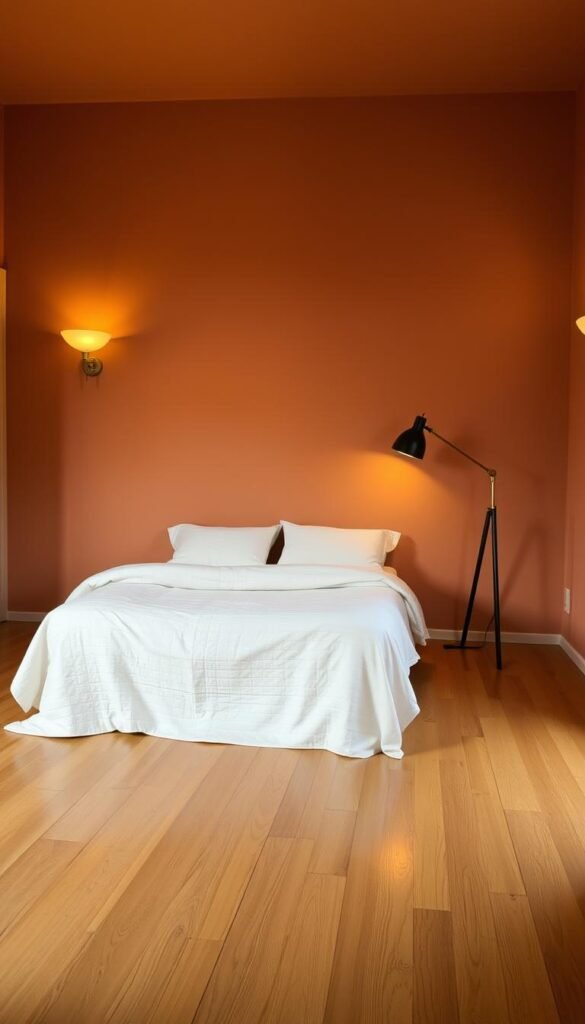
Your room’s foundation sets the stage for everything that follows. This base layer creates harmony between all elements in your space.
Thoughtful choices here ensure your sanctuary feels cohesive and intentional. Let’s explore how to build this essential foundation.
Selecting Soothing Paint Colors and Wall Treatments
Begin with your vertical surfaces. Choose paint hues that evoke nature’s tranquility. Sage green, warm beige, and soft blue create instant calm.
These tones work beautifully as your primary background. They provide a serene canvas for your furniture and decor.
Consider these wall treatment options for added depth:
- Botanical wallpaper for a nature-inspired accent wall
- Limewash effects that create subtle texture
- Grass cloth or other natural fiber coverings
These treatments add visual interest without clutter. They maintain that clean, minimalist feel you want.
Choosing Natural and Sustainable Flooring Options
Your flooring choices ground the entire space. Natural materials bring authenticity underfoot. They complement your wall colors perfectly.
Hardwood floors in warm tones provide timeless beauty. Bamboo offers an eco-friendly alternative with similar appeal.
Natural stone tiles like slate or travertine add organic texture. These materials age beautifully over time.
Layer with area rugs for added comfort. A jute or wool rug introduces softness and warmth. These natural fibers feel wonderful against bare feet.
Your foundation now works together harmoniously. Walls and floors create that cohesive base for your sanctuary.
Selecting Furniture with Natural Warmth and Character
Your furniture choices bring life and personality to your room. They transform empty areas into functional, beautiful spaces.
Natural materials create instant warmth and connection. They make your room feel grounded and authentic.
Opting for Wood and Rattan Pieces
Wood furniture provides timeless beauty and durability. Each piece tells its own story through unique grain patterns.
A reclaimed wood bed frame makes a stunning focal point. It adds history and character to your sleeping area.
Rattan pieces bring lightness and organic texture. Woven headboards or chairs create visual interest.
These materials work beautifully together. They complement rather than compete in your space.
Incorporating Organic Shapes and Curves
Nature rarely follows straight lines. Your furniture can reflect this natural flow.
Curved headboards and rounded nightstands soften the room. They create a more inviting atmosphere.
Look for pieces with gentle, flowing lines. They mimic shapes found in the natural world.
This approach makes your room feel more relaxed. It encourages true rest and relaxation.
Mixing wood tones adds depth and interest. Light oak with dark walnut creates beautiful contrast.
Choose sustainable options when possible. Bamboo and reclaimed wood are eco-friendly choices.
Your furniture should feel both beautiful and intentional. Each piece contributes to your peaceful retreat.
Building a Cozy and Inviting Bed
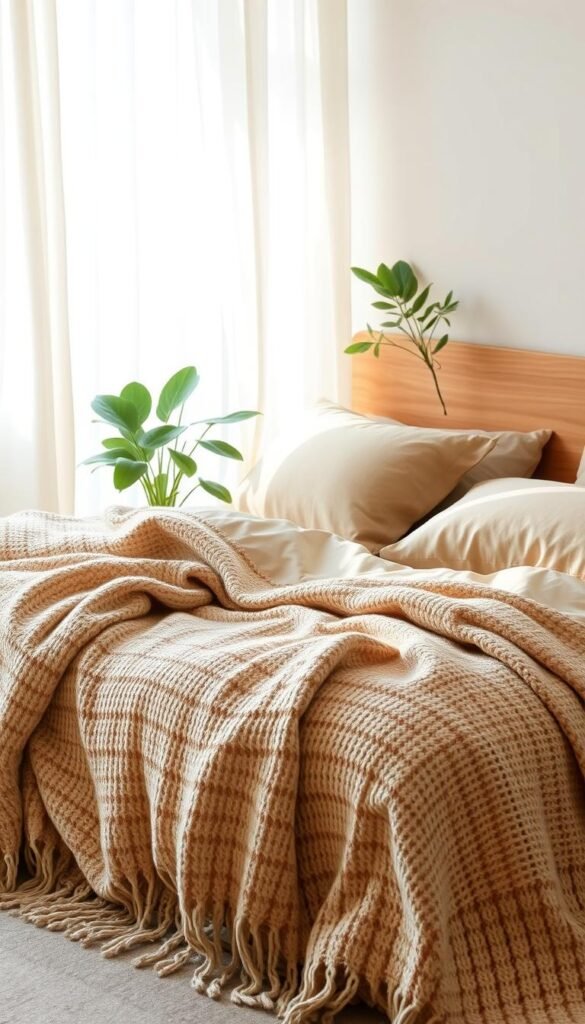
Your bed becomes the heart of your peaceful retreat through thoughtful layering. This central piece deserves special attention for both comfort and style.
Natural materials create that perfect sleeping environment you crave. They bring breathable comfort and organic beauty to your space.
Choosing Natural Fiber Bedding
Start with sheets made from organic fibers for ultimate comfort. Linen, cotton, and bamboo offer excellent temperature regulation.
These materials feel wonderful against your skin all night long. They provide that breathable quality you need for restful sleep.
Consider natural fiber bedding options for their sustainable benefits too. Earth-toned duvet covers add visual warmth to your setup.
Textured weaves or subtle patterns bring depth to your bedding. They create visual interest without overwhelming your senses.
Layering with Textured Throws and Pillows
Layer your bed with various textures for added dimension. Mix chunky knits with smooth linen for contrast.
Throw pillows in botanical motifs introduce nature-inspired accents. They add personality while maintaining that organic feel.
A cozy throw at the foot of the bed invites relaxation. It provides extra warmth on cooler evenings too.
These layers work together to create incredible comfort. Your bed becomes a sanctuary within your sanctuary.
Designing a Layered and Soothing Lighting Scheme
Lighting transforms your bedroom into a sanctuary of calm after sunset. The right illumination enhances your natural materials and earth tones beautifully.
Your lighting choices should create warmth without harshness. They make your space feel inviting during evening hours.
Think about three lighting types working together. Ambient lighting sets the overall mood throughout your room.
Task lighting serves specific functions like reading. Accent lighting highlights special features and textures.
Installing Warm Ambient and Task Lighting
Begin with ambient sources that cast gentle, widespread light. Table lamps with natural fiber shades create soft diffusion.
Choose bulbs rated at 2700K for that golden glow. This temperature makes earth tones appear richer and more vibrant.
Position your task lighting where you need focused illumination. Adjustable bedside lamps provide perfect reading light.
These should offer directional light without creating glare. Your eyes will appreciate the consideration during evening reading.
Using Accent Lights to Highlight Texture
Accent lighting adds depth and dimension to your space. Use picture lights to illuminate artwork or textured walls.
Fairy lights woven through headboards create magical highlights. They make natural materials like wood and rattan glow beautifully.
Consider these lighting strategies for your scheme:
- Place ambient lights in room corners for even distribution
- Install dimmer switches to adjust brightness throughout evening
- Use upward-facing lights to bounce illumination off ceilings
- Position task lights at eye level to prevent shadows
- Hide accent lights behind plants for dramatic effects
Your layered approach ensures no harsh shadows or dark corners. The entire room feels evenly illuminated and welcoming.
This lighting scheme completes your nature-inspired retreat perfectly. It makes every evening feel like a peaceful escape.
Bringing the Outdoors In with Plants and Greenery
Living plants transform your personal retreat into a breathing, growing sanctuary. They bridge the gap between indoor comfort and natural beauty.
Greenery introduces life and movement into your peaceful space. Plants purify air while adding organic texture throughout your room.
Strategic placement creates visual interest and improves your room’s atmosphere. Even small additions make a significant impact on your overall experience.
Selecting Low-Maintenance Bedroom Plants
Choose plants that thrive with minimal attention for worry-free greenery. These varieties adapt well to indoor conditions and indirect light.
Snake plants stand upright with striking patterned leaves. They tolerate low light and irregular watering beautifully.
Pothos vines trail gracefully from shelves or hanging planters. Their heart-shaped leaves bring soft movement to your space.
Succulents offer diverse shapes and require very little water. They create interesting texture on nightstands or windowsills.
These plants improve air quality while adding natural accents. They contribute to a healthier sleeping environment too.
| Plant Type | Light Needs | Water Frequency | Best Placement |
|---|---|---|---|
| Snake Plant | Low to bright indirect | Every 2-6 weeks | Floor corners, beside furniture |
| Pothos | Low to medium indirect | Every 1-2 weeks | Hanging planters, high shelves |
| ZZ Plant | Low to bright indirect | Every 2-3 weeks | Dark corners, beside bed |
| Spider Plant | Bright indirect | Weekly | Windowsills, hanging baskets |
| Peace Lily | Low to medium indirect | Weekly | Nightstands, accent tables |
Styling with Hanging Vines and Statement Plants
Hanging plants draw eyes upward and maximize your vertical space. They create dimension without occupying precious floor area.
Trailing vines soften hard edges and architectural features. They introduce flowing movement that mimics natural growth patterns.
Large statement plants become dramatic focal points in empty corners. Monstera plants with split leaves make particularly striking additions.
Fiddle-leaf figs offer broad, glossy leaves that command attention. Their substantial presence anchors your room’s natural feel.
Place taller plants in corners to frame your sleeping area beautifully. They hide awkward angles while adding lush greenery.
Regular care ensures your plants remain vibrant and healthy. Most varieties need only occasional watering and seasonal fertilizing.
Living plants provide psychological benefits beyond their visual appeal. They reduce stress and strengthen your connection to the earth.
Your green companions create a multi-sensory experience that enhances relaxation. They complete your nature-inspired sanctuary perfectly.
Accessorizing with Intention and Natural Touch
Final touches transform your space from beautiful to deeply personal. Thoughtful accessories complete your nature-inspired retreat.
Each piece should serve purpose while adding beauty. This approach maintains your clean aesthetic while adding character.
Adding Woven Baskets and Natural Fiber Rugs
Woven baskets offer both style and function in your space. They provide hidden storage while adding organic texture.
Choose different sizes for various needs. Large baskets hold extra blankets or pillows. Smaller ones organize bedside essentials.
Natural fiber rugs bring warmth underfoot. A jute rug adds earthy texture and reduces noise. Layer it over existing flooring for extra comfort.
These elements introduce wonderful tactile experiences. They make your room feel cozy and complete.
Displaying Botanical Art and Personal Treasures
Wall art reinforces your connection to nature. Botanical prints bring the outdoors inside your walls.
Choose frames in natural wood or simple black. This keeps the focus on your beautiful artwork.
Display personal treasures collected from nature. Seashells, stones, or dried flowers add meaning. They tell your unique story.
Place these accents where you can enjoy them daily. A windowsill or bedside table works perfectly.
Every piece should feel intentional and special. Your space becomes truly yours through these final touches.
Creating a Multi-Sensory Experience for Relaxation
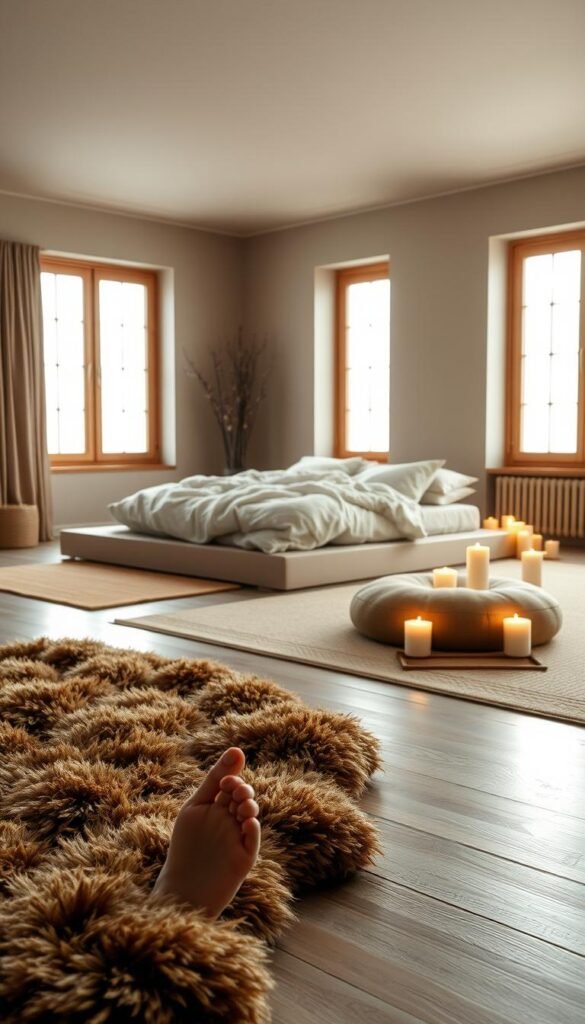
Transform your personal retreat into a complete sensory sanctuary that engages all your senses. This approach deepens your relaxation beyond visual aesthetics alone.
Multi-sensory design creates a more immersive and restorative environment. It turns your bedroom into a true haven for complete unwinding.
Engage your sense of smell with carefully chosen aromatherapy elements. Essential oil diffusers with lavender or eucalyptus create calming scents.
Sandalwood candles add earthy fragrance while providing soft ambient light. These scents promote relaxation and better sleep quality naturally.
Incorporate soothing sounds to create tranquil auditory atmosphere. Nature playlists featuring gentle rain or forest sounds work beautifully.
White noise machines mask disruptive outside noises effectively. They help your mind settle into deeper states of relaxation.
Focus on tactile elements that provide physical comfort throughout your space. Plush area rugs feel wonderful under bare feet each morning.
Soft blankets and textured throws invite cozy moments of relaxation. These elements add comforting warmth during cooler evenings.
Multi-sensory design enhances your overall relaxation experience significantly. It creates deeper connection to your peaceful environment.
Integrate these elements thoughtfully without overwhelming your minimalist aesthetic. Choose simple, natural scents and subtle sound options.
Your bedroom becomes a sanctuary that appeals to all senses beautifully. Every element works together for ultimate peace and tranquility.
Maintaining a Clutter-Free and Minimalist Feel
Your peaceful retreat deserves consistent care to maintain its calming atmosphere. A clean space supports mental clarity and reinforces that serene look you’ve created.
Develop simple habits that keep surfaces clear and organized. Only display items that serve purpose or bring genuine joy. This approach preserves your room’s tranquil feel.
Smart storage solutions hide everyday items beautifully. Woven baskets blend seamlessly with your natural aesthetic while providing hidden organization. They keep essentials accessible without visual distraction.
Regular editing prevents accumulation over time. Set monthly reminders to reassess your decor accents and personal items. Remove anything that no longer fits your vision or serves function.
Negative space plays a crucial role in your design. Empty areas allow your beautiful elements to stand out prominently. They create breathing room that enhances overall tranquility.
Daily maintenance takes just minutes when done consistently. Make your bed each morning and return items to their designated homes. These small actions preserve that inviting look effortlessly.
Your commitment to simplicity ensures lasting peace in your personal sanctuary. The space remains functional while maintaining its restorative atmosphere perfectly.
Infusing Your Personal Style into the Earthy Aesthetic
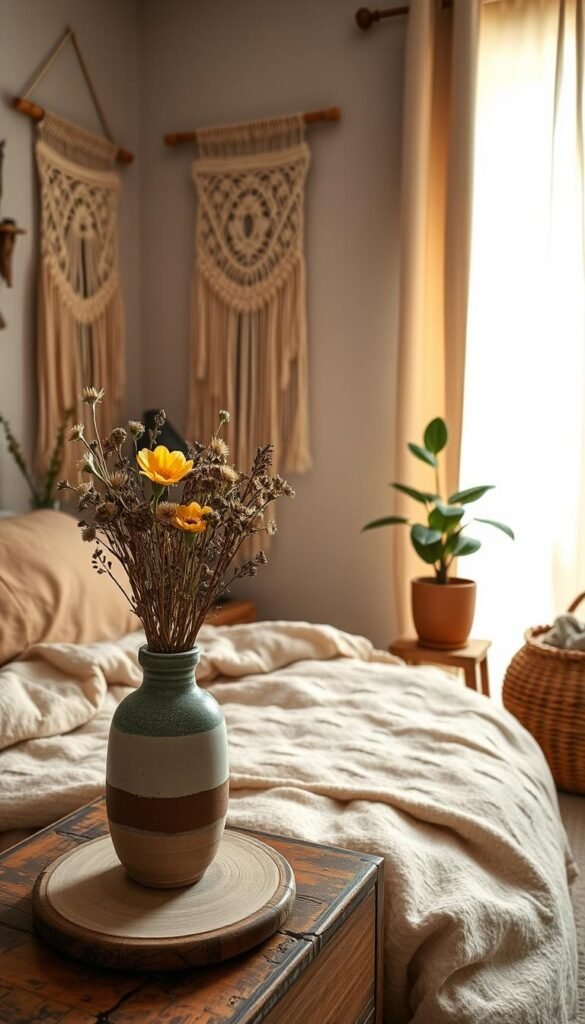
Your personal sanctuary should reflect who you are at heart. The earthy aesthetic provides a beautiful canvas for your unique story.
Handmade pottery brings wonderful texture and authenticity. Each piece carries the maker’s energy into your space.
Vintage nature-inspired decor adds character and history. These treasures create conversation points throughout your room.
Create a special meditation corner with meaningful items. This becomes your private retreat within the retreat.
Travel souvenirs and family heirlooms add personal connection. Display them where you can enjoy their stories daily.
Consider these approaches for blending your style:
| Personal Item | Integration Method | Visual Impact |
|---|---|---|
| Handmade pottery | Nightstand decor, plant holders | Organic texture, artisan feel |
| Vintage finds | Wall art, decorative objects | Historical charm, unique character |
| Travel souvenirs | Small display collections | Personal narrative, global inspiration |
| Family photos | Natural wood frames, gallery wall | Emotional connection, personal history |
| Textile arts | Wall hangings, pillow covers | Cultural richness, handmade warmth |
Experiment with colors within your earthy palette. Mustard yellows or deep terracottas can express your energy.
Layer different textures to create visual interest. Combine rough ceramics with smooth stones or woven textiles.
Your room should feel authentically yours above all else. Personal touches transform beautiful design into home.
Every item should spark joy or hold meaning. This creates that comforting retreat you love returning to.
The final look balances nature’s simplicity with your spirit. Your space becomes truly inspiring through these personal accents.
Embarking on Your Earthy Bedroom Transformation
Your journey to a peaceful retreat starts with a single step. Choose a calming color palette or source sustainable materials to begin.
This process can unfold gradually. Build your dream space over time, adding personal touches as you go.
Stay true to minimalist principles while adapting to your needs. Focus on natural elements that promote relaxation.
Your bedroom will soon become a sanctuary for well-being. It will offer a deep connection to nature every day.
Trust your vision and enjoy creating a room you love. Your personal haven awaits.