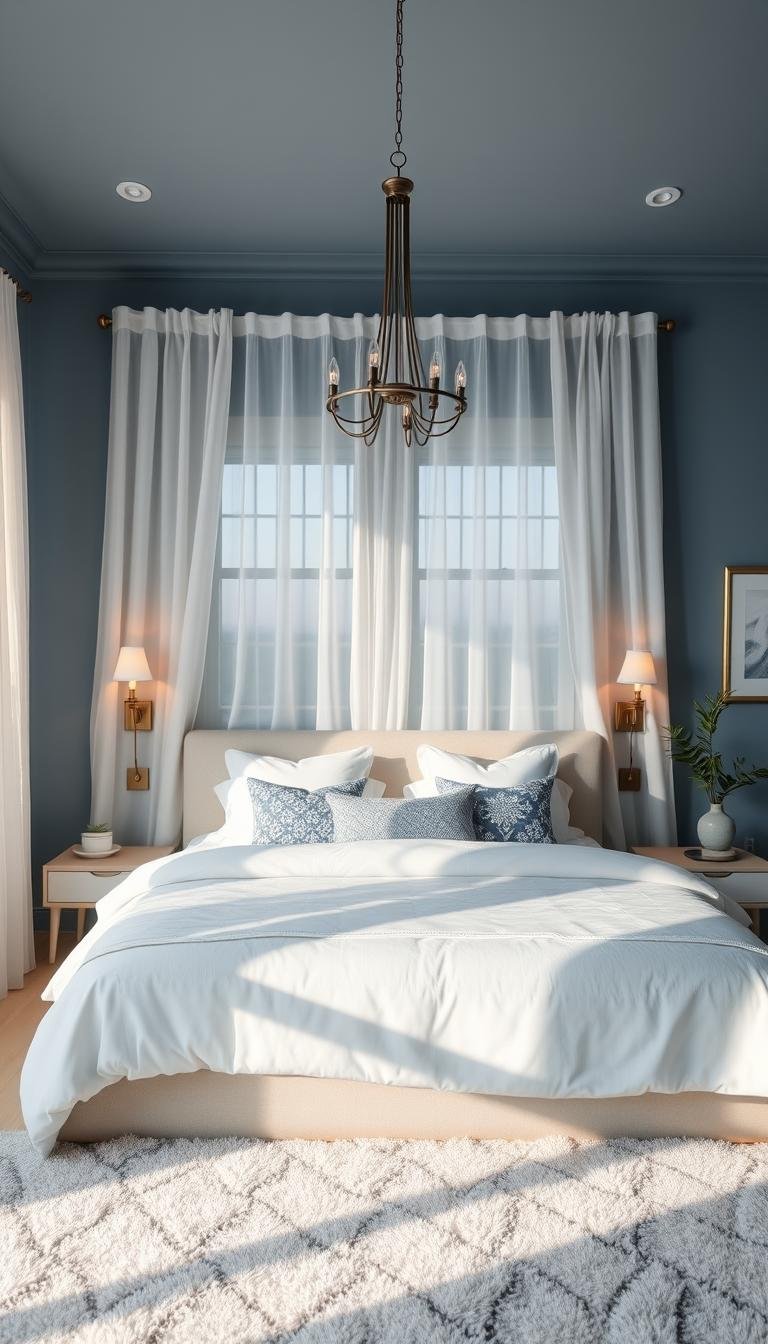
Welcome to your complete guide for crafting the perfect personal sanctuary. Your sleeping space should be a true retreat that promotes relaxation and restful nights.
Discover how this calming color can transform your space into a peaceful haven. It works beautifully across various design styles, from coastal to contemporary.
We’ll explore numerous creative concepts that range from soft sky tones to deep navy shades. Each offers unique ways to incorporate this versatile hue into your decor.
You’ll learn why this particular shade is considered excellent for sleeping quarters. It provides both psychological benefits and incredible aesthetic flexibility.
Get ready to refresh your room with practical tips and inspiring suggestions. This guide will help you create a space that feels both tranquil and chic.
Why Blue is the Perfect Choice for Your Bedroom Sanctuary
Have you ever wondered why certain colors make you feel more relaxed in your personal space? Science shows that this particular hue offers remarkable psychological benefits for your sleeping environment.
Research indicates that exposure to this calming shade can actually lower blood pressure and reduce stress levels. This creates ideal conditions for improved sleep quality and overall well-being.
The versatility of this color family allows you to create exactly the atmosphere you desire. From energizing sky tones to deeply relaxing navy shades, each variation serves a different purpose.
Many designers consider this hue a neutral because it pairs beautifully with countless other colors and materials. This flexibility makes it perfect for any design style you might choose.
There’s a natural connection between this color and the world around us. Think of peaceful ocean waves or clear sky vistas – these associations create instant tranquility in your personal retreat.
This color performs wonderfully under different lighting conditions throughout the day. It maintains its calming properties from morning sunlight to evening lamp light.
The historical significance of this hue in interior design spans centuries and cultures. Its timeless appeal ensures your space will feel current yet classic for years to come.
Depending on the shade you select, you can actually manipulate the perception of your room’s size. Lighter tones can make small spaces feel more expansive, while darker shades create intimacy in larger areas.
| Shade Type | Atmosphere Created | Best For | Light Reflection |
|---|---|---|---|
| Sky Blue | Airy, Coastal Feel | Small Rooms | High Light Bounce |
| Navy Blue | Moody, Relaxing | Master Suites | Low Light Absorption |
| Powder Blue | Soft, Serene | Guest Rooms | Medium Reflection |
| Midnight Blue | Deep, Peaceful | Accent Walls | Minimal Light Bounce |
Cultural traditions around the world have long incorporated this color into sleeping quarters. This universal appeal transcends geographical boundaries and design preferences.
Practical considerations include maintenance requirements and how the color ages over time. Most shades are relatively forgiving and develop character as they mature in your space.
When selecting your perfect shade, consider both the natural and artificial lighting in your room. Test samples at different times of day to ensure you love the color around the clock.
Remember that this transformative hue can turn your ordinary sleeping area into an extraordinary sanctuary. The right shade will support relaxation and create that peaceful environment you deserve.
Layer on Textures and Fabrics for a Plush Feel
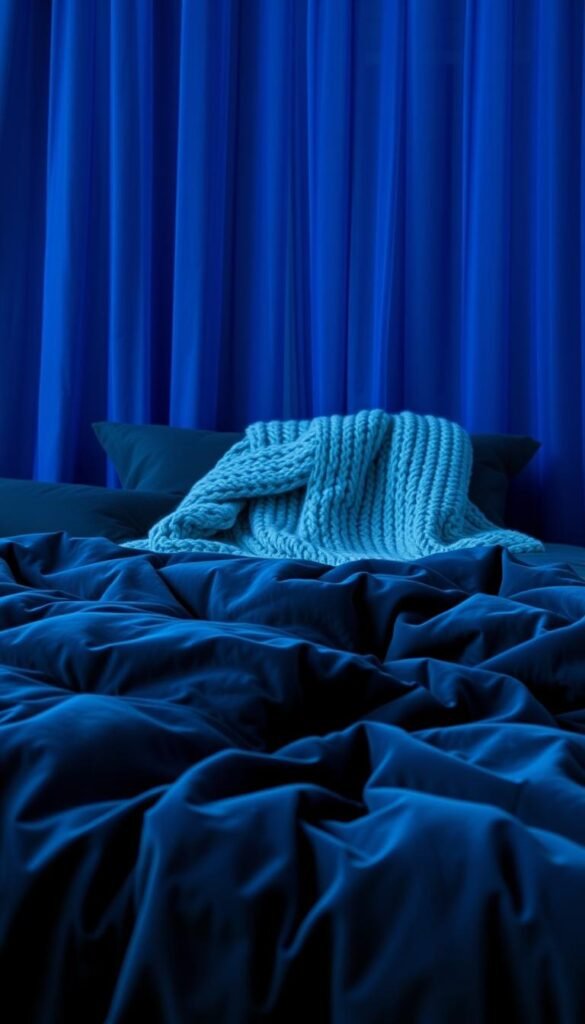
Transform your sleeping space into a luxurious retreat through thoughtful fabric selection. The right combination of materials creates both visual appeal and physical comfort.
Designer Andrew Brown mastered this approach in an Alabama bachelor pad. He used layered blue textiles to craft an exceptionally cozy environment.
The Canopy Bed Strategy
A dramatic canopy frame creates an intimate sleeping area. This design choice makes your bed the room’s focal point.
Extending fabric to the ceiling enhances the cocooning effect. It maximizes the impact of your chosen color throughout the space.
This approach works particularly well with flowing, lightweight materials. Sheer curtains soften light while maintaining airiness.
Mixing Patterns with Confidence
Combine different pattern scales for visual harmony. Large prints pair beautifully with smaller designs.
Try floral motifs with geometric shapes for interest. Stripes work well with abstract patterns too.
Maintain color consistency across all patterns. This creates cohesion despite the variety of designs.
Pro Tip: Balance Bold Fabrics with Solid Elements
Anchor patterned pieces with solid-colored basics. This prevents visual overload in your design.
Use neutral solids between bold patterns. They give the eye a place to rest amidst the excitement.
This balance creates both excitement and tranquility. Your space feels dynamic yet peaceful.
Different textiles interact uniquely with light throughout the day. Velvets absorb light for richness while silks reflect it beautifully.
Layering bedding effectively involves combining various elements. Sheets, blankets, and throws work together for comfort.
| Fabric Type | Best Use | Light Interaction | Comfort Level |
|---|---|---|---|
| Velvet | Accent Pillows | Light Absorbing | Luxurious Feel |
| Cotton | Bedding Basics | Neutral Reflection | Breathable |
| Linen | Curtains | Soft Diffusion | Natural Texture |
| Silk | Decorative Throws | Light Reflecting | Smooth Touch |
Textured materials also help absorb sound for quieter nights. This contributes to a more peaceful environment.
Remember the importance of tactile experience in your design. Different fabrics contribute to overall sensory appeal.
Your layered approach should create both visual and physical comfort. The result is a truly plush retreat.
Incorporate Natural Materials for Organic Warmth
Your sleeping space deserves more than just color. It needs texture and life. Nature provides the perfect elements to create true comfort.
Jeffrey Dungan demonstrates this beautifully with cypress paneling. The wood brings earthy character to walls and ceilings. A vintage carpet adds lightness against deeper tones.
Warm lighting and wood tones create incredible coziness. They transform cool schemes into inviting retreats. This approach feels both designed and authentically comfortable.
The Power of Wood Accents
Wood brings essential warmth to any color scheme. It balances cooler tones with natural texture. Each piece tells its own unique story through grain patterns.
Different woods create distinct moods. Light ash and oak feel airy and modern. Rich walnut and mahogany add depth and tradition.
Consider furniture pieces with character. A nightstand with visible grain adds organic appeal. Wooden headboards make strong style statements.
Smaller decor items matter too. Picture frames, trays, and boxes add subtle warmth. They contribute to the overall natural feel.
Choosing the Right Natural Elements
Select materials that complement your specific shade. Lighter woods work with pale tones. Darker woods enhance deeper shades beautifully.
Stone elements offer wonderful alternatives. Marble bedside tables add elegant contrast. Slate accent walls provide earthy texture.
Natural fibers complete the look. Jute rugs add earthy texture underfoot. Linen curtains soften light with organic charm.
Live plants bring freshness and color. They purify air while adding life to your space. Choose varieties that thrive in indoor conditions.
These materials age gracefully over time. They develop patina that enhances character. Your space grows more comfortable with each passing year.
Create a Dreamy Oasis with a Single Shade of Blue
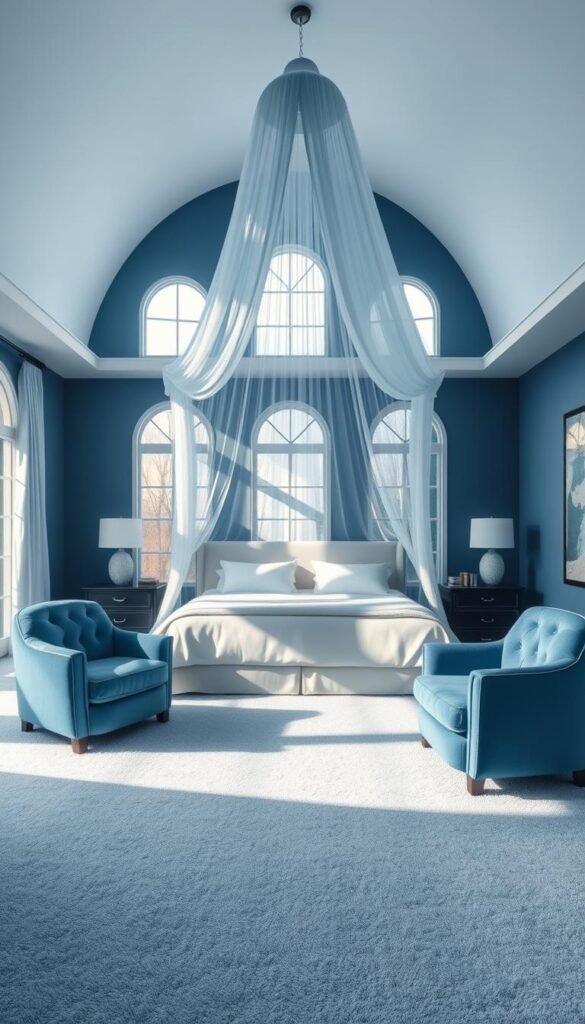
Imagine walking into a space that instantly transports you to a peaceful retreat. This Fantastic Frank bedroom demonstrates how a single soothing blue creates an ethereal quality throughout the entire room.
Using one color family for everything adds a dreamy, cohesive atmosphere. The approach offers incredible versatility while maintaining visual harmony.
Monochromatic Magic
Monochromatic schemes work through value variations of the same hue. You create depth using different lightness and darkness levels.
This magic happens when you use various shades within one color family. Darker walls paired with lighter accents create beautiful tonal interest.
The enveloping effect comes from using the same color on walls, ceiling, and major furniture. It creates a cocoon-like environment that feels both peaceful and purposeful.
Texture variation becomes your best friend in single-color schemes. Different materials create visual interest without introducing competing colors.
Consider how various finishes interact with light. Matte, eggshell, and semi-gloss finishes of the same paint create subtle dimension.
Selecting Your Perfect Blue
Choosing your ideal shade involves several important considerations. Room orientation and natural light availability significantly impact how colors appear.
North-facing rooms benefit from warmer blue tones. South-facing spaces can handle cooler variations beautifully.
Test paint samples in your actual space at different times. Colors change dramatically throughout the day with shifting light conditions.
Consider the specific mood you want to create. Lighter blues feel airy and expansive. Deeper shades create intimacy and sophistication.
Psychological research shows monochromatic blue rooms promote deeper relaxation. They also enhance mental clarity and focus.
| Room Feature | Light Blue Effect | Dark Blue Effect | Recommended Finish |
|---|---|---|---|
| Walls | Expands space visually | Creates intimate feel | Matte or Eggshell |
| Ceiling | Enhances airy quality | Adds dramatic depth | Matte |
| Trim & Doors | Soft contrast | Bold definition | Semi-Gloss |
| Furniture | Light reflective | Rich absorption | Eggshell |
Accessorizing requires thoughtful consideration of materials. Metallics, whites, and natural woods complement without competing.
Historical examples show this approach’s timeless appeal. Contemporary designers continue using monochromatic schemes for their calming effects.
Your perfect blue oasis awaits through careful planning and testing. The result will be a space that truly feels like your personal sanctuary.
Add a Touch of Glamour with Metallic Accents
What if you could add instant sophistication with reflective touches? Metallic elements bring wonderful sparkle to your sleeping space.
Designer Eliza Crater demonstrates this beautifully. Her work shows how these shiny details create depth while maintaining cohesion.
These reflective surfaces catch light throughout the day. They add movement and interest to your color scheme.
The right metallic choices can elevate your design from simple to spectacular. They provide that perfect finishing touch.
Gold, Brass, and Silver Pairings
Different metals create distinct moods with your color scheme. Warm tones like gold and brass add richness.
Cooler options like silver and chrome provide contemporary contrast. Each metal has unique characteristics.
Consider your specific shade when selecting metals. Warmer blues pair beautifully with gold and brass.
Cooler tones work well with silver and chrome finishes. The pairing should feel intentional and harmonious.
Copper offers another warm option that develops patina over time. It adds organic character to your space.
Where to Place Metallic Pieces
Strategic placement ensures maximum impact without overwhelming. Lighting fixtures make excellent starting points.
Bedside lamps and overhead fixtures serve dual purposes. They provide illumination while adding decorative appeal.
Hardware offers subtle metallic touches throughout your room. Doorknobs, drawer pulls, and switch plates matter.
Decorative objects create visual punctuation points. Picture frames, trays, and sculptures add interest.
Consider reflection patterns when placing metallic items. They should enhance rather than compete with natural light.
| Metallic Type | Best Blue Pairing | Recommended Placement | Light Reflection |
|---|---|---|---|
| Gold | Warm Navy Tones | Lighting Fixtures | Warm Glow |
| Brass | Medium Blues | Hardware & Accents | Soft Reflection |
| Silver | Cool Light Blues | Decorative Objects | Bright Sparkle |
| Chrome | Modern Blue Schemes | Bathroom Fixtures | High Reflection |
Mixing multiple metallic finishes requires careful consideration. Maintain a dominant metal with supporting accents.
Balance metallic elements with other materials. Wood, fabric, and stone prevent spaces from feeling cold.
Your metallic choices should complement rather than dominate. They serve as enhancing details within your overall design.
Remember that less can often be more with these reflective elements. Well-placed pieces create sophistication without excess.
The right metallic touches will elevate your space beautifully. They add that perfect finishing glamour to your personal retreat.
Design a Moody and Sophisticated Study Nook
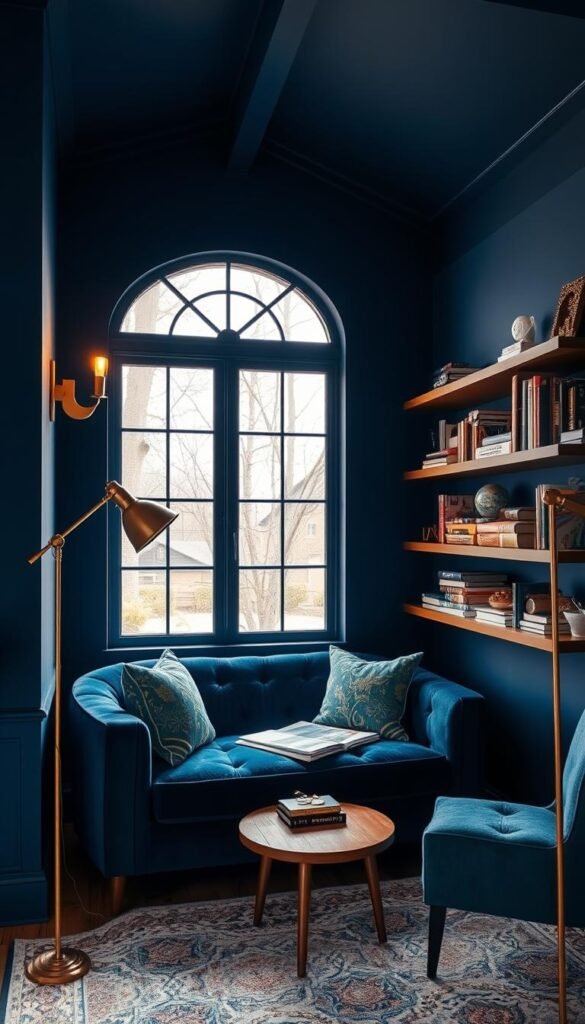
Your personal retreat deserves a dedicated area for focused work. Creating a study corner within your sleeping space combines productivity with peaceful vibes.
This approach maximizes room functionality without sacrificing style. You get the best of both worlds in one beautifully designed area.
Studio Shamshiri demonstrates this concept perfectly. They enveloped an entire Los Angeles home’s sleeping area in moody marine tones.
The ceiling received the same treatment for maximum impact. This creates an immersive experience that feels both sophisticated and cozy.
Enveloping the Space in Color
Complete color immersion transforms ordinary corners into extraordinary spaces. Darker shades work particularly well for creating intimate study areas.
Consider extending your chosen hue across all surfaces. Walls, ceiling, and even floors can share the same deep tone.
This technique makes smaller areas feel intentionally designed rather than cramped. It creates a cocoon-like environment perfect for concentration.
Navy and midnight shades offer excellent options for this approach. They provide rich depth while maintaining a relaxing atmosphere.
Psychological research supports using darker tones for focused work. They promote deeper concentration compared to brighter alternatives.
Choosing a Matte Finish
Finish selection dramatically affects your space’s final feel. Matte versions create softer, more absorptive qualities.
This finish reduces glare from task lighting beautifully. It prevents eye strain during extended study sessions.
Matte surfaces handle dark colors exceptionally well. They enhance richness while minimizing visual imperfections.
The finish works harmoniously with various lighting types. It maintains consistent color appearance throughout day and night.
Furniture choices should complement your moody atmosphere. Clean-lined pieces provide contrast against rich backgrounds.
Consider a simple desk in natural wood tones. This adds warmth while maintaining sophisticated aesthetics.
Storage solutions should integrate seamlessly into your design. Built-in shelving maintains visual continuity beautifully.
Lighting requires special consideration in darker spaces. Combine ambient and task lighting for optimal functionality.
Adjustable desk lamps provide focused illumination where needed. Overhead fixtures can offer general ambient light.
Strategic mirror placement helps balance the darkness. It reflects light while maintaining the intimate atmosphere.
Visual separation between areas creates functional zones. Furniture arrangement defines boundaries without physical dividers.
Area rugs can anchor your study space effectively. They create psychological separation from sleeping areas.
Accessories should serve both function and style. Organizational tools can enhance your sophisticated aesthetic.
Remember to balance darkness with reflective elements. Metallic accents and glass surfaces prevent cave-like feelings.
Your moody study nook will become a favorite retreat. It offers perfect conditions for productive work sessions.
Embrace Rich, Saturated Tones for a Bold Statement
Ready to make a dramatic impact in your personal space? Deep, vibrant hues can transform ordinary rooms into extraordinary retreats. These powerful colors create memorable environments that reflect your unique personality.
Ariene Bethea’s home demonstrates this approach beautifully. Her sleeping area combines intense shades with luxurious textures for maximum effect. The result feels both daring and completely comfortable.
These bold choices work particularly well in spaces where you want to make a strong impression. They create instant focal points and establish distinct moods.
Color expert Lydia Smith notes:
“Saturated colors possess an inherent energy that lighter tones simply cannot match. They create spaces that feel both alive and deeply personal.”
Pairing with Other Primary Colors
Combining intense blues with other vibrant hues creates dynamic energy. The classic blue-red combination offers particularly striking results.
Consider a navy wall behind a crimson bed frame. This contrast creates visual excitement while maintaining sophistication. Gold accents bridge the two colors beautifully.
Yellow provides another excellent pairing option. Mustard yellows work wonderfully with deeper blue shades. This combination feels both cheerful and refined.
Follow these simple guidelines for successful color combining:
- Choose one dominant color and use others as accents
- Maintain consistent intensity across all hues
- Use neutral elements to balance vibrant combinations
- Test combinations in your actual lighting conditions
These partnerships create spaces full of personality and energy. They transform simple rooms into expressive environments.
Creating a Welcoming Atmosphere
Even the most dramatic colors can feel inviting with proper execution. The secret lies in balancing intensity with comfort elements.
Layered textiles play a crucial role in softening bold statements. Plush rugs, comfortable bedding, and soft curtains add physical warmth.
Personal elements make strong colors feel more approachable. Family photos, favorite books, and cherished objects create connection.
Lighting significantly affects how intense colors feel throughout the day. Consider these approaches:
| Lighting Type | Effect on Saturated Colors | Best Application | Atmosphere Created |
|---|---|---|---|
| Natural Daylight | Enhances vibrancy and depth | Daytime use | Energetic and bright |
| Warm Artificial | Softens intensity | Evening relaxation | Cozy and intimate |
| Dimmable Systems | Adjusts color perception | Multi-purpose rooms | Flexible mood options |
| Accent Lighting | Highlights specific features | Artwork or architecture | Dramatic focal points |
Texture variety prevents visual fatigue in color-dense spaces. Combine smooth, rough, soft, and hard surfaces throughout your room.
Plants bring life and freshness to intense color schemes. Their natural green provides beautiful contrast against deep blues.
Your bold color statement should ultimately feel like home. Balance dramatic elements with comfortable, familiar touches.
This approach creates spaces that are both exciting and relaxing. You get the best of both design worlds in one beautiful room.
Soften the Look with Calming Gray Tones
Sometimes your space needs a gentle touch to achieve perfect balance. Gray provides that wonderful softening effect that makes other colors shine.
Designer Aamir Khandwala mastered this approach in a Bellport home. He used pale gray to create a fun, transitional space that feels both fresh and comfortable.
Blue, White, and Gray Harmony
This classic combination creates timeless appeal that works across design styles. The three colors work together beautifully.
Gray acts as the perfect bridge between bright white and your chosen hue. It reduces contrast while maintaining visual interest.
Different proportions create distinct moods in your space. More gray creates subtle sophistication. Less gray keeps things crisp and clean.
This harmony works particularly well in sleeping areas. It promotes relaxation while maintaining style.
Selecting Complementary Gray Shades
Choosing the right gray involves understanding undertones and intensity. Your specific blue determines which grays work best.
Cooler blues pair beautifully with grays that have blue or green undertones. Warmer blues work with grays that have brown or taupe undertones.
Test samples beside your chosen color in actual lighting. Colors change dramatically throughout the day.
Consider the mood you want to create. Lighter grays feel airy and open. Darker grays add sophistication and depth.
Gray works wonderfully throughout your space in various applications. Each placement creates a different effect.
Wall color establishes the overall atmosphere. Bedding adds softness and comfort. Furniture provides structural elements.
Psychological research shows gray-blue combinations promote stability and calm. They create spaces that feel both sophisticated and peaceful.
Balance cooler gray tones with warmer elements to prevent sterility. Natural wood tones add essential warmth.
Textured fabrics create visual interest without strong color contrast. Layered materials prevent flatness.
Gray serves as an excellent transitional color between different shades. It helps create cohesive color stories.
Lighting significantly affects how gray-blue spaces feel. Warm lighting prevents cold, institutional feelings.
Natural materials work beautifully with this color scheme. Concrete, metal, wood, and stone add organic texture.
Your space will achieve that perfect softened look through careful gray selection. The result feels both calming and sophisticated.
| Gray Application | Effect on Blue Scheme | Recommended Intensity | Best Paired With |
|---|---|---|---|
| Wall Color | Creates overall atmosphere | Light to Medium | White trim |
| Bedding | Adds softness | Medium | Textured throws |
| Furniture | Provides structure | Medium to Dark | Wood accents |
| Accessories | Adds subtle contrast | Varied intensities | Metallic touches |
For a serene, natural feel, consider pairing pale walls with soft green accents. Bedding or curtains in gentle green shades complete the look.
This approach creates spaces that feel both designed and authentically comfortable. Your personal retreat will achieve perfect balance.
Inject Preppy Style with Classic Prints
Want to add timeless charm to your sleeping space? Classic patterns create that perfect blend of tradition and freshness. This approach brings sophistication while keeping things comfortable and inviting.
Elizabeth Cooper demonstrates this beautifully in her bedroom design. She used Hague Blue paint from Farrow & Ball to create a posh foundation. Whimsical floral details play against this rich background wonderfully.
The color works with various styles as your taste changes over time. Bedding and decor can evolve while maintaining that classic foundation. This versatility makes it a smart long-term choice.
For a gender-neutral space with traditional appeal, consider pairing blue with soft pink. This combination feels both classic and contemporary. It works beautifully in children’s rooms or adult spaces.
Florals and Stripes
Combining these two classic patterns creates visual interest without chaos. The key lies in balancing scale and color consistency.
Large floral prints pair beautifully with thinner stripes. This contrast in pattern size creates harmony. It prevents visual competition between the designs.
Maintain color consistency across both pattern types. Use the same blue hue in each design element. This creates cohesion despite the pattern variation.
Consider pattern placement throughout your space. Use larger florals on bedding or curtains. Incorporate stripes through accent pillows or upholstery.
This traditional combination feels fresh when executed with confidence. It brings that authentic preppy aesthetic to life.
Choosing a Versatile Blue Paint
Selecting the right shade ensures long-term satisfaction with your space. Your chosen color should accommodate various styles and patterns.
Deeper tones like navy offer incredible flexibility. They provide a rich background for both light and dark patterns. These shades work across different design eras.
Consider how the color performs under various lighting conditions. Test samples at different times of day. Ensure it maintains its appeal around the clock.
Quality paint makes a significant difference in final results. Premium options offer better coverage and color retention. They withstand decor changes beautifully.
Your versatile choice will serve you well for years to come. It becomes the foundation for evolving personal expression.
Mixing patterns requires understanding scale and proportion. Follow these simple guidelines for success:
- Choose one dominant pattern and use others as accents
- Vary pattern scales for visual harmony
- Maintain color consistency across all designs
- Include solid elements for visual resting points
Quality fabrics contribute significantly to the authentic feel. Natural materials like cotton and linen enhance the traditional aesthetic. They offer both comfort and durability.
Accessorizing completes your preppy look beautifully. Framed prints add personal meaning and style. Collected objects tell your unique story.
Balance remains crucial in pattern-heavy spaces. Solid elements prevent visual overload. They provide necessary breathing room.
| Pattern Type | Best Application | Scale Recommendation | Color Pairing |
|---|---|---|---|
| Large Floral | Bedding or Curtains | Dominant Pattern | White Background |
| Thin Stripes | Accent Pillows | Secondary Pattern | Matching Blue Tones |
| Geometric | Rugs or Artwork | Medium Scale | Contrasting Colors |
| Traditional Toile | Wallpaper | Varied Scale | Classic Blue/White |
This design approach offers wonderful longevity. Your space can evolve while maintaining its classic foundation. It grows with you through changing tastes and seasons.
For more inspiration on creating beautiful sleeping spaces, explore these blue bedroom ideas that blend traditional charm with contemporary comfort.
Explore Shapeshifting Blue Tones for Maximum Versatility
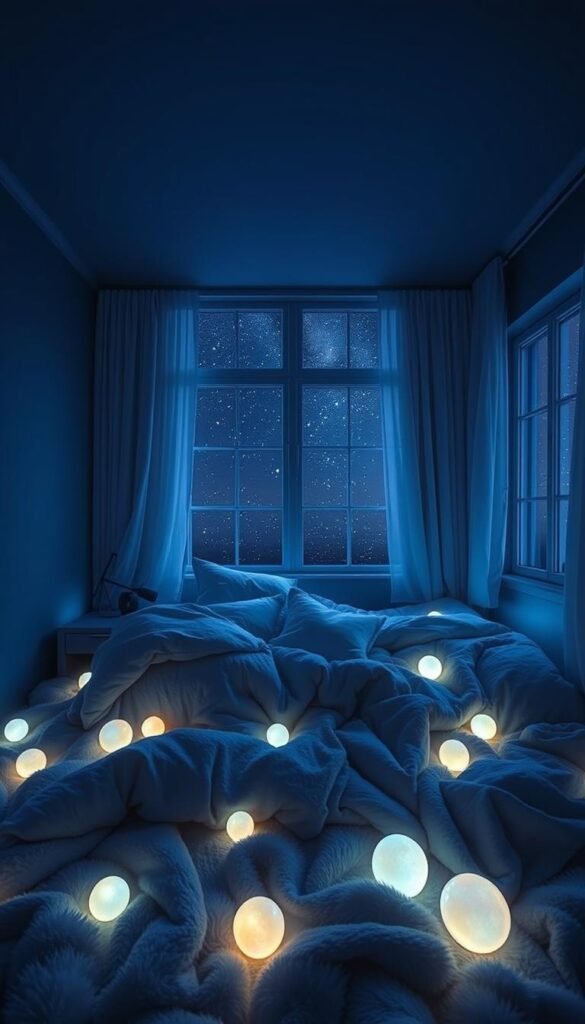
Have you discovered the magic of colors that transform before your eyes? These remarkable hues contain hidden dimensions that change with light and pairing. They offer incredible decorating flexibility.
Choosing a shade that bridges color families opens wonderful possibilities. Your space gains depth and character that evolves throughout the day.
Understanding Blue-Greens and Blue-Purples
Blue-green tones bring fresh energy to your space. Aqua feels light and airy like tropical waters. Teal offers deeper sophistication with green undertones.
Peacock blue provides rich drama with its green-blue balance. These shades work beautifully with natural materials and coastal themes.
Blue-purples create entirely different moods. Periwinkle offers soft, dreamy qualities with violet hints. Slate blue brings gray-purple sophistication.
Lavender blue provides gentle romantic appeal. These tones pair wonderfully with metallic accents and luxurious textures.
How to Accentuate Undertones
Bring out hidden colors through strategic pairings. Enhance green undertones with earthy elements. Wood tones and natural fibers make greens pop.
Accent purple qualities with complementary colors. Soft pinks and warm metals highlight violet dimensions. This creates beautiful visual harmony.
Lighting dramatically affects how these colors appear. Natural daylight reveals different aspects than evening lamps. Test your choices at various times.
Follow these simple techniques for success:
- View paint samples beside potential accent colors
- Observe how colors change throughout the day
- Choose accessories that enhance rather than compete
- Use neutral bases to let complex tones shine
These shapeshifting shades offer psychological benefits too. Blue-greens feel refreshing and revitalizing. They bring natural energy into your space.
Blue-purples encourage creativity and spiritual connection. They create meditative environments perfect for relaxation.
Historical design movements loved these complex colors. Arts and Crafts used teal for natural harmony. Art Deco embraced peacock for glamour.
Your choices can evolve beautifully over time. Start with foundational pieces in your main shade. Add accessories that highlight different dimensions.
Testing ensures you discover the perfect shade. View large samples on your actual walls. Observe them during morning, noon, and evening.
Your versatile color story awaits discovery. These magical tones will transform your space beautifully.
Create an Invigorating Glow with Varying Blue Shades
Ever notice how some rooms seem to radiate energy while maintaining perfect calm? Designer Robin Henry proves this magical balance exists. Her work shows how multiple blue values create spaces that appear to glow from within.
This approach transforms ordinary rooms into extraordinary environments. You achieve both visual excitement and peaceful atmosphere simultaneously.
The secret lies in understanding how light interacts with different intensities. Lighter tones reflect illumination beautifully while darker shades add depth.
The Layering Technique
Skillful layering creates dimension through value variations. Start with your base wall color in a medium tone. This establishes your primary atmosphere.
Add lighter elements through bedding or curtains. These pieces catch and bounce light around your space. They create that beautiful luminous quality.
Incorporate darker accents through furniture or artwork. These elements ground the scheme and add sophistication. The contrast between values creates visual movement.
Follow these simple steps for successful layering:
- Choose three to five shades within the same color family
- Maintain consistent undertones across all selections
- Test how colors interact in your actual lighting
- Adjust proportions until you achieve perfect balance
This technique works across various design styles beautifully. From coastal to contemporary, the approach adapts to your preferences.
Making a Room Feel Luminous
Strategic placement determines how light travels through your space. Position lighter elements where natural illumination enters. This maximizes reflection throughout the day.
Consider wall finishes and their light interaction properties. Matte surfaces absorb light for softer effects. Glossier finishes create brighter reflection.
Different materials contribute to overall luminosity. Sheer curtains diffuse light gently. Mirrored surfaces amplify illumination dramatically.
These elements work together to create that glowing effect. Your space feels both bright and comfortably cozy.
For maximum impact, explore these blue bedroom ideas that master light reflection techniques.
| Element Type | Light Reflection | Best Placement | Atmosphere Created |
|---|---|---|---|
| Light Blue Walls | High Reflection | All Surfaces | Airy and Expansive |
| Medium Blue Furniture | Moderate Bounce | Central Pieces | Balanced and Calm |
| Dark Blue Accents | Low Absorption | Strategic Points | Depth and Interest |
| Metallic Surfaces | Maximum Sparkle | Light-catching Areas | Energetic Glow |
Your room will achieve that perfect invigorating atmosphere. Morning light becomes a delightful experience that energizes your routine.
The psychological impact of luminous spaces is remarkable. They promote alertness while maintaining relaxation. This balance supports both productivity and rest.
Testing remains crucial for perfect results. Observe how your layered shades perform throughout the day. Make adjustments until you achieve that beautiful glow.
Achieve a Relaxed, Bohemian Vibe
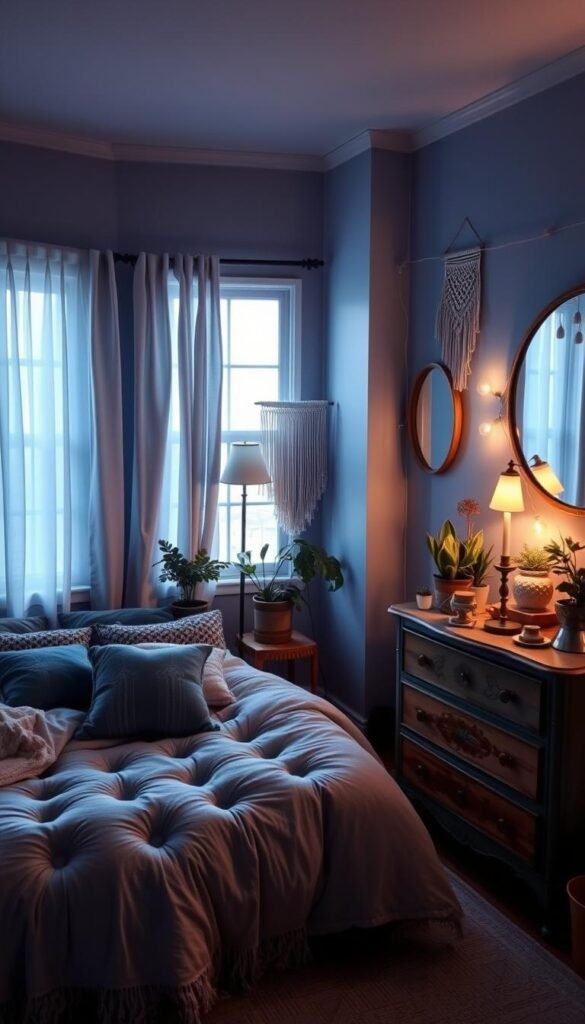
Ever dream of a space that whispers freedom and creativity? A bohemian-inspired room embraces individuality and comfort. It mixes textures, colors, and personal treasures for a unique look.
Designer Lee Stanton shows how this approach feels both polished and free-spirited. His use of indigo-dyed bedding creates an inviting foundation. Leather details and eclectic art complete the effortless charm.
This style celebrates personal history and global influences. Your space becomes a canvas for self-expression. It welcomes relaxation and creative energy equally.
Using Laidback Textiles
Textiles form the heart of any bohemian decor. Choose natural fabrics with rich textures and patterns. They add depth and comfort to your sleeping area.
Patchwork quilts bring handmade charm and visual interest. Their mixed patterns tell stories through fabric. Each piece feels special and personal.
Indigo-dyed fabrics offer beautiful variations in blue tones. No two pieces look exactly alike. This organic variation enhances the free-spirited feel.
Natural fiber weaves add earthy texture to your scheme. Jute, cotton, and linen work beautifully together. They create tactile interest underfoot and overhead.
Layer different textiles for maximum coziness. Combine quilts with woven throws and patterned pillows. This creates visual richness while maintaining comfort.
Incorporating Leather and Multi-Color Art
Leather elements add warmth and character to your space. They develop patina over time, gaining unique personality. This aging process enhances the collected feel.
Consider a leather chair or ottoman for seating. These pieces offer both function and style. Their rich texture contrasts beautifully with soft fabrics.
Smaller leather accessories make wonderful additions. Trinket trays, journal covers, or storage boxes add subtle sophistication. They blend practicality with aesthetic appeal.
Multi-color artwork creates focal points full of personality. Mix different styles and sizes for visual excitement. This approach feels curated rather than matched.
Create gallery walls that tell your personal story. Combine paintings, prints, and photographs in harmonious arrangements. This adds depth and meaning to your walls.
Artwork bridges different colors throughout your space. It helps blend various elements into cohesive whole. Your room gains personality through artistic expression.
Follow these tips for successful bohemian styling:
- Mix patterns of different scales for visual harmony
- Incorporate handmade items for authentic character
- Choose furniture with natural materials and interesting history
- Allow your space to evolve gradually over time
Lighting plays a crucial role in enhancing the mood. Moroccan lanterns cast beautiful patterned shadows. DIY fixtures add personal touch to your illumination.
Natural candlelight creates warm, flickering ambiance. It adds to the relaxed atmosphere after dark. Your space transforms into a cozy retreat.
Remember that bohemian style celebrates imperfection. Embrace the unique qualities of each piece. Your room should feel lived-in and loved.
Pair Blue with Pink for a Sweet and Unexpected Contrast
Have you considered combining two colors that create magic together? Pink and blue form a delightful partnership that breaks traditional rules. This combination brings freshness and sophistication to your personal space.
Studio DB demonstrates this beautiful relationship in their bedroom design. A baby pink sconce complements a blue upholstered headboard perfectly. Green and gray elements complete the harmonious look.
This pairing works wonderfully for gender-neutral spaces. It creates classic appeal in children’s rooms or adult bedrooms. The colors feel both playful and refined simultaneously.
Moving Beyond Gender Norms
Color associations have evolved significantly over time. Pink and blue now represent sophisticated design choices. They create spaces that feel intentionally curated rather than stereotyped.
Historical context shows how these color perceptions changed. Victorian era used pink for boys and blue for girls. Modern design embraces both colors for their aesthetic qualities.
Your space can reflect contemporary understanding of color psychology. These hues work together to create environments that feel fresh and modern. They move beyond outdated gender associations beautifully.
Choosing the Right Shades
Selecting complementary shades requires understanding color relationships. Consider undertones, saturation levels, and value differences. These factors determine how well colors work together.
Softer pinks pair beautifully with medium blue tones. Dusty rose works with slate blue for subtle elegance. Brighter pinks create exciting contrast with navy shades.
Test your selections in actual lighting conditions. Colors change appearance throughout the day. Natural and artificial light affect how they interact.
Follow these simple guidelines for perfect pairing:
- Choose colors with similar intensity levels
- Maintain consistent undertones across both hues
- Test combinations at different times of day
- Use neutral elements to balance the contrast
Different combinations create distinct moods in your space. Soft pastels feel romantic and gentle. Bold shades make graphic, dramatic statements.
Neutral elements play crucial roles in these schemes. They provide visual resting points between color moments. Gray, white, and natural materials work beautifully.
Accessories should enhance rather than compete with your color story. Artwork with both hues creates cohesion. Decorative objects bridge the color relationship.
Lighting significantly affects how these colors interact. Morning light reveals different qualities than evening illumination. Consider this when planning your scheme.
| Pink Shade | Blue Pairing | Mood Created | Best For |
|---|---|---|---|
| Baby Pink | Powder Blue | Soft, Romantic | Master Suites |
| Dusty Rose | Slate Blue | Sophisticated | Adult Spaces |
| Hot Pink | Navy Blue | Bold, Graphic | Accent Walls |
| Blush Pink | Sky Blue | Airy, Fresh | Small Rooms |
Your bedroom can achieve that perfect sweet contrast. The right combination feels both unexpected and completely right. It creates a space that reflects your unique style.
This approach works across various design aesthetics. From modern minimalist to traditional elegance, the colors adapt beautifully. Your personal retreat gains character through thoughtful color pairing.
Incorporate Prints and Patterns for Visual Interest
Ready to elevate your space with dynamic energy? Prints and patterns add personality and movement to any room. They create layers of visual interest that transform simple spaces into engaging environments.
Anna Spiro Design demonstrates this beautifully with cheetah-print and floral motifs. These elements become perfect accessories against bright sky-blue walls. The combination feels both exciting and harmonious.
Patterns bring depth and character to your design. They guide the eye around the room, creating rhythm and flow. Your space gains personality through thoughtful pattern selection.
Mixing Florals and Geometrics
Combining these contrasting patterns creates wonderful visual excitement. The key lies in maintaining balance through color consistency and scale variation.
Large floral prints work beautifully with smaller geometric designs. This size difference prevents competition between patterns. It creates harmony despite the contrast in styles.
Choose patterns that share at least one common color. This creates cohesion across different designs. Your space feels intentionally curated rather than chaotic.
Consider pattern placement throughout your room. Use larger florals on bedding or curtains. Incorporate geometrics through accent pillows or area rugs.
This mixing technique adds sophistication to your decor. It shows confidence in your design choices. The result feels both dynamic and completely comfortable.
Pairing Blue with Chocolate Brown
This sophisticated combination creates rich, grounded elegance. The cool tones balance beautifully with warm chocolate shades. It feels both refreshing and comforting simultaneously.
Anna Spiro’s work shows how cheerful blues evoke summer days. They pair wonderfully with deep brown accents. This contrast creates visual excitement while maintaining warmth.
Consider using brown in furniture pieces or wood tones. A chocolate leather chair adds luxurious texture. Dark wood nightstands provide beautiful contrast.
Textiles offer another excellent application method. Brown patterned throws or pillows complement blue backgrounds. They add warmth and visual interest.
This color partnership works across various design styles. From traditional to contemporary, the combination adapts beautifully. Your space gains depth through this sophisticated pairing.
Wallpaper provides another exciting pattern option. A busy white and blue geometric design adds liveliness. It creates focal points while maintaining color consistency.
Different pattern types work with various blue shades. Some designs enhance the primary color. Others provide beautiful contrast and visual punctuation.
Scale plays a crucial role in successful pattern mixing. Combine large-scale patterns with smaller ones. This creates balanced visual interest throughout your space.
Testing pattern combinations ensures perfect results. Use swatches and digital tools before commitment. This prevents overwhelming your space with too much pattern.
| Pattern Type | Best Blue Pairing | Recommended Scale | Placement Ideas |
|---|---|---|---|
| Floral Prints | Soft Sky Blue | Large Scale | Bedding, Curtains |
| Geometric Designs | Bright Navy | Small to Medium | Pillows, Rugs |
| Animal Prints | Medium Blue | Varied Scale | Accent Pieces |
| Abstract Patterns | Deep Blue | Medium Scale | Wallpaper, Art |
Balance remains essential in pattern-heavy spaces. Solid elements provide visual resting points. They prevent your design from feeling overwhelming.
Your space will achieve perfect visual interest through thoughtful pattern incorporation. The right combinations create both excitement and harmony.
Warm Up Your Blue Space with Accent Colors and Textures
Have you ever considered how to make your cool blue retreat feel perfectly cozy? The right balance of warm elements creates that ideal comfortable atmosphere. You can achieve this without repainting your entire room.
Corey Damen Jenkins demonstrates this beautifully with strategic design choices. He used a light sandy beige wall to complement cooler tones. This approach marries various elements harmoniously.
Using Warm Neutrals and Wood Tones
Warm neutrals provide essential balance to cooler color schemes. Beige, taupe, and cream add sophistication and warmth. They create visual interest without competing with your main color.
Wood tones bring natural warmth and organic texture to your space. They make the environment feel more inviting and grounded. Different wood species offer varying warmth levels.
Consider furniture pieces with rich wood grains. A wooden bed frame or nightstand adds instant warmth. These elements develop character over time.
Area rugs in natural fibers contribute significantly to coziness. They provide both physical and visual warmth underfoot. Choose patterns that complement your color story.
The Role of Lighting and Brass
Lighting dramatically affects how colors feel in your space. Warm artificial light creates cozy evening atmospheres. Natural light reveals different qualities throughout the day.
Brass accents offer beautiful warm metallic touches. Their golden quality enhances blue schemes beautifully. These elements add glamour and refinement.
Consider brass hardware on your furniture pieces. Light fixtures with brass finishes provide both function and style. They catch light beautifully throughout the day.
Layer different light sources for optimal warmth. Table lamps, overhead lights, and accent lighting work together. This creates depth and dimension in your room.
Texture combinations add physical warmth to your design. Plush rugs, soft blankets, and tactile treatments enhance comfort. They create sensory appeal that makes spaces feel inviting.
| Warm Element | Best Application | Warmth Level | Pairing Recommendation |
|---|---|---|---|
| Beige Neutrals | Wall Color | Medium Warmth | All Blue Shades |
| Wood Tones | Furniture Pieces | High Warmth | Medium Blues |
| Brass Accents | Hardware & Lighting | Medium Warmth | Deep Blue Tones |
| Texture Layers | Bedding & Rugs | Variable Warmth | All Blue Variations |
Color theory principles help understand warming techniques. Warm elements advance visually while cool colors recede. This balance creates depth and interest.
Layer warm elements gradually to maintain blue character. Start with smaller accents before committing to larger pieces. This ensures your space remains balanced.
Different times affect warmth perception in your room. Morning light creates different effects than evening illumination. Design for these changing conditions.
Your space can feel both coolly serene and warmly inviting. This combination creates the ideal restful environment. The right balance supports perfect relaxation.
30 Blue Bedroom Ideas That Feel Serene and Stylish: Final Thoughts on Your Project
You’ve explored countless ways to transform your sleeping area into a personal haven. Each concept offers unique approaches to achieve both tranquility and visual appeal.
Remember to consider your room’s lighting and size when selecting shades. Personal taste matters most in creating a space that truly reflects you.
This versatile hue adapts beautifully as your style evolves over time. It maintains its calming qualities while accommodating new decor elements.
Trust your instincts and experiment with different combinations. Your perfect retreat awaits through thoughtful planning and creative expression.
You now possess all the inspiration needed to begin your transformation. Embrace the journey toward creating a space that balances peace with personality perfectly.