Living in a compact home can feel challenging at first. You might wonder how to fit everything you need into one open area. But with smart planning, your small living space can become both functional and beautiful.
The secret lies in making every inch count through intentional design decisions. Strategic furniture selection and clever storage solutions can dramatically improve your experience. You don’t need to sacrifice style or comfort when working with limited square footage.
Many of these techniques are renter-friendly and don’t require major construction. Whether you’re working with 300 square feet or a bit more, these strategies will help. You can transform your place from potentially cramped to comfortably spacious.
Get ready to explore practical, creative ideas that will help you decorate and organize. You’ll discover how proper layout planning can completely change how you experience your environment. Even with limited room, you can create a home that feels bigger, brighter, and way more functional.
Understanding Your Space and Layout
Your apartment’s potential starts with how you arrange it. A smart layout makes every square foot work for you. It helps your home feel open, organized, and tailored to your lifestyle.
Why Efficient Layout is the First Step
Before choosing decor, focus on your floor plan. Good flow prevents a cramped feel. It lets you move freely between areas.
Think about how you use each part of your home. Place items where they make the most sense. This thoughtful approach saves you space and stress.
Creating Zones Without Construction
You can define separate areas without building walls. Use area rugs to mark different functions. A rug under your seating group sets apart your living zone.
Lighting also helps create visual breaks. Try using a floor lamp to highlight a cozy reading nook. These tricks make one room feel like several.
Floating Your Furniture for Better Flow
Move pieces away from the walls. This technique, called floating, improves circulation. It can actually make your room seem bigger.
Try placing your sofa to divide sleeping and living spaces. Leave about three feet for walking paths. Your home will feel more intentional and open.
Every choice in your layout matters. With these strategies, your small home will function beautifully and feel just right for you.
Choosing the Right Furniture for a Small Footprint
Smart furniture selection is your secret weapon against cramped quarters. The pieces you choose directly impact how your room flows and functions. Every item should earn its place through both style and purpose.
Thoughtful choices create breathing room where you need it most. They help your home feel organized rather than overcrowded. Your furniture can work with your layout instead of against it.
Embracing Low-Profile and Slim Designs
Low-profile furniture creates the illusion of more height and openness. Pieces with slim silhouettes take up less visual space. They make your room feel airy and less crowded.
Choose sofas with narrow arms and streamlined backs. Opt for beds with minimal footboards and headboards. These designs maximize your available floor area beautifully.
Straight-lined pieces fit better in compact rooms than curved options. Their clean lines create a sense of order and space. This approach makes your entire design feel intentional.
The Power of Multi-Functional Pieces
Multi-functional furniture is a game-changer for compact living. These clever pieces serve multiple purposes in one footprint. They reduce clutter while increasing functionality.
Consider a daybed that works as both seating and sleeping space. Look for coffee tables with lift-tops that become dining surfaces. Nesting tables provide extra surfaces when needed but store compactly.
Each multi-purpose piece eliminates the need for additional furniture. This approach saves both space and money. Your room maintains cleaner lines and better flow.
Why Armless and Open-Base Furniture Works
Armless chairs and sofas take up less physical and visual space. They allow easier movement around your room. These pieces make your seating area feel more open.
Furniture with open bases creates an airy feeling. Light passes underneath, making the piece appear lighter. Metal or acrylic bases offer nearly invisible support.
Transparent materials like acrylic make tables seem to disappear. They provide function without visual weight. Your space feels more open and less crowded.
Always consider scale when selecting any piece. Properly sized furniture makes your room feel proportionate. Everything works together in harmony.
Smart Storage Solutions to Declutter Your Home
When your floor space feels limited, clever storage becomes your best friend. The right solutions keep your belongings organized without cramping your style. They help maintain that open, airy feeling you’ve worked so hard to create.
Good storage isn’t just about hiding things away. It’s about making every item accessible yet out of sight. Your home stays tidy while remaining completely functional.
Going Vertical with Shelving and Cabinets
Look upward when you’ve run out of floor space. Walls offer incredible storage potential that often goes unused. Vertical solutions draw the eye upward, making your room feel taller.
Tall bookcases reach toward the ceiling, utilizing that valuable “air space.” Custom shelving can wrap around doorways and fill awkward nooks. These options turn blank walls into functional storage areas.
Floating shelves provide display space without bulky furniture. They keep items within reach while maintaining clean sight lines. Your room gains storage without losing its open feel.
Built-in storage walls create a seamless look. They replace freestanding pieces for a cleaner appearance. Everything stays organized yet completely accessible.
Utilizing Under-Bed Space with Drawers and Risers
Don’t ignore the valuable real estate beneath your bed. This often-overlooked area can store numerous items. It keeps things hidden but easily reachable.
Rolling drawers slide smoothly under most bed frames. They’re perfect for clothes, shoes, or seasonal items. Storage bins work well for less frequently used belongings.
Bed risers lift your frame higher, creating extra room below. Some bed frames come with built-in storage compartments. These hidden spaces keep your bedroom clutter-free.
The space under your bed might become your most valuable storage area. It holds substantial items while remaining completely out of view. Your room maintains its clean, organized appearance.
Maximizing Every Inch of Your Closet
Your closet holds more potential than you might realize. With some smart organization, it can store far more than just hanging clothes. Vertical space is the key to unlocking its full capacity.
Double-hang rods instantly double your clothing storage. They create upper and lower sections for shorter items. Shelf organizers help sort folded pieces efficiently.
Use the full height from floor to ceiling. Upper shelves store bags, hats, or off-season clothing. The back of the door offers space for shoes or accessories.
Proper closet organization eliminates clutter throughout your living space. When everything has its place, your entire home feels more organized. This system keeps your belongings out of sight but within easy reach.
Multipurpose Furniture: Getting More from Every Piece
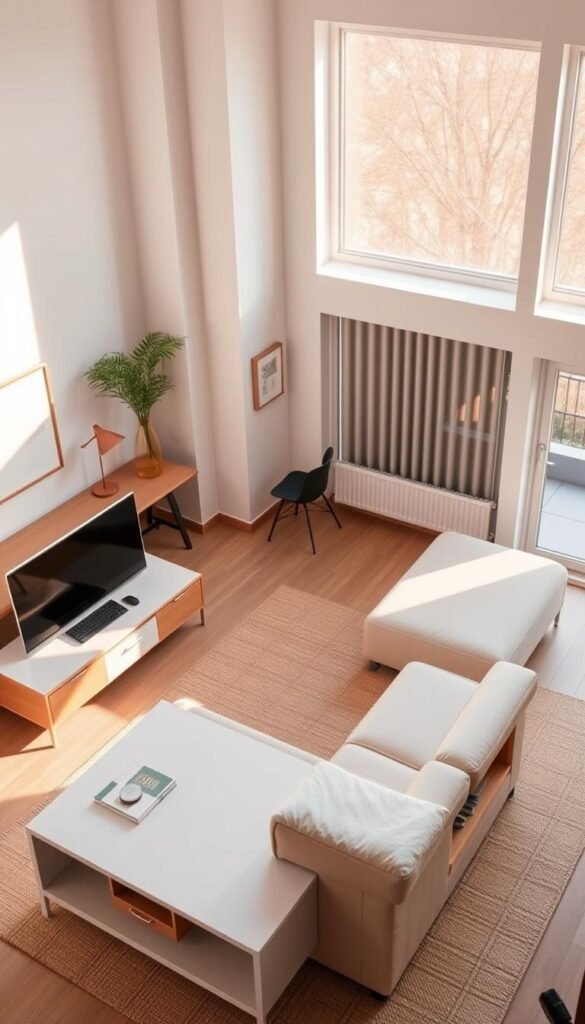
Imagine your favorite pieces working overtime for you. Smart furniture does exactly that. These clever designs serve multiple purposes without crowding your room.
You get more function from fewer items. This approach keeps your home organized and spacious. It’s the smart way to live comfortably in limited square footage.
Sofa Beds and Daybeds for Dual Functionality
Your seating can easily become your sleeping area. Modern sofa beds offer comfortable lounging by day. At night, they transform into a proper bed for rest.
Daybeds work beautifully in studio layouts. They provide generous seating for daily use. When guests visit, they offer extra sleeping space instantly.
These pieces eliminate the need for a separate bed. You gain valuable floor space during daytime hours. Your room feels more open and versatile.
Expandable and Fold-Down Tables
Your dining surface doesn’t need to dominate the room. Expandable tables grow when you entertain guests. They shrink back down for everyday use.
Wall-mounted options are even smarter. Fold-down tables serve as work desks or dining surfaces. When not needed, they disappear against the wall.
These solutions free up precious floor area. You maintain flexibility without permanent furniture. Your space stays clear and functional.
Ottomans and Coffee Tables with Hidden Storage
Your coffee table can do more than hold drinks. Many models feature hidden compartments inside. They store blankets, books, or remote controls out of sight.
Ottomans serve as footrests, extra seating, or tables. Add a tray on top for serving drinks or displaying decor. Some even open to reveal spacious storage inside.
Benches offer seating while hiding clutter below. They work beautifully at the end of your bed or in entryways. You get organization without sacrificing style.
Nesting tables provide surfaces when entertaining. Afterwards, they stack neatly into a compact unit. Your living area stays tidy and ready for anything.
Strategic Use of Color and Light
Your choice of colors and lighting can dramatically change how your home feels. These elements work together to create atmosphere and perception. They help shape your experience of the space every single day.
Smart use of these tools makes rooms appear larger and more inviting. You can transform even the smallest area into a comfortable retreat. The right approach brings both beauty and function to your design.
How Light Colors Create an Airy Feel
Light colors reflect natural and artificial light beautifully. They make walls seem to recede, creating depth. Your room gains a sense of openness and freedom.
Soft whites, pale grays, and gentle beiges work wonders. These hues bounce light around your space effectively. They eliminate that closed-in feeling instantly.
Consider painting ceilings a shade lighter than your walls. This technique draws the eye upward, enhancing height. Your room feels more spacious from every angle.
Using a Cohesive Color Palette to Unify the Space
A consistent color scheme creates visual harmony throughout your home. It allows eyes to travel smoothly from area to area. This continuity makes your entire layout feel more expansive.
Choose two or three primary colors for your main elements. Use these shades on walls, large furniture, and major textiles. Accent colors can then provide pops of interest.
This approach prevents visual choppiness that can make spaces feel smaller. Everything flows together in a pleasing, coordinated way. Your home feels thoughtfully designed and intentionally spacious.
The Impact of Natural Light and How to Maximize It
Natural light transforms how you perceive your living environment. It creates brightness that artificial sources can’t quite match. Sunshine makes rooms feel airy, fresh, and welcoming.
Keep window areas clear of bulky furniture and heavy drapes. Allow sunlight to penetrate deep into your space. Sheer curtains provide privacy while still welcoming light.
Position mirrors opposite windows to bounce light around. Light-colored walls and ceilings help distribute sunshine evenly. Your entire home benefits from this free, beautiful resource.
Consider how light changes throughout the day when arranging furniture. Place reading chairs where they’ll catch morning light. Position workspaces to benefit from afternoon sunshine.
Illusions of Space: Mirrors and Reflective Surfaces
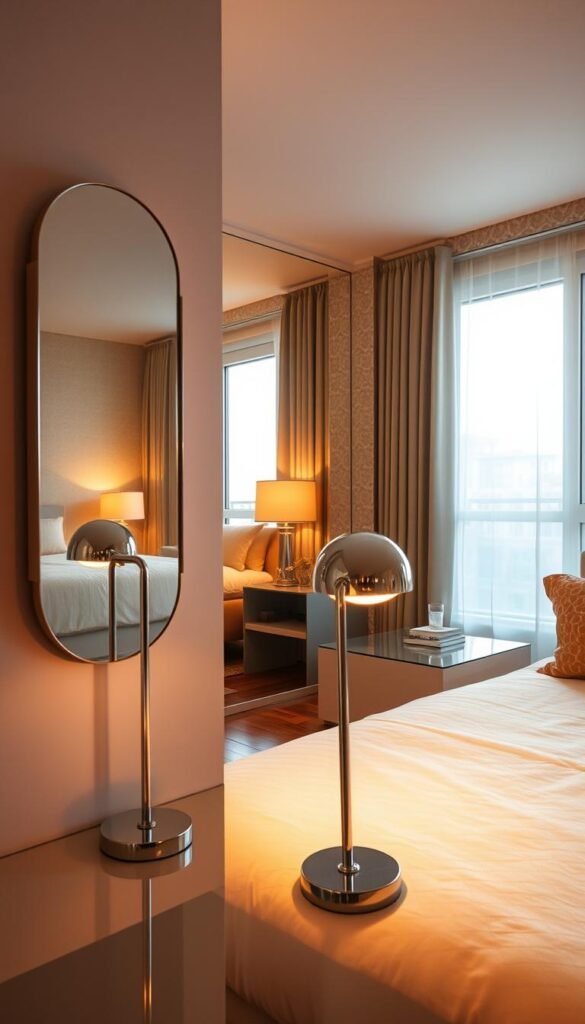
Reflective surfaces work magic in creating the illusion of more room. They trick the eye into perceiving depth where none exists. This approach makes your compact living area feel dramatically more open.
These techniques require no construction or major changes. You can implement them today for immediate impact. Your space gains visual interest while appearing larger.
Placing Mirrors to Reflect Light and Views
Position mirrors opposite your windows to capture natural light. This placement bounces sunshine throughout your room. It creates brighter, more inviting environments instantly.
Consider a floor-length mirror leaning against your wall. This casual approach adds elegance while expanding visual boundaries. Mirrored closet doors perform double duty as functional and spatial elements.
Place decorative mirrors above sofas or behind lighting fixtures. They amplify both illumination and perceived depth. Your room gains dimension without physical expansion.
Strategic mirror placement can virtually double your visual square footage. It creates the feeling of additional windows and openings. This psychological effect makes your home feel airy and unconstrained.
Incorporating Metallic and Shimmery Decor
Metallic accents provide subtle reflection without full mirrors. A shimmery lamp base catches and disperses light beautifully. These pieces brighten dark corners effectively.
Choose consistent metal finishes throughout your design. Mixing too many types creates visual clutter. Stick to one or two complementary metallic tones.
Consider metallic paint for an accent wall or small nook. This treatment adds glamour while reflecting ambient light. Furniture with metallic legs or details adds sparkle without bulk.
Metallic screens work wonderfully as room dividers. They provide separation while maintaining light flow. Your space feels organized yet connected.
These reflective elements work together to enhance spatial perception. They make ceilings appear higher and rooms feel grander. Your home transforms through thoughtful detailing.
Creative Lighting Ideas to Free Up Floor Space
Your lighting choices can transform how you experience your compact living environment. Smart illumination strategies create brightness without sacrificing precious square footage. They help your home feel open, airy, and perfectly lit for any activity.
When floor area becomes limited, mounted fixtures become your best solution. These options keep surfaces clear and pathways open. Your design gains polish while maintaining full functionality.
Choosing Wall Sconces and Pendant Lights
Wall sconces provide excellent illumination without occupying surface area. They mount directly to your walls, freeing up tables and floors. These fixtures work beautifully beside beds, sofas, or entryways.
Pendant lights hang gracefully from your ceiling. They focus light exactly where you need it most. Position them over workspaces, dining areas, or reading nooks.
Clustering several small pendants creates visual impact. This approach makes a stronger statement than a single fixture. Your lighting becomes both functional and decorative.
Why Mounted Lighting Beats Bulky Lamps
Mounted fixtures eliminate the need for floor lamps entirely. They provide illumination without consuming valuable square footage. Your room gains cleaner sight lines and better flow.
Ceiling-mounted options often feel more intentional and polished. They contribute to a cohesive design aesthetic. Your space appears thoughtfully planned and professionally finished.
Darkness makes any room feel smaller and more confined. Multiple light sources combat this effect beautifully. Layered lighting creates depth and dimension throughout your home.
| Lighting Type | Space Saved | Best Placement | Visual Impact |
|---|---|---|---|
| Wall Sconces | Frees floor and surface space | Beside beds, above sofas | Adds architectural interest |
| Pendant Lights | No surface occupation | Over tables, in corners | Creates focal points |
| LED Strip Lighting | Uses unused areas | Under cabinets, along ceilings | Adds modern ambiance |
| Ceiling Mounted Fixtures | Complete floor freedom | Center of rooms, above workspaces | Provides overall illumination |
LED strip lighting offers innovative solutions for ambient glow. Install these flexible strips under cabinets, along baseboards, or on ceilings. They provide soft, continuous light without any fixture bulk.
Different lighting temperatures affect spatial perception. Cool white light makes spaces feel more expansive and alert. Warm white creates coziness but can make areas feel more intimate.
Use lighting to define areas within open floor plans. A pendant over your dining table sets that zone apart. Wall sconces can highlight a reading corner without physical dividers.
Your lighting strategy should include multiple types and placements. Combine ambient, task, and accent lighting for best results. This layered approach makes your entire home feel brighter and more spacious.
Window Treatments That Enhance Space
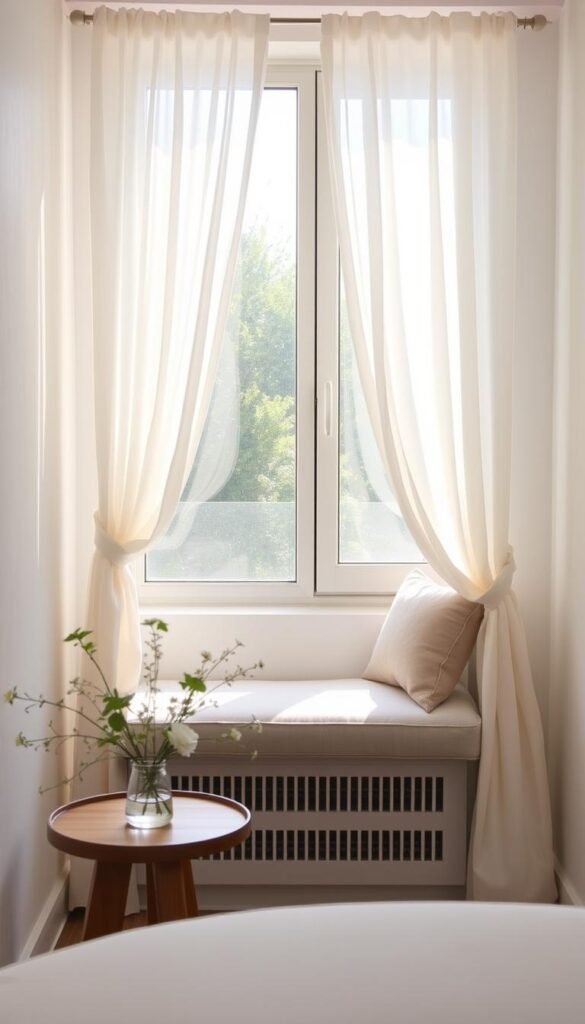
Your window coverings do more than just provide privacy. They can transform how you experience your entire living environment. The right choices make rooms feel brighter and more expansive.
Smart window treatments work with your existing light sources. They help distribute sunshine throughout your space. This approach creates an open, airy feeling instantly.
Installing Curtains High and Wide
Position your curtain rods a few inches below the ceiling line. This simple trick draws eyes upward, making windows appear taller. It creates the illusion of higher ceilings throughout your home.
Extend rods several inches beyond the window frame on each side. This technique makes your windows seem wider than they actually are. Your room gains perceived width without physical changes.
Choose curtain panels that measure about twice your window’s width. Fuller drapes create elegant folds when open. They frame your view beautifully while maximizing light entry.
Curtains that match your wall color create seamless visual lines. This continuity makes your entire space feel more expansive. Everything flows together in a harmonious way.
Choosing Sheer Fabrics for Light and Privacy
Sheer materials allow maximum light transmission while maintaining privacy. They filter sunshine gently throughout your living area. These fabrics create a soft, glowing atmosphere.
Consider curtains with vertical patterns or subtle weaves. These designs emphasize height rather than width. They make your room feel taller and more grand.
Roman shades offer excellent space-saving solutions. Semi-opaque versions provide privacy while still welcoming light. They stack neatly when open, maintaining clean sight lines.
Your window treatments should enhance your overall design scheme. They contribute to a cohesive color palette throughout your home. This thoughtful approach maximizes both style and function.
Defining Areas with Rugs and Textiles
Your floor holds incredible power to shape how your home flows and feels. The right floor coverings can transform an open layout into clearly defined zones. This approach creates visual separation without permanent walls or construction.
Textiles add warmth and personality to your compact living environment. They soften hard surfaces and make your space feel more inviting. These elements work together to create both function and beauty in your design.
Using Rugs to Create Visual Rooms
Area rugs work like magic in open floor plans. They visually separate your living zones with clear boundaries. A well-placed rug tells your eyes where one function ends and another begins.
Choose a patterned rug to anchor your seating arrangement. This creates an instant living room within your larger area. Place it so all furniture legs rest comfortably on the surface.
For your sleeping zone, select a softer, plush rug. Position it partly under your bed to frame the sleeping area. This subtle definition makes your bedroom feel like its own private retreat.
The right rug size dramatically affects your room’s proportions. Too small makes your space feel disconnected and awkward. Too large overwhelms your available floor area.
Consider these popular rug sizes for different zones:
| Room Zone | Recommended Rug Size | Placement Tip | Visual Effect |
|---|---|---|---|
| Living Area | 5’x8′ to 8’x10′ | All furniture legs on rug | Creates cohesive grouping |
| Sleeping Area | 6’x9′ to 8’x10′ | 2/3 under bed, exposed at sides | Frames bed beautifully |
| Dining Space | Extends 24″ beyond table | Chairs stay on rug when pulled out | Defines eating zone clearly |
| Entryway | 3’x5′ to 4’x6′ | Centered in entry space | Creates welcoming first impression |
Layering Textures for Depth Without Clutter
Texture adds incredible dimension to your compact home. It breaks up flat surfaces that can make spaces feel one-dimensional. This approach creates visual interest without adding physical clutter.
Mix nubby fabrics with smooth surfaces for contrast. A chunky knit throw on a sleek sofa adds instant warmth. Natural elements like wood and stone bring organic texture into your decor.
Layer different materials throughout your living environment. Combine metallic accents with soft textiles for balance. These mixtures create depth that makes your space feel more expansive.
Your textile choices should work together harmoniously. They add personality without overwhelming your limited square footage. Everything contributes to a cohesive, inviting atmosphere.
Remember that texture works through both touch and sight. Even visually textured patterns add dimension to flat surfaces. Your home gains character without sacrificing precious space.
Temporary and Renter-Friendly Design Tricks
Renting your home doesn’t mean you must settle for bland or impersonal spaces. You can create a beautiful environment that reflects your style without permanent changes. These clever solutions let you personalize your living area while keeping everything reversible.
Many landlords appreciate tenants who improve properties responsibly. Temporary upgrades can actually increase your enjoyment of the space. You get to enjoy a customized home without risking your security deposit.
Installing Peel-and-Stick Wallpaper and Backsplash
Peel-and-stick wallpaper offers incredible transformation power. You can achieve the look of expensive materials without commitment. Choose from realistic brick patterns, subtle textures, or bold graphic designs.
Application requires minimal effort and no special skills. Simply measure your space, cut the panels, and smooth them onto clean walls. The adhesive backing holds securely yet removes cleanly when needed.
These temporary wall coverings work throughout your home. Create an accent wall behind your bed for dramatic effect. Line bookshelves or drawers for hidden surprises.
Contact paper serves similar purposes for furniture and surfaces. Refresh tired kitchen cabinets with sleek metallic finishes. Give old countertops the appearance of marble or granite.
Stick-on backsplash tiles transform kitchens and bathrooms instantly. They provide protection against splashes while adding style. Removal involves simply peeling them away when moving out.
Using Freestanding Partitions and Screens
Freestanding partitions create separation without construction. They help define different functional areas within open layouts. Your studio can gain visual privacy where needed most.
Folding screens offer flexible room division solutions. Choose from various materials like wood, fabric, or woven rattan. These portable pieces can be moved or stored as your needs change.
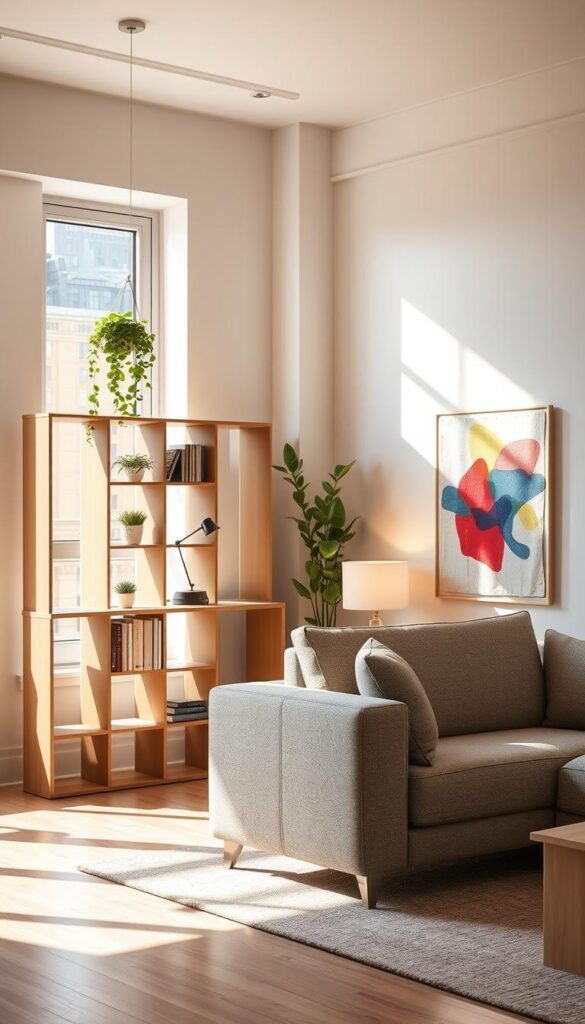
Bookshelves make excellent multi-functional dividers. They separate spaces while providing valuable storage. Open-back models maintain light flow between areas.
Consider these popular partition options:
- Folding screens with decorative panels
- Shelving units with open storage
- Curtain rods with hanging textiles
- Plant stands with trailing greenery
- Room dividers on casters for mobility
These solutions help create defined zones for sleeping, working, and relaxing. They add architectural interest without permanent alterations. Your space gains function and character instantly.
Remember that temporary doesn’t mean temporary-looking. Many rental-friendly options appear just as polished as permanent fixtures. You can achieve professional results while respecting your lease agreement.
Making the Most of Your Vertical Space
When your floor area becomes limited, your walls become your greatest asset. Looking upward opens new possibilities for organization and design. You can transform blank vertical surfaces into functional storage areas.
Vertical solutions keep your living environment clutter-free. They draw eyes upward, making your room feel taller. This approach maximizes every inch of your compact home.
Installing Floating Shelves and Nightstands
Floating shelves offer stylish storage without floor occupation. They mount directly to your wall, creating clean lines. These pieces hold books, decor, or daily essentials beautifully.
Wall-mounted nightstands replace bulky bedside tables. They provide surface space for lamps and nighttime items. Your floor stays clear for easy movement around your bed.
Floating units maintain an open, airy feeling throughout your space. They don’t interrupt visual flow like freestanding furniture. Your room gains function without losing spaciousness.
Consider these popular floating solutions:
| Solution Type | Best Placement | Storage Capacity | Visual Impact |
|---|---|---|---|
| Floating Shelves | Above desks, beside beds | Light to medium items | Adds modern simplicity |
| Wall Nightstands | Bedside mounting | Nighttime essentials | Creates clean lines |
| Floating Desks | Under windows, empty walls | Workstation setup | Maximizes floor space |
| Vertical Shelving Units | Corners, narrow walls | Books and decor | Draws eyes upward |
Building a Loft Bed if Your Ceilings Allow
Loft beds dramatically increase your usable area. They elevate your sleeping space to create room below. This solution works perfectly in compact layouts.
Your elevated bed becomes a multi-level design feature. The space underneath serves multiple functions. You might create a cozy reading nook or efficient workspace.
Consider these creative uses for your under-bed area:
- Compact desk for remote work
- Small seating arrangement for guests
- Storage system for clothing and items
- Reading corner with comfortable chair
- Entertainment center for media
Always ensure proper structural support for elevated beds. Follow manufacturer instructions for safe installation. Your safety comes first in any vertical design solution.
Vertical gardening adds life to your upper walls. Hanging plants bring nature into your home without floor space. They contribute to that open, airy feeling you want.
Remember to utilize often-overlooked upper wall areas. These spaces perfect for display shelves or art arrangements. They add personality while maintaining your open floor plan.
Creating a Functional Entryway in a Small Area
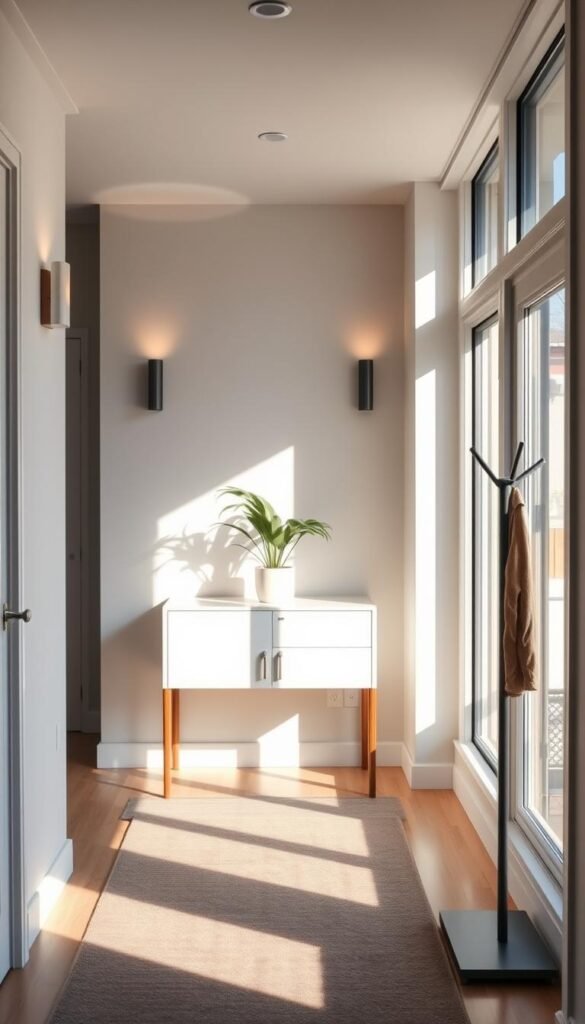
Your entryway welcomes you home and sets the stage for your entire living experience. This compact zone deserves thoughtful attention even in the smallest layouts. With smart planning, you can transform this transitional space into an organized, welcoming area.
A well-designed entry prevents clutter from invading your main living zone. It keeps daily essentials neatly contained yet easily accessible. This approach makes your daily routine smoother and more enjoyable.
Your entry design should reflect your personal style while maximizing function. Even the tiniest nook by your door can work incredibly hard. You’ll create order and beauty right from your first step inside.
Setting Up a Drop Zone with Hooks and Bins
Create a designated spot for items you use daily. Wall-mounted hooks provide perfect hanging space for coats and bags. They keep these items off your floor and furniture.
Use baskets or bins to corral smaller accessories. Shoes, umbrellas, and mail find their proper homes. Woven containers add warmth and texture to your decor.
A well-organized drop zone prevents clutter from spreading throughout your home. Everything has its place, making mornings smoother and evenings calmer. You’ll appreciate this system every single day.
Consider these popular storage solutions:
- Wall hooks at varying heights for different items
- Stackable bins for seasonal accessories
- Small trays for keys and pocket contents
- Hanging organizers for scarves and hats
- Wall pockets for mail and important papers
Using a Bench for Seating and Storage
A compact bench serves multiple purposes in your entry area. It provides seating for putting on shoes or setting down packages. Many models offer hidden storage inside for additional organization.
Choose a bench that fits your available floor space perfectly. Slim designs work well in narrow areas. Look for pieces with clean lines that complement your overall decor.
The storage compartment holds items you want to keep handy but out of sight. Store off-season accessories, pet supplies, or cleaning items. Your bench becomes both functional and beautiful.
Position your bench where it won’t block natural pathways. Leave enough room for comfortable movement around it. Your entry will feel inviting rather than cramped.
This multi-functional approach maximizes your limited square footage. You gain seating, storage, and style in one smart piece. Your home benefits from this efficient use of space.
Kitchen and Dining Solutions for Compact Living
Your kitchen and dining area deserve smart solutions that work within your limited square footage. With thoughtful planning, these functional zones can become efficient and stylish. You’ll enjoy cooking and eating without feeling cramped or crowded.
Swapping a Table for an Island or Bar Stools
A traditional dining table often occupies too much floor area. Consider replacing it with a kitchen island featuring built-in seating. This clever swap gives you dining space without overwhelming your layout.
Bar stools slide neatly underneath when not in use. They free up valuable walking paths throughout your home. Your kitchen gains functionality while maintaining an open feel.
Wall-mounted drop-leaf tables offer excellent space-saving options. They fold down when you need dining surfaces. Afterwards, they disappear against your wall completely.
Multi-level islands provide both prep space and eating areas. The higher section works perfectly with bar stools. The lower level might serve as additional counter space.
| Solution | Space Saved | Best For | Flexibility |
|---|---|---|---|
| Kitchen Island with Stools | Eliminates separate table | Open concept layouts | Works as prep and dining area |
| Wall-Mounted Drop-Leaf Table | Frees floor space when folded | Small eating nooks | Adjustable surface area |
| Bar Height Counter | Uses existing structure | Studio apartments | Permanent dining solution |
| Nesting Stools | Stackable storage | Limited floor plans | Extra seating when needed |
Utilizing Open Shelving for Displays and Storage
Open shelving transforms your walls into functional storage areas. These units utilize vertical space that often goes unused. They keep items accessible while maintaining an airy feeling.
Floating shelves work beautifully above countertops and sinks. They hold everyday dishes and cooking essentials. Your most-used items remain within easy reach.
Consider wrapping shelving around doorways and above windows. These often-overlooked areas provide additional storage potential. You gain organization without sacrificing floor space.
Open shelving draws eyes upward, making your room feel taller. It creates visual interest through displayed items. Your kitchen gains personality and function simultaneously.
Mix practical items with decorative pieces on your shelves. This balance creates both beauty and utility. Your storage becomes part of your overall design scheme.
Remember that proper organization prevents visual clutter. Group similar items together for a cohesive look. Your open storage will feel intentional and beautifully arranged.
Incorporating Plants and Decor Wisely
Greenery and decorative accents bring life to your compact living environment. They add personality without overwhelming your available square footage. Thoughtful placement creates visual interest while maintaining function.
Plants improve air quality and boost your mood naturally. They transform sterile areas into welcoming spaces. Your home feels fresher and more inviting with these natural touches.
Using Windowsills as Display Shelves
Your windowsill offers valuable surface area that often goes unused. This narrow ledge works perfectly for small potted plants. It creates a mini garden that catches natural light beautifully.
Stack a few books beside your greenery for visual balance. Add decorative accents that complement your overall design. This approach frames your view with texture and color.
Windowsill displays eliminate the need for extra furniture. They free up floor space while adding character. Your room gains style without sacrificing precious square footage.
Choosing Greenery That Draws the Eye Upward
Tall plants create vertical interest in your compact home. They draw attention upward, making ceilings appear higher. This clever trick enhances spatial perception throughout your area.
Place indoor trees in corners where they won’t obstruct pathways. Their height adds drama without consuming much floor space. You’ll appreciate their architectural quality daily.
Hanging plants utilize often-overlooked upper areas. Macrame holders suspend greenery from ceiling hooks. These floating gardens add life without any surface occupation.
Consider these space-efficient plant varieties:
- Snake plants thrive in low light conditions
- Pothos vines trail beautifully from high shelves
- ZZ plants tolerate occasional neglect
- Air plants require no soil at all
- Spider plants purify air while cascading gracefully
Position plants atop bookcases and floating shelves. This placement draws eyes upward through your room. Your space feels taller and more expansive instantly.
Remember that less can be more with decorative pieces. Choose items that serve both aesthetic and functional purposes. Your home maintains balance between beauty and practicality.
Common Mistakes That Shrink Your Space
Sometimes the biggest improvements come from avoiding simple errors. Small changes in your approach can make a huge difference in how your home feels. Understanding these common pitfalls helps you create a more open environment.
Many people unintentionally make choices that reduce their available area. These mistakes can make even well-designed spaces feel cramped. Learning what to avoid gives you more control over your final result.
Furniture That’s Too Bulky or Dark
Oversized pieces can overwhelm your layout completely. They consume valuable floor area and block natural pathways. Your room loses its sense of flow and freedom.
Dark finishes make furniture appear heavier visually. They absorb light instead of reflecting it around your space. This creates a closed-in feeling that’s hard to overcome.
Always measure your available area before selecting any piece. Consider both physical dimensions and visual weight. Lighter colors and slimmer profiles work better in compact environments.
Leave about eighteen inches between seating and coffee tables. This spacing allows comfortable movement while maintaining function. Your arrangement feels intentional rather than cramped.
Blocking Natural Light and Walkways
Natural light makes any area feel more open and inviting. When you block windows with heavy treatments or furniture, you lose this valuable resource. Rooms instantly feel smaller and more confined.
Heavy curtains that stop at window edges accentuate limitations. They create visual breaks that make walls feel closer. Fuller panels mounted higher and wider work much better.
Walkways need clear paths for comfortable movement. Allow at least three feet between major furniture pieces. This circulation space prevents that cramped feeling throughout your home.
Darkness makes any room feel smaller than its actual dimensions. Multiple light sources combat this effect beautifully. Layered illumination creates depth and spaciousness.
Clutter contributes significantly to that closed-in feeling. Disorganized items create visual noise that shrinks perceived space. Everything needs its proper home to maintain openness.
Remember that sometimes less truly is more. Edit your decor regularly to keep only what serves purpose or brings joy. Your home will feel fresher and more spacious instantly.
Your Journey to a Spacious and Stylish Home
Your small living area can become your favorite place with smart planning. These clever solutions help you create a functional and beautiful environment.
Remember that good design makes all the difference in compact homes. Each strategy works together to open up your space. You’ll enjoy your transformed home every day.
Your journey toward better living starts with small changes. Implement these ideas at your own pace. Soon, your entire apartment will feel more open and organized.
Keep refining your approach as you discover what works best. Your creative expression will shine through in your personalized space. Enjoy making your compact living area truly yours!