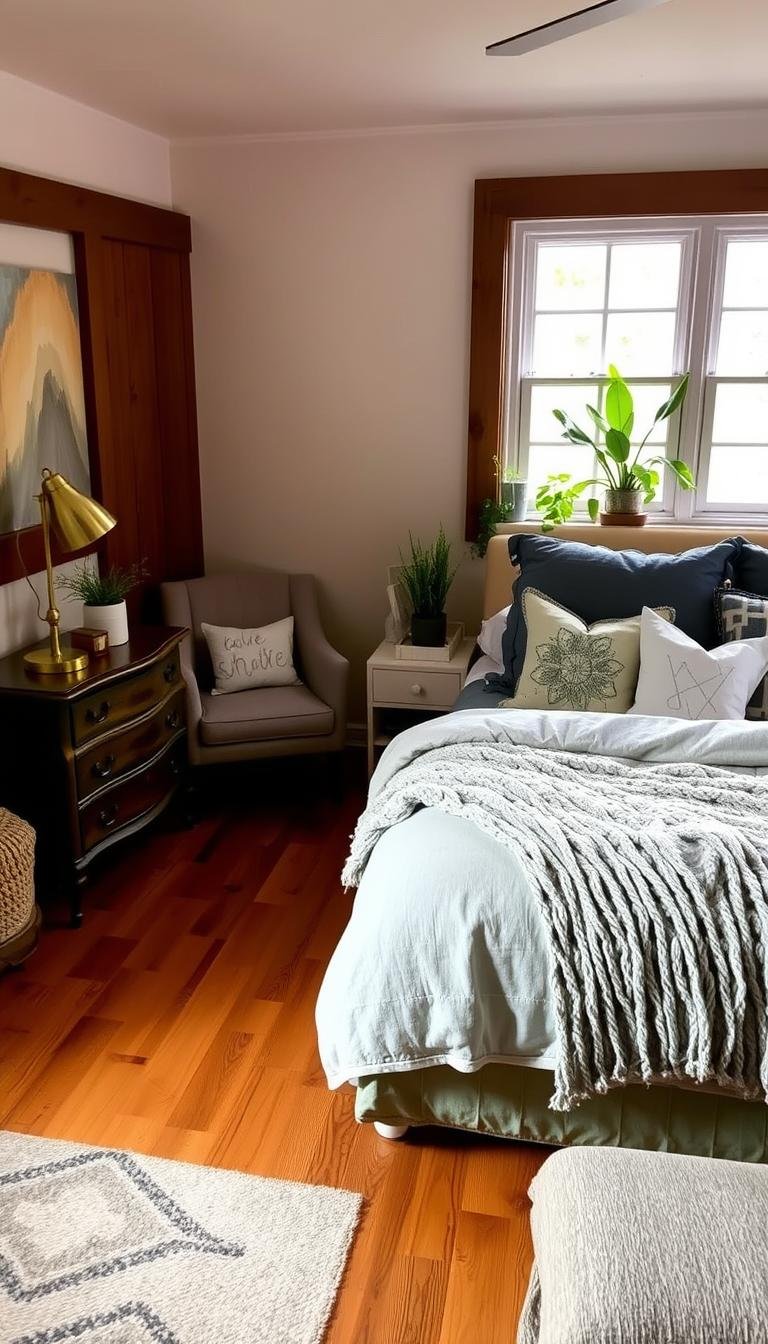
Your room is more than just a place to sleep. It’s where you start your day, unwind at night, and truly express yourself.
Think about it—you spend nearly one-third of your life in this space. Shouldn’t it feel like a true reflection of you?
Whether you’re starting fresh or giving your space a mini makeover, the right design can make all the difference. You want a room that looks good and feels like home.
Many people feel their space doesn’t fully match their vibe. But creating a charming and personal room is easier than you think.
From cozy corners to bold walls, these ideas work for any budget or room size. We’ll cover everything from color and lighting to furniture and personal touches.
Get ready to make your space worth every second you spend there!
What Makes a Bedroom “Cute” and Personal?
A truly inviting room blends warmth with your unique spirit. It’s not about following trends but creating a space that feels like you.
This style embraces comfort and character over stark minimalism. Think soft textures, meaningful items, and a cozy atmosphere.
Your personal touches—photos, travel souvenirs, or favorite books—make the design special. These elements tell your story and make the space yours.
Good bedroom design balances beauty with function. Every piece should serve a purpose while adding to the room’s charm.
Color, texture, and pattern work together to create a welcoming feel. Soft palettes, plush rugs, and interesting fabrics build depth and comfort.
Lighting plays a key role too. Warm, layered light makes a room feel safe and relaxing.
Vintage finds add history and personality. Mixing old and new makes a space feel collected over time, not bought in one day.
Your room should be a retreat—a place where you can unwind and be yourself. It’s your personal escape.
This approach differs from sleek, modern styles. It values feeling lived-in and loved over being perfect.
Ultimately, a cute room is one that makes you smile every time you walk in. It’s all about heart, not just looks.
Getting Started: Define Your Vision and Budget
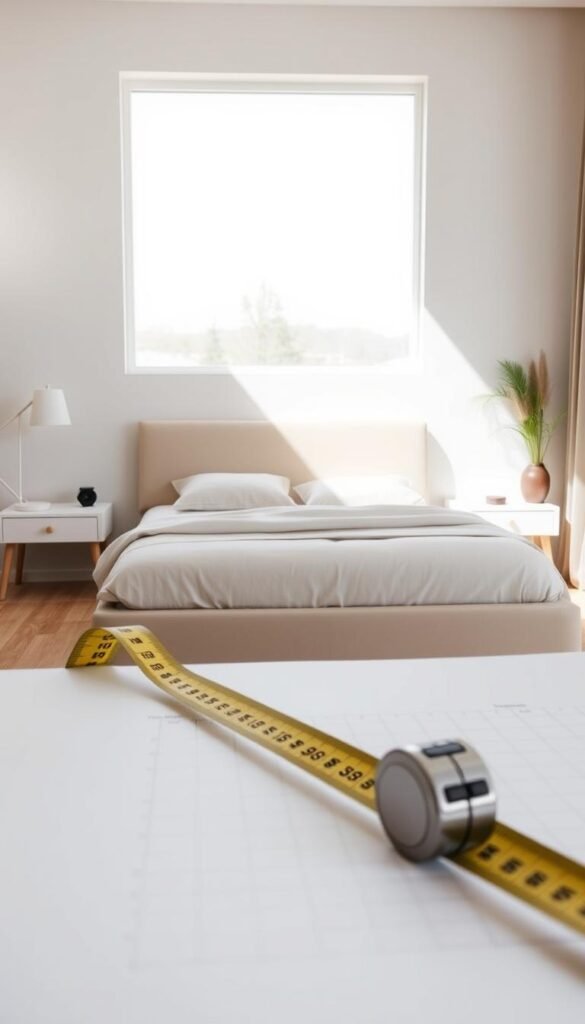
Before you dive into decorating, take a moment to plan. A clear vision and budget keep your project on track and stress-free.
Think about what you want your room to do for you. Is it a peaceful retreat? A creative haven? Your answers will guide your choices.
Assessing Your Space and Its Function
Start by looking at your room with fresh eyes. Notice its size, shape, and natural light. These factors influence your design decisions.
Measure everything carefully. Note the dimensions of your bed, furniture, and even your window. This prevents buying items that don’t fit.
Your room serves many purposes. Beyond sleeping, you might use it for reading, relaxing, or getting dressed. Identify these functions to plan zones.
Look for problem areas. Maybe you need more storage or better lighting. Fixing these issues makes your space feel more functional and cozy.
Planning Your Project Scope
Set a realistic budget based on your priorities. Decide what matters most—maybe a new bed frame or fresh wallpaper.
If funds are limited, phase your project. Start with small changes like new curtains or accessories. Save bigger updates for later.
Focus spending on items with big impact. A statement rug or good lighting can transform your room’s feel without a full overhaul.
Choose between DIY and hiring help. Painting walls or building shelves might be fun projects. Electrical work may need a pro.
Gather inspiration online. Create a mood board with color swatches, fabric samples, and decor ideas. This clarifies your style before you start.
Work with what you have. Maybe your current bedside table just needs a fresh coat of paint. Upcycling saves money and adds character.
Discover 20 Cute Bedroom Ideas That Add Charm and Personality
Ready to transform your personal sanctuary? These carefully curated suggestions will help you craft a space that’s both beautiful and uniquely yours.
Each concept builds upon the next, creating a harmonious environment. They blend aesthetics with functionality for a room that works as well as it looks.
The suggestions range from color palette selections to lighting arrangements. You’ll find options for furniture placement and decor elements too.
Mix and match these concepts based on your preferences. Your room’s size and existing features will guide your choices.
“Your home should tell the story of who you are, and be a collection of what you love.”
Even implementing just a few changes can dramatically improve your space. Small updates often make the biggest impact.
These approaches work for various room sizes. From cozy nooks to spacious suites, there’s something for every layout.
Many options are budget-friendly and can be done gradually. Start with simple changes like new curtains or accessories.
The upcoming sections detail each concept with practical tips. You’ll learn specific ways to implement these decor ideas.
Consider which suggestions align with your personal style. Think about what would make your space feel most like home.
- Soft color schemes that create calm
- Statement pieces that draw attention
- Textural elements for added comfort
- Practical storage solutions
- Personal touches that tell your story
Each element contributes to the overall charm of your personal retreat. Together, they create a space that truly reflects you.
1. Embrace a Soft, Layered Color Palette
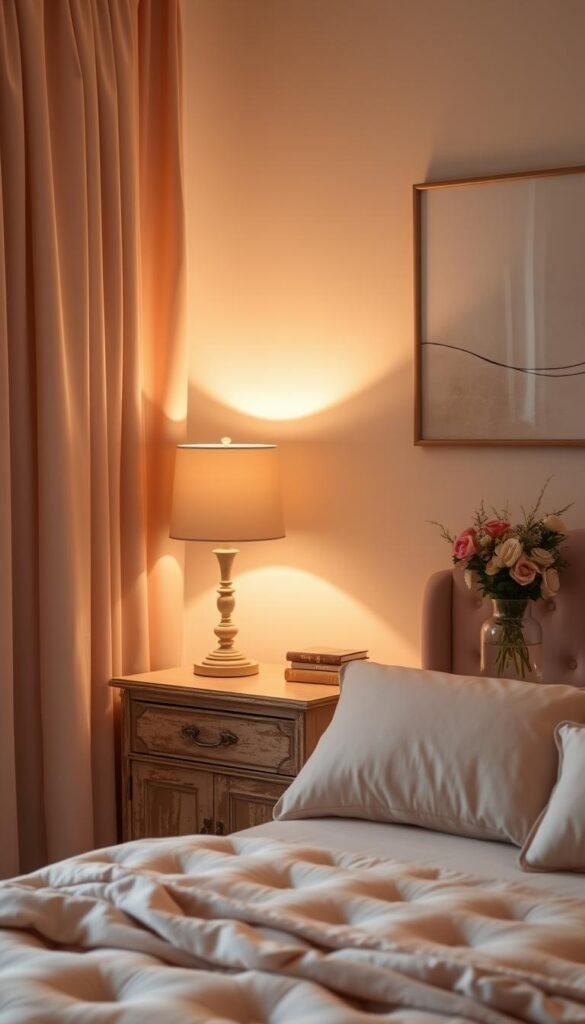
Colors shape how your room feels and functions. A thoughtful palette creates a calming foundation for your personal retreat.
Soft hues work together to build depth and comfort. They make your space feel inviting and uniquely yours.
This approach differs from bold, single-color schemes. Layering allows for flexibility and personal expression.
Choosing Your Core Colors
Start by assessing your room’s natural light and size. North-facing rooms benefit from warmer tones, while south-facing spaces can handle cooler shades.
Small bedrooms appear larger with light, airy colors. Larger rooms can embrace slightly deeper tones without feeling overwhelming.
Popular combinations include soft pinks with cream, muted blues with white, and sage greens with warm neutrals. These pairings create harmony and visual interest.
Always test colors in your actual space before committing. Paint large swatches on different walls and observe them at various times of day.
Consider the emotional impact of your choices. Blues and greens promote relaxation, while warm neutrals create coziness.
Incorporating Pops of Vibrancy
Accent colors add personality without overwhelming your scheme. Use the 60-30-10 rule for balanced distribution.
Your dominant color covers about 60% of the room. This typically includes walls, large furniture, and flooring.
The secondary color accounts for 30%. Use it for curtains, bedding, and area rugs.
The remaining 10% serves as your accent. This is where vibrant colors shine through accessories, art, and decorative items.
For example, a cobalt blue lamp or yellow pillows can enliven a muted pink scheme. These touches add energy while maintaining overall calm.
| Color Role | Percentage | Application Examples |
|---|---|---|
| Dominant Color | 60% | Walls, large furniture, flooring |
| Secondary Color | 30% | Curtains, bedding, area rugs |
| Accent Color | 10% | Accessories, art, decorative items |
Balance your wall color with furniture and textiles. Wood tones and fabric choices should complement rather than compete with your palette.
Create color continuity throughout your space. Repeat accent colors in multiple areas for a cohesive, polished look.
Remember that color lives beyond your walls. Consider how your choices work with existing elements like wood floors or vintage pieces.
Your color scheme should evolve with your taste. Start with a foundation you love, then layer in personality over time.
2. Create a Focal Point with a Statement Headboard
Your sleeping area gains instant character with one bold element. A striking headboard anchors your entire space and sets the tone.
This single piece transforms ordinary sleeping quarters into a designed retreat. It draws the eye and creates visual interest behind your bed.
Think of your headboard as the crown jewel of your personal sanctuary. It establishes your room’s personality before you add other elements.
From luxurious velvet to natural wood, options abound for every taste. Your choice reflects your unique style and enhances your comfort.
Upholstered and Tufted Designs
Soft, padded headboards bring comfort and elegance to your space. They create a cozy backdrop for reading or relaxing in bed.
Tufted designs feature button details that add texture and sophistication. This classic look works with both traditional and modern decor.
Velvet upholstery offers rich color and luxurious feel. It catches light beautifully and adds depth to your room’s palette.
Consider a bespoke curved headboard for dramatic effect. Fluted or quilted designs create visual interest without overwhelming your space.
These pieces often become family heirlooms due to their quality construction. They withstand years of use while maintaining their charm.
Natural Material Frames
Wood, rattan, and metal frames bring organic warmth to your sanctuary. They connect your sleeping area to nature through material choices.
Wood headboards range from rustic reclaimed planks to polished finishes. They complement various styles from farmhouse to contemporary.
Rattan and wicker pieces add texture and breezy appeal. Their woven patterns create visual interest while maintaining lightness.
Metal frames offer both durability and intricate design possibilities. From simple iron rails to ornate brass pieces, options abound.
Natural materials often work well with existing furniture pieces. They coordinate easily with wood tones throughout your room.
Selecting the right headboard involves considering several factors. Proportion, style, and material all contribute to the final look.
Measure your wall space and bed size before making a decision. Your headboard should complement rather than overwhelm your room.
| Headboard Type | Best For | Maintenance Level |
|---|---|---|
| Upholstered | Luxurious feel, comfort | Regular vacuuming, spot cleaning |
| Tufted | Traditional elegance | Gentle brushing, professional cleaning |
| Wood | Natural warmth, durability | Dusting, occasional polishing |
| Rattan | Textural interest, lightness | Dusting, gentle wiping |
| Metal | Structural appeal, longevity | Dusting, rust prevention |
Coordinate your headboard with other elements in your room. Your bedding, nightstands, and wall color should complement your choice.
For a cohesive look, repeat materials or colors elsewhere in your space. Wood tones from your headboard might appear in your bedside table.
DIY options exist for those working with limited budgets. Reupholstering an existing frame or building from scratch can save money.
Custom designs allow complete personalization of your sleeping area. You control the dimensions, fabric, and details to match your vision.
“The details are not the details. They make the design.”
Proper care extends your headboard’s life and maintains its beauty. Different materials require specific cleaning approaches.
Upholstered pieces need regular vacuuming and occasional professional cleaning. Wood frames benefit from dusting and occasional polish.
Your statement headboard should make you smile every time you enter your room. It represents your personal style and creates daily joy.
3. Play with Patterns on Walls and Bedding
Patterns bring energy and character to your personal retreat in ways solid colors cannot. They create visual interest and express your unique personality throughout the space.
Well-chosen patterns add depth and dimension to your room’s design. They guide the eye and create focal points that make your space feel curated.
From subtle textures to bold prints, patterns work magic in any size room. They can make compact spaces feel larger or cozy up expansive areas.
The Power of an Accent Wall
One patterned wall creates instant drama without overwhelming your space. This approach lets you experiment with bold designs while maintaining balance.
Wallpaper offers endless possibilities for your accent wall. Botanical prints bring nature indoors, while geometric patterns add modern energy.
Consider Pierre Frey’s Lasso fabric pattern for a sophisticated headboard wall. This creates continuity between your bed and wall design.
Paint techniques provide budget-friendly alternatives to wallpaper. Stripes, color blocking, or stenciled designs achieve similar impact.
Renters can use removable wallpaper for temporary pattern play. These options allow style changes without permanent commitment.
Scale matters when selecting your wall pattern. Larger rooms handle big, bold prints while smaller spaces benefit from delicate designs.
Mixing Prints for a Maximalist Look
Combining multiple patterns creates a rich, layered environment. This approach works beautifully when you maintain color consistency.
Start with a unified color palette as your foundation. Choose patterns that share two or three common colors for cohesion.
Mix pattern scales for visual harmony. Pair large-scale prints with smaller designs to create balanced interest.
For example, pair botanical wallpaper with a geometric bedspread. Add striped curtains that pick up colors from both patterns.
Consider pattern density throughout your room. Balance busy walls with simpler bedding, or vice versa.
Maximalist spaces embrace bold pattern combinations fearlessly. They create expressive environments that feel collected over time.
| Pattern Type | Room Size Recommendation | Best Paired With |
|---|---|---|
| Large Scale Florals | Spacious rooms | Solid color bedding, simple curtains |
| Small Geometrics | Compact spaces | Textured rugs, patterned pillows |
| Botanical Prints | Any size | Natural wood tones, green accents |
| Stripes | All room sizes | Floral patterns, solid accessories |
| Abstract Designs | Medium to large | Minimalist furniture, bold art |
Coordinate your pattern choices with other elements in the room. Your rug, curtains, and artwork should complement rather than compete.
Patterned bedding becomes the star when walls remain simple. Choose duvet covers or quilts with designs that reflect your style.
Remember that negative space gives patterns room to breathe. Balance patterned areas with solid color zones throughout your space.
Your pattern choices should make you happy every time you enter the room. They represent your personal taste and create daily joy.
4. Incorporate Cozy and Inviting Textures
Texture transforms your space from flat to fascinating. It adds depth, warmth, and sensory appeal that makes your room feel complete.
Different materials create unique experiences under your fingertips. They turn ordinary surfaces into comforting touchpoints throughout your day.
Layering various textures builds visual interest and comfort. Your room gains character through thoughtful material combinations.
From plush rugs to smooth silk, each element contributes to the overall feel. These choices make your personal retreat uniquely inviting.
Luxurious Fabrics: Velvet and Silk
Velvet brings rich texture and sophisticated style to your bedroom. Its soft pile catches light beautifully, adding depth to your color palette.
Use velvet for statement pieces like throw pillows or upholstered chairs. These elements elevate your space with tactile luxury.
Silk offers smooth sophistication for your bedding and curtains. Its natural sheen creates subtle reflection that enhances your lighting scheme.
Both fabrics work well in various design styles. They add elegance without overwhelming your existing decor.
Consider maintenance requirements when selecting these materials. Velvet needs regular vacuuming, while silk requires gentle care.
Natural and Chunky Knits
Chunky knit throws bring organic warmth and casual charm to your bed. Their textured patterns create visual interest while providing physical comfort.
Wool blankets offer natural temperature regulation throughout the seasons. They provide warmth in winter and breathability in summer.
Woven materials like rattan or jute add earthy texture to your room. Use them in baskets, headboards, or accent chairs.
These natural elements connect your indoor space to the outdoors. They create a grounded, peaceful atmosphere for relaxation.
Layering different textures creates maximum comfort and visual appeal. Start with your largest elements and build upward.
Your rug provides the foundation for texture layering. Choose something plush like faux fur or something natural like jute.
Add texture through bedding with crumpled linen sheets or a quilted coverlet. These materials feel wonderful against your skin.
Accessories like throw pillows and blankets complete your texture story. Mix materials for a collected, personal look.
| Texture Type | Best Applications | Seasonal Suitability |
|---|---|---|
| Velvet | Pillows, upholstery, curtains | Year-round, especially fall/winter |
| Silk | Bedding, window treatments | Spring/summer, temperature regulating |
| Chunky Knits | Throws, blankets, pillow covers | Fall/winter, warmth providing |
| Linen | Sheets, duvet covers, curtains | Spring/summer, breathable |
| Faux Fur | Rugs, throws, accent pillows | Winter, ultra-cozy |
Balance different textures throughout your space for cohesion. Mix soft and hard materials for visual interest.
Wood nightstands pair beautifully with velvet lampshades. Metal bed frames complement chunky knit blankets.
Consider your lifestyle when choosing textures. Families might prefer durable options over delicate materials.
Seasonal changes keep your space feeling fresh year-round. Lighter textures work for summer, heavier ones for winter.
“Texture is what gives a room its soul. It’s the difference between a house and a home.”
Texture affects the overall feel of your personal retreat. Plush materials create ultra-cozy environments, while crisp fabrics feel casually comfortable.
Experiment with different combinations until you find what feels right. Your perfect texture mix should reflect your personal style.
Remember that texture lives beyond soft furnishings. Consider wall treatments, flooring, and even ceiling details.
Your textured elements should work together harmoniously. They create a space that feels both visually interesting and incredibly comfortable.
5. Design a Dreamy and Functional Lighting Scheme
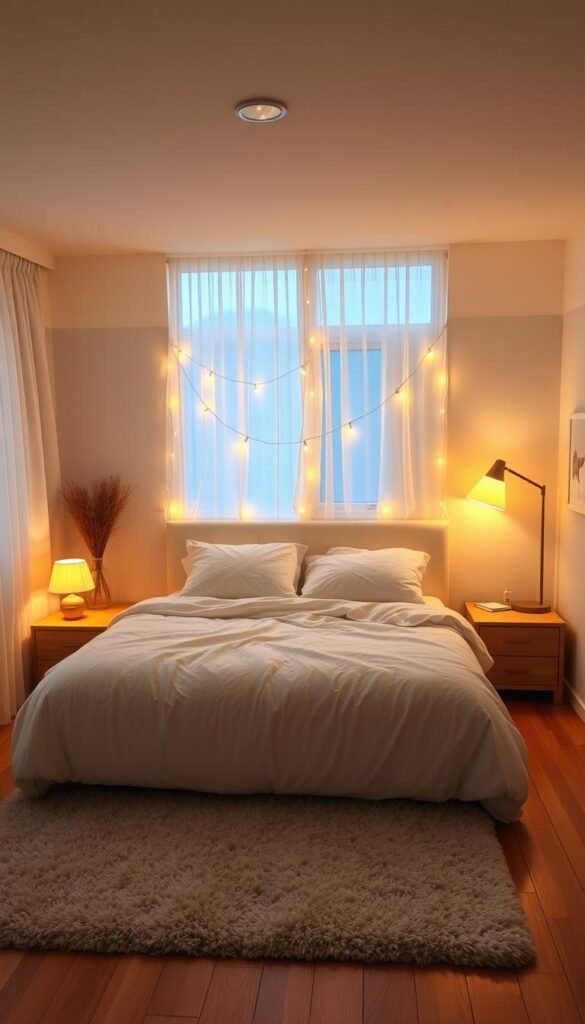
Light transforms your personal sanctuary from ordinary to extraordinary. It sets the mood, enhances functionality, and brings your design vision to life after dark.
Think of lighting as your room’s secret weapon. It can make your space feel larger, cozier, or more energetic depending on your choices.
A well-planned scheme combines different light sources. This creates layers that work together for both beauty and practicality.
Your lighting should adapt to your daily rhythms. Bright light for morning routines, soft glow for evening relaxation.
Consider how natural light changes throughout the day. Your artificial lighting should complement these natural patterns.
Overhead and Ambient Lighting
Start with your ceiling fixture as the foundation. Choose something that provides general illumination without harsh shadows.
Modern chandeliers add elegance while distributing light evenly. They become a beautiful focal point in your room.
Industrial-style black pendant lights offer a contemporary edge. Their exposed bulbs create interesting shadows and patterns.
Globe lamps provide soft, diffused light that feels welcoming. They work well in various bedroom sizes and styles.
Dimmable fixtures give you complete control over brightness. Install a dimmer switch to adjust your overhead light easily.
Consider the color temperature of your bulbs. Warm white (2700K-3000K) creates a cozy, inviting atmosphere.
Cool white bulbs (3500K-4100K) work better for task-oriented areas. They provide clearer visibility for dressing or reading.
Task and Accent Lighting
Task lighting serves specific purposes in your personal retreat. It provides focused light where you need it most.
Bedside lamps are essential for comfortable reading. Choose adjustable designs that direct light onto your book.
Wall sconces save precious bedside table space. They provide excellent light for nighttime reading without clutter.
Floor lamps illuminate dark corners beautifully. They create pools of light that make your entire space feel more inviting.
Accent lighting highlights your favorite decor elements. Use picture lights to showcase artwork or collections.
Fairy lights add magical sparkle to any bedroom. Drape them over your bed frame or window frame for instant charm.
Peel-and-stick LED lights offer flexible decoration options. Create custom patterns on your walls or ceiling.
Galaxy lights project starry patterns overhead. The Sky Lite Evolve Galaxy Projector creates amazing celestial effects.
Smart lighting systems allow remote control from your phone. Program different scenes for various times of day.
Mix lighting styles for a collected, personal look. Combine vintage pieces with modern technology.
“Light can make or break a room. It’s the difference between a space that works and one that truly sings.”
Place your lighting strategically throughout the room. Ensure each area has appropriate illumination for its function.
Layer different types of lighting for best results. Combine overhead, task, and accent sources for perfect balance.
Budget-friendly options still make big impact. Edison bulbs add instant character to simple fixtures.
Your lighting scheme should evolve with your needs. Start with basics and add special pieces over time.
Remember that good lighting affects how your color palette appears. Test your choices at different times to ensure they work.
The right lighting makes your personal retreat feel complete. It enhances both the beauty and functionality of your space.
6. Maximize Style and Storage with Smart Furniture
Furniture does more than fill your room—it defines how you live in it. The right pieces blend beauty with brains, giving you both charm and function.
Smart choices turn clutter into curated displays. They help your space feel organized yet full of personality.
Every piece should serve at least one purpose well. Storage beds hide linens, while shelves show off favorite books.
Think about flow when placing furniture. Leave enough room to move comfortably around your bed and dresser.
Choosing the Right Bedside Tables
Your bedside table holds nightly essentials within reach. Look for options with drawers or shelves to keep things tidy.
Scale matters most here. Your table should sit slightly lower than your mattress top for easy access.
Consider materials that complement your existing decor. Light wood tones work well in airy spaces, while dark finishes add depth.
Small rooms benefit from slim-profile designs. Floating shelves or narrow tables save precious floor space.
For those who love reading in bed, choose tables with enough surface for a lamp and book. Some even have built-in charging stations.
Utilizing Alcoves and Vertical Space
Don’t ignore those awkward nooks and corners. They become perfect spots for custom shelving or a cozy chair.
Alcoves make natural display areas for collections or books. Install simple wooden shelves to create a built-in look.
Look up—your walls offer valuable real estate. Floating shelves hold decor without eating into your floor plan.
Tall bookcases draw the eye upward, making ceilings feel higher. Use them to store items you don’t need daily.
Consider a storage bed with drawers underneath. This hides extra bedding or off-season clothes beautifully.
| Furniture Type | Storage Benefit | Style Impact |
|---|---|---|
| Storage Bed | Hides linens, clothing | Clean, streamlined look |
| Floating Shelves | Displays decor, books | Light, airy feel |
| Multifunctional Bench | Seating + hidden storage | Adds character |
| Tall Bookcase | Vertical storage | Creates focal point |
| Nesting Tables | Flexible surface space | Modern, adaptable |
Mix furniture styles for a collected look. Pair a modern bed frame with a vintage dresser for unique charm.
Refresh existing pieces with paint or new hardware. This gives old furniture new life without big costs.
Always measure your space before buying anything. Ensure there’s enough room to open drawers and doors fully.
Your furniture should make your room work better for you. Choose pieces that solve problems while adding beauty.
“Have nothing in your house that you do not know to be useful, or believe to be beautiful.”
Balance open and closed storage throughout your room. Display pretty items on shelves, but hide clutter behind doors.
Every furniture choice should serve your daily routine. Make your space not just lovely, but truly livable.
7. Add Character with Vintage and Thrifted Finds
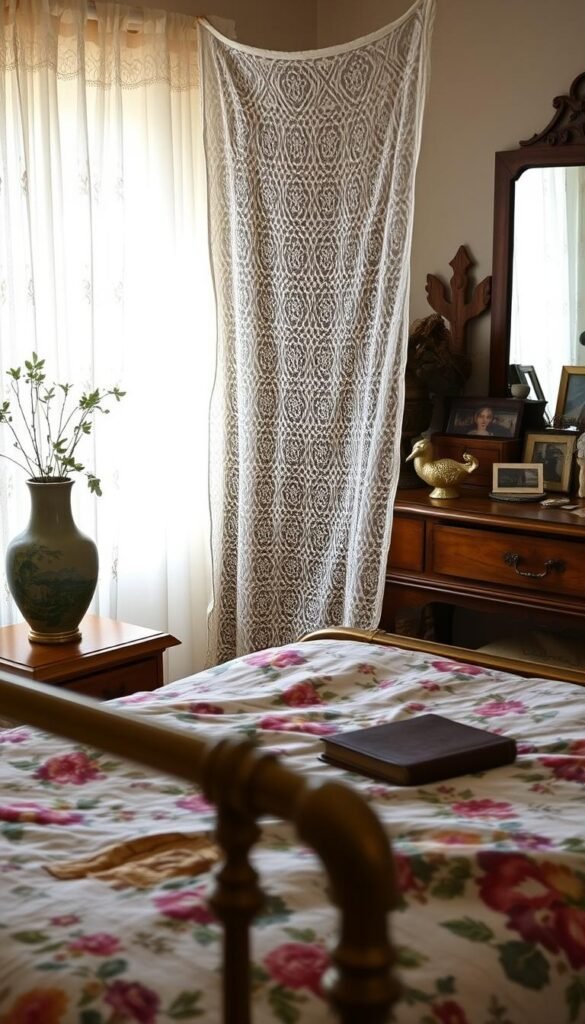
Nothing tells your story better than pieces with a past. Vintage items bring soul and history that new furniture simply can’t match.
These treasures make your space feel truly one-of-a-kind. They create depth and personality that mass-produced items lack.
Think of your room as a curated collection rather than a showroom. Each piece should have meaning and purpose in your personal sanctuary.
Curating a Collected Look
Start with one statement vintage piece as your anchor. A distressed dresser or vintage rug can set the tone for your entire space.
Build around this focal point with complementary items. Mix textures and materials for visual interest without overwhelming the eye.
Create balance through repetition of colors or shapes. If your vintage armchair has curved lines, echo that in your modern bed frame.
Leave breathing room between special pieces. Too many vintage items can feel cluttered rather than curated.
Edit your collection regularly. Remove items that no longer serve your vision or bring you joy.
Mixing Eras with Intention
Combine different periods for a dynamic yet cohesive look. Pair mid-century nightstands with a contemporary bed for unexpected harmony.
Use color as your unifying element throughout the space. Paint your vintage finds in shades that match your current palette.
Balance ornate vintage pieces with simple modern items. An elaborate mirror looks fantastic against a plain wall.
Consider scale and proportion when mixing furniture. Your vintage bedside table should complement rather than compete with your bed.
Shop thrift stores with an open mind and specific needs list. Look for solid wood construction and dovetail joints in furniture.
Check online marketplaces for local vintage treasures. Many sellers offer delivery for larger pieces like dressers or chairs.
Flea markets are perfect for unique decorative accessories. Look for vintage art, mirrors, and lighting fixtures with character.
Restore vintage finds to fit your current style. Sand and repaint wood furniture, or reupholster chairs with modern fabric.
Update hardware on vintage pieces for a fresh look. New knobs or pulls can modernize an old dresser instantly.
Keep the original charm while making pieces functional. Line drawers with fresh paper and ensure all joints are secure.
Balance vintage elements with contemporary comforts. Pair your antique dresser with a modern mirror and lighting.
Use vintage accessories rather than large furniture if you prefer a mainly modern space. Old books, trays, or art add character without dominating.
Clean and maintain vintage pieces regularly. Wood furniture needs occasional polishing, while metal items may require rust prevention.
“The best rooms have something to say about the people who live in them.”
Your vintage finds should tell your personal story. Choose pieces that resonate with your memories or aspirations.
These items make your space feel lived-in and loved. They create warmth that new furniture often lacks.
Start small if you’re new to vintage shopping. A single thrifted mirror or vase can test the waters beautifully.
8. Don’t Neglect Your “Fifth Wall”: The Ceiling
Your overhead surface offers incredible potential for transforming your personal retreat. Often called the “fifth wall,” this space completes your room’s design story beautifully.
Treating your ceiling thoughtfully creates a fully immersive environment. It adds depth and character that makes your space feel complete.
Color and Wallpaper Overhead
Painting your ceiling something other than white creates instant drama. A soft blue ceiling evokes sky-like openness and calm.
Darker hues make your space feel cozy and intimate. They work particularly well in rooms with high ceilings.
Wallpaper adds pattern and texture overhead for cottage charm. Choose designs that complement your wall treatment without competing.
Removable wallpaper works perfectly for rental spaces. It allows experimentation without permanent commitment.
Coordinate your ceiling color with your wall palette. Matching tones create seamless flow, while contrasting colors add energy.
Consider how light affects your ceiling color throughout the day. Test samples at different times before finalizing your choice.
Statement Light Fixtures
Your overhead lighting becomes a focal point when chosen carefully. It should complement your ceiling treatment rather than compete.
Modern chandeliers add elegance while distributing light evenly. They become art pieces that enhance your overall design.
Industrial pendants offer contemporary edge with exposed bulbs. Their clean lines work well with various ceiling treatments.
Consider scale when selecting fixtures. Your light should feel proportional to your room size and ceiling height.
Dimmer switches allow adjustable ambiance. They let you control brightness for different moods and activities.
| Ceiling Treatment | Room Effect | Best For |
|---|---|---|
| Sky Blue Paint | Creates openness, airy feel | Small rooms, low ceilings |
| Dark Paint | Adds coziness, intimacy | Large rooms, high ceilings |
| Wallpaper Pattern | Adds texture, cottage charm | Traditional spaces, character homes |
| Exposed Beams | Rustic, architectural interest | Farmhouse style, loft spaces |
| Molding Details | Elegance, traditional appeal | Classic interiors, formal spaces |
Architectural treatments like beams add rustic character. Exposed wood brings natural warmth and texture overhead.
Molding and paneling create elegant traditional appeal. These details work beautifully in classic interior schemes.
Maintain treated ceilings with regular dusting and cleaning. Different materials require specific care approaches.
Your ceiling design should enhance other elements in your room. It works with your walls, furniture, and lighting harmoniously.
“The ceiling is the fifth wall of any room and a great opportunity to add drama and personality.”
Ceiling treatments can make rooms feel taller or cozier. Light colors elevate space, while dark tones create intimacy.
Start with simple changes if you’re new to ceiling design. A fresh coat of paint makes dramatic impact without overwhelming.
Your fifth wall completes your personal sanctuary beautifully. It turns ordinary spaces into extraordinary retreats.
9. Define Zones with Rugs and Screens
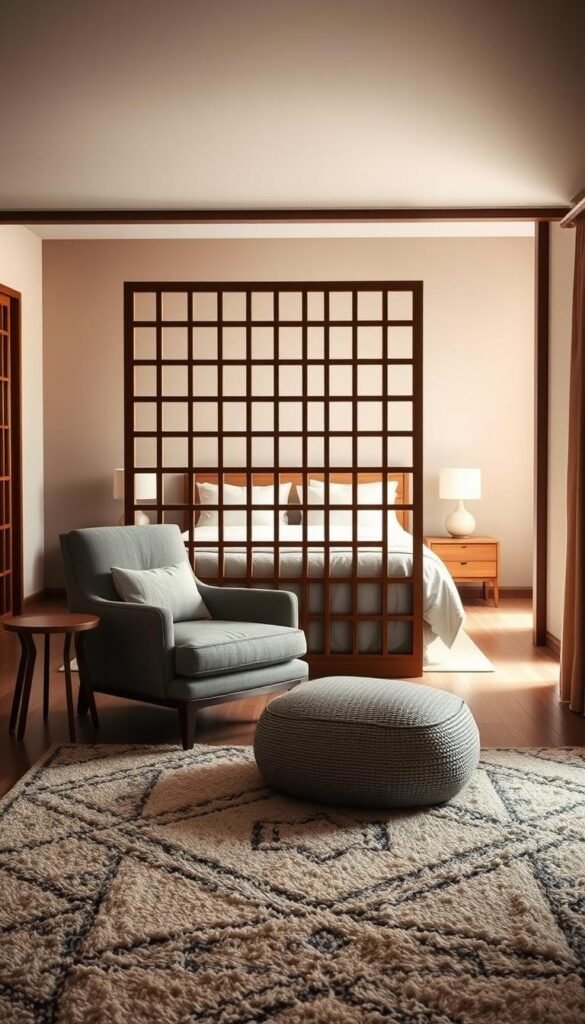
Smart zoning turns your sleeping area into a multi-functional retreat. It creates distinct areas for different activities within one room.
This approach makes your personal space work harder for you. You gain dedicated spots for relaxation, dressing, and quiet time.
Area rugs and room dividers work together beautifully. They establish visual boundaries without permanent construction.
Your bedroom becomes more organized and intentional. Each zone serves a specific purpose in your daily routine.
Layering Rugs for Depth
Start with a large base rug under your sleeping area. This anchors your bed and creates a soft landing for your feet.
Choose natural fiber rugs like jute or sisal for durability. They withstand daily wear while adding texture to your space.
Layer a smaller, plush rug on top for added comfort. Faux fur or wool options create cozy spots for morning routines.
Mix patterns and textures for visual interest. A geometric rug over a neutral base adds personality without overwhelming.
Consider rug sizes carefully for each zone. Your sleeping area rug should extend at least 24 inches beyond your bed frame.
Use rugs to define pathways through your room. They guide movement between different functional areas.
Creating a Reading Nook
Designate a quiet corner for relaxation and reading. This becomes your personal escape within your larger retreat.
Start with a comfortable chair that supports good posture. Add a small table for your tea and books.
Soft lighting makes your nook inviting day and night. A floor lamp or wall sconce provides perfect illumination.
Include storage for your favorite reads nearby. Floating shelves or a small bookcase keep everything organized.
Add plush blankets and throw pillows for ultimate comfort. These textures make your nook irresistible for long reading sessions.
Position your nook near natural light if possible. A window spot offers beautiful views and fresh air.
Room screens offer flexible division of space. A curved bamboo screen creates privacy for dressing or working.
These dividers can be moved as needed throughout the day. They adapt to your changing activities and moods.
Choose screens that complement your overall design. Their material and color should harmonize with your existing decor.
Screens work particularly well in studio layouts. They create separation without closing off light or air flow.
| Zone Type | Recommended Rug Size | Best Materials |
|---|---|---|
| Sleeping Area | 8’x10′ or larger | Wool, synthetic blends |
| Reading Nook | 5’x7′ or round | Faux fur, plush wool |
| Dressing Area | 3’x5′ or runner | Flat weave, natural fibers |
| Pathways | 2’x3′ or runners | Low pile, durable materials |
Rug pads prevent slipping and protect your floor. They add extra cushioning and extend your rug’s life.
Choose patterns that complement your wall color. Your rug should harmonize with your overall palette.
Regular maintenance keeps your rugs looking fresh. Vacuum weekly and address spills immediately.
Your zoned space should feel cohesive yet distinct. Repeat colors or materials throughout different areas.
“A room should feel collected, not decorated. Zones help create that lived-in, loved feeling.”
Small bedrooms benefit most from clever zoning. Every inch serves multiple purposes without feeling cramped.
Experiment with different arrangements until it feels right. Your zones should support your daily habits naturally.
This approach makes your personal retreat truly functional. It transforms your room into a customized living space.
10. Personalize Your Space with Art and Photos
Your walls offer the perfect canvas for showcasing what makes you unique. Filling them with meaningful pieces transforms generic rooms into personal sanctuaries that tell your story.
Art and photographs create emotional connections to your space. They reflect your memories, tastes, and experiences in visual form.
Whether you prefer bold statements or subtle accents, these elements add depth. They make your environment feel truly yours rather than something from a catalog.
Building a Gallery Wall
Gallery walls arrange multiple pieces into cohesive displays. They turn blank walls into dynamic focal points full of character.
Start by collecting artwork that resonates with you. Mix personal photographs with purchased prints for balanced visual interest.
Consider different layout patterns before hanging anything. Grid arrangements offer clean organization, while organic clusters feel more casual.
Lay everything on the floor first to experiment with placement. This helps you visualize spacing and composition without putting holes in your wall.
Choose frames that complement both your art and room style. Matching frames create uniformity, while mixed finishes add eclectic charm.
Hang pieces at eye level for comfortable viewing. Generally, center points should sit about 57 inches from the floor.
Consider scale in relation to your furniture. Larger works anchor spaces above beds or consoles beautifully.
Displaying Personal Mementos
Personal treasures make your space feel lived-in and loved. They transform ordinary items into decorative statements with emotional value.
Create shadow boxes for three-dimensional keepsakes. Tickets, jewelry, or small souvenirs become art when arranged thoughtfully.
Hanging Polaroids or instant photos adds casual charm. String them along walls or windows for playful displays.
Incorporate collections into your decor strategy. Books, vintage cameras, or pottery can adorn shelves while serving practical purposes.
Mix items of different sizes and textures for visual interest. Combine framed photos with woven wall hangings or metal sculptures.
Proper lighting highlights your special pieces effectively. Picture lights or adjustable spotlights make artworks shine after dark.
Your displays will naturally evolve over time. Add new finds as you acquire them, creating an ever-changing gallery of your life.
“Art is the only way to run away without leaving home.”
Coastal-inspired artwork brings calming ocean vibes indoors. Graphic prints maintain visual balance amid personal photographs.
Large paintings above your bed create serene focal points. They establish calm energy in your most important relaxation zone.
Remember that your personal gallery should make you happy. Choose pieces that spark joy every time you see them.
11. Bring the Outside In with Plants and Greenery
Nature’s touch transforms your personal retreat into a living sanctuary. Plants breathe life into your space while creating peaceful connections to the natural world.
Living greenery improves air quality by filtering toxins and releasing oxygen. This creates a healthier environment for rest and relaxation.
Studies show plants reduce stress and boost mood. Their presence makes your room feel more calming and restorative.
From lush leafy varieties to architectural succulents, options abound. Each plant brings unique texture and visual interest to your design.
Your green companions become living decor that grows with you. They add dynamic beauty that changes with the seasons.
Choosing the Right Plants for Your Space
Assess your light conditions before selecting plants. Most bedrooms have moderate to low light levels.
North-facing windows offer consistent indirect light. South-facing ones provide brighter conditions for sun-loving plants.
Low-light tolerant plants thrive in typical bedroom environments. Snake plants and pothos adapt well to various light conditions.
Consider your maintenance routine when choosing plants. Some varieties need weekly attention while others survive with minimal care.
Small bedrooms benefit from vertical growing options. Hanging plants or wall-mounted varieties save precious floor space.
Large rooms can accommodate statement plants like fiddle leaf figs. These become living sculptures that anchor your space.
Air-purifying varieties like spider plants work double duty. They clean your air while adding natural beauty to your room.
Creative Display Ideas
Hanging planters create floating gardens at different heights. Macrame hangers add bohemian charm to your bedroom decor.
Wall-mounted shelves turn empty walls into green galleries. Stagger shelves at different levels for dynamic visual interest.
Group plants together for easier care and greater impact. Cluster varieties with similar light and water needs on your bedside table.
Use plants as natural room dividers in open layouts. Tall varieties like bamboo palms create visual separation without blocking light.
Incorporate artificial plants for consistent greenery without maintenance. High-quality silk plants look remarkably real and never need watering.
Seasonal rotations keep your displays fresh throughout the year. Switch out flowering plants in spring and evergreen varieties in winter.
Dried elements like pampas grass add texture without upkeep. Their neutral tones complement various color palettes beautifully.
| Plant Type | Light Needs | Care Level | Best For |
|---|---|---|---|
| Snake Plant | Low to bright indirect | Very easy | Beginners, low light |
| Pothos | Low to moderate | Easy | Hanging planters, shelves |
| ZZ Plant | Low to bright indirect | Very easy | Forgetful waterers |
| Peace Lily | Low to moderate | Moderate | Air purification |
| Spider Plant | Bright indirect | Easy | Hanging displays, air cleaning |
Water plants according to their specific needs rather than on a fixed schedule. Check soil moisture before watering to prevent root rot.
Fertilize during active growing seasons (spring and summer). Most plants benefit from monthly feeding during these periods.
Watch for common pests like spider mites or mealybugs. Treat infestations early with natural solutions like neem oil.
Rotate plants regularly for even growth toward light sources. This prevents lopsided development and keeps plants healthy.
“Plants are like people: they each have their own personality and needs. Learning to care for them teaches us patience and observation.”
Plants complement various bedroom styles from boho to modern. Tropical varieties enhance vacation-inspired decor, while succulents suit minimalist spaces.
Your green companions make your space feel more alive and connected to nature. They transform ordinary rooms into refreshing retreats.
Start with one easy-care plant and expand your collection gradually. Even a single plant can make space feel more inviting and personal.
12. Achieve a Balance of Modern and Classic Elements
Blending eras creates spaces that feel both fresh and timeless. This approach gives your personal retreat character that never goes out of style.
Think of it as creating a conversation between different periods. Your room gains depth when modern pieces mingle with classic touches.
The Transitional Design Approach
Transitional design bridges contemporary and traditional aesthetics beautifully. It creates harmony between sleek lines and ornate details.
Start with a neutral foundation for your color palette. Soft grays, warm whites, and muted tones work as perfect backdrops.
Mix furniture styles intentionally throughout your space. A modern bed frame pairs wonderfully with vintage-inspired bedside tables.
Black window frames add graphic modern edge against traditional wall paneling. This combination creates visual interest without conflict.
Balance is key in transitional bedroom decor. For every modern element, include something classic to maintain equilibrium.
Molding and Paneling for Charm
Architectural details instantly elevate any bedroom‘s character. Crown molding and wainscoting add traditional elegance that never fades.
Warm shades with delicate florals create traditional feel on paneled walls. This approach softens modern furniture pieces beautifully.
Consider chair rail height for your paneling installation. This classic detail works well in both large and compact bedrooms.
Paint molding the same color as your walls for subtle sophistication. This creates texture without visual busyness.
For greater impact, use contrasting colors on your trim work. Dark molding against light walls makes architectural features pop.
Mix materials thoughtfully throughout your space. Combine modern metals with traditional wood tones for balanced charm.
Your lighting choices should bridge both styles effectively. Modern fixtures with traditional shapes work perfectly.
Accessorize with both contemporary and classic pieces. Modern art looks fantastic against traditional molding details.
This balanced approach creates bedroom ideas that feel current yet enduring. Your space won’t feel dated in a few years.
Transitional design makes your room feel collected over time. It reflects a lived-in quality that pure modern spaces often lack.
Your personal retreat becomes a timeless sanctuary. It welcomes you with both contemporary comfort and classic character.
Your Charming and Personal Bedroom Awaits
You now have all the inspiration needed to craft a space that truly reflects your spirit. These bedroom ideas blend seamlessly to create a cohesive, inviting retreat.
Remember, your personal sanctuary evolves over time. Start with changes that resonate most with your style and budget.
Small updates make big impacts. Fresh curtains, new lighting, or meaningful art can transform how your room feels.
Trust your instincts above trends. Your space should tell your unique story through colors, textures, and cherished items.
Keep collecting inspiration as your taste evolves. Create a vision board to guide future updates to your personal haven.
Your dream bedroom isn’t a destination—it’s a joyful journey of self-expression. Enjoy every step of making your space feel like home.